
 Microfungi in endemic plants of Brazil: Paubrasilia echinata (Brazilwood)
ABSTRACT
Brazilwood is an endemic species of the Brazilian Atlantic Forest and the microfungi associated with it are understudied. We present an extensive checklist of microfungi and report two new species discovered in the state of Bahia: Camposporium paubrasiliae sp. nov. and Xylomyces vesiculifer sp. nov. We also present seven new records of microfungal occurrence: Vermiculariopsiella arcicula Pasqualetti & Zucconi for the Americas, Junewangia lamma (Whitton, McKenzie & K.D.Hyde) W.A.Baker & Morgan-Jones, Monodictys abuensis (Chouhan & Panwar) V.Rao & de Hoog, and Sporidesmium altum (Preuss) M.B.Ellis for South America; and Phaeocandelabrum joseiturriagae R.F.Castañeda, Iturr., Heredia & M.Stadler, Sarcopodium circinatum Ehrenb., and Tetraploa ellisii Cooke, for Brazilwood. The checklist comprises 145 microfungal taxa, distributed among 94 genera, 49 families, 25 orders, seven classes, and three phyla, namely Ascomycota, Basidiomycota, and Mucoromycota. Furthermore, we provide a temporal analysis of the records and relevant bibliography on microfungi in Brazilwood, along with information on their ecological relationships and geographical distribution in Brazil.
Keywords:
Tropical microfungi; endangered plant; conservating microfungi.
Introduction
The microfungal diversity in most tropical countries is poorly understood. Many of these fungi are considered rare and endangered because their hosts are on the verge of extinction (Siboe et al. 2000). Understanding extinction risk assessments and the threat status among plants and fungal species is essential for biodiversity conservation (Dulymamode et al. 2001). Quantitative risk estimates and the accumulation of scientific evidence on plant and fungal extinction validate that this is an area of global concern that requires existing and emerging conservation initiatives, for managing the threat to biodiversity (Nic Lughadha et al 2020).
Paubrasilia echinata (Lam.) Gagnon, H.C.Lima & G.P.Lewis is endemic to the Brazilian Atlantic Forest (CNCFlora 2012). Brazilwood was the first to be exploited since the Portuguese colonization in the 16th century. For almost four centuries, Brazilwood has been extensively exploited and exported as a natural resource for the manufacture of furniture and paint, mainly for dyeing fabrics. The extended and intensive use of this species has resulted in the confinement of subpopulations to only a few natural areas in the Atlantic Forest (Esser et al. 2019). Currently, the harvesting of Brazilwood is restricted to areas with a sustainable management plan following the regulations set by IBAMA (2022). Brazilwood is classified as an endangered plant species at the national and global levels under criteria A4acd (CNCFlora 2012) and A1acd (IUCN 2023).
Studies on microfungi associated with P. echinata were conducted in Brazil. Endophytic (Machado 2009; Lima & Cavalcanti 2014; Campos et al. 2015), mycorrhizal and phytopathogenic (Bezerra & Costa, 2001; Araújo et al. 2005; Lisboa-Padulla et al. 2009; Moreira 2011), and saprotrophic fungi were identified. Saprotrophic fungi were the most predominant, especially those collected from decomposing leaves, where new occurrences and species are discovered (Mendes et al. 1998; 2019; Grandi & Silva 2003; 2006; Silva & Grandi 2008, 2013; Moreira 2011; Crous et al. 2016).
This study aimed to present an updated checklist of microfungi associated with P. echinata, as well as to report, describe, and illustrate two new species.
Materials and methods
New species and new records were obtained from leaf, twig, branch, petiole, and decomposing fruit samples of Brazilwood, collected between March and December 2021 from a grove located on the campus of the Universidade Estadual de Feira de Santana, Bahia, Brazil. The samples were processed according to the methods described by (Castañeda-Ruiz et al. 2016). The reproductive structures of microfungi were examined under a Leica S8APO stereomicroscope, followed by the preparation of permanent slides in PVL (polyvinyl alcohol and lactophenol) resin and examination under an Olympus BX-51 light microscope equipped with an Olympus DP25 camera and cellSens@ Imaging software for morphological analysis, photomicrographs, micrometric measurements, and subsequent identification through comparison with specialized literature. Unfortunately, despite multiple efforts, it was impossible to obtain pure cultures from these specimens.
The checklist provides information about the substrate and location; it was prepared through careful review of available literature (Mendes et al. 1998; 2019), online databases (Farr & Rossman 2023), and internet sources (Google, Google Scholar; Keywords: Caesalpinia echinata; Paubrasilia echinata; fungi; microfungi; AND; OR), collected and listed according to the current MycoBank classification (Robert et al. 2005) (Table 1).
Graphs were generated using Microsoft Excel 2019. A geographic distribution map was created using the QGIS 3.28.0 software, using the geographic coordinates Datum/Sirgas 2000 and the territorial boundaries provided by the Brazilian Institute of Geography and Statistics (IBGE 2023).
Results
We here describe two new species: Camposporium paubrasiliae sp. nov. and Xylomyces vesiculifer sp. nov.; Vermiculariopsiella arcicula Pasqualetti & Zucconi is a new record for the Americas; Junewangia lamma (Whitton, McKenzie & K.D.Hyde) W.A.Baker & Morgan-Jones, Monodictys abuensis (Chouhan & Panwar) V.Rao & de Hoog, and Sporidesmium altum (Preuss) M.B.Ellis for South America; and Phaeocandelabrum joseiturriagae R.F.Castañeda, Iturr., Heredia & M.Stadler, Sarcopodium circinatum Ehrenb., and Tetraploa ellisii Cooke for Brazilwood.
This checklist is based on the data available from literature and the internet over the past 25 years, including 17 publications related to microfungi associated with Brazilwood examining varied research topics: inventories (Mendes et al. 1998; 2019; Farr & Rossman 2023), screening of potential bioactive products (Campos et al. 2015), survey of endophytic fungal communities in the phylloplane (Lima & Cavalcanti 2014), incidence of fungi during seed formation and dispersion (Lisboa-Padulla et al. 2009; Padulla et al. 2010), a survey about microfungal decomposers (Grandi & Silva 2003; 2006; Silva & Grandi 2008), evaluation of fungal biomass during leaf litter decomposition (Moreira 2011), and microfungi recorded in different parts of the plant, such as leaves, branches, roots and with different ecological relationships (phytopathogenic, saprotrophic, endophytic and mycobiont).
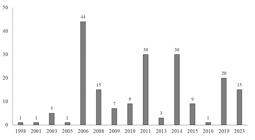
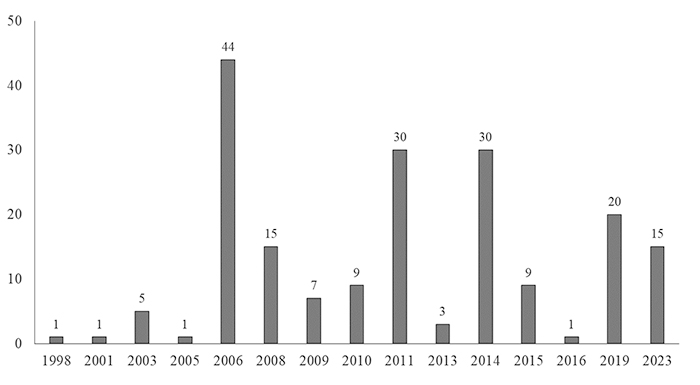
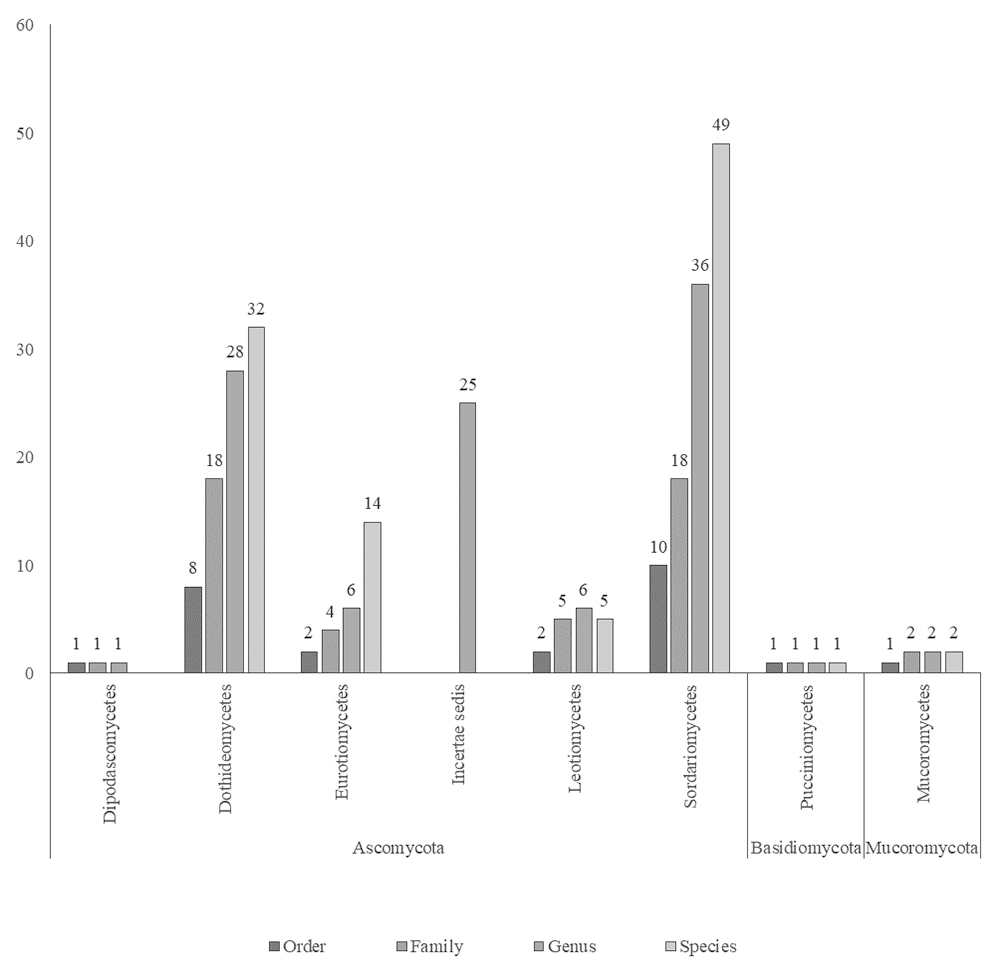
Almost half the data, 59 taxa, were obtained between 2006 and 2008, followed by 30 taxa in 2011 and 30 taxa in 2014 (Fig. 1). A total of 145 microfungi associated with Brazilwood (Table 1), belonging to 94 genera and distributed across three phyla, comprising seven classes, 25 orders, and 49 families, have been reported (Fig. 2).
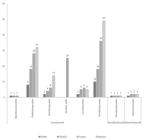
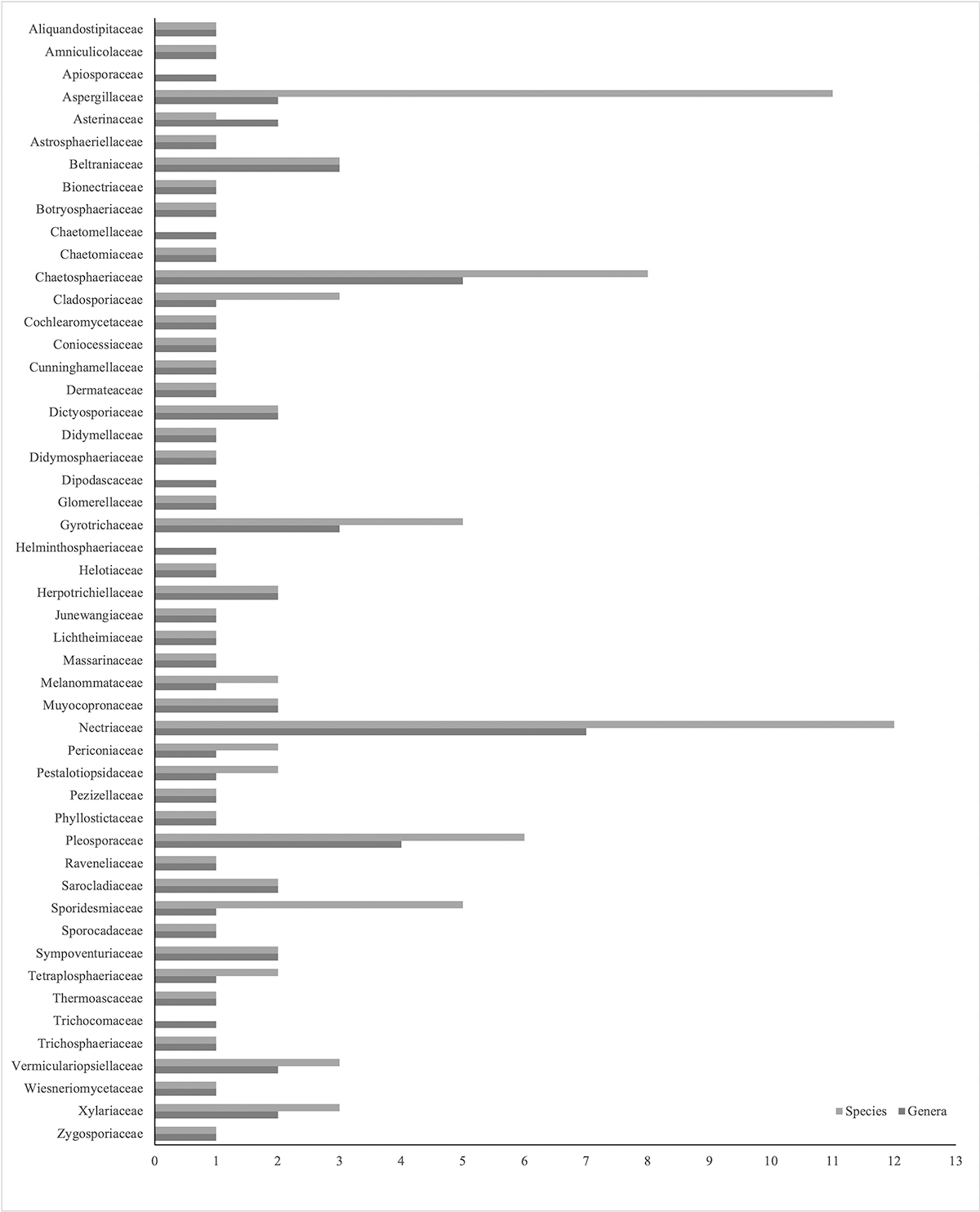
Number of microfungi associated with P. echinata by class, order, family, genus, and species.
The most prominent classes belonged to the phylum Ascomycota, with 58 species in Sordariomycetes, 40 species in Dothideomycetes, 18 species in Eurotiomycetes, and six species in Leotiomycetes. In addition, 25 taxa remain unassigned to any class and/or order and/or family; they are labeled as "incertae sedis" (Robert et al. 2005). In the phylum Basidiomycota, only Anthomyces brasiliensis Dietel, which belongs to the class Pucciniomycetes (Raveneliaceae - Pucciniales), has been reported. Furthermore, only two species were recorded from the class Mucoromycetes (Mucoromycota) (Fig. 2).
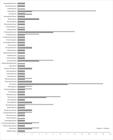
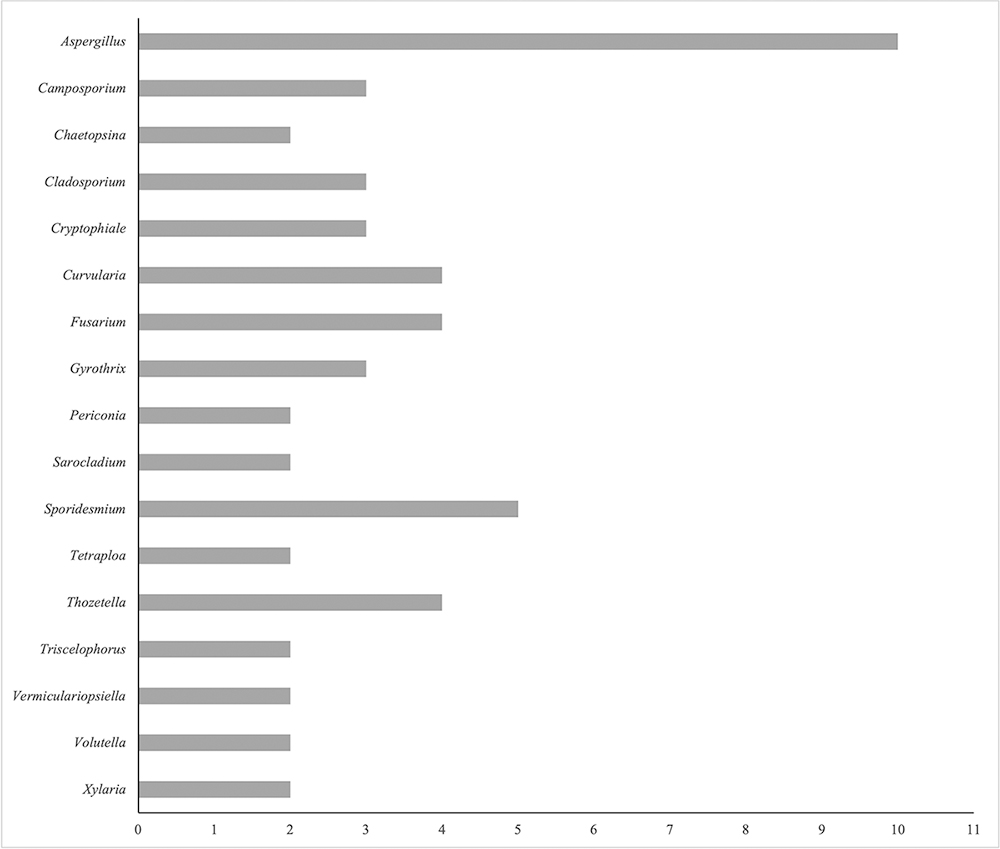
The genus with the highest number of species was Aspergillus P. Micheli ex Haller (10 spp.), followed by Sporidesmium Link (5 spp.), Fusarium Link, Curvularia Boedijn, and Thozetella Kuntze (4 spp.) (Fig. 3). The most representative families included Nectriaceae (12 spp.), Aspergillaceae (11 spp.), Chaetosphaeriaceae (8 spp.), Pleosporaceae (6 spp.), Gyrotrichaceae, Sporidesmiaceae (5 spp.), and Beltraniaceae, Cladoporiaceae, Vermiculariopsiellacea, Xylariaceae (3 spp.) (Fig. 4).
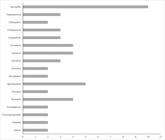
Number of microfungi associated with P. echinata by species and most representative genera.
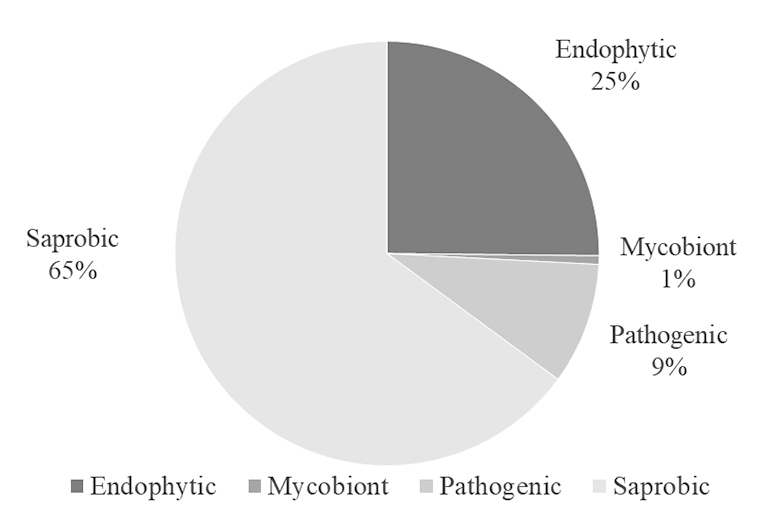
The predominant primary ecological relationships observed between microfungi and Brazilwood involved saprotrophs, accounting for 98 taxa, followed by endophytes (38 taxa), and plant pathogens (14 taxa) (Fig. 5). Among the newly recorded occurrences, V. arcicula is a plant pathogen and saprotroph (Rao & De Hoog 1986). The remaining new records were categorized as saprotrophic (Baker et al. 2002; Leão-Ferreira et al. 2008; Castañeda-Ruiz et al. 2009).
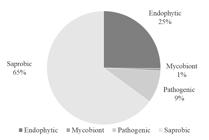
Percentage of occurrence of microfungi associated with P. echinate by ecological relationship.
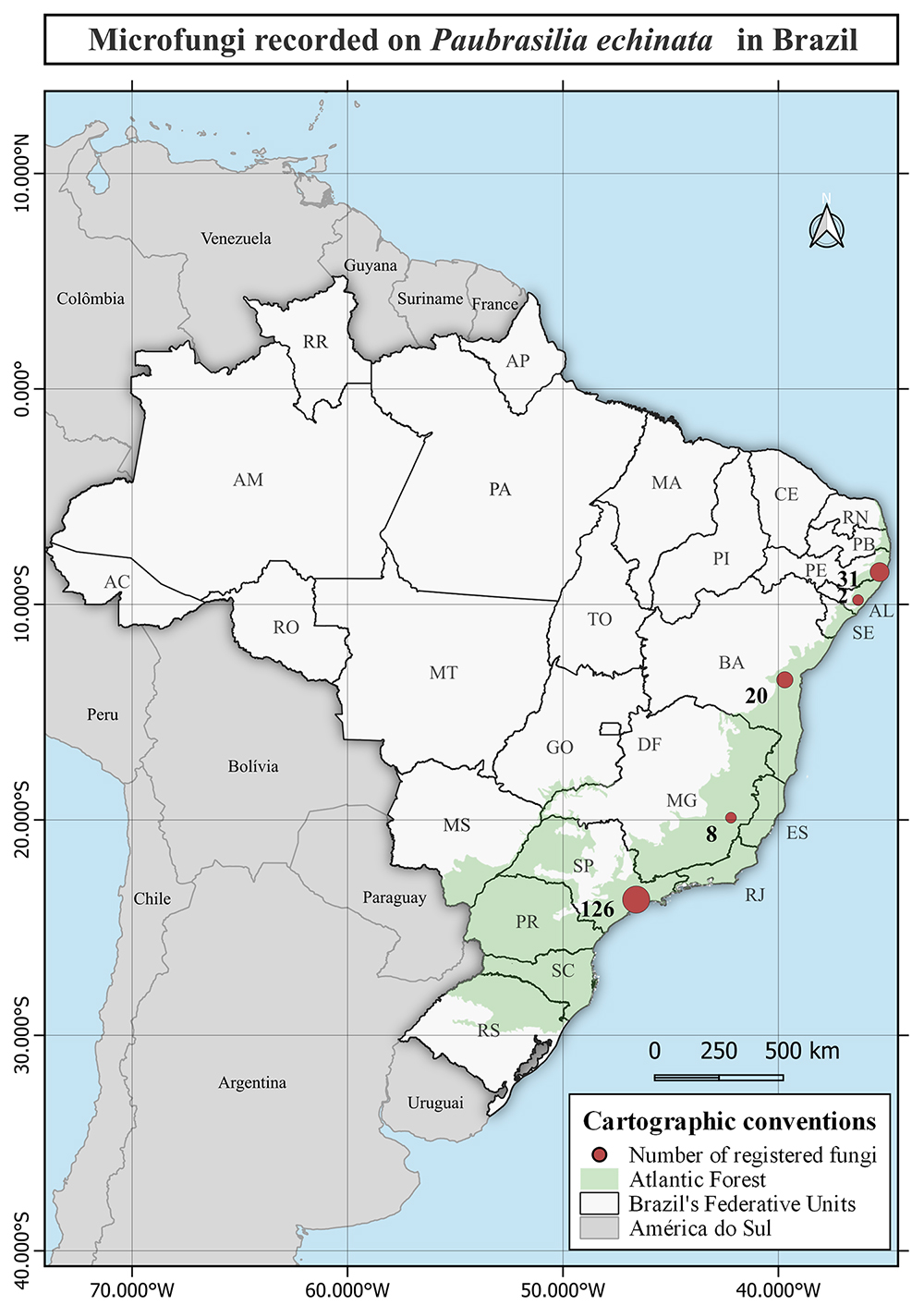
The distribution of the recorded microfungi across Brazilian states (Fig. 6) revealed significant numbers in São Paulo (126 spp.), Pernambuco (31 spp.), Bahia (20 spp.), Minas Gerais (8 spp.), and Alagoas (2 spp.).
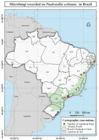
Number of microfungi associated with P. echinata in Brazilian states (AC - Acre, AL - Alagoas, AM - Amazonas, AP - Amapá, BA - Bahia, CE - Ceará, DF - Distrito Federal, ES - Espírito Santo, GO - Goiás, MA - Maranhão, MG - Minas Gerais, MS - Mato Grosso do Sul, MT - Mato Grosso, PA - Pará, PB - Paraíba, PE- Pernambuco, PI - Piauí, PR - Paraná, RJ- Rio de Janeiro, RN - Rio Grande do Norte, RO - Roraima, RR - Rondônia, RS - Rio Grande do Sul, SE - Sergipe, SC - Santa Catarina, SP - São Paulo, TO - Tocantins).
TAXONOMY
Camposporium paubrasiliae V.S.Alves & Gusmão, sp. nov.
MycoBank MB849818
Type: Brazil: Bahia: Feira de Santana, State University of de Feira de Santana, on decaying petioles of Paubrasilia echinata, 16/VIII/2021, ALVES V.S., HUEFS 263288, Holotype (slide preparation).
Etymology: paubrasiliae. Named based on the host Paubrasilia echinata.
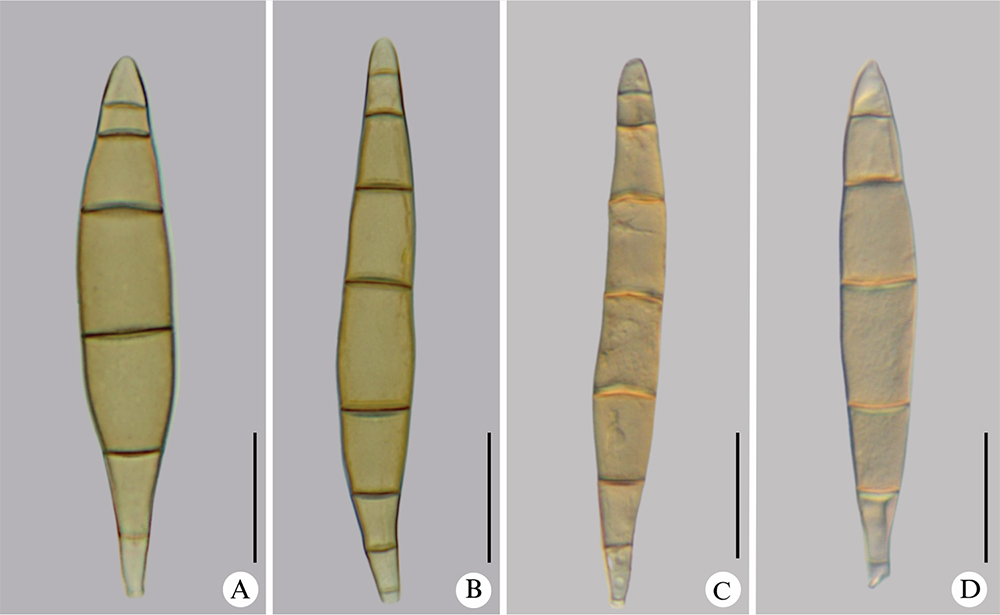
Description: Colonies on natural substrate effuse, pale brown. Mycelium immersed and superficial, hyphae septate, cylindrical, pale brown. Conidiophores micronematous, mononematous, very short, simple, unbranched, smooth, flexuous, pale brown, sometimes reduced to conidiogenous cells. Conidiogenous cells monoblastic, terminal, integrated, subhyaline, 10-22.5 × 2.5-6 µm. Conidia solitary, cylindrical, elongate, fusiform, 5-7-septate, smooth, rounded apex, truncate at the narrow base with conspicuous frills, pale brown at the middle cells, somewhat very pale brown at both 1-2 end cells, 77.5-117.5 × 10⁻¹⁵ µm. Rhexolytic secession.
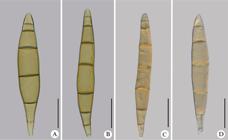
Camposporium paubrasiliae (HUEFS 263288 - Holotype). A - D Multiseptate conidia with rhexolytic secession (Scale bars: A-D = 20 μm).
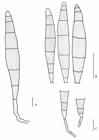
Schematic line drawing of Camposporium paubrasiliae (HUEFS 263288 - Holotype) A - C Multiseptate conidia; A- Conidium with conidiogenous cells. B-C Detail of the rhexolytic secession (Scale bars: A, C = 50; C = 20 μm).
Among the species with fusiform conidia, C. paubrasiliae shares similarities with C. fusisporum Whitton, McKenzie & K.D.Hyde and C. chinense Z.H.Xu, Jian Ma, X.G.Zhang & R.F.Castañeda. However, C. fusisporum has constricted conidia with 8-10 septa and 2-3 apical appendages (Whitton et al. 2002), whereas C. chinense has larger conidia with 9-12 septa and one apical appendage (Xu et al. 2021). In contrast, the species with micronematous conidiophores, such as C. multiseptatum D.F.Bao, Z.L.Luo, K.D.Hyde & H.Y.Su, can be easily distinguished because they possess fusiform to cylindrical conidia with 10-13 septa (Hyde et al. 2020).
Based on this revised perspective, we propose that the presence of an appendix should not be regarded as a definitive characteristic for delimiting Camposporium. This assertion is supported by the existence of species within the genus that lack appendices, such as C. ontariense Matsush., C. indicum P.Rag.Rao & D.Rao, and C. scolecosporum Matsush., and species in which the presence of appendices are facultative, such as C. japonicum Ichinoe, C.laundonii M.B.Ellis and C. quercicola Mercado, Heredia & J.Mena.
Xylomyces vesiculifer V.S.Alves & Gusmão, sp. nov.
MycoBank MB849820
Type: Brazil: Bahia: Feira de Santana, State University of de Feira de Santana, on decaying leaves of Paubrasilia echinata, 16/VI/2021, ALVES V.S., HUEFS 263291, Holotype (slide preparation).
Etymology: vesiculifer. Named based on the vesicle at the terminal cell of chlamydospore.
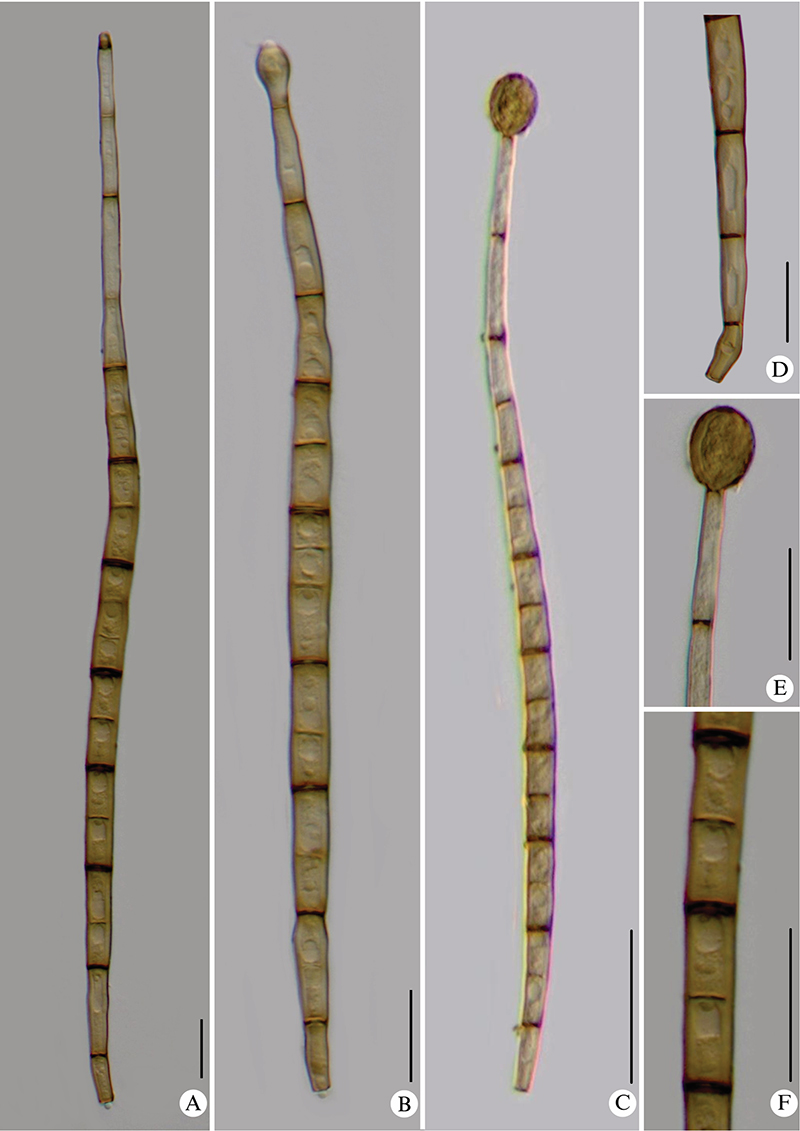
Description: Colonies on natural substrate effuse, brown to blackish. Mycelium mostly immersed and partly superficial, composed of septate, branched hyphae. Conidiophores and conidia lacking. Chlamydospores abundant, solitary, fusiform, spindle-shaped, terminal, rarely intercalary, straight or slightly curved, smooth, unbranched, with 7-20 septate, with thick and thin dark brown not constricted septa, terminal cells pale brown with a brown vesicle, truncated base, brown, 170 - 270 × 7.5 -10 µm.
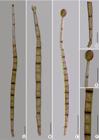
Xylomyces vesiculifer (HUEFS 263291- Holotype). A - F Chlamydopores; A - C Chlamydospores vesicule development; D-E Details of the base and vesicle; F- Detail of the septa; (Scale bars: A-F = 10 μm).
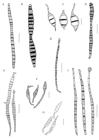
Schematic line drawing of Xylomyces ssp.; A- Xylomyces acerosisporus; B- X. aquaticus; C- X. elegans; D- X. foliicola; E- X. giganteus; F- X. punctatus; G- X. pusillus; H- X. rhizophorae; I- X. vesiculifer (Drawn at the Scale bars: A, B, D, E, I = 15 μm; C, F, G = 25 μm). Drawing based on Goh et al. (1997); Kohlmeyer & Volkmann-Kohlmeyer (1998); Cooper (2005); Almeida et al. (2012); Oliveira et al. (2015); Krause et al. (2020).
Among the species represented by Xylomyces, the only species that bears some resemblance to X. vesiculifer is X. acerosisporus (Oliveira et al. 2015), which exhibits chlamydospores without septal constrictions. However, X. vesiculifer differs with the presence of two types of septa, one thick and the other narrow, in addition to a distinct vesicle at the apex of the chlamydospores. Following several attempts to classify our material into different genera based on the observed characteristics, we chose to include it within Xylomyces. Currently, molecular data are available only for X. chlamydosporus (Suetrong et al. 2011); the other congeneric species require further molecular investigations.
New records
Junewangia lamma (Whitton, McKenzie & K.D.Hyde) W.A.Baker & Morgan-Jones, Mycotaxon 81: 310. 2002.
Examined material: Brazil: Bahia: Feira de Santana, State University of de Feira de Santana, on decaying leaves of Paubrasilia echinata, 16/VIII/2021, ALVES V.S. (HUEFS 263273; 263274).
Geographic distribution: Hong Kong (Whitton et al. 2000), Mexico (Heredia Abarca 2021), Brazil (this paper).
Monodictys abuensis (Chouhan & Panwar) V.Rao & de Hoog, Studies in Mycology, 28: 26, 1986.
Examined material: Brazil: Bahia: Feira de Santana, State University of de Feira de Santana, on dead fruit of Paubrasilia echinata, 17/VI/2021, col. ALVES.V. S. (HUEFS 263289).
Geographic distribution: Brazil (this paper), India (Rao & de Hoog 1986) Japan, and Mexico (GBIF 2023).
Phaeocandelabrum joseiturriagae R.F.Castañeda, Iturr., Heredia & M.Stadler, Mycotaxon 109: 228. 2009.
Examined material: Brazil: Bahia: Feira de Santana, State University of de Feira de Santana, on decaying leaves of Paubrasilia echinata, 10/VII/2021, ALVES V.S. (HUEFS 263286).
Geographic distribution: Brazil (Castañeda-Ruiz et al. 2009), New Zealand (Wilton 2023).
Sarcopodium circinatum Ehrenb., Sylv. mycol. berol. 23. 1818.
Examined material: Brazil: Bahia: Feira de Santana, State University of de Feira de Santana, on dead fruit of Paubrasilia echinata, 16/VI/2021, ALVES V.S. (HUEFS 263290).
Geographic distribution: Austria, Canada, Denmark, Germany, Ireland, Iceland, New Zealand, United Kingdom (GBIF 2023), Brazil (Leão-Ferreira et al. 2008), Cuba (Cybertruffle’s Robigalia 2023), Lithuania (Valiuškaitė 2002), Poland (Scheuer & Chlebicki 1997).
Sporidesmium altum (Preuss) M.B.Ellis, Mycol. Pap. 70: 46. 1958.
Examined material: Brazil: Bahia: Feira de Santana, State University of de Feira de Santana, on dead petioles of Paubrasilia echinata; 27/VII/2021, col. ALVES. V. (HUEFS 263276).
Geographic distribution: Austria, Brunei, United Kingdom, and Mexico (GBIF 2023), Brazil (this paper).
Tetraploa ellisii Cooke, Grevillea 8 (45): 12. 1879.
Examined material: Brazil: Bahia: Feira de Santana, State University of de Feira de Santana, on decaying fruit of Paubrasilia echinata, 23/VIII/2021, ALVES V.S. (HUEFS 263287).
Geographic distribution: Argentina, Brazil, India, Japan, Mexico, Morroco, United States of America, Zimbabwe (GBIF 2023).
Vermiculariopsiella arciculaPasqualetti & Zucconi, Mycotaxon 43: 1. 1992.
Examined material: Brazil: Bahia: Feira de Santana, State University of de Feira de Santana, on decaying leaves of Paubrasilia echinata, 10/VI/2021, ALVES V.S. (HUEFS 263283).
Geographic distribution: Italy (Pasqualetti & Zucconi 1992), Brazil (this paper).
Discussion
With the increasing awareness of the threats to biodiversity, there is a pressing need to expand efforts and assessment strategies to address the extinction risks faced by microfungi and endemic plants (Dulymamode et al. 2001). Endemic plants host a rich biodiversity of rare and endemic microfungi that rely on plants for nutrition and habitat (Kier et al. 2009; Keesing et al. 2010; Zachow et al. 2016). The diversity of microfungi associated with endemic plants, particularly in tropical countries, remains poorly understood (Siboe et al. 2000). Therefore, developing inventories of microfungi associated with endemic plants will significantly contribute to species conservation efforts.
Despite being an endangered plant species, P. echinata has received limited attention concerning its associated microfungi. It serves as a substrate that supports a considerable number of common and rare species, including newly discovered species. Grandi & Silva (2003; 2006) and Silva & Grandi (2008) surveyed the hyphomycetes responsible for leaf litter decomposition in P. echinata. They reported rare species and new occurrences of species from Chaetendophragmia, Sporidesmium, and Pseudodictyosporium in Brazil.
Microfungi reported as new occurrences in the Americas are considered rare. For instance, Vermiculariopsiella arcicula was only described on dead leaves of Pinus radiata D.Don in Italy in 1992 (Pasqualetti & Zucconi 1992); Junewangia lamma was found in Mexico and Hong Kong (Whitton et al. 2000; Heredia Abarca 2021). Crous et al. (2016) described a novel genus named Adautomilanezia Gusmão, S.S.Silva, Fiúza, L.A.Costa & T.A.B.Santos, which was isolated from decaying branches and obtained within the study area. The genera Aspergillus, Fusarium, and Drechslera are cosmopolitan fungi commonly encountered in tropical regions; they are often saprophytes, epiphytes, and plant pathogens (Urdaneta et al. 2002; Urdaneta & Delgado 2007). Gyrothrix and Thozetella are commonly found in the leaf litter of both temperate and tropical plants (Silva & Grandi 2008; Silva & Grandi 2013); this could account for their greater representation in P. echinata.
Evaluation of the distribution of microfungi and the types of substrates associated with P. echinata indicated that the highest diversity of taxa and new records are observed in the decomposing leaf litter. Among plant substrates, decomposing leaves host the most fungi because of the nutrients they provide and the available biomass (Meguro et al. 1979). Therefore, compiling a list of microfungal taxa isolated from P. echinata, an endemic plant at risk of extinction, helps assess the lesser-known fungal diversity and provides new perspectives for the conservation of endemic microfungi and plants.
Acknowledgments
The authors express their gratitude to the Laboratory of Mycology (LAMIC) at the State University of Feira de Santana (UEFS) for providing the necessary infrastructure. VSA would like to thank the Graduate Program in Biology of Fungi at UFPE. This study was financed in part by the Coordenação de Aperfeiçoamento de Pessoal de Nível Superior - Brasil (CAPES) - Finance Code 001. LFPG acknowledges the National Council for Scientific and Technological Development (CNPq) for the grant (Proc. 312984/2018-9).
References
- Almeida DAC, Barbosa FR, Gusmão LFP. 2012. Alguns fungos conidiais aquáticos-facultativos do bioma Caatinga. Acta Botanica Brasilica 26: 924-932.
- Araújo CLF, Gramacho KP, Bezerra JL. 2005. Reestudo de Anthomyces brasiliensis em Caesalpinia echinata no Brasil. Fitopatologia Brasileira 30: 510-515.
- Baker WA, Partridge EC, Morgan-Jones G. 2002. Notes on Hyphomycetes. LXXXV. Junewangia, a genus in which to classify four Acrodictys species and a new taxon. Mycotaxon 81: 293-319.
- Bezerra JL, Costa JCB. 2001. Anthomyces brasiliensis parasitando folhas de pau-brasil, na Bahia. Fitopatologia Brasileira 26: 351-352.
- Calabon MS, Jones EG, Boonmee S, Doilom M, Lumyong S, Hyde KD. 2021. Five novel freshwater ascomycetes indicate high undiscovered diversity in lotic habitats in Thailand. Journal of Fungi 7: 117.
- Campos FF, Sales Junior PA, Romanha AJ et al 2015. Bioactive endophytic fungi isolated from Caesalpinia echinata Lam. (Brazilwood) and identification of beauvericin as a trypanocidal metabolite from Fusarium sp. Memórias do Instituto Oswaldo Cruz 110: 65-74.
- Castañeda-Ruiz RF, Gusmão LFP, Cruz ACR et al 2009. Phaeocandelabrum, a new genus of anamorphic fungi to accommodate Sopagraha elegans and two new species, Ph callisporum and Ph. joseiturriagae Mycotaxon 109: 221-232.
- Castañeda-Ruiz RF, Heredia G, Gusmão LFP, Li DW. 2016. Fungal diversity of Central and South America. In: Li DW (ed.). Biology of microfungi. Berlin, Springer. p. 197-217.
-
CNCFlora - Centro Nacional de Conservação da Flora. 2012. Caesalpinia echinata http://cncflora.jbrj.gov.br/portal/pt-br/profile/Caesalpinia%20echinata 7 Feb. 2023.
» http://cncflora.jbrj.gov.br/portal/pt-br/profile/Caesalpinia%20echinata - Cooper JA. 2005. New Zealand hyphomycete fungi: Additional records, new species, and notes on interesting collections. New Zealand Journal of Botany 43: 323-349.
- Crous PW, Wingfield MJ, Burgess TI et al 2016. Fungal Planet description sheets: 469-557. Persoonia 37: 218-403.
-
Cybertruffle’s Robigalia. 2023. Observations of fungi and their associated organisms. https://www.cybertruffle.org.uk/robigalia/eng/index.htm 04 Nov. 2023.
» https://www.cybertruffle.org.uk/robigalia/eng/index.htm - Dong W, Wang B, Hyde KD et al 2020. Freshwater Dothideomycetes. Fungal Diversity 105: 319-575.
- Dulymamode R, Cannon PF, Peerally A. 2001. Fungi on endemic plants of Mauritius. Mycological Research 105: 1472-1479.
- Esser LF, Saraiva DD, Jarenkow JA. 2019. Future uncertainties for the distribution and conservation of Paubrasilia echinata under climate change. Acta Botanica Brasilica 33: 770-776.
-
Farr DF, Rossman AY. 2023. Mycology and Nematology Genetic Diversity and Biology Laboratory: Beltsville, MD. https://nt.ars-grin.gov/fungaldatabases 07 Feb 2023.
» https://nt.ars-grin.gov/fungaldatabases -
GBIF - Global Biodiversity Information Facility. 2023. Free and open access to biodiversity data. https://www.gbif.org/ 07 Feb 2023.
» https://www.gbif.org/ - Goh TK, Ho WH, Hyde KD, Tsui KM. 1997. Four new species of Xylomyces from submerged wood. Mycological Research 101: 1323-1328.
- Goos RD, Brooks RD, Lamore BJ. 1977. An undescribed hyphomycete from wood submerged in a Rhode Island stream. Mycologia 69: 280-286.
- Grandi RAP, Silva TDV. 2003. Hyphomycetes sobre folhas em decomposição de Caesalpinia echinata Lam.: ocorrências novas para o Brasil. Brazilian Journal of Botany 26: 489-493.
- Grandi RAP, Silva TDV. 2006. Fungos anamorfos decompositores do folhedo de Caesalpinia echinata Lam. Brazilian Journal of Botany 29: 275-287.
- Guatimosim E, Firmino AL, Bezerra JL, Pereira OL, Barreto RW, Crous PW. 2015. Towards a phylogenetic reappraisal of Parmulariaceae and Asterinaceae (Dothideomycetes). Persoonia-Molecular Phylogeny and Evolution of Fungi 35: 230-241.
- Harkness HW. 1884. New species of California Fungi. Bulletin of the California Academy of Sciences 1: 29-47.
-
Heredia Abarca G. 2021. Inventario taxonómico de los hongos conidales saprobios del parque Yumka' en Villahermosa, Tabasco. https://doi.org/10.15468/owjbjv/ 20 July 2023.
» https://doi.org/10.15468/owjbjv/ - Hyde KD, Dong Y, Phookamsak R et al 2020. Fungal Diversity Notes 1151-1276: Taxonomic and phylogenetic contributions on genera and species of fungal taxa. Fungal Diversity 100: 5-277.
-
IBAMA - Instituto Brasileiro do Meio Ambiente e dos Recursos Naturais Renováveis. 2022. Lista oficial de espécies da flora brasileira ameaçadas de extinção. Anexo I. Portaria MMA 148/2022. https://www.mma.gov.br 7 Nov. 2023.
» https://www.mma.gov.br -
IBGE - Instituto Brasileiro de Geografia e Estatística. 2023. Organização de território: Malhas territoriais. https://www.ibge.gov.br 22 June 2023.
» https://www.ibge.gov.br -
Index Fungorum. 2023. CABI databases. https://www.indexfungorum.org/ 05 July 2023.
» https://www.indexfungorum.org/ -
IUCN - International Union for Conservation of Nature. 2023. The IUCN Red List of Threatened Species (Version 2022-2). https://www.iucnredlist.org 6 July 2023.
» https://www.iucnredlist.org - Keesing F, Belden LK, Daszak P et al 2010. Impacts of biodiversity on the emergence and transmission of infectious diseases. Nature 468: 647-52.
- Kier G, Kreft H, Lee TM et al 2009. A global assessment of endemism and species richness across island and mainland regions. Proceedings of the National Academy of Sciences USA 106: 9322-9327.
- Kohlmeyer J, Volkmann-Kohlmeyer B. 1998. A new marine Xylomyces on Rhizophora from the Caribbean and Hawaii. Fungal Diversity 1: 159-164.
- Koukol O, Delgado G. 2021. Why morphology matters: The negative consequences of hasty descriptions of putative novelties in asexual ascomycetes. IMA Fungus 12: 26. doi: 10.1186/s43008-021-00073-z.
- Krause LM, Fiuza PO, Barbosa FR. 2020. Xylomyces (Aliquandostipitaceae, Jahnulales) freshwater hyphomycetes from the Brazilian Amazon. Nova Hedwigia 111: 187-197.
- Leão-Ferreira SM, Cruz ACRD, Castaneda Ruiz RF, Gusmão LFP. 2008. Conidial fungi from the semi-arid Caatinga biome of Brazil. Brachysporiellina fecunda sp. nov. and some new records for Neotropica. Mycotaxon 104: 309-312.
- Lima TEF, Cavalcanti MS. 2014. Fungos endófitos e do filoplano de Caesalpinia echinata Lam. da Estação Ecológica de Tapacurá, PE. Agrotrópica 26: 43-50.
- Lisboa-Padulla T, Moraes MHDD, Menten JOM, Barbedo C. 2009. Tratamento de sementes de pau-brasil com fungicidas: Efeito na incidência de fungos, germinação e transmissão de fungos pelas sementes. Summa Phytopathologica 35: 148-150.
- Machado MABL. 2009. Isolamento, caracterização e avaliação da atividade antimicrobiana de fungos endofíticos de Caesalpinia echinata Lam. (Leguminosae-Caesalpinioideae). PhD Thesis, Universidade Federal de Alagoas, Brazil.
- Meguro M, Vinueza GN, Delitti WBC. 1979. Ciclagem de nutrientes minerais na mata mesófila secundária - São Paulo. I - Produção e conteúdo de nutrientes minerais no folhedo. Boletim de Botânica da Universidade de São Paulo 8: 7-20.
- Mendes MAS, Silva VL, Dianese JC et al 1998. Fungos em plantas no Brasil. Brasília, Embrapa Produção de Informação/Embrapa Recursos Genéticos e Biotecnologia.
- Mendes MAS, Urben AF, Dianese JC. 2019. Fungos em Plantas no Brasil. 2nd edn. Ampliada e revisada. Brasília, Escola Nacional de Gestão Agropecuária. 970 p.
- Moreira CG. 2011. Sucessão de hifomicetos e avaliação da biomassa fúngica durante a decomposição de folhedo de Caesalpinia echinata Lam. e Campomanesia phaea (O. Berg.) Landrum submersos em lagos artificiais na cidade de São Paulo, SP. PhD Thesis, Instituto de Botânica da Secretaria de Estado do Meio Ambiente, Brazil.
- Nic Lughadha E, Bachman SP, Leão TC et al 2020. Extinction risk and threats to plants and fungi. Plants, People, Planet 2: 389-408.
- Oliveira MS, Malosso E, Barbosa MA, Araújo MA, Castañeda-Ruiz RF. 2015. Xylomyces acerosisporus sp. nov. from submerged leaves from Brazil. Mycotaxon 130: 875-878.
- Padulla TL, Moraes MHDD, Barbedo CJ, Borges IF, Menten JOM, Pascholati SF. 2010. Detecção de fungos em sementes de pau-brasil (Caesalpinia echinata) coletadas durante sua formação e dispersão. Revista Brasileira de Sementes 32: 154-159.
- Pasqualetti M, Zucconi L. 1992. Vermicullariopsiella arcicula, a new Dematiaceous Hyphomycetes from Sardinia, Italy. Mycotaxon 43: 1-7.
- Rao V, De Hoog GS. 1986. New or critical Hyphomycetes from India. Studies in Mycology 28: 1-84.
-
Robert V, Stegehuis G, Stalpers J. 2005. The MycoBank engine and related databases. https://www.MycoBank.org/ 19 June 2023.
» https://www.MycoBank.org/ - Scheuer C, Chlebicki A. 1997. Recent collections of miscellaneous microfungi from South Poland. Acta Mycologica 32: 147-172.
- Siboe GM, Kirk PM, David JC, Cannon PF. 2000. Necrotrophic fungi from Kenyan endemic and rare plants. Sydowia 52: 286-304.
- Silva JL, Cavalcanti MA. 2014. Corniculariella brasiliensis, a new species of coelomycetes in the rhizosphere of Caesalpinia echinata (Fabaceae, Caesalpinioideae) in Brazil. Phytotaxa 178: 197-204.
- Silva PD, Grandi RAP. 2008. Hyphomycetes sobre o folhedo de Caesalpinia echinata Lam. com duas novas citações para o Brasil. Hoehnea 35: 477-488.
- Silva PD, Grandi RAP. 2010. Chlamydopsis: An emendment of the genus and its type species. Mycotaxon 114: 43-47.
- Silva PD, Grandi RAP. 2013. Taxonomic studies of Thozetella Kuntze (anamorphic Chaetosphaeriaceae, Ascomycota). Nova Hedwigia 97: 361-399
- Suetrong S, Boonyuen N, Pang KL et al 2011. A taxonomic revision and phylogenetic reconstruction of the Jahnulales (Dothideomycetes), and the new family Manglicolaceae. Fungal Diversity 51: 163-188.
- Tanaka K, Hirayama K, Yonezawa H et al 2015. Revision on the Massarineae (Pleosporales, Dothideomycetes). Studies in Mycology 82: 75-136.
- Urdaneta LM, Delgado AE. 2007. Identificación de la micobiota del filoplano del cacaotero (Theobroma cacao L.), en el municipio Carraciolo Parra Olmedo, estado Mérida, Venezuela. Revista de la Facultad de Agronomía 24: 47-68.
- Urdaneta LM, Delgado AE, Sosa L, Piñeiro A. 2002. Micobiota del filoplano en plátano Harton (Musa AAB), en el municipio Francisco Javier Pulgar del estado Zulia, Venezuela¹. Revista de la Facultad de Agronomía 19: 95-108.
- Valiuškaitė A. 2002. Micromycetes infecting stone fruit trees. Biologija 1: 18-21.
-
Wilton A. 2023. New Zealand Fungal and Plant Disease Collection (PDD) . https://doi.org/10.15468/nrq12b 19 July 2023.
» https://doi.org/10.15468/nrq12b - Whitton SR, McKenzie EHC, Hyde KD. 2000. Microfungi on the Pandanaceae: Acrodictys, with two new species. Fungal Diversity 4: 159-169.
- Whitton SR, McKenzie EHC, Hyde KD. 2002. Microfungi on the Pandanaceae: Two new species of Camposporium and key to the genus. Fungal Diversity 11: 177-187.
- Xu ZH, Sun WX, Shi XG et al 2021. Camposporium chinense sp. nov. from Jiangxi, China. Mycotaxon 136: 73-78.
- Zachow C, Berg C, Müller H, Monk J, Berg G. 2016. Endemic plants harbour specific Trichoderma communities with an exceptional potential for biocontrol of phytopathogens. Journal of Biotechnology 235: 162-170.

 Notes: Camposporium antennatum Harkn. (
 Notes: The genus Xylomyces