 Ontogenetic Characterization of the Mangaba Pericarp (Hancornia speciosa Gomes) (Apocynaceae)
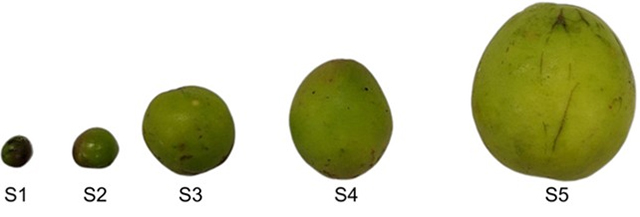
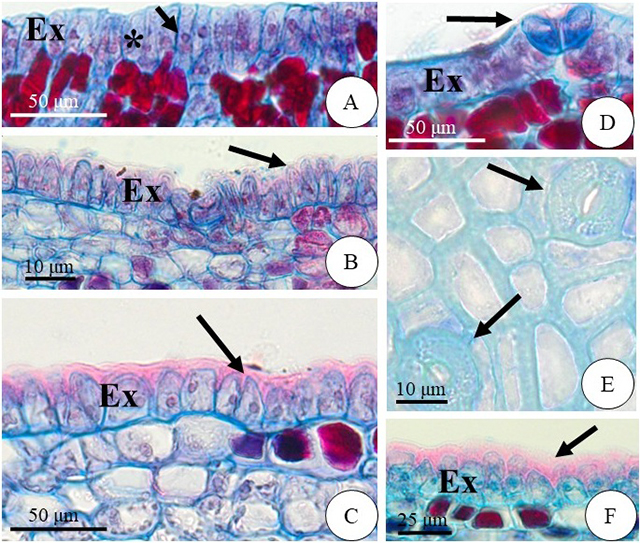
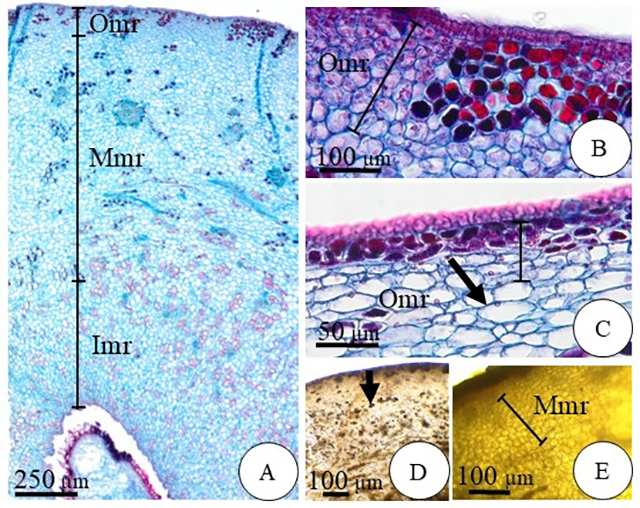
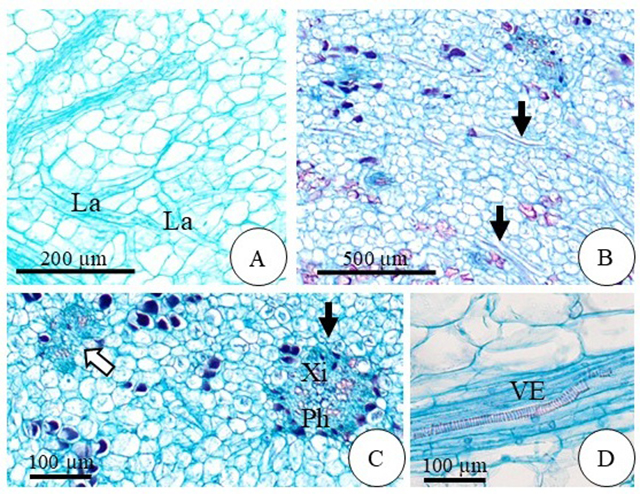
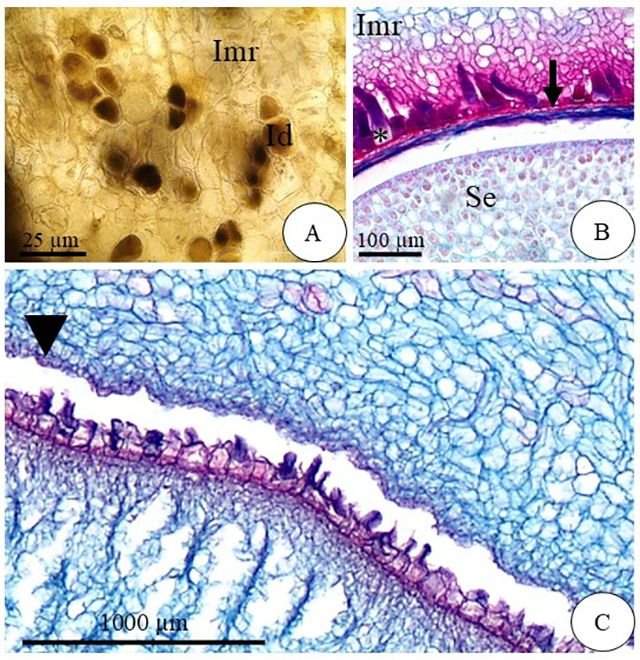
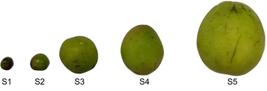
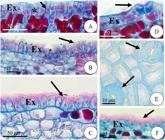
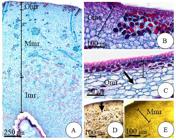
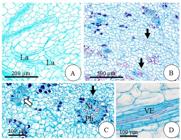
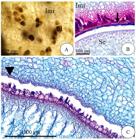
The anatomical characterization of mangaba fruit at different developmental stages remains largely unexplored. This study aims to describe the anatomical features of the mangaba pericarp across distinct phenological stages. Conventional anatomical techniques were employed for fruit characterization, along with histochemical assays. Throughout all developmental stages, the exocarp remains uniseriate and bears stomata and papillae; however, only the cuticle undergoes substantial changes, being thin during the early stages and becoming thicker as development progresses. As ripening progresses, the cuticle becomes thicker. The mesocarp is divided into three regions: outer, middle, and inner. In the outer region, the parenchyma cells elongate in the periclinal direction and display a denser organization. Idioblasts containing phenolic compounds are more abundant at the onset of fruit development but decrease as the fruit matures. Articulated and anastomosed laticifers occur throughout the middle mesocarp, along with concentric and collateral vascular bundles, whose vessel elements exhibit a helical pattern. In the endocarp, elongated trichomes develop as the fruit ripens. The pericarp analysis enabled the description of key structures associated with the survival and perpetuation of the species. Moreover, it provides valuable insights for postharvest studies of the fruit.
Keywords:
anatomy; Apocynaceae; Cerrado; Goiás; native fruit
 Thumbnail
 Thumbnail
 Thumbnail
 Thumbnail
 Thumbnail