
 Aquatic plants and where to find them: terms, concepts, and classifications of plants adapted to aquatic environments and their margins
Abstract
Understanding and conserving wetland vegetation requires a unified framework for classifying plants adapted to aquatic environments. Numerous taxonomic, limnological, and ecological studies have endeavored to establish such a framework. From Eugenius Warming's pioneering work to the latest classifications, this paper provides a historical overview of the various terms, concepts, and criteria used to categorize these plants, considering environmental factors, evolutionary relationships, and functional traits. The biological forms associated with adaptations to flooding, including floating and submerged species, offer valuable insights into the diverse life strategies of aquatic plants within the land-water continuum. This review thoroughly examines the definition of amphibious plants, a complex group that reflects the diversity of landscapes in which they occur, often resulting in sampling biases over time. These plants, reliant on water to complete their life cycle, are adapted to fluctuating water levels typical of waterway margins and exhibit phenotypic plasticity in response to varying degrees of soil water saturation. Finally, we discuss key considerations for sampling techniques to better investigate amphibious plants, such as sampling in different seasons and analyzing hydrological fluctuations in the studied region.
Keywords:
amphibious plants; aquatic macrophytes; classification criteria; hydrophytes; life forms
Introduction
Despite studies on taxonomy and ecology of aquatic plants dating back to the end of the 19th century, conceptual and terminological debates persist among botanists, ecologists, and limnologists (Sculthorpe, 1967; Cook, 1996; Wetzel, 2001; Chambers et al., 2008). Nowadays, terms such as ‘hydrophytes’ or ‘aquatic macrophytes’ have been synonymous with aquatic plants, although their definitions vary depending on the author. This issue is closely related to the criteria used to define aquatic plants, which are almost always aligned with the research focus of the investigator studying these plants (e.g., taxonomy, systematics, physiology, morphoanatomy, and ecology).
Another focal point of theoretical and conceptual debate among specialists concerns the classification and circumscription of life forms that can be manifested by these plants, especially those inhabiting the margins of water bodies (Oyedeji & Abowei, 2012). Again, various practical criteria are applied to define and delimit each life form, the principal one being associated with the plant position in the water column (Piedade et al., 2018; Pivari et al., 2019). This criterion, however, can be challenging to use in field studies since the position of species along the depth gradient is invariably dependent on the temporal flood regime, drawdown, and drought patterns of the ecosystem. As a result, a series of implications linked to the circumscription of the biological forms of aquatic plants has been reported by specialists, such as the high number of terrestrial plants incorrectly classified as amphibious (Moura-Júnior & Cotarelli, 2019). Moreover, many species are misclassified into different life forms, although this applies to some species due to their morphological plasticity. Following the plant cycle is not always possible, but it would be ideal for a more precise classification (Piedade et al., 2018).
Thus, taxonomic, ecological, or morphophysiological criteria adopted to circumscribe aquatic plants and their life forms directly influence the design of collection methods, affect the perceived taxonomic diversity of these plants on the planet, and impact the findings of studies with these organisms. In this text, we provide a historical overview of terminologies, inclusion criteria, and concepts about the plants adapted to aquatic environments, including the circumscription of their life forms, and we outline some precautions that should be observed when collecting aquatic plants, especially those classified as amphibious.
About the taxonomic diversity among the aquatic plants: who are the plants living in the water?
The first classification to include the aquatic plants was made by Eugenius Warming (1909), a Danish botanist who wrote the book Oecology of plants (Warming, 1909). In that work, the author used environmental factors as criteria for classifying plant species; therefore, he is considered one of the founders of Plant Ecology. This scientist lived in Brazil between 1863 and 1866, when he worked in Lagoa Santa, Minas Gerais. Hence, we can say that the Brazilian vegetation, especially the Cerrado, influenced his work (Cavassan & Lara Weiser, 2020).
Warming (1909) described three categories based on the criterion of water availability in the substrate (soil, gravel, sand, mud): Hydrophytes - species that live in the water, partially or totally submerged; Xerophytes - species that inhabit environments with low water availability: drought, acidity, freezing, salinity; and Mesophytes - other species that do not fit into the previous categories.
It is noteworthy that the hydrophyte species described by Warming (1909) depend entirely on water for survival. This group also includes species that inhabit environments where the soil remains waterlogged even in the dry season. Warming (1909) had already noted the variety of forms found among these plants, so he created two subcategories since there was no criterion for distinguishing species' relationships with the substrate. They are: Floating/free floating - species that do not root in the substrate and can be totally submerged or floating on the surface; and Fixed - species rooted in the substrate, whether totally or partially submerged.
Within the subcategory ‘floating/free floating’, the author included planktonic microalgae (microphytes) and free-floating angiosperms (macrophytes). Meanwhile, the subcategory ‘fixed' includes rooted vascular plants (macrophytes) and periphytic diatomaceous algae (microphytes). Thus, the subcategories do not consider the taxonomic group or its phylogenetic and evolutionary relations (Warming, 1909).
Later, Cook et al. (1974), in the book Water Plants of the World, used the term ‘macrophyte’, which includes the freshwater macroalgae, bryophytes, and all vascular plants. The authors defined that the aquatic macrophytes could be described as: "Plants visible to the naked eye, whose photosynthesizing active parts are permanently, or for several months every year, totally, or partially submerged in freshwater, or yet, floating on it" (Cook et al., 1974, highlights ours).
The definition of Cook and collaborators was restricted to freshwater photosynthesizing organisms. However, that concept was widened by Irgang and collaborators in 1984, for brackish water organisms, since these researchers described the species of the coastal plain water bodies of Rio Grande do Sul, including estuarine areas (Irgang et al., 1984). The term ‘aquatic macrophytes’ spread widely in Brazil among researchers of aquatic ecosystems involving various areas: systematics, ecology, and limnology.
Going back in time, we highlight the work of Agnes Arber, who published a book on aquatic plants in 1920, about 10 years after Warming. Arber spent most of her life in Cambridge, England, where she lectured in a women's school and investigated the anatomy and the morphology of Monocotyledons, the history of Botany, and the philosophy of biology. She wrote 218 articles and eight books. As she was a plant illustrator, she illustrated her works. The book Water Plants: A Study of Aquatic Angiosperms was her second, wherein she presents a comparative study of aquatic plants, analyzing differences in their morphology (Arber, 1920). Her study was the first to provide a general characterization and interpretation of the vegetative structure of aquatic plants. Curiously, in that work, she refers only to aquatic angiosperms, flowering plants that evolved from terrestrial into aquatic environments and occupy continental wetlands. She excluded the other groups of plants (bryophytes, ferns, lycophytes, and gymnosperms) and algae, applying the evolutionary criterion.
The evolutionary criterion to group the aquatic plants was also used by other authors, such as Sculthorpe (1967) and Barrett et al. (1993), who limited the use of the term to vascular aquatic plants (excluding bryophytes). Another controversy concerns including arboreal species, such as 'Igapó' trees, in the Amazon Forest. The revision of the concept of hydrophyte made by Tiner (1991) includes herbaceous species, as well as species of trees and woody shrubs that inhabit environments with flooded soil, such as swamps, mangroves, marshes, and bogs.
In that context, in northern Brazil, the researchers Junk and Piedade (1993) coined the term ‘aquatic herbaceous plants’ to distinguish the herbaceous species from the woody ones that possess a high diversity in Amazonian floodable areas, with over 1.000 species (Junk & Piedade, 1993). That terminology has been used until now (Piedade et al., 2018; Lopes et al., 2021). Nonetheless, a significant question remains: what should be included as aquatic plants?
Bolton (2016) wanted to clarify this problem since he faced criticism from editors and reviewers of scientific journals. The controversy was that some researchers believed that the term 'plant' could not be used for groups of organisms that included algae. He explains that Aquatic Botanic includes studies of groups of all photosynthesizing organisms that inhabit aquatic environments without restrictions. He also explains that biological studies are full of examples of artificial groupings of organisms that depend exclusively on the objectives of each researcher or team. The ‘Algae’ group is an example of organisms not related phylogenetically. The Fungi Kingdom also remains included in studies of Botanical Science for the same purpose. Thus, for Bolton (2016), the term 'Planta' is not required to be a synonym of ‘Plantae Kingdom’.
The denomination of the group of aquatic plants applies the functional criterion, not the evolutionary one. But it is orthogonal to phylogenetic classification and does not conflict with modern systematic frameworks. Many algal lineages are primarily aquatic, whereas lineages of land plants that occupy aquatic environments are typically secondarily aquatic, having returned to water after evolving in terrestrial habitats (Cook, 1999). Recognizing this distinction allows researchers to adopt a functional perspective without disregarding phylogenetic relationships. Thus, we conclude it is correct to use 'aquatic plants' in studies of photosynthesizing organisms in the aquatic environment, even when it includes species of algae and arboreal angiosperms. Hence, the terms ‘hydrophyte’, ‘aquatic macrophyte’, and ‘aquatic plant’ are scientifically accepted, as long as the researchers make a short explanation of the definition and the classification criteria they adopted (e.g., Arber, 1920; Irgang et al., 1984; Tiner, 1991).
In this context, the publications produced by members of Aquatic Plants Specialists Group (Núcleo de Especialistas em Plantas Aquáticas - NEPA) have used the term ‘aquatic plants’ because it is less restrictive. However, the conceptual challenges do not end here.
On the morphological diversity of aquatic plants: what do we know about the classification of life forms?
The aquatic plants constitute a very heterogeneous group of species with various adaptations to the flooding conditions and/or soil water saturation, as well as different degrees of tolerance to water level variations (Cronk & Fennessy, 2001). Because of these characteristics, the species exhibit life forms or distinct biological forms, so in one extreme grow emergent or sometimes submerged, and in the other, those living entirely restricted to the subaquatic environment (Thomaz & Esteves, 2011).
Recalling the work of the botanist Agnes Arber (1920), who recognized that along the land-water continuum a high diversity of life forms is found, she felt the need to create more subcategories of hydrophytes according to their survival strategies in the water, beyond those fixed to the substrate and the free-floating , previously described by Warming (1909). Within the substrate fixation category, Arber proposed six other subcategories following the criterion of types of leaves and their occurrence in the terrestrial environment: plants that are essentially terrestrial, but capable of living submerged without very marked adaptations in their leaves; plants that sometimes occur in the terrestrial environment, but when submerged, produce distinct leaves; plants that produce three types of leaves (submerged, floating, and aerial), according to the flooding condition; plants that can, in some situations, occur in the terrestrial environment, but are generally submerged, with creeping stems or rhizomes without floating leaves; plants that can, in some situations, occur in the terrestrial environment, but are much more common as submerged, with congested (short) stems and very elongated linear leaves; and plants that are entirely submerged.
In turn, Irgang and collaborators proposed in 1984 a classification based on the Danish botanist Raunkiaer’s system, whose biological forms were adapted to aquatic vegetation (Irgang et al., 1984). The classification system of biological forms proposed by Raunkiaer (1934) is based on the morphology and the position of the resprouting buds of plants during the unfavorable season. Raunkier first studied species of temperate regions where the unfavorable season was the rigorous winter, when burial by snow and ice occurred. He observed that the plants have different regrowth strategies in spring after defrosting. Therefore, he highlighted the localization of the stem axillary buds as a classification criterion. He noted it was primordial for the survival of plants during the cold season that the buds were protected, and that the harsher the climate, the lower the vegetation and the more congested the stems, until they became subterranean (cryptophytes). That phenomenon was observed as much in terrestrial as in aquatic species. Therefore, he framed helophytes (plants that live in waterlogged soil) and hydrophytes (plants that live exclusively in water), as subtypes within the cryptophytes (Raunkiaer, 1934). Given this and based on the water level and plant habit, and its interaction with the water body, Irgang et al. (1984) idealized the following life forms: Amphibious - life cycle in the water, life on the margins of water bodies; Emergent - roots fixed on the bottom substrate but emerged aerial parts; Fixed floating - roots fixed on the bottom substrate and floating leaves; Free floating - the entire plant floating; Fixed submerged - roots fixed on the bottom substrate, and the entire plant submerged; Free submerged - the entire plant submerged without fixation on the substrate; and Epiphytes - rooted on other aquatic plants.
It is worth pointing out that epiphytes should not be confused with vines (a category used by Irgang & Gastal, 1996). Both grow over other aquatic plants, but vines are rooted in the soil and epiphytes on other plants. Irgang et al. (1984) pointed out that the same species can manifest more than one life form. Such variation may occur in different life phases of the same individual (between the juvenile and the adult phases) (Fig. 1), or due to the variations in environmental conditions that different populations of the same species undergo (Irgang et al., 1984).

A: Representation of the life cycle of Pontederia azurea: 1. Rooted submerged juvenile phase; 2. Transition to fixed floating; 3. Fertile fixed floating; Fertile free floating; B, C, D, and E. Photographs of the same species in different phases. Illustration: Jefferson Cruz, photographs B and C: Francieli Peter-da-Silveira, D and E: Jefferson Cruz.
More recently, an eighth category was added by Pivari et al. (2011): 'rafted', referring to species fixed on the organic substrate - histosol - forming floating meadows found in the Brazilian seasonally flooded plain Pantanal (locally called 'baceiros' or 'batumes'), Amazonia ('matupás'), and in perennial lakes of other regions of Brazil, such as the lacustrine system of Doce River, in Minas Gerais state. A study on the Pantanal by Pott and Pott (2003) showed a scheme of plant succession from Cyperus blepharoleptos Steud. growing on Salvinia spp. to the floating mat with shrubs and treelets; additionally, Pott and Pott (2021) depicted the build-up of the floating islet.
It is worth highlighting that Irgang et al. (1984) distinguished emergent from amphibious species, since the first inhabit permanently flooded or waterlogged soils, while the latter survive in land-water habitats undergoing periods of drought and flood, also called wet-and-dry ecosystems. The authors explain that amphibious plants are considered aquatic plants since at least one phase of their life cycle depends on water.
Pivari et al. (2024) added possible biological forms for Brazilian aquatic plants. They proposed two novel representations: one illustrating a lake with flood pulse variation up to 2 m and another with a higher amplitude, of over 10 m (Fig. 2). The latter includes trees, treelets, and palms as amphibious plants, and exemplifies what occurs in forests of floodplains and 'igapós' in Amazonia. It is worth pointing out that for these environments, Piedade et al. (2018) define emergent herbs as “plants rooted in the soil whose growth keeps up with the water rise”, citing various grasses and robust herbs as examples.

Representation of biological forms of aquatic plants of Brazil: A. Systems with slight water level variation; B. Systems with high water level variation. Xyris jupicai; Ludwigia decurrens; 3. Sagittaria rhombifolia; 4. Montrichardia arborescens; 5. Nymphaea gardneriana; 6. Ludwigia sedioides; 7. Lemna aequinoctialis; 8. Salvinia auriculata; 9. Cabomba furcata; 10. Mayaca fluviatilis; 11. Utricularia breviscapa; 12. Cyperus blepharoleptos (Oxycaryum cubense); 13. Limnocharis flava; 14. Ludwigia nervosa; 15. Cecropia pachystachya; 16. Ceiba pentandra; 17. Pseudobombax munguba; 18. Triplaris surinamensis; 19. Bactris riparia; 20. Aeschynomene sensitiva; 21. Paspalum repens; 22. Oryza grandiglumis; 23. Echinochloa polystachya; 24. Costus arabicus; 25. Luffa operculata; 26. Victoria amazonica; 27. Pontederia rotundifolia; 28. Ricciocarpos natans; 29. Pontederia azurea; 30. Pistia stratiotes; 31. Ceratopteris thalictroides; 32. Utricularia foliosa; 33. Ceratophyllum muricatum; 34. Wolffiella welwitschii; 35. Utricularia gibba; 36. Montrichardia linifera; 37. Cecropia latiloba; 38. Cyclosorus interruptus; 39. Ludwigia affinis. Illustration Jefferson Cruz, adapted from Pivari et al. 2024. A and B are on different scales.
On the diversity on the margin of water bodies: who are the amphibious plants?
The classification of life forms is frequently utilized in works on aquatic plants in Brazil (Pott & Pott, 2000; Thomaz & Esteves, 2011). However, the amphibious life form is the most controversial. It remains a challenge for researchers to include the species of nearby habitats (land-water) in this category, which compromises the life cycle criterion and makes it difficult to verify during field sampling depending on the season.
A very heterogeneous group of species is observed on wetland margins under conditions of intermittent flooding, including plants that grow in varying degrees of either wet or dry soil (Tiner, 2017). Since the limits between terrestrial and aquatic environments are not stable, but are marked by fluctuations in water level, some species may be considered amphibious, while typically terrestrial species occupying adjacent areas may occasionally extend into aquatic habitats (Preston & Croft, 1997).
Fluctuations in water level may confound investigators (Thomaz & Esteves, 2011), and variability in pluviometry is one of the key factors that must be considered when collecting data in flood-prone environments. During drought periods, amphibious plants may be incorrectly classified as terrestrial species. In contrast, during flooding events, rapid increases in water level caused by rainfall may submerge many terrestrial plants (Fassett, 2006). Nonetheless, some terrestrial species can exhibit varying degrees of tolerance to flooding and aquatic conditions (Paz & Bove, 2007). Consequently, transitional land-water zones encompass a wide range of adaptive strategies, where researchers may find: (1) aquatic species that do not occur in flood-free environments but tolerate temporary drying; (2) strictly terrestrial species that may become submerged during the rainy season but die within a few weeks; (3) terrestrial species tolerant of flooding, for which inundation is disadvantageous but survivable for more than a few weeks; and (4) indifferent species that thrive in both aquatic and terrestrial habitats. This diversity of adaptations at the land-water interface, combined with the absence of well-defined criteria, leads to methodological difficulties and often results in a heterogeneous or non-standardized application of the amphibious category.
Drawing a categorical division between amphibious and terrestrial species is, however, unlikely. Many species inhabit the water-land transition zone, presenting life forms adapted to the water dynamics. Furthermore, populations of individuals of the same species may differ in flood tolerance due to distinct ecotypes (Tiner, 1991; 2017). This genetic variability contributes to ecotype shifts and survival under climate change. However, this variation hinders the determination of the criteria for dividing categories and challenges our understanding of what a truly aquatic plant is (Preston & Croft, 1997). The Pantanal oscillating environment, for instance, selects species that survive fire, flood, drought, and eventual frost through flexible seed banks for wet or dry events (Bao et al., 2014) and regrowth from protected buds.
The difficulty in classifying plants that inhabit nearby areas leads some authors to disregard the amphibious plants as aquatic (Tiner, 1991; Barros, 2009). In this perspective, Fassett (2006) defines an aquatic plant as one that, in normal conditions, germinates and grows with at least its base in the water, being large enough to be seen with the naked eye (Fassett, 2006). Thus, the author excludes plants that can live outside the water. However, as Barrett et al. (1993) point out, the life forms adapted to aquatic environments represent an evolutionary continuum, and excluding those commonly found there that do not complete their life cycle in the water would be arbitrary. In this sense, it is reasonable to regard amphibious plants as a transitional link in the process of adaptation to aquatic environments, making them an excellent model for investigating and understanding evolutionary processes (Koga et al., 2024).
Chambers et al. (2008) recognized amphibious plants as aquatic, including species that can eventually withstand drought. They are rigorous, nonetheless, in their delimitation, defining that to be considered aquatic, species' survival must depend on the regular replenishment of the habitat by a source of fresh or brackish water (Chambers et al., 2008). In contrast, Koga et al. (2024) consider that amphibious plants, aquatic in nature, may grow for long periods out of the water, since they acclimate to a dry environment, developing vegetative organs with specific traits.
An impasse is perceived when adopting a stricter approach, excluding species that present intermediate forms due to a high phenotypic variation. However, when encompassing such species in studies, there is a risk of including plants that are not wholly aquatic (Velásquez, 1994; Preston & Croft, 1997; Thomaz & Esteves, 2011), since they do not depend on flooding but only tolerate it. Given this, some authors use, in floristic inventories, the category 'tolerant' or 'occasional amphibious' to designate species that were sampled but, after a more careful analysis, were not recognized as typically aquatic (Ramos & Novelo, 1993; Paz & Bove, 2007; Barros, 2009, Alves et al., 2011; Valadares et al., 2011). Ramos and Novelo (1993) define tolerant terrestrial plants as those that live most of their life cycle in dry soil but can tolerate higher moisture in the substrate for a short period. Da Silveira et al. (2025) recognize that such tolerance periods can vary, and species in this category may occur in higher or lower frequency in wetlands. Therefore, using the term 'accidental' serves to classify terrestrial species whose presence in habitats with high moisture is rare and ephemeral.
In practice, distinguishing plants that depend on aquatic habitats from those that only tolerate aquatic environments remains challenging. As pointed by Arber (1920), some adaptations that wetland plants possess can be found in terrestrial species when cultivated in flooded conditions. Morphoanatomical changes occur, although these changes, while tending in the same direction, are much less marked than in amphibious plants under similar conditions, which readily acquire characters considered typical of aquatic plants (Arber, 1920).
Species typically terrestrial in the dry and flooded interface occupy the environment according to their degree of tolerance to water level variations and flooding duration (Scremin-Dias et al., 1999). Since gases have low solubility in water, these plants must overcome the primary hazard of surviving under low oxygen concentrations (hypoxia) on roots and submerged parts of the stem, especially in still waters. In response, the formation of air lacunae (tissue of induced aerenchyma in the roots (Fig. 3), adventitious roots and spongy tissue (hypertrophied lenticels) on the stem close to the water surface may occur (Fig. 4) (Evans, 2004; Tiner, 2017).
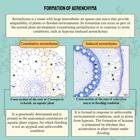
Infographic of the formation of the constitution and induced aerenchyma. Based on Evans (2004). Micrographs under clear field microscopy, colored with toluidine blue, provided by Alexandra Mastroberti.

Photograph of a submerged stem developing adventitious roots and hypertrophied lenticels under flood conditions, A: submerged stem and branches, B: detail of stem with adventitious roots (arrows) and hypertrophied lenticels (circles).
To understand the broad spectrum of life forms inhabiting wetland margins and mitigate classification mistakes of amphibious plants in floristic inventories, data collection and field observations across different phases of the hydrological cycle (drought, drawdown, and flood) are essential (Moura-Júnior & Cotarelli, 2019). Monitoring species along the flood gradient over time provides a more comprehensive understanding of the ecological attributes of those persisting in terrestrial-aquatic ecotones (Moura-Júnior & Cotarelli, 2019, Da Silveira et al., 2025).
Hence, our interpretation is that amphibious aquatic plants inhabit zones on the margins of water bodies and live out of water for a short period due to the rainfall regime or tide. Even without surface water, the soil remains saturated, ensuring enough moisture for survival. However, these dry spells should not be long; otherwise, plants undergo stress. For inhabiting the land-water interface, the amphibious plants can present adaptations to wet or dry conditions, modifying their structure accordingly. Growing outside aquatic habitats, they can acquire characteristics closer to terrestrial plants, increasing stomata density, the degree of tissue lignification, and cuticle thickness. Additionally, shortening of internodes and petioles can reduce stem diameter, roots, and leaf area. Such alterations are reverted when returning to flooded conditions (Scremin-Dias et al., 1999; Santana et al., 2019).
In environments with a broad amplitude between the dry and flooded period, terrestrial plants or amphibians can modify their behavior: terrestrial plants drown, and amphibious plants drown, too, if they remain attached to the substrate and under turbid waters or become detached and behave as free submerged (Piedade et al., 2018).
On the identification of the amphibious plants: what precautions shall be observed when collecting them?
In sum, the researcher shall take some precautions during data collection:
-
Keep records of rainfall and the regime of flood, drawdown, and drought of the region, along with other factors that can directly or indirectly influence the water level;
-
Plan an expanded field sampling effort in the same region to cover the entire hydrologic regime.
-
Observe the life forms of the individuals and their morphological alterations under various flooding conditions.
-
Identify whether the species collected have been cited before in floristic surveys in terrestrial, non-flooded areas.
-
Observe the health and vigor of individuals under various environmental conditions, considering that drought is a disadvantageous factor for species that are definitively aquatic, and that prolonged flooding is harmful to species adapted to survive temporarily in aquatic habitats.
-
Whenever possible, record the vegetative and reproductive phenological stages to verify the phase of the life cycle that depends on flooding.
-
Observe whether the individual produces morphologically different leaves when the organ is submerged or emersed.
-
Observe the presence of air lacunae in root tissues and the submerged part of the stem.
-
Observe the formation of adventitious roots close to the water surface.
-
Furthermore, when defining the amphibious life form, we can consider the following assumptions about a plant:
-
It is a species of aquatic plant that inhabits the boundary zone between the water body and dry soil.
-
It is not found in arid soils.
-
Its favorable growing condition is flooding, during which buds sprout and growth rates are higher.
-
At least one phase of the life cycle depends on water.
-
It should present adaptations to flooding or submersion, such as aerenchyma.
Final Considerations
Despite historical efforts in defining aquatic plants, the scientific community has recently reached a consensus on their classification criteria. Several approaches have been used, such as taxonomic, evolutionary, and functional. We believe the classification into functional groups offers an effective strategy to understand these plants, their evolution, and their ecological relationships. Nevertheless, some challenges remain to refine the functional groups of aquatic plants and their species. Among those challenges are the variations of functional attributes along the life cycle, phenotypic plasticity, and ecotypic variation among populations subjected to different environmental conditions.
We emphasize the complexity of classifying amphibious species. These plants exhibit phenotypic plasticity associated with the degree of flooding and can develop adaptations for both aquatic and terrestrial periods. We aim to contribute to the definition of amphibious plants by presenting considerations that are useful for the classification of these species. The established criteria can support the planning of future research, the interpretation of trait-environment relationships, and restoration and conservation projects. In addition, standardized sampling is important to facilitate comparability across meta-analyses. Conversely, incorrect classifications can introduce biases into datasets and lead to misleading comparisons. We also acknowledge the difficulties of applying all proposed criteria in short-term or low-resource floristic studies, and in such cases, we advise researchers to report these methodological limitations transparently in their work.
Acknowledgments
We thank the Núcleo de Especialistas em Plantas Aquáticas (NEPA) for its support and collaboration in the preparation of this review, and the Sociedade Botânica do Brasil (SBB) for fostering research by supporting and strengthening specialist groups during the society’s scientific events.
References
- Alves JAA, Tavares AS, Trevisan R. 2011. Composição e distribuição de macrófitas aquáticas na lagoa da Restinga do Massiambu, Área de Proteção Ambiental Entorno Costeiro, SC. Rodriguésia 62: 785-801.
- Arber A. 1920. Water plants: A study of aquatic angiosperms. London, Cambridge University Press.
- Bao F, Pott A, Ferreira FA, Arruda R. 2014. Soil seed bank of floodable native and cultivated grassland in the Pantanal wetland: Effects of flood gradient, season and species invasion. Brazilian Journal of Botany 37: 239-250.
- Barrett SCH, Eckert CG, Husband BC. 1993. Evolutionary processes in aquatic plant populations. Aquatic Botany 44: 105-145.
- Barros AAM. 2009. Vegetação vascular litorânea da Lagoa de Jacarepiá, Saquarema, Rio de Janeiro, Brasil. Rodriguésia 60: 97-110.
- Bolton JJ. 2016. What is aquatic botany? And why algae are plants: The importance of non-taxonomic terms for groups of organisms. Aquatic Botany 132: 1-4.
- Cavassan O, Lara Weiser V. 2020. Eugen Warming: um dinamarquês desvenda o cerrado brasileiro. Filosofia e História da Biologia 15: 179-193.
- Chambers PA, Lacoul P, Murphy KJ, Thomaz SM. 2008. Global diversity of aquatic macrophytes in freshwater. Hydrobiologia 595: 9-26.
- Cook CDK, Gut BJ, Rix EM, Schneller J, Seitz M. 1974. Water plants of the world: A manual for the identification of the genera of freshwater macrophytes. The Hague, Junk Publishers.
- Cook CDK. 1996. Aquatic Plant Book. Amsterdam, SPB Academic Publishing.
- Cook CDK. 1999. The number and kinds of embryo-bearing plants which have become aquatic: A survey. Perspectives in Plant Ecology, Evolution and Systematics 2: 79-102.
- Cronk JK, Fennessy MS. 2001. Wetland plants: Biology and ecology. Boca Raton, CRC Press.
- Da Silveira FP, da Silveira FF, Porto AB, Saraiva DD, Overbeck GE, Chiara Moço MC. 2025. Zonation of aquatic plant communities along a flooding gradient in subtropical wetlands. Folia Geobotanica 59: 163-178.
- Evans DE. 2004. Aerenchyma formation. New Phytologist 161: 35-49.
- Fassett NC. 2006. A Manual of Aquatic Plants. Madison, University of Wisconsin Press.
- Irgang BE, Pedralli G, Waechter JI. 1984. Macrófitos aquáticos da Estação Ecológica do Taim, Rio Grande do Sul, Brasil. Roessleria 6: 395-404.
- Irgang BE, Gastal CVS Jr. 1996. Macrófitas aquáticas da planície costeira do Rio Grande do Sul. Porto Alegre, Universidade Federal do Rio Grande do Sul.
- Junk WJ, Piedade MTF. 1993. Herbaceous plants of the Amazon floodplain near Manaus: Species diversity and adaptations to the flood pulse. Amazoniana 12: 467-484.
- Koga H, Ikematsu S, Kimura S. 2024. Diving into the water: Amphibious plants as a model for investigating plant adaptations to aquatic environments. Annual Review of Plant Biology 75: 579-604.
- Lopes A, Demarchi LO, Franco AC et al 2021. Predicting the potential distribution of aquatic herbaceous plants in oligotrophic Central Amazonian wetland ecosystems. Acta Botanica Brasilica 35: 22-36.
- Moura- EG Júnior, Cotarelli VM. 2019. An update on the knowledge of aquatic macrophytes in Northeast Brazil. Rodriguésia 70: e04452017.
- Oyedeji AA, Abowei JFN. 2012. The classification, distribution, control and economic importance of aquatic plants. International Journal of Fisheries and Aquatic Sciences 1: 118-128.
- Paz J, Bove CP. 2007. Hidrófitas vasculares da Lagoa de Carapebus, Parque Nacional da Restinga de Jurubatiba, Rio de Janeiro, Brasil. Revista Brasileira de Biociências 5: 495-497.
- Piedade MTF, Lopes A, Demarchi LO et al 2018. Guia de campo de herbáceas aquáticas: várzea amazônica. Manaus, Editora INPA.
- Pivari MO, Oliveira VB, Costa FM, Sousa SR, Silva TN. 2011. Macrófitas aquáticas do sistema lacustre do Vale do Rio Doce, Minas Gerais, Brasil. Rodriguésia 62: 759-770.
- Pivari MOD, Melo PH A, Cruz J. 2024. O projeto Plantas Aquáticas do Brasil. In: Pivari MOD, Melo PH A, Moura-Júnior EG (eds.). Plantas Aquáticas do Brasil. Viçosa, Ed. Universidade Federal de Viçosa.
- Pivari MOD, Melo PHA, Souza FS et al 2019. New initiatives for Brazilian aquatic plant data management. Acta Botanica Brasilica 33: 78-87.
- Pott A, Pott VJ. 2021. Aquatic plants. In: Damasceno- A Junior, Pott A (eds.). Plants and Vegetation of the Pantanal Wetland. Cham, Springer, p. 229-288.
- Pott VJ, Pott A. 2000. Plantas Aquáticas do Pantanal. Corumbá, EMBRAPA.
- Pott VJ, Pott A. 2003. Dinâmica da vegetação aquática do Pantanal. In: Thomaz SM, Bini LM (eds.). Ecologia e Manejo de Macrófitas Aquáticas. Maringá, Eduem, p. 145-162.
- Preston CD, Croft JM. 1997. Aquatic plants in Britain and Ireland. England, Harley Book.
- Ramos LJ, Novelo A. 1993. Vegetación y flora acuáticas de la laguna de Yuriria, Guanajuato, México. Acta Botánica Mexicana 25: 61-79.
- Raunkiaer C. 1934. The life forms of plants and statistical plant geography. Oxford, Clarendon Press.
- Santana MAC, Catian G, Scremin-Dias E. 2019. Respostas morfológicas de Ludwigia helminthorrhiza (Mart.) H. Hara (Onagraceae) à sazonalidade hídrica do Pantanal. Oecologia Australis 23: 874-890.
- Scremin-Dias E, Pott VJ, Hora RC, Souza PR. 1999. Nos Jardins Submersos da Bodoquena: Guia para identificação de plantas aquáticas de Bonito. Campo Grande, UFMS.
- Sculthorpe CD. 1967. The biology of aquatic vascular plants. London, Edward Arnold Ltd.
- Thomaz SM, Esteves FDA. 2011. Comunidade de Macrófitas Aquáticas. In: Esteves FDA (ed.). Fundamentos de Limnologia. 3th. edn. Rio de Janeiro, Interciência, p. 3.
- Tiner R. 2017. Wetland indicators: A guide to wetland formation, identification, delineation, classification, and mapping. 2nd. edn. Boca Raton, CRC Press .
- Tiner RW. 1991. The Concept of a Hydrophyte for Wetland Identification. BioScience 41: 236-247.
- Valadares RT, Souza FBC, Castro NGD, Peres ALSS, Schneider SZ, Martins MLL. 2011. Levantamento florístico de um brejo-herbáceo localizado na restinga de Morada do Sol, município de Vila Velha, Espírito Santo, Brasil. Rodriguésia 62: 827-834.
- Velásquez J. 1994. Plantas acuáticas vasculares de Venezuela. Caracas, Universidad Central de Venezuela.
- Warming E. 1909. Oecology of plants: An introduction to the study of plant communities. Oxford, Oxford University Press.
- Wetzel RG. 2001. Limnology: Lake and river ecosystems. San Diego, Gulf Professional Publishing.
Not applicable.


 Photo: Maria Cecília de Chiara Moço.