 Blechnum rosulatum (Blechnaceae, Polypodiopsida), a new species of fern from Tocantins, Brazil
Abstract
We describe a new species of Blechnum from Tocantins, Brazil: Blechnum rosulatum sp. nov. (Blechnaceae). Information about its geographical distribution, habitat, phylogenetic placement and comments on conservation status are given, as well as an updated identification key for Blechnum species in Brazil is provided. Furthermore, a table with morphological characters comparing the new species with the morphologically similar species B. lanceola is provided. Blechnum rosulatum is sister to B. longipilosum within a strongly supported clade that also includes Blechnum areolatum, but not B. lanceola. The new species is known from only two locations, one in a protected area in the Jalapão region and another in the central part of the state of Tocantins. This study contributes to the poorly-known fern flora of Tocantins, a state with high potential for floristic discoveries.
Keywords:
Cerrado; Polypodiales; savanna; Serra Geral; taxonomy
Introduction
Blechnaceae Newman has a subcosmopolitan distribution and is organized into three subfamilies with 25 genera and about 260 species (Gasper et al., 2016; PPG I, 2016; Molino et al., 2019) with plants predominantly terrestrial, often rupicolous, occasionally scandent, and rarely epiphytic (Kramer et al., 1990). In Brazil, the family has 10 genera and 40 species distributed in all the phytogeographic domains (Dittrich et al., 2025). In Tocantins, there are currently records of two genera, Blechnum L. and Telmatoblechnum Perrie, D.J.Ohlsen & Brownsey (Dittrich & Gasper, 2024; Machado & Gasper, 2024; Dittrich et al., 2025) with one species each.
Within the subfamily Blechnoideae, Blechnum comprises 30 species, the majority neotropical, with a few representatives in southern Africa (Gasper et al., 2016; Dittrich et al., 2022). The genus is characterized by stoloniferous rhizomes, monomorphic to subdimorphic fronds, and finely denticulate pinna margins (Gasper et al., 2016). The genus is represented by 15 species in Brazil, which occur throughout all phytogeographic domains, including seven species reported to the Cerrado (Dittrich & Gasper, 2025). Most species are terrestrial or rupicolous, growing in various environments, and are frequently found in shaded and humid areas within forests, as well as on rocky cliffs, associated or not with watercourses (Kramer et al., 1990; Dittrich et al., 2007; Gasper et al., 2016; Salino et al., 2017).
Currently, the richness of ferns and lycophytes for the state of Tocantins is 86 species (Flora e Funga do Brasil 2025). However, a recent survey on ferns and lycophytes from a protected area revealed 11 new records for the Tocantins state (Schindler et al., 2023), indicating that the flora of this large and biodiverse state is still very poorly known and suggesting a possible significant ‘Wallacean Shortfall’ in this area (Hortal et al., 2015).
Although this knowledge gap has been filled with the description of numerous new species of angiosperms (e.g.,Amorim et al., 2022; Cardoso et al., 2023; Rocha et al., 2024), no new ferns or lycophytes have been described from Tocantins in recent years. However, botanical surveys in underexplored regions of the Neotropics will likely result in the discovery of new species of ferns, including Blechnum (Dittrich et al., 2012; 2022; Gasper et al., 2016).
During a series of expeditions that aimed to survey the flora of the Estação Ecológica Serra Geral do Tocantins (EESGT), the team of the herbarium of Embrapa Recursos Genéticos e Biotecnologia (CEN) collected a new species of fern, which was referred to as Blechnum sp. in Schindler et al. (2023). This new taxon is described here, along with its phylogenetic placement in the genus.
Material and methods
Molecular phylogenetic inference
DNA was extracted with DNeasy Plant Mini Kit (Qiagen Inc., Valencia, CA) using field-collected silica-gel-dried tissue from sample B. Schindler et al. 361. Amplification follows Gasper et al. (2017) with the same three genome regions and methods: rbcL (Haufler & Ranker, 1995), rps4-trnS (Nadot et al., 1995; Smith & Cranfill, 2002), and trnL-trnF (Taberlet et al., 1991; Trewick et al., 2002). PCR products were sequenced on ACTGene (https://actgene.com.br/). We used the same sequences from Gasper et al. (2017) and Dittrich et al. (2022) for Blechnum (19 taxa), along with samples of Cranfillia (two taxa), Austroblechnum (two taxa), and Icarus filiformis (A. Cunn.) Gasper & Salino as outgroups. The sequences were aligned with MUSCLE (Edgar, 2004) using MEGA XI (Tamura et al., 2021), with manual adjustments when necessary, but all sites were retained. We performed a maximum likelihood (ML) analysis in the IQ-TREE webserver with default settings (Trifinopoulos et al., 2016). Best-fit substitution models for each partition were selected in IQ-TREE using ModelFinder. Node support was estimated using ultrafast bootstrap support with 1000 replicates. Vouchers are listed in Table 1, and sequences are available in GenBank (https://www.ncbi.nlm.nih.gov/genbank/).
Morphology
The morphological descriptions were mainly based on the specimens collected during the expeditions carried out in 2021 and 2022 at EESGT, which have been deposited in the CEN, CESJ, and FURB herbaria (https://sweetgum.nybg.org/science/ih/), and also on high-resolution images of specimens deposited in HCF and MBM available in virtual repositories Reflora (https://reflora.jbrj.gov.br/) and SpeciesLink (https://specieslink.net/). Morphological terminology follows Lellinger (2002) and Beentje (2010). The type designation and epithet proposed here follow the guidelines of the International Code of Nomenclature for Algae, Fungi, and Plants (Turland et al., 2018). The main diagnostic characters presented in the comparative table (Table 2) were prepared based on the literature (Dittrich et al., 2007, 2015, 2025; Silva et al., 2019), and the analysis of specimens deposited in collections and their labels.
Spores micromorphology
Spores were analyzed using a scanning electron microscope (SEM), which were positioned on stubs covered with adhesive carbon tape and coated with a layer of pure gold in a Quorum Q150R ES magnetron sputtering machine. Subsequently, stubs were analyzed and images were obtained digitally using a Tescan VEGA3 scanning electron microscope (SEM) at Universidade Regional de Blumenau (FURB). Spore ornamentation was described using the terms proposed by Punt et al. (2007).
Results
Phylogenetic analyses
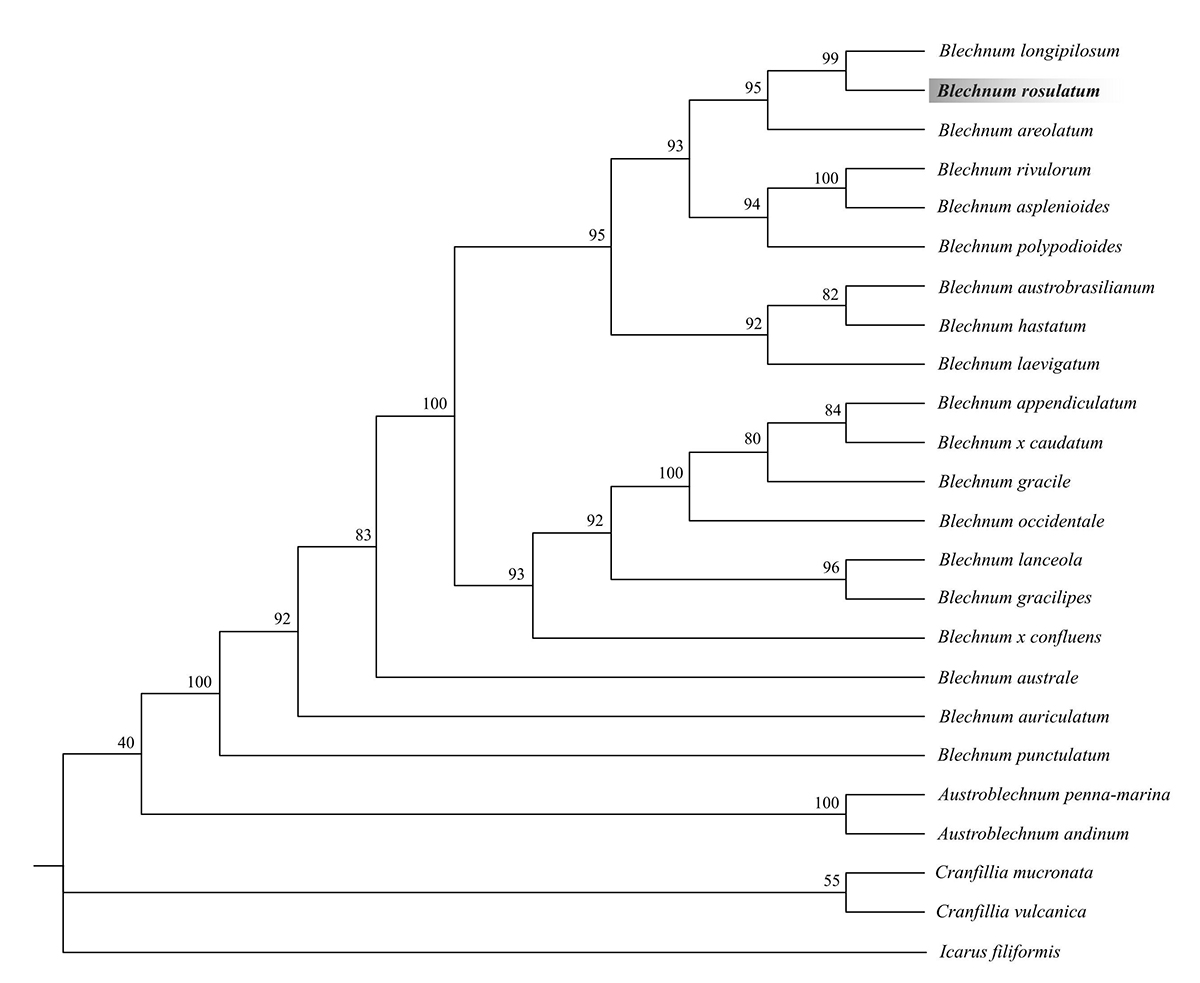
The concatenated matrix consisted of 2,945 characters, 1,181 from rbcL, 919 from rps4-trnS, and 843 from trnL-trnF. The total alignment included 288 parsimony-informative sites, 313 singleton sites, and 2344 constant sites. For a summary of the data matrix and substitution models used in the analysis, see Table 3. The maximum likelihood analysis resulted in a well-resolved phylogenetic tree (Fig. 1), with several clades supported by high bootstrap values. Blechnum was recovered as monophyletic with strong support (BS = 100 %). Blechnum punctulatum was recovered as sister to all other Blechnum species. Two main clades were recovered within Blechnum: one comprising Blechnum occidentale and related species (BS = 93 %), and the other including the new species, Blechnum rosulatum (BS = 95 %). The new species was grouped in a strongly supported (BS = 95 %) clade alongside B. longipilosum and B. areolatum.
Number of accessions, character statistics, and selected substitution models for phylogenetic analyses of Blechnum species.
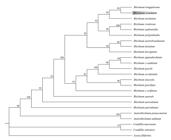
Maximum likelihood phylogenetic inference of Blechnum L. based on three chloroplast regions (rbcL, rps4−trnS, trnL−trnF), including the new species, Blechnum rosulatum (highlighted in grey). Maximum likelihood bootstrap support values are indicated near nodes.
Spore morphology and ornamentation
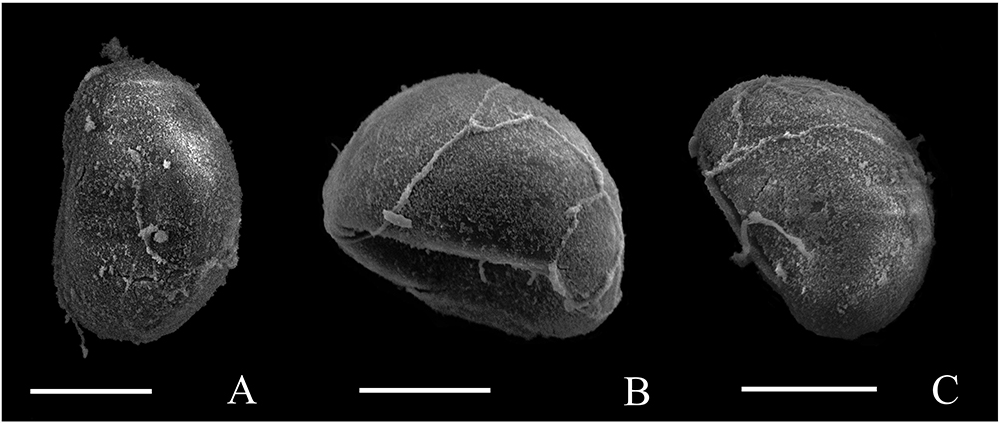
Spore micromorphology of Blechnum rosulatum, examined under SEM, revealed prolate spores with monolete laesurae. The perine surface is granulate, and spores measure approximately 29.6 µm in equatorial diameter and 45.9 µm in polar diameter (Fig. 2).
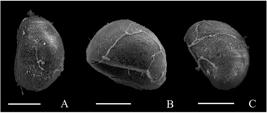
SEM images of the spores of Blechnum rosulatum (B. Schindler et al. 45). A. Distal view. B. Detail of the laesura. C. Proximal and distal views. Scale bars = 20 µm. Photos by G. M. O. Machado.
Comments on conservation status
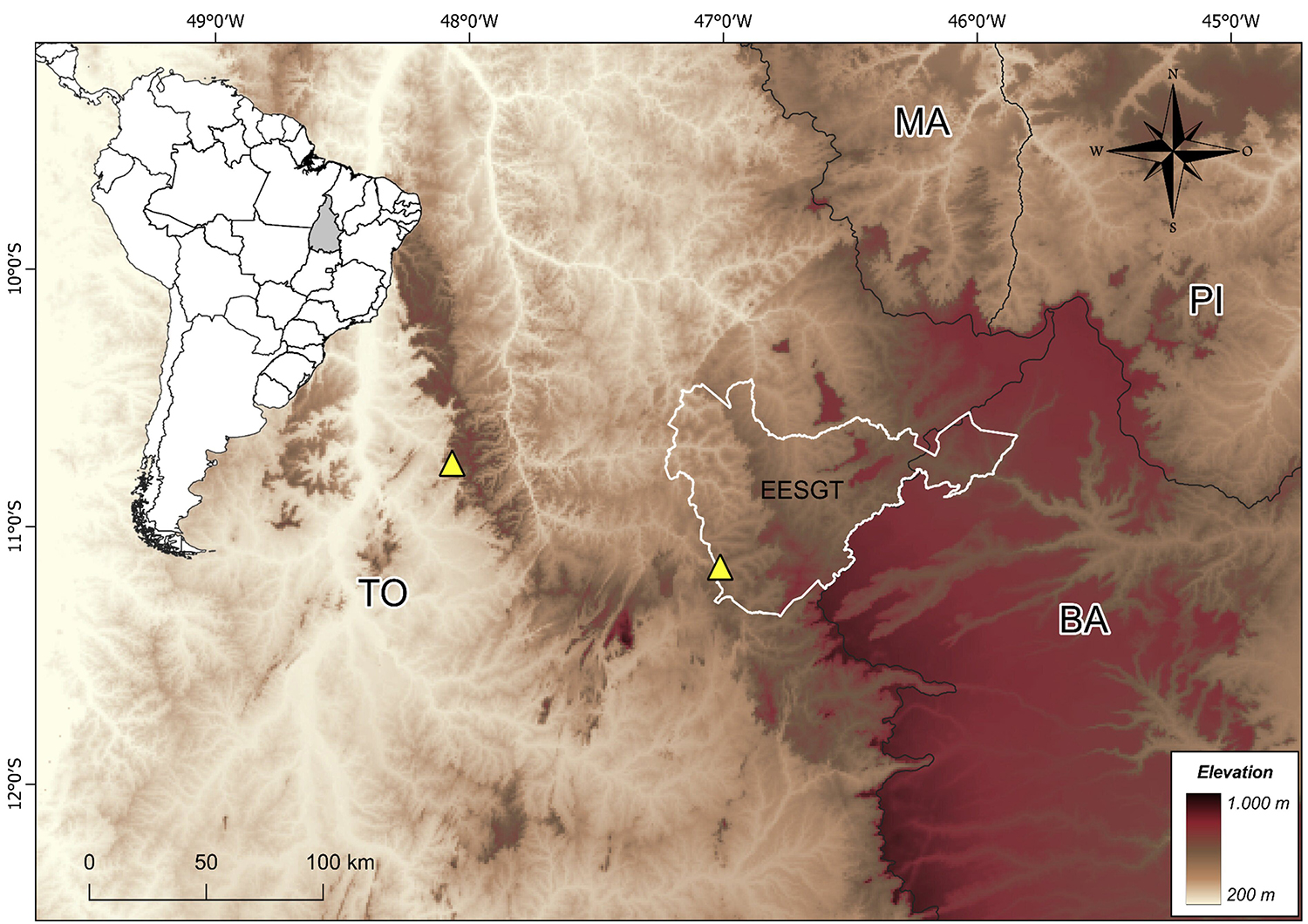
The new species is currently known from only two populations. However, additional populations of the species are likely to exist in similar environments in Tocantins, since the records are recent, and the state lacks botanical collections. Whereas the population of the Cachoeira da Fumaça locality lies within the Estação Ecológica Serra Geral do Tocantins (EESGT), a protected area, the population located in Monte do Carmo is under threat, as the region is facing the imminent growth of mining activities (Luiz Góes-Neto, pers. comm.; Fig. 3). The record of B. rosulatum in Monte do Carmo was made during environmental assessment studies associated with the mining licensing (floristic survey) of this region. Due to the overall lack of information on the distribution of the species, we, therefore, suggest the conservation status of B. rosulatum to be Data Deficient (DD) (IUCN, 2019).
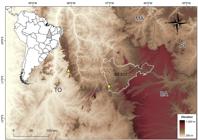
Geographic distribution of Blechnum rosulatum (triangles). EESGT: Estação Ecológica Serra Geral do Tocantins; Brazilian states: BA (Bahia), MA (Maranhão), PI (Piauí), TO (Tocantins). Map produced with QGIS version 3.28 Firenze (QGIS Development Team, 2024).
The geographic range of B. rosulatum coincides with the region known as MATOPIBA, including the Brazilian states of Maranhão, Tocantins, Piauí, Bahia, a region of a quickly expanding agricultural frontier in the Cerrado. The description of this new taxon adds to the growing list of newly described species from the MATOPIBA, many of them endemic to that region (Antar & Sano, 2019; Santana & Simon, 2022).
Discussion
Blechnum rosulatum emerged within a strongly supported clade together with B. longipilosum and B. areolatum. From a morphological perspective, this grouping presents some interesting divergences, as these closely related species share distinctive morphological traits that are notably absent in B. rosulatum. For instance, both B. longipilosum and B. areolatum exhibit partially anastomosing veins (costal areolae) and have pinnate or pinnatisect fronds. Furthermore, B. longipilosum is characterized by numerous long trichomes on the abaxial surface of its laminae, while B. areolatum typically presents 2-3 pairs of pinnae (Dittrich et al., 2012), characters absent in B. rosulatum. However, when considering their geographical distribution, this grouping appears more natural: both species are terrestrial plants, recorded predominantly in the Brazilian Amazon, specifically in the states of Mato Grosso and Pará, including enclave areas within the Cerrado domain (Castro-Aguiar et al., 2025; Dittrich & Gasper, 2025). However, to date, B. longipilosum and B. areolatum have not been recorded in Tocantins. Additionally, in the area where B. rosulatum occurs, no other species of Blechnaceae have been observed in sympatry. Only Telmatoblechnum serrulatum (Rich.) Perrie, D.J. Ohlsen & Brownsey was recorded in the region, restricted to wet fields (Campo úmido) and Vereda environments (Schindler et al., 2023). This observation significantly reduces the possibility that B. rosulatum is a hybrid between representatives of Blechnaceae - a relatively common phenomenon in ferns (Wagner Júnior, 1969). Moreover, the presence of well-developed and functionally organized sori in B. rosulatum (Fig. 2) reinforces its identity as a species. In hybrid taxa, it is common for sori to be atrophied, deformed, or with low production of viable spores, which was not observed in this case (Tejero-Díez et al., 2009). In contrast, B. lanceola, which is morphologically closer to B. rosulatum (Tab. 2), displays a broader geographical range (Dittrich et al., 2012, 2025; Engels et al., 2016). Surprisingly, despite their morphological similarity, B. lanceola is not phylogenetically closely related to B. rosulatum (Fig. 1).
Taxonomic treatment
Blechnum rosulatum V.A.O.Dittrich, Gasper & B. Schindl, sp. nov. (Figs. 2-5, Tab. 2)
Type: BRAZIL. TOCANTINS: ESEC Serra Geral do Tocantins, Ponte Alta do Tocantins, Cachoeira da Fumaça, rio das Balsas, 11º09’22.4” S, 47°00’44.3” W, 460 m elev., 15 March 2022, B. Schindler et al. 361 (holotype CEN [barcode] CEN121809!; isotypes, CESJ [barcode] CESJ080584!, FURB [barcode] FURB73207!, to be sent to: RB!).
Diagnosis: The new species is similar to Blechnum lanceola Sw., differentiated by the smaller fronds 2.1-8.5 cm long (vs. 4.7-24.5 cm), shorter stipes up to 4.8 cm long (vs. 12.6 cm), narrower blades 0.5−1.2 cm (vs. 1.6-4.6 cm), pinnatifid fronds (vs. entire) with cordate, subcordate or rarely truncate laminae bases (vs. cuneate or obtuse), sori linear and reniform, continuous (at the distal end of the lamina) and interrupted (towards the base) along the midrib (vs. linear, always continuous).
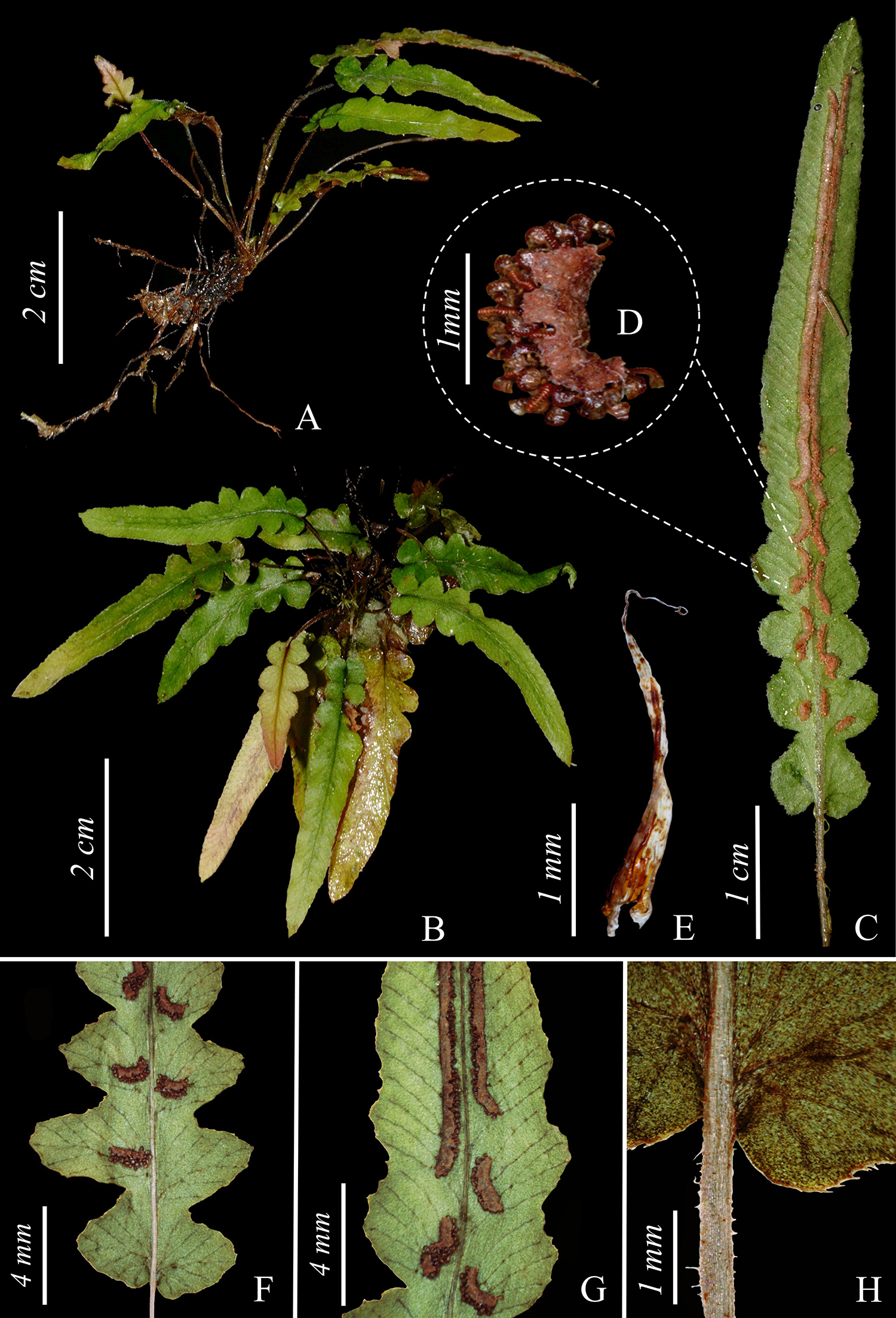
Plants rupicolous; rhizomes 0.2−0.4 cm diam., erect, stoloniferous, blackish, covered with scales 1.1−2.3 × 0.2−0.5 mm, these stramineous to blackish, concolorous, lanceolate or linear, margin entire, apex caudate; fronds monomorphic, (1.8-) 2.1-8.5 (-10) cm long, rosette-like; stipes 0.3-3.4 (-4.8) × 0.05 cm, sulcate on adaxial side, puberulent, the trichomes unicelular and pluricelular, glandular, 0.1 mm long, with scales (0.5−) 1.1-1.7 × 0.1−0.3 mm, sparse near the base, similar to those of rhizomes, stramineous with brownish punctate areas; blades (0.5−) 1.1−6.1 × 0.5−1.2 cm, lanceolate, proximally lobate to pinnatifid, usually up to the middle, distally entire, membranaceous, glabrous, base cordate, subcordate, rarely truncate, apex acute, margin finely denticulate and thickened, bearing scattered trichomes translucent, unicellular, 0.1 mm long; midrib flat or slightly raised, stramineous, trichomes similar to those of stipes; veins free, simple up to 4-forked, conspicuous on both faces; sori of two types along the lamina, linear and continuous towards the apex, reniform and interrupted towards the base usually at the lobate to pinnatifid portion of lamina; indusia 0.4-0.6 mm wide, stramineous, trichomes 0.04−0.17 mm long, translucent, simple or glandular; spores monolete, prolate, equatorial diameter 29.6 µm, polar diameter 45.9 µm, perine granulate.
Etymology: The specific epithet refers to the unusual habit of the species, in which fronds are disposed in a rosette-like pattern.
Distribution and habitat:Blechnum rosulatum was recorded exclusively in Tocantins state, Brazil, with occurrences documented in two localities across the municipalities of Almas, Monte do Carmo, and Ponte Alta do Tocantins (Fig. 3). The locality of Cachoeira da Fumaça, rio das Balsas, lies within the boundaries of the protected area (EESGT). In this case, the collections made in this locality have only rio das Balsas as the municipal boundary between Almas and Ponte Alta do Tocantins. For this reason, the collection J. Cordeiro et al. 2640, at Cachoeira da Fumaça, is wrongly registered for the municipality of Rio da Conceição. The climate is tropical with dry winters, corresponding to Aw in the Köppen classification. The annual mean temperature varies between 22-26ºC (Alvares et al., 2013), and the annual rainfall is 1400-1600 mm (Sano et al., 2019).
The known populations were found in wet forests associated with watercourses, known as Mata Ciliar or Mata de Galeria (Ribeiro & Walter, 2008), between 460 to 630 m above sea level (a.s.l.). The flora of these forests includes species typical of the Amazon Forest that were recorded during our survey in the EESGT, such as the angiosperms Croton matourensis Aubl. (M.F. Simon et al. 4220), Zygia cataractae (Kunth) L.Rico (M.F. Simon et al. 4112), Paullinia cf. capreolata (Aubl.) Radlk. (M. Figueira et al. 1830), Ruizterania wittrockii (Malme) Marc.-Berti (M.C. Ferreira et al. 19), Amanoa guianensis Aubl. (M.F. Simon et al. 3986), Sloanea sinemariensis Aubl. (M.F. Simon et al. 4149); and lycophytes and ferns such as Selaginella radiata (Aubl.) Spring (B. Schindler et al. 372) and Danaea leprieurii Kunze (B. Schindler et al. 367).
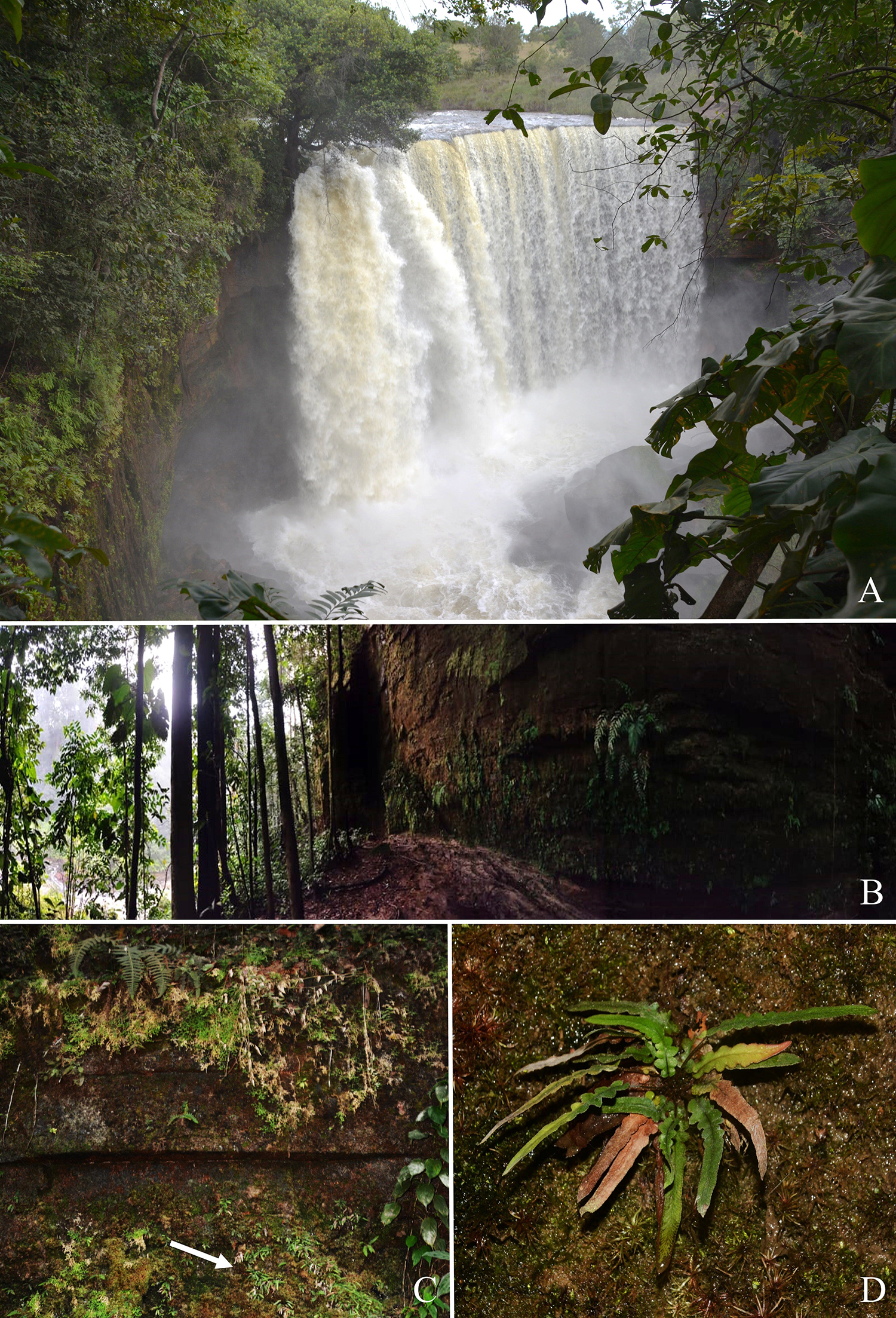
Blechnum rosulatum grows on sandstone cliffs, in shaded and humid places, with other ferns and lycophytes, as well as dense populations of the bryophyte Octoblepharum sp. (Fig. 5c-d). Young leaves of B. rosulatum are yellowish-green and slightly reddish (Fig. 4b, 5d), a character which might be associated with the presence of 3-deoxyanthocyanins, a known chemical defense against herbivores often found in ferns (Tryon & Tryon, 1982; Zuquim et al., 2008) and particularly common in the Blechnaceae.
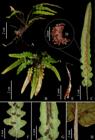
Blechnum rosulatum. A-B. Habit. C. Frond abaxial side. D. Sorus detail. E. Rhizome scale. F. Basal portion of blade with reniform sori. G. Middle portion of blade with linear and reniform sori. H. Stipe detail (B. Schindler et al. 361). Photos were edited using the software GIMP 2.10.36 (https://www.gimp.org/). Photos by B. Schindler and M. Figueira.
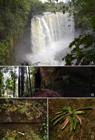
Location of the type collection of Blechnum rosulatum in the Estação Ecológica Serra Geral do Tocantins (EESGT). A. Cachoeira da Fumaça, rio das Balsas. B. Sandstone cliffs where Blechnum rosulatum grows. C. Population of B. rosulatum (B. Schindler et al. 361), arrow. D. B. rosulatum surrounded by dense clumps of the bryophyte Octoblepharum sp. (B. Schindler et al. 484). Photos: A, C-D. B. Schindler and M. Figueira; and B. Valdeci F. Gomes.
Additional specimens examined (Paratypes): Brazil. Tocantins: Almas, ESEC Serra Geral do Tocantins, Cachoeira da Fumaça, rio das Balsas, 11º09’24.18” S, 47º00’42.23” W, 460 m elev., 16 March 2022, B. Schindler et al. 371 (CEN, CESJ , FURB). Ponte Alta do Tocantins, [incorrectly Rio da Conceição], Cachoeira da Fumaça, no paredão próximo à cachoeira, 25 May 2008, J. Cordeiro et al. 2640 (MBM, HCF); ESEC Serra Geral do Tocantins, Cachoeira da Fumaça, rio das Balsas, 11º09’22.22” S, 47º00’43.44” W, 467 m elev., 2 March 2021, B. Schindler et al. 45 (CEN, CESJ, FURB).
Photographic record: Brazil. Tocantins: Monte do Carmo, 10°45'12.3" S, 48°04'05.3" W, 630 m elev., January 2022, Luiz Góes-Neto.
Updated key to Blechnum species of Brazil (after Dittrich & Gasper 2025)
1. Fronds subdimorphic, the fertile ones slightly contracted ............................................ 2
1’ Fronds monomorphic, the fertile ones not contracted .................................................. 4
2. Veins partially anastomosing ......................................................................B. heringeri
2’ Veins free ..................................................................................................................... 3
3. Sterile blades at most 6.1 cm wide; sori continuous, rarely some interrupted; proximal pinnae of sterile fronds gradually reduced, 2.5-5 × shorter than the longest pinnae ..................................................................................................................... B. auriculatum
3’ Sterile blades at least 8 cm wide; sori generally, at least partially, interrupted; proximal pinnae of sterile fronds slightly reduced, 1.2-2(3) × shorter than the longest pinnae .................................................................................................................. B. × leopoldense
4. Veins partially anastomosing ........................................................................................ 5
4’ Veins free ..................................................................................................................... 6
5. Pinnae 1-2 pairs; blades truncate at base ....................................................B. areolatum
5’ Pinnae (4-)5-7(-11) pairs; base of blades with one to three reduced pinnae ...................................................................................................................B. longipilosum
6. Blades simple, entire .....................................................................................B. lanceola
6’ Blades never fully simple and entire ............................................................................ 7
7. Blades lobate to pinnatifid, usually up to the middle, distally entire ........... B. rosulatum
7’ Blades pinnatisect or pinnate ....................................................................................... 8
8. Blades gradually reduced to semicircular lobes or to auricles at the base................................................................................................................................... 9
8’ Blades not reduced or reduced at the base, if so, never gradually reduced to semicircular lobes or auricles .............................................................................................................. 10
9. Median pinnae deltate, strongly ascending; basal pinnae semicircular ....................................................................................................................B. asplenioides
9’ Median pinnae narrowly triangular, patent or slightly ascending; basal pinnae surcurrent .................................................................................................B. polypodioides
10. Lamina apex conform or subconform, terminal pinna longer than the lateral pinnae ........................................................................................................................................ 11
10’ Lamina apex pinnatifid or with a more or less caudate segment, not conform or subconform .................................................................................................................... 14
11. Lamina apex subconform; distal pinnae surcurrent ................................................... 12
11’ Lamina apex conform; distal pinnae not surcurrent .................................................. 13
12. Proximal pinnae pair free from the rachis ..............................................B. × caudatum
12’ Proximal pinnae pair adnate to the rachis .................................................B. rivulorum
13. Fertile terminal pinnae cuneate and symmetric at the base, very rarely lobed; 2(3) pinna pairs .....................................................................................................B. meridense
13’ Fertile terminal pinnae lobed and/or asymmetric at the base; (2)3-5(-8) pinna pairs .............................................................................................................................B. gracile
14. Acroscopic side of the proximal pair of pinnae partially or completely adnate to the rachis .............................................................................................................................. 15
14’ Acroscopic side of the proximal pair of pinnae totally free from the rachis ........................................................................................................................................ 18
15. Basiscopic side of the proximal pair of pinnae totally adnate to the rachis ........................................................................................................................................ 16
15’ Basiscopic side of the proximal pair of pinnae completely or partially free from the rachis .............................................................................................................................. 17
16. Medial pinnae ascending, generally not more than 30°; stipes 0.9-1.1 mm diam. ..................................................................................................................B. polypodioides
16’ Medial pinnae strongly ascending, generally more than 45°; stipes filiform, less than 0.4 mm diam. ..................................................................................................B. rivulorum
17. Hairs generally abundant on rachis and blade (at the margins, on or between veins, on both sides) ....................................................................................................B. laevigatum
17’ Hairs, when present, only on rachis, rarely on veins, never at the margins or between veins .................................................................................................B. austrobrasilianum
18. Basal pinnae proximally without auricles at the acroscopic side ......................................................................................................................B. occidentale
18’ Basal pinnae proximally auriculate acroscopically ............................B. × leopoldense
Acknowledgments
We are grateful to Marco A. Borges, Ana Carolina S. Barradas, Maximo M. Costa (ICMBio), and rangers of EESGT, for support towards our field expeditions to EESGT; Walter B. Silva, Valdeci F. Gomes (Dudu), and Raiana R. Souza for their assistance during fieldwork; Paulo E.A.S. Camara for the identification of the bryophyte species; The curator and staff of herbarium CEN for sending duplicates; Luiz Góes-Neto for sending the field images of B. rosulatum from the municipality of Monte do Carmo and helping with information concerning its conservation status. Authorization for plant collections was provided by ICMBio (SISBIO 61941-1). BS thanks the Universidade de Brasília (DPG 001/2025) for their support.
References
-
Alvares CA, Stape JL, Sentelhas PC, Gonçalves JLM, Sparovek G. 2013. Köppen’s climate classification map for Brazil. Meteorologische Zeitschrift 22: 711-728. doi: 10.1127/0941-2948/2013/0507
» https://doi.org/10.1127/0941-2948/2013/0507 -
Amorim AM, Marinho LC, Francener A. 2022. Deciphering the Heteropterys pannosa species complex (Malpighiaceae). PeerJ 10: e12937. doi: 10.7717/peerj.12937
» https://doi.org/10.7717/peerj.12937 -
Antar GM, Sano PT. 2019. Angiosperms of dry grasslands and savannahs of Jalapão, the largest conserved Cerrado area in Brazil. Rodriguésia 70: e04002017. doi: 10.1590/2175-7860201970070
» https://doi.org/10.1590/2175-7860201970070 - Beentje H. 2010. The Kew Plant Glossary: An illustrated dictionary of plant terms. Kew, Royal Botanic Gardens.
-
Cardoso PH, Menini Neto L, Trovó M. 2023. Still on the Stachytarpheta longispicata complex (Verbenaceae): Two new narrowly endemic species from the Cerrado domain of Central Brazil. Nordic Journal of Botany 2023: e03946. doi: 10.1111/njb.03946
» https://doi.org/10.1111/njb.03946 -
Castro-Aguiar PH, Fernandes RS, Zappi DC. 2025. Ferns of the Parque Nacional das Nascentes do Rio Parnaíba, Brazilian Cerrado. Rodriguésia 76: e00612024. doi: 10.1590/2175-7860202576004
» https://doi.org/10.1590/2175-7860202576004 - Dittrich VAO, Heringer G, Salino A. 2007. Blechnaceae. In: Cavalcanti TB, Amaral-Lopes AC (eds.). Flora do Distrito Federal, Brasil. Brasília, Embrapa. p. 91-108.
-
Dittrich VAO, Salino A, Almeida TE. 2012. Two New Species of the Fern Genus Blechnum with Partially Anastomosing Veins from Northern Brazil. Systematic Botany 37: 38-42. doi: 10.1600/036364412X616602
» https://doi.org/10.1600/036364412X616602 -
Dittrich VAO, Salino A, Monteiro R. 2015. The Blechnum occidentale (Blechnaceae, Polypodiopsida) species group in southern and southeastern Brazil. Phytotaxa 231: 201. doi: 10.11646/phytotaxa.231.3.1
» https://doi.org/10.11646/phytotaxa.231.3.1 -
Dittrich VAO, Salino A, Gasper AL. 2022. A new species of Blechnum L (Blechnaceae, Polypodiopsida) from central-western Brazil, with an updated key to the species in the country. Acta Botanica Brasilica 36: e20220147. doi: 10.1590/1677-941x-abb-2022-0147
» https://doi.org/10.1590/1677-941x-abb-2022-0147 -
Dittrich VAO, Gasper AL. 2024. Miscellaneous notes on the fern family Blechnaceae (Polypodiopsida) from Tropical America. Rodriguésia 75: e01122023. doi: 10.1590/2175-7860202475001
» https://doi.org/10.1590/2175-7860202475001 -
Dittrich VAO, Gasper AL. 2025. Blechnum https://floradobrasil.jbrj.gov.br/FB245 22 Apr. 2025
» https://floradobrasil.jbrj.gov.br/FB245 -
Dittrich VAO, Gasper AL, Cárdenas GG. 2025. Blechnaceae. https://floradobrasil.jbrj.gov.br/FB245 13 Jun. 2025
» https://floradobrasil.jbrj.gov.br/FB245 -
Edgar RC. 2004. MUSCLE: Multiple sequence alignment with high accuracy and high throughput. Nucleic Acids Research 32: 1792-1797. doi: 10.1093/nar/gkh340
» https://doi.org/10.1093/nar/gkh340 -
Engels ME, Rocha LCF, Canestraro BK. 2016. Três novos registros de samambaias (Blechnaceae e Pteridaceae) para a região Centro Oeste do Brasil. Acta Biológica Paranaense 45: 65-69. doi: 10.5380/abpr.v45i1-4.49936
» https://doi.org/10.5380/abpr.v45i1-4.49936 -
Flora e Funga do Brasil. 2025. Samambaias e Licófitas. https://floradobrasil.jbrj.gov.br/FB245 13 Jun. 2025
» https://floradobrasil.jbrj.gov.br/FB245 -
Gasper AL, Almeida TE, Dittrich VAO, Smith AR, Salino A. 2017. Molecular phylogeny of the fern family Blechnaceae (Polypodiales) with a revised genus‐level treatment. Cladistics 33: 429-446. doi: 10.1111/cla.12173
» https://doi.org/10.1111/cla.12173 -
Gasper AL, Dittrich VAO, Smith AR, Salino A. 2016. A classification for Blechnaceae (Polypodiales: Polypodiopsida): New genera, resurrected names, and combinations. Phytotaxa 275: 191. doi: 10.11646/phytotaxa.275.3.1
» https://doi.org/10.11646/phytotaxa.275.3.1 - Haufler CH, Ranker TA. 1995. rbcL sequences provide phylogenetic insights among sister species of the fern genus Polypodium American Fern Journal 85: 361-374.
-
Hortal J, De Bello F, Diniz-Filho JAF, Lewinsohn TM, Lobo JM, Ladle RJ. 2015. Seven Shortfalls that Beset Large-Scale Knowledge of Biodiversity. Annual Review of Ecology, Evolution and Systematics 46: 523-549. doi: 10.1146/annurev-ecolsys-112414-054400
» https://doi.org/10.1146/annurev-ecolsys-112414-054400 -
IUCN Standards and Petitions Committee. 2019. Guidelines for Using the IUCN Red List Categories and Criteria, 14th edn. Prepared by the Standards and Petitions Committee. https://www.iucnredlist.org/documents/RedListGuidelines.pdf 13 Jun. 2025
» https://www.iucnredlist.org/documents/RedListGuidelines.pdf - Kramer KU, Chambers TC, Hennipman E. 1990. Blechnaceae. In: Kramer KU, Green PS (eds.). I Pteridophytes and Gymnosperms (The Families and Genera of Vascular). Berlin, Springer-Verlag. p. 60-68.
- Lellinger DB. 2002. A modern multilingual glossary for taxonomic pteridology - Pteridologia, 3. Washington, American Fern Society.
-
Machado GMO, Gasper AL. 2024. Unraveling the Parablechnum cordatum (Blechnaceae: Polypodiopsida) complex puzzle. Acta Botanica Brasilica 38: e20230240. doi: 10.1590/1677-941x-abb-2023-0240
» https://doi.org/10.1590/1677-941x-abb-2023-0240 -
Molino S, Gabriel y Galán JM, Sessa EB, Wasowicz P. 2019. A multi‐character analysis of Struthiopteris leads to the rescue of Spicantopsis (Blechnaceae, Polypodiopsida). Taxon 68: 185-198. doi: 10.1002/tax.12036
» https://doi.org/10.1002/tax.12036 -
Nadot S, Bittar G, Carter L, Lacroix R, Lejeune B. 1995. A phylogenetic analysis of monocotyledons based on the chloroplast gene rps4, using parsimony and a new numerical phenetics method. Molecular Phylogenetics and Evolution 4: 257-282. doi: 10.1006/mpev.1995.1024
» https://doi.org/10.1006/mpev.1995.1024 -
PPG I. 2016. A community-derived classification for extant lycophytes and ferns: PPG I. Journal of Systematics and Evolution 54: 563-603. doi: 10.1111/jse.12229
» https://doi.org/10.1111/jse.12229 -
Punt W, Hoen PP, Blackmore S, Nilsson S, Le Thomas A. 2007. Glossary of pollen and spore terminology. Review of Palaeobotany and Palynology 143:1-81. doi: 10.1016/j.revpalbo.2006.06.008
» https://doi.org/10.1016/j.revpalbo.2006.06.008 -
QGIS Development Team. 2024. QGIS Geographic Information System. http://qgis.org 13 Jun. 2025
» http://qgis.org - Ribeiro JF, Walter BMT. 2008. As principais fitofisionomias do Cerrado. In: Sano SM, Almeida SP, Ribeiro JF (eds.). Cerrado: ecologia e flora. Planaltina, Embrapa Cerrados. p. 151-212.
-
Rocha L, Arbo MM, Antar GM, Batista FRC. 2024. Piriqueta velutina (Turneraceae, Passifloraceae s.l.): A new endangered species from the Brazilian Cerrado. Kew Bulletin 79: 251-256. doi: 10.1007/s12225-023-10157-1
» https://doi.org/10.1007/s12225-023-10157-1 -
Salino A, Arruda AJ, Dittrich VAO. 2017. Flora das cangas da Serra dos Carajás, Pará, Brasil: Blechnaceae. Rodriguésia 68: 833-841. doi: 10.1590/2175-7860201768310
» https://doi.org/10.1590/2175-7860201768310 -
Sano EE, Rodrigues AA, Martins ES, Bettiol GM, Bustamante MMC, Bezerra AS, et al. 2019. Cerrado ecoregions: A spatial framework to assess and prioritize Brazilian savanna environmental diversity for conservation. Journal of Environmental Management 232: 818-828. doi: 10.1016/j.jenvman.2018.11.108
» https://doi.org/10.1016/j.jenvman.2018.11.108 -
Santana JCO, Simon MF. 2022. Plant diversity conservation in an agricultural frontier in the Brazilian Cerrado. Biodiversity and Conservation 31: 667-681. doi: 10.1007/s10531-022-02356-2
» https://doi.org/10.1007/s10531-022-02356-2 -
Schindler B, Figueira M, Dittrich VAO, Labiak PH, Pereira JBS, Souza RR, et al. 2023. Ferns and Lycophytes from the Estação Ecológica Serra Geral do Tocantins: A contribution to the flora of the Jalapão, Brazil. Rodriguésia 74: e00312023. doi: 10.1590/2175-7860202374068
» https://doi.org/10.1590/2175-7860202374068 -
Silva DM, Sylvestre LS, Mendonça CBF, Gonçalves-Esteves V. 2019. Spore diversity among species of Blechnaceae in the Atlantic Forest. Acta Botanica Brasilica 33: 412-424. doi: 10.1590/0102-33062018abb0321
» https://doi.org/10.1590/0102-33062018abb0321 - Smith AR, Cranfill RB. 2002. Intrafamilial relationships of the thelypteroid ferns (Thelypteridaceae). American Fern Journal 92: 131-149.
- Taberlet P, Gielly L, Pautou G, Bouvet J. 1991. Universal primers for amplification of three non-coding regions of chloroplast DNA. Plant Molecular Biology 17: 1105-1109.
-
Tamura K, Stecher G, Kumar S. 2021. MEGA11: Molecular Evolutionary Genetics Analysis Version 11. Molecular Biology and Evolution 38: 3022-3027. doi: 10.1093/molbev/msab120
» https://doi.org/10.1093/molbev/msab120 -
Tejero-Díez JD, Mickel JT, Smith AR. 2009. A Hybrid Phlebodium (Polypodiaceae, Polypodiophyta) and Its Influence on the Circumscription of the Genus. American Fern Journal 99: 109-116. doi: 10.1640/0002-8444-99.2.109
» https://doi.org/10.1640/0002-8444-99.2.109 -
Trewick SA, Morgan-Richards M, Russell S, Henderson S, Rumsey FJ, Pintér I, et al. 2002. Polyploidy, phylogeography and Pleistocene refugia of the rockfern Asplenium ceterach: Evidence from chloroplast DNA. Molecular Ecology 11: 2003-2012. doi: 10.1046/j.1365-294x.2002.01583.x
» https://doi.org/10.1046/j.1365-294x.2002.01583.x -
Trifinopoulos J, Nguyen L-T, Haeseler A, Minh BQ. 2016. W-IQ-TREE: A fast online phylogenetic tool for maximum likelihood analysis. Nucleic Acids Research 44: W232-W235. doi: 10.1093/nar/gkw256
» https://doi.org/10.1093/nar/gkw256 - Tryon RM, Tryon AF. 1982. Ferns and Allied Plants: With Special Reference to Tropical America. New York, Springer.
-
Turland NJ, Wiersema JH, Barrie FR, Greuter W, Hawksworth DL, Herendeen PS, et al. 2018. International Code of Nomenclature for algae, fungi, and plants (Shenzhen Code) adopted by the Nineteenth International Botanical Congress Shenzhen, China, July 2017. Regnum Vegetabile 159. Glashütten, Koeltz Botanical Books. doi: 10.12705/Code.2018
» https://doi.org/10.12705/Code.2018 -
Wagner Júnior WH. 1969. The Role and Taxonomic Treatment of Hybrids. BioScience 19: 785-795. doi: 10.2307/1294787
» https://doi.org/10.2307/1294787 - Zuquim G, Costa FRC, Prado J, Tuomisto H. 2008. Guide to the Ferns and Lycophytes of REBIO Uatumã - Central Amazonia. Manaus, Attema.
-
Data availability
Doucher specimens of the new species are available for consultation through the SpeciesLink platform (https://specieslink.net/). All molecular data used in the analyses have been deposited in GenBank (http://www.ncbi.nlm.nih.gov/genbank) and are publicly accessible under the accession numbers provided in the manuscript.
-
Funding Information
BS and MF were supported by CAPES (grants 88887.846991/2023-00 and 88887.846989/2023-00), MFS was supported by CNPq (grant 316098/2021-3), and ALG thanks to Fundação de Amparo à Pesquisa e Inovação do Estado de Santa Catarina (FAPESC) and CNPq (307861/2023-6).
Doucher specimens of the new species are available for consultation through the SpeciesLink platform (https://specieslink.net/). All molecular data used in the analyses have been deposited in GenBank (http://www.ncbi.nlm.nih.gov/genbank) and are publicly accessible under the accession numbers provided in the manuscript.