
 Small spatial intervals, big environmental variation: Restinga ecosystems are potential inducers of ecological speciation in the tropical tree Protium icicariba (Burseraceae)
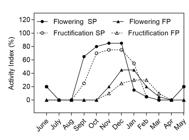
Restingas are ecosystems formed by diverse environments and plant populations separated by small spatial intervals. In this sense, we investigated the morphological, anatomical, and physiological characteristics of two populations of Protium icicariba, one occurring in a flooded forest and the other in an open restinga. Our objective was to determine if the phenotypic responses are related to the local adaptation of each population to its respective habitat and to evaluate a possible incipient case of ecological speciation. We found that individuals in flooded forests are taller and have a higher leaf area, mainly due to the greater availability of water and nutrients. The population in open restinga has individuals with higher wood density and smaller and thicker leaves. Sandy, deep, and oligotrophic soils likely induce these characteristics. The reproductive phase of the open restinga population is earlier than the flooded forest population, culminating in a certain asynchrony between them. Germination and initial seedling growth performed better when seeds and seedlings were grown in their respective habitats. Our results demonstrate evidence for the development of ecological speciation among P. icicariba populations, such as distinct selective pressures and local phenotypic adaptations, pre-zygotic reproductive isolation, and inviability of immigrants.
Keywords:
Anatomy; common garden; ecological speciation; morphology; Protium icicariba; reproductive phenology; restinga
 Thumbnail
 Thumbnail
 Thumbnail
 Thumbnail
 Thumbnail


