|
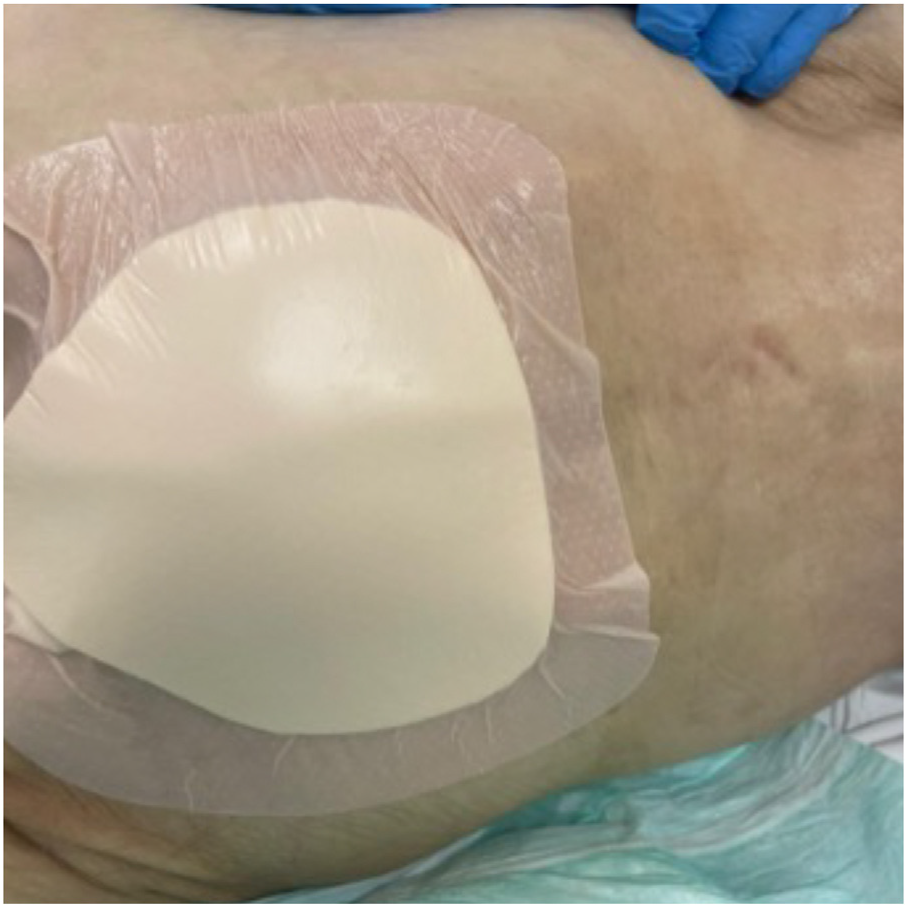
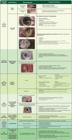
Stage 1 PI
|
| Non-blanchable erythema, intact skin |
Absent |
Avoid friction in the area when applying moisturizing creams and during bathing. Focus on pressure relief in the area and daily reassessment. |
• Barrier film/cream when required; |
| • Five-layer foam dressings with or without silicone adhesive. |
|
Stage 2 PI
|
| Superficial skin loss involving the epidermis/upper dermis. |
Intact blister |
Keep intact, protecting the area with an appropriate dressing. Depending on the blister's location, size, and characteristics, aspiration with an aseptic technique may be performed to prevent rupture and exposure to infection. |
• Foam dressings with or without silicone adhesive; • Collagen, or acrylic dressings |
| Broken skin with minimal exudate |
Promote treatment with a moist environment but with balance. Pay attention to signs of infection and the color of the exudate. |
• Foam dressings with or without silicone adhesive • Hydrocolloid, acrylic dressing, collagen/composite dressing |
|
Stage 3 PI
|
| Full-thickness damage to the subcutaneous tissue, but not reaching the muscle fascia |
Low/moderate exudate |
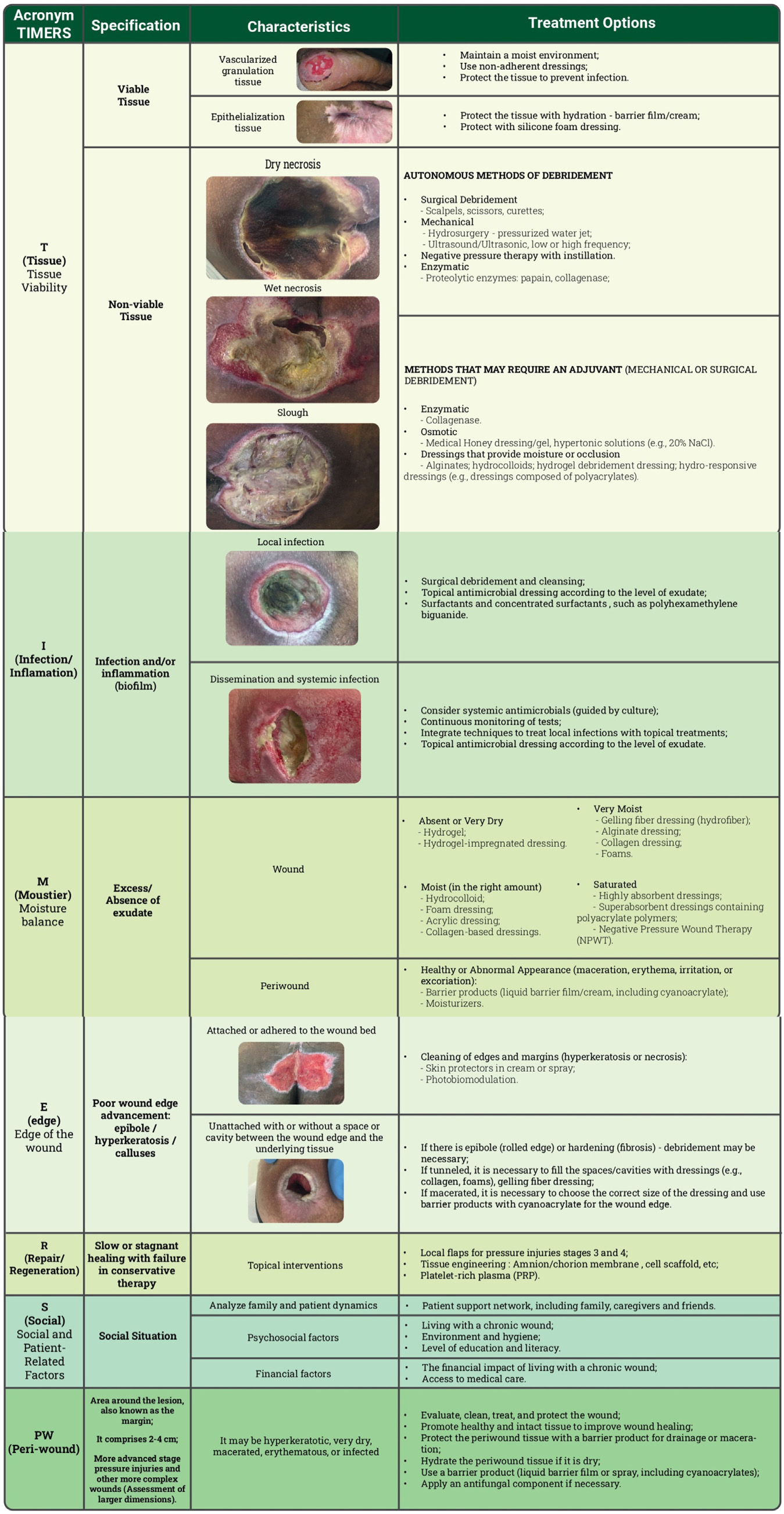
Maintain moist treatment. Assess for necrotic tissue requiring debridement and stabilize viable tissues. Manage bacterial balance/biofilm. |
• Hydrogela if autolytic debridement is required. • Antimicrobial gels such as polyhexamethylene biguanidea if local infection. • Absorbent dressings for moderate exudation, such as foam dressings, gelling fibreb
|
| High exsudate |
Increased exudate may be indicative of infection. Assess for necrotic tissue requiring debridement and stabilize viable tissues. Manage bacterial balance/biofilm. Protect edges with barrier cream products. |
• Superabsorbent dressings, such as polymer foams, silver dressings (e.g., gelling fiber or foam dressings with silverb) • Alginate dressingsb • Collagen dressingsb • Negative pressure wound therapy. |
|
Stage 4 PI
|
| Total loss of skin thickness affecting muscle and/or bone |
Low/moderate exudate |
Maintain granulation tissue. Assess for necrotic tissue requiring debridement. Manage bacterial balance/biofilm. Be attentive to osteomyelitis (exposed or palpable bone). |
• Absorbent dressings for moderate exudation, such as foam dressings, gelling fibreb • Absorbent dressings for infection: foam dressings with silverb, gelling fiber dressings with silverb, PHMB gela, cadexomer iodinea
|
| High exudate |
Increased exudate may indicate of infection ‒ be attentive to osteomyelitis (exposed or palpable bone). Assess for necrotic tissue requiring debridement and stabilize viable tissues. Manage bacterial balance/biofilm. Protect edges with barrier cream products |
• High-absorption dressings, such as foams and silver ion dressingsb • Negative pressure wound therapy. |
|
Non-classifiable PI
|
| Any wound completely covered by necrotic tissue with no visualization of the wound bed. |
Absent |
Facilitate debridement (if the wound has the capacity to heal) or protect (keep the necrotic tissue dry if healing is not the goal of care of the wound is ischemic (DIP stages C). Instrumental debridement if there is adequate blood circulation and the patient is not anticoagulated. Combine debridement methods. Pay attention to patient pain. |
• Below knee - aim to keep the wound dry until vascular assessment is determined. Apply povidone iodine 10%a to the wound bed. Keep the wound dry until the vascular assessment is determined (exclude ischemic injury); after that, it is possible to perform surgical debridement • Above knee ‒ consider an antimicrobial gel (polyhexamethylene biguanide)a to aid in autolytic debridement • In case of mild bleeding, use calcium and sodium alginate dressinga for hemostasis, or a hemostatic product. In case of severe bleeding seek help from a trained surgeon. |
|
Deep Tissue PI
|
| Purplish, bruised, or blood-filled blister lesion in an area of bony prominence |
Absent |
Avoid friction in the area when applying moisturizers and during bathing. Focus on relieving pressure in the area and perform daily reassessment. |
• Skin protectors • Barrier/film cream • Silicone foam dressings |
| Superficial rupture with exudate (may occur days after the onset of the pressure injury) |
Maintain moist treatment. Assess the necrotic tissue and proceed with caution when debriding. In cases of deep ischemia, avoid debridement in areas with compromised circulation; If necessary, do so gently and superficially, preserving viable tissue |
Depending on the exudate: • Silicone foams for atraumatic coverage, or • Absorbent dressings for moderate exudation, such as gelling fiber and foam dressings. |
|
Blood blister |
Inspect injury for improvement or deterioration and monitor capillary return; Aspiration with an aseptic technique may be performed to prevent rupture and exposure to infection |
• Five-layer silicone foam dressing • Absorbent dressing if there is heavy exudate |
|
Medical Device-Related PI
|
| It has the shape of the device and follows the same classification as above, and the same treatment according to depth and location. |
Exudate varies according to the stage of involvement and the phase of healing. |
Control moisture. Focus on the ease of application and removal of the dressing. Allow assessment of skin condition. Evaluate for infection/biofilm. |
• Treatment according to the location and stage of the pressure injury. • Combine wound coverage with protection of the medical device. • Include the use of cushions, coverings, or protective materials that not only prevent additional pressure in the area but also allow for easy and safe access to the device, minimizing the risk of contamination and infection |
|
PI on mucous membranes
|
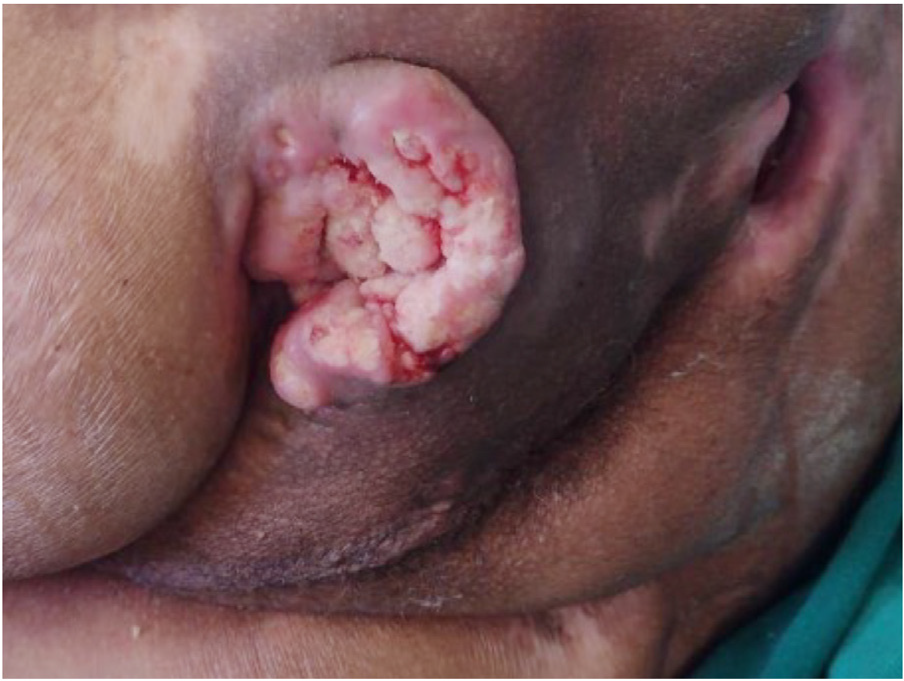
| Typically caused by medical devices on mucous membranes in areas such as the vaginal, rectal, urethral, and oral cavities. |
Absent or exudative |
Non-blanchable erythema is not visible on mucous membranes. Check for fluid accumulation. Reposition and adjust medical devices regularly to prevent prolonged pressure on a single point. Remove the device as soon as clinically possible. Assess for fungal/yeast infection. |
Mucosa: • Carefully clean the lesion with water or saline and solutions appropriate for mucous membranes, avoiding irritants. • Apply solutions appropriate for the area. • Use topical/systemic antimicrobials as needed. Skin: • Superficial area on the nostril: keep the area protected and consider using gentle white paraffin. • If there is deeper tissue loss and exudate needs to be controlled, consider using a silicone foam dressing. • Necrotic tissue: keep intact and protect with a barrier dressing. |

 Pressure Injuries: prevention, treatment, and complications - Part II
 Thumbnail
 Thumbnail
 Thumbnail