 Natural infection by Rangelia vitalii pestana, 1910, in dog from the state of Minas Gerais, Brazil - a case report
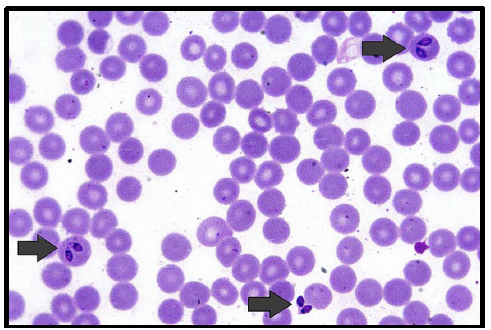
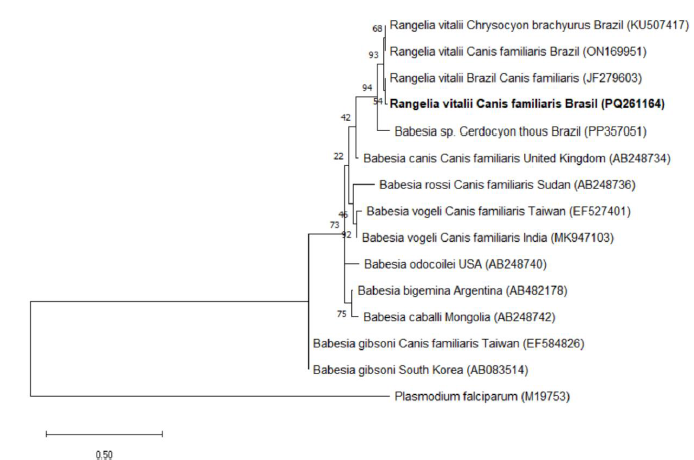
Rangeliosis is a severe, emerging hemoparasitic disease affecting dogs in South America, caused by the protozoan Rangelia vitalii and transmitted by Amblyomma aureolatum, an ixodid tick found in the Atlantic Forest biome. Although cases are commonly reported in southern Brazil and in southeastern states such as São Paulo and Rio de Janeiro, reports from the state of Minas Gerais remain scarce. This study describes a natural infection by R. vitalii in a dog from the metropolitan region of Belo Horizonte, Minas Gerais, Brazil. Peripheral blood smears revealed intra- and extra-erythrocytic piroplasms. Molecular testing detected DNA from the order Piroplasmida (18S rRNA and hsp70 genes). Genetic sequencing of the amplified piroplasmid fragments revealed 99.83% similarity with R. vitalii. This is the first study to report the ante-mortem molecular diagnosis of R. vitalii in a dog, along with clinical treatment and recovery, in the state of Minas Gerais, Brazil.
Keywords:
hemopathogens; hemoparasites; epidemiology; canids
 Thumbnail
 Thumbnail