
 Brazilian authorship gender trends on academic surgery: a bigdata analysis
ABSTRACT
Purpose: To evaluate the gender distribution of first and last authors with Brazilian surgical affiliations in PubMed-indexed surgical journals.
Methods: Data from eligible surgical journals were retrieved using Scimago Journal & Country Rank 2021 and manually reviewed. Manuscripts published from 2018 to 2022 were included if at least one author was affiliated with a Brazilian institution and a surgical specialty.
Results: Data from 340 eligible surgical journals were included. We analyzed first and last authors’ forenames of 1,881 manuscripts. Women comprised 16.7% of the first and 12.4% of the last authors. Analyzing the differences in gender trends in authorship across the five Brazilian regions, we found that the South had the highest representation, while the Midwest and North showed the lowest, respectively. Obstetrics and gynecology featured the highest percentage of women-first authors, whereas orthopedics had the lowest. For the last authorship, pediatric surgery showed the highest, with hand surgery having the lowest representation. Male first authors were 1.9 times more likely to engage in international collaborations.
Conclusions: This study suggests the persistent underrepresentation of Brazilian women in surgical journal authorship. Local policy changes should be considered to encourage greater diversity and inclusivity in surgical research.
Key words
Gender Equity; Authorship; Education, Medical; Brazil; Developing Countries
Introduction
Brazil has observed an ascending trend in the proportion of women entering the medical profession; as of 2022, women constitute 48.6% of the physician workforce. Despite this, substantial gender disparities persist across various specialties. Data from the Brazilian Medical Demography from 20231 highlight that a pronounced gender gap persists in surgery. Women comprise fewer than 15% of surgeons in urology, orthopedics and traumatology, neurosurgery, cardiovascular surgery, digestive surgery, and thoracic surgery1.
This imbalance extends into the surgical academia2. Previous studies regarding Brazilian surgical journals have shown that only about 20% of articles had women as first and last authors3,4. Additionally, women rarely reach leadership positions in academia, as illustrated by the “leaky pipeline” theory5, with the decline in the numbers of women at each step up the professional ladder6. In Brazilian public universities, only 12% of the department chairs within the surgical departments were women3,4. With the frontier of knowledge mainly outlined by men, this can reinforce a cycle as fewer women present papers and gain visibility and recognition.
Considering these findings, it is imperative to analyze the current gender diversity of academic surgery in Brazil. Therefore, we evaluated the publication pattern of Brazilian surgical researchers in worldwide surgical journals. We analyzed the gender distribution of Brazilian first and last authors in surgical journals, their medical specialties, and their distribution across Brazilian regions, international collaborations, and affiliations.
Methods
Study design
The study is a cross-sectional bibliometric analysis conducted following an adapted version of the Strengthening the Reporting of Observational Studies in Epidemiology (STROBE) statement to ensure methodological rigor7,8, while using a Big Data methodology and data repository9. To address the objectives of our study, we concentrated on a specific aspect within the bibliometric framework.
Journal selection
Surgical journals were selected using the Scimago’s Journal and Country Rank indexed 2021 list8. The eligibility criteria were:
-
Active journals indexed on PubMed;
-
Journals written in English, Portuguese, or Spanish;
-
The journal’s primary scope was surgery.
Manuscript record identification procedure
We utilized PubMed to identify articles published between January 1, 2018 and April 30, 2022 and filtered for eligible journals. A list of indexed articles was retrieved and uploaded into the Entrez Direct (EDirect) software10, generating a .txt output file with variables. We extracted data for the following PubMed XML article metadata fields11:
-
PubMed Unique Identifier (PMID);
-
title;
-
International Organization for Standardization (ISO) abbreviation journal name12;
-
Country of the journal;
-
Article date of publication;
-
Publication type;
-
Language;
-
First author’s forename;
-
First author’s affiliation;
-
Last author’s forename;
-
Last author’s affiliation;
-
Country of the institution.
These variables were chosen to provide comprehensive information about the articles, authors, and journals. The .txt output from EDirect was processed using the Microsoft Excel Power Query13 to remove duplicates and extract data on the variables of interest. To access E-Utilities in EDirect10, we used the UNIX terminal environment in the Cygwin software version 16.614.
Once the dataset with all variables of interest for all manuscript records was generated, we manually processed the data applying the following inclusion criteria: each article identified must have at least one author affiliated with a Brazilian institution. Records were excluded if they were missing data for the author’s name or affiliation and if the author’s primary affiliation was not from a surgical specialty.
The identification of author affiliation was initially conducted using the Python software, searching the “country of the institution” column with the keywords Brazil or Brasil. In the second stage, two authors manually reviewed the process.
Variables of interest
The variables of interest for the first and last authors were: gender distribution, geographical distribution, surgical specialty of authors, surgical national distribution using the 2023 National Medical Demographic Census1, country of journal (Brazilian vs. international), and, lastly, distribution among the top 10 rated surgical journals.
Gender classification
Gender definition in this study followed the author’s forename. The first and last authors’ forenames were submitted to a previously validated multinational database (Gender API)13 for gender prediction. The software Gender-Api uses publicly available data, governmental data, and manual additions/corrections as data sources to predict someone’s gender based on their forename. It provides the certainty of the assigned gender (in percentage) and the number of data rows examined in the software dataset to calculate the certainty of the assigned gender. Assigned genders with an accuracy of < 80% were manually reviewed by two authors, and discrepancies were decided by consensus.
Country of affiliation
We relied on the List of ISO 3166-114 to record country names and their variations12. Brazilian authors’ geographical regions in Brazil were identified based on their reported primary affiliation.
Specialty classification
Authors’ specialties were determined based on their reported primary affiliation. Surgical specialties were classified into anesthesiology, breast surgery, general surgery, gastrointestinal surgery, hand surgery, head and neck surgery, neurosurgery, obstetrics and gynecology (GO), oncology surgery, orthopedics/traumatology, pediatric surgery, plastic surgery, cardiothoracic surgery, vascular surgery, and urology. The specialty classification was done manually by two authors.
Journal classification
The 2021 Scimago Journal & Country Rank8 indicator was utilized to analyze gender distribution within the 10 highest-ranked surgical journals. We used this information as a proxy for journal visibility.
Using Excel Microsoft Excel, we assessed the country of the journal for interpretation.
Statistical analysis
Descriptive statistics involving frequencies and percentages were employed to summarize the distribution of citations. All variables collected were categorical. χ2 tests were used for inferential analysis to examine differences in the percentage of women authors across years, regions, specialties, and authorship roles. When multiple pairwise comparisons were applicable, significance was adjusted using the Bonferroni’s post-hoc test. A logistic regression analysis was conducted to determine the factors predicting women’s first authorship. A similar analysis was performed to evaluate predictors of gender of last authorship. Odds ratios, adjusted odds ratios, and 95% confidence intervals were reported for each independent variable. A p < 0.05 was considered statistically significant. Statistical analyses were performed using Stata 18 BE15.
Results
Overview of included studies
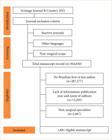
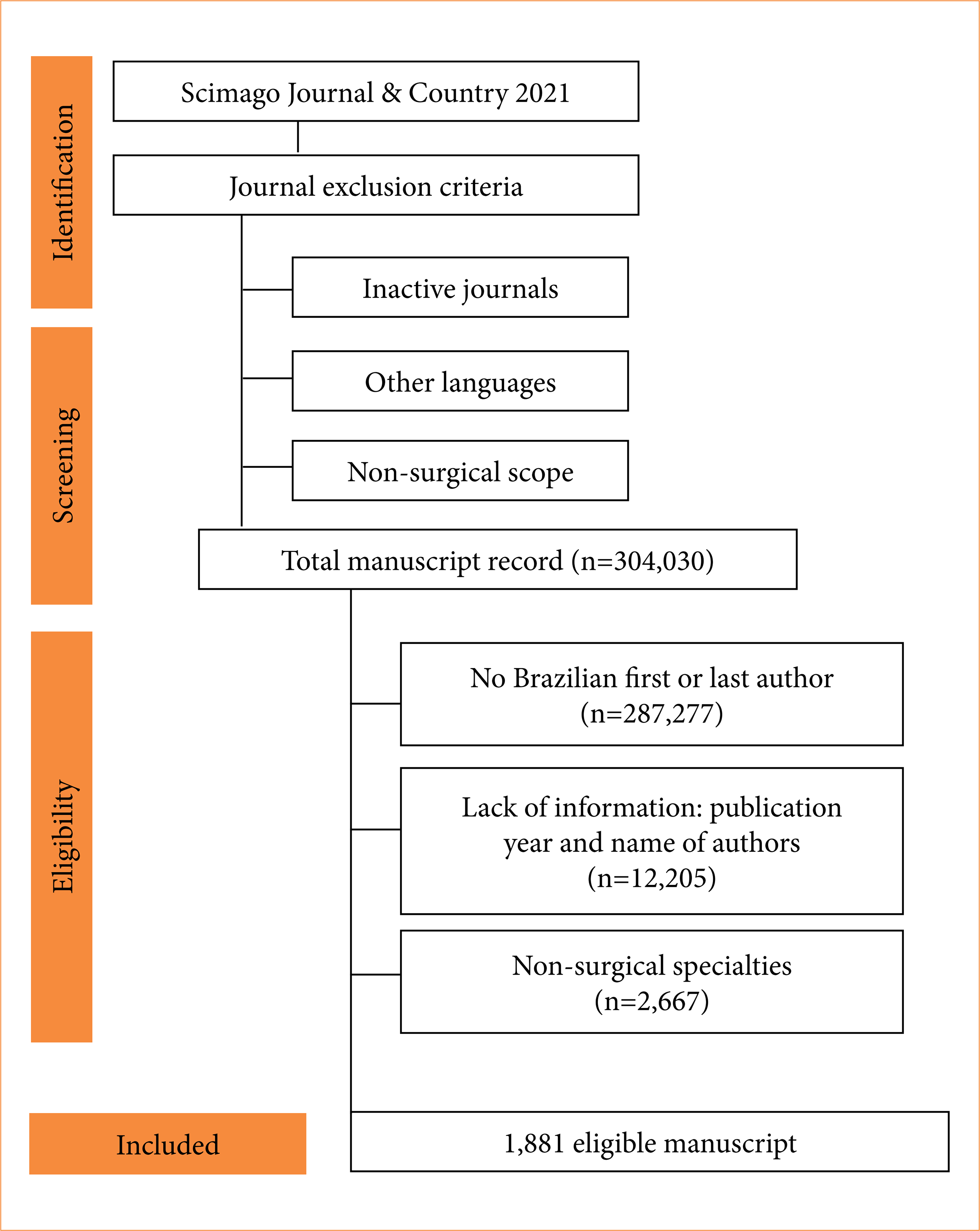
Of the 492 surgical journals searched, 340 met the inclusion criteria. We retrieved 304,030 manuscript records. Among them, 287,277 records were excluded because neither the first nor the last author were affiliated with a Brazilian institution. We further excluded 12,205 records that lacked a publication year or the first or last authors’ names. Of all, 262 citations, wherein gender accuracy for the forename was below 80% as per the Gender-API, were reviewed by two authors; 32 of these observations were amended. We excluded manuscripts when the first authors were dentists: 633; basic scientists: 139; non-healthcare professionals: 335; non-physician healthcare professionals: 289; non-surgical specialists: 301; and unknown surgical specialty: 612. Manuscripts were excluded when last authors were dentists: four; basic scientists: 26; non-health care professionals: 78; non-physician healthcare professionals: 38; non-surgical specialists: 84; and unknown surgical specialty: 130. Ultimately, we analyzed 1,881 eligible manuscripts (Fig. 1).
Overall results
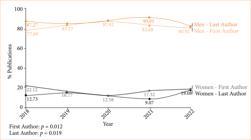
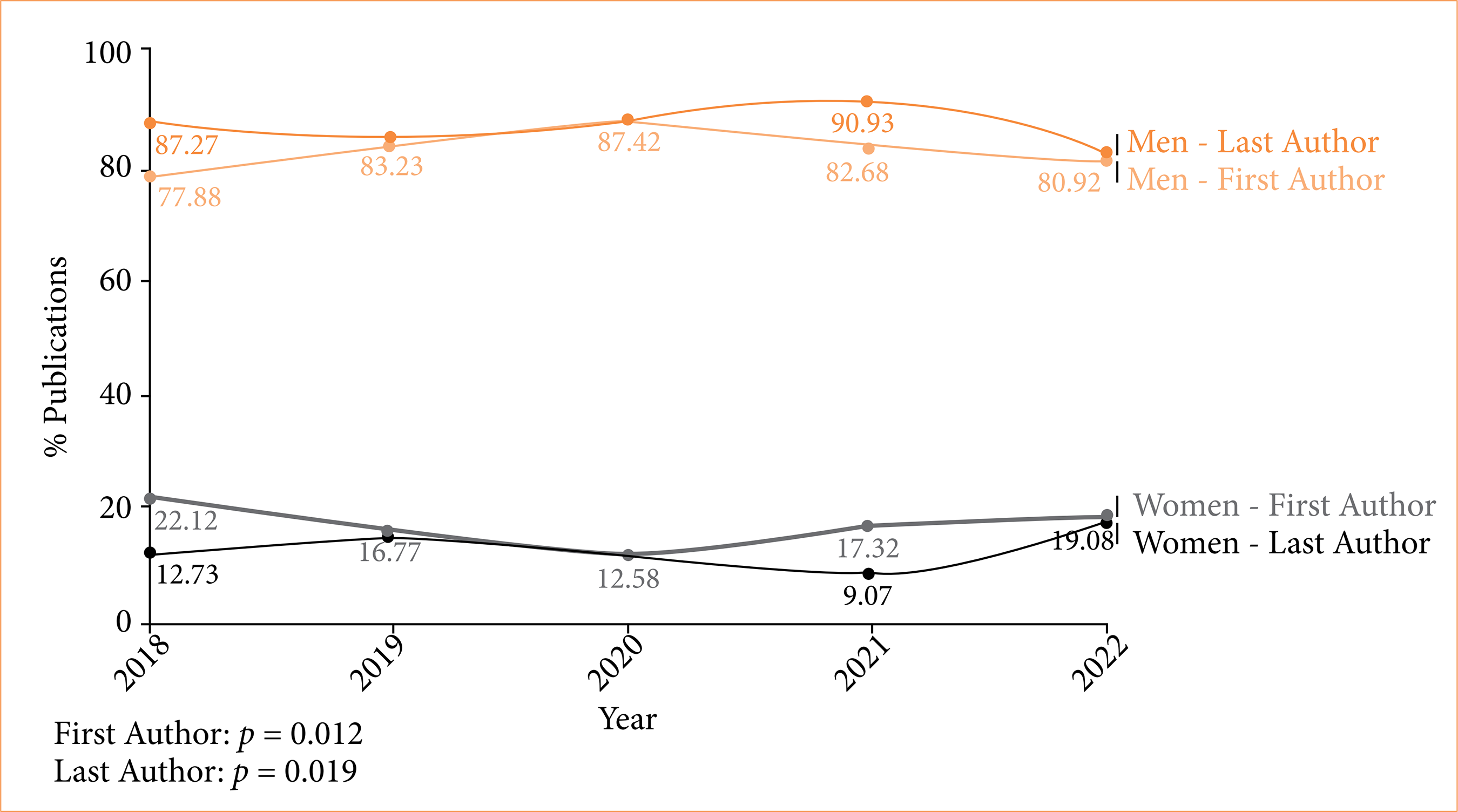
Women constituted 16.7% (314/1,881) of first authors and 12.4% (234/1,881) of last authors (Table 1). Over the five years, the proportion of publications by female first authors remained relatively constant. In 2019, women made up 16.8% (52/310) of first authors, and this figure was 17.3% (84/485) in 2021. The same happened with the representation of female last authors over this period. The proportion of publications by female last authors was from 15.2% (47/310) in 2019 to a slight decrease of 9.1% (44/485) in 2021 (p < 0.001) (Fig. 2).
Gender distribution from medical specialties
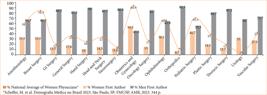
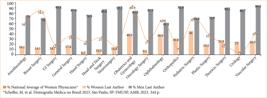
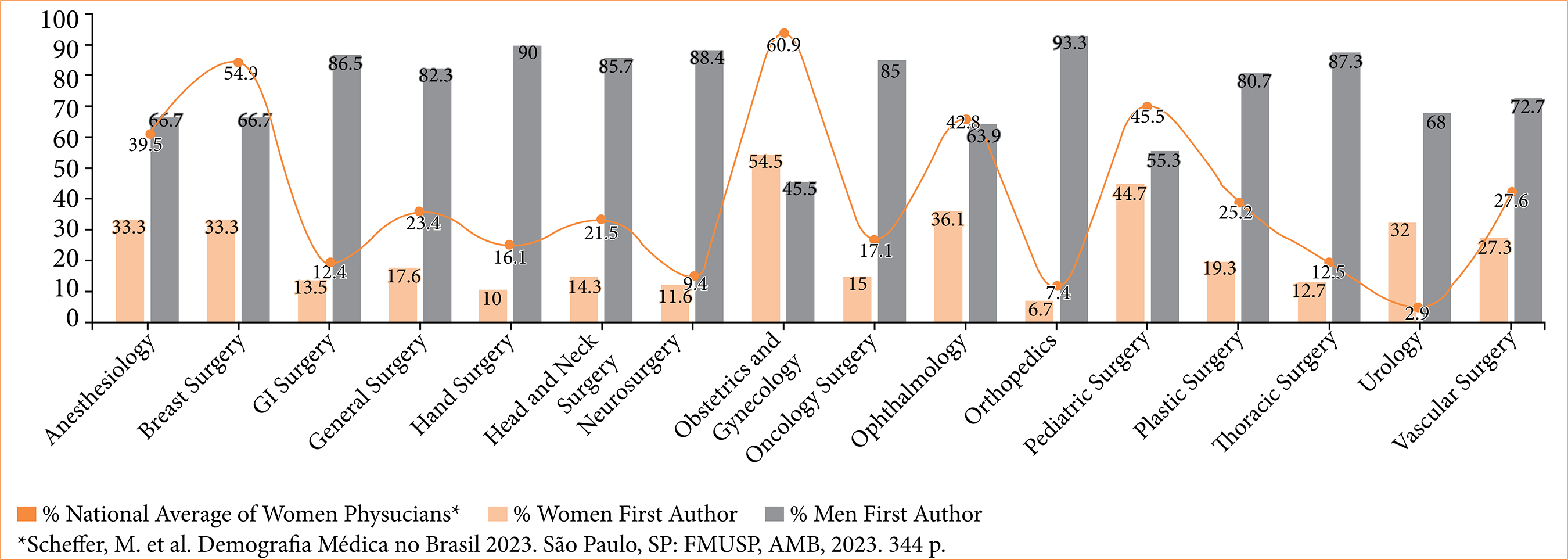
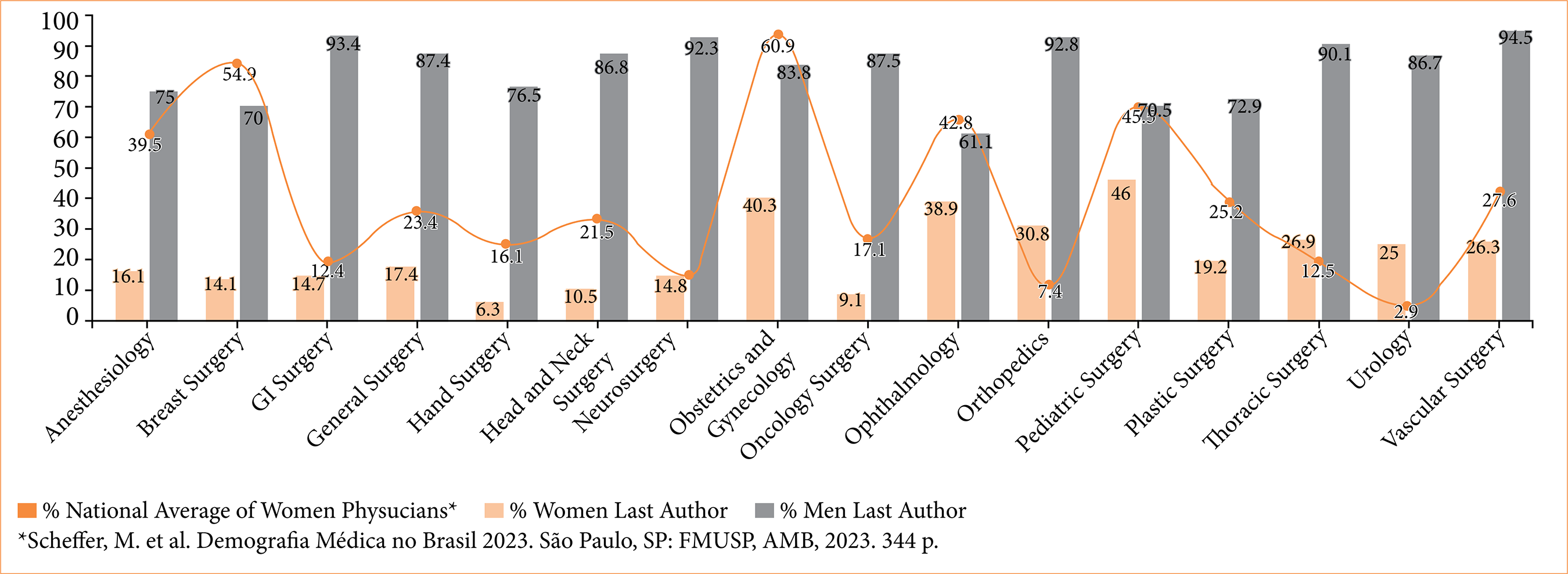
Women’s representation varied significantly across subspecialties (p < 0.001). Obstetrics and GO featured the highest proportion of female first authors (54.5%, 18/33), whereas orthopedics had the lowest (6.7%, 16/238) (Fig. 3). For the last authorship, pediatric surgery showed the highest representation of women (46%, 13/44), with hand surgery having the lowest (6.3%, 4/18) (Fig. 4). A table with the total number of publications by gender can be found in Table 1.
Geographical regions
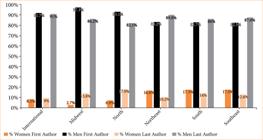
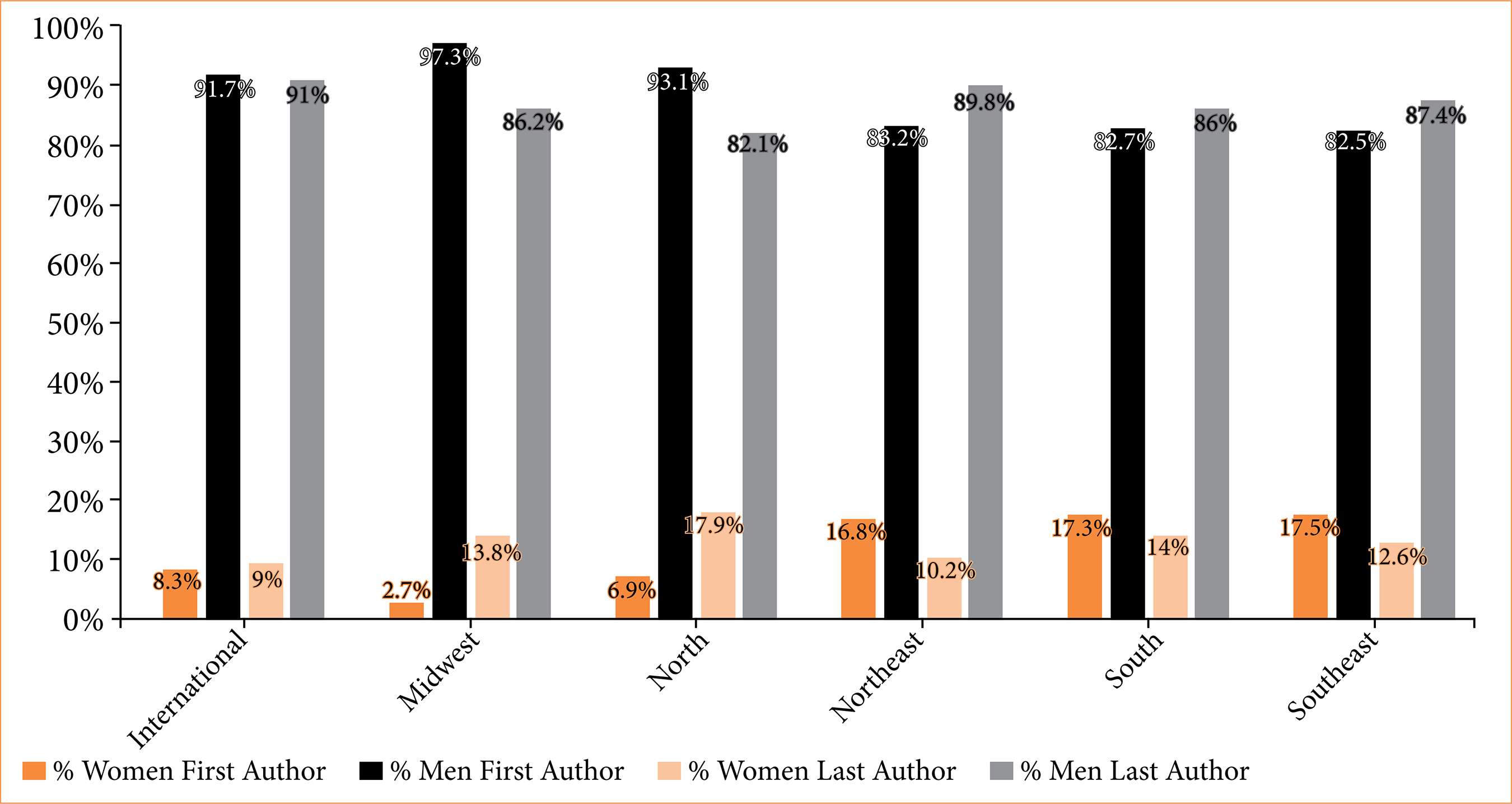
Representation of first and last authors varied significantly across geographical regions in Brazil (p < 0.001). Although 73.2% (224/306) of all female first authors’ publications originated from the Southeast region, institutions in the South boasted similar high representation of women in first (17.3%, 49/283) and highest for last (14%, 34/243) author positions. Conversely, institutions in the Midwest (2.7%, 1/37 for first authors) and Northeast (10.2%, 13/128 for last authors) displayed the most pronounced underrepresentation of women in these authorship positions (Fig. 5).
National and international collaborations
In total, 80.7% (1,519/1,881) of authors collaborated with peers from their own geographical regions. Female first authors were more likely to collaborate with authors from the same region compared to their male counterparts (86.6%, 272/314 for women vs. 79.6%, 1,247/1,567 for men, p < 0.001). Last authors had similar rates of national collaboration (82.5% 193/234 for women and 80.5% 1,326/1,647 for men, p = 0.535) (Table 1).
Female authors were underrepresented in international collaborations. Male first authors were 1.9 times more likely to collaborate with international last authors than female first authors (odds ratio–OR = 1.9, 95% confidence interval–95%CI 1.2–3.0). The OD was lower for male last authors (OR = 1.4, 95%CI 0.6–3.1) collaborating with a first author from a different country. Only 7% (22/313) of female first authors participated in collaborations with international last authors, compared to 12.6% (197/1,559) of male first authors (p = 0.004). In contrast, rates of international collaboration for last authors were the same (3% (7/230) for female last authors vs. 4.2% (69/1,636) for male ones, p = 0.479).
Journal distribution
Of all the 1,881 citations included, 19.9% (375/1,881) were published in Brazilian journals. From these 375 publications, 83.7% featured male first authors, while only 16.3% had female first authors. When examining last authors in national journals, 90.7% were men and 9.3% were women (Table 1).
Brazilian authorship among the top 10 journals
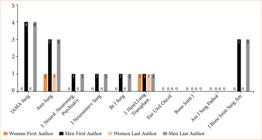
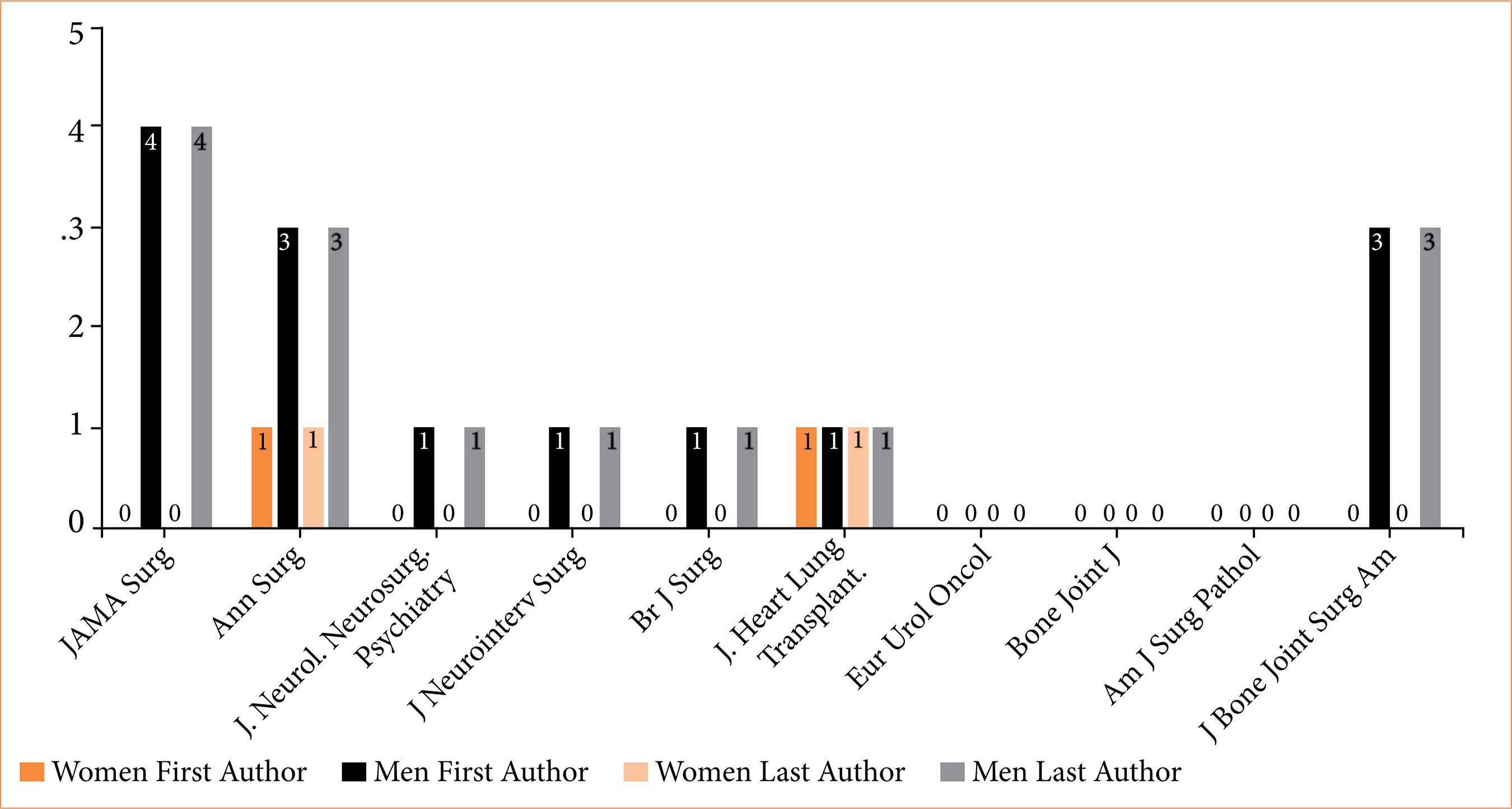
Three of the top 10 journals (European Urology Oncology, Journal of Bone & Joint Surgery, and American Journal of Surgical Pathology) analyzed did not feature any contributions from authors affiliated with Brazilian institutions. Sixteen first authors and 16 last authors published in the top 10 journals. Only 14.3% (2/16) of the first or last authors were women.
Additionally, five journals (JAMA Surgery, Journal of Neurology, Neurosurgery and Psychiatry, Journal of Neurointerventional Surgery, British Journal of Surgery, and Journal of Bone & Joint Surgery) had no women participating as first or last author, yet they had at least one male Brazilian author in these positions (Fig. 6).
Discussion
The present study highlights the disparity in Brazilian gender authorship in articles published in surgical medical journals. Similar studies analyzed the level of female surgical authorship in Brazilian journals3,4. While the presence of women in medicine and surgery in Brazil has exhibited a steady rise, an unsettling underrepresentation of female authorship persists, particularly in surgical specialties3. In this study’s analysis of surgical journals featuring Brazilian authors worldwide in the last four years, women accounted for 16.7% of first authors and 12.4% of last authors.
These findings align with existing literature. For instance, Graner et al.4 identified a persistent gender inequity in authorship in Brazilian surgical journals. They also report stable inequitable rates of female as first and last authors from 2015 and 2019. Interestingly, our results reported similar stability, adding concern to the slow progress made over time. Moreover, we observed that the proportion of female first authors slightly decreased in 2020 and 2021, and female last authors rates also decreased in 2020, yet subtly increasing in 2021.
One possible explanation for the decline in first and last author’s authorship rates in 2020 is the impact of the COVID-19 pandemic. During this time, many female researchers had added challenges in balancing their multiple roles simultaneously, including domestic duties, parenting, children’s education, and various other responsibilities16,17. This has been documented throughout the pandemic, with a reported decrease in submissions, new projects, and publications among female researchers, particularly those who were mothers18,19. This issue, however, extends beyond the pandemic, with physicians who are mothers bearing a disproportionate burden of childcare and household responsibilities20, with consequential increased rates of depressive and anxiety symptoms21.
While this is no novelty, the pandemic likely intensified the demands, increasing the impact on their personal and professional lives. A study involving female faculty at an urban medical education center revealed that, compared to their male counterpart, women were more likely to refuse leadership opportunities before and during the pandemic due to their responsibilities for childcare and household tasks20. Moreover, although manuscript submissions increased in 2020, male authorship remained higher than female authorship, especially among junior faculty members21 and in health and medicine journals19.
Gender disparities in surgical specialties
The disparities in authorship can be even more alarming across different surgical specialties. The highest proportion of female first authors was observed in obstetrics and GO (54.5%, 18/33), whereas the lowest proportion was seen in orthopedics (6.7%, 16/238).
When considering last authorship roles, pediatric surgery (46%, 13/44) displayed the highest representation of women, while hand surgery (6.6%, 4/18) the lowest. This is similar to studies conducted in high-income countries, which have consistently demonstrated the same pattern of gender disparity in academic publications in surgical subspecialties, such as obstetrics and GO (71% female first authors)22, orthopedics (15.4% female first authors)23, pediatric surgery (26.4% female last authors)24 and hand surgery (14.2% female last authors)25.
While obstetrics and GO exhibited the highest representation of women as first authors and pediatric surgery demonstrated the highest proportion of women as last authors, these figures remain below the 55% mark, underscoring a clear and persistent disparity between the percentage of women in these specialties and female authorship. This supports the inference that the number of female-led publications is not directly proportional to the number of women in each specialty. This phenomenon becomes evident when conducting a comparative analysis of gender proportions in surgical specialties in our study and the Brazilian national distribution based on medical demographic data1.
A higher proportion of women in a field was not necessarily correlated with research productivity. In obstetrics and GO, 60.9% of surgeons are women, and 54.5% of publications had women as the first author. In contrast, urology has only 2.5% women1, but, surprisingly, urology does not have the lowest proportion of female authors to male authors, with 32% of first authors women. Regarding the last author, in pediatrics, the proportion of women compared to the national distribution1 (45%) was similar to the proportion of female last authors (46%, 13/44). On the other hand, hand surgery, despite a national distribution of women of 16.1%, only 6.6% (4/18) of publications had women as the last author1.
Many modifiable institutional and cultural factors may contribute to these demonstrated gender disparities26. For instance, women often encounter fewer research opportunities in their early careers. To illustrate this scenario, Lopez et al.27 identified a gender disparity at the outset of first authorship that decreased subsequently in the last author in ophthalmology. Moreover, one of the significant factors contributing to low research among female first authors is pregnancy28. Studies have shown that pregnancy can be a hindrance to academic production29 and having more children decreases productivity. Having one child is associated with a loss of 9.5% of productivity, 22% with two children, and 33% with three children30. This does not happen with male authors, as they do not experience any significant variability in productivity with parenthood30.
Another contributing factor could be the lack of female role models to emulate, particularly in high-ranking positions, which aligns with the leaky pipeline theory. The scarcity of women in senior roles, including university positions, is striking. A meta-analysis conducted on full professorship among academic physicians revealed that men had 2.77 times higher odds of attaining full professorship than women31. Notably, the specialty with the most significant gender difference in full professorship was obstetrics and GO31,32, despite having one of the highest proportions of female professionals.
Women’s regional representativeness
Brazil is a vast and diverse country, with various healthcare and educational resources spread across different regions33. The Southeast region, containing Sao Paulo and its prestigious universities and medical centers, is rich in resources33. The Midwest and North regions are not33. Our findings revealed that, while most female-authored publications were from the Southeast region, the proportion of female first authors remained below 30% (28.31%), nearly identical to the North (28.85%). Regional disparities appeared when considering the first and last authors’ positions combined, similar to previous studies evaluating low- and middle-income authorship trends34. This resonates with the intricacies of our national cultural and historical context33 and can be insightful to other LMICs and countries with similar characteristics33,35–37. These can foster policymaking to improve professional environments and sustain academic development for women across various resource settings.
International contribution
As we explore the regional disparities in authorship representation, it is worth examining how international collaboration patterns differed among first and last authors. Recent studies examining gender disparities in international research collaboration have revealed an interesting trend: male first and last authors were approximately two times more inclined to engage in international collaborations compared to their female counterparts39,40. Even though these researchers explored various fields, their contributions have contributed to our understanding. Our study aligns with these findings, as we observed a similar trend: female first authors collaborated internationally less than male authors, with only 7% of female first authors engaging in international collaboration (vs. 12.6% male first authors, p = 0.004) and no difference between last authors (3% for female vs. 4.2% for male, p = 0.399).
Gender disparities in authorship were more significant when we analyzed high-impact journals, whether originating in Brazil or globally. In a recent study examining the gender distribution among first and last authors in the 10 top surgical journals from 2015 to 2022, only 22.3% of first authors were female, as were 14.3% of the last authors38. In our study, the rates were similar, with 22% of first authors and 7.9% of last authors female. Notably, three of the top 10 journals had no female first or last authors: JAMA Surgery, Journal of Neurointerventional Surgery and British Journal of Surgery32,39–41. Moreover, there were no Brazilian authors in two journals: Journal of Bone & Joint Surgery and American Journal of Surgical Pathology.
Surgical culture
The challenge faced by women in academic surgery is multifaceted and largely stems from largely male-oriented social norms that create a sense of belonging uncertainty for them and underrepresented or marginalized minorities42. These environments also fuel gender bias, which can manifest in various forms, from discrimination to microaggressions and macroaggressions that negatively impact women’s careers42.
Disparities persist in terms of compensation, with female surgeons earning 8% less annually43, even after controlling for factors such as training, subspecialty, faculty rank, and clinical and academic productivity metrics. Additionally, the challenging balance of professional and home responsibilities remains an unspoken challenge for many women in academic surgery, particularly in dual-professional families, exacerbating the so-called “double burden” of unpaid household work44. These issues underscore the importance of addressing both gender inequalities and the social norms that perpetuate these disparities in order to promote a more inclusive and equitable academic surgery field.
As evidenced, worldwide women’s presence in academic surgery authorship, notably leadership positions, remains inadequate45. However, some countries have developed strategies to diminish these gaps. Over 30 years ago, the John Hopkins University School of Medicine established an Equity Issues Task Force from 1990 to 1995 to identify barriers and enhance representation for women, resulting in an increase in 550% of women-associated professors46. These actions emphasize the importance of fostering national and regional strategies to promote further career advancement, professional development, and research opportunities for women in surgical, anesthesia, and obstetrics specialties. Moreover, implementing mentorship and guaranteeing representation is a must45 and crucial in narrowing gender gaps, fostering an inclusive environment, and promoting equitable growth for female surgeons.
Sex and Gender Equity in Research (SAGER) Guidelines47 are deemed effective and highly endorsed by academic stakeholders and should be implemented by journal editors. These policies will help journal editors to contribute to standardizing terminology and will support best reporting practices for inclusion of sex and gender as variables. In addition, journals should adopt a clear Equal Employment Opportunity and Diversity Statement for implementing inclusive environments48. A Brazilian study examining four academic journals revealed a stark gender disparity in their scientific committees. Only three of 158 scientific committee members on two journals were women, representing a mere 1.9% of the composition. Notably, the journal Revista do Colégio Brasileiro de Cirurgiões stood out as an exception, with women comprising 93% (67/72) of its reviewers. In contrast, one particular journal, Revista Brasileira de Cirurgia Cardiovascular, exhibited a complete absence of female participation, both in its scientific committees and among its reviewers49.
Limitations
This study is not without limitations. First, the author’s gender was obtained using the author’s first name and analyzed by Gender-API software, which works with limited binary gender (woman or man). Second, the data was analyzed manually. Therefore, there are limitations in precision compared to data analyzed by software. Third, affiliation information has been provided by the authors, with some indicating more than two different specialties. Fourth, our findings explored a limited number of journals. Lastly, the validation of the adapted version of the STROBE Statement. Despite these weaknesses, this study evaluated bibliometric literature using a systematic manner and an accurate gender software assessor. We highlighted disparities across regions and specialties that have contributed to equity in authorship in surgery.
Conclusion
Despite an increase in the proportion of women in surgery over the past years, women remain underrepresented as first and last authors in high-impact journals and international collaborations, even when working in high-resource regions. Future research should explore the factors limiting women’s engagement in surgical research and assess potential strategies to enhance their leadership in surgical publications.
Acknowledgements
We would like to acknowledge Camila Verônica Freire for her invaluable assistance in acquiring the data that made this work possible. We are also deeply grateful to Gabriel Max Santos Silva, Sofia Wagemaker and Brenda Feres for their meaningful contributions and ongoing support throughout this project.
-
Research performed at Universidade de São Paulo, São Paulo (SP), Brazil.
-
Funding
Not applicable.
Data availability statement
The data that support the findings of this study are available from the corresponding author, upon reasonable request.
References
- 1 Scheffer M, editor. Demografia Médica no Brasil 2023. São Paulo: FMUSP, AMB; 2023.
-
2 Yamamura J, Molwitz I, Ozga AK, Nguyen TA, Wedekind I, Wolf-Baldauf L, Kamo M, Zhao J, Can E, Keller S. Gender differences and cooperation in medical authorships - an analysis of the recent ten years in five key medical disciplines. BMC Med Educ. 2023;23(1):68. https://doi.org/10.1186/s12909-023-04041-6
» https://doi.org/10.1186/s12909-023-04041-6 -
3 Motter SB, Brandão GR, Iaroseski J, Alves AV, Konopka ALK, de Assis Brasil CM, Silva GS, Spadoa JL, Reis RJ. Gender-related trends in publication authorship: a 10-year analysis of a Brazilian surgical journal. Cureus. 2021;13(10):e18993. https://doi.org/10.7759/cureus.18993
» https://doi.org/10.7759/cureus.18993 -
4 Graner M, Buda AM, Moura CB, Campos L, Faria I, Truche P, Botelho F, Pompermaier L, Gil Alves Guilloux A, Bowder AN, Ferreira J. Is authorship by women in Brazilian academic surgery increasing? A five-year retrospective analysis. PLOS Glob Public Health. 2022;2(4):e0000294. https://doi.org/10.1371/journal.pgph.0000294
» https://doi.org/10.1371/journal.pgph.0000294 -
5 Danko D, Cheng A, Losken A. Gender diversity in plastic surgery: is the pipeline leaky or plugged? Plast Reconstr Surg. 2021;147(6):1480–5. https://doi.org/10.1097/PRS.0000000000008002
» https://doi.org/10.1097/PRS.0000000000008002 -
6 Moak TN, Cress PE, Tenenbaum M, Casas LA. The leaky pipeline of women in plastic surgery: embracing diversity to close the gender disparity gap. Aesthet Surg J. 2020;40(11):1241–8. https://doi.org/10.1093/asj/sjz299
» https://doi.org/10.1093/asj/sjz299 -
7 STROBE - Strengthening the reporting of observational studies in epidemiology. [accessed on May 9, 2023]. Available at: https://www.strobe-statement.org/
» https://www.strobe-statement.org/ -
8 Von Elm E, Altman DG, Egger M, Pocock SJ, Gøtzsche PC, Vandenbroucke JP; STROBE Initiative. Strengthening the Reporting of Observational Studies in Epidemiology (STROBE) statement: guidelines for reporting observational studies. BMJ. 2007;335(7624):806–8. https://doi.org/10.1136/bmj.39335.541782.AD
» https://doi.org/10.1136/bmj.39335.541782.AD -
9 Freire CVS, Campos LN, Rangel AG, Naus A, Wagemaker S, Brandão GR, Schlindwein SS, Feres B, de Araújo Grisi G, Mooney DP, Ferreira JL, Ferreira R. Uncovering gaps in women’s authorship: A big data analysis in academic surgery. World J Surg. 2024. https://doi.org/10.1002/wjs.12256
» https://doi.org/10.1002/wjs.12256 -
10 EDirect software. [accessed on May 9, 2023]. Available at: https://www.nlm.nih.gov/dataguide/edirect/documentation.html#
» https://www.nlm.nih.gov/dataguide/edirect/documentation.html# -
11 PubMed XML metadata fields. [accessed on May 9, 2023]. Available at: https://www.nlm.nih.gov/bsd/licensee/elements_descriptions.html
» https://www.nlm.nih.gov/bsd/licensee/elements_descriptions.html -
12 ISO 3166 2021. [accessed on May 9, 2023]. Available at: https://www.iso.org/iso-3166-country-codes.html
» https://www.iso.org/iso-3166-country-codes.html -
13 Microsoft Excel Power Query. [accessed on May 9, 2023]. Available at: https://powerquery.microsoft.com/en-us/
» https://powerquery.microsoft.com/en-us/ -
14 Cygwin software version 16.6. United States of America: UNIX [accessed on May 9, 2023]. Available at: https://www.cygwin.com/
» https://www.cygwin.com/ -
15 StataCorp. Stata Statistical Software: Release 18 [Internet]. College Station: StataCorp LLC; 2023 [accessed on May 19, 2023]. Available at: https://www.stata.com/new-in-stata/
» https://www.stata.com/new-in-stata/ -
16 Misra V, Safi F, Brewerton KA, Wu W, Mason R, Chan AW, Rochon PA, Lega IC, Abdel-Qadir H. Gender disparity between authors in leading medical journals during the COVID-19 pandemic: a cross-sectional review. BMJ Open. 2021;11(7):e051224. https://doi.org/10.1136/bmjopen-2021-051224
» https://doi.org/10.1136/bmjopen-2021-051224 -
17 Fisher AN, Ryan MK. Gender inequalities during COVID-19. Group Process Intergroup Relat. 2021;24(2):237–45. https://doi.org/10.1177/1368430220984248
» https://doi.org/10.1177/1368430220984248 -
18 Viglione G. Are women publishing less during the pandemic? Here’s what the data say. Nature. 2020;581:365–6. https://doi.org/10.1038/d41586-020-01294-9
» https://doi.org/10.1038/d41586-020-01294-9 -
19 Squazzoni F, Bravo G, Grimaldo F, García-Costa D, Farjam M, Mehmani B. Gender gap in journal submissions and peer review during the first wave of the COVID-19 pandemic. A study on 2329 Elsevier journals. PLoS One. 2021;16(10):e0257919. https://doi.org/10.1371/journal.pone.0257919
» https://doi.org/10.1371/journal.pone.0257919 -
20 Matulevicius SA, Kho KA, Reisch J, Yin H. Academic medicine faculty perceptions of work-life balance before and since the COVID-19 pandemic. JAMA Netw Open. 2021;4(6):e2113539. https://doi.org/10.1001/jamanetworkopen.2021.13539
» https://doi.org/10.1001/jamanetworkopen.2021.13539 -
21 Frank E, Zhao Z, Fang Y, Rotenstein LS, Sen S, Guille C. Experiences of work-family conflict and mental health symptoms by gender among physician parents during the COVID-19 pandemic. JAMA Netw Open. 2021;4(11):e2134315. https://doi.org/10.1001/jamanetworkopen.2021.34315
» https://doi.org/10.1001/jamanetworkopen.2021.34315 -
22 Metheny WP, Jagadish M, Heidel RE. A 15-Year study of trends in authorship by gender in two U.S. obstetrics and gynecology journals. Obstet Gynecol. 2018;131(4):696–9. https://doi.org/10.1097/AOG.0000000000002539
» https://doi.org/10.1097/AOG.0000000000002539 -
23 Powell SN, Hunting JC, Frazier LP, Keeling LE, Janowski J. Evolution and trends in male versus female authorship of articles in flagship orthopaedic journals from 1995 to 2020. J Am Acad Orthop Surg. 2022;30(12):e878–85. https://doi.org/10.5435/JAAOS-D-21-01113
» https://doi.org/10.5435/JAAOS-D-21-01113 -
24 Marrone AF, Berman L, Brandt ML, Rothstein DH. Does academic authorship reflect gender bias in pediatric surgery? An analysis of the Journal of Pediatric Surgery, 2007-2017. J Pediatr Surg. 2020;55(10):2071–4. https://doi.org/10.1016/j.jpedsurg.2020.05.020
» https://doi.org/10.1016/j.jpedsurg.2020.05.020 -
25 Xu RF, Varady NH, Chen AF, Earp BE. Gender disparity trends in authorship of hand surgery research. J Hand Surg Am. 2022;47(5):420–8. https://doi.org/10.1016/j.jhsa.2022.01.002
» https://doi.org/10.1016/j.jhsa.2022.01.002 -
26 Ha GL, Lehrer EJ, Wang M, Holliday E, Jagsi R, Zaorsky NG. Sex differences in academic productivity across academic ranks and specialties in academic medicine: a systematic review and meta-analysis. JAMA Netw Open. 2021;4(6):e2112404. https://doi.org/10.1001/jamanetworkopen.2021.12404
» https://doi.org/10.1001/jamanetworkopen.2021.12404 -
27 Lopez SA, Svider PF, Misra P, Bhagat N, Langer PD, Eloy JA. Gender differences in promotion and scholarly impact: an analysis of 1460 academic ophthalmologists. J Surg Educ. 2014;71(6):851–9. https://doi.org/10.1016/j.jsurg.2014.03.015
» https://doi.org/10.1016/j.jsurg.2014.03.015 -
28 Levinson W, Tolle SW, Lewis C. Women in academic medicine. Combining career and family. N Engl J Med. 1989;321:1511–7. https://doi.org/10.1056/NEJM198911303212205
» https://doi.org/10.1056/NEJM198911303212205 -
29 Hill EK, Blake RA, Emerson JB, Svider P, Eloy JA, Raker C, Robison K, Stuckey A. Gender differences in scholarly productivity within academic gynecologic oncology departments. Obstet Gynecol. 2015;126(6):1279–84. https://doi.org/10.1097/AOG.0000000000001133
» https://doi.org/10.1097/AOG.0000000000001133 -
30 Krapf M, Ursprung H, Zimmermann C. Parenthood and productivity of highly skilled labor: Evidence from the groves of academe. J Econ Behav Organ. 2017;140:147–75. https://doi.org/10.1016/j.jebo.2017.05.010
» https://doi.org/10.1016/j.jebo.2017.05.010 -
31 Li B, Jacob-Brassard J, Dossa F, Salata K, Kishibe T, Greco E, Baxter NN, Al-Omran M. Gender differences in faculty rank among academic physicians: a systematic review and meta-analysis. BMJ Open. 2021;11(11):e050322. https://doi.org/10.1136/bmjopen-2021-050322
» https://doi.org/10.1136/bmjopen-2021-050322 -
32 Burns CJ, Russell CB, Griffith KA, Mangurian C, Johnson TRB, Jagsi R. Gender differences of endowed professorship in obstetrics and gynecology departments at top academic institutions. J Womens Health (Larchmt). 2023;32(1):39–46. https://doi.org/10.1089/jwh.2022.0060
» https://doi.org/10.1089/jwh.2022.0060 -
33 United Nations Educational, Scientific and Cultural Organization (UNESCO). Cultural Diversity in Brazil. UNESCO [accessed on May 9, 2023]. Available at: https://www.unesco.org/en/fieldoffice/brasilia/expertise/cultural-diversity
» https://www.unesco.org/en/fieldoffice/brasilia/expertise/cultural-diversity -
34 Jashek-Ahmed F, Daudu D, Heer B, Ali H, Wiedermann J, Seguya A; Members of the Global OHNS Initiative (globalohns.org). Female and low- and middle-income authorship trends in high-impact ENT journals (2011-2020). Laryngoscope Investig Otolaryngol. 2023 0;8(2):417–25. https://doi.org/10.1002/lio2.1044
» https://doi.org/10.1002/lio2.1044Coube -
35 Coube M, Nikoloski Z, Mrejen M, Mossialos E. Inequalities in unmet need for health care services and medications in Brazil: a decomposition analysis. Lancet Reg Health Am. 2023;19:100426. https://doi.org/10.1016/j.lana.2022.100426
» https://doi.org/10.1016/j.lana.2022.100426 -
36 Columbia. Mailman School of Public Health. Comparative Health Policy Library. Columbia: Mailman School of Public Health [accessed on Apr. 20, 2023]. Available at: https://www.publichealth.columbia.edu/research/others/comparative-health-policy-library/brazil-summary
» https://www.publichealth.columbia.edu/research/others/comparative-health-policy-library/brazil-summary -
37 World Bank. Brazil Overview. World Bank [accessed on Apr. 20, 2023]. Available at: https://www.worldbank.org/en/country/brazil/overview
» https://www.worldbank.org/en/country/brazil/overview -
38 Sauder M, Newsome K, Zagales I, Autrey C, Das S, Zagales R, Bilski T, Elkbuli A. Gender distribution of first and senior authorship across most cited studies within the top ten surgical journals from 2015-2020: cementing women academic surgery representation. J Surg Res. 2022;277:7–16. https://doi.org/10.1016/j.jss.2022.03.019
» https://doi.org/10.1016/j.jss.2022.03.019 -
39 Aksnes DW, Piro FN, Rørstad K. Gender gaps in international research collaboration: a bibliometric approach. Scientometrics. 2019;120:747–74. https://doi.org/10.1007/s11192-019-03155-3
» https://doi.org/10.1007/s11192-019-03155-3 -
40 Kwiek M, Roszka W. Gender disparities in international research collaboration: A study of 25,000 university professors. J Econ Surv. 2021;35(5):1344–80. https://doi.org/10.1111/joes.12395
» https://doi.org/10.1111/joes.12395 -
41 Holman L, Morandin C. Researchers collaborate with same-gendered colleagues more often than expected across the life sciences. PLoS One. 2019;14(4):e0216128. https://doi.org/10.1371/journal.pone.0216128
» https://doi.org/10.1371/journal.pone.0216128 -
42 Greenup RA, Pitt SC. Women in academic surgery: a double-edged scalpel. Acad Med. 2020;95(10):1483–4. https://doi.org/10.1097/ACM.0000000000003592
» https://doi.org/10.1097/ACM.0000000000003592 -
43 Association of Women Surgeons. Gender equity toolkit. Association of Women Surgeons [accessed on Sep 23, 2023]. Available at: https://www.womensurgeons.org/gender-equity-toolkit#:~:text=Female%20surgeons%20earn%208%25%20less,on%20entry%20into%20the%20workforce
» https://www.womensurgeons.org/gender-equity-toolkit#:~:text=Female%20surgeons%20earn%208%25%20less,on%20entry%20into%20the%20workforce -
44 Offer S, Schneider B. Revisiting the gender gap in time-use patterns: multitasking and well-being among mothers and fathers in dual-earner families. Am Sociol Rev. 2011;76(6):809–33. https://doi.org/10.1177/0003122411425170
» https://doi.org/10.1177/0003122411425170 -
45 Mahendran GN, Walker ER, Bennett M, Chen AY. Qualitative study of mentorship for women and minorities in surgery. J Am Coll Surg. 2022;234(3):253–61. https://doi.org/10.1097/XCS.0000000000000059
» https://doi.org/10.1097/XCS.0000000000000059 - 46 Fried LP, Francomano CA, MacDonald SM, Wagner EM, Stokes EJ, Carbone KM, Bias WB, Newman MM, Stobo JD. Career development for women in academic medicine: Multiple interventions in a department of medicine. JAMA. 1996;276(11):898–905.
-
47 Heidari S, Babor TF, De Castro P, Tort S, Curno M. Sex and Gender Equity in Research: rationale for the SAGER guidelines and recommended use. Res Integr Peer Rev. 2016;1:2. https://doi.org/10.1186/s41073-016-0007-6
» https://doi.org/10.1186/s41073-016-0007-6 -
48 Dewidar O, Elmestekawy N, Welch V. Improving equity, diversity, and inclusion in academia. Res Integr Peer Rev. 2022;7:4. https://doi.org/10.1186/s41073-022-00123-z
» https://doi.org/10.1186/s41073-022-00123-z -
49 De Camargo JRF, Hayashi MCP. Coautoria e participação feminina em periódicos brasileiros da área de cirurgia: estudo bibliométrico. RDBCI. 2017;15(1):148–70. https://doi.org/10.20396/rdbci.v15i1.8646289
» https://doi.org/10.20396/rdbci.v15i1.8646289
Edited by
-
Section editor: Edna Montero https://orcid.org/0000-0003-1437-1219

 Source: Elaborated by the authors.
 Source: Elaborated by the authors.
 Source: Elaborated by the authors.
 Source: Elaborated by the authors.
 Source: Elaborated by the authors.
 Source: Elaborated by the authors.