
 Prenatal exposure to nitrate alters uterine morphology and gene expression in adult female F1 generation rats
ABSTRACT
Objective: Nitrate is ubiquitously found in the environment and is one of the main components of nitrogen fertilizers. Previous studies have shown that nitrate disrupts the reproductive system in aquatic animals, but no study has evaluated the impact of nitrate exposure on the uterus in mammals. This study aimed to evaluate the impact of maternal exposure to nitrate during the prenatal period on uterine morphology and gene expression in adult female F1 rats.
Materials and methods: Pregnant Wistar rats were either treated with sodium nitrate 20 mg/L or 50 mg/L dissolved in drinking water from the first day of pregnancy until the birth of the offspring or were left untreated. On postnatal day 90, the uteri of female offspring rats were collected for histological and gene expression analyses. Morphometric analyses of the uterine photomicrographs were performed to determine the thickness of the layers of the uterine wall (endometrium, myometrium, and perimetrium) and the number of endometrial glands.
Results: The highest nitrate dose increased the myometrial thickness of the exposed female rats. Treatment with both nitrate doses reduced the number of endometrial glands compared with no treatment. Additionally, nitrate treatment significantly increased the expression of estrogen receptors and reduced the expression of progesterone receptors in the uterus.
Conclusion: Our results strongly suggest that prenatal exposure to nitrate programs gene expression and alters the uterine morphology in female F1 rats, potentially increasing their susceptibility to developing uterine diseases during adulthood.
Keywords
DOHaD; nitrate; uterus; female rats
INTRODUCTION
Endocrine disruptors are natural or synthetic exogenous agents that interfere with the synthesis, secretion, transport, and action of hormones endogenously produced by the body (1,2). Several studies evaluating the impact and mechanisms of exposure to these disruptors on the endocrine system function have reported changes in neurobehavioral, growth, and stress responses; increased incidence of chronic diseases and some types of cancer; and alterations in the development of the reproductive system (3,4). Humans are persistently exposed to low concentrations of these contaminants throughout their lives (5-7). It is worth noting that even exposure to extremely low doses of endocrine disruptors also induces relevant responses in the body, especially during critical periods of development (8-10).
The prenatal and early postnatal periods are the most critical stages of development and have the greatest impact on tissue/organ programming (11). Thus, the environment to which pregnant women are exposed during pregnancy and lactation has significant effects on the development of the fetus and newborn, which also determines the extent of susceptibility to the development of diseases in adulthood (12).
The uterus is highly susceptible to the harmful effects of endocrine disruptors (3,13-16). A previous study has shown that rats chronically exposed to BPA have an increased incidence of cystic endometrial hyperplasia, cystic ovaries, and complex uterine pathologies, such as adenomyosis, leiomyomas, cystic hyperplasia, and endometrial polyps (17). Similarly, neonatal exposure to tributyltin (TBT) leads to thickened luminal epithelium, increased uterine fibrosis and tissue inflammation, and decreased number of endometrial glands in adult animals compared with controls (18).
The use of nitrogen fertilizers to enhance growth and accelerate food production has significantly increased the levels of nitrogen oxides and nitrates in the atmosphere and water sources (19). In humans, nitrates are readily absorbed in the upper gastrointestinal tract after ingestion and are distributed throughout the body, where they are converted into nitrite at specific sites (20-24). Previous studies in vertebrates and invertebrates have shown an association between nitrate contamination and changes in hormonal levels and between decreased reproductive capacity and impaired endocrine function (25,26). Harmful effects of nitrate exposure on the reproductive system, particularly on steroidogenesis and occurring due to the excessive production of nitrogen compounds, have been described (26).
Although nitrate is widely distributed in the environment, most studies on the harmful effects of nitrate on reproduction have been conducted in aquatic animals. These studies have reported a decrease in the number and weight of embryos, as well as a reduction in the reproductive capacity of offspring from animals exposed to nitrate (27,28). Only a few studies have focused on evaluating the effects of nitrate on the reproductive system in mammal models (29-32), while no studies have evaluated the uterine effects of nitrate in rodent models. Therefore, the present study aimed to investigate the impact of prenatal exposure to nitrate on uterine morphology and gene expression in adult female rat offspring.
MATERIALS AND METHODS
Experimental model and treatment protocol
Two-month-old adult virgin female Wistar rats (four per group) were housed in an acclimatized environment at 22 ± 2 ºC, with a relative humidity of 55 ± 10%, and an inverted light/dark cycle of 12 hours. Water and feed were provided ad libitum. After the adaptation period (approximately 10 days), the rats were mated, and the vaginal smear was evaluated daily to identify the first day of pregnancy. The rats were then weighed, separated into cages, and randomly divided into the following experimental groups: control (C) group, which received filtered water not supplemented with any treatment; nitrate 20 (N20) group, which received filtered water supplemented with NaNO3 20 mg/L, and nitrate 50 (N50) group, which received filtered water supplemented with NaNO3 50 mg/L. The treatment was administered only during pregnancy. Treatment doses were based on previous studies evaluating the effects of nitrate on health in humans and other animals (20,33,34). After the birth of the offspring, treatment was interrupted. Female offspring were maintained with normal rat chow and filtered water until postnatal day 90 when they were anesthetized and euthanized by decapitation (4-6 animals per experimental group). The estrous cycle on the day of euthanasia was determined by vaginal smear analysis. Notably, more than 90% of the female rats were at the metestrus or diestrus phase of the estrous cycle on the day of euthanasia.
Sample collection and preservation
After euthanasia, the uteri of the female offspring rats were collected, and the uterine horns were divided for molecular and histological analyses. One of the horns was snap-frozen and stored in a freezer at −80 ºC until processing for molecular analyses. The other horn was stored in a Methacarn fixative solution for histological analysis.
Sample preparation for histological analysis
Uterine fragments measuring 3 mm3 were fixed for 12 hours in Methacarn, then dehydrated in alcohol, cleared in xylene, and embedded in paraffin. The paraffin blocks were sectioned at a thickness of 5 μm. The slides were stained with hematoxylin and eosin and mounted using Entellan.
Uterine wall thickness measurement and endometrial gland count
A Zeiss AxioVert. A1 microscope (Jena, Germany) and Zeiss Axiocam 503 Color camera (Jena, Germany) were used for acquiring images of the uteri. Photomicrographs of each slide were obtained using a 5x objective to ensure the visualization of the entire section. Thickness was measured in cross-sections of each uterus at six distinct points, corresponding to clock positions (1, 3, 5, 7, 9, and 11 o'clock). At each clock position, the total uterine thickness (myometrium plus endometrium plus perimetrium), myometrium, and endometrium were measured using the Zen Lite software (Jena, Germany). Uterine glands were manually counted in the endometrial layer of the uterus in histological sections from all experimental groups.
RNA isolation, reverse transcription, and gene expression analysis
Uterine horns were homogenized in Trizol (Invitrogen Life Technologies, Carlsbad, CA, USA) using Polytron equipment. Total RNA was extracted according to the manufacturer's protocol. The RNA concentration in each sample was measured using a NanoDrop spectrophotometer. Subsequently, RNA was reverse transcribed into cDNA using M-MLV Reverse Transcriptase (Invitrogen Life Technologies). Real-time polymerase chain reaction (PCR) assays were performed using 200 nM of each primer pair designed for estrogen receptor alpha (Esr1), estrogen receptor beta (Esr2), and progesterone receptor (Pgr). The expression of Rpl19 was used as an endogenous control in each reaction. Real-time PCR was performed using the QuantStudio 6 Real-time PCR System (Applied Biosystems, Thermo Fisher Scientific, Waltham, MA, USA). All reactions were performed in duplicate for each sample. Melting curves were analyzed to confirm the amplification of a single product in the PCR. For quantitative analyses, the results were calculated using the 2-ΔΔCt method (35).
Statistical analysis
Statistical analyses were performed using the software SPSS, version 24 (IBM Corp., Armonk, NY, USA), and GraphPad Prism, version 5.0 (GraphPad Software, Inc., La Jolla, CA, USA), considering a significance level of 5%. All numerical values are expressed as ratios of means or estimated mean ± standard deviation of the mean. Ratios of the means were calculated for comparisons with the C group.
Generalized estimating equation (GEE) models were used to measure uterine thickness accounting for correlations among measurements from different photographs of the same slide and from different locations within the same photograph. The Gamma distribution was applied, and a compound symmetry correlation structure was considered in all models (36).
The number of endometrial glands was compared among experimental groups using a GEE model (37), which accounted for correlations among different photographs of the same slide, with negative binomial distribution and logarithmic link function. The mean ratios of the treated groups (N20 and N50) were compared with those of the C group.
To analyze gene expression data, comparisons among the different experimental groups were performed using a one-way analysis of variance followed by the Student-Newman-Keuls test.
RESULTS
Effect of intrauterine nitrate exposure on body weight
The treatment of pregnant rats with sodium nitrate 20 mg/L or 50 mg/L did not significantly alter the duration of the gestational period or the number of offspring rats. However, nitrate-exposed F1 rats presented significantly reduced body weight compared with control animals. Notably, the rats’ body weight in adulthood was not significantly different between the nitrate-exposed and control groups (Table 1).
Nitrate-induced effects on the duration of the gestational period, number of offspring rats, and body weight at birth and during adulthood
Effect of prenatal nitrate exposure on uterine wall thickness
Figure 1 illustrates the histological patterns of uterine walls in adult female offspring of animals from the C, N20, and N50 groups. Figure 2 demonstrates the mean thickness of the uterine wall in the animals exposed to nitrate and controls. The results indicated a 15.5% increase in the mean ratio of uterine thickness in the N50 group compared with the C group (p = 0.003). In contrast, no significant difference was observed between the mean ratios in the N20 and C groups, or between the N50 and N20 groups.

Histological sections of the uterine walls of adult female offspring rats exposed (N20 and N50) and not exposed (C) to nitrate during the prenatal period. Magnification: 100x. Hematoxylin and Eosin. Abbreviations: C, control group; L, uterine lumen; N20, nitrate 20 mg/L group; N50, nitrate 50 mg/L group.

Uterine wall thickness in female rats exposed or not exposed to nitrate during the prenatal period. Photomicrographs of histological slides were used to measure uterine thickness, obtained with a 5x objective, ensuring the visualization of the entire section. All values are expressed in micrometers (μm). The white markers within the box plots represent the median values, while the whiskers indicate the range of the data. *** P < 0.001 compared with the C group. Abbreviations: C, control group; N20, nitrate 20 mg/L group; N50, nitrate 50 mg/L group.
Effect of prenatal nitrate exposure on myometrial and endometrial thickness
The myometrial thickness was significantly increased (48.8%) in the N50 group compared with the C group (p < 0.001), but no significant differences were observed between the N20 and C groups or the N20 and N50 groups (Figure 3A). Endometrial thickness did not differ significantly between the C and N20 groups, the C and N50 groups, or the N20 and N50 groups (Figure 3B).

Myometrial and endometrial thickness of rats’ uteri exposed or not exposed to nitrate during the prenatal period. The measurement of myometrial (A) and endometrial (B) thickness was performed using photomicrographs of histological slides obtained with a 5x objective, ensuring the visualization of the entire section. All values are expressed in micrometers (μm). The white and black markers within the box plots represent the median values, while the whiskers indicate the range of the data. *** P < 0.001 compared with the C group. Abbreviations: C, control group; N20, nitrate 20 mg/L group; N50, nitrate 50 mg/L group.
Effect of prenatal nitrate exposure on the number of endometrial glands
Maternal exposure to nitrate during the prenatal period significantly reduced the number of endometrial glands in the uterus of the female offspring rats compared with the control animals (Figure 4). No differences in the number of glands were observed between the nitrate-exposed groups (N20 versus N50).

Number of endometrial glands in female rats exposed or not exposed to nitrate during the prenatal period. The number of endometrial glands was measured in photomicrographs obtained using a 5x objective. The white markers within the box plots represent the median values, while the whiskers indicate the range of the data. *** P < 0.001 compared with the C group. Abbreviations: C, control group; N20, nitrate 20 mg/L group; N50, nitrate 50 mg/L group.
Effect of prenatal nitrate exposure on the expression of sex steroid receptors in uteri of female offspring rats
Maternal exposure to nitrate during the prenatal period altered the mRNA expression of estrogen and progesterone receptors in the uteri of adult female F1 rats. Both doses of nitrate significantly reduced uterine Pgr expression in relation to the control group (Figure 5A). No significant difference in Pgr expression was observed between the N20 and N50 groups.
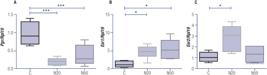
Gene expression of estrogen and progesterone receptors in uteri of rats exposed or not exposed to nitrate. The mRNA expression of (A) progesterone receptor (Pgr), (B) estrogen alpha receptor (Esr1), and (C) estrogen beta receptor (Esr2) was determined using real-time polymerase chain reaction (PCR), with Rpl19 mRNA serving as the internal control. The data are presented as mean ± standard deviation in arbitrary units (AU) (n = 4-6). The black markers within the box plots represent the mean values, while the whiskers indicate the range of thse data. * P < 0.05; *** p < 0.001 versus the C group. Abbreviations: C, control group; N20, nitrate 20 mg/L group; N50, nitrate 50 mg/L group.
The mRNA expression of Esr1 (Figure 5B) and Esr2 (Figure 5C) increased significantly in the uteri of the female offspring rats exposed to the lowest dose of nitrate (N20) during the prenatal period. Notably, exposure to the highest dose of nitrate (N50) increased mRNA expression of Esr1 but did not alter the mRNA expression of Esr2 compared with the control (C) group. There were no significant differences in expression of estrogen receptors between the nitrate-treated groups.
DISCUSSION
The reproductive system is particularly vulnerable to the harmful effects of endocrine disruptors (38). Many studies have reported unfavorable reproductive outcomes in both animals and humans exposed to endocrine disruptors (3,4,39). The results from the present study confirm the vulnerability of the reproductive system, strongly suggesting that prenatal exposure to nitrate changes the uterine morphology of female offspring rats, affecting the expression of key genes responsible for uterine development and function.
Although nitrate – a known endocrine disruptor – is widely distributed in the environment, few studies have focused on evaluating its effects on the reproductive system, specifically on the uterus of animal models. Studies on the harmful effects of nitrate on mammals are also lacking (27-29), thus emphasizing the novelty of our study. Morphological analysis of the uterus of F1 females showed that nitrate exposure, especially at the highest treatment dose (50 mg/L, N50 group), significantly increased the total thickness of the uterine wall and the thickness of the myometrium compared with no nitrate exposure (C group). In contrast, no significant changes in endometrial thickness were observed. Notably, previous studies have not observed changes in uterine weight in two different generations of female rats exposed to yttrium nitrate or lanthanum nitrate (40,41).
Few studies have evaluated the impact of nitrate exposure on the mammalian reproductive system, particularly during critical windows of susceptibility. In this context, a recent study investigated the two-generation effects of yttrium nitrate exposure in Sprague-Dawley rats, using doses of 0 mg/kg, 10 mg/kg, 30 mg/kg, and 90 mg/kg. The female F1 generation rats exposed to the low-dose treatment presented reduced weight gain compared with the control group (40). Another study from the same group, also using Sprague-Dawley rats, exposed the animals to lanthanum nitrate and observed no changes in food intake or body weight in F1 or F2 generation rats (41). Our study also found no differences in body weight among nitrate-exposed animals. These discrepant results may be due to the use of different nitrate compounds and to the fact that, unlike in previous studies, the treatment we implemented in ours was limited to the prenatal period of the F0 generation in our experimental model. Studies on perinatal exposure to other endocrine disruptors, such as tributyltin (TBT) and BPA, have demonstrated important uterine morphological and functional changes in female offspring, including an increased incidence of cystic endometrial hyperplasia and development of luminal epithelium thickening in adult rats (17,18), which is similar to the observations in the present study. Thus, the increased thickness of uterine layers observed after prenatal exposure to nitrate may be due to the aberrant proliferation of uterine cells, as previously suggested for other disruptors (17,42). High proliferative activity of uterine cells has been associated with increased susceptibility to the development of benign or malignant uterine lesions. The aberrant proliferation of uterine layer cells and endometrial glands is considered the first stage in the development of uterine diseases related to cell hyperplasia (43).
A reduced number of endometrial glands was observed in the uterus of nitrate-exposed rats at both treatment doses. This finding reinforces the hypothesis that exposure to endocrine disruptors during critical development periods may result in alterations in the function and morphology of different tissues and organs (44). Thus, this result indicates another important harmful effect of nitrate in the reproductive system of rats, as the reduction in the number of endometrial glands and nutritive secretions potentially compromises the implantation and initial maintenance of embryos (45).
Future studies are necessary to elucidate the molecular mechanisms underlying morphological changes induced by gestational exposure to nitrate. However, the role of ovarian steroids in maintaining uterine morphology and function is irrefutable (46). Thus, the results regarding estrogen and progesterone receptor expression suggest that the imbalanced hormonal action in the uterus, induced by intrauterine exposure to nitrate, is related to the observed morphological changes. Signaling disturbances triggered by the hormone-receptor interactions contribute to the development of uterine dysfunctions. Therefore, the altered mRNA expression of Pgr, Esr1, and Esr2 in nitrate-exposed animals potentially suggests a relationship between impaired hormone signaling and the observed changes in uterine histoarchitecture.
The stimulatory effect of estrogen on uterine cells is largely unclear. In rodents, in addition to its endometrial effects, estrogen induces epithelial cell hypertrophy and hyperplasia and stimulates cell proliferation in the myometrial layers (47-52). The results of the present study indicate that the myometrium was the uterine layer that underwent the most significant morphological changes in nitrate-exposed animals. The hyperplastic appearance of the uterus in these nitrate-exposed animals could be related to increased mRNA expression of Esr1 and Esr2 and reduced mRNA expression of Pgr. Indeed, the reduced number of endometrial glands may also be related to reduced uterine mRNA expression of Pgr in nitrate-exposed female rats. These findings are consistent with previous studies describing the harmful effects of intrauterine exposure to 2,3,7,8-tetrachlorodibenzo-p-dioxin (TCDD), an endocrine disruptor that induces uterine dysfunctions similar to those of endometriosis in progeny animals, persisting up to the third generation (53). These effects result from reduced uterine responsiveness to progesterone and increased expression of ESR2 in uterine stromal and epithelial cells (53,54).
The lack of serum estrogen and progesterone level measurements in our experimental model is a limitation of our study. However, other important regulators of the expression of estrogen receptor and progesterone receptor genes (55), beyond estrogen and progesterone, may also be involved. Additionally, nitrate itself could directly dysregulate the expression of estrogen receptor and progesterone receptor genes. Preliminary data from our group indicate that nitrate exposure during the intrauterine period alters the function of the hypothalamic-pituitary-thyroid axis in these animals. Thyroid hormones are known to regulate the expression of sex steroid hormone receptors and interfere with the reproductive function of mammals (56,57). Thus, the mechanism through which the expression of estrogen receptor and progesterone receptor genes was altered in the nitrate-treated groups could be explained by alterations in estradiol or progesterone levels but also by alterations in other hormones, or even by a direct effect of nitrate on these receptors’ expressions during the prenatal period. Since several mechanisms could be involved in the dysregulated expression of the estrogen receptor and progesterone receptor genes, a comprehensive study of potential mechanisms explaining this alteration should be further explored.
The limitations of this study include the fact that we did not weigh the rats’ uteri or follow up to observe the reproductive performance or development of pathologies in the female F1 rats and subsequent generations. We also did not evaluate the impact of nitrate exposure on the estrous cycle periodicity in the female F1 rats. Despite these limitations, our study is the first to show the deleterious impact of prenatal nitrate exposure on uterine histoarchitecture and gene expression in female rats, using nitrate doses previously considered safe for humans.
In conclusion, the present study is the first to demonstrate that intrauterine exposure to nitrate negatively affects uterine morphology and gene expression in adult female F1 rats. The exposure to this ubiquitous environmental endocrine disruptor increased uterine thickness, reduced the number of endometrial glands, and altered the expression of Pgr, Esr1, and Esr2 in the uterus. The results presented herein confirm that the prenatal period is a critical stage of vulnerability to the harmful effects of endocrine disruptors.
-
Ethical approval:
All procedures involving animals were approved by the Animal Ethics Committee of Instituto Israelita de Ensino e Pesquisa, Albert Einstein Hospital and were conducted according to the principles of the Brazilian College of Animal Experimentation (SGPP/CEUA 3472/18 and SGPP/CEUA 3326/2018).
-
Sponsorship:
this study was supported by funding from Fundação de Amparo à Pesquisa do Estado de São Paulo (Fapesp) granted to CSN (16/18517-8).
Acknowledgement:
the authors are grateful for the excellent support of the technician teams of the Instituto Israelita de Ensino e Pesquisa and Centro de Experimentação e Treinamento em Cirurgia (CETEC).
REFERENCES
-
1 Kabir ER, Rahman MS, Rahman I. A review on endocrine disruptors and their possible impacts on human health. Environ Toxicol Pharmacol. 2015 Jul;40(1):241-58. doi: 10.1016/j.etap.2015.06.009.
» https://doi.org/10.1016/j.etap.2015.06.009 -
2 Diamanti-Kandarakis E, Bourguignon JP, Giudice LC, Hauser R, Prins GS, Soto AM, et al. Endocrine-disrupting chemicals: an Endocrine Society scientific statement. Endocr Rev. 2009 Jun;30(4):293-342. doi: 10.1210/er.2009-0002.
» https://doi.org/10.1210/er.2009-0002 -
3 Gonsioroski A, Mourikes VE, Flaws JA. Endocrine Disruptors in Water and Their Effects on the Reproductive System. Int J Mol Sci. 2020 Mar 12;21(6):1929. doi: 10.3390/ijms21061929.
» https://doi.org/10.3390/ijms21061929 -
4 Beszterda M, Frański R. Endocrine disruptor compounds in environment: As a danger for children health. Pediatr Endocrinol Diabetes Metab. 2018;24(2):88-95. doi: 10.18544/PEDM-24.02.0107.
» https://doi.org/10.18544/PEDM-24.02.0107 -
5 Gore AC, Martien KM, Gagnidze K, Pfaff D. Implications of prenatal steroid perturbations for neurodevelopment, behavior, and autism. Endocr Rev. 2014 Dec;35(6):961-91. doi: 10.1210/er.2013-1122.
» https://doi.org/10.1210/er.2013-1122 -
6 Braun JM. Early-life exposure to EDCs: role in childhood obesity and neurodevelopment. Nat Rev Endocrinol. 2017 Mar;13(3):161-73. doi: 10.1038/nrendo.2016.186.
» https://doi.org/10.1038/nrendo.2016.186 -
7 Heindel JJ, Balbus J, Birnbaum L, Brune-Drisse MN, Grandjean P, Gray K, et al. Developmental Origins of Health and Disease: Integrating Environmental Influences. Endocrinology. 2015 Oct;156(10):3416-21. doi: 10.1210/EN.2015-1394.
» https://doi.org/10.1210/EN.2015-1394 -
8 Mallozzi M, Bordi G, Garo C, Caserta D. The effect of maternal exposure to endocrine disrupting chemicals on fetal and neonatal development: A review on the major concerns. Birth Defects Res C Embryo Today. 2016 Sep;108(3):224-42. doi: 10.1002/bdrc.21137.
» https://doi.org/10.1002/bdrc.21137 -
9 Palanza P, Nagel SC, Parmigiani S, Vom Saal FS. Perinatal exposure to endocrine disruptors: sex, timing and behavioral endpoints. Curr Opin Behav Sci. 2016 Feb;7:69-75. doi: 10.1016/j.cobeha.2015.11.017.
» https://doi.org/10.1016/j.cobeha.2015.11.017 -
10 Werner EF, Braun JM, Yolton K, Khoury JC, Lanphear BP. The association between maternal urinary phthalate concentrations and blood pressure in pregnancy: The HOME Study. Environ Health. 2015 Sep 17;14:75. doi: 10.1186/s12940-015-0062-3.
» https://doi.org/10.1186/s12940-015-0062-3 -
11 Basak S, Das MK, Duttaroy AK. Plastics derived endocrine-disrupting compounds and their effects on early development. Birth Defects Res. 2020 Oct;112(17):1308-25. doi: 10.1002/bdr2.1741.
» https://doi.org/10.1002/bdr2.1741 -
12 Rattan S, Flaws JA. The epigenetic impacts of endocrine disruptors on female reproduction across generations. Biol Reprod. 2019 Sep 1;101(3):635-44. doi: 10.1093/biolre/ioz081.
» https://doi.org/10.1093/biolre/ioz081 -
13 Barker DJ. The origins of the developmental origins theory. J Intern Med. 2007 May;261(5):412-7. doi: 10.1111/j.1365-2796.2007.01809.x.
» https://doi.org/10.1111/j.1365-27962007.01809.x -
14 Manassaram DM, Backer LC, Moll DM. A review of nitrates in drinking water: maternal exposure and adverse reproductive and developmental outcomes. Environ Health Perspect. 2006 Mar;114(3):320-7. doi: 10.1289/ehp.8407.
» https://doi.org/10.1289/ehp.8407 -
15 Sifakis S, Androutsopoulos VP, Tsatsakis AM, Spandidos DA. Human exposure to endocrine disrupting chemicals: effects on the male and female reproductive systems. Environ Toxicol Pharmacol. 2017 Apr;51:56-70. doi: 10.1016/j.etap.2017.02.024.
» https://doi.org/10.1016/j.etap.2017.02.024 -
16 Smarr MM, Kannan K, Buck Louis GM. Endocrine disrupting chemicals and endometriosis. Fertil Steril. 2016 Sep 15;106(4):959-66.doi: 10.1016/j.fertnstert.2016.06.034.
» https://doi.org/10.1016/j.fertnstert.2016.06.034 -
17 Newbold RR, Jefferson WN, Padilla-Banks E. Long-term adverse effects of neonatal exposure to bisphenol A on the murine female reproductive tract. Reprod Toxicol. 2007 Aug-Sep;24(2):253-8. doi: 10.1016/j.reprotox.2007.07.006.
» https://doi.org/10.1016/j.reprotox2007.07.006 -
18 Chen M, Guo J, Ruan J, Yang Z, He C, Zuo Z. Neonatal exposure to environment-relevant levels of tributyltin leads to uterine dysplasia in rats. Sci Total Environ. 2020 Jun 10;720:137615. doi: 10.1016/j.scitotenv.2020.137615.
» https://doi.org/10.1016/j.scitotenv.2020.137615 -
19 Nosengo N. Fertilized to death. Nature. 2003 Oct 30;425(6961):894-5.doi: 10.1038/425894a.
» https://doi.org/10.1038/425894a -
20 Ward MH, deKok TM, Levallois P, Brender J, Gulis G, Nolan BT, et al. Workgroup report: Drinking-water nitrate and health--recent findings and research needs. Environ Health Perspect. 2005 Nov;113(11):1607-14. doi: 10.1289/ehp.8043.
» https://doi.org/10.1289/ehp.8043 -
21 Leach SA, Thompson M, Hill M. Bacterially catalysed N-nitrosation reactions and their relative importance in the human stomach. Carcinogenesis. 1987 Dec;8(12):1907-12. doi: 10.1093/carcin/8.12.1907.
» https://doi.org/10.1093/carcin/8.12.1907 -
22 Tricker AR, Kälble T, Preussmann R. Increased urinary nitrosamine excretion in patients with urinary diversions. Carcinogenesis. 1989 Dec;10(12):2379-82. doi: 10.1093/carcin/10.12.2379.
» https://doi.org/10.1093/carcin/10.12.2379 -
23 Zamani H, de Joode M, Hossein IJ, Henckens NFT, Guggeis MA, Berends JE, et al. The benefits and risks of beetroot juice consumption: a systematic review. Crit Rev Food Sci Nutr. 2021;61(5):788-804. doi: 10.1080/10408398.2020.1746629
» https://doi.org/10.1080/10408398.2020.1746629 -
24 Domingo JL, Nadal M. Carcinogenicity of consumption of red meat and processed meat: A review of scientific news since the IARC decision. Food Chem Toxicol. 2017 Jul;105:256-61. doi: 10.1016/j.fct.2017.04.028.
» https://doi.org/10.1016/j.fct.2017.04.028 -
25 Guillette LJ Jr, Edwards TM. Is Nitrate an Ecologically Relevant Endocrine Disruptor in Vertebrates? Integr Comp Biol. 2005 Jan;45(1):19-27. doi: 10.1093/icb/45.1.19.
» https://doi.org/10.1093/icb/45.1.19 -
26 Jensen FB. Nitrite disrupts multiple physiological functions in aquatic animals. Comp Biochem Physiol A Mol Integr Physiol. 2003 May;135(1):9-24. doi: 10.1016/s1095-6433(02)00323-9.
» https://doi.org/10.1016/s1095-6433(02)00323-9 -
27 Poulsen R, Cedergreen N, Hayes T, Hansen M: Nitrate. An Environmental Endocrine Disruptor? A Review of Evidence and Research Needs. Environ Sci Technol. 2018 Apr 3;52(7):3869-87. doi: 10.1021/acs.est.7b06419.
» https://doi.org/10.1021/acs.est.7b06419 -
28 Edwards TM, Miller HD, Guillette LJ Jr. Water quality influences reproduction in female mosquitofish (Gambusia holbrooki) from eight Florida springs. Environ Health Perspect. 2006 Apr;114 Suppl 1(Suppl 1):69-75. doi: 10.1289/ehp.8056.
» https://doi.org/10.1289/ehp.8056 -
29 van den Bosch M, Wijnen J, van de Linde IB, van Wesel AAM, Melchior D, Kemp B, et al. Effects of maternal dietary nitrate supplementation during the perinatal period on piglet survival, body weight, and litter uniformity. Transl Anim Sci. 2019 Feb 7;3(1):464-72. doi: 10.1093/tas/txy137.
» https://doi.org/10.1093/tas/txy137 -
30 Cottrell E, Garrod A, Wareing M, Dilworth M, Finn-Sell S, Greenwood S, et al. Supplementation with inorganic nitrate during pregnancy improves maternal uterine artery function and placental efficiency in mice. Placenta. 2014;35:A21. https://doi.org/10.1016/j.placenta.2014.06.071
» https://doi.org/10.1016/j.placenta.2014.06.071 -
31 Cottrell E, Tropea T, Ormesher L, Greenwood S, Wareing M, Johnstone E, et al. Dietary interventions for fetal growth restriction - therapeutic potential of dietary nitrate supplementation in pregnancy. J Physiol. 2017 Aug 1;595(15):5095-102. doi: 10.1113/JP273331.
» https://doi.org/10.1113/JP273331 -
32 Ma R, Sassoon DA. PCBs exert an estrogenic effect through repression of the Wnt7a signaling pathway in the female reproductive tract. Environ Health Perspect. 2006 Jun;114(6):898-904. doi: 10.1289/ehp.8748.
» https://doi.org/10.1289/ehp.8748 -
33 Walton G. Survey of literature relating to infant methemoglobinemia due to nitrate-contaminated water. Am J Public Health Nations Health. 1951 Aug;41(8 Pt 1):986-96. doi: 10.2105/ajph.41.8_pt_1.986.
» https://doi.org/10.2105/ajph.41.8_pt_1.986 -
34 Hansen PR, Taxvig C, Christiansen S, Axelstad M, Boberg J, Kiersgaard MK, et al. Evaluation of endocrine disrupting effects of nitrate after in utero exposure in rats and of nitrate and nitrite in the H295R and T-screen assay. Toxicol Sci. 2009 Apr;108(2):437-44. doi: 10.1093/toxsci/kfp023.
» https://doi.org/10.1093/toxsci/kfp023 -
35 Livak KJ, Schmittgen TD. Analysis of relative gene expression data using real-time quantitative PCR and the 2(-Delta Delta C(T)) Method. Methods. 2001 Dec;25(4):402-8. doi: 10.1006/meth.2001.1262.
» https://doi.org/10.1006/meth.2001.1262 -
36 Faraway JJ. Extending the linear model with R: generalized linear, mixed effects and nonparametric regression models. In: Group TF. Boca Raton: Chapman & Hall/CRC; 2006. https://doi.org/10.1002/sim.7282
» https://doi.org/10.1002/sim.7282 -
37 Liang KY, Zeger SL. Longitudinal data analysis using generalized linear models. Biometrika. 1986;73:13-22. https://doi.org/10.1093/biomet/73.1.13
» https://doi.org/10.1093/biomet/73.1.13 - 38 Bergman A, Heindel JJ, Jobling S, Kidd KA, Zoeller RT. State of the science Endocrine Disrupting Chemicals 2012. WHO. Inter-Organization Program for the Sound Management of Chemicals; 2012.
-
39 Le Magueresse-Battistoni B, Vidal H, Naville D. Impact of in utero exposure to pollutants on metabolic health in adults. Med Sci (Paris). 2016 Jan;32(1):51-6. doi: 10.1051/medsci/20163201009.
» https://doi.org/10.1051/medsci/20163201009 -
40 Yan L, Wang H, Duan W, Zhang T, Shi W, Geng B, et al. The reproductive toxicity of yttrium nitrate in a two-generation study in Sprague-Dawley rats. J Trace Elem Med Biol. 2023 Mar;76:127117. doi: 10.1016/j.jtemb.2022.127117.
» https://doi.org/10.1016/j.jtemb.2022.127117 -
41 Yan L, Wang H, Duan W, Zhang T, Shi W, Geng B, et al. A Two-Generation Reproductive Toxicity Study of Lanthanum Nitrate in SD Rats. Biol Trace Elem Res. 2022 May;200(5):2268-82. doi: 10.1007/s12011-021-02841-9.
» https://doi.org/10.1007/s12011-021-02841-9 -
42 Neff AM, Blanco SC, Flaws JA, Bagchi IC, Bagchi MK. Chronic Exposure of Mice to Bisphenol-A Alters Uterine Fibroblast Growth Factor Signaling and Leads to Aberrant Epithelial Proliferation. Endocrinology. 2019 May 1;160(5):1234-46. doi: 10.1210/en.2018-00872.
» https://doi.org/10.1210/en.2018-00872 -
43 Markey CM, Wadia PR, Rubin BS, Sonnenschein C, Soto AM. Long-term effects of fetal exposure to low doses of the xenoestrogen bisphenol-A in the female mouse genital tract. Biol Reprod. 2005 Jun;72(6):1344-51. doi: 10.1095/biolreprod.104.036301.
» https://doi.org/10.1095/biolreprod.104.036301 -
44 Hoffman DJ, Reynolds RM, Hardy DB. Developmental origins of health and disease: current knowledge and potential mechanisms. Nutr Rev. 2017 Dec 1;75(12):951-70. doi: 10.1093/nutrit/nux053.
» https://doi.org/10.1093/nutrit/nux053 -
45 Filant J, Spencer TE. Uterine glands: biological roles in conceptus implantation, uterine receptivity and decidualization. Int J Dev Biol. 2014;58(2-4):107-16. doi: 10.1387/ijdb.130344ts.
» https://doi.org/10.1387/ijdb.130344ts -
46 Miller WL, Auchus RJ. The molecular biology, biochemistry, and physiology of human steroidogenesis and its disorders. Endocr Rev. 2011 Feb;32(1):81-151. doi: 10.1210/er.2010-0013.
» https://doi.org/10.1210/er.2010-0013 - 47 Hunter DS, Hodges LC, Vonier PM, Fuchs-Young R, Gottardis MM, Walker CL. Estrogen receptor activation via activation function 2 predicts agonism of xenoestrogens in normal and neoplastic cells of the uterine myometrium. Cancer Res. 1999 Jul 1;59(13):3090-9.
-
48 Yokoyama Y, Takahashi Y, Hashimoto M, Shinohara A, Lian Z, Tamaya T. Effects of sex steroids on silver stained proteins of nucleolar organizer regions (Ag-NOR) in the rabbit uterus. Biotech Histochem. 1998 Jul;73(4):202-10. doi: 10.3109/10520299809141111.
» https://doi.org/10.3109/10520299809141111 -
49 Branham WS, Zehr DR, Sheehan DM. Differential sensitivity of rat uterine growth and epithelium hypertrophy to estrogens and antiestrogens. Proc Soc Exp Biol Med. 1993 Jul;203(3):297-303. doi: 10.3181/00379727-203-43602.
» https://doi.org/10.3181/00379727-203-43602 -
50 Cooke PS, Buchanan DL, Young P, Setiawan T, Brody J, Korach KS, et al. Stromal estrogen receptors mediate mitogenic effects of estradiol on uterine epithelium. Proc Natl Acad Sci U S A. 1997 Jun 10;94(12):6535-40. doi: 10.1073/pnas.94.12.6535.
» https://doi.org/10.1073/pnas.94.12.6535 -
51 Katsuda SI, Yoshida M, Watanabe T, Kuroda H, Ando-Lu J, Takahashi M, et al. Estrogen receptor mRNA in uteri of normal estrous cycling and ovariectomized rats by in situ hybridization. Proc Soc Exp Biol Med. 1999 Jul;221(3):207-14. doi: 10.1046/j.1525-1373.1999.d01-78.x.
» https://doi.org/10.1046/j.1525-1373.1999.d01-78.x -
52 Cook AM, Lodge N, Blake P. Stage IV endometrial carcinoma: a 10 year review of patients. Br J Radiol. 1999 May;72(857):485-8. doi: 10.1259/bjr.72.857.10505014.
» https://doi.org/10.1259/bjr.72.857.10505014 -
53 Bruner-Tran KL, Gnecco J, Ding T, Glore DR, Pensabene V, Osteen KG. Exposure to the environmental endocrine disruptor TCDD and human reproductive dysfunction: Translating lessons from murine models. Reprod Toxicol. 2017 Mar;68:59-71. doi: 10.1016/j.reprotox.2016.07.007.
» https://doi.org/10.1016/j.reprotox.2016.07.007 -
54 Ding T, McConaha M, Boyd KL, Osteen KG, Bruner-Tran KL. Developmental dioxin exposure of either parent is associated with an increased risk of preterm birth in adult mice. Reprod Toxicol. 2011 Apr;31(3):351-8. doi: 10.1016/j.reprotox.2010.11.003.
» https://doi.org/10.1016/j.reprotox.2010.11.003 -
55 Wilson ME, Westberry JM, Prewitt AK. Dynamic regulation of estrogen receptor-alpha gene expression in the brain: A role for promoter methylation? Front Neuroendocrinol. 2008 Jun;29(3):375-85. doi: 10.1016/j.yfrne.2008.03.002.
» https://doi.org/10.1016/j.yfrne.2008.03.002 -
56 Liu J, Guo M, Hu X, Weng X, Tian Y, Xu K, et al. Effects of thyroid dysfunction on reproductive hormones in female rats. Chin J Physiol. 2018 Jun 30;61(3):152-62. doi: 10.4077/CJP.2018.BAG551.
» https://doi.org/10.4077/CJP.2018.BAG551 -
57 Brown EDL, Obeng-Gyasi B, Hall JE, Shekhar S. The Thyroid Hormone Axis and Female Reproduction. Int J Mol Sci. 2023 Jun 6;24(12):9815. doi: 10.3390/ijms24129815.
» https://doi.org/10.3390/ijms24129815


