Fertigation with sorption-treated vinasse in sandy and clay soils
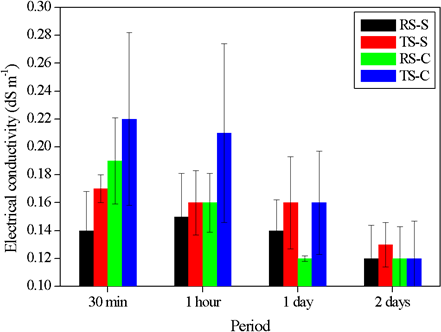
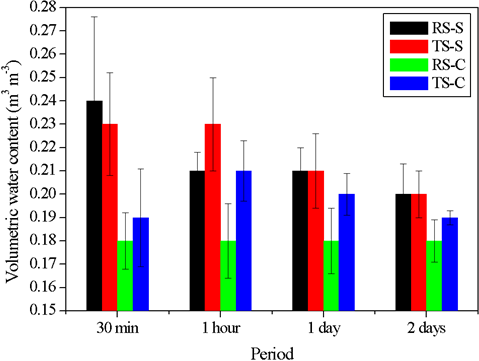
The sugar-energy industry generates large volumes of waste, among which vinasse stands out for its potential in agricultural use. However, its use in fertigation requires careful management to prevent soil salinization and soil quality degradation. This study evaluated whether sorption treatment of vinasse with sugarcane bagasse ash (SBA) can simultaneously neutralize its acidity and improve its nutrient composition, thereby mitigating its adverse effects on soil. To this end, 100 mL of raw vinasse was treated with 5.0 g of SBA through three consecutive 24-h sorption cycles. Treated vinasse was applied to PVC columns filled with sandy and clay soils, and was compared with untreated vinasse. Soil physicochemical properties, including electrical conductivity, volumetric moisture, nutrient composition, and sodicity indices, were evaluated. Results indicated that 5.0 g of SBA with a 72-h contact time optimized sorption, increasing the vinasse pH and nutrient availability. Treated vinasse enhanced chemical stability in clay soils, whereas sandy soils showed higher leaching susceptibility. In both soil types, the exchangeable sodium percentage (ESP) remained below 15%, indicating no risk of soil sodification. The results suggest that sorption-treated vinasse is a sustainable fertigation alternative, particularly for clay soils, while sandy soils require stricter application management to prevent nutrient leaching.
Keywords:
adsorption; agricultural sustainability; soil fertility; waste
 Thumbnail
 Thumbnail