Mineral nitrogen dynamics, mineralization and nitrification in soybean fields under No-Tillage and conventional tillage in Amazonian tropical soils
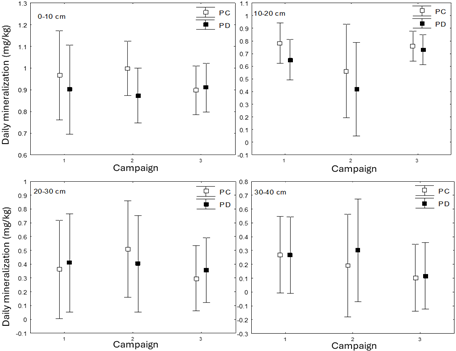
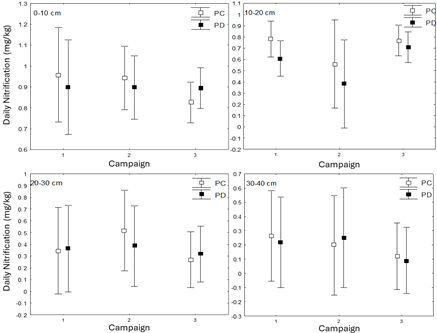
This study evaluated mineral nitrogen (NH₄⁺ and NO₃⁻) concentrations and potential mineralization and nitrification rates in soils under No-Tillage (NT) and Conventional Tillage (CT) in soybean fields in the Santarém Plateau, Pará, Brazil. Soil samples were collected at three phenological stages (R1: flowering; R5: grain filling; R8: physiological maturity) and four depths (0 - 10, 10 - 20, 20 - 30, 30 - 40 cm). No significant differences were observed between NT and CT for mineral N concentrations or transformation rates, suggesting that after two years of NT adoption, short-term effects on N dynamics are minimal. Mineral N concentrations decreased significantly (p< 0.05) from R1 to R8, mainly in deeper layers (10 - 40 cm), likely due to intense N uptake by soybean during early reproductive stages. The highest daily mineralization and nitrification rates occurred in the 0 - 10 cm layer, associated with greater organic matter and microbial activity. Positive transformation rates at all depths indicate continuous conversion of organic N into plant-available forms throughout the crop cycle. Results suggest that NT benefits on soil N cycling in Amazonian agricultural systems may become more evident over longer adoption periods, particularly when integrated with crop rotation and permanent soil cover.
Keywords:
agricultural management systems; ammonium and nitrate; nitrogen transformation rates; soil nitrogen cycling; tropical agriculture
 Thumbnail
 Thumbnail