 KIRSCHNER WIRES VERSUS SCREW FIXATION FOR LATERAL HUMERAL CONDYLE FRACTURES IN CHILDREN: A SYSTEMATIC REVIEW AND META-ANALYSIS
Objective: Lateral condyle fractures of the humerus are the second most common elbow fracture in children. Both Kirschner wires (K-wires) and cannulated screws are widely used for fixation, but the optimal technique remains debated. This study aimed to compare these methods in terms of functional outcomes and complications.
Material and Methods: A systematic review and meta-analysis were conducted in accordance with PRISMA guidelines.
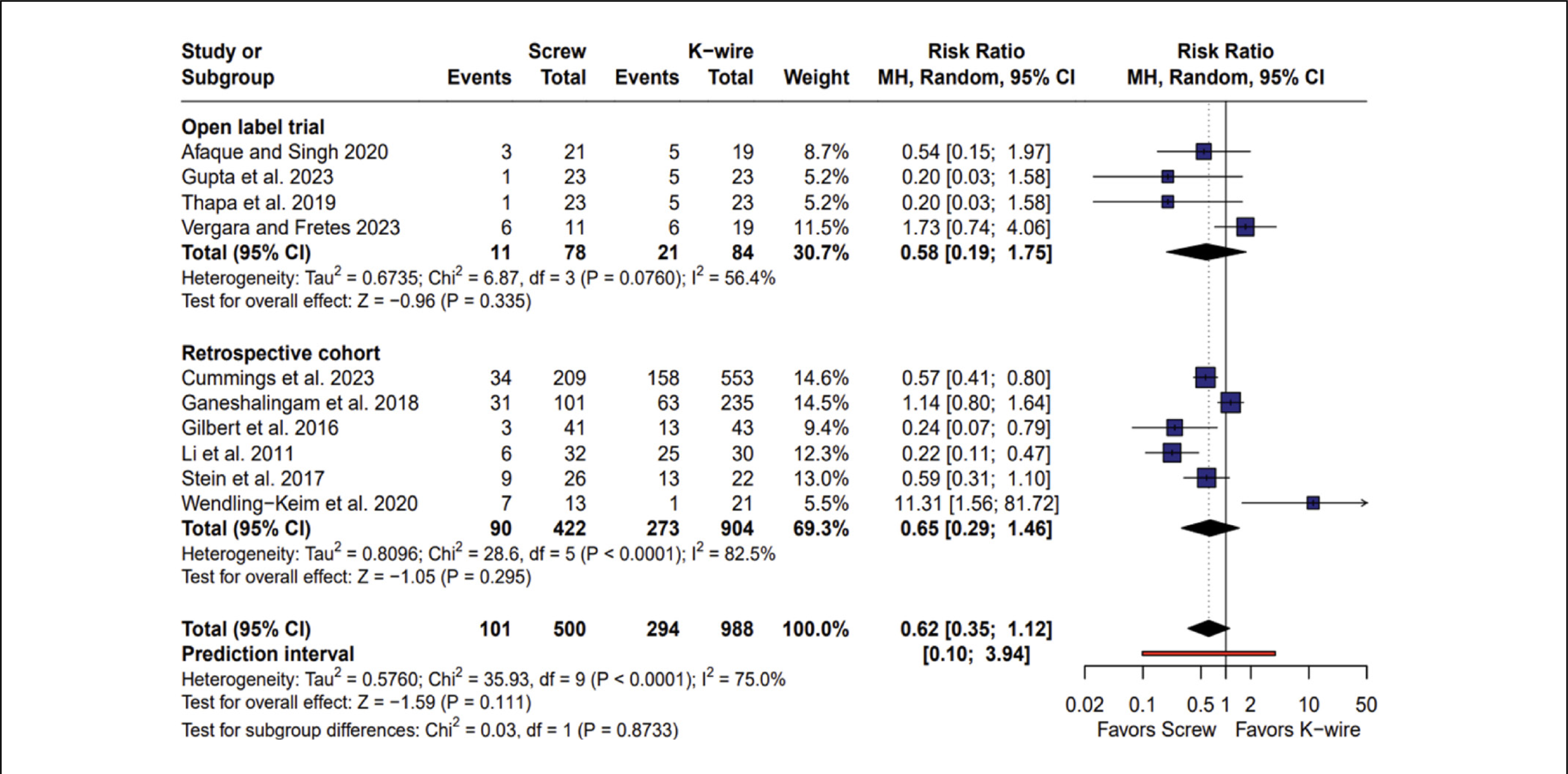
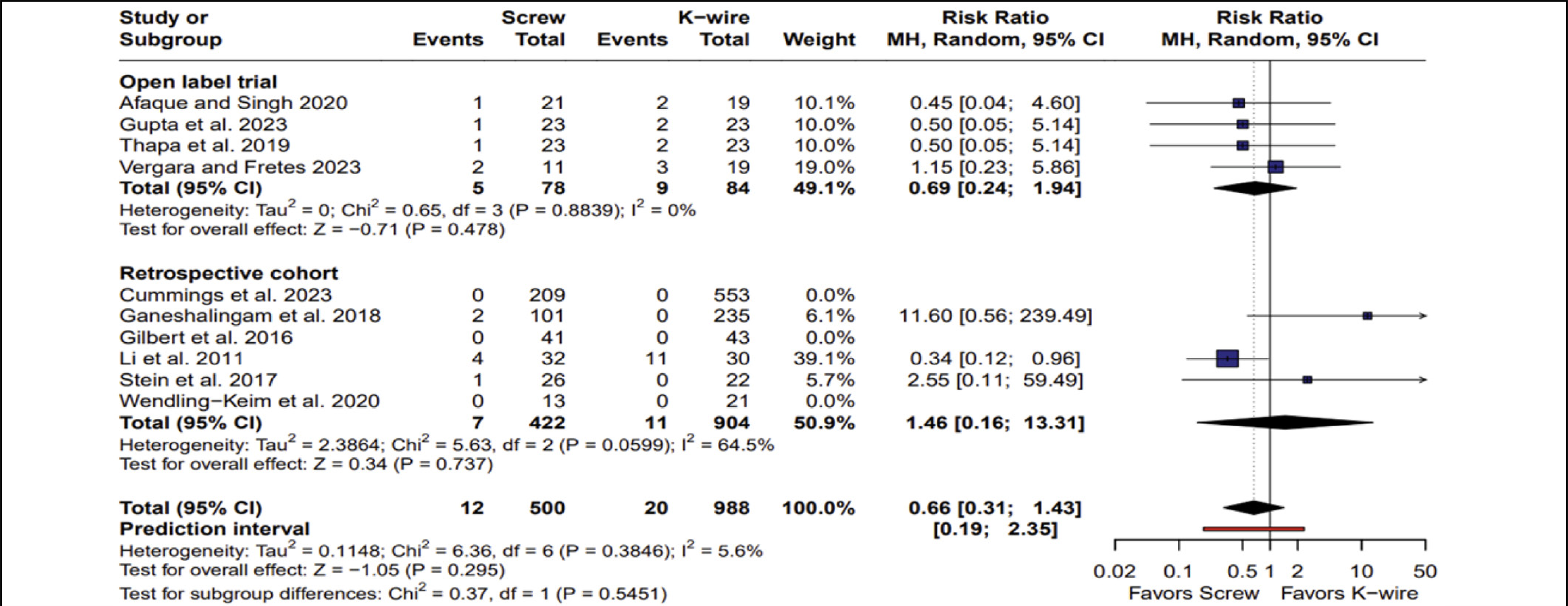
Results: Thirteen comparative studies involving 1,230 pediatric patients were included. Outcomes were analyzed using random-effects models, with risk ratios (RRs) and 95% confidence intervals (CIs). Meta-regression and prediction intervals (PIs) were applied to explore heterogeneity. Screw fixation significantly reduced the risk of postoperative infection (RR = 0.27; 95% CI: 0.12–0.60) and was associated with better functional outcomes (RR = 1.09; 95% CI: 1.01–1.18). No significant differences were observed in overall complications (RR = 0.89; 95% CI: 0.66–1.20), lateral overgrowth, range of motion limitation, or nonunion. Meta-regression did not identify age or fracture severity as effect modifiers.
Conclusion: Cannulated screw fixation may be preferable for reducing infection and improving outcomes, but individualized clinical decisions and further high-quality research remain essential. Level of Evidence III; Systematic Review.
Keywords:
Humeral Fractures; Fracture Fixation, Internal; Elbow Joint; Bone Screws; Kirschner Wires; Pediatrics
 Thumbnail
 Thumbnail
 Thumbnail
 Thumbnail
 Thumbnail
 Thumbnail
 Thumbnail
 Thumbnail
 Thumbnail
 Thumbnail