
 Circannual patterns in the reproductive biology of female Lowland tapirs (Tapirus terrestris) across climatic seasons in the Cerrado biome, Brazil
Abstract
We provide circannual information related to the reproductive biology of the lowland tapir (Tapirus terrestris) by retrospectively analyzing the databases and some frozen biological samples collected from free-living lowland tapirs in different seasons of the Brazilian Cerrado biome over the course of two years. Twenty-one females were monitored, grouped by age, with blood collections for hormonal dosage (progesterone and estrogen by radioimmunoassay), in addition to obtaining vaginal smears stained by the Diff-Quick method and analyzed by light microscopy, and examination for pregnancy or lactational status. Estrogen levels varied significantly across seasons, being higher during the rainy season (139.90 ± 14.51 pg/mL; October to April) compared to the dry season (94.50 ± 13.43 pg/mL; May to September) (p = 0.0176). Progesterone levels remained similar between the dry and rainy seasons (0.33 ± 0.22 and 1.35 ± 0.74 ng/mL, respectively) (p > 0.05). When grouped by age category, estrogen and progesterone levels did not show statistically significant differences (p > 0.05). Also, no significant differences (p > 0.05) were observed in estrogen and progesterone levels between neither pregnant and non-pregnant females nor between lactating and non-lactating females (p > 0.05). A higher proportion of superficial cells was observed in the rainy season (25.20 ± 8.29) (p = 0.0315), while cell types remained similar among age groups (p > 0.05). A positive correlation was identified between estrogen levels and the presence of parabasal cells (ρ = 0.51; p = 0.0162) and superficial (ρ = 0.47; p = 0.0305). In summary, the species does not appear to exhibit a reproductive pattern restricted to a single season, although some seasonal modulation associated with greater estrogenic activity during the rainy season is observed. Furthermore, vaginal cytology is ineffective for monitoring endocrine patterns in lowland tapirs.
Keywords:
reproductive biology; megafauna; wildlife; Tapiridae
Introduction
The lowland tapir (Tapirus terrestris) is a threatened ungulate belonging to the order Perissodactyla and the largest land mammal in South America, being the only remaining representative of the megafauna on this continent (Varela et al., 2019). Despite its immense ecological importance, acting as a major seed disperser (Villar and Medici, 2021), its population has been under constant threat. Due to their wide distribution and herbivorous habit, tapirs move through areas modified by humans, making them susceptible to threats such as agricultural expansion, habitat loss and fragmentation, illegal hunting and greater exposure to pathogens from domestic and wild fauna (Medici and Desbiez, 2012). Moreover, recent studies show that contamination by agrochemicals and heavy metals (Medici et al., 2021), vehicular collisions (Navas-Suárez et al., 2019), and unstructured social organization (Esquer, 2024) also represent considerable threats to the species in Brazil, especially in the Cerrado biome. These prospects raise concerns about the conservation status of the species, which under current circumstances is classified as vulnerable on the International Union for Conservation of Nature (IUCN) Red List of Threatened Species (Varela et al., 2019) and the Brazilian Red List (Medici et al., 2018).
The peculiar conditions to which lowland tapirs are subjected in the Cerrado biome can contribute to population decline, local extinction, loss of reproductive stock and direct interference in hormonal regulation (Navas-Suárez et al., 2019; Bhardwaj et al., 2021). In this context, understanding and assisting the reproductive biology of the species is crucial to reversing the process of extinction as reported for other wild species (Comizzoli and Holt, 2019).
For female lowland tapirs, reproductive studies are still incipient. There is an initial description of urinary estrone sulfate concentrations (ES), for which increasing values were observed throughout gestation, ranging from 20 to 5,000.0 ng/mg of ES, until shortly before parturition (Kasman et al., 1985). Subsequently, there is only an additional study that demonstrated progesterone concentrations in the milk of a single female kept in a zoo. This female had a lactational anestrus of 158 days and a complete estrous cycle of 31 days. No relationship was observed between vaginal cytology and hormonal measurements during this period, whose progesterone phase was approximately 23 days (Oliveira et al., 2001). Thus, the lack of reproductive information is evident, which also makes it difficult to interpret data and population estimates and, consequently, impacts in situ and ex situ management strategies.
There are numerous challenges in monitoring the reproduction of wild species, especially those that live in the wild. Initially, most studies advocate the use of non-invasive strategies, such as measuring hormones in feces (Graham, 2004). Although useful, this type of assessment is not always possible, since there are no viable methodologies validated for the great diversity of species on our planet. Population monitoring, however, often collects numerous biological samples, the matrices of which could later provide important reproductive information about a species. Although there are limitations regarding the interpretation of the information, this type of data can provide important insights into the dynamics of the reproductive biology of wild species, as it can be retrospectively cross-referenced with environmental data, as already described for whales (Hunt et al., 2014) and elephants (Rich et al., 2024).
Thus, this work compiles information collected in the field during ecological and population monitoring of lowland tapirs in the Brazilian Cerrado between 2016 and 2018, which comprised the database of the Lowland Tapir Conservation Initiative (LTCI), a research and conservation program of the non-governmental organization Instituto de Pesquisas Ecológicas (IPÊ). Based on the database and analysis of frozen biological samples, this study aimed to provide initial descriptions of the reproductive patterns of female lowland tapirs monitored during different climatic seasons (dry and rainy) in the Cerrado biome, Brazil. Assessments include biological data, reproductive endocrinology, and vaginal cytology, as well as the identification of possible relationships between these parameters and environmental variables.
Methods
This experimental trial followed the criteria established by Brazilian legislation and was previously approved by the Chico Mendes Institute for Biodiversity Conservation (ICMBio, SISBIO 14603-08). The work was carried out through a partnership between two Brazilian institutions, the Animal Germplasm Conservation Laboratory of the Federal Rural University of Semiárido - UFERSA and the Brazilian Tapir Conservation Initiative (INCAB), which kindly made its database and frozen biological samples available for analysis.
Place of study
The ecological monitoring of the animals was carried out in the municipalities of Nova Alvorada do Sul (21º 27’ 57” S, 54º 23’ 02” O) and Nova Andradina (22° 13’ 58” S, 53° 20’ 34” O), in the state of Mato Grosso do Sul, Brazil. The study region is fragmented into areas of Cerradão, gallery forests and wetlands, which are remnants of the natural Cerrado habitat. In addition, the area is surrounded by regions highly impacted by agricultural activity, especially the cultivation of sugar cane, soybean and corn, as well as the implementation of cultivated pastures and animal husbandry areas (Brasil et al., 2022). Eucalyptus plantations, rural communities and highways are also present. The climate of this region is characterized as tropical humid, with a rainy season in summer and a dry season in winter (Fushimi et al., 2024), with annual rainfall of around 1,200 to 1,800 mm. Another striking feature is associated with the relatively short periods of drought (May to September), known as “veranicos”, in which rainfall can reach zero (Marcuzzo et al., 2012).
The data for the environmental variables (air temperature, relative humidity, wind speed and global solar radiation; Table 1) came from the automatic weather stations of the National Meteorological Institute (INMET), and the values were collected throughout the day when the animals were handled and collected.
Mean values (± SEM) of environmental variables corresponding to the day of reproductive data collection from wild female lowland tapirs (Tapirus terrestris) in the Cerrado biome, Brazil.
Capture and restraint of animals
The data were obtained from the capture of 21 free-ranging female tapirs (15 non-pregnant and 6 pregnant/lactating females), in addition to three recaptures, totaling 24 samples. The captures were carried out in the Cerrado biome during the dry and rainy seasons, respectively. The tapirs were captured and fitted with GPS devices to monitor their movements. The animals were carefully selected to form distinct groups, ensuring completely independent samples for both the seasons and the age classes. The categorization of age groups was established based on reproductive and social organization data of tapirs, obtained through camera trapping over the past 15 years. Females were classified into the following categories: juvenile (12-17 months), when they still remain with the mother and exhibit exploratory behavior; subadult (18-47 months), already independent from the mother but without records of pairing; and adult (> 48 months), characterized by the onset of reproductive pairings with individuals of the opposite sex.
Darts were used to anesthetize the tapirs after the females were contained in box traps or pitfall traps. Darting from a distance was also used. The tapirs were anesthetized according to the method used to capture them: 1) for box and pitfall traps, a combination of butorphanol (0.17 mg/kg), medetomidine (0.012 mg/kg) and ketamine (0.7 mg/kg) was used, with the administration of atropine (0.03 mg/kg) when necessary, with atipamezole (0.04 mg/kg) and naltrexone (0.35 mg/kg) used as reversal agents; 2) When darting from a distance was used, a combination of tiletamine-zolazepam (1.25 mg/kg), medetomidine (0.006 mg/kg), ketamine (0.6 mg/kg) and atropine (0.03 mg/kg) was used, with midazolam (0.03 mg/kg) administered 30 minutes later (Quse and Fernandes-Santos, 2014). The darts containing the anesthetics (3 cc or 5 cc) were administered intramuscularly, with the anesthetic doses calculated based on the estimated body weight: juvenile (up to ~100 kg), sub-adult (~100–200 kg), and adult (> 200 kg).
During the chemical restraint protocol, the animals were monitored every 10 minutes for the following physiological parameters: respiratory rate, heart rate and blood oxygen saturation (Oxy9Vet-Plus, Bionet America, Tustin, California, USA), body temperature (digital thermometer) and systolic blood pressure (Mini Doppler with 10 MHz probe, Cardiology Shop, Boston, Massachusetts, USA) (Fernandes-Santos et al., 2020).
Handling animals, collecting blood samples and vaginal cytology
During the manipulations, tapirs underwent complete physical examinations. The age of each animal was estimated based on dentition (tooth wear), the appearance of the plantar pads and nail erosion (Fernandes-Santos et al., 2020). For blood collection, venipunctures were performed, specifically in the medial saphenous or cephalic veins, using vacuum sampling tubes. The blood samples were then centrifuged (489 × g for 10-15 min) to separate the serum, which was micropipetted into 1.5 mL Eppendorf tubes and stored in a biobank (-26 °C) until hormone analysis.
Samples for vaginal cytology (Figure 1) were obtained by making vaginal swabs, collected with a sterile swab inserted through the vulvar commissure and inserted as far as necessary to reach the most cranial region of the vagina. Each swab was taken by rotating the end of the swab on the glass slide, usually making three linear impressions. The swabs were immediately stained using the Diff-Quick method (Laborclin®), according to the manufacturer's instructions, and then transported to the Animal Germplasm Conservation Laboratory at the Federal Rural University of the Semiarid Region (UFERSA) for differential assessment of the cells. A total of 200 cells was counted per slide, evaluated under an optical microscope (400 ×) and classified according to the morphological aspects of the different cell types found in the vaginal epithelium, following the differentiation criteria described by Johnston et al. (2001): (1) Parabasal cells (round or oval, with a normal-appearing nucleus and a high nucleus-to-cytoplasm ratio); (2) Intermediate cells (round or ellipsoidal, with an irregular or angular cytoplasmic border and a prominent, normal-appearing nucleus) and (3) Superficial cells (slightly larger than intermediate cells, which may present a dark, pyknotic, faint, or indistinguishable nucleus relative to the cytoplasm).
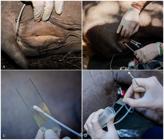
Details of the appearance of the external genitalia and vaginal cytology in wild lowland tapirs (Tapirus terrestris) in the Cerrado biome, Brazil. Swollen vulva with the presence of a viscous, transparent secretion (A); sterile swab inserted through the vulvar commissure into the most cranial region of the vagina (B); slide smears prepared by turning the end of the swab on the glass slide (C) and smears immediately stained using the Diff-Quick method (D).
Once the animals were restrained, they underwent ultrasound evaluation for gestational diagnosis. At this time, notes were also taken regarding the animals' visual appearance. Furthermore, the animals were checked for the presence of milk in their mammary glands, as well as the proximity of offspring, to determine a possible lactation status.
Evaluation of serum estrogen and progesterone levels
Serum estrogen and progesterone levels were analyzed at the Hormone Dosage Laboratory of the Fluminense Federal University (UFF). Serum estrogen and progesterone levels were determined using the solid phase radioimmunoassay (RIA) technique with a commercial kit (Immunotech, SRO - IM1087, Czech Republic), using the Wizard detector (PerkinElmer do Brasil Ltda), according to protocols previously described for horses (Rua et al., 2018), the domestic species more closely related to the tapirs. Prior to their application in lowland tapir samples, the assays were conducted for analytical validation for this species, including: (1) assessment of intra- and inter-assay variation coefficients, (2) determination of sensitivity, and (3) establishment of detection limits appropriate for the expected physiological range. Intra-assay (8.54%) and inter-assay (7.31%) coefficients were established as the standard for analyzing the samples. All estimated serum concentrations were between the maximum and minimum points of the curve. Serum samples were collected between 2016 and 2018 and continuously stored at -26 °C in sealed aliquots to avoid repeated freeze–thaw cycles.
Statistical analysis
Statistical analysis was carried out using GraphPad Prism® software version 9.3 for Windows (GraphPad Software Inc., San Diego, CA, USA). The results were expressed as mean and standard error (± SEM). Normality was verified using the Shapiro-Wilk test and homogeneity of variance was verified using the Bartlett test. Parametric data, such as length, height, and estrogen concentrations, were analyzed using the unpaired t-test and analysis of variance (ANOVA), followed by Tukey’s test for comparisons between seasons and age groups, respectively. The remaining biological, hormonal, and cytological parameters analyzed across different seasons (dry and rainy periods) were compared using the Mann-Whitney test. The analysis of these parameters considering different age groups (juvenile, sub-adult, and adult) was performed using the Kruskal-Wallis test, followed by Dunn’s multiple comparison test. Spearman's correlation test was performed to verify the relationship between hormone concentrations and the proportion of cell types identified in vaginal cytology, as well as the relationship between these concentrations and environmental parameters. The results were considered significant when p < 0.05.
Results
Biometric parameters
Overall, the parameters studied showed no significant differences in tapirs’ age, weight, length, and height between dry and rainy seasons in the Cerrado biome (p > 0.05; Table 2). When grouped by age, the group of adult females had higher biometric parameters for age (p < 0.0001), length and height (p = 0.0001) compared to the other groups, except for body weight, which was similar to that of the subadult group (p > 0.05).
Mean values (± SEM) for biometric parameters according to season (dry and rainny) and age group from wild female lowland tapirs (Tapirus terrestris) in the Cerrado biome, Brazil.
Hormonal measurements and their relationships with biometric parameters
While serum progesterone levels were similar between the dry and rainy seasons in the Cerrado biome (p > 0.05; Table 3), serum estrogen concentrations were higher in the rainy than in dry season (p = 0.0176). The hormone concentrations of estrogen and progesterone in the different age groups were similar (p > 0.05). Additionally, serum estrogen and progesterone values did not vary in relation to non-lactating and pregnant females (p > 0.05; Table 4). In addition, the period of female conception was estimated, occurring between December and March of 2015 and 2016 (rainy season; n = 3), taking into account the time of capture and the observed gestational stage. Among females with one or more pregnancies (75.0 ± 9.0 months of age), the youngest age at which pregnancy was recorded was 60 months (5 years). Grouping the data from all the animals, age was the only parameter that correlated positively and moderately with serum progesterone concentrations (ρ = 0.47; p = 0.0285; Figure 2).
Mean values (± SEM) for hormonal patterns according to season (dry and rainny) and age group from wild female lowland tapirs (Tapirus terrestris) in the Cerrado biome, Brazil.
Mean values (± SEM) for hormonal parameters according to physiological state (gestation/lactation) from wild female lowland tapirs (Tapirus terrestris) in the Cerrado biome, Brazil.

Relationship between estimated age (months) and serum concentrations of estrogen (A) and progesterone (B) in wild lowland tapirs (Tapirus terrestris; n = 21) in the Cerrado biome, Brazil. *Probable onset of puberty.
Recaptured adult females were not included in the samples analyzed statistically, and their data are presented only descriptively. Two females recaptured during the rainy season showed mean estrogen and progesterone values of approximately 165.89 pg/mL and 1.47 ng/mL, respectively. In contrast, one female recaptured during the dry season presented estrogen values approximately three times lower (48.83 pg/mL), with progesterone levels around 0.92 ng/mL. Overall, these patterns are very similar to those observed in the other females included in this study.
Vaginal cytology and its relationship with hormonal measures
Regarding vaginal cytology (Figure 3), the proportion of superficial cells across the seasons showed significant variation (p = 0.0315; Table 5). The predominance of intermediate cells was identified in the smears of juvenile youngsters, sub-adults and adults. However, no significant differences were found between the different cell types when comparing age groups (p > 0.05). Grouping the vaginal cytology data showed that serum estrogen concentrations correlated positively and moderately with parabasal cells (ρ = 0.51; p = 0.0162) and superficial (ρ = 0.47; p = 0.0305) (Table 6). The other cell types, as well as progesterone levels, did not show significant correlations (p > 0.05). For the recaptured females, cytology also revealed a higher proportion of intermediate cells, corresponding to 69.5% during the rainy season and 43% during the dry season. Overall, these patterns are quite similar to those observed in the other results.

Photomicrographs of vaginal cytology with different cell types of wild female lowland tapirs (Tapirus terrestris) in the Cerrado biome, Brazil (400x magnification). (A) Small intermediate cells clustered together and parabasal cell indicated by asterisk; (B) Predominance of large intermediate cells; black arrow indicates parabasal cell among intermediate cells; (C) Superficial cell indicated by arrowhead; (D) Population of superficial cells and some intermediate cells (star).
Mean values (± SEM) for parabasal, intermediate and superficial cell counts across seasons (dry and wet) and different age groups from wild female lowland tapirs (Tapirus terrestris) in the Cerrado biome, Brazil.
Spearman correlation (ρ) between cell types found in vaginal cytology, environmental variables and serum estrogen and progesterone concentrations from wild female lowland tapirs (Tapirus terrestris) in the Cerrado biome, Brazil.
Impact of environmental variables on hormonal parameters
Regarding the environmental variables collected throughout this study, the average wind speed measured during the dry season (3.48 ± 0.46 m/s) was significantly higher than during the rainy season (2.43 ± 0.21 m/s) (p = 0.0467; Table 1). On the other hand, there was no significant difference in air temperature, relative humidity and global solar radiation between the seasons (p > 0.05). None of the environmental parameters studied showed significant correlations with serum estrogen and progesterone concentrations (p > 0.05; Table 6). The analyses were carried out considering the group of females as a whole. The data was then grouped according to the dry or rainy season. In both situations, no seasonal influence was detected from the environmental parameters during the different seasons. In addition to the hormone concentrations, the other variables studied (biometric parameters and vaginal cytology) were subjected to correlation analyses with the environmental parameters, but none showed significance, and the results were not reported in tables.
Additionally, during the rainy season there was a proportionally greater predominance of adult females (66.6% - 4/6), followed by sub-adults (33.3% - 2/6). In contrast, during the dry season, adult females represent 33.3% of the sampled individuals (3/9), with additional records of sub-adult females (33.3% - 3/9) and juvenile individuals (33.3% - 3/9).
Discussion
Conducting field studies with free-ranging wild species is a significant challenge. These endeavors generally require a large number of people specialized in different areas and various equipment and vehicles, especially in a country as large as Brazil. Furthermore, field searches for animals are often time-consuming and require significant financial support. Once the animals are found and contained, the opportunity to collect valuable information justifies all the efforts, even enabling a retrospective study like this one. We understand the limitations of our study, as we would like to provide more precise and detailed information on the species' reproduction, for example, regarding its estrous cycle. However, we are confident that we have provided some important circannual insights to contribute to the great puzzle surrounding the reproductive biology of the lowland tapir, especially in the Brazilian Cerrado.
In the present study, there was homogeneity between the animals in terms of biometric parameters such as age, weight, length and height over the different seasons (dry and rainy). However, adult females show superior body growth, which may generally be associated with their progressive development (Scanes, 2024).
Regarding the reproductive endocrinology of the species, we demonstrate here the first circannual evaluations, providing reference values for estrogen and progesterone based on their inferences with age groups, or even the physiological state of non-pregnant, pregnant or lactating animals. Serum progesterone levels remained similar among the age groups; however, positive relationships between progesterone and age were observed, denoting that progesterone increases with age progression towards puberty and post-puberty (Al-Ali and Rahawy, 2022). In fact, progesterone levels usually remain low until puberty, when there is a significant increase associated with the formation of the first corpus luteum in mammals (Sundström-Poromaa et al., 2020). Although basal concentrations can be detected before this period, the most expressive values are observed in older animals that have already reached puberty (Vela et al., 2022). In this regard, however, we need to emphasize that the data may be biased since we do not have exact data regarding the phase of the estrous cycle, especially in subadult and adult females.
It should also be noted that there was no significant relationship between the environmental variables (dry and rainy seasons) and the serum profiles of the reproductive hormones (estrogen and progesterone), a pattern similar to that observed in the serum testosterone profile of male lowland tapirs over the seasons (Brasil et al., 2022). Even if there is no direct relationship with environmental aspects, tapirs’ estrogen levels are higher during the rainy season in the Cerrado biome. This could be an indicative of a greater sexual activity of females during rainy period than during dry season, but this event should be better investigated. One hypothesis for this statement could be linked to the greater availability of food, which is observed during the rainy season. The occurrence of this phenomenon has also been described in domestic species, such as cattle, in which access to high-quality forage during grazing improves reproductive performance, without necessarily causing reproductive seasonality (Ding et al., 2024). Furthermore, it is important to note that during the rainy season, there was also a predominance of adult tapirs, which would therefore be more likely to exhibit reproductive activity during this period.
In the environmental conditions to which the females were subjected in Cerrado, serum estrogen production seems to be favored during the rainy season. This finding corroborates the information that tapirs may show an increase in their reproductive activity before the start of the rainy season in their natural habitats, although they do not show a marked seasonality (Nowak, 1999). In non-pregnant female Malayan tapirs (Tapirus indicus), studies have reported that minimum progesterone levels (1.36-8.9 nmol/L) coincide temporally with maximum estrogen peaks (280-414 pmol/L), while the reverse was not observed (Schaftenaar et al., 2006). In the same study, irregular estrogen peaks were identified, which may be associated with behavioral manifestations of estrus in females, although this relationship has not been validated (Schaftenaar et al., 2006). In zebras, another representative of the Perissodactyla order, Cizauskas et al. (2015) found that fecal estrogen levels were significantly higher in the dry season (most females in gestation), while progesterone reached higher concentrations during the rainy season (females giving birth or coming into heat). This pattern is very different to the serum profile of tapirs, since in zebras, strong seasonality is observed (Cizauskas et al., 2015).
Complementing this evidence, we observed a numerically reduced proportion of pregnant (with the fetuses developing at the early or mid-stages of gestation) or lactating females, as well as similarities in relation to serum concentrations of reproductive hormones, when compared to the rest of the group. Higher progesterone concentrations are expected in pregnant females, as the feto-placental unit represents a crucial source for the synthesis of this hormone (Schwarzenberger and Hermes, 2023). In contrast, non-pregnant females maintain basal progesterone levels until conception, whereas lactating females exhibit an abrupt decline during the postpartum period (Pukazhenthi et al., 2013). During most of lactation (158 days), progesterone concentrations are undetectable in the milk of the lowland tapir (Tapirus terrestris) (Oliveira et al., 2001). Weekly blood analysis of a mountain tapir (Tapirus pinchaque) over approximately 2.5 years revealed elevations in serum progesterone during successive pregnancies, with mean concentrations ranging from 2.2–8.3 ng/mL at mid-gestation and 5.0–15.1 ng/mL at late gestation (Pukazhenthi et al., 2013). Although our results did not show statistically significant increases in progesterone levels between groups, the small number of animals analyzed may have limited the detection of more pronounced differences. Nonetheless, progesterone values in pregnant females were numerically higher.
Vaginal cytology is usually a viable, cost-effective, and noninvasive technique for the indirect monitoring of serum estradiol fluctuations and, consequently, of the progression of the estrous cycle, and is widely used in domestic species (Callealta et al., 2020). Its application in tapirs, however, does not seem to be an efficient technique for indirectly checking serum fluctuations in reproductive hormones. In addition, our results showed a predominance in the proportion of cells distributed across the seasons and among the different groups of females evaluated. Discrete variations in the percentages of superficial cells were recorded, with females showing higher values during the rainy season. These data are slightly different from those reported for equines, the domestic perissodactyls phylogenetically closest to tapirs. In 2022, Andreta et al. (2022) investigated the phases of the equine estrous cycle in association with the different seasons of the year and observed that, during the winter, there was a greater proportion of parabasal cells compared to the other cell types. During estrus (spring), parabasal and intermittent cells predominated, while during diestrus these parabasal cells continued to be found in greater numbers. In overview, our findings indicate that more systematic, longitudinal studies are warranted on ex situ managed animals in conjunction with serum hormone profiles and behavioral observations to sufficiently validate the utility of vaginal cytology for assessing reproductive status in lowland tapirs.
It is also noteworthy that the presence of parabasal and superficial cells in the vaginal cytology of tapirs from the Cerrado biome presents a positive and moderate correlation with plasma estrogen levels, although no clearly defined pattern is observed for the species. In previous reports, despite observing fluctuations in progesterone levels in milk (2.3 to 3.54 nmol/L) in lowland tapirs, Oliveira et al. (2001) did not identify correlations between vaginal cytology and the detected hormone levels. In this sense, estrogen appears to exert a greater influence on aspects of cell proliferation in the vaginal epithelium of tapirs in relation to progesterone. This may be attributed to the fact that vaginal epithelial cells observed in cytological smears undergo changes in response to fluctuations in estrogen levels, as reported in mares (Sitaresmi et al., 2024). It is also noteworthy that the data obtained show marked heterogeneity, with wide dispersion of values around the measures of central tendency. This condition may introduce instability into the analyses and, given the small sample size, does not allow for more robust statistical control of these variations. Furthermore, sampling conducted at a single time point may mask possible endocrine, cytological, and seasonal modulations. Therefore, longitudinal ex situ assessments could represent the most viable alternative for generating reproductive profiles for the species.
At certain times of the year, some species demonstrate a reduction in sexual activity, characterizing a phenomenon known as reproductive seasonality, which is generally influenced by environmental factors, such as temperature, precipitation regime and variations in photoperiod (Dantas et al., 2021). Differences in estrogen concentrations were observed across the seasons, likely associated with higher estrogenic activity during the rainy season. These results indicate some seasonal modulation, although they do not reflect a reproductive pattern restricted to a single season. In addition, conceptions in the females (n = 3) occurred specifically during the rainy season, between December and March of 2015 and 2016. Although these data do not allow a definitive conclusion regarding the existence of reproductive seasonality, they provide relevant information about the probable conception period of the evaluated females. Furthermore, the limited number of samples and single-time-point sampling may have directly influenced the results.
In wild male lowland tapirs monitored in the Pantanal and Cerrado biomes, no evidence of reproductive seasonality was found, based on the analysis of serum testosterone concentrations, biometry and testicular consistency (Brasil et al., 2022). Brown et al. (1994) analyzed the endocrine profile of Baird’s tapirs (Tapirus bairdii) during the estrous and gestational cycle. Although this was not the specific objective of the study, the authors observed the absence of reproductive seasonality, since sexual activity was recorded during both seasons. In this context, our data reveal new evidence of hormonal changes across the seasons, but these fluctuations do not indicate pronounced seasonal modulation, allowing the species’ reproductive activity to remain stable throughout the year.
The unprecedented findings of the present study may help improve reproductive monitoring of wild female tapirs in the Cerrado biome, providing fundamental parameters for the understanding of the reproductive physiology of the species in the natural environment. Our results could contribute to the planning of future ex situ management programs, especially in monitoring (camera traps, capture, and data collection) during strategic periods of higher sexual activity. In addition, it is worth highlighting that we provide important biometric and hormonal values for the species, which can be directly used in clinical and ecological assessments for conservation programs. The information presented may indirectly reinforce the need for environmental preservation, as the increase in sexual and hormonal activity at certain times of the year may be influenced by habitat resource availability, which ensures better food conditions and higher offspring survival. Finally, we clearly emphasize that more robust approaches for endocrine monitoring should be conducted, and the present study may serve as a basis for these new investigations.
Conclusion
Based on the analysis of database records and stored biological samples, it was possible to conduct a retrospective study on aspects of the reproductive biology of lowland tapirs in the Cerrado biome. Apparently, there is some modulation in estrogen levels between seasons, although without evidence of a reproductive pattern restricted to a single season. Vaginal cytology proved to be inefficient for monitoring endocrine patterns. Under the environmental conditions evaluated, no direct relationship was identified between environmental variables and the reproductive endocrinology of the species. It is also worth noting that the limited number of samples, combined with the lack of temporal comparisons (repeated measures from the same animal), may have prevented the observation of more pronounced responses in the animals across the seasons of the year. Thus, more systematic longitudinal studies in animals managed ex situ, associated with the evaluation of hormonal and serum profiles and behavioral observations, are necessary to validate the usefulness of vaginal cytology in assessing the reproductive status of lowland tapirs.
Acknowledgements
The study of tapir reproduction has been an important component of the long-term activities of the Lowland Tapir Conservation Initiative (LTCI) – Instituto de Pesquisas Ecológicas (IPE) in Brazil. The LTCI has institutional support from the IUCN SSC Tapir Specialist Group, Association of Zoos and Aquariums Tapir Taxon Advisory Group, and European Association of Zoos and Aquariums Tapir Taxon Advisory Group. Over the years, the LTCI has been funded by several national and international agencies including over 50 zoological institutions, 20 NGOs and foundations, 15 corporations, as well as private individuals.
Data availability statement
The datasets generated during and/or analysed during the current study are available upon request.
Financial support:
How to cite:
References
-
Al-Ali MQ, Rahawy M. Relationship between the leptin, progesterone, body weight, and onset of puberty in ewe lambs. Iraqi J Vet Sci. 2022;36(4):833-7. https://doi.org/10.33899/ijvs.2022.131232.1932
» https://doi.org/10.33899/ijvs.2022.131232.1932 -
Andreta J, Silva L, Belotto MC, Mansano H No, Peres A. Vaginal cytology in mares in the different stages of the estral cycle associated with the seasons of the year. Acta Vet Brasilica. 2022;16(2):106-11. https://doi.org/10.21708/avb.2022.16.2.10342
» https://doi.org/10.21708/avb.2022.16.2.10342 -
Bhardwaj JK, Paliwal A, Saraf P. Effects of heavy metals on reproduction owing to infertility. J Biochem Mol Toxicol. 2021;35(8):e22823. https://doi.org/10.1002/jbt.22823 PMid:34051019.
» https://doi.org/10.1002/jbt.22823 -
Brasil AV, Brandão FZ, Medici EP, Silva AR. Serum testosterone concentrations, testicular biometry, and testicular tone in wild male lowland tapirs (Tapirus terrestris) in the Pantanal and Cerrado biomes, Brazil. Theriogenology Wild. 2022;1:100005. https://doi.org/10.1016/j.therwi.2022.100005
» https://doi.org/10.1016/j.therwi.2022.100005 -
Brown JL, Citino SB, Shaw J, Miller C. Endocrine profiles during the estrous cycle and pregnancy in the Baird’s tapir (Tapirus bairdii). Zoo Biol. 1994;13(2):107-17. https://doi.org/10.1002/zoo.1430130203
» https://doi.org/10.1002/zoo.1430130203 -
Callealta I, Ganswindt A, Lueders I. Reproductive cycle stage assessment using vaginal cytology evaluation in African lions (Panthera leo). Anim Reprod Sci. 2020;213:106260. https://doi.org/10.1016/j.anireprosci.2019.106260 PMid:31987320.
» https://doi.org/10.1016/j.anireprosci.2019.106260 -
Cizauskas CA, Turner WC, Pitts N, Getz WM. Seasonal patterns of hormones, macroparasites, and microparasites in wild African ungulates: the interplay among stress, reproduction, and disease. PLoS One. 2015;10(4):e0120800. https://doi.org/10.1371/journal.pone.0120800 PMid:25875647.
» https://doi.org/10.1371/journal.pone.0120800 -
Comizzoli P, Holt WV. Breakthroughs and new horizons in reproductive biology of rare and endangered animal species. Biol Reprod. 2019;101(3):514-25. https://doi.org/10.1093/biolre/ioz031 PMid:30772911.
» https://doi.org/10.1093/biolre/ioz031 -
Dantas MRT, Souza JBF Jr, Castelo TS, Lago AEA, Silva AR. Understanding how environmental factors influence reproductive aspects of wild myomorphic and hystricomorphic rodents. Anim Reprod. 2021;18(1):e20200213. https://doi.org/10.1590/1984-3143-ar2020-0213 PMid:33936293.
» https://doi.org/10.1590/1984-3143-ar2020-0213 -
Ding Y, Liu X, Guan Y, Li Z, Luo M, Wu D, Ye L, Guo L, Wang L, Guan Y. Balancing nutrition for successful reproduction in ruminants. Mod Agric. 2024;2(1):e29. https://doi.org/10.1002/moda.29
» https://doi.org/10.1002/moda.29 -
Esquer M. 2024. Tapirs in Brazil’s Cerrado inspire research on human health and pesticides. Mongabay [Internet]; 2024 [cited 11 May 2025]. Available from: https://news.mongabay.com/2024/04/tapirs-in-brazils-cerrado-inspire-research-on-human-health-pesticides/#spotim-specific
» https://news.mongabay.com/2024/04/tapirs-in-brazils-cerrado-inspire-research-on-human-health-pesticides/#spotim-specific -
Fernandes-Santos RC, Medici EP, Testa-José C, Micheletti T. Health assessment of wild lowland tapirs (Tapirus terrestris) in the highly threatened Cerrado biome, Brazil. J Wildl Dis. 2020;56(1):34-46. https://doi.org/10.7589/2018-10-244 PMid:31526278.
» https://doi.org/10.7589/2018-10-244 -
Fushimi M, Lima GN, Capoane V. Changes in land use and cover and their environmental impacts in the Cerrado of Mato Grosso do Sul, Brazil. Sustainability. 2024;16(10):4266. https://doi.org/10.3390/su16104266
» https://doi.org/10.3390/su16104266 -
Graham LH. Non-invasive monitoring of reproduction in zoo and wildlife species. Annu Rev Biomed Sci ARBS. 2004;6(0):91-8. https://doi.org/10.5016/1806-8774.2004v6p91
» https://doi.org/10.5016/1806-8774.2004v6p91 -
Hunt KE, Stimmelmayr R, George C, Hanns C, Suydam R, Brower-Jr H, Rolland RM. Baleen hormones: a novel tool for retrospective assessment of stress and reproduction in bowhead whales (Balaena mysticetus). Conserv Physiol. 2014;2(1):cou030. https://doi.org/10.1093/conphys/cou030 PMid:27293651.
» https://doi.org/10.1093/conphys/cou030 - Johnston SD, Kristriz MV, Ollson PNS. Canine and feline theriogenology. New York: Elsevier Health Sciences; 2001. 592 p.
-
Kasman LH, McCowan B, Lasley BL. Pregnancy detection in tapirs by direct urinary estrone sulfate analysis. Zoo Biol. 1985;4(3):301-6. https://doi.org/10.1002/zoo.1430040312
» https://doi.org/10.1002/zoo.1430040312 -
Marcuzzo FFN, Melo DCR, Costa HC, Lima EP, Facco AG. Seasonality and spatio-temporal distribution of rainfall in the Cerrado biome of the state of Mato Grosso do Sul. RBRH. 2012;17(1):77-86. https://doi.org/10.21168/rbrh.v17n1.p77-86
» https://doi.org/10.21168/rbrh.v17n1.p77-86 -
Medici EP, Desbiez ALJ. Population viability analysis (PVA): using a modeling tool to assess the viability of tapir populations in fragmented landscapes. Integr Zool. 2012;7(4):356-72. https://doi.org/10.1111/j.1749-4877.2012.00318.x PMid:23253367.
» https://doi.org/10.1111/j.1749-4877.2012.00318.x -
Medici EP, Fernandes-Santos RC, Testa-José C, Francisco GA, Anne-Fleur B. Lowland tapir exposure to pesticides and metals in the Brazilian Cerrado. Wildl Res. 2021;48(5):393-403. https://doi.org/10.1071/WR19183
» https://doi.org/10.1071/WR19183 - Medici EP, Flesher K, Beisiegel BM, Keuroghlian A, Desbiez ALJ, Gatti A, Mendes-Pontes AR, Campos CB, Tofoli CF, Moraes-Junior EA. Tapirus terrestris (Linnaeus, 1758). In Instituto Chico Mendes de Conservação da Biodiversidade, editor. Red book of Brazilian fauna threatened with extinction: mammals. Brasília: ICMBIO; 2018. p. 59-68.
-
Navas-Suárez PE, Díaz-Delgado J, Fernandes-Santos RC, Testa-José C, Silva R, Sansone M, Medici EP, Catão-Dias JL. Pathological findings in lowland tapirs (Tapirus terrestris) killed by motor vehicle collision in the Brazilian Cerrado. J Comp Pathol. 2019;170:34-45. https://doi.org/10.1016/j.jcpa.2019.05.004 PMid:31375157.
» https://doi.org/10.1016/j.jcpa.2019.05.004 -
Nowak RM. Perissodactyla. In: Nowak RM, editor. Mammals of the world: the Johns Hopkins University Press. Baltimore: Johns Hopkins University Press; 1999, p. 1025-28. https://doi.org/10.56021/9780801857898
» https://doi.org/10.56021/9780801857898 -
Oliveira CA, Nogueira GP, Castro JB. Post partum reproductive assessment in lowland tapir (Tapirus terrestris): a case report. Braz J Vet Res Anim Sci. 2001;38(6):290-2. https://doi.org/10.1590/S1413-95962001000600009
» https://doi.org/10.1590/S1413-95962001000600009 -
Pukazhenthi B, Quse V, Hoyer M, Gastelaars HE, Sanjur O, Brown JL. A review of the reproductive biology and breeding management of tapirs. Integr Zool. 2013;8(1):18-34. https://doi.org/10.1111/j.1749-4877.2012.12008.x PMid:23586557.
» https://doi.org/10.1111/j.1749-4877.2012.12008.x - Quse V, Fernandes-Santos RC. Tapir veterinary manual. 2nd ed. Campo Grande: IUCN SSC Tapir Specialist Group: 2014, p. 155.
-
Rich G, Stennett R, Galloway M, McClure M, Riley R, Freeman EW, Hunt KE. Nailing it: investigation of elephant toenails for retrospective analysis of adrenal and reproductive hormones. Conserv Physiol. 2024;12(1):coae048. https://doi.org/10.1093/conphys/coae048 PMid:39100510.
» https://doi.org/10.1093/conphys/coae048 -
Rua MAS, Quirino CR, Bartholazzi-Junior A, Veja WHO, Barreto MAP, Bastos R. Relationship of serum testosterone, sperm production, and testis traits with fertility of Mangalarga Marchador stallions. Rev Colomb Cienc Pecu. 2018;31(1):36-44. https://doi.org/10.17533/udea.rccp.v31n1a05
» https://doi.org/10.17533/udea.rccp.v31n1a05 - Scanes CG. Animal growth. New York: McGraw Hill; 2024.
-
Schaftenaar W, Mark DB, Angela G. Monitoring of the oestrous cycle in a captive Malayan tapir (Tapirus indicus). Vet Rec. 2006;159(13):421-2. https://doi.org/10.1136/vr.159.13.421 PMid:16998001.
» https://doi.org/10.1136/vr.159.13.421 -
Schwarzenberger F, Hermes R. Comparative analysis of gestation in three rhinoceros species (Diceros bicornis; Ceratotherium simum; Rhinoceros unicornis). Gen Comp Endocrinol. 2023;334:114214. https://doi.org/10.1016/j.ygcen.2023.114214 PMid:36646327.
» https://doi.org/10.1016/j.ygcen.2023.114214 -
Sitaresmi PI, Wulandari A, Hudaya MF, Santoso S, Herdis H, Anwar RI, Nurlatifa A, Maulana H, Yulianto MDE, Widayati DT. Estrus detection on different thoroughbred crossbreed horses with vaginal smear and vaginal acidity method. IOP Conf Ser Earth Environ Sci. 2024;1360(1):012021. https://doi.org/10.1088/1755-1315/1360/1/012021
» https://doi.org/10.1088/1755-1315/1360/1/012021 -
Sundström-Poromaa I, Comasco E, Sumner R, Luders E. Progesterone friend or foe? Front Neuroendocrinol. 2020;59:100856. https://doi.org/10.1016/j.yfrne.2020.100856 PMid:32730861.
» https://doi.org/10.1016/j.yfrne.2020.100856 -
Varela D, Flesher K, Cartes JL, Bustos S, Chalukian S, Ayala G, Richard-Hansen C. Tapirus terrestris. In: International Union for Conservation of Nature and Natural Resources, editor. The IUCN Red List of Threatened Species. Cambridge: IUCN; 2019. https://doi.org/10.2305/IUCN.UK.2019-1.RLTS.T21474A45174127.en
» https://doi.org/10.2305/IUCN.UK.2019-1.RLTS.T21474A45174127.en -
Vela A, Suárez-Usbeck A, Lafoz L, Mitjana O, Tejedor MT, Martín S, López M, Falceto MV. Determination of puberty in gilts: contrast of diagnostic methods. Porcine Health Manag. 2022;8(1):28. https://doi.org/10.1186/s40813-022-00271-0 PMid:35710454.
» https://doi.org/10.1186/s40813-022-00271-0 -
Villar N, Medici EP. Large wild herbivores slow down the rapid decline of plant diversity in a tropical forest biodiversity hotspot. J Appl Ecol. 2021;58(11):2361-70. https://doi.org/10.1111/1365-2664.14054
» https://doi.org/10.1111/1365-2664.14054
*
Corresponding author: alexrs@ufersa.edu.brConflicts of interest:
Editor-in-Chief:


