 Dry matter and minerals in the aerial part of the banana tree ‘BRS SCS Belluna’
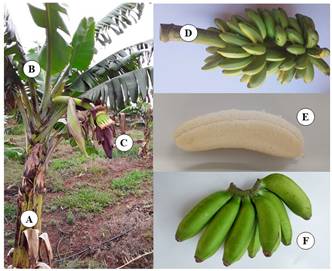
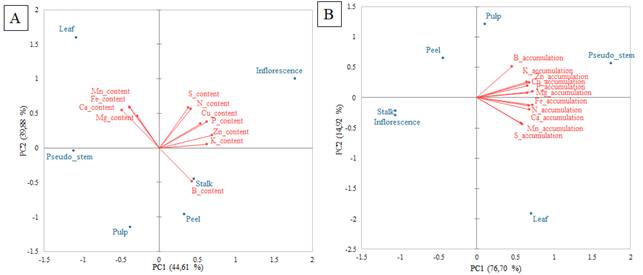
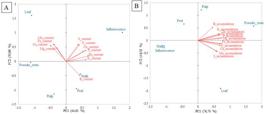
Brazil is a large banana producer, and technological advances have resulted in gains in national productivity. Developing new cultivars is part of the technological package that ensures the success of this activity. Among these cultivars, the ‘BRS SCS Belluna’ banana tree launched in 2016 through a partnership between Embrapa and Epagri, presents important agronomic characteristics for the sector and appears to be an option for market diversification with its small, sweet fruit. Banana trees are plants with high rates of phytomass production, which is regulated by the mineral distribution between their organs and influences mineral cycling and export. Thus, the objective of this study was to evaluate the phytomass and minerals in the aerial part of the BRS SCS Belluna banana tree. Two production cycles were evaluated. The organs and tissues of the aerial part were separated into the pseudostem, inflorescence, stalk, leaves, peel, and pulp. The pulp had the highest dry matter content, and the pseudostem had the highest accumulation, resulting in an average cycling of 64% of the produced dry matter. Potassium and manganese were the most accumulated macro- and micronutrients in the organs and tissues evaluated, except for the leaves, where nitrogen and calcium were predominant. In general, the inflorescences and leaves had the highest mineral concentrations, whereas the pseudostem had the highest exports. The highest cycling rates were observed for calcium and magnesium (macronutrients) and manganese (micronutrient). The highest removal rates were observed for nitrogen and phosphorus (macronutrients) and boron (micronutrient).
Keywords:
Musa spp.; cycling and export; production.
 Thumbnail
 Thumbnail