 Defoliation management and boron application as a strategy to reduce poor fruit set and improve the quality of ‘Merlot’ grapes
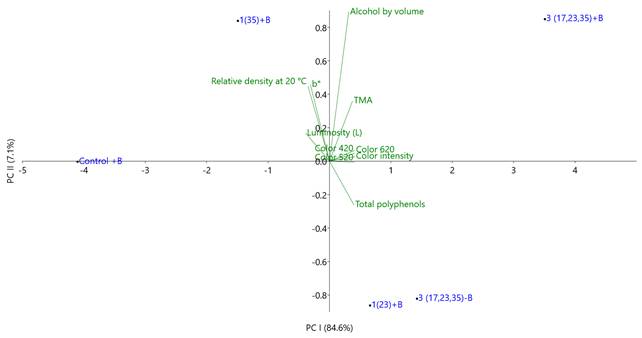
‘Merlot’ grapevines hold significant importance in Brazilian viticulture, particularly within the high-altitude region of Santa Catarina. However, they often experience a physiological disorder known as poor fruit set and shot berries, which results in clusters with few berries, uneven ripening, and reduced productivity. Therefore, this study evaluated the effectiveness of different defoliation and boron application strategies in mitigating poor fruit set. The evaluated treatments included: i) 3 defoliations with boron application at phenological stages 17 (developed inflorescence), 23 (full flowering), and 35 (beginning of maturation); ii) 3 defoliations without boron application at the same phenological stages; iii) 1 defoliation treatment with boron application at full flowering; iv) 1 defoliation treatment with boron application at the beginning of maturation; and v) a control with no defoliation but with boron application. Berry drop evaluations were conducted during the 2023 and 2024 harvests. Our findings showed that performing 3 defoliations at the developed inflorescence, full flowering, and the beginning of maturation stages did not reduce poor fruit set in ‘Merlot’ grapes cultivated in the Serra Catarinense region. However, these treatments were associated with increased total polyphenol and anthocyanin contents, improved color parameters, and enhanced color intensity in the wine. Late defoliation treatments decreased color intensity and anthocyanin and total polyphenol contents in ‘Merlot’ wines.
Keywords:
viticulture; polyphenol; calyptra
 Thumbnail