 Ora-pro-nóbis (Pereskia aculeata Mill.) propagated by seeds and cuttings under water deficit and biological indicators of soil quality
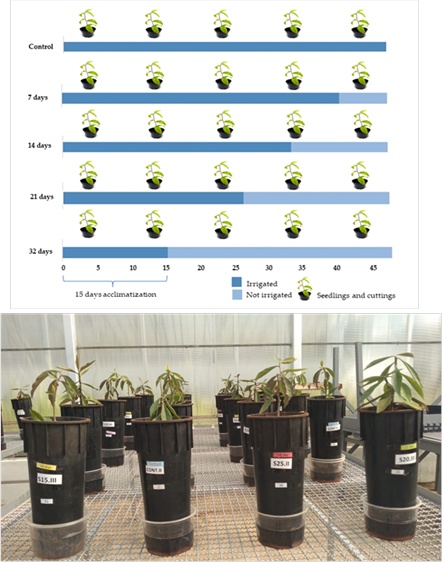
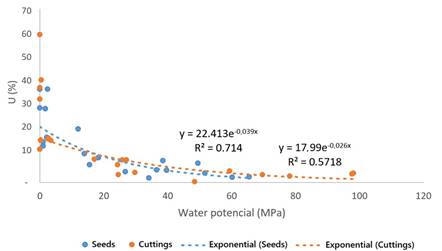
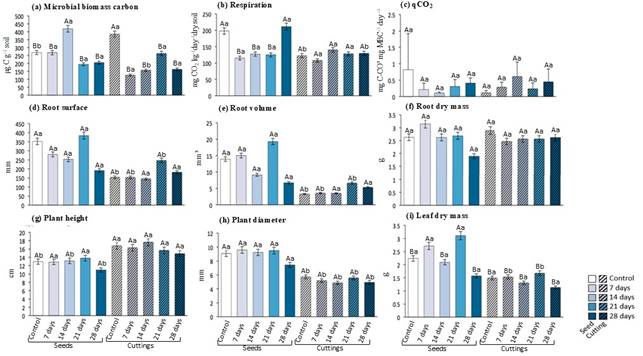
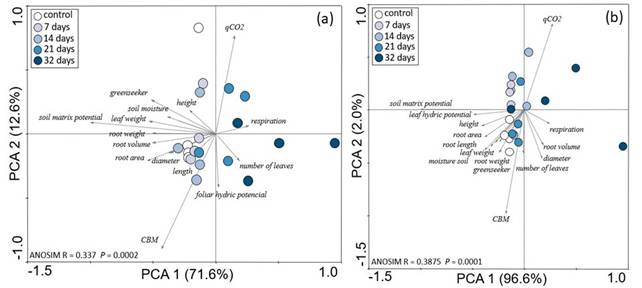
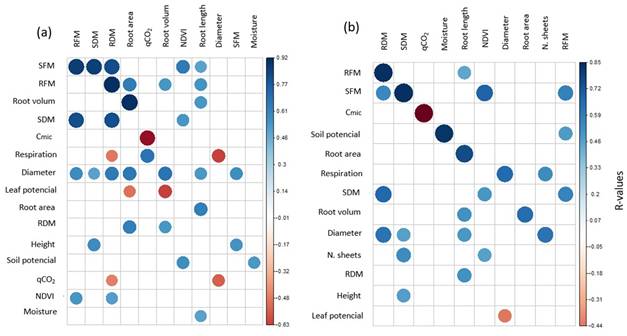
Ora-pro-nóbis (Pereskia aculeata Mill.) is a protein-rich member of the Cactaceae with great potential for cultivation in regions where water can be a limiting factor. The aim of this study was to verify the tolerance of this species to water deficiency and determine how microbial biomass and soil respiration are affected under these conditions. Five treatments were tested, namely control and irrigation suspension for 7, 14, 21, and 28 consecutive days, in plants propagated by seeds and cuttings. The decrease in soil moisture and soil water potential (Ψs) after 28 days of water restriction highlighted the severe impact of a lack of water on plants, especially those propagated by cuttings, which showed greater susceptibility to water stress (leaf potential -2.84 MPa). Seedlings, although affected in terms of root development and fresh mass at 28 days (leaf potential of -1.59 MPa), showed advantages in terms of shoot fresh matter and plant diameter, suggesting that propagation by seeds and root development are crucial for water stress resistance. The microbial biomass carbon, in general did not vary among the irrigation suspensions times both in plants propagated by seeds and cuttings, reinforcing the importance of microbial adaptation to stressful conditions.
Keywords:
water stress; non-conventional food plants; soil physics; WP4; water potential
 Thumbnail
 Thumbnail
 Thumbnail
 Thumbnail
 Thumbnail
 Thumbnail