Analysis and systematization of mangrove co-management from a systemic environmental management approach
Abstract
This work proposes to analyze and systematize the experience of implementation and executing the Agreement for Sustainable Use and Custody of the Mangrove Ecosystem (ASUCME) using a critical interpretation. To address these questions, the following steps were followed: comparison and analysis the Management Plans (MPs); examination of the semi-annual reports prepared by each community; and systematization of the experience, considering the perceptions of the community and relevant actors. The communities studied are in the south of the Esmeraldas Province, Ecuador. The methodology used is empirical and descriptive in nature, aligning with Participatory Action Research, and participatory workshops were conducted. The planning of the ASUCMEs does not consider the reality of the communities to be effective (economically and socially). The problems identified include low levels of organization within the associations, lack of access to financial resources, low presence of authorities, and low relevance of the Management Plans.
Keywords:
Landscape geoecology; Agreement for Sustainable Use and Custody of the Mangrove Ecosystem; Community-based research; Management Plans; Environmental management
Resumen
Este trabajo propone analizar y sistematizar la experiencia de implementación y ejecución de los Acuerdos de Uso Sostenible y Custodia del Ecosistema Manglar (AUSCEM), utilizando una interpretación crítica. Para responder estas interrogantes se seguirá las siguientes fases: comparar y analizar los Planes de Manejo (PM); examinar los informes semestrales realizados por cada comunidad; y sistematizar la experiencia, considerando la percepción de la comunidad y de los actores relevantes. Las comunidades estudiadas se encuentran en el sur de la Provincia de Esmeraldas, Ecuador. La metodología utilizada es de carácter empírica y descriptiva, alineándose a la Investigación Acción Participación, y se aplicaron talleres participativos. La planificación de los AUSCEM no considera la realidad de las comunidades para que estos sean efectivos (económica y social). Los problemas identificados son: existe un bajo nivel de organización de las asociaciones, falta de acceso a recursos económicos, baja presencia de autoridades y los PM no son pertinentes.
Palavras clave:
Geoecología de los paisajes; Acuerdos de Uso Sostenible y Custodia del Ecosistema Manglar; Investigación participativa; Planes de manejo; Gestión Ambiental
Resumo
Este trabalho se propõe a analisar e sistematizar a experiência de implementação e execução dos Acordos de Uso Sustentável e Custódia do Ecossistema de Mangue (AUSCEM), utilizando uma interpretação crítica. Para responder a estas questões serão adotadas as seguintes fases: comparar e analisar os Planos de Manejo (PM); examinar os relatórios semestrais elaborados por cada comunidade; e sistematizar a experiência, considerando a percepção da comunidade e dos atores relevantes. As comunidades estudadas estão localizadas no sul da província de Esmeraldas, Equador. A metodologia utilizada é de natureza empírica e descritiva, alinhando-se à Pesquisa-Ação Participativa, e foram aplicadas falas participativas. O planejamento da AUSCM não considera a realidade das comunidades para que sejam eficazes (econômicas e sociais). Os problemas identificados são: há um baixo nível de organização das associações, falta de acesso a recursos económicos, baixa presença de autoridades e os deputados não são relevantes.
Palavras-chave:
Geoecologia da paisagem; Acordos de Uso Sustentável e Custódia do Ecossistema de Mangue; Pesquisa participativa em manguezais; Planos de Manejo; Gestão ambiental
Introduction
Mangroves can be concessioned by the Ecuadorian government to fishing communities and tourism entrepreneurs. The first concessions were granted in 2001, and their number has grown to 52 by 2018, according to the Subsecretariat of Coastal Marine Management (SCMM) of the Ministry of Environment of Ecuador. The Republic of Ecuador has 157,094.28 hectares of mangrove ecosystem, of which 68,161.60 hectares are protected under the Agreement for Sustainable Use and Custody of the Mangrove Ecosystem (ASUCME) (CARVAJAL; SANTILLÁN, 2019). These concessions are based on the right to use the territory for fishing activities and, in principle, represent a form of co-management.
In communities where mangrove concessions or custodianships have been implemented, members of local fishermen’s associations have defined privileged access to certain fisheries within their boundaries (BEITL, 2017). The communities that benefit from mangrove resources can acquire custodianship of these areas, where they must have a pre-established Management Plan (MP) in place with sustainable extraction measures. They must also monitor and control the mangroves. Compliance with the MP is verified through the submission of semi-annual reports to the environmental authority (SGMC). The MPs were developed in a previous work, unrelated to the authors of this article.
The main objective of this research is to analyze and systematize the experience to determine the effectiveness and applicability of the ASUCME. To this end, the following steps were taken: comparing and analyzing the approved MPs that grant the ASUCME to the community; examining the semi-annual reports submitted by each community; and systematizing the experience, considering the perceptions of the community and relevant social actors. The systematization of the experience allowed us to analyze the following aspects of the ASUCME implementation: potentialities, limitations, threats, environmental perception of the community, governance, and actions to follow. Prior analysis of the MP documents is necessary as they serve as a roadmap for implementing and maintaining the ASUCME.
Five communities from the southern part of the Esmeraldas Province, Ecuador, requested technical assistance from the Pontifical Catholic University of Ecuador, Esmeraldas Campus (PUCESE), with the mediation of the GIZ German Cooperation since 2016, for the fulfillment of the MPs. The researchers who developed the present work were part of that technical assistance. This work allows theorizing the society-nature interrelations through practice and assessing whether the real capacities (aptitudes to exercise the acquired obligation) of the communities to successfully execute the MPs were considered.
The analysis of the results was based on the theoretical foundation of critical geography, understanding territory as a space of governance (MANÇANO, 2008). Geography provides a theoretical orientation from a territorial perspective, both conceptual and operational (BOCCO; URQUIJO, 2013). At the same time, critical geography offers a perspective for analyzing territory as an instrument where production relations take place and where contradictions are also present (LEFEBVRE, 1974). Critical geography adopts the concepts of space and space-time and translates them into a political project (HARVEY, 2017).
The experience of the communities protecting the mangrove ecosystem is understood as the search for a counter-space, which is at the center of ethnic mobilizations (OSLENDER, 2010). These communities inhabit a differential space exposed to pressures responding to the logic of extractive capitalism; hence, the search for counter-space is ambiguous and subject to power relations (OSLENDER, 2010). The territory is where the history of society “is realized through the manifestations of its existence” (MANÇANO, 2008, p. 2), thus we have territorial disputes at the material (natural landscape) and immaterial (socio-cultural landscape) levels.
This work seeks to provide a framework for systematizing an experience, specifically an instrument for the management, conservation, and protection of an ecosystem. The systematic planning of mangrove management considers the following approaches: 1) mangroves are a socio-ecological system; 2) mangroves are an integrated system; 3) planning must be multi-scalar; 4) data and information must be standardized; and 5) the evaluation of the protected area system (BORGES; FERREIRA; LACERDA, 2017).
Materials and methods
a. Design
A summary of the methodology is presented in Table 1:
The methodology is empirical and descriptive in nature. The study was conducted at the Mangrove Wildlife Refuge of the Muisne River Estuary (MWRMRE). The design aligns with the qualitative epistemological paradigm, as it seeks to identify the issues related to the ASUCME with in-depth analysis. Qualitative research considers that the social component is relative and is understood from the perspective of the studied actors (HERNÁNDEZ; FERNÁNDEZ; BAPTISTA, 2014). Participatory Action Research (PAR) is a methodology that falls under the qualitative approach (COLMENARES, 2012). The intervention seeks to transform reality: to do research through action (FALS BORDA et al., 2014; KRAUSE, 2002).
The first step was to compare and analyze the approved MPs. Failure to comply with the MPs may result in the withdrawal of this agreement. Following the approval of the MPs, semi-annual compliance reports must be submitted to the SGMC. To facilitate a comparative and analytical assessment of the approved MPs, it is recommended to examine the planning and environmental management parameters initially proposed by Mateo & Silva (2016) and subsequently discussed with the research group. Of particular importance is the necessity to ensure that these parameters consider the intrinsic relationship between society and nature (see Table 1).
Subsequently, the environmental inventory established in the MPs was verified. In this phase, interviews were conducted with members, during which they were asked about aspects related to their income, type of housing, family responsibilities, and basic services, in order to establish a relationship between their activities and the use of their resources. A general evaluation of the types of public services was also carried out.
Participatory workshops were held in addition to the interviews. In the first workshop, the project’s objective, and the process for obtaining the ASUCME were explained, and the population’s socioeconomic situation was analyzed. The tools used for the workshops included focus groups and brainstorming sessions, as well as other tools such as filing, analysis, and identification of issues.
The semi-annual reports (conducted from 2016 to 2019) were carried out using participatory techniques to collect the information. These included workshops and semi-structured interviews. The analysis of the semi-annual reports considered aspects such as level of organization, economic resources, presence of authorities, and relevance of the MPs.
The MPs stipulated that quantitative information should be collected to prepare the semi-annual reports; however, this information was not gathered. In all the workshops conducted, community members expressed that it was not feasible to complete the records due to the complexity of the document and the need to simultaneously carry out their extraction activities. For this reason, the research team decided to gather qualitative information.
Participatory workshops following the methodology proposed by Carrera Villacrés and Silva (2019) (see Table 1) were carried out to determine environmental perception. The workshops were conducted with several focus groups, including community leaders, social actors, institutional leaders, development partners, and academia. Finally, to systematize this participative experience, desk-processed information and data obtained from the participatory workshops were used.
Following the timeline proposed by Jara (2012) (see Table 1), we note that:
-
The records and procedures used include participatory workshops, semi-annual compliance reports for the MPs, and semi-structured interviews with the actors involved in the experience.
-
The objective of the systematization is to determine the effectiveness and applicability of the ASUCME.
-
It was established that the aspects of analysis include strengths, weaknesses, threats, governance, and actions to follow (solutions).
-
The documents used to formulate conclusions and lessons learned include semi-annual reports, meeting minutes, participatory workshop reports, and field visit records.
b. Population and Sample
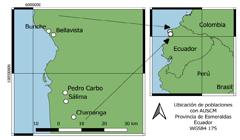
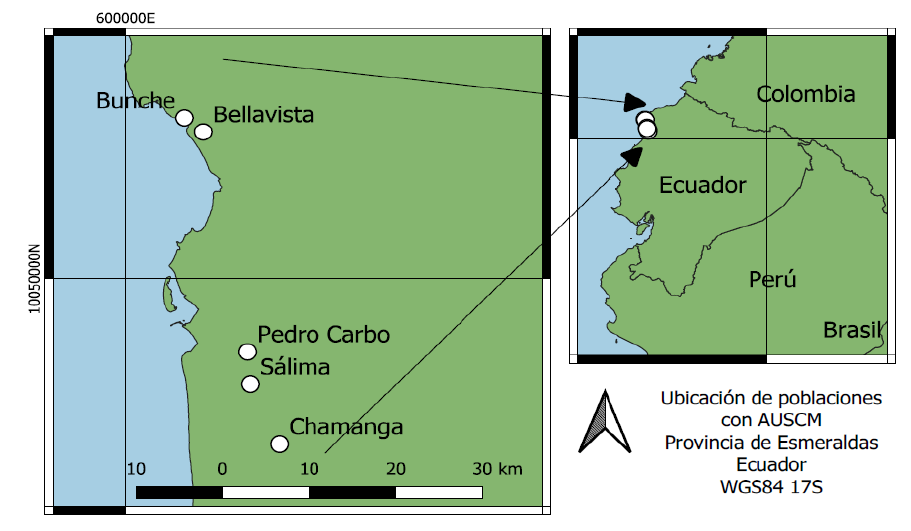
The associations formed to obtain the ASUCME are shown in Table 2, and the location of the communities is found in Figure 1:
Participatory workshops were held in all the communities, where most of the stakeholders from the territory (both public and private) were invited. Not all members were always present. The presence of the park rangers from RVSMERM was always consistent.
Results and discussion
The first four Management Plans (MPs) are very similar to each other. The MP of ASOPESMAR, being the first one, contains fewer elements than those that followed. The MP of Sálima is the most recent and is more comprehensive in terms of diagnosed elements. The Sálima MP includes participatory mapping, which demonstrates the evolution of this planning, considering the importance pointed out by Damastuti and De Groot (2019) of characterizing the social landscape through social mapping when data is scarce.
The relevance of the MPs has generated ambiguity regarding the legal criteria of the agreements, especially regarding how control entities should proceed in cases of land invasions by individuals or organizations that do not have agreements. Some of the activities proposed in the MPs are not executable, either due to lack of funding or because they were planned without considering feasibility criteria. This ambiguity has made it impossible to collect quantitative data, such as the quantity of resources harvested, inspections conducted by community members, reports filed, among others.
The environmental diagnosis included in the MPs appears to be primarily oriented towards meeting the requirements of a specific regulation, rather than delving deeply into the intricate social and natural relationships that shape the environment. The analysis of the social component is more focused on the presentation of socio-economic figures, in contrast to Sálima’s MP, which placed greater emphasis on this aspect. An analysis of the cultural landscape is notably absent.
Building public policy for mangroves is very complex (ROZIQIN, 2018). Conservation programs must first strengthen the capacities of local leaders, elected government officials, tourism entrepreneurs, women, and occupational groups (ABDULLAH; SAID; OMAR, 2014). Policy alone is not enough; local communities must be integrated, and there must also be collaboration between researchers and decision-makers (ROMAÑACH et al., 2018). Agrawal et al. (2018) suggest that institutions, information, and incentives are three fundamental means for governance interventions.
A key element for ecosystem governance is the involvement of key stakeholders. Stakeholder mapping is important in planning because it helps identify and characterize the diverse social actors in the intervention scenario (ALGRANATI; BRUNO; IOTTI, 2012). Important stakeholders in the territory include representatives of the shrimp and palm oil industries.
The evaluation of ecosystem services of mangroves is essential for the understanding and management by local communities. However, the experience, knowledge, and information of the primary beneficiaries are often ignored (DAMASTUTI; DE GROOT, 2019). Community dialogues must be based on a deep awareness of socio-ecological relationships; they should promote deeper and broader recognition of benefits, institutional changes, and basic knowledge adequate for systematic self-organization (OUNVICHIT; YODDUMNERN-ATTIG, 2018).
Ecosystem management must be proactive and transparent, and it must include institutions representing decision-makers. An example of the absence of such institutions is that while one of the MPs mentions the possible existence of archaeological heritage, this has not been investigated further, and it is likely being lost.
Regarding the inventory of environmental conditions, we must state that the utility of the inventory and characterization (development of an environmental diagnosis) in a planning and environmental management process is to identify the systemic attributes of the territory, which are: structure, function, dynamics, and evolution. It is not possible to define a transdisciplinary category of general and particular development without a geographic reading and interpretation that provides spatial support for the articulation of economic, social, and environmental structures (MATEO; SILVA, 2016).
According to Mateo and Silva (2016, p. 159)
“The Environmental Planning process is, at its core, a technical and scientific endeavor. However, it cannot be carried out without the direct and dialectical interaction with economic agents and social groups that, in one way or another, are connected to the area under study.”
Mangrove health also depends on the proper condition of the watershed that feeds them. However, the function and structure of the watershed was not considered in the MPs, but they are necessary for integrated territorial management. An increase in land-use changes corresponded to an expansion of the agricultural frontier. In the Province of Esmeraldas, the average annual gross deforestation (anthropogenic conversion of forest to other land cover) is 16,053 ha/year, the highest in the country. In the Bunche River basin, forests accounted for 60% in 1990, but by 2016, they had dropped to 30% (CARRERA VILLACRÉS, 2019).
The preparation of the bi-annual reports allows the evaluation of the implementation of the Agreements for Sustainable Use and Custody of the Mangrove Ecosystem (ASUCMEs). Our work aimed to analyze these reports, focusing on the significance, threats, and potential solutions related to the vulnerable mangrove ecosystem. Additionally, social, economic, institutional, political (governance), and environmental factors that affect the execution of the ASUCMEs were identified.
The study by Carrera Villacrés and Silva (2019) identifies threats that were not considered in the MP of ASOPESBUNCHE. For example, it was noted that in the Bunche population, the main threat is shrimp farms, not only because they are in mangrove areas but also because of the pollutant discharges they produce. The same concerns were raised in the other communities addressed.
Studies such as that of Sathirathai and Barbier (2007) indicate that although shrimp farming generates significant private benefits, it is not economically viable when externalities generated by the destruction of mangroves and water pollution are included. This reality is evident and, in general, communities living near mangroves do not recognize the shrimp industry as a real source of income for their family economies.
Naranjo (2016) notes that the shrimp industry is very important in the country, representing around 20% in monetary terms during this century. However, it does not mention that the activity has not brought economic change to the residents, possibly rendering this issue invisible. Historically, the establishment of shrimp farms led to the deforestation of large areas of mangroves. With this background, the conflict is not isolated; it is systemic and complex.
It is important to note that in the preparation of the bi-annual reports, representatives from the shrimp and palm oil industries were invited to identify alliances and conflicts in the territory, as well as opportunities and weaknesses for implementing projects. However, there was no engagement with these sectors.
Therefore, shrimp farming is at the forefront of the problem. Socio-economic factors are a concern regarding the abandonment of these populations, whether in terms of providing basic services or access to new income opportunities. Institutional presence and state governance are deficient or not significant. The academic sector also needs to increase its presence in the population, as this is how the stakeholders feel. The work of Carrera Villacrés and Silva (2019) mentions that other important issues not addressed in the MPs are necessary to assess environmental management and effectively design management and ecosystem governance tools.
Carrera Villacrés and Silva (2019) also identified other threats mentioned by the inhabitants (which were confirmed by the other communities included in this work), including overexploitation, with the consequent depletion of natural resources provided by the mangroves (shellfish and crabs), environmental pollution from solid waste, and lack of commitment from public administration actors. The main socio-economic problem affecting the population is lack of income, which leads these populations to live in conditions of vulnerability and poverty. Mangrove resources are a source of income for some families, but with their overexploitation and depletion, incomes have further decreased. Institutional weakness is also a significant issue, as it is generally accepted that there is little interest from official public institutions in the conservation of ecosystems and in improving the living conditions of populations. This statement was made in most of the workshops.
Regarding institutional and political factors, the level of organization among some associations that manage the mangroves reflects a lack of interest in attending training and capacity-building processes. The lack of leadership or training of new leaders in some organizations prevents them from improving the management capabilities of mangrove areas under their care. Effective management, to facilitate the proper functioning of the agreements, depends on the level of organization and response.
The lack of economic incentives for mangrove conservation generates disinterest in obtaining a ASUCME in other communities (this is the general perception among communities). There is a scarcity of resources available to support the organizations in implementing MP activities and in the real conservation and sustainable use of the areas under custody. There is also a lack of incentives from state institutions for individuals or organizations that provide technical assistance to organizations with ASUCMEs.
Community leaders believe that the presence of public administration for environmental control is low. This presence is necessary given conflicts with actors affecting the mangrove, such as shrimp farmers and independent fishers. Contamination or other damages caused by third parties impact mangrove conservation, and organizations with ASUCMEs lack the tools to prevent them. Associations with custody agreements are not control entities; thus, the process must be carried out together with the state. The limited response of environmental control and regulatory agencies demotivates community members and fosters distrust. Furthermore, there is low institutional coordination between entities related to the ASUCME.
The inclusion of relevant actors in mangrove management is crucial for governance conservation (KUBO; WIBAWANTO; ROSSANDA, 2019). The synergy between actors must be intensified in the future, and it is important to avoid sectoral egos and create common ground (ROZIQIN, 2018). Therefore, political support at all actor levels is essential (SCHMITT, 2011). Financial support, incentives, and compensation mechanisms must also be present (CHEVALLIER, 2013).
The two main entities relevant to the ASUCMEs are the community and the Mangrove Governance System (SGMC). The Organic Environmental Code (OEC) in Ecuador (ASAMBLEA NACIONAL, 2017) establishes the environmental responsibilities of the decentralized autonomous governments (GADs) -provincial, municipal, and parish- in ecosystem conservation (all of them share this responsibility). Governance in the ASUCMEs would be more effective if these GADs exercised their powers regarding ecosystem conservation.
Mangrove management must be approached from the bottom up, starting with local communities (OUNVICHIT; YODDUMNERN-ATTIG, 2018). Interactions between governing actors -state actors, the private sector, or civil society-and those being governed-can lead to positive or negative outcomes and impacts (TRIYANTI et al., 2017). Permanent general assemblies of the associations and their respective records are a constant means of periodically obtaining socio-environmental perceptions and interactions, and a recurrent analysis of these records is necessary.
The success of an environmental management tool, especially for it to be sustainable, necessarily requires the accompaniment and economic support of the entity promoting the policy, and not just relying on it to be implemented on its own. Sustainable management must involve all beneficiaries and key actors (RAHMAN; RAHMAN; ISLAM, 2010).
The conclusions and lessons learned from the systematization process, following the work by Jara (2012) are as follows:
-
Mangroves are an integral part of the local communities and a component of their biocultural heritage. Many community members live off the extraction of wildlife resources from the mangroves. However, for the communities, mangroves are not only a source of resources but also an ecosystem that is part of their worldview.
-
The Agreements for Sustainable Use and Custody of the Mangrove Ecosystem (ASUCMEs) should consider the following: the design and implementation were carried out by another team (we believe it is important for the same team to carry out both for greater success), the need for participatory execution, the issues encountered during the implementation that became evident through the preparation of the bi-annual reports, and the challenges that the communities face in maintaining the ASUCMEs.
-
The summary of the systematization of the experience was conducted by analyzing the aspects specified in Table 3(which we consider the most important):
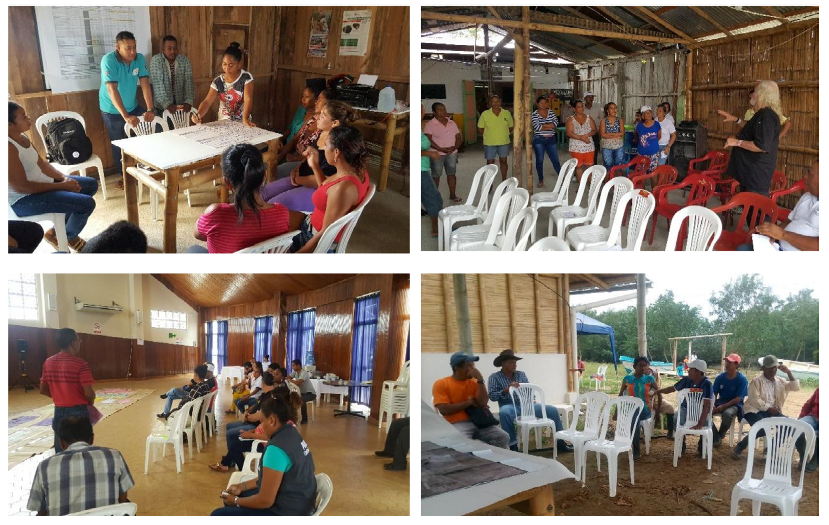
Top left: Meeting held in San José de Chamanga; top right: Meeting held in Bunche; bottom left: Meeting held at PUCESE with leaders from each community; bottom right: Meeting held in Pedro Carbo.
Figure 2 shows the photographic record of the meetings held with the communities. The findings were presented in the semi-annual reports submitted to the SGMC. The documents attached included photographic records, posters worked on with all the workshop participants and attendance records. In most of the workshops, MWRMRE park rangers were present, validating the execution of the meetings and the achievement of results.
Systematization goes beyond a simple work report; its goal is to generate practical and transformative knowledge. It is based on knowledge and action, on theory and practice. The interpretation of the experience will then aim to contribute to the effective planning and management of both natural and social landscapes. The primary goal of the intervention was to implement a tool for the protection and conservation of a threatened ecosystem, with communities serving as the key implementers and researchers providing technical assistance for its execution.
Moreover, despite the environmental conflict, there are significant strengths within the communities, the foremost being their environmental awareness. These communities possess a deep understanding of the importance of mangroves, both as natural ecosystems and as vital components of their socio-cultural identity. Mangroves are not merely sources of natural resources and income; they are embedded in the communities’ worldview shaping their cultural customs, traditional cuisine, and historical heritage. As such, conserving and protecting mangroves is not only an environmental concern but also a matter of safeguarding the biocultural heritage of these communities and the nation. The communities are fully aware of this. The only effective way to reduce the over-exploitation of mangroves is to promote greater economic diversification within these areas.
We can infer interesting aspects by discussing research results, and considering the theoretical foundation of critical geography, and relating the concepts of space, counter-space, territory, and deterritorialization with the ASUCMEs. One starting point is the concept of space proposed by Oslender (2010), which considers space as the source and object of political conflicts, and how relations in this world, driven by capitalist logics, express themselves in a struggle for space.
The studied communities establish a counter-space, previously constituted as ecosystems, which in turn face an industrial activity that was established through the destruction of that space. The implementation of the ASUCME is an example of the search for a counter-space, expressed in the desire and commitment of communities to be part of ecosystem management and as a form of resistance against aggressive economic activity.
According to Harvey (2017) we have an obligation to use geographical knowledge to create territories free from inequality. The extractive zones within mangroves clearly demonstrate these disparities, with highly invasive industrial activity like shrimp farming coexisting alongside local communities that view these activities as a constant threat to the mangrove ecosystem. To address these challenges, the implementation of environmental management tools must be comprehensive, incorporating the economic dimension into the design of such instruments.
Mançano Fernandes (2008) discusses the concept of Territory as shaped by societal relations and social structures, resulting in different territories that are in a state of ongoing conflict. The destruction of the mangrove ecosystem is an example of deterritorialization, where an industrial activity transformed the land use, replacing mangroves with shrimp farms. However, this territorial modification also impacted intangible aspects, as mangroves play a crucial role in supporting the biocultural heritage of the surrounding communities.
Castillo (2020) defines deterritorialization as a shift in territorial dynamics. The ASUCME initiative aims to halt these processes and achieve effective territorial reclamation. However, without proper institutional involvement, these efforts remain ineffective. Territoriality is inherently a process of construction and tends to be more relational in nature (PAZ, 2017).
Conclusions and final considerations
In general, the MPs have strengths and weaknesses. The description of the social landscape was done in a participatory manner, and it is evident that the main relationship that the communities have with mangroves is the use of natural resources. However, we note that the social and cultural landscape was not described in depth, since there are other characteristics that were not estimated. The social landscape is a determining factor in the execution of the agreements. This study demonstrates once again that all environmental management instruments must be participatory from planning to execution.
Mangroves are an ecosystem that supports the biocultural heritage of many ancestral populations of the Esmeraldas coast. It is necessary that future ecosystem management instruments consider mangroves from this perspective, and not only as a natural resource extractive territory, highlighting only their natural importance.
An environmental diagnosis should be regarded as a tool that provides the requisite data for the effective management of mangrove ecosystems. The ASUCMEs have encountered difficulties in implementation due to the omission of crucial elements of the social and cultural landscape, with the lack of economic resources being a particularly significant issue. The ASUCMEs will not emerge organically if there is no genuine interconnection between the community and the actors involved in the conservation of the mangrove ecosystem. Planning and management processes must be integrated into the implementation of an ecosystem conservation instrument. Achieving this integration will be a challenge in future experiences.
The ASUCMEs exemplify the communities’ aspiration to be acknowledged as genuine stakeholders in the stewardship and preservation of ecosystems. It is imperative that those with environmental competence, as defined by current regulations, demonstrate a commitment to the management and conservation of ecosystems. The exercise of legal powers by the SGMC and the GADs should be accompanied by the implementation of participatory environmental management instruments. A future challenge for new studies is to improve understanding of the experiences of co-management of ecosystems, where the involvement of all relevant actors in environmental management is integrated in a meaningful way.
Regarding solutions, it is necessary to establish quantitative biotechnological methodologies to evaluate the efficiency of the ASUCMEs in the conservation of the mangrove ecosystem. In this sense, the team proposed the use of terrestrial bio-indicators to measure the recovery of an ecosystem. For example, spiders are dominant predators in terrestrial food webs and excellent bioindicators of habitat quality. Previous studies have estimated that, globally, spiders consume between 400 and 800 million metric tons of insects per year (NYFFELER; BIRKHOFER, 2017), an amount greater than that consumed by insectivorous birds (NYFFELER; ŞEKERCIOĞLU; WHELAN, 2018).
References
-
ABDULLAH, K.; SAID, A. M.; OMAR, D. Community-based Conservation in Managing Mangrove Rehabilitation in Perak and Selangor. Procedia - Social and Behavioral Sciences, [S. l.], v. 153, p. 121-131, 2014. DOI: 10.1016/j.sbspro.2014.10.047. Disponível em: http://dx.doi.org/10.1016/j.sbspro.2014.10.047
» https://doi.org/10.1016/j.sbspro.2014.10.047» http://dx.doi.org/10.1016/j.sbspro.2014.10.047 -
AGRAWAL, A.; HAJJAR, R.; LIAO, C.; RASMUSSEN, L. V.; WATKINS, C. Editorial overview: Forest governance interventions for sustainability through information, incentives, and institutions. Environmental Sustainability, [S. l.], v. 32, p. A1-A7, 2018. DOI: https://doi.org/10.1016/j.cosust.2018.08.002
» https://doi.org/10.1016/j.cosust.2018.08.002 -
ALGRANATI, S.; BRUNO, D.; IOTTI, A. Mapear actores, relaciones y territorios. Una herramienta para el análisis del escenario social. Cuadernos de cátedra No. 3, [S. l.], n. 3, p. 22, 2012. DOI: 10.1109/CCA.2012.6402348. Disponível em: https://animacionsocioculturalunlz.files.wordpress.com/2014/09/algranati-santiago-mapear-actores-territorios-y-relaciones-mod.pdf
» https://doi.org/10.1109/CCA.2012.6402348» https://animacionsocioculturalunlz.files.wordpress.com/2014/09/algranati-santiago-mapear-actores-territorios-y-relaciones-mod.pdf -
ASAMBLEA NACIONAL. Código orgánico del ambiente Ecuador, 2017. p. 68. Disponível em: http://ecuadorforestal.org/wp-content/uploads/2017/04/Codigo-Organico-del-Ambiente-ROS-No.-983120417.pdf Acesso em: 30 out. 2018.
» http://ecuadorforestal.org/wp-content/uploads/2017/04/Codigo-Organico-del-Ambiente-ROS-No.-983120417.pdf -
BEITL, C. M. Decentralized mangrove conservation and territorial use rights in Ecuador’s mangrove-associated fisheries. Bulletin of Marine Science, [S. l.], v. 93, n. 1, p. 117-136, 2017. DOI: 10.5343/bms.2015.1086. Disponível em: https://digitalcommons.library.umaine.edu/ant_facpub/44/.
» https://digitalcommons.library.umaine.edu/ant_facpub/44 -
BOCCO, G.; URQUIJO, P. Geografía ambiental: reflexiones teóricas y práctica institucional. Región y sociedad, [S. l.], v. 25, n. 56, 2013. Disponível em: http://www.scielo.org.mx/scielo.php?script=sci_arttext&pid=S1870-39252013000100003 Acesso em: 14 jun. 2022.
» http://www.scielo.org.mx/scielo.php?script=sci_arttext&pid=S1870-39252013000100003 -
BORGES, R.; FERREIRA, A. C.; LACERDA, L. D. Systematic Planning and Ecosystem-Based Management as Strategies to Reconcile Mangrove Conservation with Resource Use. Frontiers in Marine Science, [S. l.], v. 4, n. NOV, p. 353, 2017. DOI: 10.3389/fmars.2017.00353. Disponível em: http://journal.frontiersin.org/article/10.3389/fmars.2017.00353/full Acesso em: 17 mar. 2020.
» https://doi.org/10.3389/fmars.2017.00353» http://journal.frontiersin.org/article/10.3389/fmars.2017.00353/full - BRIONES, Alfredo; SALAS, Jaime. Plan de manejo para el uso sustentable y custodia de 152,52 hectáreas de bosque de manglar ubicadas en la comunidad de Pedro Carbo del cantón Muisne, Esmeraldas por parte de la Asociación de pescadores y recolectores de productos del mar - ASOPESCMAR. [S. l.], 2016.
-
CARRERA VILLACRÉS, Felipe. Alternativas de desarrollo de las comunidades ancestrales del litoral ecuatoriano caso de estudio comunidad de Bunche. Orientador: Edson Vicente da Silva. Teses (Doutorado em Desenvolvimento e meio ambiente) - Universidade Federal do Ceará, Fortaleza, 2019. Disponível em: http://www.repositorio.ufc.br/handle/riufc/42597
» http://www.repositorio.ufc.br/handle/riufc/42597 -
CARRERA VILLACRES, F.; SILVA, E. Percepción ambiental de habitantes de comunidades que viven aledañas al ecosistema manglar. El caso de la comunidad de Bunche , en Muisne. Espacio abierto, [S. l.], v. 28, n. 4, p. 36-56, 2019. Disponível em: https://produccioncientificaluz.org/index.php/espacio/article/view/30673/31723
» https://produccioncientificaluz.org/index.php/espacio/article/view/30673/31723 - CARVAJAL, R.; SANTILLÁN, X. Plan de Acción Nacional para la Conservación de los Manglares del Ecuador Continental. Ministerio del Ambiente de Ecuador Conservación Internacional Ecuador Organización de las Naciones Unidas para la Educación, la Ciencia y la Cultura (UNESCO) Comisión Permanente del Pacífico Sur (CPPS)., [S. l.], p. 80, 2019.
-
CASTILLO, G. El territorio como apropiación sociopolítica del espacio. Entre la desterritorialización y la multiterritorialidad Territory as sociopolitical appropriation of space. Between deterritorialization and multiterritoriality. Investigaciones Geográficas, [S. l.], v. 103, 2020. DOI: 10.14350/rig.60127. Disponível em: www.investigacionesgeograficas.unam.mxorcid:https://orcid.org/0000-0001-8188-9929
» https://doi.org/10.14350/rig.60127» https://orcid.org/0000-0001-8188-9929 -
CHEVALLIER, Romy. Balancing Development and Coastal Conservation: Mangroves in Mozambique. Johannesburg. 2013. Disponível em: https://www.africaportal.org/publications/balancing-development-and-coastal-conservation-mangroves-in-mozambique/.
» https://www.africaportal.org/publications/balancing-development-and-coastal-conservation-mangroves-in-mozambique -
COLMENARES, A. Investigación-acción participativa: una metodología integradora del conocimiento y la acción. Colombia Voces y Silencios: Revista Latinoamericana de Educación, 2012. Disponível em: http://repositorio.minedu.gob.pe/bitstream/handle/20.500.12799/1833/investigacion accion participativa una metodologia integradora del conocimiento y la accion.pdf?sequence=1&isAllowed=y
» http://repositorio.minedu.gob.pe/bitstream/handle/20.500.12799/1833/investigacion accion participativa una metodologia integradora del conocimiento y la accion.pdf?sequence=1&isAllowed=y -
DAMASTUTI, E.; DE GROOT, R. Participatory ecosystem service mapping to enhance community-based mangrove rehabilitation and management in Demak, Indonesia. Regional Environmental Change, [S. l.], v. 19, n. 1, p. 65-78, 2019. DOI: 10.1007/s10113-018-1378-7.
» https://doi.org/10.1007/s10113-018-1378-7. -
FALS BORDA, Orlando; HERRERA, Nicolás; FARFÁN, Herrera; LÓPEZ, Lorena. Ciencia, Compromiso y Cambio Social. Segunda ed. Montevideo: El Colectivo, 2014. Disponível em: http://www.extension.udelar.edu.uy/wp-content/uploads/2016/12/08_Ciencia_Compromiso_y_Cambio_Social-Fals_Borda.pdf Acesso em: 21 jan. 2018.
» http://www.extension.udelar.edu.uy/wp-content/uploads/2016/12/08_Ciencia_Compromiso_y_Cambio_Social-Fals_Borda.pdf -
HARVEY, D. La geografía como oportunidad política de resistencia y construcción de alternativas. Espacios, [S. l.], v. 2, n. 4, p. 9, 2017. DOI: 10.25074/07197209.4.339.
» https://doi.org/10.25074/07197209.4.339. -
HERNÁNDEZ, Roberto; FERNÁNDEZ, Carlos; BAPTISTA, Pilar. Metodología de la investigación. Sexta ed. México: Mc Graw Hill Education, 2014. Disponível em: http://observatorio.epacartagena.gov.co/wp-content/uploads/2017/08/metodologia-de-la-investigacion-sexta-edicion.compressed.pdf Acesso em: 7 abr. 2018.
» http://observatorio.epacartagena.gov.co/wp-content/uploads/2017/08/metodologia-de-la-investigacion-sexta-edicion.compressed.pdf -
JARA, O. Sistematización de experiencias, investigación y evaluación: aproximaciones desde tres ángulos. Revista Internacional de Investigación en Educación Global y para el Desarrollo, [S. l.], v. 1, p. 56-70, 2012. Disponível em: https://dialnet.unirioja.es/servlet/articulo?codigo=6368512 Acesso em: 26 jul. 2021.
» https://dialnet.unirioja.es/servlet/articulo?codigo=6368512 -
KRAUSE, Mariane. Investigación-acción participativa: una metodología para el desarrollo de autoayuda, participación y empoderamiento. In: DURSTON, John; MIRANDA, Francisca (org.). Experiencias y metodología de la investigación participativa. Santiago de Chile: Publicación de las Naciones Unidas, 2002. p. 41-56. Disponível em: http://repositorio.cepal.org/bitstream/handle/11362/6023/S023191_es.pdf?se
» http://repositorio.cepal.org/bitstream/handle/11362/6023/S023191_es.pdf?se -
KUBO, H.; WIBAWANTO, A. ; ROSSANDA, D. Toward a policy mix in conservation governance: A case of Gunung Palung National Park, West Kalimantan, Indonesia. Land Use Policy, [S. l.], v. 88, n. May, p. 104108, 2019. DOI: 10.1016/j.landusepol.2019.104108. Disponível em: https://doi.org/10.1016/j.landusepol.2019.104108
» https://doi.org/10.1016/j.landusepol.2019.104108» https://doi.org/10.1016/j.landusepol.2019.104108 - LEFEBVRE, H. La producción del espacio. Papers. Revista de Sociologia, [S. l.], v. 3, p. 219, 1974. DOI: 10.5565/rev/papers/v3n0.880.
-
MANÇANO, Bernardo. Sobre la Tipología de los Territorios. [S. l.], p. 20, 2008. DOI: 10.1017/CBO9781107415324.004. Disponível em: https://web.ua.es/es/giecryal/documentos/documentos839/docs/bernardo-tipologia-de-territorios-espanol.pdf
» https://doi.org/10.1017/CBO9781107415324.004» https://web.ua.es/es/giecryal/documentos/documentos839/docs/bernardo-tipologia-de-territorios-espanol.pdf - MATEO, José; SILVA, Edson. Planejamento e Gestão Ambiental: Subsídios da Geoecologia das Paisagens e da Teoria Ecossistêmica. Fortaleza: Edições UFC, 2016.
-
NARANJO, Mariana. La política agropecuaria ecuatoriana. Quito: Ministerio de Agricultura, Ganadería, Acuacultura y Pesca, 2016. Disponível em: http://servicios.agricultura.gob.ec/politicas/La Políticas Agropecuarias al 2025 I parte.pdf Acesso em: 9 jan. 2018.
» http://servicios.agricultura.gob.ec/politicas/La Políticas Agropecuarias al 2025 I parte.pdf -
NYFFELER, M.; BIRKHOFER, K. An estimated 400-800 million tons of prey are annually killed by the global spider community. The Science of Nature, [S. l.], v. 104, n. 3, p. 1-12, 2017. DOI: 10.1007/S00114-017-1440-1. Disponível em: https://link.springer.com/article/10.1007/s00114-017-1440-1 Acesso em: 4 maio. 2023.
» https://doi.org/10.1007/S00114-017-1440-1» https://link.springer.com/article/10.1007/s00114-017-1440-1 -
NYFFELER, M.; ŞEKERCIOĞLU, Ç. H.; WHELAN, C. J. Insectivorous birds consume an estimated 400-500 million tons of prey annually. The Science of Nature , [S. l.], v. 105, n. 7, p. 1-13, 2018. DOI: 10.1007/S00114-018-1571-Z. Disponível em: https://link.springer.com/article/10.1007/s00114-018-1571-z Acesso em: 4 maio. 2023.
» https://doi.org/10.1007/S00114-018-1571-Z» https://link.springer.com/article/10.1007/s00114-018-1571-z -
OSLENDER, U. La búsqueda de un contra-espacio: ¿hacia territorialidades alternativas o cooptación por el poder dominante? Geopolítica(s). Revista de estudios sobre espacio y poder, [S. l.], v. 1, n. 1, p. 95-114, 2010. DOI: 10.5209/GEOP.14280.
» https://doi.org/10.5209/GEOP.14280. -
OUNVICHIT, T.; YODDUMNERN-ATTIG, B. Community dialogs on the probabilities of community-based mangrove institution. Kasetsart Journal of Social Sciences, [S. l.], v. 39, n. 3, p. 365-373, 2018. DOI: 10.1016/j.kjss.2018.07.001. Disponível em: https://doi.org/10.1016/j.kjss.2018.07.001
» https://doi.org/10.1016/j.kjss.2018.07.001» https://doi.org/10.1016/j.kjss.2018.07.001 -
PAZ, M. Luchas en defensa del territorio. reflexiones desde los conflictos socio ambientales en México. Acta Sociológica, [S. l.], v. 73, p. 197-219, 2017. DOI: 10.1016/J.ACSO.2017.08.007. Disponível em: http://www.revistas.unam.mx/index.php/ras/article/view/61059 Acesso em: 28 jun. 2022.
» https://doi.org/10.1016/J.ACSO.2017.08.007» http://www.revistas.unam.mx/index.php/ras/article/view/61059 -
RAHMAN, M. M.; RAHMAN, M. M.; ISLAM, K. S. The causes of deterioration of Sundarban mangrove forest ecosystem of Bangladesh: conservation and sustainable management issues. AACL Bioflux, [S. l.], v. 3, n. 2, 2010. Disponível em: http://www.bioflux.com.ro/aaclhttp://www.bioflux.com.ro/aacl78 Acesso em: 17 mar. 2020.
» http://www.bioflux.com.ro/aaclhttp://www.bioflux.com.ro/aacl78 -
ROMAÑACH, S. S.; DEANGELIS, D. L.; KOH, L.; LI, Y.; TEH, S. Y.; RAJA BARIZAN, R. S. ; ZHAI, L . Conservation and restoration of mangroves: Global status, perspectives, and prognosis. Ocean and Coastal Management, [S. l.], v. 154, n. February 2017, p. 72-82, 2018. DOI: 10.1016/j.ocecoaman.2018.01.009. Disponível em: https://doi.org/10.1016/j.ocecoaman.2018.01.009
» https://doi.org/10.1016/j.ocecoaman.2018.01.009» https://doi.org/10.1016/j.ocecoaman.2018.01.009 -
ROZIQIN, A. Environmental Policy of Mangroves Management in Rembang Regency. E3S Web of Conferences, [S. l.], v. 31, p. 1-6, 2018. DOI: 10.1051/e3sconf/20183109002.
» https://doi.org/10.1051/e3sconf/20183109002. - SALAS, Jaime. Plan de manejo para el uso sustentable y custodia de 319.56 hectáreas de bosque de manglar ubicadas en la parroquia Chamanga del cantón Muisne, Esmeraldas por parte de la Asociación de producción pesquera San José de Chamanga - ASOPESANJOCHA. [s.l: s.n.]. 2016. a.
- SALAS, Jaime. Plan de manejo para el uso sustentable y custodia de 69.66 hectáreas de bosque de manglar ubicadas en el recinto Bunche del cantón Muisne, Esmeraldas por parte de la Asociación de producción pesquera Bunche - ASOPESBUNCHE. 2016. b.
- SALAS, Jaime. Plan de Manejo para el Uso Sustentable y Custodia de 88.31 hectáreas de Bosque de Manglar ubicadas en el Recinto Bellavista del Cantón Muisne, Esmeraldas por parte de la Asociación de Servicios Turísticos Bellavista - Asosertuvista. [s.l: s.n.]. 2016. c.
- SALAS, Jaime. Plan de Manejo para el Uso y Custodia de 196,86 hectareas de Manglar por parte de la Asociación De Produccion Pesquera Artesanal Rio Salima Asopesarisa. 2018.
-
SATHIRATHAI, S.; BARBIER, E. B. Valuing mangrove conservation in Southern Thailand. Contemporary Economic Policy, [S. l.], v. 19, n. 2, p. 109-122, 2007. DOI: 10.1111/j.1465-7287.2001.tb00054.x. Disponível em: https://onlinelibrary.wiley.com/doi/abs/10.1111/j.1465-7287.2001.tb00054.x Acesso em: 16 mar. 2020.
» https://doi.org/10.1111/j.1465-7287.2001.tb00054.x» https://onlinelibrary.wiley.com/doi/abs/10.1111/j.1465-7287.2001.tb00054.x - SCHMITT, Klaus. Effective Mangrove Conservation through Co-management in the Mekong Delta, Viet Nam. In: SPELCHAN, Daniel; NICOLL, Isabelle; HAO, Nguy (org.). Co-management/Shared Governance of Natural Resources and Protected Areas in Viet Nam. [s.l.]. GIZ (Deutsche Gesellschaft für Internationale Zusammenarbeit), 2011. p. 89-102.
-
TRIYANTI, A.; BAVINCK, M.; GUPTA, J.; MARFAI, M. A. Social capital, interactive governance and coastal protection: The effectiveness of mangrove ecosystem-based strategies in promoting inclusive development in Demak, Indonesia. Ocean and Coastal Management, [S. l.], v. 150, p. 3-11, 2017. DOI: 10.1016/j.ocecoaman.2017.10.017. Disponível em: https://doi.org/10.1016/j.ocecoaman.2017.10.017
» https://doi.org/10.1016/j.ocecoaman.2017.10.017» https://doi.org/10.1016/j.ocecoaman.2017.10.017

 Source: Prepared by the authors.