
 Characterization of wildlife trafficking seizures in a biodiversity hotspot in Brazil
Abstract
Wildlife trafficking (WT) poses a threat to biodiversity, especially in regions with high faunal richness and low institutional effectiveness. This study analyzed 271 seizure reports from 2017 to 2021 by three government agencies in Mato Grosso do Sul (MS), Brazil. A total of 1,276 individuals from 33 threatened species were recorded, with Amazona aestiva being the most frequently seized. Seizures were concentrated in five municipalities and in Campo Grande, the state capital. Most records occurred in the Cerrado biome, with underrepresentation of the Pantanal. Institutional actions varied according to agency structure and responsibilities. The data reveal geographic, taxonomic, and institutional patterns of WT in a biodiversity hotspot and provide input for more strategic enforcement efforts. Findings highlight the urgency of integrated public policies focused on threatened species conservation and strengthening environmental enforcement.
Keywords:
wildlife trafficking; biodiversity; enforcement; Cerrado;
Amazona aestiva
Resumo
O tráfico de animais silvestres (TAS) ameaça a biodiversidade, especialmente em áreas com alta riqueza faunística e baixa efetividade institucional. Este estudo analisou 271 relatórios de apreensão realizados entre 2017 e 2021 por três agências governamentais em Mato Grosso do Sul (MS), Brasil. Foram registrados 1.276 indivíduos de 33 espécies ameaçadas, com destaque para Amazona aestiva. As apreensões se concentraram em cinco municípios e em Campo Grande, capital do estado. A maioria dos registros ocorreu no bioma Cerrado, com sub-representação do Pantanal. As ações institucionais variaram conforme estrutura e atribuições. Os dados revelam padrões geográficos, taxonômicos e institucionais do TAS em um hotspot de biodiversidade e oferecem subsídios para fiscalizações mais estratégicas. Os resultados evidenciam a necessidade de políticas públicas integradas voltadas à conservação de espécies ameaçadas e ao fortalecimento da fiscalização ambiental.
Palavras-chave:
Tráfico de fauna; biodiversidade; fiscalização; Cerrado;
Amazona aestiva
Resumen
El tráfico de animales silvestres (TAS) representa una amenaza para la biodiversidad, especialmente en regiones con alta riqueza faunística y baja efectividad institucional. Este estudio analizó 271 informes de incautaciones realizadas entre 2017 y 2021 por tres agencias gubernamentales en Mato Grosso do Sul (MS), Brasil. Se registraron 1.276 individuos de 33 especies amenazadas, con énfasis en Amazona aestiva. Las incautaciones se concentraron en cinco municipios y en Campo Grande, capital del estado. La mayoría de los registros se ubicó en el bioma Cerrado, con una subrepresentación del Pantanal. Las acciones institucionales variaron según la estructura y atribuciones de cada agencia. Los datos revelan patrones geográficos, taxonómicos e institucionales del TAS en un hotspot de biodiversidad y ofrecen insumos para fiscalizaciones más estratégicas. Los resultados refuerzan la necesidad de políticas públicas integradas dirigidas a la conservación de especies amenazadas y al fortalecimiento de la fiscalización ambiental.
Palabras-clave:
Tráfico de fauna; biodiversidade; fiscalización; Cerrado;
Amazona aestiva
Introduction
Any use of wildlife that violates national or international regulations poses a threat to fauna and global biodiversity in general, which is especially true in the case of wildlife trafficking (WT). The commodification of wildlife is an increasingly present trend in today’s societies. It is not limited to the trade and illegal transport of live specimens of native fauna, but rather to the set of actions linked to the illegal exploitation of animals such as illegal trade, hunting, illegal domestication, and biopiracy (Morton et al., 2021; Sánchez-Mercado et al., 2016; Wyatt, 2022).
Tropical countries such as Brazil are often targeted by traffickers due to the abundance of biodiversity hotspots (ICMBio, 2018). The risks imposed on this wealth of biodiversity are increasing as there are 1,249 endangered species in Brazil alone (Brasil, 2014).
In Brazil, the relevant legislation is based on Law No. 9,605 from February 12, 1998 (Brasil, 1998), known as the Environmental Crimes Act, which brings a broad approach to wildlife aggression. Environmental inspection agencies qualify wildlife trafficking crimes using Art. 29 of this Law. Criminal activity is described as activities such as killing, hunting, using or chasing wild, native or migrating species when carried out without any kind of legal authorization. The penalty for this crime is detention from six months to a year, as well as a fine. Art. 29 also applies to those who lack legal authorization and prevent breeding of native fauna, or tamper with natural nests and breeding sites, or those who acquire, sell, or transport specimens, eggs, or products and by-products from wild animals (Brasil, 1998).
However, the combination of high biodiversity and limited state capacity has created favorable conditions for the chronic and widespread illegal exploitation of wildlife in Brazil (Sánchez-Mercado et al., 2016). The country faces significant challenges in addressing this issue, including the absence of a cohesive national policy, weak inter-agency coordination, a porous border shared with eight neighboring countries, and a vast territory that hinders effective enforcement (Charity; Ferreira, 2020). These structural weaknesses have been exploited by criminal organizations, which benefit from the abundance of natural resources and institutional gaps.
Such criminal networks are strengthened by the diversification of their activities (Miklaucic; Brewer, 2013). As an example, the connection between drug and wild animal trafficking has already been demonstrated in several studies, where the same regions are the stage for drug trafficking associated with illegal wildlife exploitation, with overlap and complementarity of routes and logistics (Lichtenwald; Mackenzie; Perri, 2009; Van Uhm; South; Wyatt, 2021; Wyatt, 2022).
The illicit nature of these organizations and the scarcity of information make it difficult to produce accurate data on wildlife trafficking. Data on the subject are sparse, incomplete, and fragmented in the various registration systems of public agencies, so that perspectives on trafficking numbers are generally based on old estimates of trading and capture of fauna. Thus, the lack of data is one of the major obstacles in assessing the extent of the problem (Charity; Ferreira, 2020; Ribeiro et al., 2019).
Considering the main characteristics related to WT, this study focused on the analyses in the Brazilian state of Mato Grosso do Sul (MS). This state is considered one of the four most environmentally diverse in Brazil (IBGE, 2022), in addition to being situated on the border with Paraguay and Bolivia. This region is characterized by the presence and operation of international drug trafficking criminal organizations (Berg, 2021; Ferreira, 2019; Hudson, 2003; Vianna, 2020). The combination of these elements makes the region an important point of interest in understanding the WT dynamics at both the national and international levels.
This work compiled official data extracted from reading of seizure reports provided by federal and state environmental inspection agencies working in MS. When considered in isolation, seizure data from individual enforcement agencies may be insufficient to assess the true extent of wildlife trafficking (WT), as each agency operates with distinct mandates, surveillance capacities, and geographic coverage. This fragmentation can lead to underreporting, data duplication, or blind spots in enforcement, ultimately obscuring the actual scale and complexity of the illegal trade (Hitchens; Blakeslee, 2020; Wyatt, 2022). However, in addition to being important to understanding governance characteristics in environmental conservation, this information is essential as a data source for future work both in the ecological and criminal aspects of WT.
Therefore, this work aims to characterize the seizures of wild fauna in the period of 2017 - 2021 in the State of Mato Grosso do Sul to contribute to the conservation of endangered species and the preservation of the Atlantic Forest, Cerrado, and Pantanal biomes, through the production of a more accurate and detailed database than the official metrics disclosed by the inspection agencies. This study also aimed to assess the distribution of enforcement actions among different institutions and to evaluate the consistency and effectiveness of these efforts.
Materials and methods
Study area
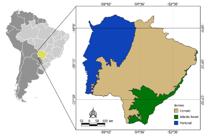
The state of Mato Grosso do Sul (MS) is located in the Midwestern region of Brazil, bordering Paraguay and Bolivia, and covers an area of 357,146 km²-approximately 4.2% of Brazil’s total territory. It comprises three highly biodiverse biomes: the Cerrado (61%), the Pantanal (25%), and the Atlantic Forest (14%) (Fig. 1) (IBGE, 2019). The Atlantic Forest contains 4,637 terrestrial fauna species, followed by the Cerrado with 3,455 and the Pantanal with 1,272, establishing the state as a biodiversity hotspot (Costa et al., 2018).
Data preparation
A database was created using all seizure reports classified under Article 29 of Law No. 9,605/98 (Brasil, 1998), which refers to crimes against native wildlife. We selected reports from January 1, 2017 to December 31, 2021, issued by three inspection agencies: the Mato Grosso do Sul State Military Police (PM), the Brazilian Institute of Environment and Renewable Natural Resources (IBAMA), and the Brazilian Federal Highway Police (PRF).
PM provided access to data directly from institutional records; IBAMA provided an Excel spreadsheet containing all fauna protection actions; and PRF data were accessed through its internal database (BOP System) by the first author, who is a member of the agency with authorized access.
The reports from the PRF and PM, as well as the spreadsheet provided by IBAMA, were formatted and organized differently. Due to the lack of integration and standardization between the systems used to record occurrences of wildlife trafficking, it was necessary to standardize the information from the three regulatory bodies in order to obtain a consistent and unified presentation of the data.
The selected reports contained whole specimens or parts of wild animals of the Brazilian native fauna, including migratory and other species that occur in the Brazilian territory (ICMBio, 2018). These reports contained information about the specimens seized, such as species identification, quantity, condition (alive or dead), and, in some cases, biological samples (e.g., feathers or meat). When such details were available, they were incorporated into the database.
The data were reviewed and interpreted by the authors. During this process, inconsistencies were identified in the reports - such as errors in species names, specimen counts, and data entry. When available, photographs, detailed descriptions, or official corrections within the reports were used to clarify species identification. In cases where errors could not be reliably corrected, records were classified at the genus, family, or broader taxonomic group (e.g., bird, mammal, invertebrate). Species determination followed these criteria: (i) use of scientific names when reported; (ii) use of popular names when clearly referring to a unique species (e.g., Hydrochoerus hydrochaeris / Capybara); and (iii) classification at higher taxonomic levels when specific identification was not possible.
The conservation status of each taxon was verified using the IUCN Red List (2024), the CITES Appendices (2023), and the Brazilian Red Book of Endangered Fauna (Ordinance No. 148/2022) (Brasil, 2022; ICMBio, 2018).
For this study, any species or family listed in the CITES Appendices and/or categorized as Vulnerable (VU), Endangered (EN), Critically Endangered (CR), or Extinct in the Wild (EW) by IUCN or ICMBio was classified as “threatened”.
Each agency also reported the number of agents assigned to environmental surveillance activities during the studied years. These institutional profiles also included the number of personnel designated to environmental surveillance, which enabled the assessment of agency capacity in relation to seizure outcomes.
The data were analyzed with queries using SQL (Structured Query Language), selecting the most relevant information for the issuance and presentation of reports.
Statistical analysis
All statistical analyses were performed using GraphPad Prism 8.0.1. One-way ANOVA was used to compare the number of seizures across taxonomic groups and to evaluate differences in annual seizure counts by agency. When applicable, post-hoc analyses included effect size (η²) and 95% confidence intervals to enhance interpretation beyond statistical significance. When sample sizes allowed, chi-square tests were applied to assess associations. A significance level of 95% (p < 0.05) was adopted. Descriptive results are presented as absolute numbers and percentages.
Data categorization for the municipalities with the highest number of seized specimens was performed using the Jenks natural breaks method to identify breakpoints by minimizing within-class variance and maximizing between-class variance (Jenks, 1967). The algorithm was executed in QGIS. Classification quality was assessed through the Goodness of Variance Fit (GVF) using the classInt package (Bivand, 2025) in R (R Core Team, 2024).
Map production
Maps were elaborated using the political and biome cartographic bases of the Brazilian Institute of Geography and Statistics (IBGE) (IBGE 2019, 2021), of Federal Conservation Units of ICMBio (ICMBio, 2020) and the State Conservation Units of the Environment Institute of Mato Grosso do Sul (IMASUL) (IMASUL, n. d.). All information was processed in QuantumGIS, version 3.22.7 (QGIS.org, 2021).
Results
Seizures
Faunal Composition and Spatial Patterns of Wildlife Seizures
A total of 18,259 specimens of Brazilian native fauna were recorded in 271 seizure reports issued by inspection agencies in MS between 2017 and 2021 (Table S1). Of these, 16,170 were invertebrates, predominantly Rhinodrilus motucu (n = 14,952), seized in five occurrences reported by PRF and PM. Vertebrate seizures accounted for 2,089 individuals across 266 events, of which 813 were classified as non-threatened species.
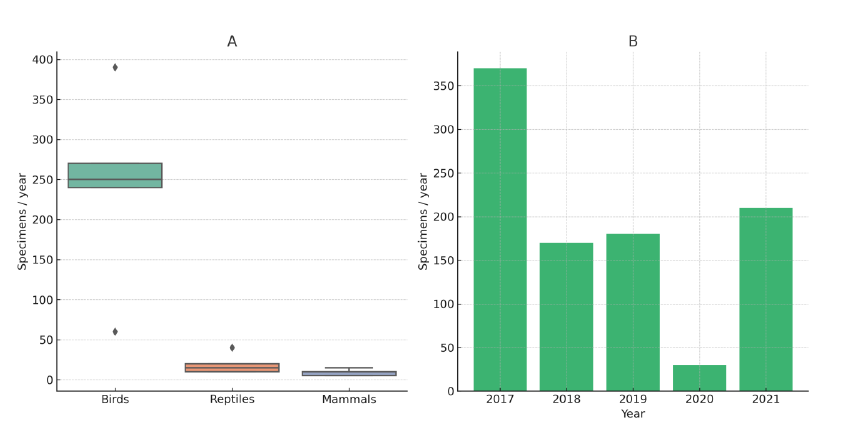
Among the 1,276 threatened vertebrates seized in 166 reports, birds represented the majority (n = 1,152), followed by reptiles (n = 71) and mammals (n = 53), spanning 14 families and 33 species. No amphibians were recorded. The annual distribution of seizures by taxonomic group is illustrated in Figure 2-A, where birds were significantly more frequent than reptiles and mammals (p = 0.02), primarily due to the predominance of Amazona aestiva (Figure 2-B).
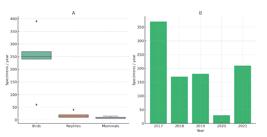
(A) Distribution of annual seizures of threatened vertebrates by taxonomic group (birds, reptiles, and mammals) in Mato Grosso do Sul, Brazil, from 2017 to 2021. Each boxplot summarizes five yearly values per group, showing the median (horizontal line), interquartile range (box), and potential outliers (black diamonds). Birds showed the highest median number of specimens seized per year and greater variation compared to other groups. (B) Annual number of Amazona aestiva individuals seized from 2017 to 2021. Each bar represents the total number of specimens seized in a given year. The data highlight the predominance of this species in illegal trade and a notable drop in seizures in 2020, followed by an increase in 2021.
A. aestiva appeared in 27% of all seizure reports and was the most frequently and numerically seized species. Notably, five seizures contained over 69 individuals each (224, 175, 150, 112, and 69), and among the 20 reports with the highest counts, 13 involved A. aestiva (n = 892) and four involved Sporophila maximiliani (n = 112).
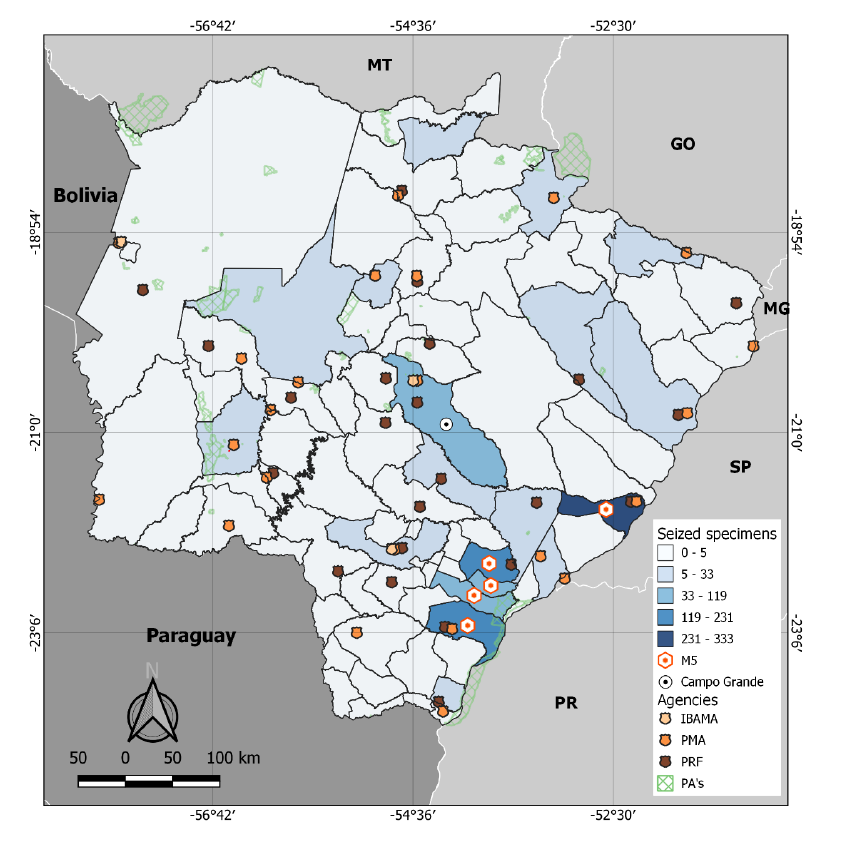
A total of 53 municipalities recorded seizures. Jenks natural breaks categorization (GVF = 0.889) was applied to all 79 municipalities in Mato Grosso do Sul, resulting in five classes: 60 municipalities (0-5 specimens), 13 (6-33), 3 (34-119), 2 (120-231), and 1 (333). The highest seizure volumes occurred in Bataguassu (333), Naviraí (231), Ivinhema (148), Jateí (112), and Novo Horizonte do Sul (102), mostly Psittacidae, hereafter referred to as M5. Campo Grande was categorized in the third class with 119 specimens (Thraupidae n = 103; Psittacidae n = 11), all seized by IBAMA during inspections of SISPASS-registered breeders. The mean number of seized specimens per municipality was 16.16 (SD = 67.50).
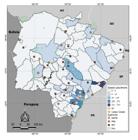
Map of Mato Grosso do Sul showing the number of threatened wildlife fauna specimens seized in each municipality as well as the location of protected areas (PA) and the stations of the Brazilian Institute of Environment and Renewable Natural Resources (IBAMA), Mato Grosso do Sul State Military Police (PM), and Federal Highway Police (PRF). The PM sites refer to the Environmental Policing Battalion stations (PMA).
Seizure reports by biome showed that the Cerrado accounted for the majority of reports (n = 116; 70%), followed by the Atlantic Forest (n = 39; 23%) and the Pantanal (n = 11; 7%). The municipalities with the highest number of reports within each biome were: Campo Grande (Cerrado), Ivinhema (Atlantic Forest), and Aquidauana (Pantanal). Despite its ecological importance, the Pantanal presented a significant underrepresentation in seizure occurrences. Statistical analysis confirmed discrepancies between observed and expected occurrences in this biome (p < 0.0001).
By total specimen count, 635 individuals were seized in the Cerrado, 630 in the Atlantic Forest, and only 11 in the Pantanal, reinforcing the statistical significance of underreporting in this latter biome (p < 0.0001).
Threatened Species Targeted by Illegal Hunting
Among the threatened species, 61 seizure reports involved dead animals, totaling 83 specimens attributed to illegal hunting. No seizures involved animals that died due to poor transport conditions.
PM accounted for 58 of these reports (95.1%). Birds (n = 40), reptiles (n = 40), and mammals (n = 3) were the most affected groups. The families with the highest number of dead individuals were Alligatoridae (n = 39), Tayassuidae (n = 29), Cuniculidae (n = 4), and Tapiridae (n = 3).
Among the identified species, Pecari tajacu had the highest count (n = 18; 21.7%), followed by Caiman latirostris (n = 4; 4.8%) and Cuniculus paca (n = 4; 4.8%).
Results of inspection agencies
The number of specimens seized by each agency per year is summarized in Table 1. The year 2019 recorded the highest number of seizures (n = 40), and 2018 the lowest (n = 22), though no significant differences were observed. More than 61% of seizures occurred in the second semester of each year, with the exception of 2018, which had equal seizures in both semesters.
PM was responsible for the majority of seizure reports (n = 134) and specimens (n = 1,070). IBAMA accounted for 26 reports (n = 196), and PRF for six (n = 10). Seizures by PM were primarily the result of routine inspections (44.3%) and anonymous reports or information (36.4%). All PRF seizures occurred during routine inspections.
During inspections of SISPASS-registered breeders, IBAMA reported 11 seizures involving 309 animals, 128 of which were threatened species. S. maximiliani accounted for 110 of these individuals.
Criminal aspects of police reports
According to PM and PRF records, 50% of reports (n = 70) involved other criminal offenses besides wildlife trafficking. The most frequent was illegal firearm possession (37.1%, p < 0.0001), followed by animal cruelty (17.1%), drug trafficking (10%), and illegal fishing (5.7%). Other infractions, each representing 2.9% of reports, included disobedience, crimes against flora, drunk driving, open arrest warrants, and pollution. Additional offenses such as threats, possession of stolen goods, bodily injury, vehicle tampering, resisting arrest, possession of drugs for personal use, and domestic violence were each reported once (1.4%).
Discussion
Total Seizures of Vertebrates and Invertebrates
During the study period, no threatened invertebrate species were seized. However, the observed quantities are cause for concern: 16,170 invertebrates were seized in only six reports, with an average of approximately 2,600 individuals per seizure.
Although the illegal exploitation of invertebrates is one of the lesser-known dimensions of wildlife trafficking (WT), urgent action is necessary to address this scenario, since this group is also affected by illegal trade (Fukushima; Mammola; Cardoso, 2020; Leather, 2013).
The results of this study provide valuable information on invertebrate trafficking, which is often overlooked due to society’s and the scientific community’s preference for vertebrates (Cardoso et al., 2011; Collen et al., 2012).
Among vertebrates, birds were the most frequently seized group and accounted for the highest number of specimens each year, a trend driven by seizures of Amazona aestiva (Fig. 2-B), highlighting the illegal commercial exploitation of this species in the region. This corroborates the fact that A. aestiva ranks among the ten most illegally traded parrot species in 22 countries worldwide, especially in Brazil, Peru, and Bolivia - the latter of which shares a border with MS - as the most involved (Sánchez-Mercado et al., 2021).
The species, whose population has already been impacted by habitat reduction caused by deforestation, is further threatened by illegal capture due to nest destruction for chick removal, a pattern observed in the M5 region (Seixas; Mourão, 2022).
The high exploitation of A. aestiva in M5 may be related to the existence of areas with high nest density associated with the species’ reproductive period. This is supported by seizure data showing only four individuals apprehended in the first half of each year, compared to 913 in the second half (Marini et al., 2012; Seixas; Mourão, 2022).
Among the twenty reports with the highest number of individuals seized, thirteen included A. aestiva (totalling 892 individuals), and four included S. maximiliani (n = 112), underscoring the volume of exploitation for these species.
Spatial Distribution and Trafficking Routes
Two geographic regions stood out for the number of seizures in Mato Grosso do Sul (Fig. 3): M5 and the city of Campo Grande. M5 accounted for over 70% (n = 926) of all threatened vertebrates seized in the state, distributed across Bataguassu (n = 333), Naviraí (n = 231), Ivinhema (n = 148), Jateí (n = 112), and Novo Horizonte do Sul (n = 102). These 926 specimens were seized in only 27 reports, with an average of approximately 34 specimens per seizure. Among the seizures involving ten or more individuals, nine cases had an average of 94 specimens each.
The high average number of individuals per seizure in the M5 region, combined with reports of nest destruction and chick capture, and supported by other institutional seizure records and published studies, may suggest a direct connection between the M5 region and major consumer markets for trafficked animals both within and outside Brazil.
As other studies have highlighted, the vast biomes of the North, Northeast, and Midwest likely serve as primary sources of animals destined for the domestic illegal market (Destro et al., 2012; Ferreira; Glock, 2004; Nascimento; Czaban; Alves, 2015).
Campo Grande, the capital of MS, was the only municipality outside M5 with more than 100 seized specimens. This may be attributed to its geographical position, the presence of offices of all three enforcement agencies, its road infrastructure, and its status as a major urban and administrative center (Clements et al., 2014; Destro et al., 2012; Farhadinia et al., 2019; Suárez et al., 2009).
Regarding biome distribution, most seizure reports occurred in the Cerrado (n = 116; 70%), with prominent municipalities including Campo Grande, Três Lagoas, and Nova Andradina. The Atlantic Forest accounted for 23% of reports (n = 39), notably in Ivinhema, Novo Horizonte do Sul, and Dourados.
The Pantanal recorded only 11 reports (7%), mostly in Aquidauana and Corumbá. Despite its large conservation areas-such as the Pantanal do Rio Negro and Pantanal Matogrossense National Parks-these features were not reflected in higher seizure numbers. Similar patterns were observed in Bonito, Bodoquena, Porto Murtinho, and Jardim (near Serra da Bodoquena National Park), and in municipalities near Emas National Park, like Costa Rica and Alcinópolis, which also had few seizures (ICMBio, 2020; IMASUL, n.d.; IBAMA, 2004; IBGE, 2020).
Target Species and Use Motivations
Reptiles from the families Testudinidae and Alligatoridae were the second most seized group of threatened vertebrates. These families include species valued as pets and for their meat (Fonseca et al., 2021; Alves et al., 2019).
Among Alligatoridae, 86.6% (n = 39) of seized individuals had been slaughtered, suggesting their use in meat trade, blood sport, or for medicinal/food derivatives (Alves et al., 2019; Sirvinskas, 2018).
Mammals such as P. tajacu, T. terrestris, and C. paca are typically hunted for meat (Souto; Lima; Sousa, 2019). Although there are documented cases of Panthera onca being illegally hunted in Brazil, only one slaughtered individual was seized during the study period (El Bizri et al., 2015; Morcatty et al., 2020).
Surveillance Capacity and Institutional Limitations
The number of seizures made by the PM reflects its operational reach, including a specialized environmental policing battalion with 23 stations throughout MS. The agency also drafts environmental infraction notices even in occurrences initiated by other institutions.
IBAMA’s relatively low seizure numbers contrast with its broad mandate, indicating a pressing need to expand its workforce and field presence. The PRF’s limited seizure outcomes are attributable to the agency’s broader responsibilities, including road safety and crime control (Bomfim, 2023; Brasil, 1988, 1995; IBAMA, 2024).
Our data show that routine surveillance was the most frequent seizure method used by both PM and PRF, consistent with national trends from 2017 to 2022 (Wendt-Oliveira; Rivero-Wendt; Guedes, 2023).
IBAMA inspections of SISPASS-registered breeders led to the seizure of 309 animals, including 128 threatened species. S. maximiliani accounted for 110 of these-a species with a total estimated wild population of fewer than 2,500 individuals in Brazil (BirdLife International, 2019).
Some studies argue that regulated breeding can alleviate pressure on wild populations (Biggs et al., 2013; Ribeiro et al., 2019). However, our findings reinforce SISPASS’s limitations in preventing wild capture and in verifying false declarations (Alves; Lima; Araujo, 2013; IBAMA, 2022).
Wildlife Trafficking and Associated Criminal Activities
Wildlife trafficking is often connected to other crimes. In our study, 50% of seizure reports involved additional infractions, such as illegal possession of firearms, animal cruelty, and drug trafficking. This is aligned with evidence that wildlife trafficking is often embedded within illegal logistics chains used by organized criminal networks (Anagnostou; Doberstein, 2022; South; Wyatt, 2011; Van Uhm; South; Wyatt, 2021).
The association between wildlife and drug trafficking in MS suggests that the state may serve as a logistical hub for multiple types of organized crime (Berg, 2021).
Policy Recommendations and Practical Applications
In light of these findings, we propose the following recommendations for agencies and decision-makers: Geographic Prioritization of Enforcement - Municipalities within the M5 region should be targeted for intensified surveillance, especially during the second semester of the year. Reform of SISPASS and Legal Breeding Systems - Improvements to the captive breeding system should include microchipping, independent audits, and greater enforcement of penalties for fraudulent declarations. Strengthening of Institutional Capacity - IBAMA requires significant investment in personnel and infrastructure. Multi-agency cooperation should be formalized through data sharing and coordinated inspections. Legislative Updates - Wildlife legislation should incorporate improved traceability mechanisms, stricter sanctions, and alignment with international best practices. Public Awareness Campaigns - Educational initiatives in urban centers and source regions could help reduce consumer demand and support conservation goals.
Conclusion
Our findings confirm that birds are the most trafficked vertebrate group in Mato Grosso do Sul, a pattern consistent with previous studies across Brazil. The case of Amazona aestiva is particularly emblematic, highlighting both the scale of its illegal exploitation and the inability of enforcement agencies to mitigate this pressure effectively. These results reinforce concerns raised by IUCN and CITES regarding population declines and highlight the urgent need for targeted conservation measures.
The performance of environmental inspection agencies revealed regional inconsistencies, largely influenced by differences in institutional mandates, field capacity, and geographic coverage. Despite its ecological importance and extensive network of protected areas, the Pantanal biome was underrepresented in seizure reports, underscoring the need for improved surveillance in this region.
While seizure-based studies have inherent limitations-such as underreporting and reliance on enforcement action-they remain a valuable tool for identifying trafficking patterns, target species, and enforcement gaps. This study contributes to a better understanding of wildlife trafficking dynamics in biodiversity hotspots and provides evidence to support the development of data-driven, integrated public policies aimed at protecting threatened species and enhancing institutional effectiveness.
Acknowledgments
We would like to thank the Brazilian Federal Highway Police, the Mato Grosso do Sul State Military Police and the Brazilian Institute of the Environment and Renewable Natural Resources for access to data, and the Coordination of Superior Level Staff Improvement (CAPES) - Financing Code 001 and the Anhanguera-Uniderp University, for the scholarship.
References
- Alves, R. R. N., de Araújo, B. M. C., da Silva Policarpo, I., Pereira, H. M., Borges, A. K. M., da Silva Vieira, W. L., & Vasconcellos, A. (2019). Keeping reptiles as pets in Brazil: Ethnozoological and conservation aspects. Journal for nature conservation, 49, 9-21.
- Alves, R. R. N., LIMA, J. R. D. F., & Araujo, H. F. P. (2013). The live bird trade in Brazil and its conservation implications: an overview. Bird Conservation International, 23(1), 53-65.
- Anagnostou, M., & Doberstein, B. (2022). Illegal wildlife trade and other organised crime: A scoping review. Ambio, 51(7), 1615-1631.
-
Berg, R. (2021). Tussle for the Amazon: New Frontiers in Brazil’s organized crime landscape. Available at: https://digitalcommons.fiu.edu/jgi_research/45/. Accessed on: November 18, 2024.
» https://digitalcommons.fiu.edu/jgi_research/45 - Biggs, D., Courchamp, F., Martin, R., & Possingham, H. P. (2013). Legal trade of Africa’s rhino horns. Science, 339(6123), 1038-1039.
-
BirdLife International. (2019). Sporophila maximiliani (amended version of 2017 assessment). The IUCN Red List of Threatened Species, 2019: e.T22723537A155473409. https://doi.org/10.2305/IUCN.UK.2019-3.RLTS.T22723537A155473409.enBivand R. (2025). classInt: Choose univariate class intervals (Version 0.4-11) [Computer software]. https://CRAN.R-project.org/package=classInt
» https://doi.org/10.2305/IUCN.UK.2019-3.RLTS.T22723537A155473409.» https://CRAN.R-project.org/package=classInt -
Bomfim, L. (2024). Em troca de comando, vice-governador destaca papel da PMA em defesa da fauna e flora do MS. Agência de Notícias do Governo de Mato Grosso do Sul. https://www.agenciadenoticias.ms.gov.br
» https://www.agenciadenoticias.ms.gov.br -
Brasil. (1988). Constituição da República Federativa do Brasil de 1988. Presidência da República. http://www.planalto.gov.br/ccivil_03/constituicao/constituicaocompilado.htm
» http://www.planalto.gov.br/ccivil_03/constituicao/constituicaocompilado.htm -
Brasil. (1995). Decreto nº 1.655, de 3 de outubro de 1995: Define a competência da Polícia Rodoviária Federal e dá outras providências. Presidência da República. http://www.planalto.gov.br/ccivil_03/decreto/d1655.htm
» http://www.planalto.gov.br/ccivil_03/decreto/d1655.htm -
Brasil. (1998). Lei nº 9.605, de 12 de fevereiro de 1998: Dispõe sobre as sanções penais e administrativas derivadas de condutas e atividades lesivas ao meio ambiente e dá outras providências. Presidência da República. http://www.planalto.gov.br/ccivil_03/leis/l9605.htm
» http://www.planalto.gov.br/ccivil_03/leis/l9605.htm - Brasil. (2014). Portarias nº 444 e nº 445, de 17 de dezembro de 2014: Espécies da fauna brasileira ameaçadas de extinção. Ministério do Meio Ambiente.
-
Brasil. (2022). Portaria nº 148, de 7 de junho de 2022: Atualiza os anexos das portarias nº 443, nº 444 e nº 445 referentes à Lista Nacional de Espécies Ameaçadas de Extinção. Ministério do Meio Ambiente. https://www.in.gov.br/en/web/dou/-/portaria-mma-n-148-de-7-de-junho-de-2022-406272733
» https://www.in.gov.br/en/web/dou/-/portaria-mma-n-148-de-7-de-junho-de-2022-406272733 -
Cardoso, P., Erwin, T. L., Borges, P. A. V., & New, T. R. (2011). The seven impediments in invertebrate conservation and how to overcome them. Biological Conservation, 144(11), 2647-2655. https://doi.org/10.1016/j.biocon.2011.07.024
» https://doi.org/10.1016/j.biocon.2011.07.024 - Charity, S., & Ferreira, J. M. (2020). Wildlife trafficking in Brazil. TRAFFIC International.
-
CITES. (2023). Appendices I, II and III. https://cites.org/sites/default/files/eng/app/2023/E-Appendices-2023-01-11.pdf
» https://cites.org/sites/default/files/eng/app/2023/E-Appendices-2023-01-11.pdf -
Clements, G. R., Lynam, A. J., Gaveau, D. L. A., Yap, W. L., Lhota, S., Goosem, M., Laurance, S., & Laurance, W. F. (2014). Where and how are roads endangering mammals in Southeast Asia’s forests? PLoS ONE, 9(12), e115376. https://doi.org/10.1371/journal.pone.0115376
» https://doi.org/10.1371/journal.pone.0115376 - Collen, B., Böhm, M., Kemp, R., & Baillie, J. E. M. (2012). Spineless: Status and trends of the world’s invertebrates. Zoological Society of London.
-
Costa, M. R., Nogueira, M. A., Hungria, M., & Ribeiro, R. A. (2018). Polyphasic characterization of rhizobia microsymbionts of common bean (Phaseolus vulgaris L.) isolated in Mato Grosso do Sul, a hotspot of Brazilian biodiversity. Symbiosis, 76(2), 163-176. https://doi.org/10.1007/s13199-018-0556-3
» https://doi.org/10.1007/s13199-018-0556-3 - Destro, G. F. G., Oliveira, C. R., Barreto, E., & Paglia, A. P. (2012). Efforts to combat wild animals trafficking in Brazil. In G. A. Lameed (Ed.), Biodiversity enrichment in a diverse world (pp. 421-436). InTech.
-
Destro, G. F. G., De Marco, P., & Terribile, L. C. (2020). Comparing environmental and socioeconomic drivers of illegal capture of wild birds in Brazil. Environmental Conservation, 47(1), 46-51. https://doi.org/10.1017/S037689291900035X
» https://doi.org/10.1017/S037689291900035X -
Environmental Investigation Agency. (2020). While you’ve been in lockdown, so have wildlife criminals - and many of them have been “working from home”. https://eia-international.org/news/while-youve-been-in-lockdown-so-have-wildlife-criminals-and-many-of-them-have-been-working-from-home/
» https://eia-international.org/news/while-youve-been-in-lockdown-so-have-wildlife-criminals-and-many-of-them-have-been-working-from-home/ -
El Bizri, H. R., Morcatty, T. Q., Lima, J. J. S., & Valsecchi, J. (2015). The thrill of the chase: Uncovering illegal sport hunting in Brazil through YouTube™ posts. Ecology and Society, 20(3), Article 30. https://doi.org/10.5751/ES-07882-200330
» https://doi.org/10.5751/ES-07882-200330 -
Farhadinia, M. S., Johnson, P. J., Macdonald, D. W., & Hunter, L. T. B. (2019). Belt and Road Initiative may create new supplies for illegal wildlife trade in large carnivores. Nature Ecology & Evolution, 3(9), 1267-1268. https://doi.org/10.1038/s41559-019-0941-0
» https://doi.org/10.1038/s41559-019-0941-0 - Ferreira, C. M., & Glock, L. (2004). Diagnóstico preliminar sobre a avifauna traficada no Rio Grande do Sul, Brasil. Biociências, 12(1), 21-30.
-
Ferreira, M. A. S. V. (2019). Brazilian criminal organizations as transnational violent non-state actors: A case study of the Primeiro Comando da Capital (PCC). Trends in Organized Crime, 22(2), 148-165. https://doi.org/10.1007/s12117-018-9341-4
» https://doi.org/10.1007/s12117-018-9341-4 -
Fonseca, É., Marques, A., & Aleixo, A. (2021). Reptile pet trade in Brazil: A regulatory approach to sustainable biodiversity conservation. Conservation Science and Practice, 3(10), e512. https://doi.org/10.1111/csp2.512
» https://doi.org/10.1111/csp2.512 -
Fukushima, C. S., Mammola, S., & Cardoso, P. (2020). Global wildlife trade permeates the tree of life. Biological Conservation, 247, 108503. https://doi.org/10.1016/j.biocon.2020.108503
» https://doi.org/10.1016/j.biocon.2020.108503 -
Hitchens, R. T., & Blakeslee, A. M. H. (2020). Trends in illegal wildlife trade: Analyzing personal baggage seizure data in the Pacific Northwest. PLoS ONE, 15(6), e0234197. https://doi.org/10.1371/journal.pone.0234197
» https://doi.org/10.1371/journal.pone.0234197 -
Hudson, R. A. (2003). Terrorist and organized crime groups in the Tri-Border Area (TBA) of South America. https://apps.dtic.mil/sti/citations/ADA439846
» https://apps.dtic.mil/sti/citations/ADA439846 - Instituto Brasileiro do Meio Ambiente e dos Recursos Naturais Renováveis. (2004). Plano de manejo do Parque Nacional das Emas. IBAMA.
-
Instituto Brasileiro do Meio Ambiente e dos Recursos Naturais Renováveis. (2024). Sobre o Ibama. https://www.gov.br/ibama/pt-br/acesso-a-informacao/institucional/sobre-o-ibama
» https://www.gov.br/ibama/pt-br/acesso-a-informacao/institucional/sobre-o-ibama - Instituto Brasileiro do Meio Ambiente e dos Recursos Naturais Renováveis. (2022). A criação amadorista de passeriformes no Brasil: Diagnóstico da criação de 2004 a 2020. IBAMA.
- Instituto Brasileiro de Geografia e Estatística. (2019). Biomas e sistema costeiro-marinho do Brasil: Compatível com a escala 1:250 000. IBGE.
- Instituto Brasileiro de Geografia e Estatística. (2020). Contas de ecossistemas: O uso da terra nos biomas brasileiros (2000-2018). IBGE.
-
Instituto Brasileiro de Geografia e Estatística. (2021). Mapas e bases cartográficas contínuas. https://www.ibge.gov.br/geociencias/downloads-geociencias.html
» https://www.ibge.gov.br/geociencias/downloads-geociencias.html -
Instituto Brasileiro de Geografia e Estatística. (2022). Brasil em síntese: Territórios. https://brasilemsintese.ibge.gov.br/territorio.html
» https://brasilemsintese.ibge.gov.br/territorio.html - Instituto Chico Mendes de Conservação da Biodiversidade. (2018). Livro vermelho da fauna brasileira ameaçada de extinção (Vol. 1). ICMBio/MMA.
-
Instituto Chico Mendes de Conservação da Biodiversidade. (2020). Mapa temático e dados geoestatísticos das unidades de conservação federais. https://www.gov.br/icmbio/pt-br/acesso-a-informacao/paginas-em-migracao/mapa-tematico-e-dados-geoestatisticos-das-unidades-de-conservacao-federais-1
» https://www.gov.br/icmbio/pt-br/acesso-a-informacao/paginas-em-migracao/mapa-tematico-e-dados-geoestatisticos-das-unidades-de-conservacao-federais-1 -
Instituto de Meio Ambiente de Mato Grosso do Sul. (n.d.). Unidades de conservação estaduais. https://www.imasul.ms.gov.br/gestao-de-unidades-de-conservacao/unidades-de-conservacao-estaduais/
» https://www.imasul.ms.gov.br/gestao-de-unidades-de-conservacao/unidades-de-conservacao-estaduais/ -
International Union for Conservation of Nature. (2024). The IUCN Red List of Threatened Species (Version 2024-2). https://www.iucnredlist.org.
» https://www.iucnredlist.org. - Marini, M. Â., Borges, F. J. A., Lopes, L. E., Sousa, N. O. M., Gressler, D. T., Santos, L. R., Paiva, L. V., Duca, C., Manica, L. T., Rodrigues, S. S., França, L. F., & Costa, B. M. A. (2012). Breeding biology of birds in the Cerrado of central Brazil. Ornitología Neotropical, 23, 385-405.
-
Maron, D. F. (2021, March 15). Wildlife seizures are down-and in the fallout of COVID-19, an illicit trade boom may be coming. National Geographic. https://www.nationalgeographic.com/animals/article/wildlife-seizures-dropped-in-2020-but-an-illicit-trade-boom-may-be-coming
» https://www.nationalgeographic.com/animals/article/wildlife-seizures-dropped-in-2020-but-an-illicit-trade-boom-may-be-coming - Miklaucic, M., & Brewer, J. (2013). Convergence: Illicit networks and national security in the age of globalization. National Defense University Press.
-
Morcatty, T. Q., Bausch Macedo, J. C., Nekaris, K. A. I., Ni, Q., Durigan, C. C., Svensson, M. S., & Nijman, V. (2020). Illegal trade in wild cats and its link to Chinese-led development in Central and South America. Conservation Biology, 34(6), 1525-1535. https://doi.org/10.1111/cobi.13498
» https://doi.org/10.1111/cobi.13498 -
Morcatty, T. Q., Bausch Macedo, J. C., Nekaris, K. A. I., Ni, Q., Durigan, C. C., Svensson, M. S., & Nijman, V. (2021). Online trade in wildlife and the lack of response to COVID-19. Environmental Research, 193, 110439. https://doi.org/10.1016/j.envres.2020.110439
» https://doi.org/10.1016/j.envres.2020.110439 -
Morton, O., Scheffers, B. R., Haugaasen, T., Edwards, D. P., & Harrison, R. D. (2021). Impacts of wildlife trade on terrestrial biodiversity. Nature Ecology & Evolution, 5(4), 540-548. https://doi.org/10.1038/s41559-021-01399-y
» https://doi.org/10.1038/s41559-021-01399-y -
Nascimento, C. A. R., Czaban, R. E., & Alves, R. R. N. (2015). Trends in illegal trade of wild birds in Amazonas state, Brazil. Tropical Conservation Science, 8(4), 1098-1113. https://doi.org/10.1177/194008291500800416
» https://doi.org/10.1177/194008291500800416 - Nassaro, M. R. F. (2017). Wildlife trafficking in the state of São Paulo, Brazil. In G. L. South & T. Wyatt (Eds.), Environmental crime in Latin America (pp. 245-260). Palgrave Macmillan.
-
Polícia Militar de Mato Grosso do Sul. (n.d.). Quem somos. https://www.cartasdeservicos.ms.gov.br/category/sejusp/pmms/
» https://www.cartasdeservicos.ms.gov.br/category/sejusp/pmms/ -
QGIS Development Team. (2021). QGIS geographic information system (Version 3.22.7) [Computer software]. QGIS Association. http://www.qgis.org
» http://www.qgis.org -
R Core Team. (2024). R: A language and environment for statistical computing [Computer software]. R Foundation for Statistical Computing. https://www.R-project.org/
» https://www.R-project.org/ -
Ribeiro, J., Reino, L., Schindler, S., Strubbe, D., Vall-llosera, M., Bastos, R., Leitao, A., & Araújo, M. B. (2019). Trends in legal and illegal trade of wild birds: A global assessment based on expert knowledge. Biodiversity and Conservation, 28(12), 3343-3369. https://doi.org/10.1007/s10531-019-01825-5
» https://doi.org/10.1007/s10531-019-01825-5 -
Sánchez-Mercado, A., Ferrer-Paris, J. R., García-Rangel, S., Yerena, E., Robertson, B. A., Rodríguez-Clark, K. M., & Rodríguez, J. P. (2016). Using spatial patterns in illegal wildlife uses to reveal connections between subsistence hunting and trade. Conservation Biology, 30(6), 1222-1232. https://doi.org/10.1111/cobi.12744
» https://doi.org/10.1111/cobi.12744 -
Sánchez-Mercado, A., Ferrer-Paris, J. R., García-Rangel, S., Yerena, E., Robertson, B. A., & Rodríguez, J. P. (2021). A literature synthesis of actions to tackle illegal parrot trade. Diversity, 13(5), 191. https://doi.org/10.3390/d13050191
» https://doi.org/10.3390/d13050191 - SAVE Brasil. (2017). Protocolo experimental para soltura e monitoramento de aves vítimas do comércio ilegal de animais silvestres no Estado de São Paulo. SMA / SAVE Brasil.
-
Seixas, G. H. F., & Mourão, G. (2022). A long-term study indicates that tree clearance negatively affects fledgling recruitment to the Blue-fronted Amazon (Amazona aestiva) population. PLoS ONE, 17(6), e0267355. https://doi.org/10.1371/journal.pone.0267355
» https://doi.org/10.1371/journal.pone.0267355 - Sirvinskas, L. P. (2018). Manual de direito ambiental (16th ed., Vol. 1). Saraiva.
- Sollund, R. (2017). The use and abuse of animals in wildlife trafficking in Colombia: Practices and injustice. In G. L. South & T. Wyatt (Eds.), Environmental crime in Latin America (pp. 215-243). Palgrave Macmillan.
-
South, N., & Wyatt, T. (2011). Comparing illicit trades in wildlife and drugs: An exploratory study. Deviant Behavior, 32(6), 538-561. https://doi.org/10.1080/01639625.2010.538346
» https://doi.org/10.1080/01639625.2010.538346 - Souto, W. M. S., Lima, R. N., & Sousa, B. F. C. F. (2019). Illegal bushmeat hunting and trade dynamics in a major road-hub region of the Brazilian Mid North. Indian Journal of Traditional Knowledge, 18(2), 402-411.
-
Suárez, E., Morales, M., Cueva, R., Utreras, V., Zapata-Ríos, G., Toral, E., Torres, J., Prado, W., & Vargas, J. (2009). Oil industry, wild meat trade and roads: Indirect effects of oil extraction activities in a protected area in north-eastern Ecuador. Animal Conservation, 12(4), 364-373. https://doi.org/10.1111/j.1469-1795.2009.00263.x
» https://doi.org/10.1111/j.1469-1795.2009.00263.x -
Van Uhm, D., South, N., & Wyatt, T. (2021). Connections between trades and trafficking in wildlife and drugs. Trends in Organized Crime, 24(4), 425-446. https://doi.org/10.1007/s12117-020-09416-9
» https://doi.org/10.1007/s12117-020-09416-9 - Vianna, G. S. (2020). A lógica do ilícito e as redes criminais: Mato Grosso do Sul e as rotas transnacionais dos crimes organizados. In S. de Jesus (Ed.), Defesa & fronteiras (pp. 73-88). Editora Dialética.
- Wendt-Oliveira, J. R., Rivero-Wendt, C. L. G., & Guedes, N. M. R. (2023). Tráfico de animais silvestres: Atuação da Polícia Rodoviária Federal no enfrentamento aos crimes contra a fauna silvestre nativa do Brasil. Editora Científica.
- Wyatt, T. (2022). Wildlife trafficking: A deconstruction of the crime, victims and offenders (2nd ed.). Palgrave Macmillan.
-
Data Availability Statement:
The data that support the findings of this study are available from the corresponding author, Wendt-Oliveira, J.R., upon reasonable request.The dataset used in this study includes detailed information on seizures of threatened wildlife species and enforcement actions by governmental agencies. Publicly releasing the full dataset could potentially expose sensitive information regarding species locations and enforcement patterns, which may pose risks for conservation and law enforcement activities. Therefore, the data are available from the corresponding author upon reasonable request, allowing controlled access for legitimate research purposes while minimizing potential misuse.
The data that support the findings of this study are available from the corresponding author, Wendt-Oliveira, J.R., upon reasonable request.
The dataset used in this study includes detailed information on seizures of threatened wildlife species and enforcement actions by governmental agencies. Publicly releasing the full dataset could potentially expose sensitive information regarding species locations and enforcement patterns, which may pose risks for conservation and law enforcement activities. Therefore, the data are available from the corresponding author upon reasonable request, allowing controlled access for legitimate research purposes while minimizing potential misuse.

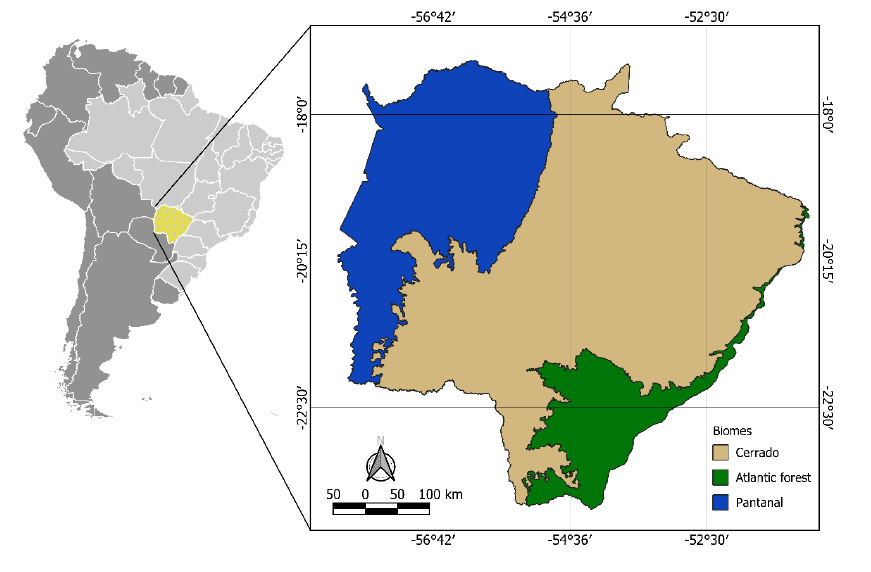 Source: the authors, 2025. Adapted from IBGE (2019)
 Source: the authors, 2025.
 Source: the authors, 2025.