
 The future beyond Fridays: the discursive turn of the Fridays for Future movement in Brazil
Abstract
Fridays for Future, founded by young Swedish activist Greta Thunberg, quickly became a transnational movement through its intense use of digital media. This article aims to understand the collective’s formation in Brazil, given the very different discourse production conditions vis-à-vis the Global North. In Study 1, employing content analysis, we identify the quantitative trends in the networked mediation of student climate strikes, demonstrating that this contentious action, unlike in the Europe, did not resonate much in the Brazilian public sphere. In Study 2, supported by French discourse analysis and political process theory, we define the discursive opportunity structures: Identity, Governmental, Ecological, Political-Scientific and Private Initiative. We conclude that Instagram’s affordances enabled the collective in the implementation of a “rooted discourse.” This strategy helped highlight the different consequences and implications of rising global temperatures within the country, avoiding the generalization of a “globalized discourse.”
Keywords:
Climate change; social movements; social media; Fridays for Future; discursive opportunity structures
Resumo
O Fridays for Future, fundado pela jovem sueca Greta Thunberg, logo se transformou em um movimento transnacional a partir do intenso uso das mídias digitais. O objetivo deste artigo é entender a constituição do coletivo no Brasil frente a condições de produção do discurso muito distintas do Norte Global. No Estudo 1, através da análise de conteúdo, demarcamos a recorrência das greves climáticas estudantis, demonstrando que esta ação contenciosa, diferente da Europa, não encontrou ressonância no país. No Estudo 2, apoiados na análise de discurso francesa e na teoria do processo político, definimos as estruturas de oportunidades discursivas: Identitárias, Governamentais, Ecológicas, Político-Científicas e da Iniciativa Privada. Concluímos que os recursos do Instagram facilitaram a implementação de um “discurso enraizado”. Estratégia que ajudou a destacar diferentes implicações do aumento da temperatura do planeta no território nacional, evitando as generalizações do “discurso globalizado”.
Palavras-chave:
Mudanças climáticas; movimentos sociais; mídias sociais; Fridays for Future; estruturas de oportunidades discursivas
Resumen
Fridays for Future, fundado por la joven activista sueca Greta Thunberg, se convirtió rápidamente en un movimiento transnacional gracias a su intenso uso de los medios digitales. Este artículo busca comprender la formación del colectivo en Brasil, dadas las diferentes condiciones de producción discursiva del Norte Global. En el Estudio 1, mediante análisis de contenido, identificamos la recurrencia de las huelgas estudiantiles por el clima, demostrando que esta acción polémica, a diferencia de la Europe, no tuvo eco en Brasil. En el Estudio 2, con el apoyo del análisis del discurso francés y la teoría de procesos políticos, definimos las estructuras de oportunidad discursiva: Identidad, Gobierno, Ecología, Ciencia Política e Iniciativa Privada. Concluimos que los recursos de Instagram facilitaron la implementación de un “discurso arraigado”. Esta estrategia ayudó a visibilizar las diferentes implicaciones del aumento de la temperatura global en el país, evitando las generalizaciones del “discurso globalizado”.
Palabras-clave:
Cambio climático; movimientos sociales; redes sociales;
Fridays for Future
; estructuras de oportunidad discursivas
INTRODUCTION
Mobilizations to mitigate the effects of global warming have involved various social actors. Recently, a group of citizens has been standing out in this effort: young people. Thousands of them are part of a highly mediated contemporary movement: Fridays for Future (FFF), also known as Student Climate Strike. It all started in August 2018, when 15-year-old Greta Thunberg from Sweden decided to fight for climate justice. The activist began a solitary student strike in front of her country’s parliament to draw attention to the failure to comply with the Paris Agreement. Subsequently, through online networks, FFF began to mobilize other young people. In the first global call to action, in March 2019, more than one million people took to the streets. Today, the movement has collectives in approximately 7,500 cities across five continents (Fridays for Future, 2024).
This article investigates the mediated actions of FFF-Brazil in order to understand how young people in Brazil reproduce, negotiate and transform the discourse and practices of FFF in the Global North. The relevance of this work owes to the leading role Brazil plays in the international climate regime, partly due to the importance of the Amazon in regulating the temperature of the Earth’s biosphere. In addition, the huge contingent of young people, more than 47 million individuals between the ages of 15 and 29 (Atlas das Juventudes, 2025), makes it pertinent and necessary to understand their demands and engagement with the cause.
We begin the study by reviewing the literature on the climate movement, pointing out that most research on the FFF is concentrated in Europe. This has led to a substantial gap in the knowledge about youth climate activism on the Majority World. Next, we address the concept of discursive opportunity structures (McCammon, 2013; Cammaerts, 2012), a derivation of the concept of political opportunity structures, which comes from political process theory (Tilly, 1978, 1995, 2004; Tarrow, 1996), to show the important role of communication and digital media for social movements. Then we highlight the expressiveness of the Brazilian context within the global climate emergency, the initial configuration of FFF-Brazil, and the adoption of the digital platform Instagram, with its numerous resources, which are fundamental for the self-mediation of these young people’s climate discourse.
In Study 1, using content analysis (Bryman, 2012), we define the recurrence of strikes during the first four years of FFF-Brazil on Instagram. Then, in Study 2, we explore the themes present in posts that did not refer to the climate strikes. With the support of French discourse analysis (Orlandi, 2007; Freire, 2021), constructionist thematic analysis (Braun & Clarke, 2006), and the support of political process theory (Tilly, 1978, 1995, 2004; Tarrow, 1996), we identify five thematic sets within the discursive opportunity structures of FFF-Brazil. The findings of both studies will be analyzed in detail in the sections dedicated to each of the results.
In the discussion, we reflect on the main differences identified in the practices of the international movement in comparison with the local collective and, fundamentally, on what we call “globalized discourse” and “rooted discourse”. We will examine the implications of these two typologies in the formation and organization of FFF-Brazil in order to contribute to the understanding and validation of other perspectives on this crisis that go far beyond those of the Global North.
“FFF” ON THE WEB AND IN THE STREETS OF EUROPE
With the aim of understanding FFF activism in the context of the climate crisis, numerous studies have been conducted using different approaches (Soβdorf & Burgi, 2022; Boulianne et al., 2020; Marquardt, 2020; Ivanovic et al. 2022; Haßler et al, 2023). However, this heterogeneous character does not concern the transnationality of the movement and how the collective behaves in different geopolitical contexts than those of the European countries. There is a body of important scientific work on FFF, but most of it has been carried out in Europe.
Sainz and Hanna (2023), for example, focused on X (formerly Twitter) posts to analyze the transition from street actions to social media during COVID-19 in Finland. The goal was to observe whether interaction within the platform could help young people in that country learn about human rights and citizenship in order to become agents of change.
Sorce and Dumitrica (2023) collected data from 27 collectives in Europe to observe which discursive strategies are used by FFF on Facebook to maintain the engagement of young people, given the impossibility of holding street strikes during COVID-19. It was found that FFF’s discourse introduced the health crisis into the climate emergency discourse in order to prevent the movement from demobilizing, since outdoor demonstrations were a unifying factor for the struggle of young people in Europe.
In Germany, Sorce (2022) interviewed young activists to observe their perception, identification, and online interaction with Thunberg. The conclusion is that Greta is relevant to engagement, as all participants follow her on social media. However, many downplay the importance of the Swedish activist as a leader of the movement and highlight the need for interaction on the streets to maintain a collective identity. In another study, also in Germany, Soβdorfi and Burgi (2022) show how scientific knowledge was used by FFF activists to promote engagement. The authors point out that the voice of science was sought to lend legitimacy to the young people’s discourse.
Soler-I-Martí et al. (2022) analyzed tweets on X and posts on Instagram to understand how young people from FFF-Barcelona created a discourse on the future and climate change through the notion of emergency. They concluded that dystopian scenarios were used especially to mobilize the public for protest actions.
Finally, Herrmann et al. (2023) present a more comprehensive approach, not limited to Europe, nor focused solely on the theme of strikes. The authors examined the use and connection of hashtags on FFF International’s Instagram page to understand how the movement’s identity was constructed in that digital environment.
We would like to point out that there is comparatively little research on the activities of FFF in Latin America, especially in Brazil. Although the movement in the country has almost 30,000 followers on Instagram, with frequent posts, reaching more people than some of the collective’s accounts in Europe.
Our search was focused on scientific articles, excluding dissertations, thesis, and book chapters. Within this scope, we found Laux’s (2021) research, which detected mechanisms that led young people to join climate strikes in 17 countries, involving Brazil. These include the availability of resources, information, and technology, as well as adherence to the cause. Barbosa et al. (2021) assessed whether the environmental attitudes and knowledge of students in Brazil and Germany differ and influence the frequency of participation in climate strikes. They revealed the importance of both factors, concluding that Brazilians could benefit from learning more about environmental sustainability. Meanwhile, Torres et al. (2020) investigated how the climate change agenda and its relationship with social movements were addressed in sociology in national journals between 2013 and 2016. Additionally, they analyzed the participation of young people in the global strike in 2019, showing that both the low academic output and the meager participation of young people in the FFF-Brazil protests indicate the minimal involvement of these spheres with the socio-environmental agenda.
CITIZENSHIP, INTERNET, AND DISCURSIVE OPPORTUNITIES
According to political process theory, the emergence of collective mobilizations is explained by the balance of power between government authorities and external challengers. In this clash, there are three categories: (i) Political Opportunity Structures, which are windows for political action, that is, the capacity or loss thereof on the part of the State and the availability, for the opponent, of potential allies among dissidents of the ruling elite; (ii) Mobilization Structures, which are networks of relationships that provide the organizational basis for movement; and finally (iii) the Repertorie of Actions (Alonso, 2012). Tilly (1995) states that a repertoire of actions is a limited set of routines learned, shared, and executed through a relatively deliberate process of choice and is influenced not only by the nature of the problems or the resources available, but also by situated experiences and the cultural context in which the struggle takes place.
On the other hand, the role of communication in the formation of social movements is fundamental. This is because people can only challenge domination if they express their indignation and decide to build alternative projects for themselves and for society (Castells, 2013). Accordingly, in recent years, communication on a global scale has undergone profound technological and structural transformation, based on multidirectional, interactive, horizontal networks on the internet. In this context, communicative practices not only help to create the conditions for political involvement, but also constitute the ways in which it occurs (Carvalho et al., 2021). Sorce and Dumitrica (2022) postulate that digital media have been integrated into the actions of social movements, giving them more control over their messages, opportunities to expand their audience and diversity in participation.
In view of these considerations, it is important to highlight that the Political Opportunities Structures , Mobilization, and Repertoire of Actions cannot do without what Cammaerts (2012) calls the Mediation Opportunity Structures, composed of three axes: (i) Media Opportunity Structures, the extent to which movements are able to create performances and convey their messages through the mainstream media; (ii) Discursive Opportunity Structures, which are self-mediation strategies aimed at producing counter-narratives and disseminating them independently of the mainstream media; and (iii) Network Opportunity Structures, which are the practices of resistance and mediation through technology. In this study, we will focus on the self-mediation strategies of FFF-Brazil activists. We will show how the collective uses the Discursive Opportunity Structures (DOS) within Instagram to construct meanings of the climate crisis and demand solutions to one of the most serious problems of our time.
INSTAGRAM AND THE CONSTITUTION OF FFF-BRAZIL
Brazil tends to occupy a leading role in debates on the climate crisis. First, due to its vast geographical extension, with six important biomes, including the Amazon, the largest tropical forest on the planet, which is fundamental for regulating global warming (Greenpeace Brazil, 2024). Second, because of its huge population, with more than 213 million inhabitants, of whom 47 million are young people between 15 and 29 years (Atlas das Juventudes, 2025). This is the generation that will have to deal with an uncertain future. The effects of rising temperatures are a harbinger of difficult times, capable of negatively affecting the lives of countless beings.
In view of this, the struggle to mitigate the consequences of global warming gained momentum in the country in March 2019, when a group of young people from various parts of the country decided to join the FFF cause. Gathered through a WhatsApp group, they began to make decisions about the planning and promotion of the first major student climate strike, called for by the international movement (Ribeiro, 2023). Initial actions included the creation of accounts on Facebook, X and Instagram, the latter of which currently has the largest number of posts and followers.
According to Opinion Box (2025), Instagram is the most popular social media platform in Brazil, with around 134 million users, second only to WhatsApp. The platform offers a range of features that can be used free of charge in a simple and intuitive way. Among the many tools available on this platform, in the main account panel, the feed, it is possible to publish 1 to 10 cards in a single post (as of 2024, this number has increased to 20), including photos, illustrations, and videos up to 60 minutes long (CanalTech, 2024). Posts remain visible indefinitely or until the user deletes them. In addition, the caption text allows for 2,200 characters, which is much higher than other platforms (SproutSocial, 2025). These features were fully utilized by the administrators of the FFF-Brazil Instagram account, allowing to disseminate the movement’s central claims in the country, construct new meanings for the climate crisis, and shape the collective’s identity.
STUDY 1 - STUDENT CLIMATE STRIKES
METHODOLOGY
The corpus of the Study 1 is based on the FFF-Brazil Instagram feed. The period analyzed runs from March 10, 2019 to March 22, 2023; corresponding to the movement’s first four years in Brazil, which includes n=691 posts.
The data was collected using Crowdtangle, a tool that collects public information from Meta’s digital media. All extracted material was exported to MAXQDA 2024 (VERBI Software, 2024), which is being used for data analysis.
We used a content analysis protocol, an approach to investigating documents and texts in order to determine content in terms of previously defined categories in a systematic and replicable manner (Bryman, 2012). While reading each post, we checked: (i) whether the word “strike” was present in the texts of the cards or in the audio and/or captions of the videos; (ii) whether there were expressions such as: “come to the streets”; “bring your posters,” or “post a photo with your posters and tag us”, the latter in the case of digital strikes; (iii) whether there was any mention of the date, time, and location of the demonstration and, in case of doubt, whether the post had been published on a Friday (the day on which strikes occur within the FFF calendar) or on a date immediately before or after this day of the week; and (iv) whether there were images (photos or videos) of young people in the streets with protest posters. The combination of two or more of these items identified a post in the “strike” category. In cases where these premises were not associated, the post went to the non-strike category, i.e., “thematic.” In this way, it was possible to probe into the behavior of the movement in the Brazilian digital environments between March 2019 and March 2023.
RESULTS - Study 1
The collective began its activities in the country by joining the first major global strike, scheduled for March 15, 2019. Among the n=43 posts that month (strikes and thematic), n=36 were about strikes, with n=32 published between the 10th and 15th. The data reveal an intense communication effort by the collective in the country to introduce the practices and discourse of the international movement. These first thirty-two posts were intended to encourage young people to participate in the demonstration; guide the organization of mobilizations in cities; notify about the locations and times of the strikes; and provide information about the FFF and Greta Thunberg.
After this preparation, a very small number of young people took to the streets, as can be seen in the Instagram photos from March 17. In April, the strikes were limited to protests initiated by local activists, with n=16 posts.
The second global strike, in May 2019, saw the highest peak in posts within the four years analyzed in this study. There were n=59 publications, however, this number includes a combination of posts about the coverage of local strikes and the call for global demonstration. Of this total, n=37 are related to the global event scheduled for May 24. This number is very close to what happened in the first global call (n=36), while the other n=22 posts refer to local strikes. However, approximately 100 people across the country took to the streets, according to posts on FFF-Brazil’s Instagram.
The months of June (n=15), July (n=9), and August (n=10) show lower numbers of strike posts than the previous months, concentrated in demonstrations called by members of local collectives. Finally, in September, there is the third global strike. At this point, the communication effort decreases, probably due to low participation in the previous two major strikes. There were only n=12 posts calling for action (between the 16th and 20th) and another n=7 posts (on the 20th and 21st) with the results from the streets, demonstrating young people’s indifference to FFF-Brazil’s appeals.
Faced with three unsuccessful mobilization efforts, the movement’s activity in the country entered a period of decline, starting in October 2019, with little production on social media (Graph 1). During this time, there were no new global strikes scheduled, which usually happen more frequently in March and September. On the other hand, December and January are school vacation months, summer season in several cities, and pre-Carnival celebrations, when many young people are more inclined toward other activities, which may explain FFF-Brazil’s decreased level of activity during these months.
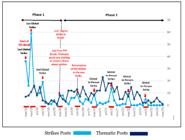
The period from March 2019 to March 2020, designated as Phase 1, is characterized by content that is heavily dependent on the actions and discourses of the Global North. The posts are highly focused on calls for strikes and the presentation of the claims of the FFF international and its founder Greta Thunberg.
In early March 2020, an unexpected event occurred that would change not only the dynamics of the FFF, but of the entire contemporary world: COVID-19. The emergence of the virus, which had high rates of contamination, made it imperative to implement preventive measures.
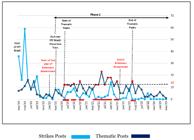
In order to contain the spread of the pandemic, health authorities in numerous countries, including Brazil, decreed a lockdown. This meant the prohibition of social, non-essential activities that required physical contact. From then on, probably: (i) driven by the weak adherence to the efforts undertaken during the first three global strikes; (ii) in the face of the restrictions imposed by the lockdown; and (iii) in view of the accumulation of socio-environmental problems in the country - due to the start, in the previous year, of Bolsonaro’s President, openly opposed to actions to address the climate crisis -FFF-Brazil activists began to devote more communication efforts to what was designated as the thematic posts. This marks the end of Phase 1 and the beginning of Phase 2, which is the focus of Study 2.
STUDY 2 - INSTAGRAM AND DISCURSIVE OPPORTUNITIES
METHODOLOGY
In order to understand the construction of meaning in FFF-Brazil’s climate discourse on Instagram during the period when posts about strikes decreased, we began Study 2. Based on the content analysis carried out in Study 1, using the principle of exclusion, we identified the posts labeled as “thematic”, which are all the posts that do not focus on the climate strikes themselves. The epistemological cut-off established for this Study 2 was the peaks in “thematic” publications that were higher than those mentioning street protests. In this case, the first turning point occurs in June 2020, where thematic posts total n=12, while strike posts total n=1. Thus, we defined that the parameter for including peaks in thematic posts would be those with n≥ 12. This cut-off corresponds to 12 months between June 2020 and April 2022, totaling n=177 posts (Graph 2).
The theoretical-methodological device used in this second study consists of French discourse analysis - FDA (Orlandi, 2007a; Orlandi, 2007b; Freire, 2021) associated with constructionist thematic analysis - CTA (Braun & Clarke, 2006), since the objective is to understand the construction of meaning of the climate crisis, taking into account the conditions of discourse production, the place of enunciation of the speaking subject, and the socio-historical context of the utterance. CTA, like FDA, also works with meaning beyond semantic literalness and has a well-defined protocol for categorizing themes, more focused on the linguistic surface, the first stage of FDA, and was therefore used at this stage.
In the stages following the analysis of the linguistic relations, we continued with the analysis of the discursive object, making use of paraphrases and textual semantic substitutions to understand the mechanism of meaning construction, as well as the analysis of the discursive process, bringing in the theoretical framework to define the effects of meaning that the discursive object intended to produce, given the socio-historical context of the utterance (Orlandi, 2007a; Orlandi, 2007b; Freire, 2021). According to CTA, themes should capture something important in relation to the research question, and an inductive approach was adopted (Fereday & Muir-Cochrane, 2006). Christou (2023) states that this requires a search for meaning patterns and, after familiarization, it is important to create codes in order to bring together similar themes. To this end, we followed the guidelines proposed by Braun and Clarke (2006): 1. Reading the Data; 2. Generating Initial Codes; 3. Searching for Themes; 4. Reviewing Themes; 5. Defining Themes; 6. Composing the Report.
The dominant themes were discussed among the authors after a multimodal reading of the posts. The definition took into account the argumentation surrounding the main issue, that is, the phenomenon that was the target of the claim or defense of the speaker, FFF-Brazil. The photos, illustrations, and/or moving images were described and included in the analysis as if they were text. In some cases, we also observed the content of other posts that referred to the same issue and gave rise to a campaign. On the other hand, we emphasize that there is a pluralism of themes that intersect in the climate discourse, as it is a multi-level, cross-cutting issue. However, in our exclusive coding, the secondary themes that appeared less prominently in the argumentation, both in relation to the use of linguistic and visual resources, were not included.
RESULTS - Study 2
The 12 thematic peaks analyzed in this Study 2, totaling n=177 posts, revealed the prevalence of five thematic sets, within what Cammaerts (2012) calls Discursive Opportunity Structures (DOS): Identity, Governmental, Ecological, Political-Scientific, and Private Initiative. In only one post, it was not possible to classify the message into any of the DOS because the content was too vague. Each of the five DOS brings together several categories, as listed in Table 1.
In the “Identity” DOS, the “Indigenous” category has the highest number of posts. Of the total of n=28 posts, ten were about the SOS Amazon campaign, which requested donations to support the peoples of the forest due to COVID-19. There are four posts about invasions of indigenous lands by land grabbers and/or miners, including the use of armed violence. Direct threats to indigenous leaders were also the subject of a complaint about intimidation that activist Sônia Guajajara had been suffering from federal government agencies. Other indigenous women were also the subject of a post in August 2021 in support of the Indigenous Women’s March. There are also two posts on emblematic dates, one on Brazil’s Independence Day and the other on International Indigenous Peoples’ Day, reinforcing the importance that FFF-Brazil attributes to this population for maintaining biodiversity in the country.
Continuing on the subject of indigenous peoples, the maneuvers for the general adoption of the Marco Temporal1 thesis and the progress of PL 490/07, which also deals with the demarcation of indigenous lands, were the subject of several posts. These legal setbacks generated a series of protests, through the ATL - Acampamento Terra Livre (Free Land Camp), led by the Articulação dos Povos Indígenas do Brasil (APIB, 2025). There were seven different publications, distributed on different dates, which demonstrate FFF-Brazil’s commitment to the cause. This is also an indication that, for the collective, the peoples of the forest are fundamental actors in the preservation of nature and, consequently, in controlling the increase in the planet’s temperature.
Figure 1 exemplifies one of the posts about the ATL made on April 10, 2022, categorized in DOS Identity - Indigenous. The album consists of seven photos, a significant amount of visual content, which confirms the importance of the theme for FFF-Brazil and the intention to present as many details as possible about the demonstration.
On the cover of the post, there is an indigenous person at the top of a mast, where the Brazilian flag is hoisted. In the background, we see two towers, the seat of the National Congress. The union of the flag with the image of the indigenous person and the parliament buildings helps to establish a relationship between homeland, territory, indigenous peoples and legislation.
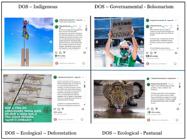
This is likely an association with the rights of these peoples, as prescribed in the 1988 Federal Constitution, which were not being guaranteed by the National Congress. The text also mentions: “with the power of the maracá2 , jenipapo, and urucum, the indigenous peoples of Brazil declare the end of Bolsonaro’s genocidal government.” The argument extols the power of indigenous leaders, particularly shamans, in contrast to the state power of the white man, represented by Jair Bolsonaro and his administration, which is openly opposed to the climate agenda. Once again, this reaffirms the importance of indigenous ancestral culture for maintaining the quality of life on the planet. It is worth noting that this interpretation takes into account the place of enunciation of FFF-Brazil: young people, students, activists, residents of a country in the Global South. These are subjects who are both the witnesses and the actors in the struggles to mitigate the effects of global warming in the national territory and who recognize the relevance of forest peoples for the conservation of biodiversity. As Orlandi (2007a) states, meanings are not only found in words, texts, and images, but also in the relationship with exteriority, in the conditions in which they are produced, in the way subjects are affected by events, and in a discursive memory traversed by history. When they speak, these subjects signify the world and themselves. That said, we intend to show the relevance of addressing the different meanings of the climate crisis from the perspective of subjects other than those in the Global North. In this way, it is possible to perceive the multifaceted conditions for interpretation and, consequently, the management of global warming in unique contexts.
In the “Governmental” DOS, the “Bolsonarism” category is dominant, due to conflicts with indigenous issues and many other reasons. Of a total of n=46 posts, n=19 address nominal complaints against the president and public officials linked to the government. This indicates that FFF-Brazil activists associate the worsening climate crisis with Bolsonaro’s disastrous management. There are posts with demonstrations in Brasília, the seat of the federal government, but also in other cities across the country. Some of these protests were broadcast live and then included as videos in the feed. This was probably done so that followers from various parts of the country and the world could follow the events. Bolsonaro’s inefficient administration was a key issue not only for FFF-Brazil, but for activists from many other parts of the world. There are a series of videos in this DOS, published with English audio and Portuguese subtitles, probably produced by international organizations, with serious accusations against the then-president, which were posted on FFF-Brazil’s Instagram. This is a resource that helps to amplify the voice of young people, demonstrating the importance of the national context in the global climate crisis scenario.
The “Ecological” DOS, with a total of n=40 posts, is the third most representative in this construction of FFF-Brazil’s climate discourse. In here, the “Deforestation” category stands out, with n=22 posts on the importance of Brazilian biomes, not only the Amazon, but also the Caatinga, the Cerrado, the Pampas, the Atlantic Forest, and the Pantanal. Most of these posts address reforestation actions in these areas, as well as demands for the creation of conservation units to safeguard the national territory from devastation.
The “Political-Scientific” DOS shows a sharp decrease in the number of posts, with a total of n=21. In this set, the “COP-26” (Conference of the Parties) category is prevalent. There are eleven publications on the participation of activists in the event. Two of them show the delivery of letters to Brazilian politicians about climate education and environmental preservation in the country. Both use video, highlighting the interaction of young people with political authorities and taking the opportunity to document a friendly approach between government officials and activists. This may demonstrate a counterpoint to the contentious tactic of climate strikes, which had a more aggressive tone and were less open to negotiation. There are also posts about participation in round tables to discuss issues related to the national scenario and three others with requests for donations to cover expenses so that FFF-Brazil activists could represent the country’s youth at COP-26.
Finally, in the “Private Initiative” DOS, there are only n=6 publications, three of which refer to the dam collapse of a mining company, which caused serious socio-environmental damage in the region. The posts point to the tragedy, caused by the Equinox, a Canadian company, and request donations to help the affected population. The other three posts deal with the fashion industry, agribusiness, and the use of plastic packaging by delivery companies. The low incidence of this DOS shows that FFF-Brazil has not made a direct association between the climate crisis and economic extractivism. Through this DOS, the collective tends to blame political authorities, calling them to the task of regulation. The responsibility of private enterprise and the capitalist system is rarely explored. Even the calls for “No Fossil Fuel,” which are much present in protests in the Global North and directly related to industrialization, are almost non-existent in FFF-Brazil’s posts.
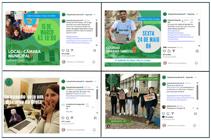
In Phase 2 of FFF-Brazil’s self-mediation, more specifically within the months analyzed, it is possible to notice a discursive shift in relation to Phase 1, when posts about strikes were in the majority. In Phase 1, there is the prevalence of a single theme, which deals almost exclusively with street protests. In this period, FFF-Brazil follows a discursive pattern imported from the Global North. The layouts and texts show little variation, in general, with young people holding posters and some catchphrases, sometimes written in English (Figure 2). This corresponds to what we call “globalized discourse.”
Within the thematic peaks, there is an explicit visual and textual heterogeneity. FFF-Brazil makes intense and deliberate use of different national issues and symbols, such as the Brazilian flag, federal government buildings, indigenous peoples, and local fauna, such as the maned wolf and the jaguar (Figure 1), among others. In addition, at times, they also resort to videos that capture fires in indigenous villages and in the Pantanal region, an important Brazilian biome. In these cases, audiovisual media is very useful for presenting evidence of the already clear effects of rising temperatures in the country or criminal actions to devastate these areas and subsequently exploit the soil, for example, by agribusiness.
It is worth noting that Instagram is an eminently visual medium and this is a mechanism that activists are making good use of in Phase 2. Despite this, FFF-Brazil also incorporates extensive captions in an attempt to offer as much information as possible about the different causes and consequences of the climate crisis in Brazil.
There are also live meetings, which are used to promote long participatory conversations. During these moments, Brazilian activists discuss topics that are of particular interest to young people in a country in the Global South, such as climate justice and environmental racism.
In Phase 2, based on the posts analyzed, we see the emergence and establishment of a “rooted discourse” through the appropriation of local issues and national themes, with arguments that delve deeper into the effects of the climate crisis in Brazil and on the daily lives of the population of a country in the Global South. However, it is worth noting that after April 2022-following the last thematic peak-FFF-Brazil also decreased its presence on the platform. Although posts that do not address the strikes remain higher than those concerning calls for street protests, they also became increasingly scarce. This may indicate a new period of apathy within the collective, similar to what occurred after the peaks in strike posts in Phase 1, between October 2019 and February 2020, but probably for different reasons that were not the subject of this Study.
DISCUSSION
In order to assess the construction of meaning of the climate crisis by young activists from FFF-Brazil, we investigated the movement’s communication patterns on Instagram between March 2019 and March 2023. The content analysis of Study 1 revealed that student climate strikes were not successful in popularizing the movement and mobilizing the youth in the country, even before COVID-19, when collectives in Europe brought thousands of students onto the streets (Fridays for Future, 2024). During the first year, which corresponds to what we call Phase 1, activists invested in “globalized discourse,” still very dependent discursively on the movement in the Global North, based especially on the call for strikes. We emphasize that, in political process theory, contentious action is a fundamental concept that points to specific ways of acting collectively against opponents. This involves choices and creativity, but it is limited by local culture and the constraints of the political opportunity structure (Alonso, 2012). These restrictions are also mentioned by Cavaco (2025), confirming what Della Porta and Kriesi (1999) highlight. These authors argue that international strategies encounter barriers when employed in different contexts due to unique configurations, especially in countries in the Global South. On the other hand, they agree that an international movement can offer advantages to activists in terms of sharing experiences, receiving training on strategies, and achieving greater visibility.
In Brazil, the FFF’s trajectory was gradually adapted to the national context, in what we designate as the Phase 2 of FFF’s networked self-mediation. Given the insignificant presence of young people on the streets after the first three strikes and, consequently, the lack of mass media coverage, we registered a change in positioning of the movement’s Instagram presence. In March 2020, one year after the start of FFF-Brazil, the COVID-19 lockdown forced the complete digitization of almost all collectives around the world (Sorce & Dumitrica, 2022). Thunberg herself posted an appeal on her social media asking activists to avoid crowds and respect the recommendations of experts. However, this may also have been a great opportunity for collectives to test other strategies, particularly in Brazil, given the inefficiency of street strikes.
From the second year onwards, during Phase 2, thematic posts increased while those about strikes remained at very low levels. From that moment on, as the results of Study 2 shows, FFF-Brazil began to invest in a “rooted discourse.” The low presence of young people in climate strikes during Phase 1 was probably perceived as an indication that, before calling on the public to take collective action, it was necessary to create the awareness and identity necessary for engagement. As Santos et al. (2025) state, youth activism requires greater dissemination of knowledge about issues involving climate change.
Given the above, we argue that, for a transnational movement such as FFF, a generic, consensual, and “globalized” discourse is necessary in order to coordinate broad actions in diverse configurations, offering greater visibility to the cause. However, for local collectives, a discourse aligned with the national agenda is crucial to establish legitimacy and create viable positions for action.
When they moved from the streets to social media, FFF-Brazil activists took advantage of some Discursive Opportunity Structures on the national scene, using Instagram as a window for political action. During Phase 2, young people begin to construct a more nuanced and elaborate discourse. At thematic peaks, they present arguments that are not restricted to the short protest slogans used on posters during strikes and linked to the position of the Global North. Through a combination of photos, videos, live conversations, and long captions, FFF-Brazil showed that the climate crisis is a phenomenon that manifests itself in multiple ways, depending not only on the characteristics of a given territory but also on the place of enunciation of the subjects addressing the problem. There are, therefore, singularities in the country and in the discourse of these young people that must be considered and widely debated.
The transformation of the “globalized discourse” into a “rooted discourse” is based on the premise that, in order to give meaning to and act on climate change, it is necessary to take into account the context in which statements and calls for action emerge and operate. This term does not only refer to geographical boundaries, but also includes culture and ways of being in the world, that is, it considers the roots planted in a land that gave rise to young people other than those in Europe. Instagram resources were fundamental to the construction of the “rooted discourse,” allowing activists to present different evidence of the climate crisis in the country and demand solutions more appropriate to the national reality.
On the other hand, it is important to note that the excess of texts and images used in the elaboration of the “rooted discourse” may cause an overload of information for the interlocutor. It is worth remembering that the young followers of the FFF-Brazil account are a generation accustomed to increasingly shorter and instantaneous messages. For this reason, future research will be useful to assess the impact of publications on the target audience and their interaction with the efforts of translation, examining “likes”, “views”, and “comments” on posts.
Additional research may also offer relevant contributions by relating the data in this article to interviews with FFF-Brazil activists. Thus, it will be possible to understand, for example, what criteria were used in defining the themes and organizing the Instagram posting calendar beyond Fridays-the day reserved for street demonstrations, which are no longer a priority on the collective agenda in the country. Investigations into the repertoire of actions of FFF-Brazil are also relevant, precisely because the movement has not been using strikes as its main tactic. We also recommend studies that observe the movement under the administration of President Lula da Silva, who has taken a more moderate stance than his predecessor, Jair Bolsonaro. This other political context is fundamental to understanding whether FFF-Brazil remained stagnant after April 2022, with a low number of posts, both thematic and strike-related. Or whether it resumed its activities in order to take advantage of the new Discursive and Political Opportunity Structures, demanding solutions to the climate crisis which, according to IPCC data (2023), does not seem to be nearing an end.
Nevertheless, Fischer et al. (2023) argue that as conditions deteriorate, activism is likely to intensify, while governments simultaneously exhibit a tendency toward repression. Therefore, further research is needed to understand how to improve dialogue between civil society and public authorities, considering the different voices that need to be involved in this debate.
REFERENCES
-
Alonso, A. (2012). Repertório, segundo Charles Tilly: história de um conceito. Sociologia & Antropologia, 2(3), 21-24. https://doi.org/10.1590/2238-38752012v232
» https://doi.org/10.1590/2238-38752012v232 -
APIB - Articulação dos Povos Indígenas do Brasil. (2025). In: https://apiboficial.org/sobre/
» https://apiboficial.org/sobre/ -
Atlas das Juventudes. (2025). Jovens, População e Percepções. In: https://atlasdasjuventudes.com.br/jovens-populacao-e-percepcoes/
» https://atlasdasjuventudes.com.br/jovens-populacao-e-percepcoes/ -
Barbosa, R., Randeler, C. & Robaina, J. L. (2021). Values and environmental knowledge of student participants of climate strikes: a comparative perspective between Brazil and Germany. Sustainability, 13(14). https://doi.org/10.3390/su13148010
» https://doi.org/10.3390/su13148010 -
Boulianne, S.; Lanlancete, M. & Ilkwi, D. (2020). School strike 4 climate: social media and the international youth protest on climate change. Media and Communication, 8(2), 208-218. https://doi.org/10.17645/mac.v8i2.2768
» https://doi.org/10.17645/mac.v8i2.2768 -
Braun, V. & Clarke, V. (2006). Using thematic analysis in psychology. Qualitative Research in Psychology, 3, 77-101. https://doi.org/10.1191/1478088706qp063oa
» https://doi.org/10.1191/1478088706qp063oa - Bryman, A. (2012). Social research methods. Oxford University Press.
-
Cammaerts, B. (2012). Protest logics and the mediation opportunity structure. European Journal of Communication, 27(2). https://doi.org/10.1177/0267323112441007
» https://doi.org/10.1177/0267323112441007 -
Canaltech. (2024). Como postar vídeos longos no Instagram. https://canaltech.com.br/redes-sociais/como-postar-videos-longos-no-instagram/
» https://canaltech.com.br/redes-sociais/como-postar-videos-longos-no-instagram/ -
Carvalho, A., Russil, C. & Doyle, J. (2021). Editorial: critical approaches to climate change and civic action. Frontiers in Communication, 6. https://doi.org/10.3389/fcomm.2021.711897
» https://doi.org/10.3389/fcomm.2021.711897 - Castells, M. (2013). Redes de indignação e esperança: movimentos sociais na era da Internet. Zahar.
-
Cavaco, I. C. (2025). Existe um movimento pela justiça climática no Brasil? Reflexões a partir dos jovens ativistas. [Dissertação de Mestrado]. Instituto de Energia e Ambiente, Universidade de São Paulo, São Paulo. Doi:10.11606/D.106.2025.tde-22072025-162253.
» https://doi.org/10.11606/D.106.2025.tde-22072025-162253. -
Christou, P. A. (2023). How to use thematic analysis in qualitative research. Journal of Qualitative Research in Tourism. https://doi.org/10.4337/jqrt.2023.0006
» https://doi.org/10.4337/jqrt.2023.0006 - Della Porta, D. & Kriesi, H. (1999). Social movements in a globalizing world: an introduction. In: Social movements in a globalizing world (pp. 3-22). Palgrave Macmillan UK.
-
Fereday, J. & Muir-Cochrane, E. (2006). Demonstrating rigor using thematic analysis: a hybrid approach of inductive and deductive coding and theme development. International Journal of Qualitative Methods, 5, 80-92. https://doi.org/10.1177/160940690600500107
» https://doi.org/10.1177/160940690600500107 -
Fischer, D. R.; Berglund, O. & Davis, C. J. (2023). How effective are climate protests at swaying policy - and what could make a difference? Nature, 623. https://www.nature.com/articles/d41586-023-03721-z
» https://www.nature.com/articles/d41586-023-03721-z - Freire, S. (2021). Análise de Discurso: Procedimentos Metodológicos (2.ed). EDUA.
-
Fridays for Future. (2024). Movimento Fridays for Future. In: https://fridaysforfuture.org
» https://fridaysforfuture.org -
Fridays for Future. [@fridaysforfuturebrasil ]. (2025). Instagram. [fotos]. https://www.instagram.com/fridaysforfuturebrasil/
» https://www.instagram.com/fridaysforfuturebrasil/ -
FUNAI - Fundação Nacional dos Povos Indígenas. (2025). Cultura: saiba mais sobre o maracá, instrumento musical indígena. In: https://www.gov.br/funai/pt-br/assuntos/noticias/2022-02/cultura-saiba-mais-sobre-o-maraca-instrumento-musical-indigena
» https://www.gov.br/funai/pt-br/assuntos/noticias/2022-02/cultura-saiba-mais-sobre-o-maraca-instrumento-musical-indigena -
Greenpeace Brasil. (2024). Amazônia: o que é e qual a importância. In: https://www.greenpeace.org/brasil/blog/amazonia/
» https://www.greenpeace.org/brasil/blog/amazonia/ -
Haßler, J.; Wurst, A-K; Jungblut, M & Schlosser, K (2023). Influence of the pandemic lockdown on Fridays for Future’s hashtag activism. New Media & Society, 25(8). https://doi.org/10.1177/14614448211026575
» https://doi.org/10.1177/14614448211026575 -
Herrmann, C., Rhein, S. & Dorsch, I. (2023). #Fridaysforfuture - What does Instagram tell us about a social movement? Journal of Information Science, 49(6). https://doi.org/10.1177/01655515211063620
» https://doi.org/10.1177/01655515211063620 -
IPCC - Intergovernmental Panel on Climate Change. (2023). Sixth Assessment Report. https://www.ipcc.ch/assessment-report/ar6/
» https://www.ipcc.ch/assessment-report/ar6/ -
Ivanovic, V.; Pudak, J. & Poljak, T. T. (2022). What kind of mo(ve)ment is Fridays for Future? Motivation, success perception, and climate action framing in Fridays for Future Croatia. Interdisciplinary Description of Complex Systems, 20(4), 304-318. https://doi.org/10.7906/indecs.20.4.1
» https://doi.org/10.7906/indecs.20.4.1 -
Laux, T. (2021). What makes a global movement? Analyzing the condition for strong participation in the climate strike. Social Science Information, 60(3), 413-435. https://doi.org/10.1177/05390184211022251
» https://doi.org/10.1177/05390184211022251 -
Marquardt, J. (2020). Fridays for Future’s disruptive potential: an inconvenient youth between moderate and radical ideas. Frontiers in Communication, 5, 42. https://doi.org/10.3389/fcomm.2020.00048
» https://doi.org/10.3389/fcomm.2020.00048 -
McCammon, H. (2013). Discursive opportunity structure. In: D. A. Snow, D. Della Porta, B. Klandermans, & D. McAdam (Eds.), The Wiley Blackwell encyclopedia of social and political movements. https://doi.org/10.1002/9780470674871.wbespm073
» https://doi.org/10.1002/9780470674871.wbespm073 -
Opinion Box (2025) Pesquisa Instagram no Brasil: dados que revelam as preferências dos usuários na rede social. In: https://blog.opinionbox.com/pesquisa-instagram/
» https://blog.opinionbox.com/pesquisa-instagram/ - Orlandi, E. P. (2007a). Análise de discurso: princípios e procedimentos (7th ed.). Pontes Editores.
- Orlandi, E. P. (2007b). Interpretação, autoria e efeitos do trabalho simbólico (5th Ed.). Pontes Editores.
-
Ribeiro, A. C. D. (2023). Estratégias transmídia e juventudes pelo clima: reflexos do movimento Fridays for Future no Brasil. [Dissertação Mestrado em Ciências da Comunicação]. Escola de Comunicações e Artes, Universidade de São Paulo. doi:10.11606/D.27.2023.tde-01112023-155005
» https://doi.org/10.11606/D.27.2023.tde-01112023-155005 -
Sainz, G. M. & Hanna, A. (2023). Youth digital activism, social media and human rights education: the Fridays for Future movement. Human Rights Education Review. https://doi.org/10.7577/hrer.4958
» https://doi.org/10.7577/hrer.4958 -
Santos, T. R.; Rebelo, D.; Garcia, A.; Fernandes‐Jesus, M.; Malafaia, C. & Carvalho, A. (2025). Imagined climate futures and collective action: an analysis of affect in dystopias and utopias by young climate activists. Journal of Community & Applied Social Psychology, 35(2). https://doi.org/10.1002/casp.70072
» https://doi.org/10.1002/casp.70072 -
Soβdorf, A. & Burgi, V. (2022). Listen to the science! : the role of scientific knowledge for the Fridays for Future movement. Frontiers in Communication, 7. https://doi.org/10.3389/fcomm.2022.983929
» https://doi.org/10.3389/fcomm.2022.983929 -
Soler-I-Martí, R.; Fernández-Planells, A. & Pérez-Altable, L. (2022). Bringing the future into the present: the notion of emergency in the youth climate movement. Social Movement Studies, 23(4), 517-536. https://doi.org/10.1080/14742837.2022.2123312
» https://doi.org/10.1080/14742837.2022.2123312 -
Sorce, G. (2022). The “Greta effect”: networked mobilization and leader identification among Fridays for Future protesters. Media and Communication, 10(2). https://doi.org/10.17645/mac.v10i2.5060
» https://doi.org/10.17645/mac.v10i2.5060 -
Sorce, G. & Dumitrica, D. (2023). #Fighttheverycrisis: pandemic shifts in Fridays for Future’s protest communication frames. Environmental Communication, 17 (3), 263 - 275. https://doi.org/10.1080/17524032.2021.1948435
» https://doi.org/10.1080/17524032.2021.1948435 -
Sorce, G. & Dumitrica, D. (2022). From school strikes to webinars: mapping the forced digitalization of Fridays for Future’s activism during the COVID-19 pandemic. Convergence, 29 (3). https://doi.org/10.1177/13548565221148112
» https://doi.org/10.1177/13548565221148112 -
Sproutsocial. (2025). Limite de caracteres nas redes sociais. https://sproutsocial.com/pt/glossary/character-count/
» https://sproutsocial.com/pt/glossary/character-count/ - Tarrow, S. (1996). States and opportunities: the political structuring of social movements. In: McAdam D., McCarthy J. , & Zald, M. (Eds.), Comparative perspectives on social movements (pp. 41-61). Cambridge University Press.
- Tilly, C. (1978). From mobilization to revolution. Newbery Award Records.
- Tilly, C. (1995). Contentious repertoires in Great Britain, 1758-1834. In: Repertoires and cycles of collective action. Duke University Press.
- Tilly, C. (2004). Social movements, 1768-2004. Paradigm Publisher.
-
Torres, P.H.C.; Jacobi, P. R. & Leonel, A. L. (2020). Nem leigos, nem peritos: o semeador e as mudanças climáticas no Brasil. Política e Sociedade, 29(44). https://doi.org/10.5007/2175-7984.2020v19n44p17
» https://doi.org/10.5007/2175-7984.2020v19n44p17 -
VERBI Software. (2024). MAXQDA 2024 [Software de computador]. https://www.maxqda.com
» https://www.maxqda.com
-
1
- Legal thesis from 2009 according to which, in the Raposa Serra do Sol case, indigenous peoples would only have the right to demarcation of those lands if they had been in possession of them since October 5, 1988, the date of publication of the Brazilian Federal Constitution (APIB, 2025).
-
2
- There are ethnic groups that believe that the maraca has great spiritual power. Considered a noble object, it is also used by shamans in religious ceremonies and rituals (FUNAI, 2025).
-
Data Availability Statement:
All datasets that support the findings of this study are included in the article.
All datasets that support the findings of this study are included in the article.

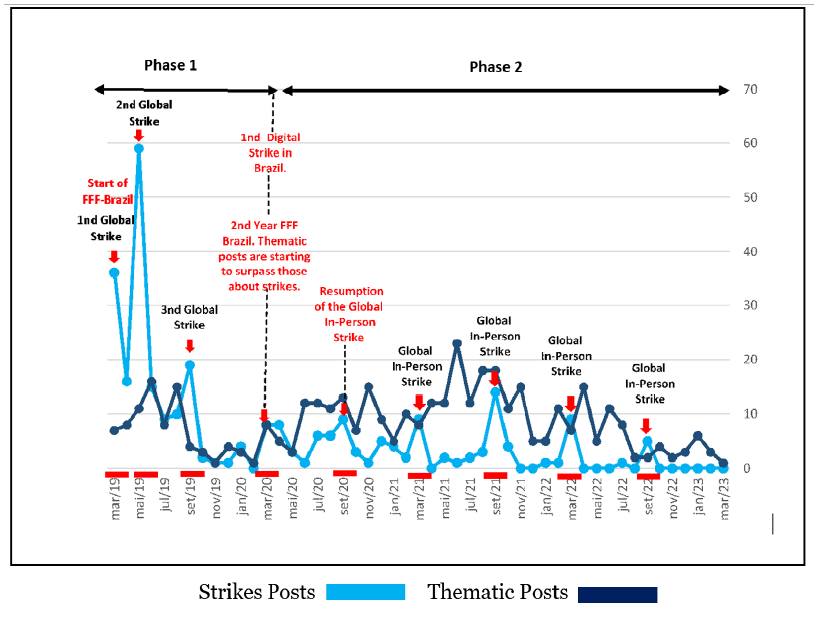 Source: Based on data extracted from Instagram FFF Brazil, 2023 - Author’s own work
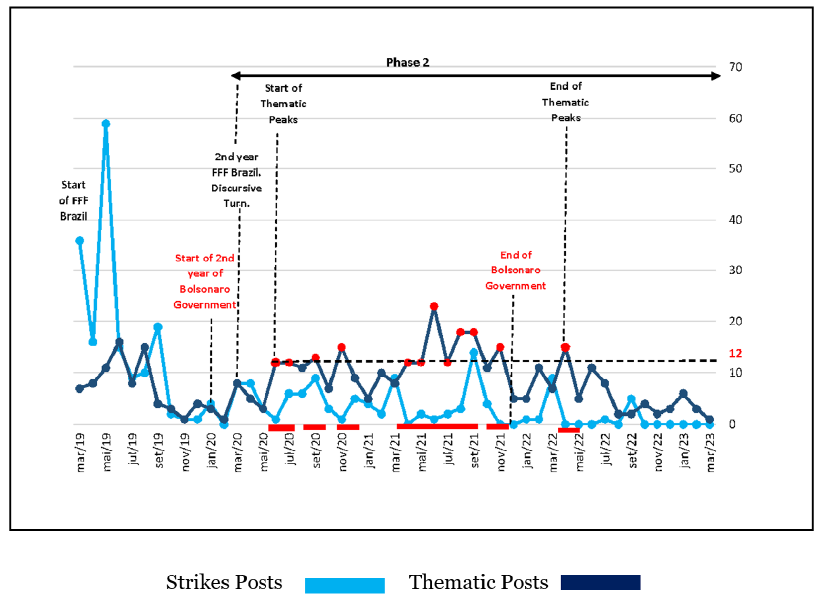 Source: Based on data extracted from Instagram FFF Brazil, 2023 - Author’s own work
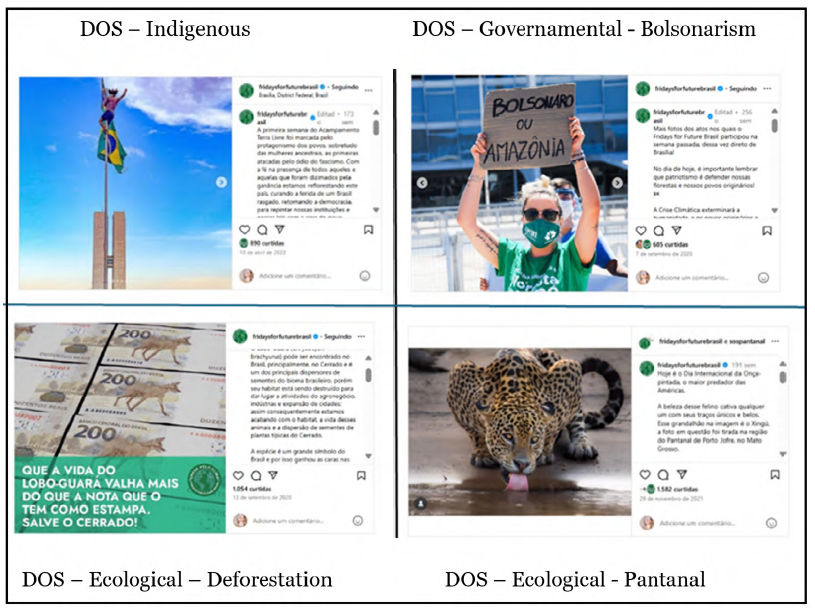 Source: Instagram FFF-Brazil, 2025
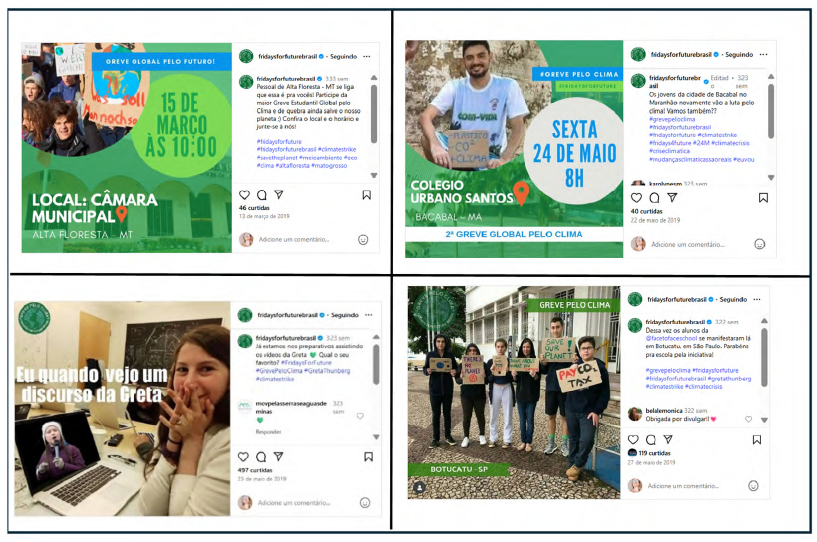 Source: Instagram FFF-Brazil, 2025