
 The future beyond Fridays: the discursive turn of the Fridays for Future movement in Brazil
Fridays for Future, founded by young Swedish activist Greta Thunberg, quickly became a transnational movement through its intense use of digital media. This article aims to understand the collective’s formation in Brazil, given the very different discourse production conditions vis-à-vis the Global North. In Study 1, employing content analysis, we identify the quantitative trends in the networked mediation of student climate strikes, demonstrating that this contentious action, unlike in the Europe, did not resonate much in the Brazilian public sphere. In Study 2, supported by French discourse analysis and political process theory, we define the discursive opportunity structures: Identity, Governmental, Ecological, Political-Scientific and Private Initiative. We conclude that Instagram’s affordances enabled the collective in the implementation of a “rooted discourse.” This strategy helped highlight the different consequences and implications of rising global temperatures within the country, avoiding the generalization of a “globalized discourse.”
Keywords:
Climate change; social movements; social media; Fridays for Future; discursive opportunity structures
 Thumbnail
 Thumbnail
 Thumbnail
 Thumbnail
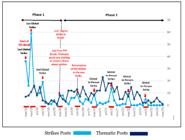
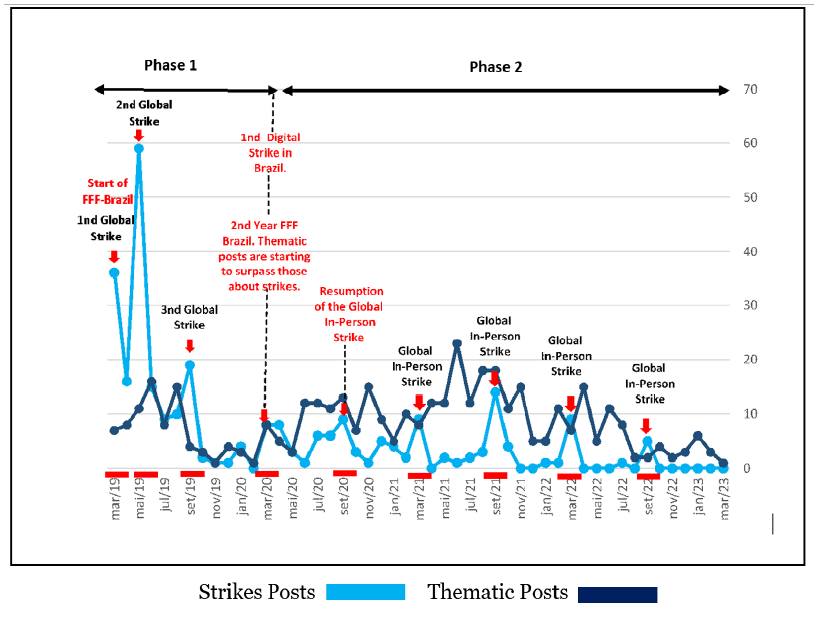 Source: Based on data extracted from Instagram FFF Brazil, 2023 - Author’s own work
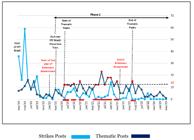
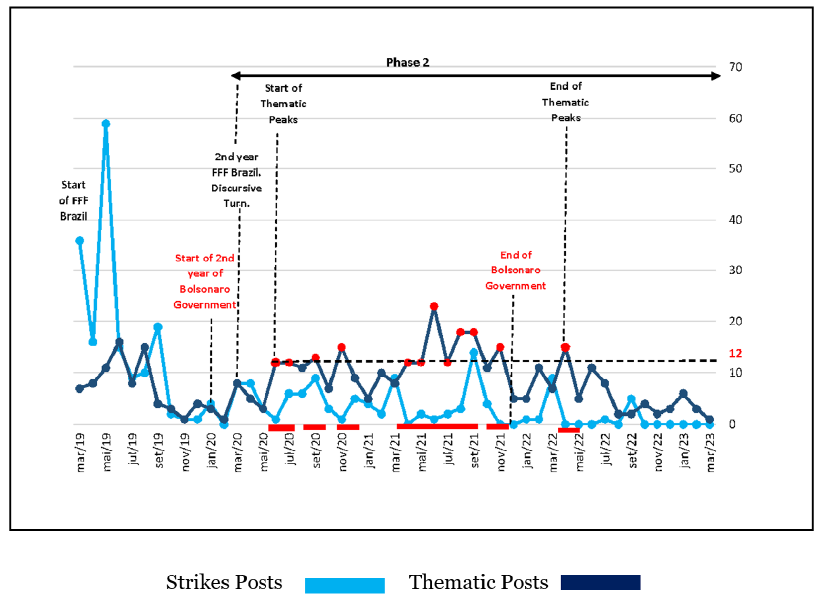 Source: Based on data extracted from Instagram FFF Brazil, 2023 - Author’s own work
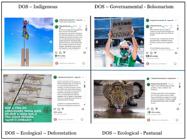
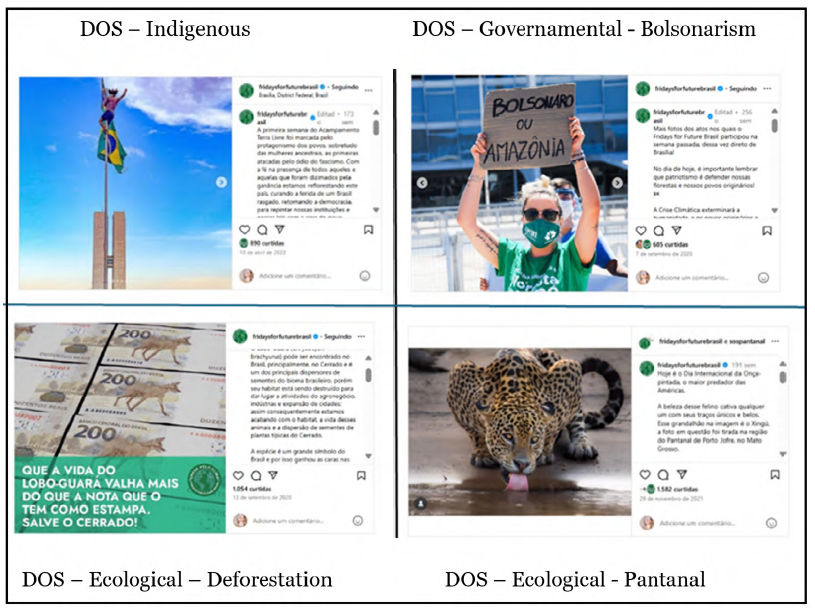 Source: Instagram FFF-Brazil, 2025
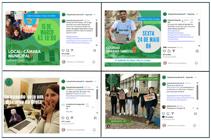
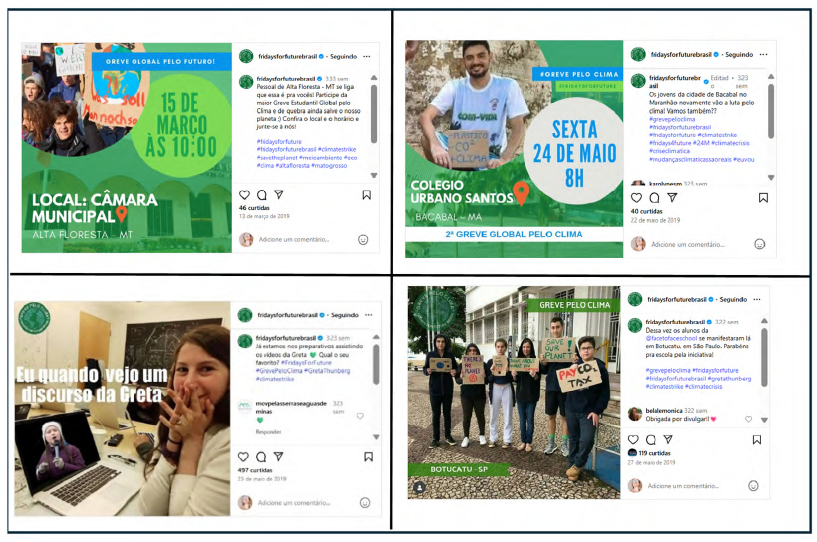 Source: Instagram FFF-Brazil, 2025