
 Risks in coffee cultivation: a Citizen Science experience with elementary school students
Abstract
Abstract: This article discusses the risks associated with coffee production and establishes a dialogue between the concepts of risk and risk society, from the perspective of upper elementary school students in a public school. The material was developed through both collective and individual contributions. This study enabled researchers and students to systematize existing knowledge and build new understandings regarding the risks surrounding coffee cultivation. The findings, based on the perceptions of students at Olegário Martins School, highlight the presence of multiple risks related to coffee production in Água Doce do Norte, as well as the participants’ interest in gaining a deeper understanding of these risks. Furthermore, Citizen Science emerges as an important pathway for fostering closer connections between universities and knowledge production.
Keywords:
Environmental risks; Rural environment; Environment and education; Pesticides; Citizen science
Resumo
O artigo debate riscos em relação à produção do café e estabelece um diálogo entre Risco e sociedade de risco, a partir do olhar de estudantes dos anos finais do ensino fundamental de uma escola pública. O material foi produzido com uma construção coletiva e individual. Esse estudo possibilitou aos pesquisadores e estudantes a sistematização de conhecimentos existentes e construção de novos conhecimentos acerca dos riscos em torno da cafeicultura. Os resultados mostram, a partir do olhar dos estudantes da educação básica da escola Olegário Martins, a presença de uma série de riscos associados à produção do café em Água Doce do Norte e o desejo dos participantes de entender melhor estes riscos. Além disso, a Ciência Cidadã se apresenta como uma via para a aproximação entre a universidade e a produção de conhecimento.
Palavras-chave:
Riscos socioambientais; Ambiente rural; Meio Ambiente e Educação; Agrotóxicos; Ciência Cidadã
Resumen
Este artículo analiza los riesgos relacionados con la caficultura y establece un diálogo entre el riesgo y la sociedad del riesgo, desde la perspectiva de estudiantes de los últimos años de la educación primaria en una escuela pública. El material se produjo mediante la construcción colectiva e individual. Este estudio permitió a investigadores y estudiantes sistematizar el conocimiento existente y construir nuevos conocimientos sobre los riesgos que implica la caficultura. Los resultados demuestran, desde la perspectiva de los estudiantes de la escuela primaria Olegário Martins, la presencia de una serie de riesgos asociados a la caficultura en Água Doce do Norte y el deseo de los participantes de comprender mejor estos riesgos. Además, la Ciencia Ciudadana se presenta como una forma de conectar las universidades con la producción de conocimiento.
Palabras-clave:
Riesgos socioambientales; Entorno rural; Medio ambiente y educación; Plaguicidas; Ciencia ciudadana
Economic, Historical, and Cultural Importance of Coffee for Brazil
Coffee is one of the most important agricultural products in Brazil, traded both in domestic and international markets. In 2023, Brazil reached a new production record and continues to be the global market leader, as well as the leading country in per capita consumption in South America, accounting for 82.5% of the region’s consumption (IOC, 2023). The coffee production network exerts significant influence on other sectors of the economy, as it consumes raw materials such as fertilizers, pesticides, machinery, and equipment, while also supplying inputs for various industries, including pharmaceuticals and medicinal products, confectionery, food, and beverages, among others (Santos, 2017).
As with most agricultural products, in addition to the benefits of its production, it is necessary to consider the risks posed by the use of synthetic pesticides, which may contaminate the environment, causing harm both broadly to life in general and specifically to individuals who live and work on coffee farms. Accordingly, this study analyzes the presence of risks associated with coffee production from the perspective of upper elementary school students in a region where coffee cultivation constitutes the basis of the local economy. It is a Citizen Science experience in which the children of farmers, in a community reliant on family agriculture, participated in the collective construction and systematization of knowledge about the risks linked to coffee production.
The theoretical framework adopted for the discussion of results draws on Ulrich Beck’s concept of the “risk society” and dialogues with Citizen Science as a democratic practice of knowledge production by laypeople or citizen scientists, with Alan Irwin (2021) serving as an important reference. Thus, while professional scientists produce relevant knowledge, this article seeks to engage in a collaborative exercise of knowledge production about such risks.
Risks Associated with Coffee Cultivation and the Importance of Lay Perceptions - Citizen Scientists
The subject of this study concerns the risks present in a territory shaped by coffee cultivation and is intrinsically linked to environmental, ecological, and health issues, through the lens of the “risk society” theory (Beck, 2010). According to this perspective, late-modern societies face risks not merely as unintended consequences of progress, but as central to it, threatening all forms of life on the planet. As Beck’s theory asserts, “there are risks against which we cannot obtain insurance, because they cannot be calculated. They lie in the dimension of uncertainty. Nuclear energy and pesticides were paradigmatic examples” (Guivant, 2016, p. 230).
Whereas risks were once perceived as individual, in late modernity they become global, crossing national and class boundaries: “food chains interconnect practically all of us, although some people are more affected than others by risks, since their distribution follows class inequalities and social hierarchies” (Guivant, 1998, p. 17). Soil management practices and irrigation methods in farming are among the factors contributing to increased contamination of groundwater by leaching, making human action a key driver of environmental contamination (Santos, 2017).
As Daufenback and colleagues argue, “family farmers are the group at highest risk regarding health impacts due to their continuous and prolonged exposure to these chemical and toxic substances” (Daufenback et al., 2022, p. 483). Risk is often underestimated or neglected, being theoretically reduced to the high toxicity of certain substances, the absence or improper use of personal protective equipment (PPE), and structural deficiencies in public health surveillance.
This research seeks to contribute to making science more accessible and to strengthening its role in society by fostering knowledge translation from science to society, which, as we expect, will reinforce the social impact of research and enhance its value and recognition (Morais, 2022).
According to Haklay (2013), there is not a single form of Citizen Science but rather multiple modalities, encompassing a variety of partnerships between scientists and volunteers, i.e., non-professional researchers aiming to co-produce scientific knowledge. Terms such as community-based science, participatory biodiversity monitoring, and public participation in science are often employed. The present study reflects the joint efforts of professional researchers and volunteer participants, here referred to as “citizen scientists,” in alignment with the terminology adopted by the Brazilian Citizen Science Network (RBCC).
In Citizen Science projects, partnerships between citizen scientists and professional scientists are indispensable and, as Fraisl et al. (2022) note, increasingly recognized. Nevertheless, decades ago Guivant (1998) already warned of conflicts between scientific and lay knowledge, due to the polarization between laypeople and experts. She highlights scholars who criticize technical studies on modern health and environmental risks and safety regulations, employing arguments rooted in the sociology of science. Part of this divergence stems from the fact that while laypeople rely on rationalities shaped by personal experiences and judgments, experts tend to believe that the real world corresponds to the controlled environment of laboratories.
Additionally, people living in high-risk areas often ignore or downplay these risks, adapting to them by perceiving or classifying their environment as safer than it truly is. This adaptation process, marked by a sense of control over threatening circumstances, hinders or prevents preventive risk actions. This phenomenon is also linked to the tendency of individuals to perceive themselves as less exposed to risk than others (Rohrmann & Renn, 2000).
Therefore, this work emphasizes the importance of recognizing the differences between risks as perceived by professional scientists and those perceived by citizen scientists or laypeople, and engages in an interdisciplinary, collaborative construction of knowledge about risks associated with coffee production within the real-life context of the volunteers. The choice to involve students stems from the understanding that Citizen Science enables them to grasp not only scientific content and methods of inquiry but also broader dimensions of science itself. In this case, reflecting on the risks associated with coffee production promotes positive attitudes toward science (Morais, 2022).
Methodological Pathway: Citizen Science with Elementary School Students and the LEAS
This study was conducted at Olegário Martins State School of Elementary and Secondary Education, located in the rural community of Santa Luzia do Azul, in the municipality of Água Doce do Norte (ES), following approval by the Research Ethics Committee (Certificate of Presentation for Ethical Consideration - CAAE 70917623.5.0000.5157). The 7th-grade class, comprising 17 students, 11 boys and 6 girls, aged 12 to 13, was selected to participate in this experience.
This group was chosen intentionally, as the students and their families live in coffee-producing territories, with all students being children of farmers, 9 of whom are children of coffee producers. The class’s science teacher, who is also a researcher at LEAS, initiated the activities with a brief introduction to the research theme and objectives, through dialogue in the classroom. The discussion also covered topics such as science, who can be a scientist, and Citizen Science. At the end of this initial conversation, students were invited to participate in the project as citizen scientists.
The invitation was promptly accepted, with the students expressing enthusiasm about meeting “real scientists.” Each student took home the Free and Informed Consent Form (FICF) and the Free and Informed Assent Form (FIAF) to read and sign with their guardians. To ensure confidentiality, students were asked to choose pseudonyms inspired by animals commonly found in coffee plantations.
The next step involved an intervention beginning with a discussion circle facilitated by two additional LEAS researchers. The dialogue started by asking the students to describe coffee cultivation in their local areas. The LEAS coordinator explained that she hoped to learn many things from them and asked questions such as: Have you all seen a coffee plantation, or is there anyone who has not? Have you ever worked in or visited a coffee farm? To support the discussion, researchers projected satellite images of the Água Doce do Norte region (ES) using Google Earth.
Once they located themselves, the plantations, and other spatial elements of the coffee production chain on the projected map, the group was encouraged to discuss the specific dangers associated with coffee cultivation. After sharing their ideas, students wrote down the risks on individual cards, which were then compiled into a collective list. Finally, the risks were mapped in relation to the region.
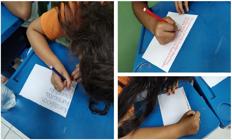
One month after the intervention, students were asked to write individually about these risks. Each received an A4 sheet with guiding prompts. As shown below, the exercise consisted of a set of open questions, with no requirement regarding the number of lines.
Imagine that…
You have been invited to give an interview for a local magazine. In this interview, the journalist wants to know what you understand about the risks associated with coffee. You may respond whether or not you are familiar with them.Which risks are present throughout the coffee production process, from soil preparation and seedling nurseries to roasting and sales? Reflect on the hazards that exist from the early stages of soil preparation through to the commercialization of coffee. What dangers can be identified? What kinds of harm can these factors cause? If possible, provide examples of situations or people affected by these hazards. What measures could be taken to avoid or mitigate these dangers? At the end of the interview, because the journalist is very curious, he also wants to know: What more can we still learn about this subject? So, how would you respond to the magazine? Take care in your response, it is a major newspaper with many readers.
All activities were carried out during the second semester of 2023. Each activity was planned to last for one class period (approximately one hour). All sessions were recorded for subsequent transcription and documented through photographs and videos by the research team.
So, what do we know about the risks associated with coffee production? A collective construction of knowledge on risks
“Wow! We Are Becoming Important!” (Stick Insect, 2023)
From the very first moment of dialogue, when the students were invited to become researchers, many expressed themselves with smiles and excitement. One of them exclaimed: “Wow! We are becoming important!” (Stick Insect, 2023), highlighting their satisfaction at being part of a scientific research project. These expressions resonate with Alender (2016), who identified the opportunity to contribute to the construction of scientific knowledge, as well as to the community and the environment, as key motivators for participation in citizen science projects.
In the first conversation with LEAS researchers, students confidently discussed coffee cultivation in their communities and reaffirmed their willingness to participate. They were then invited to introduce themselves using the pseudonyms they had chosen and to explain the reasons for their choices. During these presentations, students highlighted both familiarity with the animals and their beauty, showing admiration for the fauna commonly found in coffee plantations:
“I chose this animal because I think they are very beautiful, colorful, and they stay in the coffee fields” (Butterfly, 2023).
“Because it is a beautiful animal, and also during the coffee flowering season they stay on the flowers collecting the nectar, the sweetness of the blossoms” (Ladybug, 2023).
Only one student, who was new to the school, could not think of an animal on her own. Her classmates promptly suggested one, which she accepted:
“At the time, I couldn’t think of much, but some colleagues suggested it, and I accepted” (Dove, 2023).
Other students easily named animals and even described camouflage strategies, demonstrating the familiarity of those who know the coffee-growing territory and its specificities:
“I chose this name because it is an insect that lives in the coffee fields and has excellent camouflage among the coffee branches” (Stick Insect, 2023).
Risks emerged in the students’ narratives during the discussion circle. All participants, at some point, expressed a sense of fear toward venomous animals frequently encountered in coffee plantations and therefore part of their daily lives:
“I chose wasp because they build nests in the coffee plants, and when people go to pick the coffee, it’s dangerous to get stung” (Wasp, 2023).
“I chose snake because it is green and coils around the leaves and branches of the coffee” (Snake, 2023).
“Because it is an animal very common in the coffee fields, they build their homes to catch insects like bees, the brown ones hide in the ground to camouflage, and some are very venomous” (Spider, 2023).
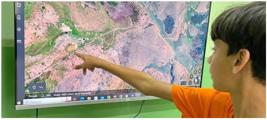
After the introductions, students visualized the rural zone of Água Doce do Norte (ES) through projected satellite images (Figure 1). They located their homes, coffee plantations, drying patios, greenhouses, dryers, and other landmarks, starting from the school, the church, the town square, nearby mountains, and ponds. During this activity, one student pointed out the largest coffee plantation in the region and proudly stated: “This is the largest plantation that exists!” Students also mentioned other economic activities in the territory, such as fish farming (ponds for raising fish and fingerlings) and other crops, especially corn.
Different students took turns pointing out references such as the route of the school bus or replanted coffee fields: “This plantation has already been renewed.” Others identified older plantations and those replaced by eucalyptus: “This is not like this anymore!” They also highlighted features of the landscape, such as mountainous outcrops (“rocks”) and ponds.
“You need to use a lot of Roundup!” (Stick Insect, 2023).
Once the group had located themselves within the space, a new prompt guided the conversation toward risks more directly. The researchers asked: “Do you think it is dangerous to be in the coffee plantations when people are planting or harvesting?” The students briefly mentioned the main hazards, starting with venomous animals. The pseudonyms may have facilitated this association between danger and animals. Still, the discussion on venomous animals naturally extended to pesticides, and finally, to machines.
“You need to use a lot of Roundup to kill the snakes in the coffee fields, and because of that other animals also die. The Roundup goes into the roots of the plants, and when it rains, it runs off into the water, reaching the gardens and affecting us because we eat the vegetables.” (Stick Insect, 2023).
The student’s statement was not primarily about Roundup as a risk, but rather about venomous animals and the importance of weeding as a way of reducing risks for workers. In this context, the herbicide, whose active ingredient is glyphosate, was mentioned. Only when further prompted did the student reflect on the risks of using this substance. This observation resonates with Beck’s (2010, p. 97) claim that “the peasant, who for centuries was considered part of the ‘nurturing estate,’ who made the soil ‘fruitful,’ upon whom life and survival depended, begins to have his image reversed. Agriculture, from this perspective, becomes a transfer station for poisons that threaten the lives of plants, animals, and humans.”
After the first conversation, the students were invited to record, using index cards, the risks associated with coffee cultivation. Each student received a paper card on which they could write as many factors as they wished (Figure 2).
When all students had finished writing on their cards, the researchers compiled a single list on the whiteboard with all the factors reported, including the number of times each factor was mentioned by the class (Table 1).
The students’ first production reveals that Roundup was the most frequently mentioned risk, followed by snakes and ant poison; together, these three accounted for 23 of the 45 total mentions. Among the three most cited, the manufactured risks (Roundup and ant poison) together were more than twice as frequent as the natural risks (snakes). It is noteworthy that natural risks emerged first in the discussion circle and appeared in nearly the same number of categories as manufactured ones, yet were cited much more often. This suggests that their meaning, as sources of danger, may be perceived as more concerning to the students.
It is possible to observe that the danger of natural sources of risk is generally recognized, but in most cases does not go beyond inconvenience. Even Scorpions, capable of causing fatal acidentes, were mentioned as often as bees, wasps, or machines, all of which can cause severe harm. In this class, two students had already experienced accidents with scorpions, and one student’s father had lost fingers from an accident involving machinery. Nevertheless, other sources were mentioned more frequently (Roundup, snakes, and ant poison).
Regarding natural risks, the category “harmful animals” could encompass all others, indicating the existence of a single group of natural risks associated with coffee. Interestingly, venomous animals were referred to as “harmful animals,” which suggests an understanding of harm as an undesirable condition.
“I chose Roundup because it is used for the health of the coffee” (Swallow, 2023)
In the schoolyard, continuing the activities, students were guided to once again examine satellite images. The group explored the available images and discussed the terrain, relating it to risks associated with coffee production (Figure 3, left). The group was asked to reflect on the topographical locations where coffee grows best: on higher ground (mountainous areas) or lower ground? Some said higher ground, and Ant explained that if planted too low, the fields flood and the harvest is lost, even citing the case of someone near his home who lost a coffee crop to flooding “in the lowlands.” One of the researchers then asked where they thought there would be greater risks if pesticides were applied. Stick Insect replied that on higher ground, because runoff from rain or irrigation would reach the gardens where vegetables are grown for consumption, as well as rivers and springs.
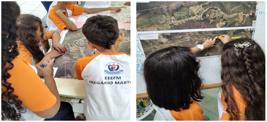
Students exploring satellite images of the Santa Luzia do Azul region, ES (left), and marking the presence of risk factors on the satellite images (right). Classroom activity using the Google Earth application.
This was one of the rare moments in which the group brought health into the discussion from an environmental perspective, and even then, the argument ultimately centered on people. In this sense, we perceive a lack of understanding of broader consequences beyond the immediate scope of the students’ own lives, even though they already demonstrated sufficient abstraction skills to reach this level. As Beck (2010) reminds us, risks can bring uncontrollable consequences and serious challenges. These are risks with global, invisible, and sometimes irreversible effects.
Finally, the students were invited to associate risks with the locations where they occur on the maps, using colored sticky notes (Figure 3, right). Working in groups, they could record risks they had already listed on the cards or add new ones they recalled but had not yet written down. Each group then placed their notes on the map, explaining the relationship between the risk and the chosen location.
Pesticides
The first group chose to mark pesticides, although they also included venomous animals. Other groups also began with pesticides, naming different types of these substances, such as ant poison and herbicides (Roundup). The students’ statements reveal that in Santa Luzia do Azul, the use of pesticides is a common practice, as in other conventional production areas in Brazil, in an attempt to achieve ever-higher levels of production.
Marking 1 - I am pointing out pesticides as a risk factor and the place where there is a lot of coffee (plantation), snake where there was brush (Dove, 2023).
Marking 3 - I chose Roundup because it is used for the health of the coffee, it is applied to the roots and not to the leaves, because they can make the coffee lose its balance and health (Swallow, 2023).
Although this student related the use of herbicides to the health of the coffee plant, studies on the risks to human health and the environment from exposure to chemical products, as well as the conditions under which pesticides are handled, are fundamental to public health promotion. This confused and contradictory notion is part of an issue that transcends scientific frameworks. Pol, Hupffer, and Figueiredo (2021) emphasize the proven correlation between glyphosate and human health, noting that not only glyphosate itself is toxic but also the diluents and additives incorporated into the commercial product contribute to its toxicity.
Brazil is among the world’s leading consumers of pesticides, and according to the Brazilian Institute of Geography and Statistics (IBGE), agricultural workers in Brazil are increasingly exposed to the risks of pesticide use1. The increase in pesticide consumption is related to incentive policies historically led by the Brazilian state, including recent changes in pesticide regulation policies (Daufenback et al., 2022).
Marking 8 - I chose to mark ant poison, which is a poison for ants used in the fields but not only in the fields, also in other places (Spider, 2023).
Insecticides, used to combat insects, larvae, and ants, can be absorbed through the skin, the digestive tract, or by inhalation. There is a wide variety of products, which implies diverse modes of action, effects, and symptoms of poisoning. Poisoning varies according to several factors, including not only factors related to the chemical and toxicological characteristics of the product, but also factors related to the individual exposed, the conditions of exposure, or general working conditions2.
With regard to human health, the effects of pesticide poisoning may appear days or even years after exposure (Londres, 2011), threatening all forms of life. As Bohner, Araújo, and Nishijima (2013) argue, when pesticides are used improperly, excessively, or close to harvest time, they can pose risks to both applicators and consumers, causing poisoning, genetic mutations, cancer, and even death. While the discourse that pesticides are “safe” when used in proper doses and with personal protective equipment (PPE) persists, they can still contaminate soil, air, and water bodies. These substances applied to plants and soil are carried to rivers and springs by rain and irrigation. Here we recall Oosterbeek’s (2012, p. 42) statement that “access to water resources (…) already fuels several conflicts across all continents,” making it likely that more territories will face scarcity of potable water in the future.
Venomous Animals
Venomous animals are defined as those that produce venom in a group of cells or secretory organ (gland) and possess a specialized structure capable of injecting the venom into prey or predators (Santos et al., 2018).
Marking 2 - I marked wasps because they hide in the coffee fields, and I also pointed out the scorpion, since they stay in cooler places. I will also mark pesticides here, where I see coffee plantations, because they are harmful both to animals and to people (Butterfly, 2023; Bee, 2023).
Marking 4 - I chose to mark the spider that stays on top of the rocks, where there is more vegetation, where they can hide. The rocks are an ideal place for them to attack their prey. You can see that here in the rocks there is low vegetation, and they end up hiding in it, camouflaging themselves, making it almost impossible to see. I also marked the snake here near the rock, where they hide. If you look closely here in the rocky area, there are many of them. Here, where the forest is, there are many places for them to hide, in the dry leaves and crevices, where they like to stay because it is cooler, and they reproduce there (Stick Insect, 2023).
Marking 5 - I will mark bees because they stay closer to the rocks, near the crevices, because these are cooler areas and have flowers from which they collect nectar. Near the rocks, there are many coffee plantations (Wasp, 2023).
Statistical data also reflect the importance of venomous animals. According to the Espírito Santo state health system (esus-vs.saude.es.gov.br), between 2020 and 2023, 355 accidents involving venomous animals were reported. However, as with pesticide poisoning, there was no access to specific data for Água Doce do Norte.
Accidents involving venomous animals are considered a significant public health problem in tropical countries, particularly due to their high morbidity and mortality, the difficulty of accessing health facilities, and the scarcity of antivenom (Santos et al., 2018).
Marking 7 - I chose to mark the scorpion. They appear both in the fields and in houses (Scorpion, 2023).
Marking 10 - I chose to mark the centipede because they hide in the coffee fields. I also marked the snake; it is a very common animal in coffee plantations. One day my father was harvesting coffee with the sieve, and a snake appeared inside his sieve (Hummingbird, 2023).
In Brazil, between 2015 and 2017, 301,972 accidents caused by scorpions, 82,336 by snakes, 92,242 by spiders, and 42,861 by bees were reported. In 2015 and 2016, the Southeast region recorded the highest number of cases involving venomous animals, with Minas Gerais standing out as the state with the highest incidence (Santos et al., 2018). Two students in the class reported having suffered scorpion stings themselves, demonstrating how common such accidents are in Santa Luzia do Azul. Nevertheless, they were only able to find treatment in another municipality.
Machines
Marking 6 - I chose to mark machines because here on this farm there are dryers, depulpers, grinding machines; they can injure your hand, burn you, the belts can come loose and whip you, and if you don’t know how to operate them, accidents can happen (Ant, 2023).
The students’ reports regarding their markings of risks associated with coffee mainly demonstrated a sense of fear, especially when mentioning accidents involving machinery. According to Sousa et al. (2022, p. 1231), “improper use of equipment, recklessness, lack of maintenance, discomfort caused by poor ergonomic conditions, and the absence of PPEs” are among the main causes of agricultural machinery accidents. In their review, these authors also found studies that highlight the importance of overconfidence, lack of maintenance, and fatigue resulting from long and exhausting workdays. In this context, students recalled an accident in which the hand of one student’s grandfather was mutilated by a coffee dryer.
Here, the risk is linked to the lack of understanding of future effects on life. Thus, the alternative is to manage the condition, to deal with the risk (rather than attempting to eliminate it), as a way to minimize potential future harm (Engelmann, Von Hohendorff, & Leal, 2018). However, in the case of these coffee plantations, agricultural production is family-based and takes place in the very space where our citizen scientists live. Therefore, beyond the need for training, machine maintenance, and proper equipment, there is also the undeniable fact that the environment where coffee is cultivated, processed, bagged, stored, and transported is the living territory of these children.
What I Know and What I Still Want to Learn About the Risks Associated with Coffee
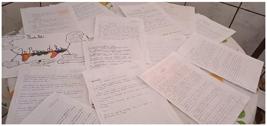
The individual writing activity was carried out by the 13 students present on the day of the activity. The session occurred during a rainy week, which left the roads some students use to reach school impassable, leading to the absence of four students. Still, the group present readily accepted the task of writing (Figure 4).
A contrast can be noted between the beginning of the research activities and the final written production. While in the first discussion circle the students’ contributions initially focused on venomous animals, already mentioned during the introduction of their chosen pseudonyms, in the final individual writing exercise, manufactured risks emerged prominently at the very beginning of their texts.
Another observation is that the mechanical risks related to machinery were identified by students as “dangerous, it can roll down from the hill and hit the houses” (Scorpion, 2023). Here, it becomes even clearer how students perceive the machines present in their environment as a source of risk.
Discussions about the risks involving venomous animals, both in dialogues and in individual writing, were consistently present in the students’ accounts. This likely occurred because venomous animals can be seen, and their damage is visible and immediate, swelling, pain, or wounds. In contrast, the risks associated with pesticides cannot be observed, since acute poisoning occurs hours or days later, while chronic intoxication is cumulative. It is also noteworthy that, in the collective conversation, visible risks (here classified as natural) emerged first, but in the written productions, risks related to pesticides (manufactured) appeared first.
The student Swallow began her text by saying, “I confess that I do not understand much,” but she nonetheless produced a detailed text, listing different categories of pesticides such as Roundup, ant poison, and other chemicals. She also precisely identified risks associated with accidents involving venomous animals: “There are risks at the moment of harvesting coffee.” Like Swallow, other girls in the class demonstrated extensive knowledge of the risks associated with coffee, contrasting with the collective production where they often preferred to simply agree with the boys’ statements.
Butterfly was the only student who proposed alternatives to the use of industrial inputs, pointing out “cow manure.” In her individual writing, she denied the need for pesticides in coffee production and affirmed that we should “use organic fertilizer” (Butterfly, 2023). The other students suggested the use of personal protective equipment (PPE) as their main response to the question of what could be done to avoid risks.
We observed here, as in other moments of the research, several confusions between different types of agrochemicals, fertilizers and pesticides. On the one hand, the lack of clarity regarding the substances used seems expected given the students’ young age. On the other hand, what stands out is the certainty about their universal use, with PPE being seen as the only necessary means of reducing risk. Thus, adaptation to risk becomes evident: instead of questioning the use of such substances or considering alternative forms of production, students recognized the importance of PPE and highlighted the lack of proper care in applying poisons/pesticides as the danger in itself. In this sense, the absence of PPE, or the use of poisonous substances, was perceived as a risk, with responsibility placed on the workers.
In this respect, we understand pesticide risks as what Beck (2010) calls “manufactured uncertainty.” These uncertainties depend on human decisions, and the use of pesticides, initially perceived as harmless when isolated, may later be considered dangerous (Beck, 2010). Thus, the likely damages resulting from pesticide use become perceived as uncertainties, as revealed by the student Bee: “Well, what I know is that pesticides like Roundup, at the time of planting, cause poisoning with the smell. I don’t know of anyone who suffered harm, the best thing to do is to use protective equipment and learn more about pesticides.”
Therefore, the participants’ belief in PPE as a way of preventing risks may create the false impression that pesticides are not dangerous. Glyphosate itself is at the center of a controversy among political, economic, legal, and scientific systems, where health risks are relativized as economic development is prioritized.
Other students stated that they did not know the damages caused by pesticides and had no knowledge of cases in which such substances harmed people. They reaffirmed, however, the dangers posed by venomous animals:
“It is very dangerous in the plantations, especially with animals, scorpions and snakes, pesticides when they are planting coffee, and during roasting there is risk, and also in harvesting. About pesticides, I don’t know what damage they cause, I don’t remember any case with people. We have to be very careful not to get bitten in the coffee fields. We need to study more about this subject.” (Dove, 2023).
“Mainly the animals that live in the fields, vine snakes. Pesticides when they are planting coffee and during roasting. I don’t know what damage pesticides cause, I don’t remember any case with people, but we have to be very careful not to get bitten, we need to study more about this subject.” (Vine Snake, 2023).
“The risks in the fields are wasps, snakes, and poisons like Roundup; the dangers are during harvesting. Roundup causes disease, poisoning. I don’t know of anyone who suffered harm, it is necessary to use protection like masks and gloves.” (Dog, 2023).
There is little knowledge about the consequences of irrational use of agrochemicals, particularly regarding health, since most students expressed that it would be important to study more about the topic, understand statistics, and learn about cases involving agrochemicals. Dove noted that he would like to learn more about risks in all coffee plantations. Asked if he knew anyone who had suffered harm, he only said “yes,” without elaboration, similar to Spider. The student Ladybug did not identify pesticides as a risk in her text and wrote that she did not know what else could be learned.
As Porto-Gonçalves (2004) stated, “it is necessary to rethink the relationship between humanity and the planet. We live in a risk society; it is a difficult path we will have to walk” (p. 18). There is no longer any nature that has not been affected in some way by human activity (Beck, 2010). In this research, it became clear that coffee production is related to multiple risk factors, as identified by students who listed and discussed threats to both human health and the environment.
As Wasp wrote: “We lack knowledge about how many people have suffered harm.” Beyond the fact that students did not identify specific victims, the public system itself lacks detailed data on pesticide-related incidents. Thus, it becomes clear that not only the participants but also the community and public authorities do not fully recognize where the risks lie, as Beck (2010) pointed out.
Dealing with alternatives to pesticide use requires farmers’ trust in something unfamiliar, which makes them vulnerable (Billaud, Porcher, & Maclouf, 2025). This likely explains why such discussions do not emerge in the daily lives of the citizen scientists in this study. Nevertheless, participation in citizen science projects can generate experiences that contribute to increased trust in alternatives that address current planetary challenges (Mourad, Hosseini, & Avery, 2020).
In the individual activities, without direct encouragement, students did not mention risks to the environment. Therefore, environmental health concerns did not appear spontaneously. Throughout the activities, students’ focus remained largely on human health, with most struggling to perceive environmental damage as a consequence of pesticide use. Still, some spontaneously recognized possible impacts on the environment from substances such as caustic soda.
The lack of clarity about the use and potential damage of pesticides such as glyphosate in coffee fields, as well as the desire to better understand these risks, points to the importance of including this subject in the basic education curriculum. It could be incorporated particularly as part of the “integrative themes” already established in the Basic Education Pedagogical Guidelines of Espírito Santo, since it engages with health and environmental issues. In this way, the present study contributes to understanding the risks associated with coffee production in Santa Luzia do Azul and may support future risk management projects.
Final Considerations
This research confirms that it is possible to identify risk factors associated with coffee cultivation from the perspective of elementary school students at Olegário Martins School, in Santa Luzia do Azul, as initially hypothesized. The study enabled students to share knowledge from their daily experiences, build new knowledge together with peers and researchers, and reflect critically on their local context.
Moreover, several students expressed a desire to better understand these risks, reinforcing their potential development as citizens capable of driving change in their communities through the reflections generated during the study. Therefore, we consider this research an example of what Mourad, Hosseini, and Avery (2020) describe as good practices in citizen science, adaptable to diverse local conditions.
The adoption of citizen science contributed to raising awareness among the students involved in this research and shows potential for sensitizing their families, local farmers’ associations, community groups, and schools about coffee production and its risks to human and environmental health, especially regarding pesticides. Thus, we affirm that scientific knowledge can also be constructed with the participation of citizen scientists.
By engaging in this study, students were able to perceive risks and knowledge gaps about the possible consequences of pesticide use in coffee production. They particularly highlighted risks associated with venomous animals such as scorpions, snakes, and insects, risks that are more tangible in their daily lives and those of their families. Pesticides, on the other hand, were only remembered later. Although students knew of their use, they did not know people directly affected. It also became evident that adaptation to risks, such as relying on PPE for pesticide application, was viewed as a solution, rather than questioning the use of such substances or proposing alternatives to conventional production.
Finally, citizen science proved to be a pathway for strengthening the connection between universities and basic education, enabling knowledge co-production and greater community engagement in this process. This research highlighted the need to integrate discussions on conventional coffee production into the school curriculum. Including this subject could foster an education that values human and ecological life, recognizes the realities of these students’ communities as learning opportunities, and contributes to the preservation of human and environmental health.
Acknowledgments
The authors would like to thank CAPES (Coordination for the Improvement of Higher Education Personnel) and Olegário Martins State School of Elementary and Secondary Education for their support.
References
- ALENDER, B. Understanding volunteer motivations to participate in citizen science projects: a deeper look at water quality monitoring. Journal of Science Communication, v. 15, n. 3, p. A04, 2016.
- BECK, U. Sociedade de risco: rumo a uma outra modernidade. Tradução de Se-bastião Nascimento. São Paulo: Editora 34, 2010. Título original: Risikogesellschaft: auf dem weg in eine andere moderne.
-
BILLAUD, O; PORCHER, E; MACLOUF, E. Experience and trust to handle uncertainty of biodiversity responses to innovative agricultural practices: Lessons from citizen science on farms. People and Nature, v. 7, n. 3, p. 611-630, 2025. Disponível em: https://besjournals.onlinelibrary.wiley.com/doi/full/10.1002/pan3.10778 Acesso em: 15 jul. 2025.
» https://besjournals.onlinelibrary.wiley.com/doi/full/10.1002/pan3.10778 -
BOHNER, T O L; ARAÚJO, L E B; NISHIJIMA, T. O impacto ambiental do uso de agrotóxicos no meio ambiente e na saúde dos trabalhadores rurais. Revista eletrônica do curso de direito da UFSM, v. 8, p. 329-341, 2013. Disponível em: https://periodicos.ufsm.br/revistadireito/article/view/8280 Acesso em: 18 fev. 2024.
» https://periodicos.ufsm.br/revistadireito/article/view/8280 - DAUFENBACK, V, ADELL, A, MUSSOI, M.R, FURTADO, A C F, SANTOS, S A D, & VEIGA, D P B D. Agrotóxicos, desfechos em saúde e agroecologia no Brasil: uma revisão de escopo. Saúde em Debate, v. 46, p. 482-500, 2022.
-
ENGELMANN, W; VON HOHENDORFF, R; LEAL, D W S. Nanotecnologias e a evolução das teorias sobre risco: atenção para o nanowaste e sua gestão adequada. Cadernos de Dereito Actual, n. 10, p. 15-19, 2018. Disponível em: https://www.cadernosdedereitoactual.es/ojs/index.php/cadernos/article/view/328 Acesso em: 4 fev, 2024.
» https://www.cadernosdedereitoactual.es/ojs/index.php/cadernos/article/view/328 -
FRAISL, Dilek et al. Citizen science in environmental and ecological sciences. Nature reviews methods primers, v. 2, n. 1, p. 64, 2022. Disponível em: https://www.nature.com/articles/s43586-022-00144-4 Acesso em: 15 jul. 2025.
» https://www.nature.com/articles/s43586-022-00144-4 -
GUIVANT, J S. A trajetória das análises de risco: da periferia ao centro da teoria social. Revista Brasileira de Informação Bibliográfica em Ciências Sociais, v. 46, n. 2, p. 16 -37, 1998. Disponível em: https://bibanpocs.emnuvens.com.br/r evista/article/view/203 Acesso em: 24 fev. 2024.
» https://bibanpocs.emnuvens.com.br/r evista/article/view/203 - GUIVANT, J S. O legado de Ulrich Beck. Ambiente & Sociedade, v. 19, p. 227-238, 2016.
-
HAKLAY, M. Citizen Science and Volunteered Geographic Information: overview and typology of participation. In: SUI, D.; ELWOOD, S.; GOODCHILD, M. Crowdsourcing Geographic Knowledge: Volunteered Geographic Information (VGI) in Theory and Practice. Berlin: Springer, p. 105-122, 2013. Disponível em: https://povesham.files.wordpress.com/201309/haklaycrowdsourcinggeographicknowledge.pdf Acesso em: 4 fev. 2024.
» https://povesham.files.wordpress.com/201309/haklaycrowdsourcinggeographicknowledge.pdf - IOC. International Coffee Organization. Coffee report and outlook. 2023. Disponível em: Coffee_Report_and_Outlook_December_2023_ICO.pdf. Acesso em: 15 jul. 2025.
-
IRWIN, A. Citizen science and public policy making: A thought experiment. In: Future Directions for Citizen Science and Public Policy. Centre for Science and Policy, 2021. p. 28-31. Disponível em: https://www.csap.cam.ac.uk/media/uploads/files/1/future-directions-for-citizen-science-and-public-policy-web-v6.pdf Acesso em: 15 jul. 2025.
» https://www.csap.cam.ac.uk/media/uploads/files/1/future-directions-for-citizen-science-and-public-policy-web-v6.pdf -
MORAIS, C. Ciência cidadã e educação CTS/CTSA: perspectivando contributos, desafios e oportunidades. Revista Iberoamericana de Ciencia, Tecnología y Sociedad, v. 17, n. 51, nov. 2022. Disponível em: https://www.redalyc.org/journal/ 924/92476009009/92476009009.pdf Acesso em: 10 mar. 2023.
» https://www.redalyc.org/journal/ 924/92476009009/92476009009.pdf -
MOURAD, K A.; HOSSEINI, S H; AVERY, H. The role of citizen science in sustainable agriculture. Sustainability, v. 12, n. 24, p. 10375, 2020. Disponível em: https://www.mdpi.com/2071-1050/12/24/10375 Acesso em: 15 jul. 2025.
» https://www.mdpi.com/2071-1050/12/24/10375 - OOSTERBEEK, L. Princípios de Gestão Integrada do Território. In SCHEUNEMANN, I; OOSTERBEEK, L. Gestão Integrada do Território: economia, sociedade, ambiente e cultura. Rio de Janeiro: IBIO, 2012.
- POL, J J; HUPFFER, H M; FIGUEIREDO, J A S. Os riscos do agrotóxico glifosato: controvérsia científica ou negação do dano à saúde humana. Revista Opinião Jurídica (Fortaleza), v. 19, n. 32, p. 267-295, 2021.
- PORTO-GONÇALVES, C W. O desafio ambiental. Rio de Janeiro: Record, 2004.
- ROHRMANN, B; RENN, O . Risk Perception Research. In: RENN, O., ROHRMANN, B. (Eds.) Technology, Risk, and Society. Springer, Boston, MA, v. 13, 2000, p. 16-18.
-
SANTOS, G M A D A. Espacialização do risco de lixiviação de agrotóxicos em áreas de cafeicultura no estado do Espírito Santo. 2017. 119 fls. Tese (Doutorado em Agroquímica), Universidade Federal de Viçosa, MG, 2017. Disponível em: https://www.locus.ufv.br/bitstream/123456789/13333/1 /texto%20completo.pdf Acesso em: 12 fev. 2024.
» https://www.locus.ufv.br/bitstream/123456789/13333/1 /texto%20completo.pdf -
SANTOS, A V; NUNES, A L B P; NUNES, D C O S . Epidemiologia dos acidentes causados por animais peçonhentos no município de Patrocínio (MG), Brasil (2015-2017). Hygeia: Revista Brasileira de Geografia Médica e da Saúde, v. 14, n. 30, p. 82, 2018. Disponível em: https://seer.ufu.br/index.php/hygeia/article/view/44239 Acesso em: 4 fev. 2024.
» https://seer.ufu.br/index.php/hygeia/article/view/44239 -
SOUSA A C M; OLIVEIRA, D C; PADILHA, A S; NACHTIGALL, G R; TATAGIBA, S D; HACKBARTH, C. Acidentes de trabalho envolvendo máquinas agrícolas no Brasil: estado da arte sobre as principais causas dos sinistros e as ações que visam a prevenção. Brazilian Applied Science Review, v.6, n. 3, 1224-1233, 2022. Disponível em: https://ojs.brazilianjournals.com.br/ojs/index.php /BASR/article/view/49097 Acesso em: 6 mar. 2024.
» https://ojs.brazilianjournals.com.br/ojs/index.php /BASR/article/view/49097
-
1
- https://www.camara.leg.br/noticias/89819-intoxicacao-de-trabalhador-rural-preocupa-oms
-
2
- https://docs.bvsalud.org/biblioref/2019/10/728138/196956-man-vigilancia-livro2.pdf
-
3
- Adotamos a mesma grafia usada pelos estudantes para o herbicida Roundup, vendido pela Monsanto em 1974, o qual tem glifosato como principal ingrediente ativo. Mantivemos a grafia adotada por eles mesmo quando nos referimos às falas.
-
Data Availability Statement:
The research data are presented in the main body of the document.
The research data are presented in the main body of the document.

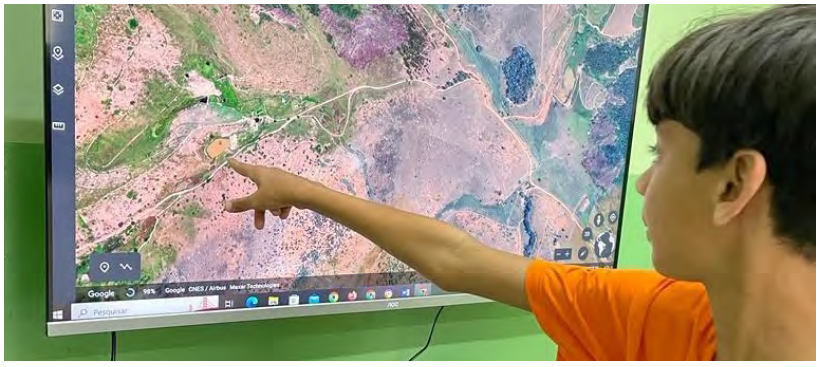 The authors, 2023.
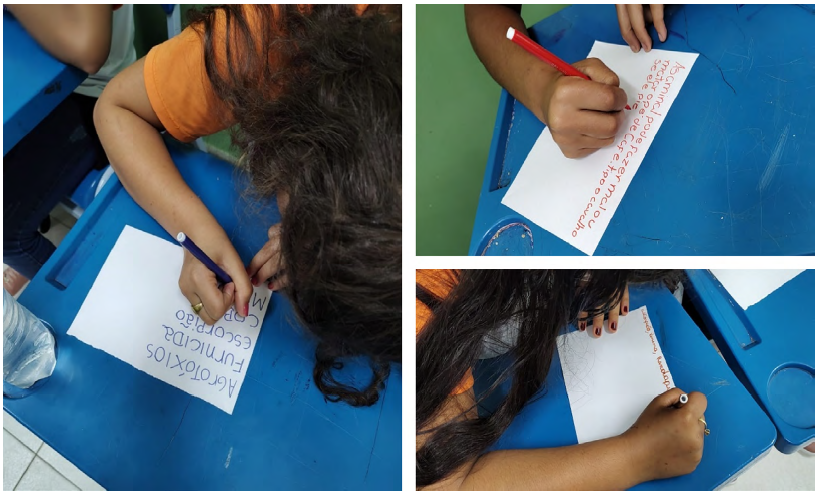 The authors, 2023.
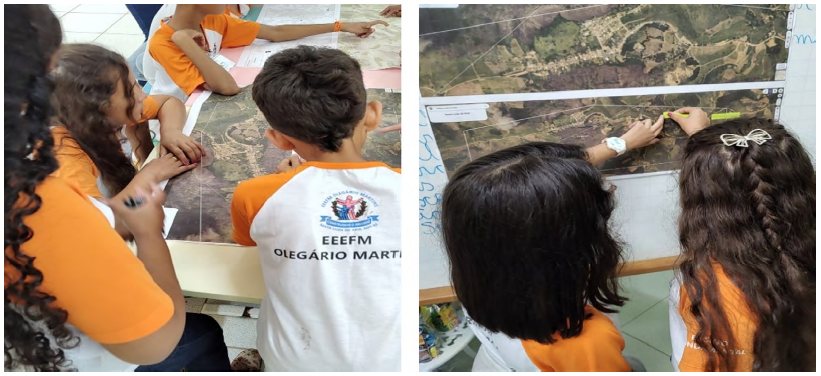 The authors, 2023.
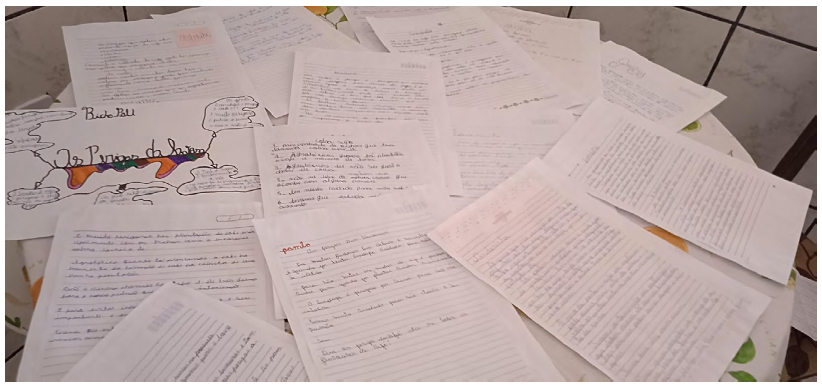 The authors, 2023.