
 (Re)constructing socio-ecological resilience from school education: a proposal for an indicator system
Abstract
This article presents a proposal for an indicators system to verify the perception of the school community of rural education institutions regarding the role of school practices in the development of knowledge and skills that help strengthen the socio-ecological resilience of rural communities. The research was developed in partnership with a school located in the Mato Grosso Amazon. The indicators were defined based on bibliographical research and joint work with the school, with workshops and questionnaire administration. Four dimensions and fourteen indicators were defined, which were validated by the 3S method and applied to the school community. The analysis of the results and the evaluation of the usefulness of the indicators were carried out with students and the pedagogical team. The indicator system was considered appropriate for evaluating and improving school practices and can be applied in other schools, considering the need for eventual adaptations to local specificities.
Keywords:
Socio-ecological systems; Rural education; Teaching-learning; Pedagogical practice; Environmental governance
Resumo
Este artigo apresenta uma proposta de sistema de indicadores de verificação da percepção da comunidade escolar de instituições de educação do campo quanto ao papel das práticas escolares no desenvolvimento de conhecimentos e habilidades que ajudem a fortalecer a resiliência socioecológica de comunidades rurais. A pesquisa foi desenvolvida em parceria com uma escola localizada na Amazônia Mato-grossense. Os indicadores foram definidos a partir de pesquisa bibliográfica e trabalho conjunto com a escola, com realização de oficinas e aplicação de questionário. Foram definidos quatro dimensões e catorze indicadores, os quais foram validados pelo método 3S e aplicados na comunidade escolar. A análise dos resultados e a avaliação da utilidade dos indicadores foram feitas com estudantes e equipe pedagógica. O sistema de indicadores foi considerado apropriado para avaliação e aprimoramento das práticas escolares e pode ser aplicado em outras escolas, levando-se em consideração a necessidade de eventuais adaptações a especificidades locais.
Palavras-chave:
Sistemas socioecológicos; Educação do campo; Ensino-aprendizagem; Práticas pedagógicas; Governança ambiental
Resumen
Este artículo presenta una propuesta de sistema de indicadores para verificar la percepción de comunidades escolares de instituciones de educación del campo sobre el papel de las prácticas escolares en conocimientos y habilidades que ayuden a fortalecer la resiliencia socioecológica de comunidades rurales. La investigación fue desarrollada con una escuela ubicada en la Amazonia de Mato Grosso. Los indicadores se definieron a partir de investigación bibliográfica y trabajo conjunto con la escuela, con talleres y aplicación de cuestionario. Se definieron cuatro dimensiones y catorce indicadores, los cuales fueron validados por el método 3S y aplicados en la comunidad escolar. El análisis de los resultados y de la utilidad de los indicadores se realizó con los estudiantes y el equipo pedagógico. El sistema de indicadores fue considerado apropiado para evaluar y mejorar las prácticas escolares y puede ser aplicado en otras escuelas, teniendo en cuenta eventuales adaptaciones a las especificidades locales.
Palabras-clave:
Sistemas socioecológicos; Educación del campo; Enseñanza-aprendizaje; Práctica pedagógica; Gobernanza ambiental
Introduction
The Amazon illustrates the complexity surrounding socio-ecological systems. There, multiple groups (such as indigenous people, conservationists, miners, loggers, farmers, and ranchers) interact with different goals and conflicting interests-such as environmental conservation, cultural maintenance, agricultural production, equity, profit, among others. Additionally, biophysical factors affect and are affected by anthropogenic activities, and other aspects such as culture, power relations, and public police implementation influence their dynamics (BUSCHBACHER, 2014).
In the face of so many challenges and pressures, communities need to learn to cope with disturbances and uncertainties. Establishing sustainable relations with the environment, adaptation and recognizing unpredictability are aspects that confer resilience to such systems (HOLLING; GUNDERSON, 2002). Resilience indicates the system’s ability to change and adapt continuously, to absorb disturbances and reorganize itself to develop within its domain of stability (FOLKE et al., 2010; LÖF, 2011).
Regarding community self-organization mechanisms to solve local collective problems in socio-ecological systems and other aspects that promote resilient socio-ecological landscapes, scientific literature (FABRICIUS et al., 2021; LEE; MARQUES; ESTEVÃO, 2021; MARTIN et al., 2023; SANDOVAL-DIAZ; MUÑOZ; MARTÍNEZ, 2023) highlights properties such as: diversity maintenance and systemic approach to landscape management; promoting rights and equitable access to land and resources; adapting local and regional social needs to biophysical contexts; opportunities for income generation; human and social capital; community environmental monitoring for managing common goods and ensuring the rights of traditional peoples and communities; partnerships with external actors; maturity of institutions focusing on participation, trust and transparency; existence of spaces that favor social interaction; agency oriented towards collective mobilization and problem solving; knowledge, perception and communication of risks; social learning and the ability or willingness to find opportunities in crisis.
The literature also points out impact indicators that help assess the resilience of socio-ecological systems in an agricultural production context. Such indicators highlight, above all, the following aspects (BERGAMINI et al., 2013; FABRICIUS et al., 2021; PANPAKDEE; LIMNIRANKUL, 2018; UNU-IAS et al., 2014):
-
Ecosystem integrity: diversity of species and ecosystem services, maintenance of ecological interactions, soil quality, components, and landscape heterogeneity, with low environmental degradation;
-
Adaptive capacity: social and ecological elements of the landscape can adapt and recover quickly after disturbances;
-
Human well-being: landscape provides livelihoods, well-being, food security and equitable access to resources;
-
Sustainable production: conservation of agricultural biodiversity, with a diversity of cultivated species and the local food system;
-
Effective governance: effectiveness in achieving equitable access to and sustainable management of common resources.
Accumulating experiences with reflective processes contributes to improve skills and to long-term behavioral changes. This can be fostered by learning processes whose approaches associate various types of knowledge, practices, reflections and teamwork. Social learning, for example, has potential application for this purpose with participatory and collective approaches that emphasize social contexts, critical reflection, adaptive capacity, pluralism, knowledge exchange, cooperation, and developing trust (in oneself and in others) (FOLKE et al., 2005; KRASNY; ROTH, 2011; MENDOZA, 2016; PELLING et al., 2015). Social learning can contribute to the socio-ecological resilience of communities through experiences that foster the improvement and optimization of established processes, the recognition of the challenges and crises faced by the system-as well as the need for more significant changes, new perspectives and solutions-and a deeper transformation by paradigm shift (KRAKER, 2017).
Formal education institutions configure powerful learning spaces for the socio-ecological resilience of communities, capable of encouraging research and reflective actions based on the experimentation of different arrangements that connect such spaces to different territories. Schools can, for example, conduct practices that have heterogeneous environments as a scenario, with their issues and obstacles, enabling students to improve ecosystem functions and services, collaborate for landscape diversification, learn to distinguish the limitations and potentialities from a resilience perspective and thus respond to the problems encountered by the socio-ecological system (KRASNY; ROTH, 2011; MERÇON, 2016).
Additionally, school education allows to integrate individual development with collective thinking through participatory, integrative, with joint reflection and knowledge construction experiences to foster a greater bond between students and their communities as well as with local environmental issues. Such an education contributes to the socio-ecological system’s adaptive capacity, improves its environmental quality, strengthens social ties and ecological, cultural, and social appreciation, and stimulates student engagement in community self-organization and environmental governance (KRASNY; ROTH, 2011; MERÇON, 2016).
Considering this, a doctoral research was conducted with an Amazonian rural school with the primary objective of understanding the role of its practices in the socio-ecological resilience of communities, and the participatory process for defining, validating, administering, and analyzing indicators established for this purpose. Thus, this article presents a proposal for an indicator system to verify the perception of rural school communities regarding the role of their practices in developing knowledge and skills that help strengthen the socio-ecological resilience of rural communities.
Methodological strategies
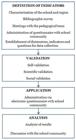
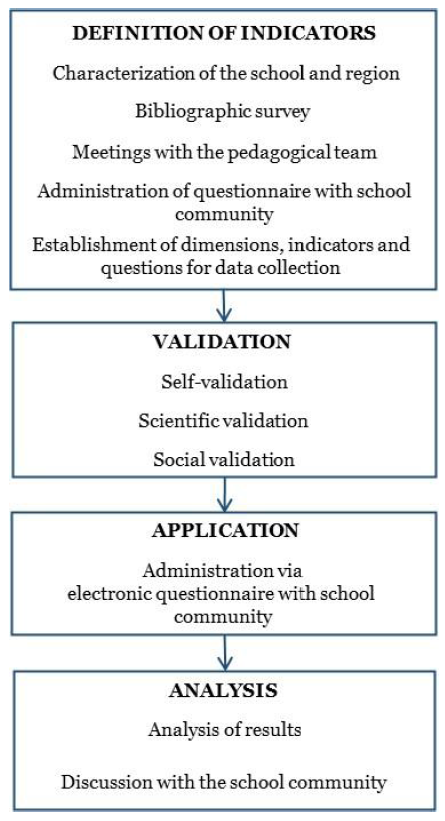
Proposing an indicator system is a complex process that requires combining instruments and ethical-methodological care. Following approval of the research ethics committee (CAAE 27210819.0.0000.5504), this study conducted an intervention research to investigate with the partner institution (OLIVEIRA; FIGUEIREDO; VALDANHA NETO, 2023). Figure 1 summarizes the methodological process.
Defining the indicator system
The indicators aim to verify the perception of the school community regarding the role played by its practices in developing knowledge and skills that help strengthen the socio-ecological resilience of rural communities. In this manner, the indicators can be employed to visualize the impacts of such practices on students’ lives and their communities, identify strengths and weaknesses, and formulate strategies for improvement.
Establishing the indicator system adopted three assumptions: that they be defined and discussed in a joint and participatory manner with the future users so that they make sense and are useful to the beneficiaries; had a theoretical and methodological foundation; and adopt a conception of ‘school practice’ not reduced to activities, but that encompasses individuals’ daily life and subjectivity (HOLLIDAY, 2006; LUZZI, 2012).
As such, developing the investigation needed to involve a partnership with a school aligned with such assumptions, one that implemented practices related to the socio-ecological resilience learning of rural communities and was interested in participating in the research and in using its results. The participating institution was EE Terra Nova (Terra Nova State School), a rural high school integrated with vocational and technical education in agroecology that adopts the Alternating Cycle Pedagogy as a work proposal.
EE Terra Nova is located in the municipality of Terra Nova do Norte, Portal da Amazônia Territory, northern Mato Grosso (MT). It serves almost 300 students from 18 municipalities in Mato Grosso and three municipalities in Pará. The school proposes to foster the integral education of youth by promoting sustainable and solidary local development and sustainable agriculture that recognizes the importance and encourages the protection of ecosystems (EE TERRA NOVA, 2019).
To strengthen ties and formalize the dialogue process and school participation in the research, the partnership was institutionalized by offering an outreach project with certification with the university. The project “School practices and socio-ecological resilience of rural communities: Continuing education course for education professionals from rural schools” was offered by the Department of Environmental Sciences of the Federal University of São Carlos (DCAm/CCBS/UFSCar) and approved by the Dean of Outreach Activities.
It was held from October 2020 to December 2021 with a workload of 45 hours, completed between synchronous meetings and complementary activities. A total of 15 school professionals attended the meetings: the pedagogical coordinator, the school principal, eleven teachers from different knowledge areas (natural sciences, agricultural sciences, human sciences, mathematics and languages) and two zootechnicians.
The approach adopted involved expository-dialogued meetings, reflective group discussions, and practical activities. A two-block structure subsidized the conceptual alignment of the group, especially regarding the notions of socio-ecological resilience, social learning and indicators. Dialogical meetings jointly reflected on the concepts introduced and their relationship with the school practices. Such moments of discussion also surveyed information that provided subsidies for defining the indicators.
For the indicator system to have a theoretical basis, we conducted a bibliographic literature survey on related topics such as socio-ecological resilience, social learning, education focused on socio-ecological resilience, and the relation between learning and the adaptive cycle theory. Studies that proposed indicators related to these themes were also used for a pre-selection of indicators close to the proposed system’s objective.
The work with the school involved gathering information about the territory, the political-pedagogical project, and school practices, conducting conceptual alignment workshops with the pedagogical team, and administering a questionnaire to the school community about their living locations, school practices, and its relationship with socio-ecological resilience, which was answered by 19 individuals (two technicians, five teachers, one pedagogical coordinator, ten students and one former student). Both the workshops and the questionnaire prioritized proposing open questions to allow more freedom for the participants to give their contributions.
The workshops also enabled alignment with the pedagogical team’s expectations regarding the use of indicators and data collection strategies. Participants suggested preparing an online form, preferably with short, objective and multiple-choice questions specific to each of the four established groups-students, former students, school staff and family members.
Data collected in the workshops and with the questionnaire were analyzed by selecting excerpts that could contribute to proposing indicators. These excerpts were coded with keywords related to their central content and grouped into categories of similar themes. This procedure was based on discursive textual analysis (MORAES, 2003) and provided support for the definition of the indicators and the questions for data collection. From this, and together with the bibliographical analysis, we proposed a system composed of four dimensions and fourteen indicators.
Validating the proposed instrument
Validation is an essential process in proposing indicators to evaluate their performance regarding conceptual coherence (relation between the measuring instrument and the measured object), operational coherence (correct definition of procedures), and usefulness (applicability in evaluation studies) (CLOQUELL-BALLESTER et al., 2006).
System validation was conducted using the 3S methodology (CLOQUELL-BALLESTER et al., 2006) which verifies indicator adequacy in three complementary stages that increase indicator credibility: sui validatio (self-validation, done with the proposing team), scienciatis validatio (scientific validation, conducted with experts), and societatis validatio (social validation, conducted by users). Self-validation was performed with three research team members. After the necessary adjustments, scientific validation was conducted with eight experts in the topics related to the indicators. Finally, social validation was performed with the participation of 11 members of the school’s pedagogical team.
Validation requires the establishment of criteria and scales. Criteria refer to the requirements for validating the indicator as an evaluation tool according to the analysis context and objective. Scales, in turn, are used to assign values which require establishing minimum acceptable standards to validate the indicator (HANAI; ESPÍNDOLA, 2012). Based on parameters found in the literature and considering the context and use of the proposed system, we adopted the following criteria to validate the indicators:
-
Basis: Conceptual foundation and scientific validity;
-
Comprehension: Straightforward, there is no ambiguity;
-
Reliability: Dependable, representative, and meaningful data sources;
-
Feasibility and applicability: Data to be collected are available, simple to obtain and low cost, easy to be measured and analyzed. The indicator is applicable and practical in the context of use;
-
Usefulness and relevance: It contributes to decision-making, is interesting and useful for the parties involved in the analyzed context;
-
Sensitivity and temporality: Sensitive to changes in the environment and able to compare variations over time;
-
Pertinence: It helps to respond to the research objective.
For each indicator, we assigned one value per criterion on a Likert-type scale, with values ranging from 0 (indicator does not include the criterion) to 3 (indicator fully includes the criterion), thus avoiding a mean, neutral, or ambiguous score by adopting a four-point scale (LYNN, 1986).
The weighting of the scores was performed following Polit and Beck (2006). For each criterion scored 2 or 3, a new value of 1 was assigned. For criteria that received a score of 0 or 1, a new value of 0 was assigned. Next, we calculated the simple mean of the values received in each criterion to determine their Content Validity Index (CVI), which refers to the degree of agreement between participants. Finally, the final score of each indicator was weighted by the average CVI of its criteria.
Criteria and indicators were classified as validated when achieving a CVI of 0.8 (80%) - with five or more evaluators - or 1.0 (100%) - with fewer than five evaluators - as suggested by Lynn (1986) and endorsed by Polit and Beck (2006).
This process was performed for each criterion to identify aspects of the indicator that could be improved or reasons for its exclusion. Additionally, it helps to check for possible inconsistencies in the indicator (CLOQUELL-BALLESTER et al., 2006).
Application and analysis of the indicator system as a management tool
The indicators were administered via an online questionnaire, individually and anonymously, so that participants could feel comfortable responding sincerely. A total of 80 students, four former students, five family members and 10 school staff members participated in this stage.
Despite the low number of responses from former students and family members, the collected data were analyzed and discussed as a preliminary survey of these groups’ understanding of the role played by school practices in the socio-ecological resilience of the communities. However, such data were not qualified as representative.
Gallopín (1996) emphasizes the responsibility of the scientific community that produces indicators to explain them in meaningful and usable ways for users. According to the author, “the responsibility of the scientific community does not end with the production of indicators, but it includes helping to convey the implications, weakness and appropriate uses of the indicators generated to the users of indicators” (GALLOPÍN, 1996, p. 115). Additionally, intersubjectivity, that is, peer evaluation and the recognition of those involved in relation to the content and legitimacy of the results, offers greater credibility to the data collected (MINAYO, 2009).
In line with Gallopín (1996) and Minayo (2009), an evaluation of the collected data and a discussion about the potential adoption of the indicators as a school management tool were conducted together with students and the pedagogical team.
Indicator system for evaluating performance and impact of school practices on socio-ecological resilience learning of rural communities
The proposed system contains fourteen indicators organized into four dimensions, which are presented below with their respective objectives. The questions developed for data collection are presented in Oliveira (2023), along with the results of the application conducted at the participating school.
Dimension 1: Landscape diversity and ecosystem protection
This dimension aims to understand whether school practices encourage ecosystem protection and landscape diversification. Such characteristics are paramount in resilient socio-ecological systems, as by offering alternatives to deal with change, they help the system to sustain its identity, functions, and structures after disturbances (BERGAMINI et al., 2013; PANPAKDEE; LIMNIRANKUL, 2018). Chart 1 presents the dimension indicators.
Dimension 2: Agricultural production
Fostering agricultural biodiversity helps ensure food diversity in case of extreme events and increases opportunities for product marketing, supplying the local economy. Additionally, agricultural biodiversity fosters experimentation, reorganization, and innovation in communities, collaborates with their autonomy, and strengthens food security and sovereignty (FOLKE et al., 2005; PANPAKDEE; LIMNIRANKUL, 2018; UNU-IAS et al., 2014). This dimension therefore aims to apprehend whether school practices affect the community agricultural production to strengthen their socio-ecological resilience. Chart 2 presents the dimension indicators.
Dimension 3: Knowledge, learning and innovation
Knowledge, learning, and innovation are resources for developing socio-ecological resilience. Learning about the ecological and social relations that make up a system contributes to its self-organization, adaptation, and transformation in the face of disturbances. Learning to live with changes and deal with unforeseen events and uncertainties requires skills such as openness to the new, flexibility, a continuous effort to acquire knowledge, and enthusiasm to experiment with interventions to address the situation (MERÇON, 2016; PANPAKDEE; LIMNIRANKUL, 2018; UNU-IAS et al., 2014).
This dimension seeks to understand the effect of school practices on (self-)learning, on knowledge construction and exchange, on innovation, and on knowing how to cope with changes and uncertainties. Chart 3 presents the dimension indicators.
Dimension 4: Self-organization, governance, social equity and community well-being
The dimension aims to ascertain whether and how school practices influence self-organization, governance, social equity and community well-being.
The availability of efficient and functional infrastructure and assurance of social equity are essential to meet the needs and desires of communities and, thus, for their resilience. Inequality and marginalization of certain groups and their knowledge and skills can hinder their ability to collaborate with community strengthening (UNU-IAS et al., 2014).
A community’s capacity for self-organization to find solutions to address challenges, improve social relations, and consolidate connections is also relevant to socio-ecological resilience. Finally, community well-being and biodiversity conservation can be improved with the inclusive, diverse, and horizontal engagement of its members in territorial governance, decision-making spaces, and the development of public policies (BURGOS; MERTENS, 2022; KRASNY; ROTH, 2011; MENDOZA, 2016; MERÇON, 2016; PANPAKDEE; LIMNIRANKUL, 2018; UNU-IAS et al., 2014). Chart 4 presents the dimension indicators.
Mapping school practices
To complement the data collection and provide greater support for the analysis of the school’s role in socio-ecological resilience learning, a mapping of school practices can be performed by the institution. Such mapping indicates which school practices most contribute to educating students for this purpose and what can be improved, as well as identifies possibilities for adopting new practices. The following are fields and examples of school practices:
-
Curricular content of knowledge areas: Human sciences, Languages, Natural sciences, Mathematics, Agricultural sciences.
-
Teaching-learning activities: theoretical classes, field visits, self-learning at school and in the community, group work, theoretical-practical works.
-
Assessment tools: activity portfolio, field notebook, final course paper.
-
Night activities: planning of work groups, workshops, culture, reflection.
-
School self-management: working groups, accommodation, decision-making spaces regarding school issues, rules of coexistence, moments of study by the pedagogical team.
-
Extracurricular content and activities: collective efforts, community activities, articulation with local farmers, activities for students and community members on disturbances and how to deal with them.
These fields and school practices speak to the participating school’s reality of rural education and Alternating Cycle Pedagogy. Other schools should make adaptations so that data collection is consistent with institutional specificities.
Analysis of the indicator system as a management tool
Analysis with students
The activity with students for joint analysis and discussion on the results of the indicator system application, as well as gathering suggestions for improving the results, was valuable for evaluating the proposal regarding its objectives, usefulness and operationalization. The students approved the activity and recommended its future repetition.
At first, the objective of applying the indicators was obscure for some students, but the joint analysis and discussion allowed them to recognize its importance. Additionally, the process of answering the indicators and analyzing their results provided a change in perspective regarding their own attitudes and what they can improve at school, in their family and the community.
Analysis with pedagogical team
According to members of the pedagogical team, the participation of former students and family members in the application of the indicators system could have been higher if the instrument had fewer questions and if the school’s efforts to reach these groups had been greater. Additionally, the team noted that the results were affected by the period of social distancing due to the COVID-19 pandemic, and thus the data collected reflected the perception of the school community, especially students and family members, within this context.
Despite these setbacks, the team evaluated that the indicators’ results help to visualize how the community is responding to the schoolwork and where the gaps are, as well as to create improvement strategies. For a more reliable result, the team considered it advisable to repeat the instrument application with greater adherence from the school community, thus achieving better mapping of the effects of the proposed school practices.
Considerations for using the indicator system
We believe the proposed system is replicable and that other educational institutions can benefit from its use as a management tool. However, we emphasize the importance of making the necessary adaptations considering the particularities of each location.
For the results to be dependable, the educational institution must mobilize to obtain a representative number of responses from the four application groups. In case of low adherence, it is advisable to identify the reasons - such as poor understanding of the indicator objective, lack of motivation, the number of questions, or low school engagement, among other possibilities - and develop procedures to mitigate these risks.
Joint analysis of the results involving the school team and students and, if possible, family members and former students, represents a data triangulation procedure that can provide a complementary evaluation of the results and a more in-depth diagnosis, thereby giving greater consistency and reliability to the conclusions regarding the data collected.
Indicator results can point out weaknesses and strengths of the school regarding the socio-ecological resilience learning of rural communities and direct the desired change, as well as identify strategies to achieve it. Proposal for improvements can also be enriched if done collectively by the school community. The recommendations can then be used to establish an action plan to improve the practices conducted.
Finally, periodic instrument application is relevant for monitoring the results of school practices in socio-ecological resilience learning over the years and eventual updating of the action plan to fill gaps and enhance strengths.
Final considerations
The article presented a proposal for an indicators system to verify the perception of the school community in rural schools regarding the role of their practices in developing knowledge and skills that help strengthen the socio-ecological resilience of rural communities. A bibliographic search, together with a participatory process with the EE Terra Nova (MT) rural school, defined indicators with theoretical foundation and meaning for its users.
The indicators system encompasses different aspects related to learning for socio-ecological resilience. Validation by experts and research participants has shown it to be a potentially useful database instrument for reflecting on and discussing school practices.
Although indicators, like any instrument, can reflect reality incompletely, they help visualize a given context, reduce uncertainties, and provide significant information that aids decision-making processes (HANAI; ESPÍNDOLA, 2012; MINAYO, 2009).
Effectively measuring skill acquisition, genuine understanding of content and its practical application, and behavioral changes is a difficult and complex procedure. However, this can be facilitated by listening to evaluations from a group of people regarding a topic related to a collective of voices (PELLING et al., 2015). In this study, this was provided through the joint result analysis of the indicators with school members.
These indicators do not propose to concretely measure behavioral changes, but to assist school management with a data survey that maps their efforts to promote socio-ecological resilience learning and the school community’s perspective regarding the results of these actions.
We believe that the indicators can be applied in other school spaces, with attention to possible adaptations if necessary. Additionally, articulation is of paramount importance to obtain significant responses rates from the four groups from which this indicators system collects information (students, former students, family members, and school staff) and, thus, a representative view of the results.
By adopting this system, educational institutions in the Amazon can foster socio-ecological resilience learning which is fundamental for territory regeneration. Moreover, large-scale application can provide subsidies to help elaborate public policies aimed at strengthening its most varied communities.
The indicators system is available to all who want to apply or adapt the instrument. Data collection questions and the results from its application at the participating school are presented in Oliveira (2023).
Acknowledgements
To the Coordenação de Aperfeiçoamento de Pessoal de Nível Superior - Brazil (CAPES) for the financial support to carry out this study - Financing Code 001. To the Pró-Reitoria de Extensão da UFSCar for the support through offering the extension project that was part of this research. To Escola Estadual Terra Nova for the support and joint construction of several of the actions that culminated in this production. The authors thank Espaço da Escrita - Pró-Reitoria de Pesquisa - UNICAMP - for the language services provided.
References
- BERGAMINI, N.; BLASIAK, R.; EYZAGUIRRE, P.; ICHIKAWA, K.; MIJATOVIC, D.; NAKAO, F.; SUBRAMANIAN, S. M. UNU-IAS Policy Report: Indicators of Resilience in Socio-ecological Production Landscapes (SEPLs). Yokohama: United Nations University Institute of Advanced Studies (UNU-IAS). 2013.
- BURGOS, A.; MERTENS, F. Redes de governança colaborativa: explorando o sucesso da governança na conservação em larga escala. Ambiente & Sociedade, v. 25, 2022.
- BUSCHBACHER, R. A teoria da resiliência e os sistemas socioecológicos: como se preparar para um futuro imprevisível? Boletim Regional, Urbano e Ambiental, n. 9, p. 11-14, jan.-jun. 2014.
- CLOQUELL-BALLESTER, V. A.; CLOQUELL-BALLESTER, V. A.; DIAZ, R. M.; SIURANA, M. C. S. Indicators validation for the improvement of environmental and social impact quantitative assessment. Environmental Impact Assessment Review, 26, p.79-105, 2006.
- EE TERRA NOVA. Projeto Político Pedagógico - Curso Técnico em Agroecologia. Terra Nova do Norte. SEDUC Secretaria de Estado de Educação. Mato Grosso. 2019.
- FABRICIUS, C.; NOVELLIE, P.; RINGLER, C.; UHLENBROOK, S.; WRIGHT, D. Resilience in agro-ecological landscapes: process principles and outcome indicators. Colombo, Sri Lanka: International Water Management Institute (IWMI), CGIAR Research Program on Water, Land and Ecosystems (WLE), 2021.
- FOLKE, C.; HAHN, T.; OLSSON, P.; NORBERG, J. Adaptive governance of social- ecological systems. Annual Review of Environment and Resources, v. 30, p. 441-73, 2005.
- FOLKE, C.; CARPENTER, S. R.; WALKER, B.; SCHEFFER, M.; CHAPIN, T.; ROCKSTRÖM, J. Resilience thinking: integrating resilience, adaptability and transformability. Ecology and Society, v. 15, n. 4, art. 20. 2010.
- GALLOPÍN, G. C. Environmental and sustainability indicators and the concept of situational indicators. A systems approach. Environmental Modeling and Assessment, 1, p. 101-117, 1996.
- HANAI, F. Y.; ESPÍNDOLA, E. L. G. Indicadores de sustentabilidade para desenvolvimento turístico. In: PHILIPPI JR., A.; MALHEIROS, T. F. (ed.) Indicadores de sustentabilidade e gestão ambiental. Barueri: Manole, 2012.
- HOLLIDAY, O. J. Para sistematizar experiências. 2. ed. revista. Tradução: Maria Viviana V. Resende. Brasília: MMA, 2006.
- HOLLING, C. S.; GUNDERSON, L. H. Resilience and adaptive cycles. In: GUNDERSON, L. H.; HOLLING, C.S. (ed.). Panarchy: understanding transformations in human and natural systems. Washington: Island Press, 2002.
- KRAKER, J. Social learning for resilience in social-ecological systems. Current Opinion in Environmental Sustainability, v. 28, p.100-107, 2017.
- KRASNY, M. E.; ROTH, W. Environmental education for social-ecological system resilience: a perspective from activity theory. In. KRASNY, M. E.; LUNDHOLM, C.; PLUMMER, R. Resilience in social-ecological systems: the role of learning and education. New York: Routledge, 2011.
- LÖF, A. Exploring adaptability through learning layers and learning loops. In: KRASNY, M. E.; LUNDHOLM, C.; PLUMMER, R. (ed.). Resilience in social-ecological systems: the role of learning and education. New York: Routledge, 2011.
- LOPES, M.; MARQUES, P. H. D.; ESTEVÃO, P. C. DE M. Monitoramento Ambiental Comunitário: a gestão dos bens comuns na Reserva Extrativista de Cassurubá. Ambiente & Sociedade, v. 24, p. e01532, 2021.
- LUZZI, D. Meio ambiente & escola. São Paulo: Editora Senac São Paulo, 2012.
- LYNN, M. R. Determination and quantification of content validity. Nursing Research, v. 35, p. 382-385, 1986.
- MENDONZA, M. M. The case of youth community-based organisations in informal settlements of freetown, Sierra Leone. Dissertação (MSc Environment and Sustainable Development) - University College London, Londres, 2016.
- MERÇON, J. Construyendo nuevos posibles a partir de la articulación entre resiliencia, aprendizaje social y sistema escolar. Educação, v. 39, n. 1, p. 105-112, jan./abr. 2016.
- MINAYO, M. C. S. Construção de indicadores qualitativos para avaliação de mudanças. Revista Brasileira de Educação Médica, v. 33, suppl. 1, p. 83-91, 2009.
- MORAES, A. R.; FARINACI, J. S.; PRADO, D. S.; ARAUJO, L. G.; DIAS, A. C. E.; UMMUS, R. E.; SEIXAS, C. S. What comes after crises? Key elements and insights into feedback amplifying community self-organization. Ecology and Society v. 28, 1, 2023.
- MORAES, R. Uma tempestade de luz: a compreensão possibilitada pela análise textual discursiva. Ciência & Educação, v. 9, n. 2, p. 191-211, 2003.
- OLIVEIRA, M. P. P. Aprendizagem para resiliência socioecológica de comunidades rurais: sistema de indicadores a partir de uma escola do campo. 2023. Tese (Doutorado em Ciências Ambientais) - Universidade Federal de São Carlos, São Carlos, 2022.
- OLIVEIRA, M. P. P.; FIGUEIREDO, R. A.; VALDANHA NETO, D. Pesquisar COM como potência de aprendizagem social: uma experiência nas ciências ambientais junto a uma escola do campo. Revista Eletrônica Mutações, Universidade Federal do Amazonas (UFAM), v. 16, n. 26, p. 35-49, 2023.
- PANPAKDEE, C.; LIMNIRANKUL, B. Indicators for assessing social-ecological resilience: A case study of organic rice production in northern Thailand. Kasetsart Journal of Social Sciences, v.39, p. 414-421, 2018.
- PELLING, M.; SHARPE, J.; PEARSON, L.; ABELING, T.; SWARTLING, Å. G.; FORRESTER, J.; DEEMING, H. Social Learning and Resilience Building in the emBRACE framework. Relatório. CRED, Louvaina, Bruxelas. 2015.
- POLIT, D. F.; BECK, C. T. The Content Validity Index: Are you sure you know what’s being reported? Critique and recommendations. Research in nursing & health, 29, p. 489-497, 2006.
- SANDOVAL-DIAZ, J.; MUÑOZ, M. N.; MARTINEZ, D. C. Revisión sistemática sobre la capacidad de adaptación y resiliencia comunitaria ante desastres socionaturales en América Latina y el Caribe. Revista de Estudios Latinoamericanos sobre Reducción del Riesgo de Desastres REDER, v. 7, n. 2, p. 187-203, 2023.
- UNU-IAS; BIOVERSITY INTERNATIONAL; IGES; UNDP. Toolkit for the Indicators of Resilience in Socio-ecological Production Landscapes and Seascapes (SEPLS). 2014.

 Font: the authors, 2024.