
 Indicators for solid waste management in small municipalities from a circular economy perspective
The circular economy emerges as a strategic alternative for managing municipal solid waste (MSW) in municipalities with populations under 20,000, incorporating waste reduction, reuse, and recycling practices. This study proposes an evaluation model for MSW public policies, composed of 53 indicators developed and validated using the Delphi method, adapted to the specific needs of small Brazilian municipalities. The indicators are organized into analytical dimensions that cover aspects from waste generation and disposal to the integration of circular practices in municipal planning. Applying the model allowed an assessment of local practices’ alignment with circular economy principles, identifying both ongoing initiatives and gaps requiring improvement. The resulting indicator model serves as a tool to support public managers in formulating and enhancing MSW policies, tailored to the contexts and limitations of small communities.
Keywords:
Circular Economy; Waste Management; Indicators; Public Policies; Small Municipalities
 Thumbnail
 Thumbnail
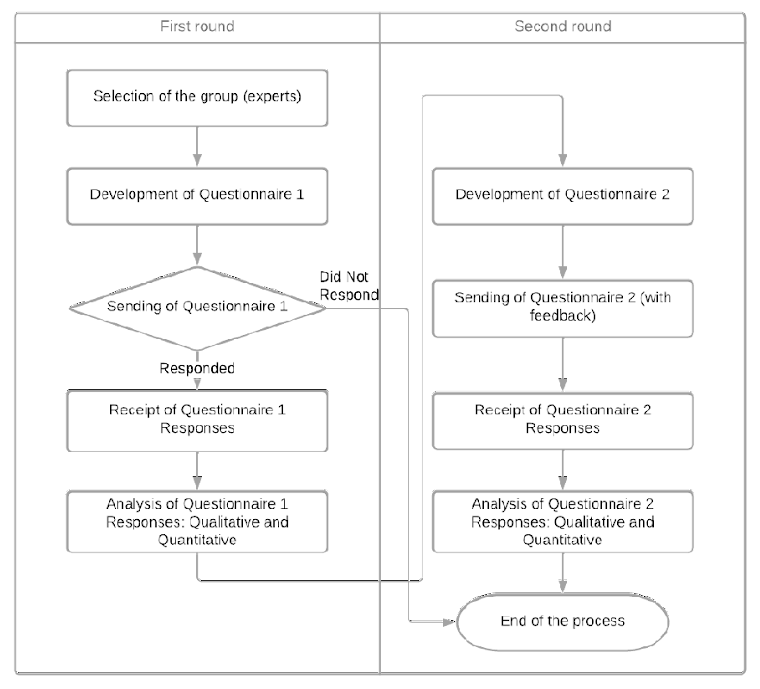 Source: Authors, 2024.
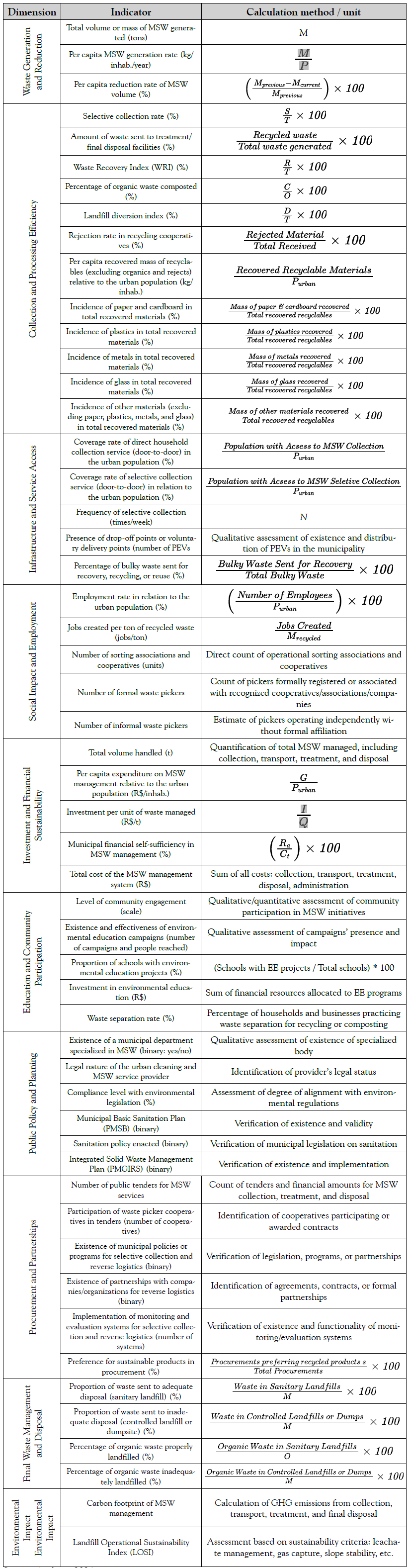 Source: Authors, 2024.