
 Artisanal Fishermen’s Insights on Human Impacts on Ichthyofauna in Southern Rio de Janeiro Bays
Abstract
Fishermen’s Local Ecological Knowledge (LEK) provides valuable insights for environmental conservation and fisheries management. LEK from fishermen in two large Brazilian bays was used to detect changes in fish abundance and trophic levels, allowing an evaluation of human impacts and the ‘fishing down marine food webs’ hypothesis. Currently, the most frequently captured species are Whitemouth croaker (Micropogonias furnieri) (61.5% of fishermen’s responses), Lebranche mullet (Mugil liza) (29%), and Common snook (Centropomus undecimalis) (20%). In contrast, Brazilian sardinella (Sardinella brasiliensis) (17%), Bluefish (Pomatomus saltatrix) (15%), and Serra Spanish mackerel (Scomberomorus brasiliensis) (14%) have shown marked declines. According to fishermen, the main drivers of these declines are industrial fishing by large trawlers (36%), industrial pollution (16%), and large-scale development projects (10%). Declines in fish trophic levels support the ‘fishing down marine food webs’ hypothesis. Strengthened enforcement of fishing regulations is essential for sustaining artisanal fisheries and conserving biodiversity.
Keywords:
Coastal fish; human actions; local ecological knowledge; trophic level; tropical bays
Resumo
O Conhecimento Ecológico Local (CEL) dos pescadores é valioso para a conservação ambiental e gestão pesqueira. O CEL dos pescadores em duas grandes baías brasileiras foi utilizado para detectar mudanças na abundância de peixes e níveis tróficos, avaliando o impacto humano nas pescarias e investigando a hipótese de que ‘pesca reduz redes tróficas marinhas’. Atualmente, as espécies mais capturadas são a corvina (Micropogonias furnieri) (61,5% das respostas dos pescadores), tainha (Mugil liza) (29%) e robalo (Centropomus undecimalis) (20%). Por outro lado, a sardinha-verdadeira (Sardinella brasiliensis) (17%), anchova (Pomatomus saltatrix) (15%) e sororoca (Scomberomorus brasiliensis) (14%) experimentaram declínios significativos na abundância. Os principais fatores destas reduções incluem a pesca industrial por grandes arrastos (36%), poluição industrial (16%) e grandes projetos (10%). A queda nos níveis tróficos dos peixes corrobora a hipótese de que pesca diminui redes tróficas. A supervisão das leis de pesca é crucial para a sobrevivência dos pescadores artesanais, destacando a importância da diversidade cultural para a biodiversidade e a saúde dos ecossistemas.
Palavras-chave:
Peixes costeiros; variação temporal; ações humanas; conhecimento ecológico local; nível trófico; baías tropicais
Resumen
El Conocimiento Ecológico Local (CEL) de los pescadores es crucial para la conservación ambiental y gestión pesquera. Se usó el CEL en dos bahías brasileñas para detectar cambios en la abundancia y niveles tróficos de peces, evaluando el impacto de la pesca y la hipótesis de que ‘pesca reduce las redes alimentarias’. Las especies más capturadas son la corvina (Micropogonias furnieri) (61,5% de las respuestas), la lisa (Mugil liza) (29%) y el róbalo común (Centropomus undecimalis) (20%). En contraste, la sardina brasileña (Sardinella brasiliensis) (17%), el pez azul (Pomatomus saltatrix) (15%) y el carite (Scomberomorus brasiliensis) (14%) tienen reducciones significativas. Los principales factores son la pesca industrial (36%), la contaminación industrial (16%) y proyectos a gran escala (10%). Las reducciones en los niveles tróficos respaldan la hipótesis de que la pesca reduce las redes tróficas. Es crucial supervisar las leyes para proteger a los pescadores artesanales, destacando la importancia de la diversidad cultural para conservar la biodiversidad y la salud de los ecosistemas.
Palabras-clave:
Peces costeros; variación temporal; acciones humanas; conocimiento ecológico local; nivel trófico; bahías tropicales
Introduction
Estuarine areas are crucial ecosystems connecting watersheds and coastal waters, providing key biological resources to human populations (Whitfield, 2022). However, anthropogenic pressures, especially from port and industrial activities, have altered their dynamics through dredging, habitat degradation, and pollution, thereby affecting fish communities (Barletta; Lima; Costa, 2019; Prestrelo; Monteiro-Neto, 2016;).
Conservation efforts should be proactive, ensuring resources sustainability while recognizing the cultural importance of estuaries for traditional communities. Local dependence on these environments extends beyond mere livelihoods (Barletta; Lima; Costa, 2019). Management should move beyond purely economic goals by incorporating traditional knowledge into decision-making to promote the sustainable use of long-inhabited environments (Diegues, 2004). Ultimately, ecosystem management must consider the dynamic relationship between human knowledge, practices, and the environment.
The Local Ecological Knowledge (LEK) of artisanal fishermen has significant value for environmental conservation and fisheries management (Hill et al., 2010; Vieite et al., 2022). For example, traditional fishermen in Puerto Rico frequently cite the Lebranche mullet Mugil liza Valenciennes, 1836 as an indicator of estuarine health (García-Quijano; Valdés-Pizzini, 2015). This is noteworthy because fisheries management encompasses all components of a socio-ecological system, including target resources, associated ecosystems, fishing practices, and social, cultural, economic, and governance subsystems (Orensanz; Parma; Cinti, 2015). Studies have been conducted to understand the relationship between fishermen and their environment, as well as environmental transformations and their impacts on fishing activities (Tavares Filho et al., 2020).
Integrating Local Ecological Knowledge (LEK) into natural resource management is essential for developing more sustainable and inclusive approaches. LEK, built through generations of environmental observation, plays a vital role in conservation but has long been marginalized (Berkes, 2008; Johannes, 2002). Its inclusion supports decentralized governance (Begossi, 2006) and challenges dominant Western scientific paradigms (Foucault, 1979; Santos, 2002).
In Brazil, studies by Silvano and Begossi (2012) and Costa-Neto and Marques (2000) show that artisanal fishers possess detailed ecological knowledge, such as species behavior and ecosystem dynamics, that is valuable for participatory management. Although this knowledge differs from scientific taxonomies, it is highly effective and culturally grounded (Lévi-Strauss, 1962; Rodrigues, 1905).
LEK has also been applied globally. In Peru and Cabo Verde, it revealed dramatic declines in fish stocks (Castagnino et al., 2023; Macedo et al., 2024). In Costa Rica and Bangladesh, it helped reconstruct trends and inform models (Sánchez-Jiménez et al., 2019; Ullah et al., 2023). In Mauritius, fishers reported coral reef degradation and stock loss associated with warming and pollution (Appadoo et al., 2023). Thus, integrating LEK is both a practical and political act, bridging knowledge systems and strengthening conservation grounded in local realities.
Pauly et al. (1998) showed that analyzing the mean trophic levels (TL) of fish in catches provides insight into trophic declines driven by fishing pressure over time. This process, known as fishing down marine food webs, involves the initial targeting of high-TL species, followed by a shift toward species at lower TLs as fishing progresses. By selectively removing organisms from the food chain, fishing alters both trophic structure and size composition (Pauly et al., 1998; Shin et al., 2005). Therefore, comparing the mean trophic levels of the most frequently caught fish species over time by artisanal fishers in coastal environments offers a way to test the relevance of this hypothesis in small-scale fisheries.
Rio de Janeiro State, Brazil, has two major bays on its southern coast, namely Sepetiba (SB) and Ilha Grande (IGB), which support multiple human activities, including fishing, tourism, transportation, port operations, industry, and urban settlements. However, both bays are subject to increasing anthropogenic pressures, such as pollution and habitat destruction, which have progressively affected fish communities, particularly in SB (Araújo; Azevedo; Guedes, 2016).
This study aims to explore the local ecological knowledge (LEK) of artisanal fishers from caiçara and quilombola communities regarding historical patterns of the most frequently captured fish species in Sepetiba Bay (SB) and Ilha Grande Bay (IGB). By documenting and safeguarding this knowledge, the study seeks to support environmental conservation, fish species protecting, and the preservation of social fabric, cultural diversity, and traditional livelihoods in artisanal fishing communities.
Furthermore, this study investigates the hypothesis proposed by Pauly et al. (1998), which posits that the mean trophic level of fish species declines over time because of fishing pressure. To test this hypothesis, the historical mean trophic levels of the most frequently captured fish species by artisanal fishers in SB and IGB were compared with their current trophic level. Confirmation of this pattern would provide evidence that reductions in mean trophic level within the food web reflect the impacts of fishing pressure and/or declining environmental quality in these bays.
Methods
Study area
SB covers an area of approximately 450 km² and is situated in a region subject to intense urban-industrial pressures. In contrast, IGB spans about 650 km² and experiences anthropogenic pressures, albeit to a lesser extent than SB (Figure 1). These two bays differ in their geomorphological and environmental characteristics. SB exhibits a pronounced salinity gradient due to the substantial freshwater input and has an average depth of 8.0 meters, with the dredged navigating channel for the Port of Sepetiba reaching depths of 20-30 m. Prevailing northeast and southwest winds generate thermal currents between the bay and the adjacent ocean, producing a clockwise circulation pattern that promotes continuous water exchange with the sea (Copeland et al., 2003).
Rapid urbanization, industrialization, and agricultural expansion have increased the input of organic and industrial waste, particularly in recent decades in SB (Molisani et al., 2006). In addition, major structural changes have occurred along the margins of SB, including the establishment of a large cargo port terminal, a steel plant, and a submarine construction facility (Araújo; Azevedo; Guedes, 2016). More recently, the installation of the Turkish thermal power plant Karpowership, comprising four floating barges for energy generation in the inner bay, and the construction of 36 onshore transmission towers, with associated mangrove suppression, represent the latest large-scale development in the area.
The surrounding area of SB is experiencing population growth despite a lack of essential infrastructure, including basic sanitation and public health services. Accelerating urbanization has intensified social inequality in the region. Similarly, the expansion of industrial and logistics complexes has occurred with limited state oversight, promoting industrial growth that often disregards social and environmental concerns. As a result, marine, riverine, and atmospheric pollution have increased, degrading environmental conditions and the quality of life of local populations (Rodrigues et al., 2020; Souza et al., 2021).
IGB is influenced by tides and local winds, which, together with weak ocean currents and limited hydrodynamics, contribute to its distinctive environmental conditions (Fragoso, 1999). The waters of IGB are generally calm, with temperatures ranging from 20° to 28°C. During summer, water visibility can reach considerable depths, depending on location (Skinner; Barboza; Rocha, 2016). Recognized as a key component of the Serra do Mar Biodiversity Corridor, IGB is of great importance for biodiversity conservation, sustainable use, and equitable sharing of benefits, as acknowledged by the Brazilian Ministry of the Environment under the Biodiversity Conservation and Sustainable Use Project - PROBIO (MMA, 2002). In addition, IGB is a major hub of economic development in the state of Rio de Janeiro, hosting large-scale enterprises such as the BrasFELS shipyard, the port of Angra dos Reis, the Eletrobrás nuclear power plants, and the TEBIG-Petrobrás oil terminal. Tourism-based activities, including boat tours, recreation, snorkeling, fishing (recreational, artisanal, and industrial), and mariculture also play a central role in the regional economy (Joventino; Lianza; Johnsson, 2013).
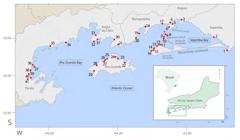
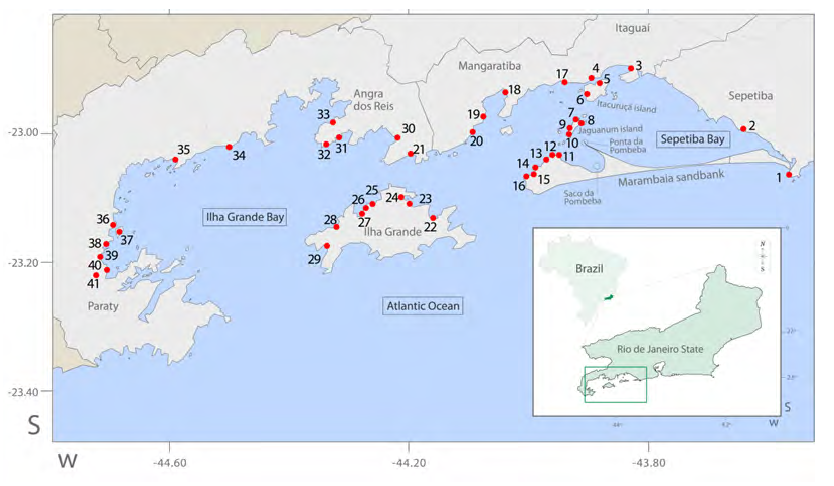
Map of Sepetiba and Ilha Grande Bays, showing the 41 artisanal fishing communities surveyed. Names of the communities in Table 1.
Fisherfolk communities
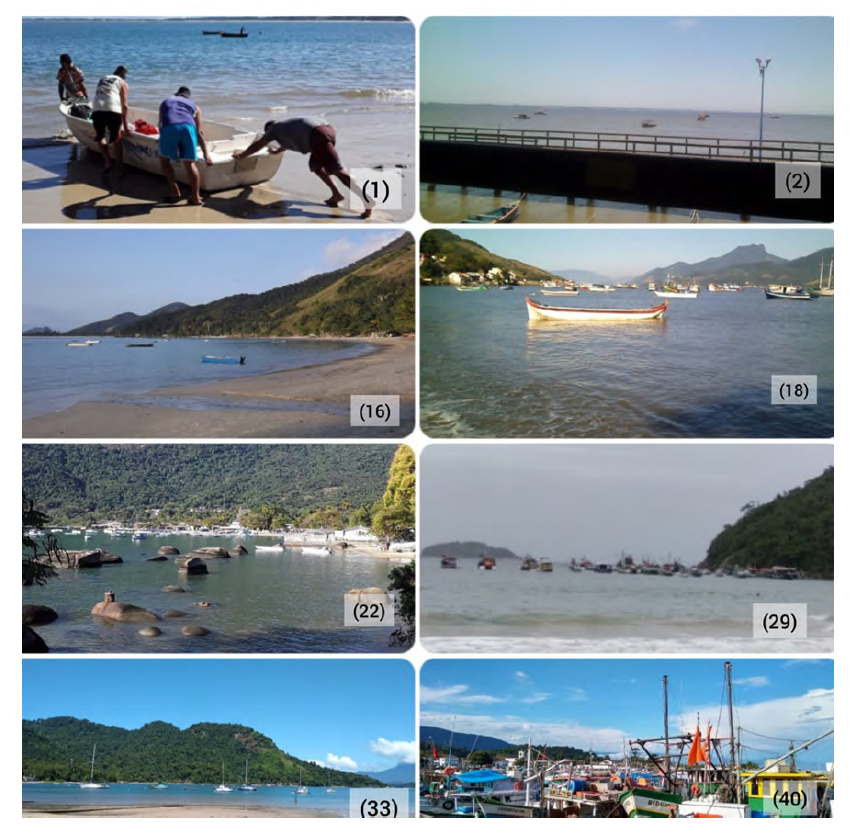
Artisanal fishers in both bays typically operate small vessels in coastal areas, using s motorized canoes, rowboats, or small trawlers, which distinguishes them from industrial fleets that rely on large trawlers. Figure 2 illustrates the types of vessels commonly used by these artisanal fishers in the surveyed regions.
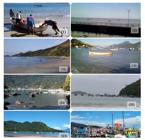
Artisanal fishermen from various locations in Sepetiba and Ilha Grande Bays and some models of boats used by them in fishing: (1) Barra de Guaratiba, with the Marambaia Sandbank (outer face) in the background; (2) Pedra de Guaratiba, with the Marambaia Sandbank (inner face) in the background, showing signs of silting and a pier built by the city to try to minimize the effects of silting, in the foreground; (16) Praia da Pescaria Velha, Marambaia Sandbank; (18) Mangaratiba, with Ilha Grande in the background; (22) Abraão, Ilha Grande; (29) Provetá, Ilha Grande, Open Sea; (33) Vila do Retiro, Angra dos Reis; (40) Ilha das Cobras, Paraty. Photos: Claudio Nona Morado, 2019-2020.
In the areas surrounding these bays, local communities include caiçara fishers and small-scale farmers who sustain their livelihoods through fishing and agriculture, with particular emphasis on flour production. The region is also home to quilombola communities, descendants of formerly enslaved Black populations who resisted slavery and established autonomous territories. Quilombolas have preserved their cultural traditions and developed sustainable livelihoods based on natural resources, maintaining interactions with other traditional communities and broader society. Their activities include farming, fishing, and community-based tourism within their territories, which they continue to defend (Itapatrimônio, 2023). Despite long-term adaptation to often adverse conditions, the remaining quilombola communities in Marambaia, distributed across the two bays, still face restrictions on their territorial rights due to the Brazilian state’s failure to formally recognize and title their lands.
Urbanization and industrialization have led to environmental impacts and increasing social inequalities. This aligns with Santos (1996), who argues that in Brazil, the State often prioritizes corporate interests over strengthening its regulatory role in socio-environmental matters. As a result, the territory governed by laws and under state authority becomes intertwined with a normative territory dominated by corporations, information, and networks.
It is important to note that the Brazilian Federal Constitution of 1988, together with the National Policy for the Sustainable Development of Traditional Peoples and Communities (Decree No. 6.040/2007; Brazil, 2007), and the International Labour Organization (ILO) Convention 169, safeguard the territorial rights of traditional communities. The Convention also requires consultation with affected peoples, through appropriate procedures, whenever legislative or administrative measures that may directly affect them are considered. ILO Convention No. 169 further recognizes the special relationship that traditional peoples maintain with their environments, which is essential for their cultural and economic survival.
Despite this legal framework, traditional fishing communities, including caiçaras and quilombolas, are often rendered invisible and have their rights unrecognized, even though they are classified as traditional communities under the Convention. Moreover, the definitions established in the constitutional decree do not fully capture the complexities and specificities of artisanal fishers and their fishing territories.
Data collection
A total of 198 traditional fishermen participated in the survey, which was conducted between November 2018 and February 2020. Among these, 111 fishermen were from fishing communities in SB, and 87 were from IGB. All respondents were active fishermen; no cultural consultants were interviewed. The number of participants interviewed per community ranged from 1 to 20 (Table 1).
In Sepetiba Bay, three fisher colonies have approximately 3.500 registered and an estimated 1.500 unregistered fishermen (Silva; Suiama, 2018). Paraty Bay has more than 1.000 fishers (Juliana Vieira de Jesus, Z-18 Fisher Colony). No official data were available for Angra dos Reis or Conceição de Jacarei at the time of the study. The survey encompassed 41 artisanal fishing communities across these two bays (Figure 1).
Participants were selected using the snowball sampling method (Silvano; Valbo-Jorgensen, 2008). At the end of each interview, respondents were asked to indicate another experienced fisherman. Both, part-time and full-time artisanal fishermen were interviewed. They used small-scale and low-technology fishing gear, including fishing lines, hooks, longlines, gillnets, weirs, and similar equipment.
Two semi-structured questionnaires were applied following the methodology proposed by Mourão and Nordi (2003). The first questionnaire collected socioeconomic data to characterize the local fishing communities, including age and years of fishing experience. The second questionnaire focused on ethnoichthyological information, aiming to document perceptions of historical abundance of the most caught fish species.
All interviews were recorded with the informed and voluntary consent of the participants and are archived at the Fish Ecology Laboratory (LEP) of the Federal Rural University of Rio de Janeiro (UFRRJ). The study was approved by an ethics committee under CAEE (Ethical Studies Evaluation Board) number 95479318.1.0000.8144.
Data treatment
Fishermen’s responses were analyzed by comparing answers and calculating the frequencies and proportions of similar responses. Although some communities were underrepresented, the objective was to characterize patterns at the bay scale rather than to perform community-level comparisons.
Average trophic levels were calculated for fish species reported as frequently caught in the past decades but currently considered rare or markedly reduced in abundance. Each interviewee could mention more than one species. Trophic level information was obtained from FishBase and compared with the trophic levels of species currently caught by artisanal fishermen. This comparison aimed to test the hypothesis proposed by Pauly et al. (1998) that mean trophic levels decline over time because of fishing pressure.
Fishermen’s oral accounts were transcribed, and textual analyses were conducted to investigate perceived drivers of declines in fish abundance. In this study, “past decades” were defined as periods more than 10 years prior to the present, encompassing information from 2010 or earlier. Qualitative analyses were performed using IRAMUTEQ software (RATINAUD, 2009), a free interface based on R statistical environment. IRAMUTEQ organizes, segments, and codes textual data through lemmatization, grouping words by their root forms regardless of tense, gender, or number, thereby facilitating textual analysis (Camargo; Justo, 2013; Kami et al., 2016).
A similarity analysis was applied to responses concerning the decline in abundance of heavily exploited species. Based on graph theory, this analysis generates a word tree that illustrates relationships among terms across interviews (Salviati, 2017). The results are summarized into a maximum tree highlighting the strongest associations (Vergès; Bouriche, 2001), in which words represent vertices and edges indicate co-occurrences. More frequent words are represented by larger nodes and stronger connections by thicker edges (Baril; Garnier, 2015).
Results
The age of interviewees from fishing communities in SB and IGB ranged from 19 to 95 years, with a mean of 55 years (standard deviation, SD = 14). Mean age was similar between bays, averaging 55 years in SB (SD = 14), and 54 years in IGB (SD = 15).
Fishing experience averaged 39 years across both bays (SD = 15). Interviewees from SB reported a mean of 38 years of experience (SD = 14), whereas those from IGB averaged 41 years (SD = 16). Most interviewees learned to fish from their parents (55% overall) with this pattern reported by 50% of participants in SB and 60% in IGB.
The most frequently caught fish species reported by artisanal fishermen across both bays were Whitemouth croaker Micropogonias furnieri (Desmarest, 1823) (61.5% of respondents), Lebranche mullet (M. liza) (29%), and Common snook Centropomus undecimalis (Bloch, 1792) (20%). In SB, fishermen identified 36 ethnospecies as commonly caught in artisanal fisheries. Among these, “corvinota” and “viroti,” referred to juvenile Whitemouth croaker and juvenile Lebranche mullet, respectively. The most frequently reported species in SB were Whitemouth croaker (67%), Lebranche mullet (44%), Bigtooth corvina Isopisthus parvipinnis (Cuvier, 1830) (20%), White mullet Mugil curema Valenciennes, 1836 (20%), and Common snook (19%) (Table 2).
In IGB, fishermen identified 44 ethnospecies commonly caught in artisanal fisheries. The most frequently reported species were Whitemouth croaker (56%), Horse-eye jack Caranx latus Agassiz, 1831 (30%), Common snook (21%), Brazilian sardinella Sardinella brasiliensis (Steindachner, 1879) (14%), King mackerel Scomberomorus cavalla (Cuvier, 1829) (14%), Lebranche mullet (14%), Bluefish Pomatomus saltatrix (Linnaeus, 1766) (13%), and Largehead hairtail Trichiurus lepturus Linnaeus, 1758 (13%). In the fishermen´s ethnotaxonomy, “Carapau” and “Xerelete” are treated as distinct species, although fishermen recognize that “Carapau” represents a smaller size class within the “Xerelete” category. When both are combined according to scientific taxonomy, the relative frequency of the Horse-eye jack remains 30%, ranking as the second most important species in catches in IGB. On average, 7% of fishermen did not respond to this question (12% in SB and 2% in IGB) (Table 2).
Fishermen from both bays reported a marked decline in the abundance of nearly all fish species over recent decades. When data from both bays were analyzed jointly, the species most frequently perceived as declining were Brazilian sardinella (17%), Bluefish (15%), Serra Spanish mackerel Scomberomorus brasiliensis Collette, Russo & Zavala-Camin, 1978 (14%), and King mackerel (13%). In SB, fishermen identified 52 species perceived to have undergone the most pronounced declines. The most frequently cited were Serra Spanish mackerel (28%), Bluefish (15%), King mackerel (15%), Black drum Pogonias chromis (Linnaeus, 1766) (14%), and Brazilian sardinella (14%) (Table 2).
In IGB, fishermen reported a significant decrease in the abundance of 53 species. The species most frequently cited as declining were Brazilian sardinella (19%), Bluefish (15%), King mackerel (11%), Acoupa weakfish Cynoscion acoupa (Lacepède, 1801) (11%), and Jamaica weakfish Cynoscion jamaicensis (Vaillant & Bocourt, 1883) (11%). On average, 11% of fishermen did not respond to this question, with non-response rates of 16% in SB and 7% in IGB (Table 2).
The primary factors cited by fishermen from both bays as contributing to fish declines were industrial boats (48%), followed by industrial pollution (11%). Artisanal fishermen from SB identified the operation of industrial boats (36%), industrial pollution (16%), and the establishment of mega-companies (10%) as significant factors. In contrast, respondents from IGB attributed fish declines mainly to industrial boats (60%), harpoon fishing (7%), and industrial pollution (6%). Overall, 22% of respondents did not answer this question, with non-response rates of 24% in SB and 21% in IGB (Table 2).
A decline in the overall mean trophic level over time was observed when comparing fish species caught by artisanal fishermen in SB and IGB in previous decades with those caught in the present.
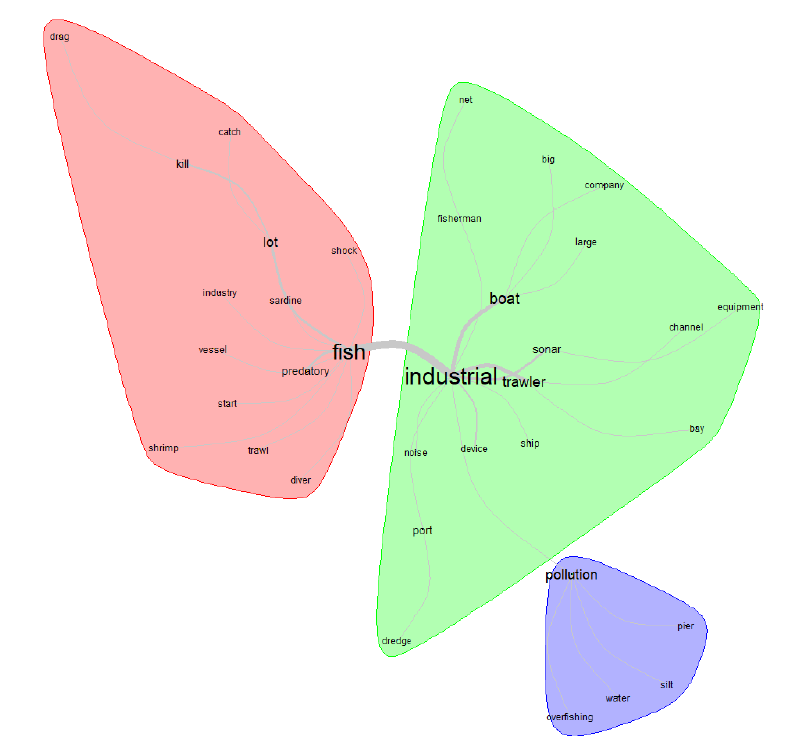
To address the question “What are the causes of the decline in the abundance of fish that were heavily caught decades ago”, a textual analysis was conducted using IRAMUTEQ. Key terms identified in the responses of artisanal fishermen included “industrial” (53 occurrences), “fishing” (52 occurrences), “boat” (27 occurrences), “trawler” (24 occurrences), “lot” (21 occurrences), and “pollution” (20 occurrences). The Classical Textual Statistics (CTS) analysis comprises 132 texts and 132 text segments (ST), 682-word occurrences, of which 21.21% were hapax (words occurring only once), and 245 unique word forms, of which 61.63% were hapax.
The word “industrial” occupies a central position in the semantic network, connecting to other terms in a fan-shaped structure of high similarity (Figure 3). Collectively, these words represent multiple facets of the main environmental impacts associated with the temporal decline in fish abundance in SB and IGB. The terms such as “fish,” “boat,” “pollution,” and “lot,” highlighted in bold, occurred more frequently, corroborating patterns observed in the word cloud analysis.
Notably, “industrial” showed strong associations with these terms, indicating a clear link between industrial fishing operations, conducted by large boats or trawlers equipped with sonar, and the depletion of fish stocks. A 52-year-old fisherman from Ilha Grande Bay attributed declining fish abundance to the expansion of industrial fishing: “After the ‘evolution’ of boat fishing (industrial): sonar, radar (lots of catch).”
Similarly, a 77-year-old from Sepetiba Bay emphasized the impact of industrial boats and port activities, stating: “Dredging and pile-driving noise scared the shark away.” The lack of effective supervision by regulatory authorities was also frequently cited, particularly regarding industrial sardine fishing and shrimp trawling. A 40-year-old fisherman from Ilha Grande Bay reported that unsupervised industrial trawlers catch up to 300 kg per net lift, contributing to stock declines.
The term “pollution” also emerged prominently and was closely linked to “industrial,” highlighting industrial pollution from large-scale regional projects, as the second most significant environmental impact driving long-term declines in fish abundance. This perception was reinforced by a 41-year-old fisherman from Sepetiba Bay, who cited industrial vessels and unmonitored corporate pollution as major causes of fish declines.
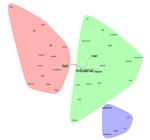
Similarity analysis representing the perception of fishermen about the principal causes of declining fish abundance compared to past decades.
Discussion
The most important fish species for the fishing communities of SB and IGB, according to this study, are the Whitemouth croaker (M. furnieri), followed by the Lebranche mullet (M. liza) and the Common snook (C. undecimalis). These species were frequently mentioned during interviews, particularly the Whitemouth croaker and Lebranche mullet. Araújo; Azevêdo and Guedes (2016), studying fish communities in SB across three periods (1983-1985; 1993-1995; 1999-2001) reported that Whitemouth croaker remained abundant throughout all periods, whereas Lebranche mullet became one of the most abundant species in the later years. Similarly, using Local Ecological Knowledge (LEK), Paz and Begossi (1996) identified Whitemouth croaker as the consumed and commercially important species among artisanal fishermen in Praia da Lagoa, SB. Significant differences in the importance of these species between the two bays were observed in both scientific studies and LEK. Araújo, Azevêdo and Guedes (2016) recorded higher catches of Whitemouth croaker and Lebranche mullet in SB than IGB, a pattern that is consistent with reports from artisanal fishermen, who indicated that catches of Lebranche mullet were approximately three times higher in SB than in IGB.
LEK indicates a perceived decline in both fish abundance and diversity across several species. Industrial fishing vessels were identified as the primary environmental concern by 60% of fishermen in IGB, compared to 36% in SB. In contrast, industrial pollution was mentioned more frequently in SB (16%), at twice the rate reported in IGB (6%). Other concerns included the impact of large-scale infrastructure and megaprojects in the SB region (10%) and spearfishing activities (7%) in both bays, the latter being associated by fishermen with the decline of the Dusky grouper Epinephelus marginatus (Lowe, 1834) in IGB.
In recent decades, SB has experienced an intensification of human activities, resulting in increased inputs of organic and industrial waste flowing into the bay. Previous studies have linked these pressures to eutrophication and contamination processes (Mello et al., 2022; Molisani et al., 2006;), as well as to urban expansion and habitat degradation (Molisani et al., 2006; Tonhá et al., 2020). The expansion of the port to accommodate larger vessels and the installation of major industrial complexes, such as the ThyssenKrupp Companhia Siderúrgica do Atlântico (TKCSA), have further intensified environmental pressure in the region (ANTAQ, 2022; Araújo; Azevêdo; Guedes, 2016). In addition to environmental impacts, the establishment of TKCSA has been associated with social problems, including increased violence and pressure on public services (Lopes, 2013). Collectively, these transformations have contributed to habitat loss and increased pollutant inputs, which likely affect local fish communities by reducing species diversity and abundance.
Interviewees identified intensive fishing as a major driver of fish population declines. In IGB, particularly in its insular sector, this decline appears to be more strongly associated with large-scale industrial fishing operations. Previous studies suggest that industrial overfishing of Brazilian sardinella may negatively affect predator species, such as the Bluefish, Serra Spanish mackerel, and King mackerel. Researches have also reported a decrease in Bigtooth corvina, attributed to shrimp trawling activities, despite this species being heavily exploited by artisanal fisheries in both bays (Paz; Begossi, 1996). Addressing these impacts requires strengthened oversight of industrial fishing activities, greater involvement of traditional fishing communities in management processes, improved evaluation of fishing licenses, and enhanced inspection of large-scale development projects in these regions.
Fishermen expressed concern over the disappearance or decline of Brazilian sardinella and Rio anchovy Anchoa januaria (Steindachner, 1879), as well as other species such as King mackerel, Serra Spanish mackerel, and Black drum. According to interviewees, the reduction of these key food resources is largely attributed to industrial fishing practices, which they believe disrupt fish availability and seasonal arrivals. Fishers also reported decline in species such as Horse-eye jack and Bluefish. Official landings data corroborate these perceptions, showing the Brazilian sardinella accounted for 77.8% of fish landing in Rio de Janeiro in 2015 (47.204 tons), but declined to 36.1% in 2022 (FIPERJ 2015, 2022).
Fishers with more than 31 years of experience reported declines in a substantially higher number of species (97) than those with 15 years or less experience (19), like reflecting longer temporal memory and exposure to past ecological conditions. Similar patterns have been documented among fishing communities in Mexico (Sáenz-Arroyo et al., 2005). Pauly and Murphy (1982) argued that observation periods of approximately 17 years are often insufficient to detect long-term ecological trends, a phenomenon later conceptualized as the “shifting baseline syndrome” (Pauly, 1995), and subsequently applied to fishers´perception by Martins et al. (2018).
The average trophic level of fish catches has declined from 3.6 in previous decades to 3.2 at present, based on species commonly caught by artisanal fishermen. This pattern indicates a recent shift in trophic structure, with higher-trophic-level species being progressively replaced by lower-trophic-level species. This finding supports the hypothesis proposed by Pauly et al. (1998) of a global trend toward declining trophic levels in fish catches over time, suggesting that fishing activities in the bays have exerted intense ecological effects. Similar trends have been reported in marine ecosystems worldwide, including the east and west coast of Canada, Chile, India, and the Adriatic Sea (Arancibia; Neira, 2005; Bhathal; Pauly, 2008; Coll et al., 2010a; Pauly et al., 2001).
Consistent with these patterns, fishermen reported declines in top predators such as Bluefish and King mackerel, alongside increases in mid- and low-trophic-level species, including Whitemouth croaker and Lebranche mullet. This combination suggests both selective overfishing of top predators (“fishing down”) and a broader shift toward the dominance of lower-trophic-level species (“fishing through”), reflecting ecosystem reorganization (Coll et al., 2010b; Essington; Beaudreau; Wiedenmann, 2006) Other indicators, such as size at maturity and maximum body size, have also been used as markers of overfishing (Mclean; Forrester, 2018). Although differences may exist between fishers’ local ecological knowledge (LEK) and scientific estimates, fishers’ routine observations highlight the potential for collaborative monitoring approaches capable of generating scientifically robust and socially meaningful assessments (García-Quijano; Valdés-Pizzini, 2015; Thornton; Scheer, 2012).
Collaborative dialogue between scientific expertise and artisanal fishing communities is essential for establishing a standardized territorial management model (Santos, 2002). To ensure the effectiveness of such dialogue, several measures are crucial: (1) explicitly addressing the specific characteristics of artisanal fisheries and fishing territories, as recognized by Decree No. 6.040/2007 (Brasil, 2007a); and (2) formally recognizing and including caiçara and quilombola artisanal fishers in accordance with ILO Convention No. 169. During a public hearing, a representative of artisanal fishers emphasized the urgent need for official recognition of fishing areas and protection against irregular territorial occupation.
Diegues (2004) argues that the impoverishment and marginalization of traditional populations can lead to the overexploitation of natural resources, driven by processes of ecocultural disorganization. These processes, resulting from the expansion of capitalist production systems, disrupt social-ecological relationships and generate severe environmental degradation, which the author characterizes as an ecological crime against nature.
State oversight of industrial activities and industrial fishing vessels in these bays remains insufficient. Fishers from IGB reported unequal treatment by environmental agencies, which they perceive as favoring large enterprises over artisanal fisheries, often at the expense of socio-environmental concerns. Authorities must strengthen supervision to safeguard biodiversity, cultural heritage, and artisanal fishing livelihoods, as mandated by national legislation (Brasil, 2007a). Effective enforcement of existing regulations is essential, including the ban on trawling by vessels exceeding 10 tons within two nautical miles of the coast (IBAMA Ordinance No. 43-N; Brasil, 1994), restrictions on the capture of Whitemouth croaker by industrial trawlers in the Exclusive Economic Zone (Ordinance No. 43/2007), and the prohibition of industrial fishing for Lebranche mullet during the winter spawning period (Brasil, 2007b).
This study highlights the importance of specific fish species for the livelihoods and cultural practices of artisanal fishermen. These commonly caught “key species” are fundamental to sustaining traditional fishing practices and ways of life. Special attention should also be given to species showing declining occurrence. The local ecological knowledge (LEK) of artisanal fishermen revealed changes in fish community composition and identified their underlying socio-environmental drivers. Therefore, this knowledge should not only be recognized but actively incorporated into the development of conservation and fisheries management strategies. Such actions can contribute to environmental protection while simultaneously promoting social justice for artisanal fishing communities. Moreover, any public or private initiatives seeking to operate within traditional fishing territories should prioritize and integrate this locally grounded knowledge.
Acknowledgements
We thank the fishermen from Sepetiba and Ilha Grande Bays for sharing their valuable knowledge, without which this work would not have been possible. We also thank Wagner Uehara and his family for the logistical support (accommodation, boat, and land transportation) generously provided to the first author during the fieldwork. The Coordination for the Improvement of Higher Education Personnel (CAPES) provided a PhD scholarship to the first author.
References
-
ANTAQ - Agência Nacional de Transporte Aquaviário. Estatístico Aquaviário, 2022. http://anuario.antaq.gov.br Accessed on 23 December 2022.
» http://anuario.antaq.gov.br -
APPADOO, C.; SULTAN, R.; SIMIER, M.; TANDRAYEN-RAGOOBUR, V.; CAPELLO, M. Artisanal fishers in small island developing states and their perception of environmental change: the case study of Mauritius. Reviews in Fish Biology and Fisheries, v. 33, n. 3, p.611-628, 2023. https://doi.org/10.1007/s11160-022-09735-6
» https://doi.org/10.1007/s11160-022-09735-6 -
ARANCIBIA, H.; NEIRA, S. Long-term changes in the mean trophic level of Central Chile fishery landings. Scientia Marina, v. 69, p. 295−300, 2005. https://doi.org/10.3989/scimar.2005.69n2295
» https://doi.org/10.3989/scimar.2005.69n2295 -
ARAÚJO, F. G.; AZEVEDO, M. C. C.; GUEDES, A. P. P. Inter-decadal changes in fish communities of a tropical bay in southeastern Brazil. Regional Studies in Marine Science, v. 3, p. 107-118, 2016. https://doi.org/10.1016/j.rsma.2015.06.001
» https://doi.org/10.1016/j.rsma.2015.06.001 -
BARIL, E.; GARNIER, B. Utilisation d’un outil de statistiques textuelle. IRaMuteQ 0.7 alpha 2 Interface de R pour les Analyses Multidimensionnelles de Textes et de Questionnaires. Paris. INED. http://www.iramuteq.org/documentation Accessed on 21 March 2021
» http://www.iramuteq.org/documentation -
BARLETTA, M.; LIMA, A. R. A.; COSTA, M. F. Distribution, sources and consequences of nutrients, persistent organic pollutants, metals and microplastics in South American estuaries. Science of The Total Environment, v. 651, p. 1199-1218, 2019. https://doi.org/10.1016/j.scitotenv.2018.09.276
» https://doi.org/10.1016/j.scitotenv.2018.09.276 -
BEGOSSI, A. Temporal stability in fishing spots: conservation and co-management in Brazilian artisanal coastal fisheries. Ecology and Society, v. 11, n. 1, 5, 2006. https://doi.org/10.5751/ES-01380-110105
» https://doi.org/10.5751/ES-01380-110105 -
BERKES, F. Sacred Ecology. 3. ed. New York: Routledge, 392 p. 2008. https://doi.org/10.4324/9780203123843
» https://doi.org/10.4324/9780203123843 -
BHATHAL, B.; PAULY, D. ‘Fishing down marine food webs’ and spatial expansion of coastal fisheries in India, 1950−2000. Fisheries Research, v. 91, p. 26−34, 2008. https://doi.org/10.1016/j.fishres.2007.10.022
» https://doi.org/10.1016/j.fishres.2007.10.022 - BRASIL. Decreto nº 6.040 de 07 de fevereiro de 2007. Institui a política nacional de desenvolvimento sustentável dos povos e comunidades tradicionais. Diário Oficial [da] República Federativa do Brasil, Brasília, DF, 08 fev. 2007a.
-
BRASIL. Ministério do Meio Ambiente. Instituto Brasileiro do Meio Ambiente e dos Recursos Naturais Renováveis - Ibama. Portaria n° 43, de 24 de setembro de 2007. Proibir a captura das espécies corvina (Micropogonias furnieri), castanha (Umbrina canosai), pescadinha-real (Macrodon ancylodon) e pescada-olhuda (Cynoscion guatucupa, sin. C. striatus), por embarcações cerqueiras (traineiras) no mar territorial e zona econômica exclusiva - ZEE das regiões sudeste e sul. Diário Oficial [da] República Federativa do Brasil, Brasília, DF, 25 set. 2007b. https://www.ibama.gov.br/component/legislacao/?view=legislacao&legislacao=113455 Accessed on 21 May 2022
» https://www.ibama.gov.br/component/legislacao/?view=legislacao&legislacao=113455 -
BRASIL. Ministério do Meio Ambiente. Instituto Brasileiro do Meio Ambiente e dos Recursos Naturais Renováveis - Ibama. Portaria n° 43, de 11 de abril de 1994. Proíbe a pesca de arrasto pelos sistemas de portas e parelhas por embarcações maiores de 10tab nas áreas costeiras do estado do rio de janeiro, a menos de 2 milhas da costa. Diário Oficial [da] República Federativa do Brasil, Brasília, DF, 13 abr. 1994. https://www.ibama.gov.br/component/legislacao/?view=legislacao&legislacao=97956 Accessed on 15 June 2023
» https://www.ibama.gov.br/component/legislacao/?view=legislacao&legislacao=97956 -
CAMARGO, B. V.; JUSTO, A. M. IRAMUTEQ: um software gratuito para análise de dados textuais. Temas em Psicologia, v. 21, n. 2, p. 513-518, 2013. http://pepsic.bvsalud.org/pdf/tp/v21n2/v21n2a16.pdf Accessed on 10 October 2021
» http://pepsic.bvsalud.org/pdf/tp/v21n2/v21n2a16.pdf -
CASTAGNINO, F.; ESTÉVEZ, R. A.; CAILLAUX, M.; VELEZ-ZUAZO, X.; GELCICH, S. Local ecological knowledge (LEK) suggests overfishing and sequential depletion of Peruvian coastal groundfish. Marine and Coastal Fisheries, v. 15, n. 6, p.e210272, 2023. https://doi.org/10.1002/mcf2.10272
» https://doi.org/10.1002/mcf2.10272 -
COLL, M.; PALOMERA, I.; ARNERI, E. Ecosystem assessment of the North-Central Adriatic Sea: towards a multivariate reference framework. Marine Ecology Progress Series, v. 417, p. 193−210, 2010a. https://doi.org/10.3354/meps08800
» https://doi.org/10.3354/meps08800 -
COLL, M.; PIRODDI, C.; STEENBEEK, J.; KASCHNER, K.; BEN RAIS LASRAM, F.; AGUZZI, J.; BALLESTEROS, E.; BIANCHI, C.N.; CORBERA, J.; DAILIANIS, T.; DANOVARO, R. The biodiversity of the Mediterranean Sea: estimates, patterns, and threats. PLoS ONE, v. 5, n. 8, e11842, 2010b. https://doi.org/10.1371/journal.pone.0011842
» https://doi.org/10.1371/journal.pone.0011842 -
COPELAND, G.; MONTEIRO, T.; COUCH, S.; BORTHWICK, A. Water quality in Sepetiba Bay, Brazil. Marine Environmental Research, v. 55, p. 385-408, 2003. https://doi.org/10.1016/S0141-1136(02)00289-1
» https://doi.org/10.1016/S0141-1136(02)00289-1 -
COSTA NETO, E. M.; MARQUES, J. G. W. A etnotaxonomia de recursos ictiofaunísticos pelos pescadores da comunidade de Siribinha, norte do estado da Bahia, Brasil. Biociências, v. 8, n. 2, p. 61-76, 2000. https://api.semanticscholar.org/CorpusID:132264454
» https://api.semanticscholar.org/CorpusID:132264454 -
DIEGUES, A. C. O mito moderno da natureza intocada. 4ª edição. São Paulo: Hucitec, 101 p. 2004. https://expressaopopular.com.br/livraria/9786558911050o-mito-moderno-da-natureza-intocada/
» https://expressaopopular.com.br/livraria/9786558911050o-mito-moderno-da-natureza-intocada/ -
ESSINGTON, T. E.; BEAUDREAU, A. H.; WIEDENMANN, J. Fishing through marine food webs. Proceedings of the National Academy of Sciences, v. 103, n. 9, p. 3171-3175, 2006. https://doi.org/10.1073/pnas.0510964103
» https://doi.org/10.1073/pnas.0510964103 - FIPERJ - Fundação Instituto de Pesca do Estado do Rio de Janeiro, Relatório Anual 2015. Governo do Estado do Rio de Janeiro, Brasil, 2015. Acessed on 17 March 2023
- FIPERJ - Fundação Instituto de Pesca do Estado do Rio de Janeiro, Relatório Anual 2022. Governo do Estado do Rio de Janeiro, Brasil, 2022. Accessed on 09 January 2024
- FOUCAULT, M. Microfísica do poder. Rio de Janeiro: Graal, 174 p. 1979.
- FRAGOSO, M. R. Estudo numérico da circulação marinha da região das Baías de Sepetiba e Ilha Grande (RJ). Master’s Thesis, Universidade de São Paulo, São Paulo, Brazil, 1999.
- GARCÍA-QUIJANO, C. G.; VALDÉS-PIZZINI, M. Ecosystem-based knowledge and reasoning in tropical, multispecies, small-scale fishers’ LEK: What can fishers LEK contribute to coastal ecological science and management? In: FISCHER, J. et al. (ed). Fishers’ knowledge and the ecosystem approach to fisheries: applications, experiences and lessons in Latin America. FAO Fisheries and Aquaculture, Technical Paper No 591, Rome, FAO, 278p., 2015.
-
HILL, N. A. O.; MICHAEL, K. P.; FRAZER, A.; LESLIE, S. The utility and risk of local ecological knowledge in developing stakeholder driven fisheries management: the Foveaux Strait dredge oyster fishery, New Zealand. Ocean and Coastal Management, v. 53, p. 659-668, 2010. https://doi.org/10.1016/j.ocecoaman.2010.04.011
» https://doi.org/10.1016/j.ocecoaman.2010.04.011 -
ITAPATRIMÔNIO - Patrimônio cultural brasileiro, Mangaratiba - Quilombo Ilha de Marambaia. https://www.ipatrimonio.org/mangaratiba-quilombo-ilha-de-marambaia/#!/map=38444&loc=-23.106259979652933,-44.35249328613281,10 Accessed on 23 January 2022
» https://www.ipatrimonio.org/mangaratiba-quilombo-ilha-de-marambaia/#!/map=38444&loc=-23.106259979652933,-44.35249328613281,10 -
JOHANNES, R. E. The renaissance of community-based marine resource management in Oceania. Annual Review of Ecology and Systematics, v. 33, p. 317-340, 2002. https://doi.org/10.1146/annurev.ecolsys.33.010802.150524
» https://doi.org/10.1146/annurev.ecolsys.33.010802.150524 -
JOVENTINO, F. K. P.; LIANZA, S.; JOHNSSON, R. M. F. Pesca artesanal na Baía de Ilha Grande, no Rio de Janeiro: conflitos com unidades de conservação e novas possibilidades de gestão. Política & Sociedade, v. 12, n. 23, p. 159-182, 2013. https://doi.org/10.5007/2175-7984.2013v12n23p159
» https://doi.org/10.5007/2175-7984.2013v12n23p159 -
KAMI, M. T.; LAROCCA, L. M.; CHAVES, M. M. N.; LOWEN, I. M. V.; SOUZA, V. M. P. D.; GOTO, D. Y. N. Working in the street clinic: use of IRAMUTEQ software on the support of qualitative research. Escola Anna Nery, v. 20, n. 3, e20160069, 2016. scielo.br/pdf/ean/v20n3/en_1414-8145-ean-20-03-20160069 Accessed on 04 January 2022
» scielo.br/pdf/ean/v20n3/en_1414-8145-ean-20-03-20160069 - LEVI-STRAUSS, C. O pensamento selvagem. São Paulo: Companhia Editora Nacional, 1976. (original de 1962)
- LOPES, V. F. M. Era uma vez uma ilha de pescadores artesanais: impactos socioambientais dos grandes complexos industriais, conflitos e resistência (Ilha da Madeira/Itaguaí/RJ). Tese de Doutorado. Universidade do Estado do Rio de Janeiro. Instituto de Biologia Roberto Alcantara Gomes, 199 p., 2013.
-
MACEDO, T. P.; ZIVERI, P.; VARELA, B.; COLONESE, A. C. Local knowledge and official landing data point to decades of fishery stock decline in West Africa. Marine Policy, v. 171, e106447, 2024. https://doi.org/10.1016/j.marpol.2024.106447
» https://doi.org/10.1016/j.marpol.2024.106447 -
MARTINS, I. M.; MEDEIROS, R. P.; DI DOMENICO, M.; HANAZAKI, N. What fishers’ local ecological knowledge can reveal about the changes in exploited fish catches. Fisheries research, v. 198, p.109-116, 2018. https://doi.org/10.1016/j.fishres.2017.10.008
» https://doi.org/10.1016/j.fishres.2017.10.008 -
MCLEAN, E. L.; FORRESTER, G. E. Comparing fishers’ and scientific estimates of size at maturity and maximum body size as indicators for overfishing. Ecological Applications, v. 28, n. 3, p. 668-680, 2018. https://doi.org/10.1002/eap.1675
» https://doi.org/10.1002/eap.1675 -
MELLO, F. V.; CUNHA, S. C.; FOGAÇA, F. H.; ALONSO, M. B.; TORRES, J. P. M.; FERNANDES, J. O. Occurrence of pharmaceuticals in seafood from two Brazilian coastal areas: implication for human risk assessment. Science of The Total Environment, v. 803, e149744, 2022. https://doi.org/10.1016/j.scitotenv.2021.149744
» https://doi.org/10.1016/j.scitotenv.2021.149744 - MMA - Ministério do Meio Ambiente. Biodiversidade brasileira: avaliação e identificação de áreas e ações prioritárias para conservação, utilização sustentável e repartição de benefícios da biodiversidade nos biomas brasileiros. Relatório de ações e avaliação. Brasília: MMA/SBF, 404 pp., 2002.
-
MOLISANI, M. M.; KJERFVE, B.; SILVA, A. P.; LACERDA, L. D. D. Water discharge and sediment load to Sepetiba Bay from an anthropogenically-altered drainage basin. SE Brazil. Journal of Hydrology, v. 331, n. 3-4, p. 425-431, 2006. https://doi.org/10.1016/j.jhydrol.2006.05.038
» https://doi.org/10.1016/j.jhydrol.2006.05.038 -
MOURÃO, J. S.; NORDI, N. Etnoictiologia de pescadores artesanais do estuário do rio Mamanguape, Paraíba, Brasil. Boletim do Instituto de Pesca, v. 29, n. 1, p. 9-17, 2003. http://orcid.org/0000-0003-2249-5836
» http://orcid.org/0000-0003-2249-5836 - ORENSANZ, J. M.; PARMA, A. M.; CINTI, A. Methods to use fishers’ knowledge for fisheries assessment and management. In: FISCHER, J. et al. (ed) Fischers’ knowledge and the ecosystem approach to fisheries: applications, experiences and lessons in Latin America. FAO Fisheries and Aquaculture Technical Paper No 591, Rome, FAO, 278 p., 2015.
-
PAULY, D.; CHRISTENSEN, V.; DALSGAARD, J.; FROESE, R.; TORRES Jr, F. Fishing Down Marine Food Webs. Science, v. 279, n. 5352, p. 860-863, 1998. https://doi.org/10.1126/science.279.5352.860
» https://doi.org/10.1126/science.279.5352.860 -
PAULY, D.; MURPHY, G.I. Theory and management of tropical fisheries. ICLARM/CSIRO, Conference Proceedings v. 9, 360 p. Manilla, Philippines, 1982. https://agris.fao.org/search/en/providers/122535/records/65dde6397c7033e84be8bfd4
» https://agris.fao.org/search/en/providers/122535/records/65dde6397c7033e84be8bfd4 -
PAULY, D.; PALOMARES, M. L.; FROESE, R.; SA-A, P.; VAKILY, M.; PREIKSHOT, D.; WALLACE, S. Fishing down Canadian aquatic food webs. Canadian Journal of Fisheries and Aquatic Sciences, v. 58, p. 51−62, 2001. https://doi.org/10.1139/f00-193
» https://doi.org/10.1139/f00-193 -
PAULY, D. Anecdotes and the shifting baseline syndrome in fisheries. Trends in ecology and evolution, v. 10, n. 10, p. 430, 1995. https://doi.org/10.1016/s0169-5347(00)89171-5
» https://doi.org/10.1016/s0169-5347(00)89171-5 -
PAZ, V. A.; BEGOSSI, A. Ethnoichthyology of Gamboa fishermen of Sepetiba Bay, Brazil. Journal of Ethnobiology, v. 16, n. 2, p. 157-168, 1996. https://www.biodiversitylibrary.org/item/101830
» https://www.biodiversitylibrary.org/item/101830 -
PRESTRELO, L.; MONTEIRO-NETO, C. Before-after environmental impact assessment of an artificial channel opening on a south-western Atlantic choked lagoon system. Journal of Fish Biology, v. 89, p. 735-752, 2016. https://doi.org/10.1111/jfb.13012
» https://doi.org/10.1111/jfb.13012 -
RATINAUD, P. Interface de R pour les Analyses Multidimensionnelles de Textes et de Questionnaires (IRAMUTEQ). Toulouse, LERASS, 2009. http://www.iramuteq.org/. Accessed on 09 November 2021
» http://www.iramuteq.org - RODRIGUES, J. B. A Botânica, nomenclatura indígena e seringueiras. Rio de Janeiro, Imprensa Nacional, 1905.
-
RODRIGUES, S. K.; MACHADO, W.; GUERRA, J. V.; GERALDES, M.; MORALES, S.; VINZÓN, S. B. Changes in Cd and Zn distribution in sediments after closure of an electroplating industry, Sepetiba bay, Brazil. Marine Pollution Bulletin, v. 161, e111758, 2020. https://doi.org/10.1016/j.marpolbul.2020.111758
» https://doi.org/10.1016/j.marpolbul.2020.111758 -
SÁENZ-ARROYO, A.; ROBERTS, C.; TORRE, J.; CARIÑO-OLVERA, M.; ENRÍQUEZ-ANDRADE, R. Rapidly shifting environmental baselines among fishers of the Gulf of California. Proceedings of the Royal Society B: Biological Sciences, v. 272, n. 1575, p.1957-1962, 2005. https://doi.org/10.1098/rspb.2005.3175
» https://doi.org/10.1098/rspb.2005.3175 -
SALVIATI, M. E. Manual do aplicativo Iramuteq: versão 0.7 Alpha 2 e R versão 3.2.3. Planaltina: [s.n.], 2017. http://iramuteq.org/documentation/fichiers/anexo-manual-do-aplicativo-iramuteq-par-maria-elisabeth-salviati Accessed on 04 October 2021
» http://iramuteq.org/documentation/fichiers/anexo-manual-do-aplicativo-iramuteq-par-maria-elisabeth-salviati -
SÁNCHEZ-JIMÉNEZ, A.; FUJITANI, M.; MACMILLAN, D.; SCHLÜTER, A.; WOLFF, M. Connecting a trophic model and local ecological knowledge to improve fisheries management: The case of Gulf of Nicoya, Costa Rica. Frontiers in Marine Science, v. 6, n.126, p.1-17, 2019. https://doi.org/10.3389/fmars.2019.00126
» https://doi.org/10.3389/fmars.2019.00126 - SANTOS, B. S. A crítica da razão indolente: contra o desperdício da experiência. 4. ed. São Paulo: Cortez, 419 p. 2002.
- SANTOS, M. A natureza do espaço: técnica e tempo - Razão e emoção. São Paulo: Editora da Universidade de São Paulo, 1996.
-
SHIN, Y. J.; ROCHET, M. J., JENNINGS, S.; FIELD, J. G.; GISLASON, H. Using size-based indicators to evaluate the ecosystem effects of fishing. ICES Journal of Marine Science, v. 62, p. 384−396, 2005. https://doi.org/10.1016/j.icesjms.2005.01.004
» https://doi.org/10.1016/j.icesjms.2005.01.004 -
SILVA, C. A.; SUIAMA, S. G. Baía de Sepetiba: Riscos à natureza e aos coletivos humanos na metrópole do Rio de Janeiro. Desafios para a avaliação socioambiental, 1st edition. ISBN 9788577855674. Rio de Janeiro: Letra Capital, 2018. https://letracapital.com.br/produto/baia-de-sepetiba-riscos-a-natureza-e-aos-coletivos-humanos-na-metropole-do-rio-de-janeiro/?srsltid=AfmBOoqlNVeoKesdOBDG4CI96p4M2xpVndn-4gbSwd_nQ4J3sX0trIyH
» https://letracapital.com.br/produto/baia-de-sepetiba-riscos-a-natureza-e-aos-coletivos-humanos-na-metropole-do-rio-de-janeiro/?srsltid=AfmBOoqlNVeoKesdOBDG4CI96p4M2xpVndn-4gbSwd_nQ4J3sX0trIyH -
SILVANO, R. A. M.; BEGOSSI, A. Fishermen’s local ecological knowledge on Southeastern Brazilian coastal fishes: contributions to research, conservation, and management. Ethnobiology and Conservation, v. 1, p. 1-15, 2012. https://doi.org/10.1590/S1679-62252012000100013
» https://doi.org/10.1590/S1679-62252012000100013 -
SILVANO, R. A. M.; VALBO-JØRGENSEN, J. Beyond fishermen’s tales: contributions of fisher’s local ecological knowledge to fish ecology and fisheries management. Environment, Development and Sustainability, v. 10, n. 5, pp. 657-675, 2008. https://doi.org/10.1007/s10668-008-9149-0
» https://doi.org/10.1007/s10668-008-9149-0 -
SKINNER, L. F.; BARBOZA, D. F.; ROCHA, R. M. Rapid Assessment Survey of introduced ascidians in a region with many marinas in the southwest Atlantic Ocean, Brazil. Management of Biological Invasions, v. 7, n. 1, p. 13-20, 2016. http://dx.doi.org/10.3391/mbi.2016.7.1.03
» http://dx.doi.org/10.3391/mbi.2016.7.1.03 -
SOUZA, A. M.; ROCHA, D. S.; GUERRA, J. V.; CUNHA, B. A.; MARTINS, M. V. A.; GERALDES, M. C. Metal concentrations in marine sediments of the Rio de Janeiro Coast (Brazil): a proposal to establish new acceptable levels of contamination. Marine Pollution Bulletin, v. 165, 112113, 2021. https://doi.org/10.1016/j.marpolbul.2021.112113
» https://doi.org/10.1016/j.marpolbul.2021.112113 -
THORNTON, T. F.; SCHEER, A. M. Collaborative engagement of local and traditional knowledge and science in marine environments: a review. Ecology and Society, v. 17, n. 3, 8, 2012. http://dx.doi.org/10.5751/ES-04714-170308
» http://dx.doi.org/10.5751/ES-04714-170308 -
TONHÁ, M. S.; GARNIER, J.; ARAÚJO, D. F.; CUNHA, B. C.; MACHADO, W.; DANTAS, E.; ARAÚJO, R.; KUTTER, V. T.; BONNET, M. P.; SEYLER, P. Behavior of metallurgical zinc contamination in coastal environments: a survey of Zn from electroplating wastes and partitioning in sediments. Science of The Total Environment, v. 743, e140610, 2020. https://doi.org/10.1016/j.scitotenv.2020.140610
» https://doi.org/10.1016/j.scitotenv.2020.140610 -
ULLAH, H.; WAHAB, M. A.; RAHMAN, M. J.; AL MAMUN, S. N.; KUMAR, U.; RAHMAN, M. A.; SOUHARDYA, S.M.; KABIR, I. E.; HUSSAIN, M.; RAHMAN, M.B.; CHISHTY, S. M. S. U. H. Local ecological knowledge can support improved management of small-scale fisheries in the Bay of Bengal. Frontiers in Marine Science, v. 10, p.974591, 2023. https://doi.org/10.3389/fmars.2023.974591
» https://doi.org/10.3389/fmars.2023.974591 - VERGÈS, P.; BOURICHE, B. L’analyse des données par les graphes de similitudes. Sciences Humaines, p. 1-90, 2001.
-
VIEITE, B.; BRAGA, H.O.; COSTA NETO, E.M.; AZEITEIRO, U. M. Fishermen’s knowledge and conservation attitudes: focus on the great cormorant Phalacrocorax carbo (Linnaeus, 1758) in the Minho River, Portugal. Aquatic Ecology, v. 56, p. 667-684, 2022. https://doi.org/10.1007/s10452-021-09928-4
» https://doi.org/10.1007/s10452-021-09928-4 - WHITFIELD, A. K.; ABLE, K. W.; BLABER, S. J.; ELLIOTT, M. Chapter 4. Habitat use and connectivity. In: ABLE, K. W.; SIMENSTAD, C. A.; STRYDOM, N. A.; BRADLEY, M.; SHEAVES, M. Fish and Fisheries in Estuaries: A Global Perspective. Oxford: Wiley Blackwell, 2022. p. 188-254.
Research data are available upon request.
These data have restricted availability, and authorization is required for sharing.

 Source: Prepared by the authors, 2024.
 Source: Prepared by the authors, 2024.
 Source: Prepared by the authors, 2024.