
 The invisibility of hydrosocial scarcity in São Gonçalo, Rio de Janeiro Metropolitan Region
Abstract
In political ecology, the concept of hydrosocial scarcity argues that the circulation of water in urban spaces is inherently tied to the flow of money and capital, leading to socially produced water exclusion for vulnerable individuals and groups. This paper builds on the recognition of hydrosocial scarcity in São Gonçalo, RJ, to investigate a second, often overlooked dimension of scarcity - one that remains invisible in official statistics - resulting from intermittent or inadequate water supply in households formally connected to the service. The findings reveal that this form of hydrosocial scarcity has multiple impacts: it compels low-income populations to seek alternative water sources, such as wells, cisterns, water trucks and suction pumps; it fosters the normalization of scarcity by shaping new household behaviours and routines, even reinforcing hierarchies of water access within this broader context of water insecurity; and ultimately, it further marginalizes vulnerable individuals, excluding them from policies designed to ensure access to safe water.
Keywords:
Right to water and sanitation; Hydrosocial inequalities; Official water supply data; Water governance policies; Domestic water security
Resumo
Na ecologia política, o conceito de escassez hidrossocial considera que a circulação da água nos espaços urbanos está diretamente associada à circulação de dinheiro e capital. Indivíduos e grupos vulneráveis vivenciariam uma exclusão hídrica socialmente produzida. Partindo da constatação da escassez hidrossocial em São Gonçalo-RJ, este artigo investiga in loco a ocorrência de uma segunda dimensão de escassez, invisibilizada nas estatísticas oficiais, causada pela intermitência ou desabastecimento de água em domicílios conectados ao serviço. Foi evidenciado que esta escassez hidrossocial tem vários impactos: obriga a população pobre a buscar alternativas para a escassez como poços, cisternas, carros-pipa e bombas de sucção; promove a naturalização da escassez ao desenvolver novos comportamentos e rotinas domiciliares e até mesmo a aceitação de hierarquias de acesso à água dentro desse universo de insegurança hídrica; por fim, segrega e afasta, das políticas de acesso à água segura, indivíduos já vulneráveis e marginalizados socialmente.
Palavras-chave:
Direito à água e ao saneamento; Desigualdades hidrossociais; Dados oficiais de abastecimento; Políticas de governança da água; Segurança doméstica da água
Resumen
En la ecología política, el concepto de escasez hidrosocial sostiene que la circulación del agua en los espacios urbanos está intrínsecamente vinculada al flujo de dinero y capital, lo que genera una exclusión hídrica socialmente producida para individuos y grupos vulnerables. A partir del reconocimiento de la escasez hidrosocial en São Gonçalo, RJ, este artículo examina una segunda dimensión de la escasez, a menudo ignorada y ausente en las estadísticas oficiales, derivada del suministro intermitente o insuficiente de agua en hogares formalmente conectados al servicio. Los hallazgos revelan que esta forma de escasez hidrosocial tiene múltiples impactos: obliga a la población de bajos ingresos a buscar fuentes alternativas de agua, como pozos, cisternas, camiones cisterna y bombas de succión; fomenta la normalización de la escasez al moldear nuevos comportamientos y rutinas domésticas, e incluso refuerza jerarquías de acceso al agua dentro de este contexto más amplio de inseguridad hídrica; y, en última instancia, profundiza la marginación de los individuos vulnerables, excluyéndolos de las políticas destinadas a garantizar el acceso al agua segura.
Palabras-clave:
Derecho al agua y al saneamiento; Desigualdades hidrosociales; Datos oficiales de abastecimiento; Políticas de gobernanza del água; Seguridad doméstica del água
Introduction
In 2010, the United Nations recognised access to safe drinking water and sanitation as a fundamental human right, based on the principles of equality and non-discrimination. All UN member states are required to ensure that individuals and groups of individuals enjoy this right in full equality, such that less favourable or detrimental treatment is not permitted in fulfilling this right within the political, economic, social, cultural, or any other sphere (UN, 2014).
In Brazil, Federal Law No. 11,445/07 established the universalisation of access to water and sanitation services, as a legal principle to be guaranteed fully, regularly, continuously, safely and efficiently to all citizens. Its updated version, Law No. 14,026/20, set the target of universalising access to water and sanitation services by 2033 (Brazil, 2020). Nonetheless, in 2022 more than 33 million people in Brazil still lacked access to treated water (SNIS, 2022).
Inequalities in access to environmental goods and benefits are central to the field of study known as political ecology. In terms of access to water, the circulation of this element, particularly in urban settings, is analysed as the outcome of the interplay of physical, social, political, and economic factors that generate diverse hydrosocial relations (Bakker, 2003; 2012; Linton, 2010; Zwarteveen & Boelens, 2014; Linton & Budds 2014). Approaching the issue through the analytical framework of the political ecology of water thus allows us to discern the mechanisms that produce asymmetries in the territorialization of access to water and the socially produced scarcity imposed on particular social groups - hydrosocial scarcity.
The municipality of São Gonçalo, located in the Rio de Janeiro Metropolitan Region, has the second largest population in Rio de Janeiro state (IBGE, 2024). However, access to water across its five administrative districts is profoundly unequal. The two municipal districts with the worst socio-economic indicators are precisely those with the lowest coverage of water services, a situation characterised by Gouveia (2017) and Gouveia et al. (2021) as hydrosocial scarcity. These findings, drawn from official data, follow the trend confirmed by recent studies that show delays and sharp contrasts in the universalisation of access to water and sanitation services in the Rio de Janeiro Metropolitan Region. The studies show how a polarisation persists between central municipalities (Rio de Janeiro and Niterói), where services are of higher quality, and municipalities on the metropolitan periphery, like São Gonçalo, where services are inferior in quality (Britto et al., 2016; PEDUI, 2018; Quintslr, 2018).
This study seeks to deepen the investigation of hydrosocial scarcity in the water supply in São Gonçalo by exploring the universe of users connected to the main distribution system. It sets out from the premise that polarisation and differences in the quality of services between municipalities can generate asymmetries in the municipality’s most vulnerable areas, producing another dimension of hydrosocial scarcity, this time among users of the same service (intramunicipal). This dimension arises from the intermittence or physical absence of water in the pipelines, even in those households connected to the supply infrastructure.
Drawing from qualitative field research, this article aims to investigate whether there are differences in the provision of treated water services among households in São Gonçalo, RJ, connected to the water supply system based on their socio-economic characteristics. In other words, it seeks to ascertain the existence of a form of hydrosocial scarcity invisible in official water access statistics, produced by interruptions in household access to treated water, which appear to be associated with inefficient service provision in poorer areas. Finally, it aims to demonstrate how this second dimension of hydrosocial scarcity may be just as harmful to users as the lack of household connection to the supply system.
In this way, the study looks to contribute to research grounded in the fulfilment of the human right to water and sanitation, and in the universal access established by Brazilian Federal Laws 11,445/07 and 14,026/20. It aims to provide resources for more inclusive public policies on access to safe drinking water - a human right essential to reducing poverty - both in São Gonçalo and in other peripheral municipalities or those marked by major social inequalities.
Hydrosocial cycles, the circulation of water in urban spaces and hydrosocial scarcity
Political ecology holds that social and ecological projects, both imagined and materialised, are both inseperable and inherent to the structures of societies. As a terrain of contestation and diverse forms of symbolism, the environment and the appropriation of natural goods become a field of conflict where the participation of social actors, the construction of collective subjects and the composition and opposition of interests are at the heart of environmental issues and the distribution of socio-environmental benefits and burdens (Leff, 2003; Acselrad, 2004; Larsimont, 2014; Martínez-Alier, 2015). In relation to water, political ecology posits that its circulation within societies is the outcome of physical, social, political and economic factors, imbuing it with a socio-natural hybridity (Swyngedouw, 2009). The functions attributed to water thus shape the formulation of public policies, governance and regulatory proposals for access, modes of distribution and water authority, discourses, institutions, technologies, and infrastructures (Bakker, 2003; Linton, 2010; Zwarteveen & Boelens, 2014).
Situated within the political ecology of water, the hydrosocial approach analyses how flows of water in societies, particularly capitalist ones, lose their purely hydrological characteristics and become the product of socio-political arrangements. This line of analysis transcends the ‘nature-society’ dichotomy and incorporates relations of power, politics and the participation of the state and markets in shaping the discursive and material flows of water that legitimise either access to or exclusion from this good. In this way, the hydrosocial cycle stands in contrast to the hydrological cycle (a dominant, technical, enduring, asocial and apolitical concept) by portraying the states and directions of water flows as both products and producers of political ideologies, power relations, hierarchies, capital accumulation and social and environmental inequalities. The concern is not with water per se but with hydrosocial relations, approached from a political, social, temporal, and dynamic perspective (Swyngedouw et al., 2002; Bakker, 2003; Swyngedouw, 2004a; Linton & Budds, 2014; Budds et al., 2014). Linton (2014, p.114) writes:
[...] while the hydrologic cycle has the analytical effect of separating water from its social context, the hydrosocial cycle represents water as a hydrosocial fact, thereby placing people and politics at the centre of all water issues.
Water, therefore, ceases to be a neutral and passive element, becoming an ‘inherently political’ asset, immersed in a complex network of stakeholders that both shapes and is shaped by power relations and geometries. On this point, Linton and Budds (2014, p.175) define the hydrosocial cycle as ‘socio-natural process by which water and society make and remake each other over space and time.’
In urban contexts, the hydrosocial cycle possesses specific requirements to meet the demands created, materialised through technologies and infrastructures that reconfigure water flows, rearrange the socio-political landscapes of governance, and transform river basin ecosystems (Swyngedouw et al., 2002; Swyngedouw, 2009; Loftus, 2012; Mao et al., 2020). Urban hydrosocial relations, materialised in water supply systems, are already expressed in the subsystems of abstraction, treatment and distribution of drinkable water. These relations are legitimised by the prevalence of purely technical dimensions in water supply management, which fail to consider environmental complexity, the social importance of water, its direct relationship with water resource management and the role of citizens in decision-making. The technologies and technical choices implemented in the urban environment for water distribution thus also function as political agents of access or exclusion (Swyngedouw, 2004a; 2004b; 2009; Britto et al., 2016, Quintslr, 2018; Gouveia et al., 2021).
In this regard, Guy et al. (2010) argue that water supply infrastructures are not just technical instruments: they are institutional arrangements and organisational structures with their own socio-cultural logics, making them complex socio-technical systems. As a result, the technical and technological choices employed in the production and distribution of water reflect the social relations and the political, economic, cultural and geographical conditions of each locality, shaping their installation, operation and utilization.
From a hydrosocial perspective, therefore, the notion of water scarcity is neither absolute nor naturally given, but a socio-natural hybrid product. The concept of hydrosocial scarcity thus posits that, faced with the orientation of capitalist society towards a market logic, the natural element of water is transformed into a resource. Its flows are determined by hydraulic infrastructures that segment opportunities for access according to the availability of capital. Individuals and groups with less economic and political capacity to defend their interests are more likely to be affected by water scarcity. The lack of access to treated water among low-income populations in urban areas is thus the outcome of a socially constructed exclusion by actors who control water and supply services. In this way, an artificial scarcity is created, projected and grounded in economic factors (Swyngedouw, 2004a; 2004b; 2009; Goldin et al., 2013, Linton & Budds, 2014; Boelens et al., 2016).
Hydrosocial scarcity in São Gonçalo/RJ according to official data
São Gonçalo is located in the Rio de Janeiro Metropolitan Region, 20 minutes from the state capital. It is the second most populous municipality in the state with 896,744 inhabitants distributed across 91 neighbourhoods and five administrative districts: São Gonçalo (the municipal centre), Ipiíba, Monjolos, Neves and Sete Pontes. In 2021, it recorded the seventh largest Gross Domestic Product (GDP) in the state. However, in the same year its GDP per capita was only R$18,504.00, well below the national average of R$42,247.52 per inhabitant. Indeed, 34.5% of the municipal population live in households with a monthly income of up to half the minimum wage per person (IBGE, 2024).
The municipal water supply is provided by the Imunana-Laranjal System, in which water abstraction and treatment are operated by the Rio de Janeiro State Water and Sewerage Company (CEDAE).1 Since 2021, distribution has been effected by the private company Águas do Rio. The Imunana-Laranjal System also supplies the municipality of Niterói, Paquetá Island, the municipality of Itaboraí (with raw water), and part of the municipality of Maricá (districts of Inoã and Itaipuaçu). Data from the Municipal Water and Sanitation Plan (São Gonçalo City Hall, 2015) and the Metropolitan Water and Sanitation Plan (Government of the State of Rio de Janeiro, 2024) indicate a significant water storage deficit in the municipality, which signifies a lack of sufficient treated water reservoirs with the capacity to ensure continuous supply to neighbourhoods, which in turn necessitates operational manoeuvres. Storage capacity for treated water is crucial for reducing inequalities in access to water through the distribution system and for safeguarding the quality of the water supplied.
Although this issue is not the focus of this study, the literature indicates that interruptions in water supply can lead to the intrusion of pathogens into the distribution network (Diniz et al., 2021). In 2021, a study carried out to support the concession of water and sanitation services in the Rio de Janeiro metropolis highlighted the need to build six new treated water reservoirs and to renovate two existing ones in the municipality (Government of the State of Rio de Janeiro, 2021)
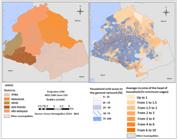
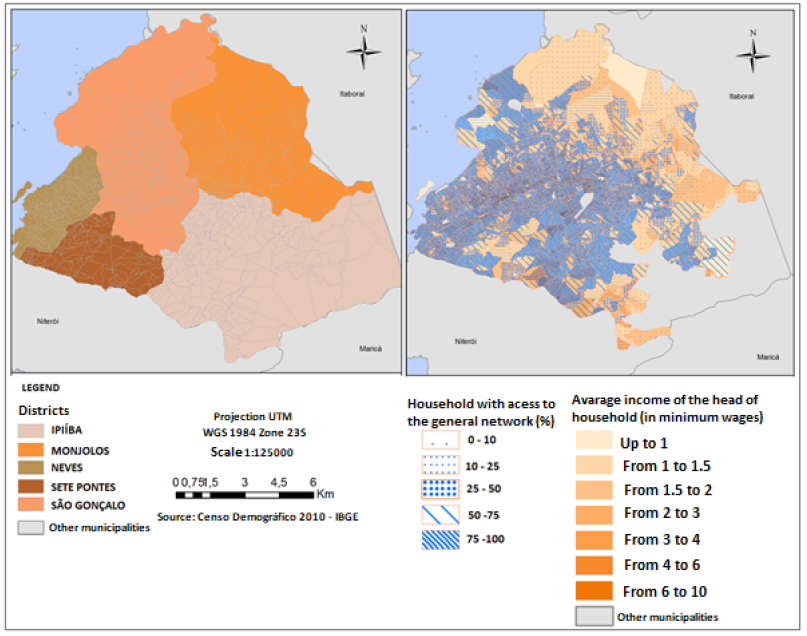
Studies on access to water services in São Gonçalo have identified a marked hydrosocial scarcity (Gouveia, 2017; Gouveia et al., 2021). Based on municipal data (Municipal Water and Sanitation Plan) and the 2010 IBGE Census, it was found that areas with higher social and economic indicators were more favourably covered by the water supply services. At the opposite end, areas occupied by inhabitants with lower social and economic power were excluded from access to the water supply services. In territorial terms, these corresponded to two of the five municipal districts: Ipiíba and Monjolos. Together, these two districts - home to more than 400,000 inhabitants - simultaneously presented the worst socio-economic indicators and the lowest coverage of treated water services. Figure 1 shows the districts of São Gonçalo and the territorialisation of the observed hydrosocial scarcity:
Administrative districts & hydrosocial scarcity (average monthly income versus water supply by public system) in São Gonçalo, RJ
The low coverage of distribution systems in these districts forces the population to resort to alternative forms of supply such as wells, cisterns and water trucks. Some of these - deemed inadequate and unsafe in terms of both quantity and quality of water - may even be associated with the occurrence of waterborne diseases recorded in these areas (Gouveia et al., 2021).
Investigating another dimension of hydrosocial scarcity: verification method
The methodological process, exploratory in nature and combining qualitative and quantitative approaches, was designed to investigate in situ the possible occurrence of another dimension of hydrosocial scarcity in the municipal water supply services in São Gonçalo, RJ - a dimension that emerges across different socio-economic segments and remains invisible in official statistics. In this context, hydrosocial scarcity occurs through the intermittence or physical absence of water in households connected to the public system.
To investigate this hypothesis, fieldwork was conducted in two neighbourhoods of São Gonçalo connected to the water supply system, selected because they represent the segments of the municipal population with the highest and lowest socio-economic indicators. The sample definition and selection of neighbourhoods followed the non-probabilistic statistical method of typical case sampling. Using this technique, subgroups of the population were selected based on available information regarding access to water and socio-economic characteristics, ensuring representativeness of the researched universe and providing adequate estimates of the characteristics of the problem under investigation (Freitas et al., 2000; Gil, 2008; Dias, 2018). For the collection of these data, the research used disaggregated datasets at the level of census tracts from the 2010 IBGE Demographic Census - the most recent census available at the time of research. Based on official data on the type of water access and socio-economic indices of each neighbourhood in São Gonçalo, three criteria were established for selecting the neighbourhoods investigated in situ:
-
Both should be connected to the municipal water supply system;
-
One neighbourhood should include a segment of the municipal population with the highest socio-economic indicators, and the other, a segment with the lowest indicators;
-
Both neighbourhoods should be representative of the municipality’s population contigent, as well as accessible and safe for conducting the field research.
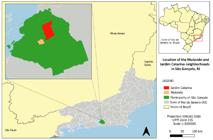
In accordance with the established criteria, the neighbourhoods of Mutondo and Jardim Catarina were selected. Both are connected to the water supply system and represent, respectively, the highest and lowest municipal socio-economic indicators. They are also among the most populous neighbourhoods in São Gonçalo, according to the 2010 Census. Below, some characteristics of these neighbourhoods are presented, together with their location within the municipal territory (Figure 2):
-
With 26,210 inhabitants and 9,681 households, the neighbourhood of Mutondo has the fourth largest population in the municipality and is located in the 1st district (São Gonçalo), which has the second highest rate of coverage by the public water system (88.61%) and the best social and economic indicators (Prefeitura de São Gonçalo, 2015; IBGE, 2011). The neighbourhood’s urban infrastructure includes private educational institutions, commercial buildings, fast-food outlets and restaurants. It concentrates a large share of condominiums and residential buildings, making it the third most highly valued neighbourhood in the municipality’s property market;
-
Jardim Catarina, located in the 3rd administrative district (Monjolos), has 73,042 inhabitants and 24,781 households. It is considered one of the largest low-income housing developments in Latin America, with 176 streets and 25,000 plots. The Monjolos district has the lowest rate of coverage by the public water system (55.48%) and the worst socio-economic indicators in the municipality (Prefeitura de São Gonçalo, 2015; IBGE, 2011). Ironically, the neighbourhood is considered the birthplace of the Imunana-Laranjal Integrated System, the location of the Laranjal Water Treatment Plant (ETA) and the starting point of the water distribution lines to Niterói, São Gonçalo, Paquetá Island, Inoã and Itaipuaçu in Maricá.
The in-situ investigation was carried out in one IBGE census tract from each neighbourhood, through household interviews conducted between November and December 2021. The selected samples represented 25% of the total households in each tract, with semi-structured questionnaires administered. Respondents were required to be adults, heads of household (or their spouses) and to agree to be interviewed. The census tracts surveyed and their main characteristics are shown in Table 1.
The hydrosocial scarcity invisible in official statistics
Field research in Jardim Catarina began with a socio-economic survey of the households. It revealed that 60% of household heads interviewed had completed only primary education (13.4% completed and 46.6% incomplete). The remaining 40% were divided as follows: 17.8% with complete secondary education; 11.1% with incomplete secondary education; 6.6% with higher education; and 2.2% with no schooling.
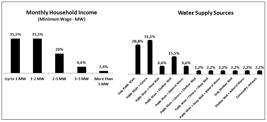
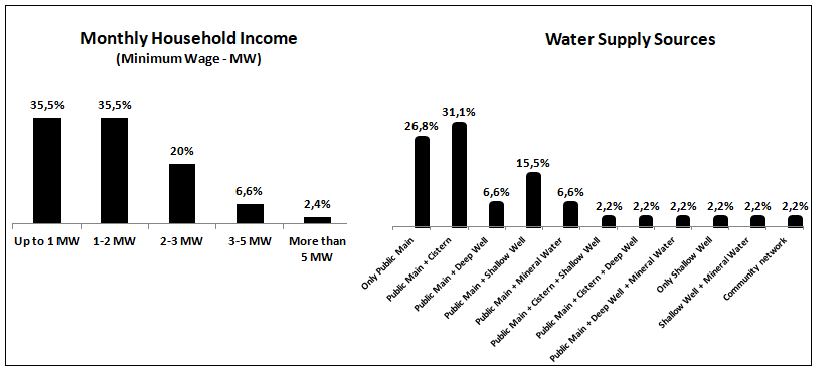
Regarding income, 35.5% of households had a family income of up to one minimum wage, the same proportion (35.5%) up to two minimum wages, 20% between two and three, and 9% more than three minimum wages (see Figure 3). Many respondents reported being beneficiaries of the Organic Law of Social Assistance (LOAS).2
In relation to water access, only 26.8% of households reported relying exclusively on the treated water supply services. The remaining 73.2% used alternative sources in combination with the public system or relied solely on alternative sources. The combined forms of access identified were: 31.1% through the distribution system and a cistern; 6,6% through the distribution system and a cistern; 15.5% through the distribution system and a shallow well; 6.6% through the distribution system and an shallow well; 6.6% through the distribution system and bottled water; 2.2% through the distribution system, cistern and shallow well; 2.2% through the distribution system, cistern and deep well; 2.2% through the distribution system, deep well and bottled water; 2.2% through shallow well and bottled water; 2.2% through shallow well only; and 2.2% through community-installed connections (Figure 3).
In terms of frequency of access to treated water, only 15.5% of respondents stated that they received water on a daily basis. The large majority (77.9%) reported being supplied by the distribution system on alternate days: 9% four to five times a week; 33.4% two to three times a week; and 35.5% only once a week. Various respondents who received water just once a week mentioned Wednesdays or Thursdays as the ‘official water day.’ One interviewee remarked: ‘Here, officially, Wednesday is the day we have water.’ The remaining 6.6% of households were not connected to the distribution system.
For 68.9% of respondents, treated water reached their homes with low pressure and frequent interruptions throughout the supply period. Owing to these conditions, 71% of households had suction pumps, hydraulic pumps, or both. While suction pumps were used to ‘draw’ water from the public system, increasing pressure and enabling the filling of rooftop storage tanks, hydraulic pumps were used for wells and cisterns. During the interviews, it was observed that the use of such equipment to facilitate water entry into households had become indispensable in the neighbourhood, even though most dwellings were single-storey.
One important fact observed in the field concerns the conflictual situation among users, caused by water scarcity and by the use of suction pumps for supply. Because of the limited amount of water circulating in the neighbourhood’s pipelines, households without pumps were able to access treated water only at night or early morning on those days when the neighbourhood was supplied. By ‘sucking’ the scarce water from the pipelines, users with pumps rendered it unavailable to others.
As an outcome of the dynamics of water flows in the pipelines, nearly 90% of respondents in the census tract reported routine water shortages in their households: 78% stated that it ‘always runs out,’ and 11% that it ‘frequently runs out.’ Only 44.5% considered their access to water sufficient for daily domestic needs, while 55.5% deemed it insufficient. Alongside these declarations, 62.2% of respondents identified a series of difficulties arising from the regular lack of water: cleaning the house (62.2%); washing clothes (60%); personal hygiene (33.3%); health-related issues (4.4%); and other problems (2.2%). For 37.8% of respondents there was no specific problem. Thus, even though the vast majority of households relied on multiple combined sources of supply, water remained insufficient to meet basic domestic demands. In this context, one resident recounted a moment of great difficulty: ‘We have even run out of drinking water because neighbours refused to share. We have had to bathe with rainwater from the guttering.’
The need to use suction pumps, hydraulic pumps, or both to ensure household access to water (treated or from other sources), beyond impacting local water dynamics, also imposes a significant financial burden on users. Many mentioned the high electricity bills, which they attributed to the frequent use of pumps: ‘I only have well water and a storage tank, so I have to switch the pump on every day, and the [electricity] bill is coming in expensive’; ‘I spend a lot of electricity using the pump. I use it three times a week’; ‘I have to use the pump for both the mains water and my well.’ Conversely, the high energy costs began to limit pump use and thus access to water: ‘I have to adapt to use water on the day it comes in so as not to rely too much on the cistern. On water days, I do the laundry, clean the yard, and tidy the house.’
When asked about possible seasonal factors interfering with the availability of treated water, 84.4% of respondents stated that in the summer months the pressure of water from the distribution system becomes even weaker with lengthier periods of scarcity. Some respondents specified: ‘For everyone living here in Catarina, the water gets worse in summer’; ‘In summer it comes less than three times a week’; ‘When the weather is hotter, we have less water. Sometimes it only arrives early in the morning and then runs out. Afterwards, only at night’; ‘In summer it gets much worse.’ As consequences of the worse access to treated water during summer, several respondents recalled negative experiences associated with Christmas and New Year celebrations: ‘There’s no water at Christmas, New Year, and the beginning of January’; ‘December and January are the worst. I’ve spent Christmas without water’; ‘In December and January we only get water once a week’; ‘I’ve gone New Year without water.’ Other accounts associated December with an increase in the movement of water trucks through the neighbourhood: ‘Every year-end water trucks are needed. The time of year with the most water trucks here is December’; ‘In December it gets worse and there are more water trucks.’ It should be noted that water trucks were observed in the area during the fieldwork interviews.
In 84.4% of the households surveyed there were no water meters. In relation to payment for water services, 53.4% of respondents stated that they did not pay for the services; 40% reported paying monthly bills; and 6.6% gave no response. Most of those who did not pay claimed that they did not receive water bills. However, among respondents who reported being billed, 57.8% said they did not make payments due to the absence of meters and their disagreement with the high values of estimated consumption on their bills. Combined with this deficiency, the limited availability of treated water and the need to resort to complementary forms of supply (wells, cisterns or water trucks) mean that users in arrears are not worried about having the services cut off.
Finally, 65.1% of respondents reported feeling insecure about their access to water, while only 34.9% stated that they felt secure. As for the reasons behind these perceptions, 72.1% attributed them to the quantity of water accessed; 16.3% to the quality of the water; and 11.6% to both quantity and quality. The sense of security was not necessarily linked to connection to the distribution system: while most respondents reported feeling insecure about water even when connected to the public system, 6.6% of those not connected said they felt secure. For example, one interviewee associated their sense of security with the quantity and quality of water from their own well; another, connected to the public system, felt secure only because she lived alone and used little water; two other residents also connected to the public system linked their security to the possession of large storage tanks. Finally, one woman emphasised that her sense of security was linked to her suction pump: ‘I feel secure. I have a pump. It’s bad for those who don’t.’
In the census tract of Mutondo, the built environment at first sight suggested a higher socio-economic standard than Jardim Catarina, as already indicated by the 2010 Census. There was an alternation between dwellings typical of the periphery and higher-standard residences, including a middle-class residential building, medium-sized shops, a private educational institution, a nightclub and snack bars.
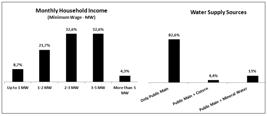
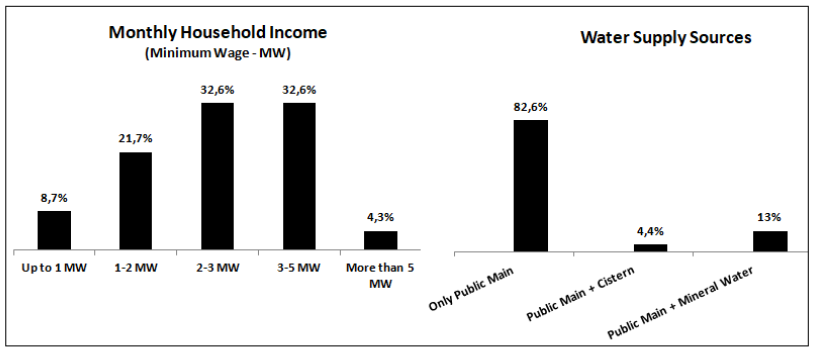
The socio-economic survey of the residences revealed that 15.2% of household heads had higher education; 36.9% had completed secondary education; 4.3% had incomplete secondary education; 41.2% had primary education (17.3% complete and 23.9% incomplete); and 2.2% had no schooling. In relation to income, 4.3% of the households surveyed had a family income above five minimum wages; 32.6% between three and five minimum wages; 32.6% between two and three minimum wages; and 30.4% up to two minimum wages (Figure 5). Thus, two-thirds of the households interviewed had a family income between two and five minimum wages. Notably, none of the respondents declared themselves beneficiaries of the LOAS.
In terms of water supply, all households (100%) were connected to the water supply system. Among these, 82.6% relied exclusively on treated water services, while among the remaining 17.4%, 4.4% used cisterns and 13% combined the consumption of bottled water with the treated water supply (Figure 4).
As for the frequency of access to treated water, 95.6% reported receiving water daily and just 4.3% on an alternating basis (three times a week). In 93.4% of households, supply occurred without interruption day and night; in 4.3% of cases, it was available only at night; and 2.3% did not know how to respond. Water pressure was considered strong by 76.1% of respondents, and medium or normal by 23.9%.
As a result of the dynamics of treated water in Mutondo, 90% of respondents stated that water ‘never runs out’ in their households, while 10% reported that it ‘occasionally runs out,’ only during system maintenance. All respondents (100%) considered the water they accessed sufficient for their domestic needs and reported no negative impacts from the functioning of the public water system on their household routines. At this moment of the research in Mutondo, two main points contrast with the situation observed in Jardim Catarina:
-
Residents who reported possessing cisterns stated that their use had only been necessary some 30 years ago and is no longer required today;
-
Even in two- or three-storey households, all respondents stated that pumps were not needed.
On the question of seasonal interference in the dynamics of the treated water supply, 50% of respondents reported no variations between the winter and summer months; 28.2% reported some variations; and 21.8% did not know how to respond. Among the 50% who reported variations, respondents said they ‘felt’ or ‘thought’ the water pressure was weaker in the hotter months. However, none reported an actual shortage. Two residents commented: ‘It gets weaker, but it doesn’t run out’; ‘It gets a little weaker during the day, but it doesn’t run out.’ When interviewees were asked to recall any period without water on a continuous basis, 86.9% said they did not remember, while 13.1% did. However, all of the 13.1% related this to the distant past: ‘Some ago’; ‘Many years ago’; ‘When I was a teenager [...].’
In 52.8% of households, water meters were installed and functioning; in 45% they were absent; and in 2.2% no information was provided. Among respondents, 76.1% reported paying for the services; 21.7% declared that they did not; and 2.2% did not respond. Those who did not pay explained their non-payment by the fact that no bills were delivered to their homes.
Finally, 95.5% of respondents reported feeling secure in relation to water access, while only 4.5% said they felt insecure. As for the reasons for these perceptions: 57.7% attributed them to the quantity of water accessed; 22.3% to the quality of the water; and 20% to both quantity and quality. On this point, respondents frequently referred to their own domestic routines with water as practical examples of ‘water security.’ Since there were no systemic problems with the treated water services in the locality, various other factors contributing to water security were positively noted by users. By contrast, in Jardim Catarina the need to procure access to water, not guaranteed by the supply system made quantity the main determinant of (in)security. Hence, ensuring quantity became both the objective and the symbol of security for poorer residents of the neighbourhood, irrespective of source or other factors.
Discussing the second dimension of hydrosocial scarcity
The in-situ research revealed the inequalities in São Gonçalo regarding access to an essential urban service: water supply. The realities of Jardim Catarina and Mutondo demonstrate how a dual standard can exist in the provision of water services, excluding those users with lower ability to pay for the services from accessing water, even when connected to the water system.
This creates two distinct realities within the same supply infrastructure: users with a higher socio-economic level receive continuous and satisfactory services, sufficient to meet domestic demands and resilient to seasonal variations, fostering a household-level perception of water security; by contrast, low-income users living in poorer neighbourhoods receive an intermittent supply that is vulnerable to seasonal variations and insufficient for domestic needs, generating a sense of household water insecurity. In this sense, although the Jardim Catarina neighbourhood hosts the Laranjal Water Treatment Plant (ETA) and is the starting point for the Imunana-Laranjal System’s distribution lines - which supply the municipalities of Niterói, São Gonçalo, Paquetá Island and part of Maricá - it is subject to physical water scarcity. Hence, the lack of supply for these users is not related to technical limitations but to socio-technical constraints: more distant areas with greater capital power receive water continuously, while economically vulnerable Jardim Catarina suffers from hydrosocial scarcity.
Although the study was based on 2010 Census data, the conclusions of the qualitative analysis reveal a structural phenomenon. The field results confirm that the presence of infrastructure does not by itself guarantee access to water: poor families, even when connected to the system, may face shortages due to the unequal provision of services. This finding highlights the fact that official indicators, limited to measuring water system expansion, fail to capture the selective scarcity experienced in these territories. In this way, the situation observed in Jardim Catarina demonstrates that, even when connected to the public supply system, poor users may be subject to a form of hydrosocial scarcity that is far more subtle to outsiders, forcing them to seek alternative water sources, rendering them vulnerable in diverse respects. This type of hydrosocial scarcity can be just as harmful as the kind identified by Gouveia (2017) and Gouveia et al. (2021), in which individuals in the poorest districts of São Gonçalo (Ipiíba and Monjolos) were not connected to treated water services.
The prolonged and systemic lack of supply experienced by 90% of respondents in Jardim Catarina, subjecting them to scarcity of up to 144 hours per week, makes wells, cisterns and water trucks the main sources of water. Suction and hydraulic pumps, which would not normally be required in an urban residential neighbourhood with comparable infrastructure, become necessary to enable household access to water. However, the use of suction pumps, tasked with drawing the limited water circulating in the pipelines, has itself become a new segregating factor, adding another layer to unequal hydrosocial relations by producing a second, micro-scale framework of scarcity. While users with enough capital to purchase pumps are able to divert water to themselves during the days and hours when water is supplied, those without pumps endure a deeper level of hydrosocial scarcity. For them, treated water becomes available only once the demand of the first group of users has been fully met, restricting their access to a brief night-time period on supply days.
In addition to the inequalities between individuals connected and disconnected from the supply system, therefore, this second dimension of hydrosocial scarcity not only promotes a hierarchy between users living in areas with better and worse socio-economic indicators, but also among those experiencing scarcity depending on the utilization (or not) of pumps. In other words, there are vulnerable individuals and highly vulnerable individuals, where the power of capital continues to govern water flows - here represented by the pumps.
An intriguing point observed during the field research concerns the emotional impact that the absence of access to water by public system can have on vulnerable users, something not observed in households not connected to the public supply service. Gouveia (2017) detailed how individuals living in areas without connection to the water supply system developed adaptations for living with scarcity, naturalising these solutions as the only possible forms of supply. This hydrosocial configuration shapes in these individuals a particular emotional dependence linked to their alternative forms of water access. By contrast, in this study, several users reported staying awake at night waiting for the arrival of water to fill storage tanks and barrels, operate pumps (which cannot be switched on without water in the pipelines) or even perform domestic tasks and store whatever water reserves they could manage.
Hence, negative emotional impacts were perceived among individuals in the second dimension of hydrosocial scarcity that were not observed in the first: these included feelings of frustration, worry, distress, stress and anxiety. Moreover, the distress and other negative emotional consequences resulting from the lack of water in Jardim Catarina are intensified by seasonal factors that directly influence the depth of hydrosocial scarcity. During hot seasonal periods, scarcity is aggravated by the natural increase in water demand. Respondents from the neighbourhood expressed great concern about supply during the summer months and also associated festive year-end periods with negative memories of acute scarcity, having to purchase water from vendors and witnessing the increased circulation of water trucks.
It becomes clear, therefore, that the second dimension of hydrosocial scarcity exposes already vulnerable users to multiple other forms of vulnerability. Economically, financial outlays are needed to drill wells, construct cisterns and purchase water from trucks, as well as additional costs on electricity bills due to the intensive use of pumps. Socially, there is a reduction in quality of life and in the full freedom of users since their routines become bound to the days and hours of supply. Environmentally, there is the possibility of a sewage intrusion into drinking water distribution systems for users who draw water from wells in a densely occupied neighbourhood where households don’t have sewage system, relying on soak pits for wastewater disposal.
Finally, the naturalisation of ‘official water days,’ the resorting to alternative forms of supply and the various domestic adaptations made to cope with hydrosocial scarcity reveal a certain conformation to this reality. This is perceived by vulnerable users as natural, apolitical and inevitable. On the other hand, local conflicts over the possession and use of pumps contribute to weakening the collective identity and cohesion of this social group. Multiple realities and levels of access to water are thereby produced on the micro-scale, eroding the political potential for collective mobilisation that could be directed towards seeking an effective solution for transforming the local reality. Moreover, the household resilience strategies developed to cope with the hydrosocial scarcity of treated water in Jardim Catarina have produced a false perception of domestic water security, shifting what should be the responsibility of the state onto pumps, wells and cisterns.
As Guy et al. (2010) and Swyngedouw (2009) point out, therefore, the findings indicate that the circulation of treated water in São Gonçalo’s infrastructure is the product of a combination of physical, social, political, economic and technological factors. Water thus becomes a hybrid element, simultaneously social and natural, through a socio-cultural logic conceived and materialised by the infrastructure of the Imunana-Laranjal System in the municipality. In this way, the non-neutrality of water in São Gonçalo’s hydrosocial cycle, grounded in choices, not only shapes H₂O and its flows in line with dominant interests, but also influences the behaviour of individuals in the production of water abundance or scarcity. We are dealing with a socio-ecological process in which water and social actors mutually shape one another across space and time (Linton; Budds, 2014).
Final remarks
This article aimed to investigate another dimension of hydrosocial scarcity in São Gonçalo, RJ, related to the quality of water supply services provided to different socio-economic strata of the municipal population. The field results demonstrated that municipal scarcity goes beyond what official figures suggest. Statistics reveal just one dimension of scarcity in access to water, that of individuals excluded from the public supply system, residents of the poorest districts of São Gonçalo (Ipiíba and Monjolos). However, this research identified a second dimension of hydrosocial scarcity, deeper and existing within households already connected to the water supply system. In this dimension, while supply in the neighbourhood with better socio-economic conditions was daily, uninterrupted and with strong water pressure, in the neighbourhood with the lowest income indicators supply was limited to one or two nights per week and characterised by weak pressure.
Insufficient access to treated water forces the poorest users to seek alternative solutions, some of which are considered unsuitable or unsafe. For many, these alternatives have become the main sources of water, rendering them as vulnerable as those individuals disconnected from the supply system. Moreover, the adaptations made to cope with shortages have led to the naturalisation of socially produced scarcity, establishing and reinforcing the acceptance of ‘official water days.’ So while adaptive solutions respond to hydrosocial scarcity, they also further expose, segregate and depoliticise an already vulnerable and marginalised social group.
This hydrosocial scarcity, invisible in official statistics, highlights the complexity of the water flows that make up the hydrosocial cycle in São Gonçalo. The problem stems from the incomplete coverage of the existing system, particularly with regard to storage capacity. The poorest neighbourhoods are those without reservoirs, clearly demonstrating the political ecology argument that technical choices in water distribution can function as mechanisms of either access or exclusion of populations from essential services. The case of São Gonçalo shows that large-scale water supply systems can also operate as socio-technical mechanisms of exclusion from access to water and water rights through more subtle and less visible forms than the absence of household connections to supply systems.
In this way, the combination of choices regarding the ordering of water flows together with collective practices of adaptation has institutionalised the territorialisation of urban water scarcity in the municipality, manifested both materially and symbolically in people’s everyday lives and in subtle forms of socio-environmental marginalisation and degradation. As Ioris (2012) argues, the production of urban water scarcity is more than merely the mechanical outcome of unequal urban development: it is a ‘territorial adjustment’ of the relationship between water and capital. The determinants of this territorial adjustment, as identified in the present study, call for a deeper investigation of public policies and the management of water services - that is, of other hydrosocial relations beyond those presented here.
This research underscores the fragility of ensuring the human right to water in a context where market forces direct flows towards users with greater capacity to pay. It also highlights issues on how universal access should be assessed: simply being connected to water supply system does not necessarily imply access to the services. By producing and analysing real data on access to water across different socio-economic segments of the population, this study demonstrates the weakness of current methods for obtaining official supply data and the need for their improvement. In this sense, the findings provide resources not only for future updates on the phenomenon in the region but also for studies investigating the quality of access to treated water in poor areas.
In order to undertake a realistic analysis of the advances made towards the universalisation of water access - a target set for 2033 within the framework that regulates new private concessions - it is essential, therefore, to comprehend how services are delivered to vulnerable populations, particularly in vulnerable urban areas and peripheral municipalities of metropolitan regions. Indicators of connection to water public system are not sufficient. It is the state’s duty, via public water and sanitation policies and regulation, to establish indicators that genuinely represent real conditions. Otherwise, the state risks contributing to the silent perpetuation of exclusion of human water rights.
Acknowledgments
This research was supported by the Brazilian National Council for Scientific and Technological Development (CNPq) and the Carlos Chagas Filho Foundation for Research Support of the State of Rio de Janeiro (FAPERJ).
References
- Acselrad, H. (2004). Conflitos ambientais no Brasil. Rio de Janeiro: Relumé Dumará; Fund. Heinrich Boll.
- Bakker, K. (2012). Water: Political, biopolitical, material. Social Studies of Science, v.42, n.4, p.616-623.
- ______. (2003). An un cooperative commodity: privatizing water in Englandand Wales. Oxford: Oxford University Press.
- Boelens, R., Hoogesteger, J., Swyngedouw, E., Vos, J., & Wester, P. (2016). Hydrosocial territories: a political ecology perspective. Water International, p.1-14.
- Brazil. (2022). Ministério da Integração e do Desenvolvimento Regional. Sistema Nacional de Informações sobre Saneamento (SNIS). Diagnóstico Temático dos Serviços de Água e Esgoto.
- ______. (2007). Lei Federal nº 11.445 de 05 de janeiro de 2007. Lei do Saneamento Básico.
- ______. (2020). Lei Federal n°14.026 de 15 de julho de 2020. Novo Marco Legal do Saneamento Básico.
- Britto, A. L., Formiga-Johnsson, R. M., & Carneiro, P. R. F. (2016). Abastecimento público e escassez hidrossocial na Metrópole do Rio de Janeiro. Ambiente & Sociedade. São Paulo, v.19, n.1, p.185-208.
- Budds, J., Linton, J., & Mcdonnel, R. THE HYDROSOCIAL CYCLE. (2014). Editorial. Geoforum, v.57, p.167-169.
-
Dias, M. (2018). Técnicas de amostragem probabilística e não-probabilística. Disponível em: https://www.opuspesquisa.com/blog/tecnicas/amostragem/. Accessed 15 January 2023.
» https://www.opuspesquisa.com/blog/tecnicas/amostragem - Diniz, T.G., Del Grande, M.H., & Galvão, C.O. (2021). Vulnerabilidade domiciliar em situação de intermitência no abastecimento de água. Engenharia Sanitária e Ambiental, v.26 n.3, p.535-543.
- Freitas, H., Oliveira, M., Sacool, A. Z., & Moscarola, J. (2000). O método de pesquisa survey. Revista de Administração, v., n.3, p.105-112.
- GIL, A. C. (2008). Métodos e técnicas de pesquisa social. São Paulo: Atlas.
- Goldin, J., Sneddon, C., & Harris, L.M. (2013). Introduction: interrogating hegemonic discourses in water governance. In: Harris, L.M., Goldin, J.A., Sneddon, C. (Eds.), Contemporary Water Governance in the Global South: Scarcity, Marketizationand Participation. London: Earthscan, p.1-10.
-
Governo do Estado do Rio De Janeiro. (2024). Instituto Rio Metrópole. COBRAPE. Plano Metropolitano de Saneamento - Produto 2. Diagnósticos Setoriais. Available at: https://www.planosaneamentormrj.com.br/_files/ugd/c27b98_c843a1 e678fb425ebe49ec5f18cb5824.pdf Accessed 31 January 2025.
» https://www.planosaneamentormrj.com.br/_files/ugd/c27b98_c843a1 e678fb425ebe49ec5f18cb5824.pdf - ______. (2021). Concessão de Saneamento. Estudos e Documentos Referenciais.
- Gouveia, A. G. (2017). Escassez hidrossocial e abastecimento de água: o caso do município de São Gonçalo, Rio de Janeiro. Dissertação de Mestrado. Rio de Janeiro. Programa de Pós-Graduação em Engenharia Ambiental, Universidade do Estado do Rio de Janeiro - PEAM/UERJ, 203p.
- ______. (2022). Abastecimento de água e escassez hidrossocial no município de São Gonçalo, Rio de Janeiro. Tese de Doutorado. Rio de Janeiro. Programa de Pós-Graduação em Meio Ambiente, Universidade do Estado do Rio de Janeiro - PPGMA/UERJ, 339p.
- Gouveia, A. G., Formiga-Johnsson, R. M., & Britto, A. L. (2021). Escassez hidrossocial no município de São Gonçalo, Região Metropolitana do Rio de Janeiro. Revista Política e Planejamento Regional, v.82, n.2, p.161-183.
- Guy, S., Marvin, S., Medd, W., & Moss, T. (2010). Shaping Urban Infrastructures: Intermediaries and the Governance of Socio-Technical Networks. London: Earthscan.
- IBGE. (2011). Instituto Brasileiro de Geografia e Estatística. Censo Demográfico 2010: Resultados do Universo por Setor Censitário. Rio de Janeiro.
-
______. (2024). IBGE Cidades (São Gonçalo). Available at: https://cidades.ibge.gov.br/brasil/rj/sao-goncalo/panorama Accessed 14 April 2024.
» https://cidades.ibge.gov.br/brasil/rj/sao-goncalo/panorama - Ioris, A. (2021). The geography of multiplescar cities: Urban development and water problems in Lima, Peru. Geoforum, v.43, n.3, p.612-622.
- Larsimont, R. (2014). Ecología política del agua: reflexiones teórico-metodológicas para el estudio del regadío en la provincia de Mendoza. In: 2° Encuentro de investigadores en Formación en Recursos Hídricos. Buenos Aires: IFRH.
- Leff, E. (2003). La ecología política en América Latina: un campo en construcción. Sociedade e Estado, v.18, p.17-40.
- Linton, J. (2010). What is Water? The History of a Modern Abstraction. Vancouver: UBC Press.
- Linton, J., & Budds, J. (2014). The hydrosocial cycle: Defining and mobilizing a relational-dialectical approach to water. Geoforum, v.57, p.170-180.
- Mao, K., Zhang, Q., Xue, Y., & Weeks, N. (2020). Toward a socio-political approach to water management: successes and limitations of IWRM programs in rural northwestern China. Frontiers of Earth Science, v.14, n.2, p.268-285.
- Martínez-Alier, J. (2015). 25 años de Ecología Política. In: 25 años de ecologia política: entre elactivismo y la academia, movimientos sociales y cambio climático, perspectivas sobre ecologia política. Ecología Política - cuadernos de debate internacional. Catalunya: Gobierno de España, p.64-65.
- ONU. (2014). Organização das Nações Unidas. Manual prático para a realização dos direitos humanos à água e ao saneamento pela relatora especial da ONU, Catarina de Albuquerque. Princípios. Portugal: Organização das Nações Unidas.
- PEDUI. (2018). Plano Estratégico de Desenvolvimento Urbano Integrado da Região Metropolitana do Rio de Janeiro,Tomo II. Rio de Janeiro: Consórcio Quanta Jaime Lerner Arquitetos Associados, Câmara Metropolitana.
-
Prefeitura de São Gonçalo. (2024). Website. Available at: http://www.saogoncalo.rj.gov.br/mapas.php Accessed 13 March 2024.
» http://www.saogoncalo.rj.gov.br/mapas.php -
______. (2015). Relatório Final do Plano Municipal de Saneamento Básico. Available at: https://www.saogoncalo.rj.gov.br/wp-content/uploads/2023/05/plano-municipal-de-saneamento-basico-relatorio-final.pdf
» https://www.saogoncalo.rj.gov.br/wp-content/uploads/2023/05/plano-municipal-de-saneamento-basico-relatorio-final.pdf - Quintslr, S. (2018). A (re)produção da desigualdade ambiental na metrópole: conflito pela água, ‘crise hídrica’ e macrossistema de abastecimento no Rio de Janeiro (Tese de Doutorado). Programa de Pós- Graduação em Planejamento Urbano e Regional, Universidade Federal do Rio de Janeiro - UFRJ.
- Swyngedouw, E. (2004a). Privatizando o H2O: Transformando águas locais em dinheiro global. Revista brasileira de estudos urbanos e regionais, v.6, n.1.
- ______. (2004b). Social Power and the Urbanization of Water: Flows of Power. New York: Oxford University Press.
- ______. (2009). The Political Economy and Political Ecology of the Hydro-Social. Journal of Contemporary Water Research & Education, p.56-60.
- Swyngedouw, E., Kaika, M., & Castro, J. E. (2002). Urban Water: A Political-Ecology Perspective. Built Environment, v.28, p.24-137.
- Zwarteveen, M. Z., & Boelens, R. (2014). Defining, researching and struggling for water justice: some conceptual building blocks for research and action. Water International, p.143-15.
The research data are presented in the main body of the document.

 Font:
Font: 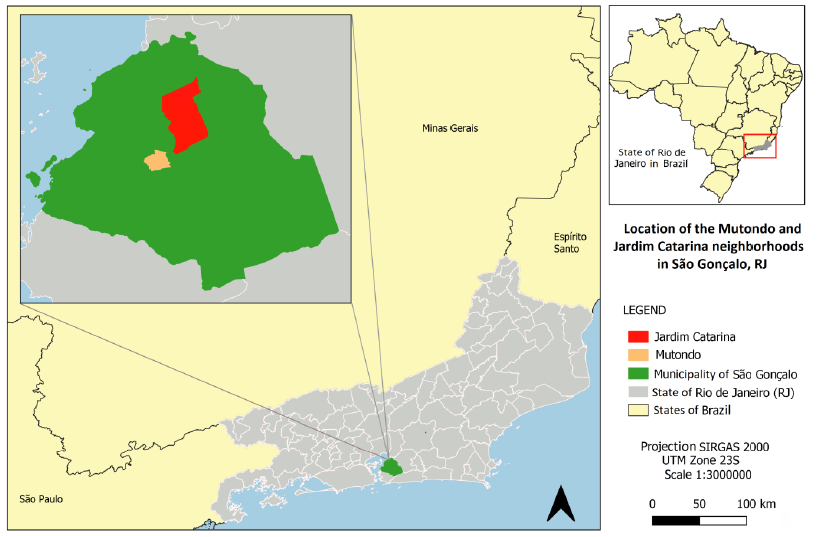 Font: the authors, 2024.
 Font: the authors, 2024.
 Font: the authors, 2024.