
 The invisibility of hydrosocial scarcity in São Gonçalo, Rio de Janeiro Metropolitan Region
In political ecology, the concept of hydrosocial scarcity argues that the circulation of water in urban spaces is inherently tied to the flow of money and capital, leading to socially produced water exclusion for vulnerable individuals and groups. This paper builds on the recognition of hydrosocial scarcity in São Gonçalo, RJ, to investigate a second, often overlooked dimension of scarcity - one that remains invisible in official statistics - resulting from intermittent or inadequate water supply in households formally connected to the service. The findings reveal that this form of hydrosocial scarcity has multiple impacts: it compels low-income populations to seek alternative water sources, such as wells, cisterns, water trucks and suction pumps; it fosters the normalization of scarcity by shaping new household behaviours and routines, even reinforcing hierarchies of water access within this broader context of water insecurity; and ultimately, it further marginalizes vulnerable individuals, excluding them from policies designed to ensure access to safe water.
Keywords:
Right to water and sanitation; Hydrosocial inequalities; Official water supply data; Water governance policies; Domestic water security
 Thumbnail
 Thumbnail
 Thumbnail
 Thumbnail
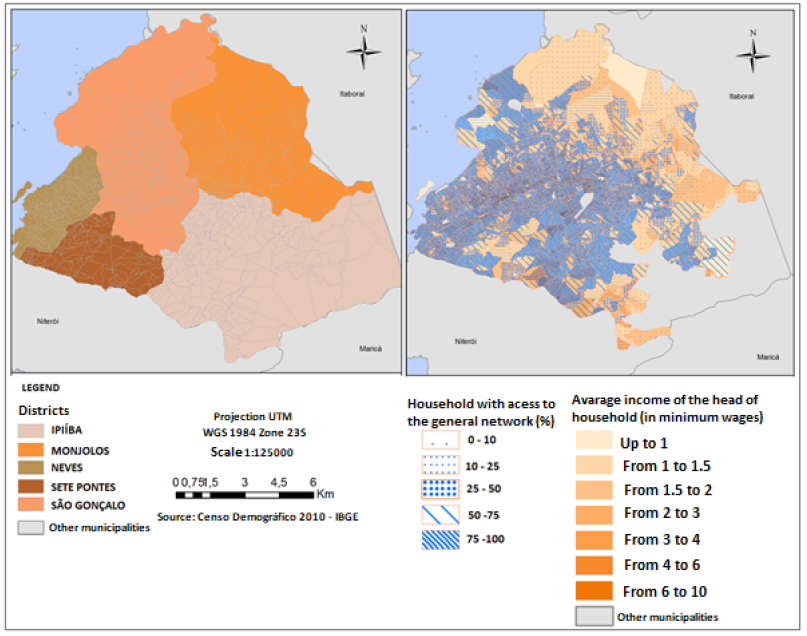 Font:
Font: 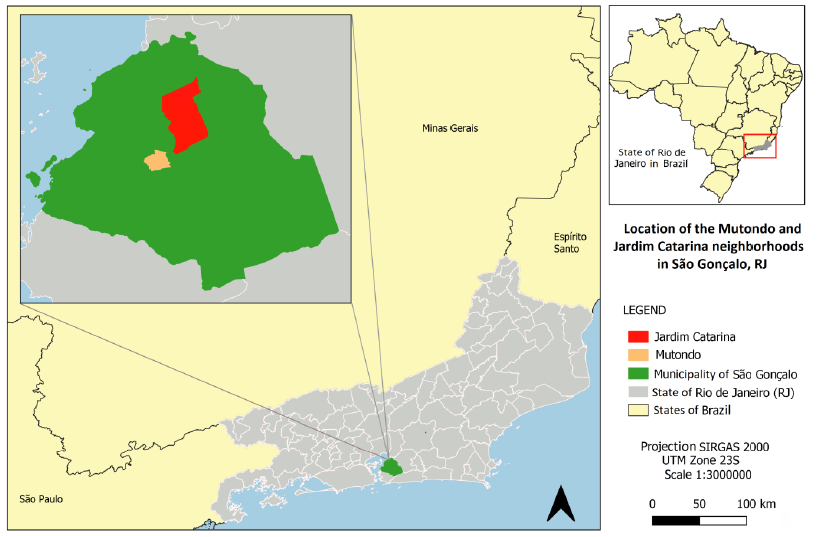 Font: the authors, 2024.
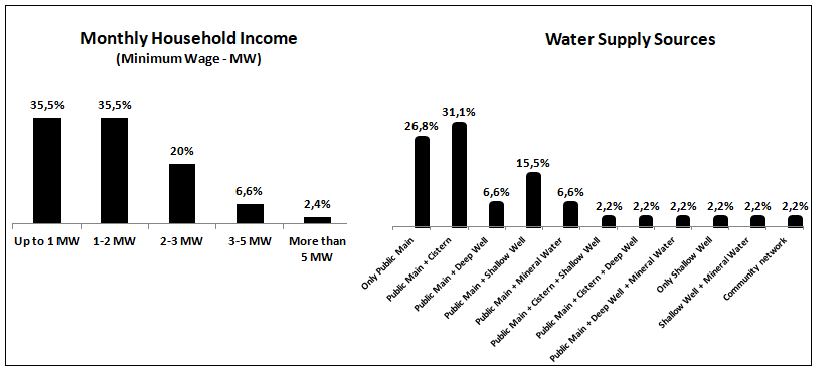 Font: the authors, 2024.
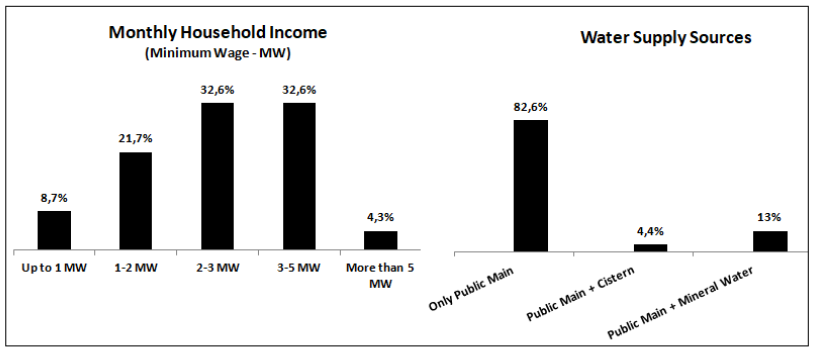 Font: the authors, 2024.