
 Local ecological knowledge about reptiles and cryptic lizard in urban park in the Atlantic Forest
Abstract
Protected areas are important strategies for conserving biodiversity, but maintaining them is a challenge, especially in urban areas. In this study, the local ecological knowledge (LEK) of employees on the fauna of reptiles and small cryptic lizard species in an urban park in the Atlantic Forest was investigated. A total of 39 employees of the park were interviewed. It was found that employees have more specific knowledge about the local flora and recognize the importance of the park for the conservation of species. Employees with longer working time in the park have more LEK on the cryptic and endangered lizard Coleodactylus natalensis. This fact is of great relevance when added to the small size of the species and the lack of cultural and utilitarian value for the employees, since it is not the pattern observed in other LEK studies. This work also highlights the threats to which urban parks are subjected.
Keywords:
Local knowledge; urban parks; cryptic species; ethnoherpetology; conservation
Resumo
Áreas protegidas constituem estratégias importantes de conservação da biodiversidade, mas é um desafio mantê-las, especialmente em áreas urbanas. Em um Parque Urbano na Mata Atlântica, foi investigado o Conhecimento ecológico local (CEL) dos funcionários sobre a fauna de répteis e de espécies de lagartos crípticas de pequeno porte. Foram entrevistados 39 funcionários do Parque. Constatou-se que os funcionários detêm conhecimentos mais específicos sobre a flora local, e reconhecem a importância do Parque para conservação das espécies. Funcionários com maior tempo de trabalho no Parque possuem maior CEL sobre o lagarto críptico e ameaçado de extinção Coleodactylus natalensis. Esse fato, quando adicionado ao tamanho diminuto da espécie, e inexistência de valor cultural e utilitário para os funcionários, é de grande relevância, visto que não é o padrão observado em outros estudos de CEL. Este trabalho também evidencia as ameaças às quais parques urbanos estão submetidos.
Palavras-chave:
Conhecimento local; Parques urbanos; espécies crípticas; etnoherpetologia; conservação
Resumen
Las Áreas Protegidas o Unidades de Conservación son estrategias de preservación, pero mantenerlas es un desafío, especialmente en áreas urbanas. En el Parque Municipal Urbano, con un remanente de Mata Atlántica Norte, se investigó el saber ecológico local (SEL) de los empleados sobre la fauna de reptiles y sobre especies de lagartijas crípticas pequeñas. Se entrevistaron 39 empleados de diferentes sectores del Parque. Entre los resultados se encontró que los empleados tienen un conocimiento más específico sobre la flora local, y reconocen la importancia del parque para la conservación de las especies. Los empleados con más tiempo de trabajo en el parque tienen un SEL más alto en el lagarto críptico y amenazado Coleodactylus natalensis. Este hecho, sumado al pequeño tamaño de la especie, y la falta de valor cultural y utilitario para los empleados, es de gran relevancia, ya que no es el patrón observado en otros estudios de SEL. Este trabajo también destaca las amenazas a las que están sujetos los parques urbanos y destaca las diferencias entre los parques urbanos y los rurales.
Palabras-clave:
Saber local; parques urbanos; especies crípticas; etnoherpetología; conservación
Introduction
Life on Earth is experiencing the sixth mass extinction, putting the entire world’s biodiversity at risk (CEBALLOS; EHRLICH; RAVEN, 2020). Anthropogenic actions cause habitat loss and fragmentation, the introduction of exotic species, overexploitation of natural resources, environmental pollution, and climate change, which are the main factors generating population declines and species extinctions (GIBBONS et al., 2000; PRIMACK; RODRIGUES, 2001; RODRIGUES, 2005).
Given this scenario, ethnology emerges as a possibility for studying biodiversity by inserting the knowledge and relationships of human societies into ecological studies. Although Ethnobiology, specifically Ethnozoology, are promising areas which have been growing considerably in recent years (SILVANO et al., 2006; BEAUDREAU; LEVIN, 2014; LANA PINTO; CRUZ; SILVÉRIO PIRES, 2015; RAMIRES et al., 2015; REYES-GONZÁLEZ et al., 2020), there is still a lack of studies on Ethnoherpetology, a subarea of Ethnozoology dedicated to studying the relationship between human cultures and popular knowledge about herpetofauna (ALVES et al., 2010). This fact limits the development of appropriate conservation strategies for several species, considering that such studies are fundamental from a conservation perspective (ALVES et al., 2010; ALVES; SOUTO, 2011; DIEGUES, 2000; PASSOS et al., 2015).
Knowing the natural history of species and considering the perceptions and knowledge of local actors is the first step in conservation strategies. However, when it comes to reptiles, especially those with a small body size, cryptic, and which tend to have less contact and charisma among the local population, implementing these strategies becomes more challenging (SITAS; BAILLIE; ISAAC, 2009; FRYNTA et al., 2013; MACDONALD et al., 2015; ROLL et al., 2016). There is great difficulty in conserving small species due to less funding, research, and conservation actions than for larger and more charismatic species, such as large mammals (FISHER, 2011). These numbers regarding reptile species can be much more worrying (MAREŠOVÁ; FRYNTA, 2008; SITAS; BAILLIE; ISAAC, 2009). Studies show that the willingness to protect and the resources allocated for conservation are often related to human attitudes towards the animal in question, and not in relation to indicators of real conservation priority, such as their status on the IUCN red list, for example (SITAS; BAILLIE; ISAAC, 2009).
In this context, we find some lizards from the Sphaerodactylidae family, which are predominantly diurnal and live among the litter of forested habitats (VANZOLINI, 1968; FREIRE, 1999; MORETTI, 2009). One of the species in this family is the Natal pygmy gecko or leaf lizard, Coleodactylus natalensisFreire, 1999, considered the smallest lizard in South America, measuring up to 24 mm in snout-vent length (FREIRE, 1999). This species is endemic to the northern region of the Brazilian Atlantic Forest, specifically forest remnants in Rio Grande do Norte State, and is officially threatened with extinction (BRASIL, 2022). The forested habitats used by C. natalensis are highly fragmented by uncontrolled urban expansion and tourism. Along with these threats, the small body size and cryptic coloration of the species make it even more difficult to include the local population in conservation strategies (BERTI et al., 2020; ROLL et al., 2016). The parks where this species occurs are isolated within urban areas; therefore, their conservation directly depends on the maintenance of these protected areas and awareness among the population that lives around and/or works in these parks.
When it comes to biodiversity conservation, it is essential to analyze the history and the way in which human societies have related to the environment and local biodiversity (ALVES; ALBUQUERQUE, 2012). Understanding this relationship is of great relevance, as it contributes to the conservation of biodiversity (GADGIL; BERKES; FOLKE, 1993), rare species (COLDING, 1998), protected areas (JOHANNES, 1998), ecological processes and sustainable use of resources in general (BERKES; COLDING; FOLKE, 2000; CUNHA, 1999; RAMIRES et al., 2015; SILVANO et al., 2006). An important tool for working on conservation with society is the study of local ecological knowledge (LEK), which can be defined by the accumulated knowledge about ecology and management of natural resources that a person acquires throughout their life, which can vary by gender, age, educational level and frequency of contact with natural areas (BERKES; COLDING; FOLKE, 2000; GADGIL; BERKES; FOLKE, 1993). It constitutes a field of scientific knowledge that aims to test the ecological validity of certain forms of natural resource management used by a cultural group in a specific area (ALVES; SOUTO, 2015).
In this context, taking into account that C. natalensis is an endangered species, endemic to fragments of the Atlantic Forest, cryptic and has a small body size, using it as a model to understand what people’s knowledge about species with a small body size can provide data of global relevance that supports ethnoconservation strategies. However, current ethnobiological research is mostly related to the rural environment, and knowledge expression in urban populations is still little known. In this sense, the existence of some species of lizards adapted to anthropic or negatively impacted environments, but which still manage to remain in urban forest remnants (as is the case of C. natalensis), added to the family ancestry of portions of the urban population often related to rural areas, supports the occurrence of particular conceptions about lizards in urban centers (PASSOS et al., 2015).
In view of the above, this work addresses an evaluation of local ecological knowledge of employees of an urban park about the Atlantic Forest, herpetofauna, and the small cryptic lizard C. natalensis, which is the flagship species of this Park (Municipal Law No. 6,438 of March 7, 2014). Specifically, the objectives are to: (1) identify employees’ local ecological knowledge (LEK) about reptile fauna and the importance of the existence of the protected area; (2) identify whether the employees’ LEK converges with the scientific literature and whether there are alternative conceptions about the local herpetofauna; (3) determine what ecological knowledge these workers have about C. natalensis; and (4) evaluate the differences in the LEK of the interviewees depending on their length of time working in the park and rural or urban family ancestry. We hypothesize that: (1) Park officials consider it relevant for biodiversity conservation and hold LEK on local reptile fauna; (2) the level of LEK on the reptile fauna and the natural environment of the park influences the level of LEK on C. natalensis; (3) ancestry in rural areas contributes to the LEK regarding the park’s fauna and flora , even though it is located in an urban area; and (4) working time in the park is directly related to greater knowledge about C. natalensis due to greater chances of local experiences with this species over time.
Material and methods
Study area
This study was conducted in the Dom Nivaldo Monte Municipal Park (Figure S1), a Conservation Unit (CU) for Integral Protection of the Northern Atlantic Forest. This CU spans 136.54 hectares, and is located in the urban area of Natal/RN, Brazil (“Prefeitura Municipal do Natal”, [s.d.]). The park is popularly known as Parque da Cidade, and it was established through Municipal Decree No. 87,078/2006 as an Integral Protection Conservation Unit, with the primary aim of nature preservation and limited indirect use of its natural resources. The park is used for recreational activities for the local population, including hiking, cycling, and nature trails. Interviews were conducted with the CU’s headquarter staff as part of this study.
Data collection
Data collection took place in the months of July and August 2021 through application of semi-structured questionnaires applied to park employees on the following topics: conservation, herpetofauna, and ecology of the leaf lizard Coleodactylus natalensis, herein representing our model of small cryptic species.
This study was approved by the Research Ethics Committee (CEP) of the Federal University of Rio Grande do Norte under certificate number CAAE 46979421.8.0000.5537 and Opinion number 4.812.599. Following the rules of this Committee, an Informed Consent Form (ICF) was presented to employees before applying the questionnaire, in accordance with the standards established by Resolution No. 510/2016 of the National Health Council and previously approved by the Research Ethics Committee (CEP) of the Federal University of Rio Grande do Norte (UFRN) (CEP/ UFRN no. 227/12).
The questionnaires were administered individually to avoid bias in responses, lasting between 15 and 30 minutes. Before application, the study proposal was briefly explained and the person was asked if they would like to participate; those who accepted signed the ICF, authorizing the use of data for research. The questionnaire was divided into 4 parts: (1) profile of participants (age, ancestry from a rural environment, time working in the park, gender, education, sector of activity in the park (10 questions); (2) LEK about the natural environment and conservation of the Park (6 questions); (3) LEK on the local reptile fauna (5 questions); and (4) LEK about the lizard C. natalensis (11 questions).
During part 3 of the questionnaire, eight photos of animals that occur in the region were shown (Figure S2): giant armadillo (Euphractus sexcinctus), red-footed tortoise (Chelonoidis carbonaria), boa constrictor (Boa constrictor), earthworm (Annelida), Chaco tree frog (Boana raniceps), gecko (Tropidurus hispidus) , snake lice (Diplopoda), and Boettger’s sipo (Chironius flavolineatus). Employees were asked to identify which of these animals they classified as reptiles. Then, still in part 3 of the questionnaire, participants were shown photos of five species of lizards that occur in the Park area (Figure S3): Vanzosaura multiscutata, Brasiliscincus heathi, Hemidactylus mabouia, Salvator merianae and Coleodactylus natalensis; after presenting the images, they were asked whether they knew how to identify which was the leaf lizard (C. natalensis) among these lizards. The interview was subsequently closed for those participants who could not identify the leaf lizard or who identified it incorrectly; for those who correctly identified C. natalensis, the questionnaire continued to part 4, with specific questions about ecological aspects of this species, including reproductive biology, habitat use, period of activity, diet and thermoregulation.
Data analysis
Next, a “comparative cognition table” was created for the qualitative analysis of the LEK, containing the information provided by the interviewees (most frequent answers) about the conservation of the park, about the reptiles, and about C. natalensis specifically, and the convergences and divergences with scientific literature (COSTA NETO; SANTOS FITA; VARGAS CLAVIJO, 2009). When the information provided by the participant about C. natalensis was not found in the scientific bibliography for this species, what was available for the Coleodactylus genus was taken into consideration, and when not found for this genus, general information for gecko lizards (Gekkota) from leaf litter was taken into account due to the phylogenetic proximity and ecological similarities between the species of this group (KLUGE, 1995).
Then, a table for quantitative data analysis was organized with scores prepared by the authors for the obtained responses (Table S1). Participants who obtained the maximum score, meaning that they got all the answers correct, reached 10 points. The same methodology was used for information on the ecological attributes of Coleodactylus natalensis (Table S2); specific questions about the leaf lizard were only asked to participants who adequately identified the species through photography.
With this score made for each of the informants, independent samples t-tests were performed to verify whether there was an influence regarding time working in the park (more or less than 5 years) and the informant’s ancestry (urban or rural) on the LEK scores regarding the natural environment of the park and the reptiles. An independent t-test was also applied to compare these LEK scores between respondents who recognized and those who did not recognize the C. natalensis species among the lizard images presented.
Additionally, the Chi-squared test was applied to assess whether time working in the park and the informant’s ancestry influenced their recognition of C. natalensis. For people who recognized C. natalensis, a Spearman’s correlation analysis was performed to test whether there was a relationship between LEK scores on the park’s natural environment and reptiles, and LEK scores on the C. natalensis species.
All statistical analyzes were performed using SPSS Statistics 20.0 (IBM) for Windows (α = 0.05). All variables were tested for normality and homoscedasticity of variances before performing parametric tests.
Results
A total of 39 employees of the Parque da Cidade were interviewed between July and August 2021 (27 male and 12 female), aged between 24 and 63 years old. From the total number of interviewees, eleven worked in the environmental management sector - EMS (28.2%), eleven in the environmental education center - EEC (28.2%), ten in the environmental action group - EAG (25.6%), 4 assistant general services employees - ASG (10.3%) and 3 employees from the Administrative sector - ADM (7.7%). This sample of participants represents around 90% of the total number of employees in these sectors of the park. Among these, 71% declared living in the city of Natal throughout their lives, however 53.8% had ancestry up to the second degree (parents or grandparents) in rural areas. Furthermore, 53.8% had completed higher education, but only 7.7% have training in the environmental area. A total of 61.5% of employees have worked at the park for 5 years or more (some since its opening in 2008), while 38.5% of workers have worked at the park for less than 5 years. They were also asked which animals they saw most in the park, and 73.7% stated that birds were the most seen group, while 26.3% stated that reptiles are seen more often.
Local ecological knowledge about the natural environment and conservation of the park
All participants considered the existence of the park as “very important” for the conservation of local fauna and flora. Regarding the predominant vegetation and biome in the park, the majority correctly answered that the Atlantic Forest is the predominant biome, but they also mentioned restingas, dense or spaced shrub vegetation, coastal tableland, semi-deciduous shrub forest, dune grass, and seasonal forest, which are types of vegetation associated with the Atlantic Forest. Only two people incorrectly indicated the park’s main biome as Cerrado or Caatinga.
When participants were asked to rate, on a scale of 0 to 10, how much the local fauna and flora species would have the possibility of surviving without the existence of the park after 10 years, everyone responded that there would be an interruption of survival and permanence of species in the park location over the years without this protected area. The main justification cited by those interviewed for the rapid “disappearance” of local biodiversity was real estate speculation, given that the park is located in an urban area of the city of Natal, and recently some residential condominiums have been built in its surroundings.
Local ecological knowledge about reptiles
Based on the participants’ responses, recurring phrases about reptiles were selected (Table 1) to assess whether there would be congruence with the scientific literature. Most participants (79%) stated that they were not afraid of reptiles; however, 38.4% stated that reptiles or some reptiles can transmit diseases, one of the alternative misconceptions found. Additionally, 25.6% of the total participants incorrectly reported that all reptiles are venomous.
Local ecological knowledge about the lizard Coleodactylus natalensis
A total of 22 (56.4%) participants correctly identified the Coleodactylus natalensis species when the five images of lizards were presented to them. For those who identified correctly, we continued the questionnaire by asking about specific ecological characteristics of the leaf lizard, such as habitat, reproduction, reproductive period, number of eggs per posture, time of greatest activity, and food, with the main and most recurrent answers shown below in Table 2.
Determinants of local ecological knowledge
Informants with rural and urban ancestry did not differ in LEK scores on the natural environment and conservation of the park and on reptiles (t = -0.589, df = 37, p = 0.560); time working in the park (more or less than 5 years) also did not influence these scores (t = 0.010, df = 37, p = 0.992; Table 3).
Mean values (± 1 SD) of local ecological knowledge scores about the park’s natural environment and reptiles (total sample), and about the lizard species Coleodactylus natalensis (sample of people who recognized the species), both by type of ancestry (rural x urban) and time working in the park.
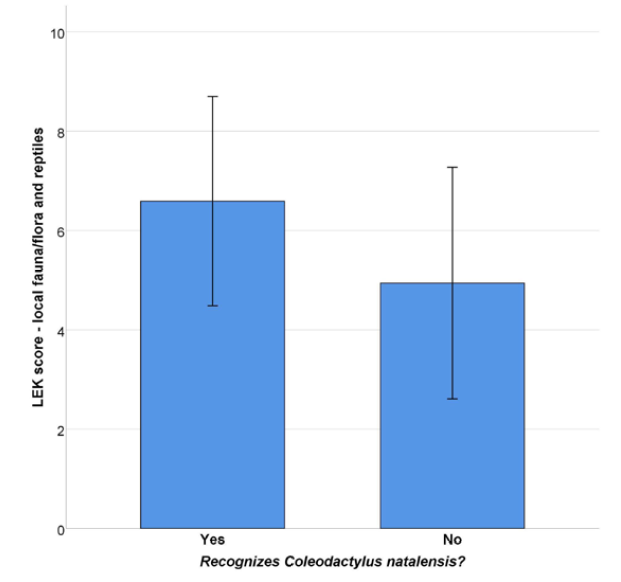
The LEK level on the natural environment and conservation of the park and on the reptiles had an influence on the recognition efficiency of Coleodactylus natalensis: people who recognized C. natalensis among the animal images presented obtained a LEK score (6.59 ± 2.11), which was significantly higher than the score obtained by people who did not recognize the species among the images presented (4.94 ± 2.33; t = 2.315, df = 37, p = 0.026; Figure 1).
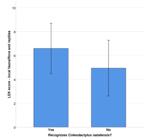
Mean values (± 1 SD) of local ecological knowledge scores about the park’s natural environment and reptiles among people who recognized and those who did not recognize the species Coleodactylus natalensis among the images of lizards presented.
The length of time working in the park influenced recognition of C. natalensis (Chi-squared test, X2 = 12.773, df = 1, p < 0.001; Table 4), but people’s ancestry (rural or urban) did not significantly influence recognition of the species (Chi-squared test, X2 = 2.837, df = 1, p = 0.092; Table 4).
For people who recognized C. natalensis, there was no correlation between LEK scores on the natural environment and conservation of the park and reptiles and LEK scores on C. natalensis (rs = 0.010, p = 0.964; Figure S1). There was also no influence of people’s ancestry (rural or urban; t = 0.180, df = 20, p = 0.859), nor of time working in the park (less or more than 5 years; t = 1.637, df = 20, p = 0.117) on LEK scores in relation to C. natalensis.
Discussion
Most employees at Dom Nivaldo Monte Municipal Park demonstrated specific knowledge about the local biome, a fact which corroborates previous studies showing that local knowledge and perception of park employees tend to converge with scientific knowledge due to constant contact with the area and with researchers (DIEGUES, 2000; SILVA; CÂNDIDO; FREIRE, 2009; KNAPP et al., 2014).
It is also important to highlight that all employees, regardless of age, training, and time working in the park studied, are aware of the need for the existence of this protected area for the conservation of biodiversity and identify that there would be immediate biodiversity losses due to speculation real estate over this area, which would result in the loss of habitats. This type of threat is very common in protected areas in urban spaces, unlike protected areas in rural areas, which are more subject to threats from subsistence hunting, mining, and illegal logging, among others (SHAFER, 2012). Therefore, protected urban and rural areas are subject to threats, although distinct (VERGARA-RIOS et al., 2021).
Regarding local fauna, participants pointed to reptiles as the second most seen vertebrate taxon in the park. Overall, the informants’ knowledge of reptiles was congruent with scientific literature. Most of the answers provided about reptile characteristics were behavioral (i.e. form of locomotion, foraging mode) or physiological (i.e. thermoregulation and body temperature), although it is observed in the literature that most species identification based on LEK is by morphological characteristics (BONIFÁCIO; SCHIAVETTI; FREIRE, 2015; RAMIRES et al., 2015; FERREIRA-ARAUJO; MACEDO LOPES; QUEIROZ LIMA, 2021). The type of behavioral knowledge demonstrated by the park informants studied herein may have been acquired from daily observations; however, the physiological information was possibly acquired during school training.
As for small and cryptic reptiles, it was found that those interviewed who achieved higher LEK scores on the natural environment and conservation of the park and reptiles had greater efficiency in identifying the leaf lizard Coleodactylus natalensis. These results suggest that knowledge of the natural environment in which animals live can provide more specific knowledge about small and cryptic species. The interviewees’ knowledge about C. natalensis must be analyzed carefully and in a valuable way since the feeling of conservation can be associated with knowledge about the animals, and conservationist discourse and attitudes are generally directed towards very visible and large animals (LORIMER, 2007; FISHER, 2011; ALVES et al., 2012). Thus, considering that C. natalensis is a small, cryptic species of lizard that has no cultural or utilitarian value for informants, the local knowledge identified is of great relevance, as this is not the frequently observed pattern in local ecological knowledge studies (SILVANO et al., 2006; STOKES, 2007; RAMIRES et al., 2015).
Berti et al. (2020) argue that although smaller animals generally have low charisma, the smallest species within each taxonomic group analyzed has a much higher charisma value than expected. The reptile model used in the study by Berti et al. (2020) was the Virgin Islands dwarf gecko (Sphaerodactylus parthenopion), which is a gecko belonging to the same family (Sphaerodactylidae) and very similar in shape and size to C. natalensis. This suggests that although aesthetic charisma is greater for larger animals, extremely small species can evoke positive reactions due to different psychological mechanisms, such as “cute” charisma (LORIMER, 2007). It is likely that since C. natalensis is the smallest lizard in South America and is the flagship species of the green areas of Natal/RN, which includes the Dom Nivaldo Monte Municipal Park (FREIRE et al., 2018), it will become charismatic, and causes feelings of belonging in people, and in turn is receiving special attention from the employees of this park. Finally, we suggest that this perception of the lizard can be expanded to the local population, helping to conserve this threatened species.
For this work, no difference was found between the LEK of people with ancestry in a rural environment and those from an urban environment. Considering that the rural area in Rio Grande do Norte mostly does not have an Atlantic Forest and that the occurrence of C. natalensis is restricted to the Atlantic Forest (LISBOA; FREIRE, 2012), we exclude the hypothesis that ancestry in rural areas can grant specific conceptions about LEK in protected areas present in urban environments.
It is also important to highlight some alternative conceptions detected about reptiles in general and about C. natalensis (Table 1, Table 2). The mystical element can often generate a positive or negative perspective of conservation when the image of the animal is feared and hated due to its association with evil, as especially happens with many species of snakes (ALVES et al., 2010; COSTA et al., 2021). Such antagonistic views overlap in various cultures, resulting in love and hatred towards these animals. In the case of Parque Municipal Dom Nivaldo Monte employees, misconceptions about reptiles may come from a flaw in the teaching-learning process. However, they also show us that although contact with natural areas offers some specific information to employees, it does not break all the alternative misconceptions found (PASSOS et al., 2015).
Finally, regarding the alternative conceptions found about Coleodactylus natalensis, it can no longer be attributed to the educational process, as it is an animal that is little known even by some local Biology teachers. Therefore, we attribute this lack of specific knowledge to difficulties in visualizing and interacting with this animal, and therefore observing its behavior and morphological attributes, which is one of the biggest challenges in conserving species with a small body size.
Conclusion
The wealth of diversity and knowledge about local biodiversity demonstrated by the park’s employees shows that their involvement in the daily life of a protected natural area allows them access to specific information, even about reptiles, despite sporadic encounters with these animals.
The knowledge demonstrated by the interviewees about the leaf lizard C. natalensis was generally consistent with the current state of scientific knowledge about this species. The inconsistency regarding specific knowledge may be due to difficulties in visualizing and interacting with this very small animal, and therefore in observing its behavior and morphological attributes, which is one of the biggest challenges in conserving small species.
The hypothesis that ancestry in rural areas can provide specific conceptions about LEK regarding fauna and flora in protected areas in urban environments was not confirmed. However, time working in the park was directly related to greater knowledge about the leaf lizard.
Finally, our results reinforce the importance of Local Ecological Knowledge of protected area employees and their relevant role as partners of science and society in favor of biodiversity conservation. Furthermore, there are few studies that investigate the LEK for protected areas in urban environments, which makes this work relevant, as it constitutes the basis for perception and analysis of specific concepts registered in this urban park, which differ from protected areas in rural areas in terms of biological and local popular knowledge.
Acknowledgments
This study was funded by the Coordination for the Improvement of Higher Education Personnel (CAPES), which granted a Master’s scholarship to H.R.S., as well as a PNPD/post-doctoral scholarship to R.F.D.S; and to the National Council for Scientific and Technological Development (CNPq), for the Research Productivity grant for E.M.X.F. We are also grateful to the Parque da Cidade Dom Nivaldo Monte managers and all the employees interviewed for allowing us to conduct the interviews. Without them, this work would not have been possible. Our sincere gratitude to O. Furtado and V. Silva for providing some of the images used in this work. H.R.S. I would especially like to thank my daughter and remind her that she can make all her dreams come true and that her mother will always be there to help make them come true!
References
- ALVES, R. R. DE N. DE et al. Répteis e as populações humanas no Brasil: Uma abordagem Etnoherpetológica. In: A Etnozoologia no Brasil: Importância, Status atual e perspectivas. Estudo e avanços. Recife: NUPEEA, 2010. v. 7.
- ALVES, R.; ALBUQUERQUE, U. Ethnobiology and conservation: Why do we need a new journal? Ethnobiology and Conservation, 20 aug. 2012.
- ALVES, R. R. N. et al. A review on human attitudes towards reptiles in Brazil. Environmental Monitoring and Assessment, v. 184, n. 11, p. 6877-6901, nov. 2012.
- ALVES, R. R.; SOUTO, W. M. Ethnozoology in Brazil: current status and perspectives. Journal of Ethnobiology and Ethnomedicine, v. 7, n. 1, p. 22, 18 jul. 2011.
- BEAUDREAU, A. H.; LEVIN, P. S. Advancing the use of local ecological knowledge for assessing data-poor species in coastal ecosystems. Ecological Applications, v. 24, n.2, p. 244-256, mar. 2014.
- BERKES, F.; COLDING, J.; FOLKE, C. Rediscovery of traditional ecological knowledge as adaptive management. Ecological Applications, v. 10, n. 5, p. 12, 2000.
- BERTI, E. et al. Body size is a good proxy for vertebrate charisma. Biological Conservation, v. 251, p. 108790, nov. 2020.
- BONIFÁCIO, K. M.; SCHIAVETTI, A.; FREIRE, E. M. X. Conhecimento ecológico local sobre o veado, Mazama gouazoubira (g. Fischer, 1814), por moradores do entorno de uma área protegida do semiárido brasileiro. Revista Brasileira de Ciências Ambientais, n. 38, p. 78-95, 1 dec. 2015.
- BRASIL. Portaria N°148, de 7 de Junho de 2022. Lista Nacional Oficial de Espécies da Fauna Ameaçadas de Extinção. Diário Oficial da União n° 62, Seção 1, p. 119.
- CAPISTRANO, M. T.; FREIRE, E. M. X. Utilização de hábitats por Coleodactylus natalensis Freire, 1999 (Squamata; Sphaerodactylidae) no Parque Estadual das Dunas de Natal, Rio Grande do Norte. PublICa, v. 4, p. 48-56, 2009.
- CEBALLOS, G.; EHRLICH, P. R.; RAVEN, P. H. Vertebrates on the brink as indicators of biological annihilation and the sixth mass extinction. Proceedings of the National Academy of Sciences, v. 117, n. 24, p. 13596-13602, 16 jun. 2020.
- COLDING, J. Analysis of hunting options by the use of general food taboos. Ecological Modelling, v. 110, n. 1, p. 5-17, jul. 1998.
- COSTA, M. K. B. et al. Demystifying ophidism: bridging school and society to develop educational resources. Ambiente & Sociedade, v. 24, p. e01481, 2021.
- CUNHA, M. C. Populações tradicionais e a Convenção da Diversidade Biológica. Estudos Avançados, v. 13, n. 36, p. 147-163, aug. 1999.
- DIEGUES, A. C. S. (ED.). Etnoconservação: novos rumos para a conservação da natureza. São Paulo: Hucitec : NUPAUB-USP, 2000.
- FERREIRA-ARAUJO, T.; MACEDO LOPES, P. F.; QUEIROZ LIMA, S. M. Size matters: identity of culturally important herrings in northeastern Brazil. Ethnobiology and Conservation, 18 nov. 2021.
- FISHER, O. Cost, effort and outcome of mammal rediscovery: Neglect of small species. Biological Conservation, v. 144, n. 5, p. 1712-1718, 1 may 2011.
- FREIRE, E. M. X. Espécie nova de Coleodactylus Parker, 1926 das dunas de Natal, Rio grande do Norte, Brasil, com notas sobre suas relações e dicromatismo sexual no gênero (Squamata, Gekkonidae). Boletim do Museu Nacional, 1999.
- FREIRE, E. M. X; MESQUITA, D. O.; LISBOA, C. M. C. A.; SALES, R. F. D.; SILVA, S. T.; SANTANA, D. Mata Atlântica da Paraíba e Rio Grande do Norte: Herpetofauna Ameaçada e estratégias de Conservação. In: ABRAHÃO, C. R.; MOURA, G. J. B.; FREITAS, M. A.; ESCARLATE-TAVARES, F. (Org.). Plano de Ação Nacional para a Conservação da Herpetofauna ameaçada da Mata Atlântica nordestina. Série Espécies Ameaçadas. 1 ed. Brasília/DF: CDD/597.579 ICMBio, 2018, v. 41, p. 133-143.
- FRYNTA, D. et al. Mammalian Collection on Noah’s Ark: The Effects of Beauty, Brain and Body Size. PLOS ONE, v. 8, n. 5, p. e63110, 15 may 2013.
- GADGIL, M.; BERKES, F.; FOLKE, C. Indigenous Knowledge for Biodiversity Conservation. A Journal of the Human Environment, 1993.
- GIBBONS, J. W. et al. The Global Decline of Reptiles, Déjà Vu Amphibians: Reptile species are declining on a global scale. Six significant threats to reptile populations are habitat loss and degradation, introduced invasive species, environmental pollution, disease, unsustainable use, and global climate change. BioScience, v. 50, n. 8, p. 653-666, 1 aug. 2000.
- HICKMAN, C. P. et al. Integrated principles of zoology. Sixteenth Edition ed. New York: McGraw-Hill Education, 2014.
- JOHANNES, R. E. The case for data-less marine resource management: examples from tropical nearshore finfisheries. Trends in Ecology & Evolution, v. 13, n. 6, p. 243-246, jun. 1998.
- KNAPP, C. N. et al. Parks, people, and change: the importance of multistakeholder engagement in adaptation planning for conserved areas | EndNote Click. Ecology and Society, v. 19, n. 4, p. 16, 2014.
- LANA PINTO, L. C.; CRUZ, A. J. R.; SILVÉRIO-PIRES, M. R. Incorporando o conhecimento ecológico local na conservação dos lagartos da serra do Ouro Branco, Minas Gerais, Brasil. Bioscience Journal, v. 31, n. 2, p. 613-622, 2015.
- LISBOA, C. M. C. A.; FREIRE, E. M. X. Population Density, Habitat Selection and Conservation of Coleodactylus natalensis (Squamata: Sphaerodactylidae) in an Urban Fragment of Atlantic Forest in Northeastern Brazil. South American Journal of Herpetology, v. 7, n. 2, p. 181-190, aug. 2012.
- LISBOA, C. M. C. A.; SALES, R. F. D.; FREIRE, E. M. X. Feeding ecology of the pygmy gecko Coleodactylus natalensis (Squamata: Sphaerodactylidae) in the Brazilian Atlantic Forest. Zoologia (Curitiba), v. 29, n. 4, p. 293-299, aug. 2012.
- LISBOA, C. M. C. A.; SOUSA, P. A. G. DE; RIBEIRO, L. B. Coleodactylus natalensis (NCN). Clutch size; Hatchling size. Herpetological Review, p. 2, 2008.
- LORIMER, J. Nonhuman Charisma. Environment and Planning D: Society and Space, v. 25, n. 5, p. 911-932, oct. 2007.
- MACDONALD, E. A. et al. Conservation inequality and the charismatic cat: Felis felicis. Global Ecology and Conservation, v. 3, p. 851-866, 1 jan. 2015.
- MAREŠOVÁ, J.; FRYNTA, D. Noah’s Ark is full of common species attractive to humans: The case of boid snakes in zoos. Ecological Economics, v. 64, n. 3, p. 554-558, 15 jan. 2008.
- MORETTI, R. Revisão taxonômica do gênero Coleodactylus Parker, 1926 (Squamata, Sphaerodactylidae). Doutorado em Zoologia-São Paulo: Universidade de São Paulo, 18 mar. 2009.
- PASSOS, D. C. et al. Calangos e lagartixas: concepções sobre lagartos entre estudantes do Ensino Médio em Fortaleza, Ceará, Brasil. Ciência & Educação (Bauru), v. 21, n. 1, p. 133-148, mar. 2015.
- PRIMACK, R. B.; RODRIGUES, E. Biologia da conservação. Londrina: E. Rodrigues : [Editora Planta, 2001.
- RAMIRES, M. et al. Fishers’ knowledge about fish trophic interactions in the southeastern Brazilian coast. Journal of Ethnobiology and Ethnomedicine, v. 11, n. 1, p. 19, 2015.
- REYES-GONZÁLEZ, A. et al. Biocultural Diversity Loss: the Decline of Native Stingless Bees (Apidae: Meliponini) and Local Ecological Knowledge in Michoacán,Western México. Human Ecology, v. 48, n. 4, p. 411-422, aug. 2020.
- RODRIGUES, M. T. The Conservation of Brazilian Reptiles: Challenges for a Megadiverse Country. Conservation Biology, v. 19, n. 3, p. 659-664, jun. 2005.
- ROLL, U. et al. Using Wikipedia page views to explore the cultural importance of global reptiles. Biological Conservation, Advancing reptile conservation: Addressing knowledge gaps and mitigating key drivers of extinction risk. v. 204, p. 42-50, 1 dec. 2016.
- SALES, R. F. D. et al. Communal egg-laying and hatchling size in the pygmy gecko Coleodactylus natalensis (Squamata: Sphaerodactylidae) in an Atlantic Forest site of Brazil. Herpetology notes, v. 13, p. 8, 2020.
- SHAFER, C. L. Chronology of Awareness About US National Park External Threats. Environmental Management, v. 50, n. 6, p. 1098-1110, dec. 2012.
- SILVA, T. S. DA; CÂNDIDO, G. A.; FREIRE, E. M. X. Conceitos, percepções e estratégias para conservação de uma estação ecológica da Caatinga nordestina por populações do seu entorno. Sociedade & Natureza, v. 21, n. 2, p. 23-37, aug. 2009.
- SILVANO, R. A. M. et al. When Does this Fish Spawn? Fishermen’s Local Knowledge of Migration and Reproduction of Brazilian Coastal Fishes. Environmental Biology of Fishes, v. 76, n. 2-4, p. 371-386, 4 sep. 2006.
- SITAS, N.; BAILLIE, J. E. M.; ISAAC, N. J. B. What are we saving? Developing a standardized approach for conservation action. Animal Conservation, v. 12, n. 3, p. 231-237, 2009.
- SOUSA, P. A. G. DE; FREIRE, E. M. X. Thermal ecology and thermoregulatory behavior of Coleodactylus natalensis (Squamata: Sphaerodactylidae), in a fragment of the Atlantic forest of northeastern, Brazil. Zoologia (Curitiba), v. 28, n. 6, p. 693-700, dec. 2011.
- STOKES, D. L. Things We Like: Human Preferences among Similar Organisms and Implications for Conservation. Human Ecology, v. 35, n. 3, p. 361-369, 5 apr. 2007.
- VANZOLINI, P. E. Lagartos brasileiros da família Gekkonidae (Sauria). Arquivos de Zoologia, v. 17, n. 1, p. 1, 22 feb. 1968.
- VERGARA-RIOS, D. et al. Local community knowledge and perceptions in the Colombian Caribbean towards Amphibians in urban and rural settings: tools for biological conservation. Ethnobiology and Conservation, 11 may 2021.
- VITT, L. J. et al. Small in a big world: ecology of leaf-litter geckos in new world tropical forests. Herpetological Monographs, v. 19, n. 1, p. 137, 2005.
- VITT, L. J.; CALDWELL, J. P. Herpetology: an introductory biology of amphibians and reptiles. Fourth edition ed. Amsterdam; Boston: Elsevier, AP, Academic Press is an imprint of Elsevier, 2014.

 Source: Ramos-Silva, Sales and Freire, 2024.