
 The biology, ecology and management of Isatis tinctoria L.: An important weed of rangelands
Abstract:
Background: Rangelands provide important ecosystem services, supported by the diverse flora of both weedy and native desirable plant species. Isatis tinctoria L., commonly known as dyer's woad, is one of the most important and common weeds that predominantly established in rangelands and has recently expanded into croplands, globally. The knowledge of the behaviour and management of this species has not been synthesized, curtailing further research and sustainable management.
Objective: This review aims to provide extensive knowledge of the biology and ecology of I. tinctoria to highlight its growth traits, lifecycle, distribution, competition dynamics, invasiveness and different management options.
Methods: In this paper, we have reviewed and discussed the available literature on various aspects of the biology and management of I. tinctoria.
Results: Isatis tinctoria is highly competitive in nature, often forming dense stands which result in crop and pasture suppression and yield reduction in infested areas. The production losses associated with I. tinctoria infestations in rangelands have been estimated to be upwards of $ 2 million (USD) annually in the United States of America (USA), while such data are lacking from other parts of the world. Several control methods including preventive, chemical, cultural, and biological options have shown varying degree of success against this weed. Biological control agents such as Puccinia thlaspeos and Aulacobaris fallax in rangelands have been introduced in the USA. However, the efficacy of these biological control options varies.
Conclusions: An integrated approach using biological control in combination with cultural (for rangelands) or chemical control (for agricultural areas) could be feasible for controlling this weed.
Keywords:
Dyer's Woad; Rangelands; Weed Ecology; Invasive Species; Weed Management
1. Introduction
The rangelands are natural landscapes that serve as a source of foraging and grazing for wildlife and livestock and usually consist of native grasses, shrubs and flowering plants (Ramoelo et al., 2018). These areas provide diverse services and become the ultimate source of food. The spread of invasive plant species is considered as a main threat to the rangeland ecosystems (Schohr et al., 2020). Some of the major weeds of these rangelands globally include cheatgrass (Bromus tectorum L.), sagebrush (Artemisia tridetata Nutt.), cornflower (Centaurea spp.), toadflax (Linaria spp.) and leafy spurge (Euphorbia esula L.) (DiTomaso 2000). Several invasive species such as soft brome (Bromus hordeaceus L.), slender oat (Avena barbata Pott ex Link), bulbous canarygrass (Phalaris aquatica L.), buffelgrass (Pennisetum ciliare L.), and dyer's woad [Isatis tinctoria L. (ISATI and ISTI Bayer and US code, respectively)] were introduced intentionally as forage or potential crop or accidentally as crop-seed contaminants. These species negatively impact environment by depleting water and soil resources, reducing plant diversity and altering fire regimes, and the economy by reducing the quality and quantity of forages (Gornish et al., 2018).
Isatis tinctoria is an important plant of the mustard family (Brassicaceae), native to central Asia, and it was introduced prehistorically into Europe (Speranza et al., 2020). It has been recognized as an invasive species in many parts of Europe, Africa, and the United States of America (USA). Historically, it has been mostly dominant in the Central Asia and the Middle East, but it has recently extended its range to the Mediterranean region (Akeroid, 2002). From the Middle Ages until the 18th Century, I. tinctoria was the most important crop grown for the indigo (blue) dye in Europe (Hamburger, 2002). The leaves of the species have also been used as fodder for cattle (Bos spp.) and sheep (Ovis aries L.) in some parts of the world, although they have less palatibility. Today, this plant is a major threat to biodiversity and productivity in rangelands across many parts of the world. For instance, in the USA alone, presence of this weed in rangelands causes estimated losses of $ 2 million annually, which are more than many other pests (Weyl, Moore, 2022).
Various cultural and mechanical management strategies have been adopted to control I. tinctoria with varying degree of success. The main management options for this species are burning, mowing, and reseeding or inter-seeding of perennial pasture species. Moreover, several herbicides have been used to control this weed along with other rangeland weed species (Zesiger et al., 2021; Hettinger, 2023). If not controlled early on and consistently, this weed can form dense infestations causing serious problems (DiTomaso et al., 2013). Due to perennial growth habit, plants will continue to regenerate quickly to make flower heads on much shorter stems and eventually the utility of cultural practices, such as stem cutting or mowing is diminished (Zesiger et al., 2021).
Although I. tinctoria is a widespread, serious weed across different parts of the world, limited information is available on its biology, ecology and management. There are comprehensive review articles published on this species focused on its cultivation as a crop and its biological properties, phytochemistry, therapeutic potential and utilization (Speranza et al., 2020; Miceli et al., 2023). However, no concerted efforts have been made so far to synthesize knowledge on weedy attributes, impacts and management options of this problematic invasive species. Therefore, here we have reviewed and discussed the available literature on various aspects of the biology and management of I. tinctoria to provide up-to-date knowledge for researchers, weed managers and the general public.
2. Distribution and Invasion History
Isatis tinctoria is known as a noxious weed in many countries around the world (Figure 1). Genetic analysis of I. tinctoria has suggested that it is native to Central Asia (Spataro et al. 2007), although some reports have also suggested that its native range expands from South-Eastern Russia to South-West Asia and to some extent to South-Eastern Europe (Hamburger, 2002; Akeroid, 2002). There was a huge genetic variation within (58%) and among (42%) the I. tinctoria accessions collected from European countries showing its wide-ranging natural adaptability (Rocha et al., 2011). Now it is expanding around the countries of the Baltic coast (Stroh et al., 2020). This plant was introduced as a blue dye source in North America during the colonial period and then entered Western America in the 19th Century as seed contaminant of alfalfa (Medicago sativa L.) (Thomas, Kropp, 2011). Currently, the weed is widespread across the Western USA, including in the States of Utah, Idaho, Wyoming, California, Oregon and Nevada (Dewey et al., 1991; Kropp et al., 2002). It is also known to persist in South-West Asia, Russia, Japan (Shu 2001), Kazakhstan, Uzbekistan, Tajikistan, Mongolia, Korea, Pakistan, Turkey (Kizil, 2006), Italy (Guarino et al., 2000), and several other countries in Europe (Tan, 2002).
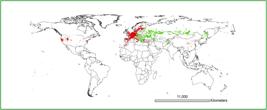
Global distribution of Isatis tinctoria. The occurrence data to prepare this map were obtained from the Global Biodiversity Information Facility (GBIF) open access online repository (Global Biodiversity Information Facility, 2024). Only the occurrence data with GPS coordinates were used for the map. The green and red colors represent the native and introduced ranges, respectively, as best defined by CABI (Weyl, Moore, 2022).
Isatis tinctoria is considered as a traditional crop and had widespread distribution in Italy for centuries (Guarino et al., 2000). It is also widely distributed in China and has been used as a medicinal plant and for indigo production (Angelini et al., 2007). Several Isatis species are widely distributed in Anatolia, Turkey (Misirdali, 1985). In Iran, 19 species of the genus Isatis have been observed which is considered as an important diversification centre of this genus (Sajedi et al., 2004). Overall, the widespread distribution of the species suggests it is prolific and occurs to a wide range of geo-climatic conditions.
3. Biology and Ecology
3.1 Habitat and adaptability
Isatis tinctoria is a weed of both disturbed and undisturbed areas, particularly in dry and rocky to sandy soils. This weed can grow under shady conditions and persists in understory forests and other vegetation, although it mostly grows in open areas (Hettinger, 2023). It is highly adaptable to a wide range of environments presenting various growth habits (e.g., winter annual, biennial, and short-lived perennial weed) (Dewey et al., 1991). Major reason for high adaptability include tolerance to diverse environmental conditions, robust reproductive strategies, physiological efficiency, competitive traits, genetic diversity, phenotypic plasticity and escape from natural enemies in its introduced range (Pokorny, Krueger-Mangold, 2007; Hettinger, 2023). It has the ability to rapidly spread along roadsides and in forests and rangelands. This species successfully infests sloped areas that are unsuitable for most native and wild plant species (Dewey et al., 1991; Farah et al., 1988; Monaco et al., 2005). Moreover, it has a variable invasion pattern and impact depending upon geo-climatic conditions. For example, it is less of a problem in the Eastern USA while it is widespread and causes serious problems in the Western States. In Northern California, it invades grasslands along with annual grasses such as downy brome (Bromus tectorum L.) or medusahead [Taeniatherum asperum (Simonk.) Nevski] as dominant species (Young, Evans, 1971). The main reasons for the rapid invasion and range expansion of this weed are its wider adaptability to arid climates and survival ability in alkaline soils (McConnell et al., 1999; Pokorny, Krueger-Mangold, 2007). It is possible that its invasion range will continue to expand if status-quo in management is maintained.
3.2 Plant traits
Isatis tinctoria plants grow 30–90 cm tall, but they may occasionally reach a height of up to 120 cm (Akeroid, 2002). The plants have basal leaves that are stalked, bluish green in colour, 4–10 cm long and 0.8–4 cm wide. The leaves are spearhead-shaped with a slightly hairy and waxy surface and tiny atrial auricle (Figure 2A). The leaves have a cream-colored midrib that runs out from the bottom to the leaf tip (Evans, Dewey, 1994). Rosette leaves, appended by a tail, are most extensive close to the tip, and short basal leaves fasten the stem (Figure 2B). As compared to other Isatis species, I. tinctoria produces higher number of branches per plant, i.e., up to 17 branches per plant (Kizil, 2006; Guarino et al., 2000). Furthermore, the plants of this species have various yellow blossoms in an umbrella-like inflorescence, which make them easy to recognize. This racemose inflorescence collects the flowers (Figure 2C). The bloom inflorescence stretches and solidifies at the time of development, which is transformed into pods (Figure 2D), and each of the pod has a seed (National Park Service, 2023) (Figure 2E, F). The size of the seed inside the fruit is 2.3–7.5 mm and oblong in shape which makes it easy to germinate (Figure 3A, B). I. tinctoria plants have an around 30 cm long taproot and some parallel roots in the upper surface of the soil. The root is cylindrical in shape and tortuous to some extent, brown yellow or greyish yellow in colour, transversally lenticulate along with a rootlet scar of rootlets (Speranza et al., 2020) (Figure 2G).

Isatis tinctoria plant at (A) 8-leaf, (B) rosette, (C) full-bloom/flowering, (D) pod formation, (E) seed-set and (F) maturity stages, and (G) a photo of the taproot of the plant (Photos captured by Taseer Ahmad and Khawar Jabran).

The images of (A) a single seed with dimension, (B) the seeds (C) seed containg pod and (D, E) seedlings of Isatis tinctoria (Photos captured by Taseer Ahmad with a digital microscope color camera, Leica DFC295).
3.3 Reproductive system
Isatis tinctoria primarily reproduces by seeds and follows an outcrossing reproductive system that reduces the occurrence and viability of self-pollinated progeny compared to those produced through outcrossing (Spataro, Negri, 2008). It has ben reported that plants produced by self-pollination had fewer siliques (fruits) (7.1 g/plant) that were lighter (6.0 mg) and had low germination rate (8.2%) as compared to the progeny produced by outcrossing plants which produced more siliques (44.1 g/plant) with higher weight (8.0 mg) and higher germination rate (46.0%) (Spataro, Negri, 2008). The plant flowers primarily during the spring. The yellow-coloured flowers are produced on panicles and have four petals, four sepals and six stamens on each flower. These flowers develop into hanging pods containing fruit which are 0.8 to 1.8 cm long and 0.25 to 0.7 cm wide. Seed pods are green and hairless maturing into blackish/dark purplish fruits containing one seed in each silique (Figure 3C).
Isatis tinctoria is also capable of switching to vegetative reproduction by initiating sprouts present on the surface of root-crown and occasionally the plant roots serve as buds and regenerate (Zouhar, 2009). Damage or suppression to certain other neighbouring plants is likely to be amplified by this mode of vegetative growth of this weed. Therefore, it is hard to fully destroy the vegetative component, especially when the plants have reached their maturity phase.
3.4 Seed biology and germination ecology
Isatis tinctoria produces a higher number of seeds per plant as compared to other plants of this genus (Kizil, 2006). Fast vegetative growth of this species, especially during the spring season allows it to produce a large number of seeds by the late spring or the start of the summer (Zouhar, 2009). The seeds become visible and viable during the early seed production stage (Holmgreen et al., 2005, p. 488; Zouhar, 2009) and the fruits ripen between June and October (Zouhar, 2009). Rate of seed production varies from 350 to 600 seeds/plant (James et al., 1991), though some studies have reported the production of up to 1000 seeds/plant (McConnell et al., 1999). This can be attributed to different environmental conditions. In Turkey, approximately 88 seeds per plant have been reported, which is much lower than other studies (James et al., 1991; Kizil, 2006). I. tinctoria seeds do not normally dehisce and have a significantly high germination rate compared to available seeds in the seed bank (Young, Evans, 1971). The seeds after separation from plants germinate quickly under favorable conditions while remain dormant if the winter is severe at its start. They mostly germinate in fall or early spring (Zouhar, 2009) and seedlings can readily germinate at temperatures from 3 °C to 25 °C (Figure 3D, E).
Isatis tinctoria seeds are generally short-lived, however, when remaining intact within their pods/fruits, they can stay viable for many years in the soil (Jacobs, Pokorny, 2007). Typically, most of the seeds lose viability within the first 12 months when buried under soil; however, this might vary depending on soil moisture level and germination rate decreases from 99% to 44% after 10 months of burial (Farah et al., 1988). Seed dormancy is observed equally during harsh environmental conditions both in summer and winter corresponding to dry and hot circumstances or even cold temperature (Fuller, 1985; Farah et al., 1988) mostly when seed is inside the pod. The plants stalk has been reported to dry after setting seeds/pods, but the top buds frequently generate new growth structures in following years (Jacobs, Pokorny, 2007).
3.5 Seed dispersal
Seeds of I. tinctoria are mostly dispersed along waterways and roadsides by humans and animals (Washington State Noxious Weed Control Board, 1999). Air circulation also influences the seed dispersal indicating that wind is responsible for limited dispersion of this weed. The pedicel of fruits has a peg that can easily attach to several carrier (e.g., bikes, ATVs, trucks, animal fur and human clothing); helping to disperse its seed. Some plants of this species hold fruit which can flow with water over long distances or move across firmly compacted snow. The fruit of I. tinctoria also has smoothed wings which facilitate seed dispersal by wind (Farah, 1987).
4. Impact on Crop and Pasture Production
Isatis tinctoria is a highly competitive weed species in rangeland ecosystems and may cause significant productivity losses in cropped (cereal) and forage areas (alfalfa). This weed spreads in pastures at a rate of 14% annually, thereby reducing the carrying capacity for grazing animals by 38% (Young, Evans, 1971; Calihan et al., 1984; Xie, Kristensen, 2017). In Utah, USA, this species is considered a class 2 noxious weed (Lowry et al., 2012) and the losses to crop and rangeland production by I. tinctoria were estimated to be worth $2 million (Jacobs, Pokorny, 2007). This weed decreases carrying capacity of forage crops and pasture as its usually avoided by grazing animals due to low palatibility (Young, 1988; Gerber et al., 2009). Therefore, it is considered a major production constraint in rangelands causing management problems and reducing the land value (US Department of Agriculture, 2014). It also invades agronomic crops, especially winter wheat (Triticum aestivum L.) in areas where dryland no-till agriculture is practiced (Hettinger, 2023). This weed also negatively affects wildlife habitat, depletes soil nutrients and organic matter, drains water resources, and causes a reduction in flora and fauna diversity (Monaco et al., 2005).
4.1 Resource competition
The taproot of the weed effectively penetrates soil extracting nutrients and water resources often in landscapes with limited resources (Sheley, 1987). It can also thrive in soils with limited nitrogen (N) availability (Monaco et al., 2005). According to Thorup-Kristensen and Rasmussen (2015), the root system of I. tinctoria reached a depth of 100 cm which helped with higher absorption of N and reduced the sub-soil nitrate to 15 kg N ha-1. This weed can also adapt to a wide range of photoperiods and can grow in a variety of situations and environments (West, Farah, 1989; Dewey et al., 1991; Farah et al., 1998). These attributes make I. tinctoria drought tolerant and competitive against many desirable plants. Moreover, I. tinctoria plants compete with perennial grasses and forbs and can exist within the specific stand of desirable plants and survive when canopy stand is not dominant (Hettinger, 2023).
4.2 Allelopathic effect
Isatis tinctoria is listed among the weeds having high allelopathic potential. Major allelochemicals present in I. tinctoria are alkaloids, glucosinolates, carotenoids and certain volatile fatty acids (Speranza et al., 2020). The foliage of this weed also has some fungicidal and insecticidal properties due to the presence of secondary metabolites such as tryptanthrin, indole-3-acetonitrile and p-coumaric acid methyl ester (Seifert, Unger, 1994). These compounds showed a wide control of termites (Reticulitermis santonensis) and brown rot fungus (Coniophora puteana). The seed pods of I. tinctoria exhibit allelopathic potential and serve as germination inhibitor and hinder root development of neighbouring plants which can make this species particularly phytotoxic and invasive (Zouhar, 2009). Studies show that its pods have some allelochemicals with unknown modes of action (Young, Evans, 1971; Mohn et al., 2009; Speranza et al., 2020). Germination rate and root length of several species is generally declined when exposed to I. tinctoria fruit leachates (Miceli et al., 2023). By releasing these chemicals in the rhizosphere and sometimes through deposition of plant debris/residue on soil surface, this weed suppresses growth, yield and quality of forage crops which ultimately affects livestock productivity (US Department of Agriculture, 2014). This ability along with other competitive advantages such as the ability to survive environmental conditions that are not favorable for the survival and seed production of other species (Jacobs, Pokorny, 2007), enable this weed to outcompete other plants.
5. Management
The most important way to manage I. tinctoria is to control its spread and invasiveness because the weed can damage the crops and reduce their growth, development, and productivity (Lobell et al., 2009). Management of this weed requires different active methods such as prevention, cultural, mechanical, biological, chemical, and integrated weed management options, which can be utilized to limit its encroachment in rangelands.
5.1 Preventive measures
Weed prevention is the most efficient way of the management of rangeland weeds and restrict them from becoming invasive.. Being aware of sources responsible for weed infestation, taking appropriate actions to prevent its invasion, careful selection of mulch materials, manure composting to kill weed seeds before its application, and being cautious before selection of the crop cultivars are the most important preventive measures for I. tinctoria (Zesiger et al., 2021). Periodic scouting of the newly infested areas such as pathways, fence lines, and ditch bank area is also an important proactive preventive measure for control of this weed (Zesiger et al., 2021).
Prevention is the major element to stop the introduction of weed seeds or vegetative reproduction fragments and reduce vulnerability of the ecosystem to weed invasion through effective education activities, and early detection and monitoring strategies (DiTomaso, 2000). Other land management best practices such as the maintenance of desirable vegetation, limiting weed seed dispersal and minimizing soil disturbance are also crucial for lowering the invasion risk (Sheley, 1994). The monitoring and sanitation require much care, especially when moving animals and field equipment from infested areas. It has been observed that seeds of I. tinctoria are capable of germinating when the pod is still green, and plants treated with herbicides at the flowering stage are able to produce some viable seeds (Zouhar, 2009). Therefore, prevention is considered the best option for controlling its spread.
5.2 Physical, mechanical and cultural control
Physical control methods such as hand hoeing, rouging, and digging of individual plants of I. tinctoria are considered effective in small or scattered growth areas. In highly infested areas, these methods help to prevent the plants from producing seeds which inhibits population growth and further seed dispersal (Zesiger et al., 2021). Hand pulling at the crown or bolting stage before seed set can be effective in controlling smaller patches of the weed. It is necessary to visit the site two to three weeks later to rouge plants that have re-sprouted. In addition, it is indeed critical to follow up the site for several years to prevent re-infestation (DiTomaso et al., 2013). Mowing is also done in the orchards to control I. tinctoria; however, it may not be effective due to re-sprouting from the crown. Mowing is considered very helpful in gardens for controlling this weed, but it should be done multiple times to reduce root reserves and seed production. The use of close clipping (two inches above the soil surface) can help minimize re-sprouting and prevent seed production (DiTomaso et al., 2013). Spring cultivation can kill rosettes and therefore can be effectively used to stop seed set (Zesiger et al., 2021).
Maintaining healthy ground cover by growing different perennial grasses is also helpful in discouraging the infestation and overall spread of this weed (Jacobs, Pokorny, 2007). Adopting crop competition by crop rotation along with different tillage and herbicide management approaches are much beneficial for removing I. tinctoria and other weeds from alfalfa crop (Jacobs, Pokorny, 2007). In alfalfa fields of the dry land region, fields should be tilled twice a year to obtain better control of I. tinctoria; once before seed production mostly in spring and the second one for late germinating plants in late fall. Additionally, fire can also kill the above ground parts of the weed but is not a well-known practice in most rangeland environments (DiTomaso et al., 2013).
Grazing with sheep and cattle has also been used for I. tinctoria control. West and Farah (1989) observed that 16% of utilization of the selected weed plants occurred by sheep, while in the case of individual plants, 18 to 92% of ground portions were grazed. The use of cultural and physical tools is difficult in rangelands where the topography is steep, and rocks are present. In addition, most cultural practices are uneconomical and unfeasible on a large scale in rangelands.
5.3 Biological control
The use of biological control can be a pragmatic and self-sustained option for controlling weeds like I. tinctoria in non-cropped/environmental situations. A rust, Puccinia thlaspeos has been introduced as a biological control agent for this weed on roadsides, farms, waste areas and rangelands of northern Utah, USA (Kropp et al., 2002). The inoculum dose of 1 mg/plant proved effective in infection establishment and a dose higher than 1 mg provided significant level of infection on the rosettes (Kropp et al., 2002). This rust decreases the cytokinin like activity and infects the rosettes in the first year mostly asymptomatically, while in the second year, the infected plants show stunted growth, chlorotic appearance, malformed and decreased rate of seed production (Kropp et al., 1999; Stirk et al., 2006). A commercial product called "Woad Warrior™ (Puccinia thlaspeos)" has been developed from this rust fungus and registered as a bioherbicide in the USA since 2002 (Bailey, 2014; Cordeau et al., 2016).
A classical biological control program was also introduced for I. tinctoria in 2004 in North America (Gerber et al., 2009). In this program, three European insect species were chosen as biological control candidate agents, of which a root-mining weevil (Aulacobaris fallax) was the most effective. The biology and host specificity of A. fallax were studied between 2004 and 2006 in its native European range and up to 62% of the I. tinctoria plants were observed to be attacked by this weevil in the field sites (Gerber et al., 2009). Recently, in a preliminary experiment, two weevils, the root crown miner (Ceutorhynchus rusticus) and the seed feeder (C. peyerimhoffi) were also tested for biological control of this weed (Commonwealth Agricultural Bureaux International, 2024). These weevils have a narrow host range and I. tinctoria was highly preferred by these species for egg laying in tested fields. The result of this study showed that up to 72% seed production was reduced by C. rusticus, while C. peyerimhoffi destroyed up to 97% of seeds, and both these weevils reduced the plant biomass by 46% (Commonwealth Agricultural Bureaux International, 2024).
Overall, biological control has shown promising results for I. tinctoria management and having multiple agents would increase the efficacy of this important tool. However, widespread infestations along diverse climatic conditions mean that biological control alone is not sufficient to reduce substantial impacts of this weed.
5.4 Chemical control
Herbicides are generally considered as the most effective method of weed control, especially in rangeland settings. In the case of I. tinctoria, seedlings that appear after spring cultivation are unable to mature until the start of the next season i.e., when cold exposure is realized. Therefore, it can be controlled by herbicides before it produces seeds and affects grain crops. Also, herbicides become more effective when applied at seedling to rosette and up to flowering stage (US Department of Agriculture, 2014).
Several selective herbicides have been used to control this weed (Table). Glyphosate is the main non-selective option which is useful in certain situations. However, it is not preferred due to its non-selective activity, leading to damage of desired plant species (Stapleton, Orloff, 2017). In the case of 2,4-D, it is applied at the early-bud stage of the plant until the blossom stage. The 2,4-D application usually does not kill the plants quickly but prevents seed production. Applying 2,4-D in a mixture with other herbicides such as metsulfuron-methyl and chlorsulfuron-immediately stopped I. tinctoria growth and seed production, leading to effective kill of the weed (US Department of Agriculture, 2014). Metsulfuron-methyl and chlorsulfuron can be applied alone or in combination with 2,4 D to provide the best results for grasses and I. tinctoria control in rangelands (Cherry, 2003). Application of 2,4-D after the weed had started to set seeds was not found very successful due to limited weed biomass reduction (Varga, Evans, 1978). According to King and Evans (1983) decrease in the rate of pod formation and final seed production of I. tinctoria occurred when treated with chlorsulfuron during the late flowering period.
Overall, chemical control is effective but not always feasible in rough terrain and the economic cost also becomes a major constraint when I. tinctoria infestations are on large areas.
5.5 Integrated management approach
The use of a single method for controlling a weed is mostly less effective and has some drawbacks. A successful long-term weed management program that combines cultural, mechanical, biological and chemical methods is desirable for achieving sustainable weed control. In the case of I. tinctoria, the main integrated management approach is the revegetation of desired species along with chemical or biological control (Enz, Pokorny, 2005). Research on the integrated management of this species have shown that when physical control (digging, hand pulling) and chemical control (spot spraying of metsulfuron) methods were combined, the weed populations were eradicated from 9 out of 13 infested counties and infestation size was reduced in the remaining counties in Montana, USA (Pokorny, Krueger-Mangold, 2007). Another promising example is the combined application of the selective broadleaf herbicide, imazapic and methylated seed oil at rosette or bolting stages achieving effectove weed control (US Department of Agriculture, 2014). Kropp and Darrow (2006) suggested a possible integrated control of I. tinctoria with P. thlaspeos inoculum (the biological control agent) and chlorsulfuron and metsulfuron-methyl (chemical control).
6. Conclusions and future directions
Isatis tinctoria is considered a noxious weed of rangelands across many countries, but it also has shown the ability to encroach agronomic crop production regions with significant impact. A greater understanding of the biology (plants traits and reproductive system) and ecology (distribution, adaptability), as discussed throughout the manuscript, may help the land managers to identify and manage this weed effectively. Properties such as high adaptability across various ecological zones and climatic regions make this weed highly invasive, requiring significant resources for ongoing prevention and management.
Implementing appropriate control measures at the right time is the best solution for its management. For example, the most suitable time to control this weed is before the flowering stage. Moreover, cultural + biological control (for rangeland areas) and mechanical + specific herbicides (for field crops) are also considered much effective in achieving sustainable control of this weed. In future, identifying I. tinctoria populations at early growth stages, especially in newly infested areas and properly eradicating them is critical for managing this weed. Research on future invasion trends, especially in relation to changing climate and land management practices must be prioritised. In addition, further research on integrated approaches and novel weed control methods should help with management of this important weed.
Acknowledgements
The authors also acknowledge Hamdan Yacob (Nigde Omer Halisdemir University) and Dr. Babar Shahzad (La Trobe University) for their help in literature search and preparation of the distribution map, respectively. Ali Ahsan Bajwa is thankful to La Trobe University for continuing support enabling this international collaborative work and publication.
References
- Akeroid JR. Isatis Linnaeus In: Cullen J, Alexander JCM, Brady A, Brickell CD, Green PS, Heywood VH et al., editors. The european garden flora. Cambridge: Cambridge University; 2002. p. 135.
-
Angelini LG, Tozzi S, Di Nasso NN. Differences in leaf yield and indigo precursors production in woad (Isatis tinctoria L.) and Chinese woad (Isatis indigotica Fort.) genotypes. Field Crops Res. 2007;101:285-95. Available from: https://doi.org/10.1016/j.fcr.2006.12.004
» https://doi.org/10.1016/j.fcr.2006.12.004 -
Bailey KL. The bioherbicide approach to weed control using plant pathogens. In: Abrol DP, editor. Integrated pest management: current concepts and ecological perspectives. San Diego: Academic Press; 2014. p. 245-66. https://doi.org/10.1016/B978-0-12-398529-3.00014-2
» https://doi.org/10.1016/B978-0-12-398529-3.00014-2 - Callihan RH, Dewey SA, Patton JE, Thill DC. Distribution, biology and habitat of dyers woad (Isatis tinctoria L.) in Idaho. J Idaho Acad Sci. 1984;20:18-32.
- Cherry K. Integrated noxious weed management. Santa Fe: New Mexico Department of Transportation Preliminary Design Bureau, Engineering Design Division, Environmental Section; 2003. p. 22.
-
Commonwealth Agricultural Bureaux International – CABI. Giving dyer's woad the blues. Boston: Commonwealth Agricultural Bureaux International; 2024[access Jan 23, 2024]. Available from: https://www.cabi.org/projects/giving-dyers-woad-the-blues/
» https://www.cabi.org/projects/giving-dyers-woad-the-blues/ -
Cordeau S, Triolet M, Wayman S, Steinberg C, Guillemin JP. Bioherbicides: dead in the water? a review of the existing products for integrated weed management. Crop Prot. 2016;87:44-9. Available from: https://doi.org/10.1016/j.cropro.2016.04.016
» https://doi.org/10.1016/j.cropro.2016.04.016 -
Dewey SA, Price KP, Ramsey D. Satellite remote sensing to predict the potential distribution of dyer's woad (Isatis tinctoria). Weed Technol. 1991;5(3):479-84. Available from: https://doi.org/10.1017/S0890037X00027184
» https://doi.org/10.1017/S0890037X00027184 - DiTomaso JM, Kyser GB, Oneto SR, Wilson RG, Orloff SB, Anderson LW et al. Weed control in natural areas in the Western United States. Davis: University of California; 2013. p. 544.
-
DiTomaso JM. Invasive weeds in rangelands: Species, impacts, and management. Weed Sci. 2000;48(3):255-65. Available from: https://doi.org/10.1614/0043-1745(2000)048[0255:IWIRSI]2.0.CO;2
» https://doi.org/10.1614/0043-1745(2000)048[0255:IWIRSI]2.0.CO;2 - Enz T, Pokorny ML. Stop the spread of dyer's woad. Bozeman: Montana State University; 2005.
-
Farah KO, Tanaka AF, West NE. Autecology and population biology of dyer's woad (Isatis tinctoria). Weed Sci. 1988;36(2):186-93. Available from: https://doi.org/10.1017/S0043174500074695
» https://doi.org/10.1017/S0043174500074695 - Farah KO. Autecological and grazing control studies of dyer's woad (Isatis tinctoria L.) on northern Utah rangelands [thesis]. Logan: Utah State University; 1987.
-
Fuller AT. An autecological study of dyer's woad (Isatis tinctoria L.) on Utah rangeland [thesis]. Logan: Utah State University; 1985[access July 10, 2024]. Available from: https://digitalcommons.usu.edu/etd/6395
» https://digitalcommons.usu.edu/etd/6395 -
Gerber E, Cortat G, Hinz HL. Biology and host specificity of Aulacobaris fallax (Coleoptera: Curculionidae), a potential biological control agent for dyer's woad, Isatis tinctoria (Brassicaceae), in North America. J Appl Entomol. 2009;133(5):345-54. Available from: https://doi.org/10.1111/j.1439-0418.2009.01384.x
» https://doi.org/10.1111/j.1439-0418.2009.01384.x -
Global Biodiversity Information Facility – GBIF. GBIF occurrence data of Isatis tinctoria L. Copenhagen: Global Biodiversity Information Facility; 2024[access July 10, 2024]. Available from: https://doi.org/10.15468/dl.p5ju6n
» https://doi.org/10.15468/dl.p5ju6n -
Gornish ES, Case E, Valle M, Bean TM, Moore-O’Leary KA. A systematic review of management efforts on goatgrass (Aegilops spp.) dominance. Plant Ecol. 2018;219(5):549-60. Available from: https://doi.org/10.1007/s11258-018-0817-3
» https://doi.org/10.1007/s11258-018-0817-3 - Guarino C, Casoria P, Menale B. Cultivation and use of Isatis tinctoria L. (Brassicaceae) in Southern Italy. Econ Bot. 2000;54(3):395-400.
-
Hamburger M. Isatis tinctoria: from the rediscovery of an ancient medicinal plant towards a novel anti-inflammatory phytopharmaceutical. Phytochem Rev. 2002;1(3):333-44. Available from: https://doi.org/10.1023/A:1026095608691
» https://doi.org/10.1023/A:1026095608691 - Hettinger EM. Ecology and management of dyer's woad (Isatis tinctoria) in Northern Utah [thesis]. Logan: Utah State University; 2023.
- Holmgren NH, Holmgren PK, Cronquist A. Intermountain flora: vascular plants of the Intermountain West, U.S.A. Vol. 2, part B: subclass Dilleniidae. New York: New York Botanical Garden; 2005.
- Jacobs J, Pokorny M. Ecology and management of dyer's woad (Isatis tinctoria L.) Washington: US Department of Agriculture, Natural Resources Conservation Service; 2007.
- James LF, Evans JO, Ralphs MH, Child RD, editors. Noxious range weeds. Boulder: Westview; 1991.
- King WO, Evans JO. Effects of several foliar-applied herbicides on the viability of dyers woad (Isatis tinctoria L.) seed. Proc West Soc Weed Sci.1983;38:98-101.
- Kizil S. Morphological and agronomical characteristics of some wild and cultivated Isatis species. J Centr Eur Agric. 2006;7(3):479-84.
-
Kropp BR, Darrow H. The effect of surfactants and some herbicides on teliospore viability in Puccinia thlaspeos (Schub.). Crop Prot. 2006;25(4):369-74. Available from: https://doi.org/10.1016/j.cropro.2005.06.004
» https://doi.org/10.1016/j.cropro.2005.06.004 -
Kropp BR, Hansen D, Thomson SV. Establishment and dispersal of Puccinia thlaspeos in field populations of dyer's woad. Plant Dis. 2002;86(3):241-6. Available from: https://doi.org/10.1094/PDIS.2002.86.3.241
» https://doi.org/10.1094/PDIS.2002.86.3.241 -
Kropp BR, Hooper GR, Hansen D, Binns M, Thomson SV. Initial events in the colonization of dyer's woad by Puccinia thlaspeos Can J Bot. 1999;77(6):843-9. Available from: https://doi.org/10.1139/b99-042
» https://doi.org/10.1139/b99-042 -
Lobell DB, Cassman KG, Field CB. Crop yield gaps: their importance, magnitudes, and causes. Annu Rev Environ Resour. 2009;34:179-204. Available from: https://doi.org/10.1146/annurev.environ.041008.093740
» https://doi.org/10.1146/annurev.environ.041008.093740 -
Lowry BJ, Ransom C, Whitesides R, Olsen H. Noxious weed field guide for Utah. Logan: Utah State University Extension; 2017[access June 6, 2024]. Available from: https://digitalcommons.usu.edu/extension_curall/1352
» https://digitalcommons.usu.edu/extension_curall/1352 - McConnell EG, Evans JO, Dewey SA. Dyer's woad. In: Sheley RL, Petroff JK, editors. Biology and management of noxious rangeland weeds. Corvallis: Oregon State University; 1999. p. 231-7.
- Miceli N, Taviano MF, Kwiecień I, Nicosia N, Szopa A, Ekiert H. Isatis tinctoria L. (woad): cultivation, phytochemistry, pharmacology, biotechnology, and utilization. In: Jha S, Halder M, editors. Medicinal plants: biodiversity, biotechnology and conservation. Singapore: Springer Nature; 2023. p. 633–73.
-
Mohn T, Plitzko I, Hamburger M. A comprehensive metabolite profiling of Isatis tinctoria leaf extracts. Phytochemistry. 2009;70(7):924-34. Available from: https://doi.org/10.1016/j.phytochem.2009.04.019
» https://doi.org/10.1016/j.phytochem.2009.04.019 -
Monaco TA, Johnson DA, Creech JE. Morphological and physiological responses of the invasive weed Isatis tinctoria L. to contrasting light, soil-nitrogen, and water. Weed Res. 2005;45(6):460–6. Available from: https://doi.org/10.1111/j.1365-3180.2005.00480.x
» https://doi.org/10.1111/j.1365-3180.2005.00480.x -
National Park Service – NPS. Exotic species: dyer's woad. Washington: National Park Service; 2023[access Dec 12, 2023]. Available from: https://www.nps.gov/articles/dyers-woad.htm
» https://www.nps.gov/articles/dyers-woad.htm -
Pokorny ML, Krueger-Mangold JM. Evaluating Montana's dyer's woad (Isatis tinctoria L.) cooperative eradication project. Weed Technol. 2007;21(1):262–9. Available from: https://doi.org/10.1614/WT-06-048.1
» https://doi.org/10.1614/WT-06-048.1 -
Ramoelo A, Stolter C, Joubert D, Cho MA, Groengroeft A, Madibela OR et al. The role of rangeland monitoring and assessment: a review. Biodivers Ecol. 2018;6(1):170-6. Available from: https://doi.org/10.7809/b-e.00320
» https://doi.org/10.7809/b-e.00320 -
Rocha L, Martins S, Carnide V, Braga F, Carvalho C. Genetic diversity in woad (Isatis tinctoria L.) accessions detected by ISSR markers. Plant Genet Resour. 2011;9(2):210-3. Available from: https://doi.org/10.1017/S1479262111000463
» https://doi.org/10.1017/S1479262111000463 - Sajedi S, Sharifnia F, Sonboli A. Verification of Isatis tinctoria in Iran. Rostaniha. 2004;5:51-2.
-
Schohr TK, Gornish ES, Woodmansee G, Shaw J, Tate KW, Roche LM. Practitioner insights into weed management on California's rangelands and natural areas. Environ Manag. 2020;65(3):212–9. Available from: https://doi.org/10.1007/s00267-019-01238-8
» https://doi.org/10.1007/s00267-019-01238-8 -
Seifert K, Unger W. Insecticidal and fungicidal compounds from Isatis tinctoria Z Naturforsch C. 1994;49:44–8. Available from: https://doi.org/10.1515/znc-1994-1-208
» https://doi.org/10.1515/znc-1994-1-208 - Sheley RL. Ecology and Distribution of Dyer's Woad (Isatis tinctoria) in Montana. Bozeman: Montana State University; 1987.
-
Sheley RL. The identification, distribution, impacts, biology, and management of noxious rangeland weeds. Logan: Utah State University; 1994[access July 10, 2024]. Available from: https://digitalcommons.usu.edu/govdocs/446
» https://digitalcommons.usu.edu/govdocs/446 - Shu SL. Isatis. In: Taiyan Z., Lianli L., Guang Y., Al-Shehbaz IA, editors. Flora of China. 8th ed. St. Louis: Missouri Botanical Garden; 2001. p. 36-8.
-
Spataro G, Negri V. Assessment of the reproductive system of Isatis tinctoria L. Euphytica. 2008;159:229-31. Available from: https://doi.org/10.1007/s10681-007-9479-2
» https://doi.org/10.1007/s10681-007-9479-2 -
Spataro G, Taviani P, Negri V. Genetic variation and population structure in a Eurasian collection of Isatis tinctoria L. Genet Resour Crop Evol. 2007;54(3):573-84. Available from: https://doi.org/10.1007/s10722-006-0014-4
» https://doi.org/10.1007/s10722-006-0014-4 -
Speranza J, Miceli N, Taviano MF, Ragusa S, Kwiecień I, Szopa A et al. Isatis tinctoria L. (woad): a review of its botany, ethnobotanical uses, phytochemistry, biological activities, and biotechnological studies. Plants. 2020;9(3):2-40. Available from: https://doi.org/10.3390/plants9030298
» https://doi.org/10.3390/plants9030298 - Stapleton JJ, Orloff SB. UC IPM pest notes: dyers woad. Pest Notes Publication 74175, June, 2017.
-
Stirk WA, Thomson SV, van Staden J. Effect of rust-causing pathogen (Puccinia thlaspeos) on auxin-like and cytokinin-like activity in dyer's woad (Isatis tinctoria). Weed Sci. 2006;54(5):815-20. Available from: https://doi.org/10.1614/WS-06-034R.1
» https://doi.org/10.1614/WS-06-034R.1 -
Stroh PA, Humphrey TA, Burkmar RJ, Pescott OL, Roy DB, Walker KJ. Woad Isatis tinctoria L. Plant Atlas 2020[access Mar 7, 2024]. Available from: https://plantatlas2020.org/atlas/2cd4p9h.c4t
» https://plantatlas2020.org/atlas/2cd4p9h.c4t - Tan K. Isatis. In: Strid A, Tan K, editors. Flora Hellenica vol. 2. Ruggell: Gantner; 2002. p. 126-7.
-
Thomas E, Kropp BR. Some effects of abiotic stress on infection of dyer's woad (Isatis tinctoria L.) by Puccinia thlaspeos C. Schub.: implications for biological control. Am J Agric Biol Sci. 2011;6(1):45-51. Available from: https://doi.org/10.3844/ajabssp.2011.45.51
» https://doi.org/10.3844/ajabssp.2011.45.51 -
Thorup-Kristensen K, Rasmussen CR. Identifying new deep-rooted plant species suitable as undersown nitrogen catch crops. J Soil Water Cons. 2015;70(6):399-409. Available from: https://doi.org/10.2489/jswc.70.6.399
» https://doi.org/10.2489/jswc.70.6.399 -
US Department of Agriculture – USDA. Field guide for managing dyer's woad in the southwest. Washington: US Department of Agriculture; 2014[access Feb 17, 2024]. Available from: https://www.fs.usda.gov/Internet/FSE_DOCUMENTS/stelprdb5410112.pdf
» https://www.fs.usda.gov/Internet/FSE_DOCUMENTS/stelprdb5410112.pdf - Varga WA, JO Evans. Dyer's woad: from cultivated to cursed. Utah Sci. 1978;39(3):87-9.
-
Washington State Noxious Weed Control Board – NWCB. Written findings of the Washington State Noxious Weed Control Board. Olympia: Washington State Noxious Weed Control Board; 1999[accessed Jan 20, 2024]. Available from: https://www.nwcb.wa.gov/images/weeds/Isatis-tinctoria-1999.pdf
» https://www.nwcb.wa.gov/images/weeds/Isatis-tinctoria-1999.pdf - West NE, Farah KO. Effects of clipping and sheep grazing on dyer's woad. J Range Manag. 1989;42:5-10.
-
Weyl P, Moore D. Isatis tinctoria (Dyer's Woad). CABI Compendium. January 22, 2018[access Nov 25, 2024]. Available from: https://www.cabi.org/cabicompendium
» https://www.cabi.org/cabicompendium -
Xie Y, Kristensen HL. Intercropping leek (Allium porrum L.) with dyer's woad (Isatis tinctoria L.) increases rooted zone and agro-ecosystem retention of nitrogen. Eur J Agron. 2017;82(part A):21-32. Available from: https://doi.org/10.1016/j.eja.2016.09.017
» https://doi.org/10.1016/j.eja.2016.09.017 - Young JA. Dyer's woad wages chemical was in west. Agric Res. 1988;36.
-
Young JA, Evans RA. Germination of dyer's woad. Weed Sci. 1971;19(1):76-8. Available from: https://doi.org/10.1017/S0043174500048323
» https://doi.org/10.1017/S0043174500048323 -
Zesiger C, Hadfield J, Ransom C. Identifying and managing dyer's woad (Isatis tinctoria) in pastures, rangelands, and non-crop settings. Logan: Utah State University Extension; 2021[access July 10, 2024]. Available from: https://digitalcommons.usu.edu/extension_curall/2200
» https://digitalcommons.usu.edu/extension_curall/2200 -
Zouhar K. Fire Effects Information System: Isatis tinctoria. Washington: US Department of Agriculture, Forest Service; 2009[access Apr 24, 2014]. Available from: http://www.fs.fed.us/database/feis/
» http://www.fs.fed.us/database/feis/
Edited by
-
Editor in Chief:
Carol Ann Mallory-Smith
-
Associate Editor:
Aldo Merotto Junior


