The optimal reference genes for RT-qPCR in various tissues of Cyperus rotundus L.
Abstract
Background: Purple nutsedge (Cyperus rotundus L.), a perennial C4 plant from the Cyperaceae family, is one of the most invasive weed species worldwide and significantly affects crop yields.
Objective: To identify and validate stable reference genes (RGs) for reliable gene expression normalization in RT-qPCR analyses across various tissues of purple nutsedge.
Methods: The expression patterns of 11 candidate RGs were evaluated across three tissue types, including tubers at three developmental stages forming tubers (FT), swelling tubers (ST), and mature tubers (MT), along with buds and leaves. Expression stability was evaluated using three widely accepted algorithms: geNorm, NormFinder, and BestKeeper. A consensus ranking (RK) was then generated using the RankAggreg package to identify the most stable RGs overall.
Results: The most stable RGs varied across tissues. CrEF1α was optimal for FT, CrActin for ST, and CrADF7 for MT. For bud and leaf tissues, CrRPL11 and CrCYC showed the highest stability, respectively.
Conclusions: This study demonstrates that the stability of RGs is tissue-dependent in purple nutsedge. The identified RGs provide a reliable basis for normalizing RT-qPCR data, enabling precise gene expression analyses in specific tissues such as tubers, buds, and leaves.
Keywords:
Purple nutsedge; geNorm; NormFinder; BestKeeper; Gene expression
1. Introduction
Purple nutsedge (Cyperus rotundus L.), is a C4 species in the Cyperaceae family that reproduces and spreads through an extensive and continuous tuber network (Liu et al., 2024). It invades dryland and paddy fields, competing with crops for nutrients, water and sunlight, and thereby reducing yields of crop such as sugarcane, corn, soybeans, and rice (Foloni et al., 2008; Kumar et al., 2012; Dogan et al., 2014; Okafor et al., 1976). As a result, purple nutsedge has been listed by international agricultural agencies as one of the most harmful weeds in the world (Nath et al., 2025).
The inherent herbicide tolerance of purple nutsedge leads to poor field control efficacy of multiple herbicides (Owen et al., 2005). For instance, halosulfuron-methyl (HRAC #2) is currently one of the most effective herbicides for controlling purple nutsedge. However, its efficacy is limited to the early growth stages and declines significantly against newly emerging plants in the middle and late stages (Yu et al., 2020a). Studying the detoxification-related genes and gene expression patterns associated with different growth stages and biological traits of purple nutsedge may contribute to more effective control strategies. However, current research on these gene expression patterns is limited (Ranz et al., 2006).
The reference genes (RGs) necessary for accurate normalization in gene expression studies of purple nutsedge remain unclear. In previous research, comparative analyses across plant species demonstrate tissue-specific variability in RGs performance. For example, in Solanum lycopersicum, elongation factor 1-alfa (EF1α) maintains stable expression in roots and leaves, whereas ubiquitin (UBQ) shows optimal consistency during fruit development stages (Expósito-Rodríguez et al., 2008). Rice cold stress responses necessitate triple-RGs combinations (UBQ, EF1α, Glyceraldehyde-3-Phosphate Dehydrogenase (GAPDH)) for accurate normalization (Almas, Kamrodi, 2018). Therefore, identifying suitable RGs is crucial for advancing molecular and genetic research in this species.
A common strategy for RGs selection in plants involves the combined application of geNorm, NormFinder, and BestKeeper algorithms. The geNorm algorithms evaluates gene stability by comparing pairwise expression ratios between candidate genes, effectively eliminating systematic errors in sample processing. NormFinder estimates both intra-group and inter-group variation in RGs expression, making it particularly valuable for experiments involving multiple conditions. Best Keeper ranks genes based on Pearson correlation coefficients between each gene and the geometric mean of all candidates, reducing the influence of amplification efficiency biases caused by secondary metabolite inhibition.
In this paper, 11 commonly used RGs were selected for evaluation in purple nutsedge, including cyclophilin (CYC), EF1α, ribosomal protein L11 (RPL11), 18S ribosomal RNA (18SrRNA), actin, ribulose-1,5-bisphosphate carboxylase/oxygenase (Rubisco), tubulin beta-4 chain (TuB4), chloroplast lipid-oxygenase (CLO), malate dehydrogenase (MDH), GAPDH, and actin depolymerizing factor (ADF). These RGs have been validated for gene expression normalization across various plants, including but not limited to yellow nutsedge (Cyperus esculentus), potato (Solanum tuberosum), cassava (Manihot esculenta), sugarcane (Saccharum officinarum), under diverse experimental conditions (Bai et al., 2021). RT-qPCR experiments were conducted across leaves, buds, and three key developmental stages of tubers: formation tuber (FT), swelling tuber (ST), and mature tuber (MT). Gene expression stability was analyzed using multi-algorithms of geNorm, NormFinder, and BestKeeper, and the resulting stability rankings were integrated using the RankAggreg computational framework.
2. Materials and Methods
2.1 Plant Material and Growth Conditions
Purple nutsedge tubers used for propagation were collected from a sugarcane field in Nanning City, Guangxi Zhuang Autonomous Region, China (20°50’55”N, 106°14”37”E). MT were soaked in a 0.1% (w/v) carbendazim solution for 15 minutes, air-dried, and then planted at a depth of 2-3 cm in 20-cm-diameter pots. The pots were filled with a soil mixture composed of loess soil (40%), vermiculite (30%), and perlite (30%) with a pH of 6.07.0. The pots were then placed outdoors under natural conditions with temperatures ranging from 22–35°C. To minimize positional effects, all pots were randomly rearranged at regular intervals to ensure uniform growth conditions across all experimental plants.
2.2 Collection and Processing of Plant Samples
For gene expression analysis, tissue samples of purple nutsedge were collected from 7 to 9 plants at specific developmental stages. Tubers were harvested at three key time points: formation (40 days after sowing, DAS), swelling (80 DAS), and maturity (120 DAS). Buds and leaves were collected at 80 DAS. Immediately after harvesting, all samples were flash-frozen in liquid nitrogen and stored at −80 °C until RNA extraction.
2.3 RNA Extraction and cDNA Synthesis
All samples were ground into a fine powder using liquid nitrogen, and approximately 0.05 g of tissue was used for total RNA extraction. RNA was isolated using the Fast Pure Universal Plant Total RNA Extraction Kit (RC411, Vazyme Biotech Co., Ltd.) according to manufacturer’s protocol. The concentration and purity of RNA were evaluated using a NanoDropTM 2000C spectrophotometer (Thermo Fisher Scientific). Samples with an OD260/280 ratio between 1.8 and 2.1 and an OD260/230 ratio ≥ 2.0 were considered acceptable. Extracted RNA was stored at −80 °C until use.
For cDNA synthesis, 1 μg of total RNA was reverse-transcribed using the FastKing RT Kit (for conventional applications) and the PrimeScriptTM II 1st Strand cDNA Synthesis Kit (for RT-qPCR). Synthesized cDNA was stored at −20 °C until use.
2.4 Selection of Reference Genes and Primer Design
A total of 11 commonly used RGs (CrCYC, CrEF1α, CrRPL11, Cr18SrRNA, CrActin, CrRubisco, CrTuB4, CrCLO, CrMDH, CrGAPDH, CrADF). Phytoene desaturase (CrPDS), a carotenoid biosynthesis-related gene, was selected as a control to validate the performance of conventional RGs, due to its expression stability in phylogenetically related species (Lacerda et al., 2015; Tang et al., 2023). Genespecific primers were designed using Primer Premier 6.0 based on sequences from our unpublished whole-genome sequencing data of purple nutsedge, with subsequent synthesis by Sangon Biotech (Shanghai, China) (Table 1).
Primer sequences and amplification parameters for 11 candidate reference genes and the control gene (CrPDS) for C. rotundus used in RT-qPCR
2.5 RT-qPCR
RT-qPCR reactions were performed using the CFX Connect™ Real-Time PCR Detection System (Bio-Rad, USA) in a 20 μL reaction volume containing 10 μL of TB Green™ Premix Ex Taq II, 0.5 μL each of forward and reverse primers, 1.6 μL of diluted cDNA template, and 7.4 μL of nuclease-free water. Amplification was carried out under the following conditions: an initial denaturation at 95 °C for 30 s, followed by 40 cycles of 95 °C for 5 s and 60 °C for 30 s. Melting curve analysis was subsequently performed from 95 °C to 60 °C, with 5 s intervals, to confirm primer specificity. Standard curves were generated using a series of 5-fold cDNA dilutions (1,000, 200, 40, 8, and 0.16 ng/μL) to assess primer efficiency.
All reactions were conducted with three biological replicates and three technical replicates. RT-qPCR for each sample was performed using 5-fold diluted cDNA under identical cycling conditions.
2.6 Data Processing and Analysis
Cycle threshold (Ct) values were processed using a integrated analytical method combining Microsoft Excel for data organization, Origin for graphical visualization, and three algorithms (geNorm, NormFinder, and BestKeeper) for RGs stability evaluation.
The geNorm algorithm was first employed to calculate the average expression stability value (M-value), where lower M-values indicate more stable gene expression. Additionally, geNorm determined the optimal number of RGs required for accurate normalization by computing pairwise variation (V-values). A V-value below 0.15 was considered the threshold, beyond which the inclusion of additional RGs did not significantly improve normalization reliability.
Subsequently, NormFinder assessed both intra and inter-group expression variations using a model-based approach, assigning stability values to each gene. Genes with lower NormFinder values were considered more stably expressed across different experimental conditions.
BestKeeper evaluated expression consistency based on the standard deviation (SD) and coefficient of variation (CV) of Ct values. Genes with SD < 1 and CV < 5% were deemed highly stable.
To integrate and compare rankings from the three algorithms, a weighted consensus analysis was performed using the RankAggreg package in the R software environment. This meta-analysis approach mitigated algorithm-specific biases and improved the robustness of RGs selection.
3. Results
3.1 Primer Specificity and Efficiency
Melting curve analysis revealed single and sharp peaks for all primer pairs, confirming the specificity of amplification (Figure S1). All primers exhibited a consistent melting temperature (Tm) of 60 °C. Amplification efficiencies (E%) ranged from 97.7 to 124.1, with all correlation coefficients (R2) exceeding 0.978 (Table 1). These results collectively indicate that all primer pairs are suitable for subsequent RT-qPCR analysis.

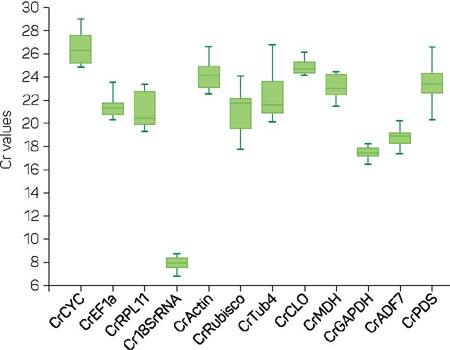
Distribution plot of threshold cycle (Ct) values for eleven candidate reference genes (RGs) and one control gene (CrPDS).
3.2 Expression Profiling of 11 Candidate RGs Across Various Tissues
To evaluate the expression stability of RGs, the average Ct values of 11 candidate RGs and the target gene CrPDS were analyzed based on RT-qPCR data. The Ct values spanned a broad range of 6.82 to 29.11, with nine genes falling between 18 and 26. Notably, CrCYC showed the lowest expression level, with a maximum Ct value of 29.10 in MT, whereas Cr18SrRNA exhibited the highest transcript abundance in bud, with a minimum Ct value of 6.82 (Figure 2).
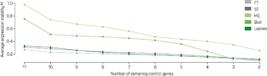
Expression stability analysis of 11 candidate reference genes (RGs) using geNorm algorithm, showing M-values <1.5 for all RGs with optimal gene pairs identified for different tissues: CrCYC/CrEF1α in FT (M=0.11), CrActin/CrRubisco in ST (M=0.11), Cr18SrRNA/CrADF7in MT (M=0.26), CrMDH/CrGAPDH in bud tissues (M=0.11), and Cr18SrRNA/CrRubisco in leaf tissues (M=0.12).
3.3 geNorm Analysis
The geNorm algorithm, which evaluates expression stability without requiring a control gene, was used to determine the optimal RGs based on their M-values. The M-value in the geNorm algorithm serves as a stability metric, reflecting the average pairwise variation of a specific gene’s expression ratio in comparison with other candidate RGs. Genes with M-value <1.5, are considered stable, with lower values indicating greater expression stability. All 11 candidate RGs displayed M-values below this threshold, confirming their suitability for RT-qPCR normalization (Table 2). The most stable genes were identified in various tissues as follows: CrCYC and CrEFla (M-value = 0.11) for FT, CrActin and CrRubisco (M-value = 0.11) for ST, Cr18SrRNA and CrADF7 (M-value = 0.26) for MT, CrMDH and CrGAPDH (M-value = 0.11) for buds, and Cr18SrRNA and CrRubisco (M-value = 0.12) for leaves (Figure 2).
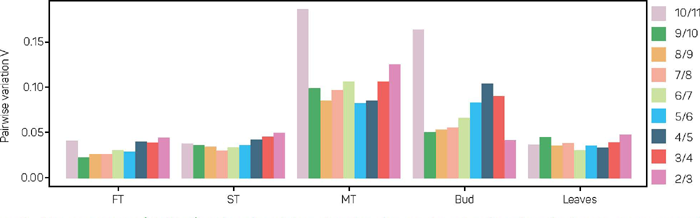
In geNorm, V denotes pairwise variation and reflects the improvement in normalization factor stability upon inclusion of an additional reference gene. geNorm calculated Vn/Vn+1, values to determine the minimal number of RGs required for accurate normalization (Figure 2). In FT, ST and leaves, all values from V2/V3 to V10/V11 were below the threshold value of 0.15, indicating that two RGs were sufficient for reliable normalization. However, in MT and buds, the V10/V11 values exceeded the threshold (0.19 and 0.16, respectively) suggesting that approximate 10 RGs maybe necessary for optimal normalization in these tissues (Figure 3).

Pairwise variation (Vn/Vn+1) analysis by geNorm algorithm showing the optimal number of reference genes required for normalization across tissues: two genes sufficient for FT, ST, and leaf tissues (Vn/Vn+1 <0.15), while up to 10 genes needed for MT (V10/11=0.19) and bud tissues (V10/11=0.16).
3.4 NormFinder Analysis
The NormFinder algorithm was used to further assess the expression stability of candidate RGs by analyzing both inter-group and intra-group variations, independent of the expression of the target gene CrPDS. All candidate genes showed that stability values expressed as SD were < 1.5, indicating that they were generally suitable for RT-qPCR normalization. Lower SD values denote greater stability. With the exception of CrRubisco, which showed instability in both MT and buds, all genes were considered appropriate RGs (Figure 4). The most stable genes varied by tissue type: CrCYC for FT and leaves, CrCLO for ST, CrEF1α for MT, CrRPLII for Buds. The overall stability ranking of RGs based on SD values was: CrEF1α> CrRPL11 > CrActin > CrMDH > CrCLO > CrGAPDH > CrADF7 > CrCYC > Cr18SrRNA > CrTuB4 > CrRubisco.

Stability evaluation of candidate reference genes (RGs) in purple nutsedge using NormFinder algorithm, genes with M-value <1.5, are considered stable, with lower values indicating greater expression stability,showing SD values <1.5 for all genes (except CrRubisco in MT and buds). Top stable genes: CrCYC (FT/leaves), CrCLO (ST), CrEF1α (MT), CrRPL11 (buds). Overall stability ranking: CrEF1α > CrRPL11 > CrActin > CrMDH > CrCLO > CrGAPDH > CrADF7 > CrCYC > Cr18SrRNA > CrTuB4 > CrRubisco.
In addition to SD, group difference (Group Dif) values were used to evaluate inter-group variation, with Smaller Group Dif values indicating more gene stability across different biological groups. The most stable genes in each tissue type based on Group Dif values were: Cr18SrRNA for FT, CrEF1α for ST, CrADF7 for MT, CrRPL11 for buds, and Crl8SrRNA and CrEF1α for leaves. The comprehensive ranking based on Group Dif values across all tissues was: Cr18SrRNA > CrEF1α > CrMDH > CrADF7 > CrCYC > CrCLO > CrGAPDH > CrActin > CrRPL11 > CrTuB4 > CrRubisco (Figure 5).

Dif values asymptotically approaching zero demonstrate increased gene stability across different biological groups. Variation (Dif) analysis of reference genes in Purple nutsedge, ranking stability across tissues: Cr18SrRNA (FT), CrEF1α (ST/leaves), CrADF7 (MT), and CrRPL11 (buds). Overall stability order: Cr18SrRNA > CrEF1α > CrMDH > CrADF7 > CrCYC > CrCLO > CrGAPDH > CrActin > CrRPL11 > CrTuB4 > CrRubisco.
3.5 BestKeeper Analysis
BestKeeper was used to evaluate the stability of candidate RGs by analyzing the SD and CV of Ct values through pairwise correlation analysis. The results revealed substantial variability in expression stability across different tissues. The most stable genes in each tissue, based on the lowest SD and/or CV values, were as follows: CrEF1α (SD = 0.07, CV = 0.35) for FT, Cr18SrRNA (lowest SD = 0.11) and CrActin (lowest CV = 0.56) for ST, CrADF7 (SD and CV = 1.59) for MT, CrRPL11 (SD and CV = 1.49) for Buds, CrCYC (SD and CV = 0.113) for Leaves. Genes with SD values > 1 were considered unstable. Notably, CrCYC and CrRubisco were unstable in MT, while CrRubisco also showed instability in buds (Figure 6).

BestKeeper evaluated expression consistency based on the standard deviation (SD) and coefficient of variation (CV) of Ct values. Genes with SD<1 and CV<5% were deemed highly stable BestKeeper analysis of reference gene stability in purple nutsedge, showing stage-specific optimal candidates: CrEF1α (FT, SD=0.07, CV=0.35), Cr18SrRNA (ST, SD=0.11) and CrActin (ST, CV=0.56), CrADF7 (MT, SD=CV=1.59), CrRPL11 (buds, SD/CV=1.49), and CrCYC (leaves, SD=CV=0.113). Genes with SD>1 (CrCYC, CrPDS, and CrRubisco in MT tubers; CrRubisco in buds) were identified as unstable(FT forming tubers; ST: swelling tubers; MT: mature tubers).
3.6 RankAggreg Analysis
To determine a consensus ranking of RGs, the RankAggreg software was used, employing both the Cross-Entropy (CE) and Genetic Algorithm (GA) methods. As a result, CrEF1α was identified as the most stable RGs. In specific tissues, the stability rankings of RGs varied. In the FT, CrEF1α was ranked first by the CE method, while the GA ranked CrCYC first and CrEF1α second. In the ST, CrActin achieved the top position in both CE and GA analyses. For MT, CrADF7 was consistently ranked first by both algorithms. In buds, CrRPL11 was identified as the most stable RGs. In leaves, CrCYC received the highest ranking from both CE and GA methods (Table 3).
Consensus ranking of reference genes in purple nutsedge by RankAggreg analysis using Cross-Entropy (CE) and Genetic Algorithm (GA) methods.
4. Discussion
Purple nutsedge, widely regarded as one of the most invasive and difficult-to-control weeds worldwide, has recently attracted increasing research attention, focusing on herbicide metabolism mechanisms (Nath et al., 2025). Although significant progress has been made in understanding metabolic pathways and gene functions, the selection and validation of suitable RGs in purple nutsedge remain largely unexplored.
To address this knowledge gap, a comprehensive evaluation of candidate RGs was conducted using three commonly applied algorithms: geNorm, NormFinder, and BestKeeper. Each tool offers a unique analytical perspective. The geNorm emphasizes the synergistic consistency of gene combinations (Ling et al., 2014). In contrast, NormFinder incorporates analysis of variance, enhancing its sensitivity to group-specific expression differences, particularly under heterogeneous sample conditions (Andersen et al., 2004). In this study, all 11 candidate RGs met the expression stability thresholds defined by geNorm and NormFinder analysis, supporting their potential suitability as RGs for gene expression normalization in purple nutsedge (Table 2, Figure 2,3,4,5). In addition, BestKeeper enables the rapid identification of genes with consistent expression (Pfaffl et al., 2004). Based on BestKeeper analysis, CrEF1α for FT, Cr18SrRNA and CrActin for ST, and CrCYC for leaves were identified as the most stable RGs across different tissues of purple nutsedge (Figure 6). However, it is important to note that BestKeeper may exhibit bias toward high-abundance transcripts (Pfaffl et al., 2004). Here, although Cr18SrRNA was ranked as the most stable gene for ST, it is not recommended as a RG for purple nutsedge, due to its excessively high expression level (Figure 1), which may introduce quantification biases and reduce normalization accuracy in RT-qPCR analysis. Therefore, based on integrative results from these three algorithms, CrEF1α, CrActin, and CrCYC are likely to be recommended as RGs for FT, ST, and leaves, respectively.
A consensus gene ranking of RGs across the three algorithms was further achieved using the RankAggreg package, providing additional validation of candidate RGs. This comprehensive approach enabled the robust identification of tissue- and stage-specific RGs, exhibiting minimal expression variability (Fan et al., 2025; Han et al., 2025; Wu et al., 2025). As a result, the three previously recommended RGs (CrEF1α, CrActin, and CrCYC) were further validated. EF1α has been widely used as a RG in tuber crops such as Solanum tuberosum and Manihot esculenta (Tang et al., 2017; Yin et al., 2021; Nicot et al., 2005; Zhao et al., 2016). Similarly, Actin expression is stable across diverse tissues and developmental stages in Litsea coreana, as well as during reproductive development in Amorphophallus konjac (Dai et al., 2025; Liu et al., 2023). In Saccharum officinarum, the CYC gene has demonstrated high expression stability, supporting its use as a RG (Chai et al., 2023; Xue et al., 2014). Moreover, consistent CYC expression has been observed across multiple tissues and under temperature stress conditions in Ipomoea batatas L., reinforcing its potential as a RG in plant gene expression studies (Yu et al., 2020b).
In addition, CrADF7 and CrRPL11 were verified as the most stable RGs for MT and buds, respectively, based on consensus gene ranking. The ADF gene has previously been used as a RG in Solanum lycopersicum (Khatun et al., 2016). However, in Cyperus esculentus, TUB4 and UCE2 have been reported as the most stable RGs during tuber development (Bai et al., 2021), indicating that RGs stability may differ among species within the Cyperaceae family, despite their shared mode of vegetative propagation via tubers. In a previous study, RPL genes also have been identified as stable RGs in Vigna radiata under both pathogen infection and hormone treatment conditions (Zhou et al., 2023).
The observed tissue-specific variation in RGs stability may reflect the distinct physiological roles of these genes in purple nutsedge organs. CrEF1α exhibited the highest stability in FT, consistent with its fundamental role in translational elongation, which is a crucial process for tuber dormancy maintenance and nutrient storage (Tang et al., 2017). Its constitutive expression likely supports the high protein synthesis demands during tuber maturation. In ST, CrActin demonstrated superior stability, correlating with its structural role in cell expansion and vascular development, as reported in Amorphophallus konjac (Liu et al., 2023), suggesting that actin stability is essential for maintaining cytoskeletal integrity during rapid shoot growth. The leaf-specific stability of CrCYC could be associated with its involvement in chloroplast biogenesis (Yu et al., 2020b), thereby supporting photosynthetic activity. Interestingly, CrADF7 showed predominant stability in MT, potentially regulating cell wall remodeling during secondary growth, while CrRPLU’s bud-specific stability might reflect the increased ribosomal demands to support meristematic proliferation (Zhou et al., 2023). Collectively, these findings indicate that optimal RGs selection should account for both technical parameters and the biological context of target tissues, underscoring the necessity of tissue-specific validation in gene expression studies.
This study were performed under controlled conditions. However, the stability of these RGs remains untested under certain abiotic stresses, such as herbicide and heavy metal exposure. Previous research has shown that RGs expression can be stress-sensitive. For example, 18SrRNA expression fluctuated under heavy metal stress in Miscanthus sinensis (Wang et al., 2017), whereas it was reported to be stable under similar conditions in Camellia sinensis (Zhong et al., 2020). Likewise, EF1α maintained stability in drought-stressed Solanum tuberosum (Zhao et al., 2016). Such findings highlight species-specific differences in RGs performance under abiotic stress. Given that herbicide metabolism can alter housekeeping gene expression (Nath et al., 2025) and purple nutsedge exhibits notable herbicide tolerance, future studies should assess the stability of these RGs under herbicide treatment. This validation will provide further confirmation of RGs reliability in herbicide response studies.
5. Conclusions
By employing three distinct algorithms-geNorm, NormFinder, and BestKeeper in conjunction with the RankAggreg algorithm for integrative ranking, the most suitable RGs were identified across different tissue types. Specifically, CrEF1a was identified for FT, CrActin for ST, CrADF7 For MT, CrRPL11 for buds, and CrCYC for leaves. These results provide a reliable set of tissue-specific RGs, which are essential for accurate gene expression normalization in purple nutsedge. This study establishes a foundational framework for future investigations into herbicide metabolic detoxification mechanisms in this globally invasive and herbicide-tolerant weed, and contributes valuable molecular tools for advancing gene function research in weed species.
Supplementary Information
Supplementary Information
Acknowledgments
Thanks to Haohuan Jin for help in sample collection and preparation, and to senior sister Haili Huang for help in paper submission.
-
Funding
This research was funded by the National Natural Science Foundation of China (grant number 32460682), and the Research Funding of Guangxi Academy of Agricultural Sciences (grant numbers 2025YP090, 2025ZX03 and 2021YT066).
-
Data Availability
The data are available at https://doi.org/10.51694/AdvWeedSci/2025;43:00028 and Supplementary Information.
References
-
Agahiu AE. Assessment of some herbicides for the control of purple nutsedge (Cyperus rotundus) in soybean (Glycine max (L.) Merrill). GSC Biol Pharm Sci. 2020;12(1):229-34. Available from: https://doi.org/10.30574/gscbps.2020.12.1.0191
» https://doi.org/10.30574/gscbps.2020.12.1.0191 -
Almas DE, Kamrodi AR. Validation of appropriate reference genes for real-time quantitative PCR gene expression analysis in rice (Oryza sativa) plants exposed to metal stresses. Russ J Plant Physiol. 2018;65(6):890-7. Available from: https://doi.org//10.1134/S102144371806002X
» https://doi.org/10.1134/S102144371806002X -
Andersen CL, Jensen JL, Ørntoft TF. Normalization of real-time quantitative reverse transcription-PCR data: a model-based variance estimation approach to identify genes suited for normalization, applied to bladder and colon cancer data sets. Cancer Res. 2004;64(15):5245-50. Available from: https://doi.org/10.1158/0008-5472.CAN-04-0496
» https://doi.org/10.1158/0008-5472.CAN-04-0496 -
Bai X, Chen T, Wu Y, Tang M, Xu Z-F. Selection and validation of reference genes for qRT-PCR analysis in the oil-rich tuber crop tiger nut (Cyperus esculentus) based on transcriptome data. Int J Mol Sci. 2021;22(5):1-20. Available from: https://doi.org/10.3390/ijms22052569
» https://doi.org/10.3390/ijms22052569 -
Chai Y, Liu H, Chen W, Guo C, Chen H, Cheng X et al. Advances in research on the regulation of floral development by CYC-like genes. Curr Issues Mol Biol. 2023;45(3):2035-59. Available from: https://doi.org/10.3390/cimb45030131
» https://doi.org/10.3390/cimb45030131 -
Dai Q, Lu M, Yang X, Lei C, Huang F, Hu X et al. qRT-PCR reference gene selection for the discoloration of tender leaves in hawk tea (Litsea coreana). Curr Issues Mol Biol. 2025;47(2):131. Available from: https://doi.org/10.3390/cimb47020131
» https://doi.org/10.3390/cimb47020131 - Dogan MN, Jabran K, Unay A. Integrated weed management in cotton. In: Chauhan BS, Mahajan G, editors. Recent advances in weed management. New York: Springer; 2014. p. 197-222.
-
Expósito-Rodríguez M, Borges AA, Borges-Pérez A, Pérez JA. Selection of internal control genes for quantitative real-time RT-PCR studies during tomato development process. BMC Plant Biol. 2008;8:1-12. Available from: https://doi.org/10.1186/1471-2229-8-131
» https://doi.org/10.1186/1471-2229-8-131 -
Fan W, Shi Y, Shi P, Yang Y, Zhang M. Selection and validation of reference genes in alfalfa based on transcriptome sequence data. Sci Rep. 2025;15(1):1-14. Available from: https://doi.org//10.1038/s41598-025-90664-2
» https://doi.org/10.1038/s41598-025-90664-2 -
Foloni L, Christoffoleti P, Carvalho S, Nicolai M. [Purple nutsedge (Cyperus rotundus) management program in sugarcane crop with isolated or sequential application of MSMA]. Planta Daninha. 2008;26(4):883-92. Portuguese. Available from: https://doi.org/10.1590/S0100-83582008000400019
» https://doi.org/10.1590/S0100-83582008000400019 -
Han P, Chen J, Sun Z, Ren S, Wang X. Evaluation of reference genes for gene expression analysis in Japanese flounder (Paralichthys olivaceus) under temperature stress. BMC Gen. 2025;26:1-9. Available from: https://doi.org//10.1186/s12864-025-11285-7
» https://doi.org/10.1186/s12864-025-11285-7 -
Khatun K, Robin AHK, Park J-I, Kim CK, Lim K-B, Kim M-B et al. Genome-wide identification, characterization and expression profiling of ADFfamily genes in Solanum lycopersicum L. Genes. 2016;7(10):1-18. Available from: https://doi.org/10.3390/genes7100079
» https://doi.org/10.3390/genes7100079 -
Kumar M, Das TK, Yaduraju NT. An integrated approach for management of Cyperus rotundus (purple nutsedge) in soybean-wheat cropping system. Crop Prot. 2012;33:74-81. Available from: https://doi.org/10.1016/j.cropro.2011.11.016
» https://doi.org/10.1016/j.cropro.2011.11.016 -
Kumar V, Singh S, Chhokar RS, Malik RK, Brainard DC, Ladha JK. Weed management strategies to reduce herbicide use in zero-till rice-wheat cropping systems of the Indo-Gangetic Plains. Weed Technol. 2013;27(1):241-54. Available from: https://doi.org/10.1614/WT-D-12-000691
» https://doi.org/10.1614/WT-D-12-000691 -
Lacerda ALM, Fonseca LN, Blawid R, Boiteux LS, Ribeiro SG, Brasileiro ACM. Reference gene selection for qPCR analysis in tomato-bipartite begomovirus interaction and validation in additional tomato-virus pathosystems. PLoS ONE. 2015;10(8):1-17. Available from: https://doi.org/10.1371/journal.pone.0136820
» https://doi.org/10.1371/journal.pone.0136820 -
Ling H, Wu Q, Guo J, Xu L, Que Y. Comprehensive selection of reference genes for gene expression normalization in sugarcane by real time quantitative RT-PCR. PLoS ONE. 2014;9(5):1-10. Available from: https://doi.org/10.1371/journal.pone.0097469
» https://doi.org/10.1371/journal.pone.0097469 -
Liu B, Li H, Chen W, Wang Y, Chen Y, Wei X. Dormancy break, sprouting and later tuber reproduction in response to different tuber sizes of tiger nut (Cyperus esculentus L.). R Soc Open Sci. 2024;11(2):1-10. Available from: https://doi.org/10.1098/rsos.231616
» https://doi.org/10.1098/rsos.231616 -
Liu Y, Zhang C, Harijati N, Diao Y, Liu E, Hu Z. Selection and evaluation of reference genes for RT-qPCR analysis in Amorphophallus konjac based on transcriptome data. Genes. 2023;14(8):1-12. Available from: https://doi.org/10.3390/genes14081513
» https://doi.org/10.3390/genes14081513 -
Nath CP, Kumar N, Dutta A, Hazra KK, Praharaj CS, Kumar D et al. Cover crop and herbicides can control purple nutsedge (Cyperus rotundus L.) and increase crop yields in conservation agriculture-based crop rotations. Crop Prot. 2025;187. Available from: https://doi.org/10.1016/j.cropro.2024.106974
» https://doi.org/10.1016/j.cropro.2024.106974 -
Nicot N, Hausman JF, Hoffmann L, Evers D. Housekeeping gene selection for real-time RT-PCR normalization in potato during biotic and abiotic stress. J Exp Bot. 2005;56(421):2907-14. Available from: https://doi.org//10.1093/jxb/eri285
» https://doi.org/10.1093/jxb/eri285 -
Okafor LI, De Datta SK. Competition between upland rice and purple nutsedge for nitrogen, moisture, and light. Weed Sci. 1976;24(1):43-6. Available from: https://doi.org/10.1017/S0043174500065383
» https://doi.org/10.1017/S0043174500065383 -
Owen MDK, Zelaya IA. Herbicide-resistant crops and weed resistance to herbicides. Pest Manag Sci. 2005;61(3):301-11. Available from: https://doi.org/10.1002/ps.1015
» https://doi.org/10.1002/ps.1015 -
Peerzada AM. Biology, agricultural impact, and management of Cyperus rotundus L.: the world’s most tenacious weed. Acta Physiol Plant. 2017;39(12). Available from: https://doi.org/10.1007/s11738-017-2574-7
» https://doi.org/10.1007/s11738-017-2574-7. -
Pfaffl MW, Tichopad A, Prgomet C, Neuvians TP. Determination of stable housekeeping genes, differentially regulated target genes and sample integrity: BestKeeper-Excel-based tool using pair-wise correlations. Biotechnol Lett. 2004;26(6):509-15. Available from: https://doi.org/10.1023/B:BILE.0000019559.84305.47
» https://doi.org/10.1023/B:BILE.0000019559.84305.47 -
Ranz JM, Machado CA. Uncovering evolutionary patterns of gene expression using microarrays. Trends Ecol Evol. 2006;21(1):29-37. Available from: https://doi.org/10.1016/j.tree.2005.09.002
» https://doi.org/10.1016/j.tree.2005.09.002 -
Roozkhosh M, Rastgoo M, Mohammadnia Ghalibaf KH, Tahmasebi BK, Aien A. Evaluating the efficacy of herbicide options in controlling purple nutsedge (Cyperus rotundus L.) in onion (Allium cepo L.) fields. Crop Prot. 2025;190. Available from: https://doi.org/10.1016/j.cropro.2024.107084
» https://doi.org/10.1016/j.cropro.2024.107084 -
Tang J, Li E, Liu J, Zhang Z, Hua B, Jiang J, Miao M. Selection of reliable reference genes for gene expression normalization in Sogittorio trifolio. Genes. 2023;14(7):43-6. Available from: https://doi.org/10.3390/genes14071321
» https://doi.org/10.3390/genes14071321 -
Tang X, Zhang N, Si H, Calderón-Urrea A. Selection and validation of reference genes for RT-qPCR analysis in potato (Solonum tuberosum) under abiotic stress. Plant Met. 2017;13:1-8. Available from: https://doi.org//10.1186/s13007-017-0238-7
» https://doi.org/10.1186/s13007-017-0238-7 -
Wang ML, Li QH, Xin HH, Chen X, Zhu X-J, Li XH. Reliable reference genes for normalization of gene expression data in tea plants (Comellio sinensis) exposed to metal stresses. PLoS ONE. 2017;12(4):1-13. Available from: https://doi.org/10.1371/journal.pone.0175863
» https://doi.org/10.1371/journal.pone.0175863 -
Wu Q, Deng M, Zhao X, Long J, Zhang J. Screening and validation of optimal real-time PCR reference genes for Abelmoschus manihot. Sci Rep. 2025;15(1):1-18. Available from: https://doi.org/10.21203/rs.3.rs-4950662/v1
» https://doi.org/10.21203/rs.3.rs-4950662/v1 -
Xue B, Guo J, Que Y, Fu Z, Wu L, Xu L. Selection of suitable endogenous reference genes for relative copy number detection in sugarcane. Int J Mol Sci. 2014;15(5):8846-62. Available from: https://doi.org/10.3390/ijms15058846
» https://doi.org/10.3390/ijms15058846 -
Yin Z, Xie F, Michalak K, Zhang B, Zimnoch-Guzowska E. Reference gene selection for miRNA and mRNA normalization in potato (Solonum tuberosum) in response to potato virus Y. Mol Cell Probes 2021;55. Available from: https://doi.org/10.1016/j.mcp.2020.101691
» https://doi.org/10.1016/j.mcp.2020.101691 -
Yu J, Sharpe SS, Boyd NS. PRE herbicides and POST halosulfuron for purple nutsedge control in tomato grown in plasticulture systems. Weed Technol. 2020a;34(5):642-6. Available from: https://doi.org/10.1017/wet.2020.24
» https://doi.org/10.1017/wet.2020.24 -
Yu J, Su Y, Sun J, Li Z, Zhang B. Selection of stable reference genes for gene expression analysis in sweet potato (Ipomoeo bototos L.). Mol Cell Probes. 2020b;53. Available from: https://doi.org/10.1016/j.mcp.2020.101610
» https://doi.org/10.1016/j.mcp.2020.101610 -
Zhao X, Zhang X, Guo X, Li S, Han L, Song Z et al. Identification and validation of reference genes for qRT-PCR studies of gene expression in Dioscorea opposita. Biomed Res Int. May 26, 2016. Available from: https://doi.org/10.1155/2016/3089584
» https://doi.org/10.1155/2016/3089584 -
Zhong M, Yang X, Hu Y, Huang L, Peng Y, Li Z, Liu Q et al. Identification of candidate reference genes for quantitative RT-PCR in Miscanthus sinensis subjected to various abiotic stresses. Mol Biol Rep. 2020;47:2913-27. Available from: https://doi.org/10.1007/s11033-020-05392-9
» https://doi.org/10.1007/s11033-020-05392-9 -
Zhou Y, Liu H, Wu T, Zheng Y, Wang R, Xue D et al. Screening of reference genes under biotic stress and hormone treatment of mung bean (Vigna radiata) by quantitative real-time PCR. Genes. 2023;14(9):1-14. Available from: https://doi.org/10.3390/genes14091739
» https://doi.org/10.3390/genes14091739
Edited by
-
Approved by: Editor in Chief:
Nome Carol Ann Mallory-Smith
-
Associate Editor:
Caio Brunharo
The data are available at https://doi.org/10.51694/AdvWeedSci/2025;43:00028 and Supplementary Information.