 Evaluation of Essential Oils from the Brazilian Species Baccharis trimera (Less.) DC. and Mimosa verrucosa Benth. against Ctenocephalides felis felis Bouché
Abstract
Essential oils (EO) have the potential to control ectoparasites, being an alternative to the use of synthetic products. The essential oils of Baccharis trimera and Mimosa verrucosa were evaluated for lethality, residual efficacy, and repellence against the ectoparasite Ctenocephalides felis felis Bouché, and toxicity was using Saccharomyces cerevisiae eukaryote model. EOs were obtained by steam distillation and characterized by GC/FID/MS. Mortality at different immature stages and among adult fleas was measured through in vitro filter paper tests at different concentrations of EOs, as well as residual effect and repellent activity. The major compounds for B. trimera were carquejyl acetate (33.0%), carquejol (7.07%), and palustrol (6.99%), and for M. verrucosa, β-pinene (14.2%), (E)-caryophyllene (13.8%), and α-pinene (10.6%). Low toxicity was recorded for B. trimera and M. verrucosa EOs at 200 µg.mL-1. EOs recorded 100% efficacy against adult fleas at 800 µg.cm-2 (LC50 = 369.22 µg.cm-2) and residual effect for three days, B. trimera EO promoted 46.7% of mortality on the 3rd day of the exposition, and M. verrucosa EO 20% of mortality on the 3rd day of the exposition. The repellent activity was presented in the concentration of 40000 µg.mL-1 for B. trimera EO (80% at 12h) and M. verrucosa EO (75% at 6h). The results show great potential for developing alternative products from the essentials of B. trimera and M. verrucosa in control against C. felis felis, which show low toxicity and high activity.
Keywords:
volatile oil; biocontrol; biopesticide; fleas; toxicity.
HIGHLIGHTS
Essential oils rich in terpene compounds.
Baccharis. trimera has pulicidal potential against adult fleas
Mimosa verrucosa has pulicidal potential against larvae and adult fleas.
Essential oils have repellent activity.
INTRODUCTION
Ctenocephalides felis felis is the most prevalent flea subspecies parasitizing companion animals worldwide [1]. Infestations by C. felis felis can be transmitted to humans by contact with dogs and cats or with infested environments, which can cause discomfort and allergic reactions [2].
Chemical synthetic formulations are traditionally employed for controlling fleas. These formulations raise several issues related to environmental impact and develop resistance to ectoparasites, reducing the products' effectiveness [3, 4]. Organic plant-derived compounds represent alternative controlling agents [5, 6, 7]. Plants can produce a broad range of secondary metabolites; terpenoids have well-established insecticidal activity [8, 9].
Essential oils are a complex mixture of compounds, and their chemical composition is mainly based on terpenes and phenylpropanoids [10]. They have shown to be very promising concerning their biopesticide activity due to the different bioactive compounds in their composition. The largest body of research describes their activity against mosquitoes, ticks, and fleas [11, 12]. Interest has been directed to finding new formulations for veterinary use and new active molecules or even prototypes for developing new drugs that are more effective and safer for veterinary medicine [13]. Using effective natural products could be an excellent alternative to synthetic compounds to minimize the negative impact on human health and the environment [14].
Baccharis trimera (Less.) DC. known as carqueja (Asteraceae), native to the southern region and Mimosa verrucosa Benth. known as jurema-branca (Fabaceae), native to the caatinga biome and the northeast region, are Brazilian plants used in folk medicine [15,16]. B. trimera showed carquejyl acetate as a major compound, while M. verrucosa is studied for the first time in the present article. Moreover, few papers published with Brazilian plants show the chemical composition of essential oil and pulicidal activity.
The present study aimed to evaluate the pulicidal and repellent activity of the essential oils (EOs) of B. trimera and M. verrucosa against the different immature stages and adults of the flea C. felis felis, characterize their residual effect, and evaluate the toxicity of these oils in a eukaryotic organism mimicking the cells of higher mammals.
MATERIAL AND METHODS
Essential Oils and their Chemical Characterization
Essential oils from B. trimera, known as carqueja, from all plant parts, and M. verrucosa, known as jurema-branca, from leaves and twigs, were purchased commercially (Laszlo©). Both essential oils were obtained by steam distillation, protected from light, and stored at -20 °C until all the analyses were performed. To separate, detect, and quantify the constituents, 1μL of essential oils samples (10 μL.ml-1), in the defined times, were injected into the gas chromatography (GC). A Hewlett-Packard 5890 Series II (Palo Alto, USA), equipped with flame ionization detection and a split/splitless injector in a split ratio 1:20, was used to separate and detect the constituents in the essential oil. The substances were separated with a fused silica capillary column, similar DB5 with 30 m × 0.25 mm (i.d.) × 0.25 m (film thickness). Helium was used as the carrier gas at a 1.0 ml.min-1 flow rate. The column temperature was programmed as follows: 60 oC for 2 min followed by heating at 5 oC min-1 to 110 oC, followed by heating at 3 oC min-1 to 150 oC and finally followed by heating at 15 oC min-1 until 290 oC and holding constant for 15 min. The injector temperature was 220 oC and the detector temperature was 290 oC. To separate and identify the substances, 1.0 μL of essential oils samples (10 μL.ml-1), in the defined times, were injected in the gas chromatograph coupled to a mass spectrometer (GC-MS) QP-2010 Plus (Shimadzu, Japan). The flow of the helium gas carrier, the capillary column, and the temperature conditions for the GC-MS analysis were the same as those described for the GC. The temperature of the injector was 220 oC and the temperature of the interface was 250 oC. Mass spectra were obtained with a quadrupole detector operating at 70 eV, with a 40-400 m/z mass range and scanning rate equal to 0.5 scan s-1. The identification of volatile compounds in essential oil has been based on Linear Retention Indices (LRI) and mass spectra of the samples, compared with authentic standards injected under the same conditions, with the NIST database (2008) and the index Kovats, IK [17]. The LRI was calculated based on the co-injection of alkanes series [18].
Biological tests
The experiments followed the standards established by the Ethics Committee for Animal Use of the Veterinary Institute (CEUA/IV nº 4313110419). Fleas (eggs, larvae, pupae, and adults) were obtained from a colony of C. felis maintained in the Experimental Chemotherapy Laboratory in Veterinary Parasitology (LQEPV) at the Federal Rural University of Rio de Janeiro (UFRRJ).
In vitro activity of essential oils against Ctenocephalides felis felis
Bioassays for evaluating the mortality of the fleas against the essential oils were performed using the filter paper impregnation method [18], where a stock solution was prepared at 200 mg.mL-1 of essential oils, and from this, 10 serial dilutions were performed 1:2, made in acetone, an innocuous solvent used as a negative control capable of solubilizing the essential oil, with a ranging concentration from 1978.1 μg.mL-1 to 49.5 μg.mL-1. Fipronil (technical-grade active ingredient fipronil (99.2%) was provided by CEVA® (Paulínia, BR) and used at 400 µg.cm-2 as a positive control.
Six replications were performed for each concentration, with filter paper strips (10 cm2) for adult fleas and filter paper discs (23.76 cm2) for immature stages. The strips were impregnated with 200 μL, and the discs with 470 μL of their respective dilutions, so the final concentrations for B. trimera and M. verrucosa were 50 to 2000 μg.cm-2.
After impregnation and drying, the strips were placed in test tubes containing 10 non-fed adults of C. felis felis, which were then sealed with non-woven fabric and elastic. Ten eggs, larvae, or pupae of C. felis felis were added to their respective impregnated discs and then sealed in the petri dish. The tubes and discs were kept in an acclimatized chamber at 27 ± 1°C, 75 ± 10% RH. Using a stereoscopic microscope (Wild Heerbrugg, Switzerland, M5-52706), the results evaluated the mean number of live fleas per concentration. Ovicidal tests were evaluated after 72 h, the larvicidal test after 24 and 48 h, the pupicidal test after 15 days, and the test for adult fleas was evaluated after 24 and 48 h.
Insecticidal activity was evaluated by impregnating filter paper with adult fleas, which were considered alive even though the fleas had less movement. So, it was determined the residual effect of the essential oil [19] obtained results at a concentration of 40000 for B. trimera and 100000 μg.mL-1 for M. verrucosa. The evaluation was done for 6 days each 24 h; fleas alive were counted, and new ones were added. The impregnated tapes were maintained to evaluate the durability of the insecticidal activity of the essential oils in only one application.
Bioassays of the repellent activity against fleas were carried out to determine the fleas' resistance using Diethyltoluamide (DEET) at 40000 μg.mL-1 as a positive control, using the filter paper impregnation method [19]. Bioassays for mortality were also carried out, with essential oil concentrations of 5000, 20000, and 40000 μg.mL-1. These tests were evaluated after different times, varying from 1 to 48 h.
The evaluation of the in vitro efficacy of each concentration followed the formula developed by Abbott, used to calculate the percent efficacy [20]:
The assessment of lethal concentrations that killed 50% and 90% of the treated population, LC50 and LC90, respectively, was established by analysis in the RStudio Team software program (2020, RStudio: Integrated Development Environment for R. RStudio, PBC, Boston, MA, USA).
Microorganism and cell culture conditions
Saccharomyces cerevisiae strain code BY4741 with genotype MATa; his3Δ1; leu2Δ0; met15Δ0; ura3Δ0 was acquired from Euroscarf, headquartered in Frankfurt, Germany. For all bioassays, an inoculum was made from fresh subcultures in a 2% YPD (Kasvi, Brazil) medium liquid (2% glucose, 2% peptone, and 1% yeast extract). Cell proliferation was carried out overnight in a refrigerated incubator at 160 rpm and 28 °C. Cells were grown to the stationary phase, and an aliquot of this cell suspension was collected and used for each subsequent assay.
Evaluation of the toxicity of essential oil in a eukaryote model of Saccharomyces cerevisiae
The toxicity of essential oils was preliminarily analyzed using the qualitative method (resazurin, Sigma Brazil) and then using two quantitative assays (cell viability and growth curves) [21]. The analysis with the resazurin reagent is based on a screening using different concentrations of the two essential oils in contact for 24 h with 50 µL of cell suspension in a 96-well plate. Then, 10 µL of 0.01% resazurin in water was added to each well, where a blue stain revealed poor cellular metabolism and a pink stain revealed active cellular metabolism.
In the analysis of cytotoxicity by cell viability, an aliquot of the cell suspension (10 mg of cells per 10 mL of YPD medium) was incubated with B. trimera and M. verrucosa oils, both at a concentration of 0.2 mg.mL-1, for 1h at 28 °C and 160 rpm. After this period, an aliquot (40 µg) of this suspension was diluted and placed in Petri dishes with 2% solid YPD medium (agar). The same aliquot was placed on plates with YPGly medium (4% glycerol replacing glucose). After 48 h in a BOD (Solab, Brazil) oven at 28 ºC, the colonies were counted, and the results were compared with the control assay (cells only) and with a yeast toxicity control (H2O2 - 1.0 mM). Cell viability in YPD and YPGly (Kasvi, Brazil) medium was expressed in colony-forming units.
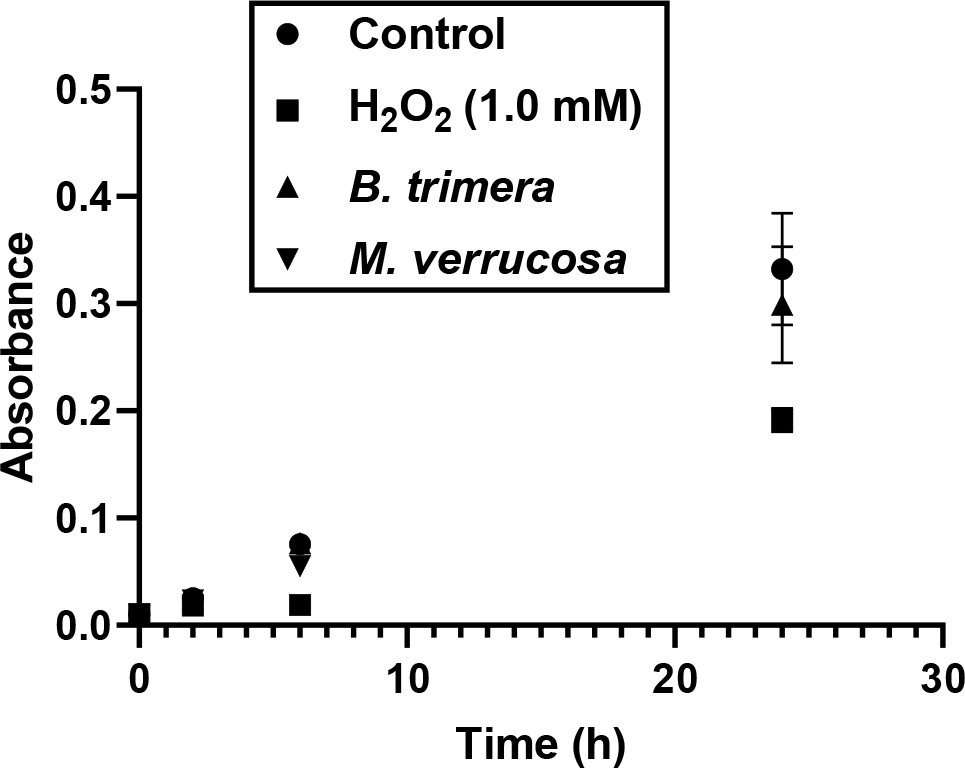
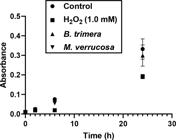
The second toxicity analysis relates to the generation of daughter cells during exposure to oils for 24 h (time-dependent). The cells were incubated with B. trimera and M. verrucosa EOs (0.2 mg.mL-1), and the absorbance was measured in a spectrophotometer (Biospectro, Brazil) at 570 nm during 0, 2, 6, and 24 h.
RESULTS
Chemical characterization of essential oils
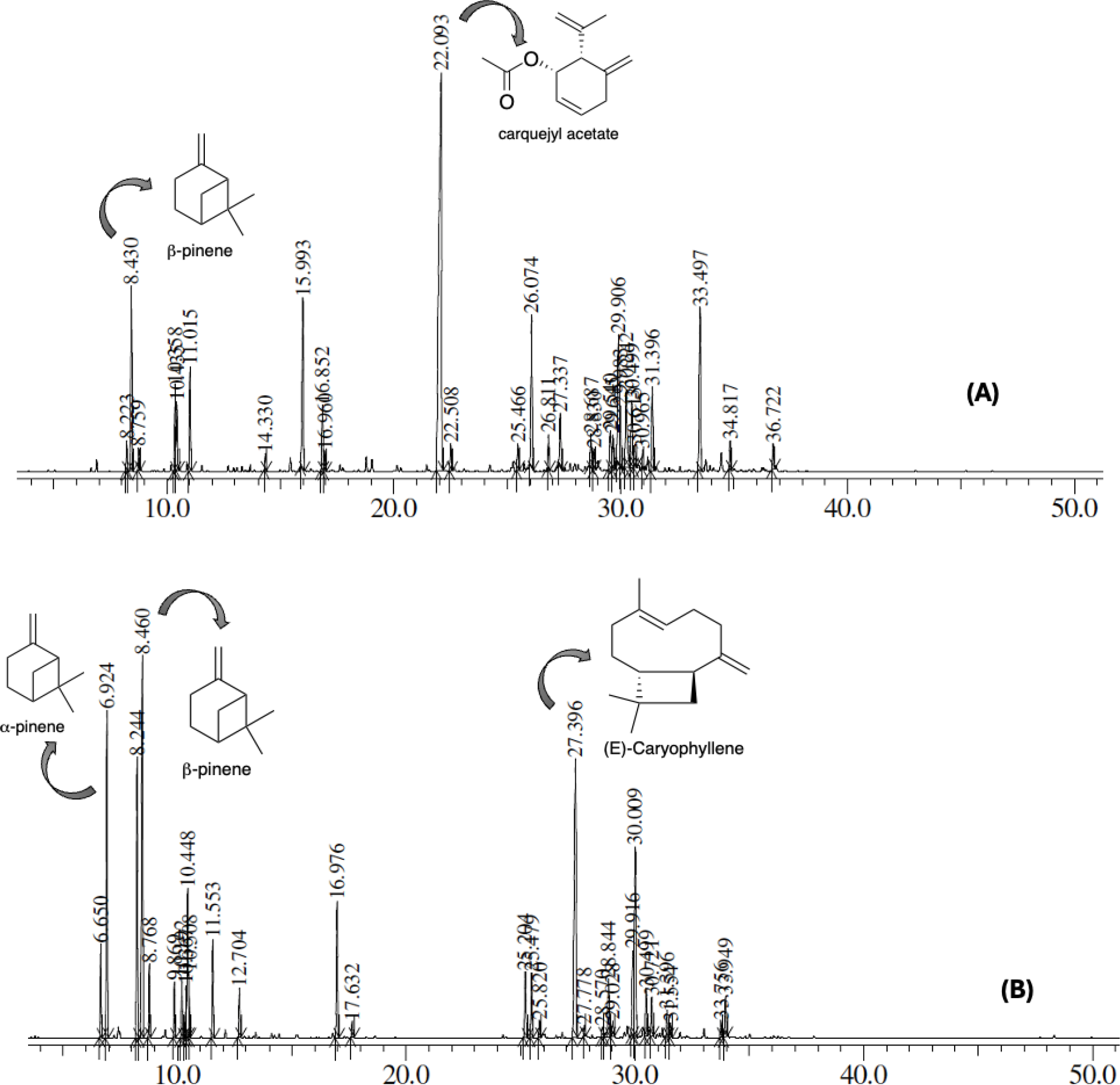
The analysis of essential oils led to the identification of thirty compounds for B. trimera and thirty for M. verrucosa (Figure 1 and Table 1).
Chromatograms of Baccharis trimera (A) and Mimosa verrucosa (B), essential oil obtained from a fused silica capillary column similar to DB-5 (30 m x 0.25 mm x 0.25 μm). The major compounds and the respective retention times are shown.
Flea mortality at different stages, residual effect, and repellent activity
B. trimera and M. verrucosa EO showed activity against immature stages and adults of C. felis felis in the concentration range tested. The lethal concentrations at 50% and 90% were calculated from them, as shown in Table 2.
Lethal concentrations at 50% and 90% from Baccharis trimera and Mimosa verrucosa essential oil against adults and immature stages of Ctenocephalides felis felis.
B. trimera EO showed activity against all stages evaluated, demonstrating greater larvicidal (LC90 = 44.93 µg.cm-2) activity, followed by adulticidal (LC90 = 678.13 µg.cm-2), pupicidal (LC90 = 1160.35 µg.cm-2) and ovicidal (LC90 = 1391.85 µg.cm-2). M. verrucosa EO, on the other hand, showed greater ovicidal (LC90 = 563.08 µg.cm-2) activity, followed by adulticidal (LC90 = 678.13 µg.cm-2) and larvicidal (LC90 = 731.34 µg.cm-2) and did not demonstrate significant pupicidal activity in the concentration range evaluated.
B. trimera and M. verrucosa EOs presented adulticidal activity with similar potency, as they presented 100% mortality at the same concentration (800 µg.cm-2). However, regarding activity against immature stages, B. trimera and M. verrucosa EOs showed different results. In terms of larvicidal activity, B. trimera EO presented 20-folder potency than M. verrucosa EO since the concentrations needed to achieve 100% mortality against larvae for B. trimera EO and M. verrucosa EO were 59.5 µg.cm-2 and 1186.9 µg.cm-2, respectively. The ovicidal activity was more pronounced for M. verrucosa EO, demonstrating 2.5-folder potency than B. trimera EO, since the concentrations necessary to achieve 100% mortality against eggs for M. verrucosa EO and B. trimera EO were 791.2 µg.cm-2 and 1582.5 µg.cm-2, respectively.
The residual effect of insecticidal activity for both essential oils was three days. B. trimera EO caused 83.3% of mortality on the 2nd day of exposition, decreasing to 46.7% on the 3rd day of analysis. On the 4th day, it was still capable of causing 18.3% mortality of the fleas, and on the 5th day, there was no activity. B. trimera EO presented a lower concentration, capable of causing approximately 80% of mortality, and its effectiveness remained more than M. verrucosa EO. On the 2nd day of the exposition, the pulicidal activity of M. verrucosa EO decreased by approximately 40% of mortality, dropping by 58.3%, on the 3rd day, 20% of mortality and no activity on the 4th day of the exposition, as shown in Table 3.
The residual effect from the concentration of 40000 µg.mL-1 Baccharis trimera and Mimosa verrucosa essential oil against Ctenocephalides felis felis adult stage.
Essential oils of B. trimera and M. verrucosa showed repellent activity against C. felis felis in all concentrations tested. Negative control (acetone) was ineffective, and positive control (DEET) presented a satisfactory variation of effectiveness over time under exposed concentrations. The best efficiency results were found for B. trimera EO in concentrations of 20000 and 40000 µg.mL-1; at higher concentrations, it maintained repellence in the range of 80% for 12h and reached 50% in 24 h. Even for M. verrucosa, EO was the concentration of 40000 µg.mL-1 effective at the first hour of evaluation reached 83.1%, in 6 h reached 75%, and in 12h, 7.8% of repellence, as shown in Table 4.
Percentage of repellence from Baccharis trimera and Mimosa verrucosa essential oil against adult stage of Ctenocephalides felis felis.
Toxicity of essential oils
Qualitative results in the resazurin assay revealed a non-cytotoxic concentration range for yeast cells, specifically between 8000.00 and 15.563 µg.mL-1 (data not shown). Based on this assay, we chose an intermediate concentration (200 µg.mL-1) of this screening for a quantitative assessment of the toxicity of essential oils. Cell viability evaluates the number of viable cells, which are individual cells capable of forming colonies. Colonies were counted on YPD medium (medium rich in glucose - fermentative metabolism) and YPGly (medium rich in glycerol - respiratory metabolism).
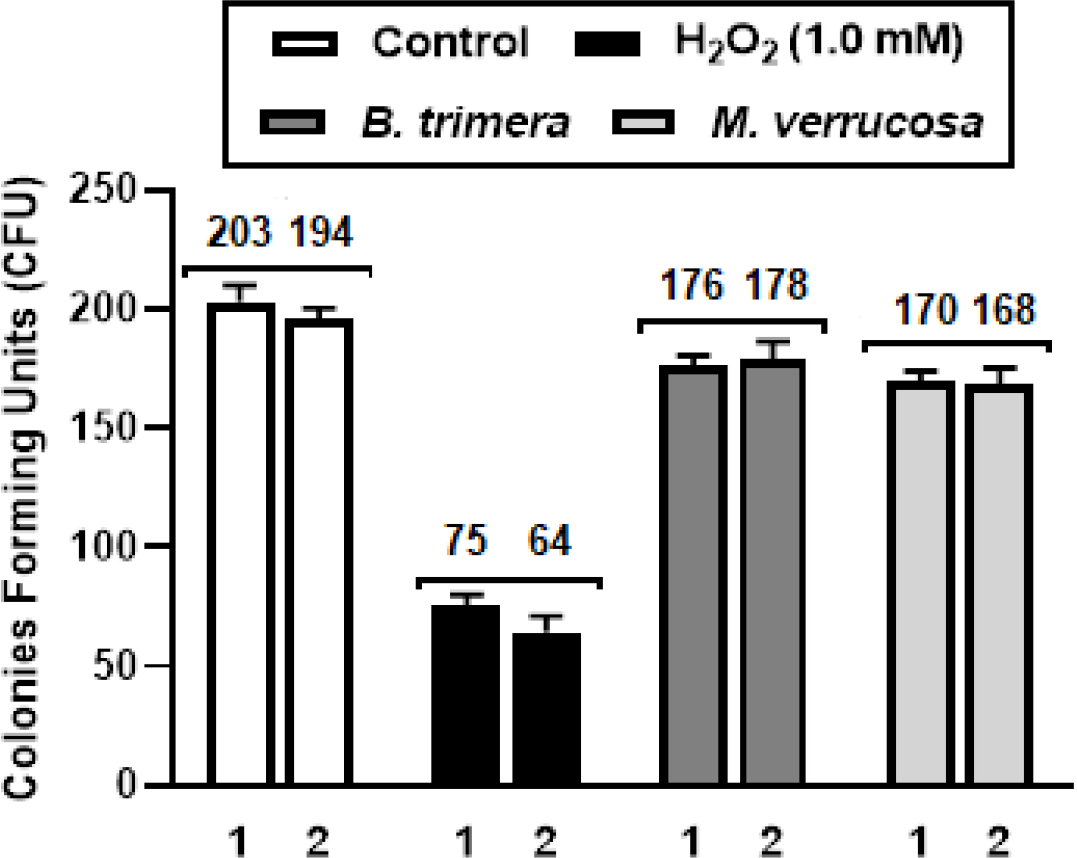
The results of Figure 2 in YPD medium showed a low toxicity of B. trimera EO (176.50 ± 4.12 CFU) and M. verrucosa EO (171.80 ± 3.27 CFU) concerning the control (203.00 ± 6.96 CFU). The control was cells without any treatment incubated in a culture medium under the same agitation and temperature parameters. However, both essential oils showed low toxicity compared to the positive control (hydrogen peroxide) (75.00 ± 5.10 CFU). It is important to emphasize that none of the treatments with essential oils of both species at a concentration of 200 µg.mL-1 showed statistical similarity with the control's cell viability level (P <0.05).
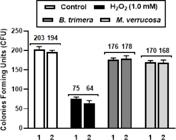
Colonies of Saccharomyces cerevisiae cells in different culture media (1-YPD and 2-YPGly) after exposure to B. trimera and M. verrucosa oils (200ug.mL-1), counted after 48 h of cultivation. H2O2 (1.0mM) was used as a toxicity standard for yeast cells. Different amounts in the number sign represent results that are statistically different.
Evaluating cell growth in contact with the essential oils over time may reveal a time-dependent growth inhibition. Figure 3 shows that both essential oils (B. trimera and M. verrucosa) did not inhibit the growth of S. cerevisiae cells, as they presented statistically similar curves to the control (P< 0.05) at all times. Hydrogen peroxide, on the other hand, proved to be toxic to cells from 2h to 24h.
DISCUSSIONS
This is the first study using the essential oils of B. trimera and M. verrucosa in vitro, correlating their toxicity to the mortality of animal ectoparasites. Analysis of the chemical profile of essential oils by gas chromatography revealed their complexity, enabling the identification of the numerous compounds responsible for their properties.
For B. trimera essential oil, 30 compounds were identified, of which carquejyl acetate (33.04%) and carquejol (7.07%) were the major. According to Suzuki and coauthors [23], carquejyl acetate acts synergistically with β-pinene, also present in the essential oil composition (5.54%).
Thirty compounds were identified in the composition of M. verrucosa essential oil, among which α-pinene (10.66%), sabinene (9.54%), β-pinene (14.17%), E-caryophyllene (13.84%), and γ-himachalene (8.09%) were the major ones. According to Suzuki and coauthors [23], β-pinene is one of the most important bioactives in the chemical composition of several essential oils and can produce an antimicrobial effect, as it has characteristics that can change the membrane of bacterial cells.
According to Avelar and coauthors [24], essential oils from the Schinus molle species contain monoterpenes and sesquiterpenes as the major classes. As described by Batista and coauthors [13], the essential oil of S. molle was 100% effective against fleas of the species C. felis felis. The similar chemical composition of S. molle and M. verrucosa could indicate the good efficacy against fleas found in our study.
Among the different concentrations evaluated in each stage, those that obtained 100% mortality efficiency in both essential oils were present. Only the M. verrucosa essential oil test against the pupae did not show satisfactory results.
Then, it is possible to state that the result for adult fleas for both essential oils analyzed, B. trimera and M. verrucosa (LC50 = 369.22 µg.cm-2 in 24 and 48 h), corroborates the literature data, with lower lethal concentration to the mentioned EO and equivalent to the essential oil of Schinus molle fruits (LC50 = 353.95 µg.cm-2), Alpinia zerumbeti (LC50 = 553.31 µg.cm-2), Laurus nobilis (LC50 = 412.09 µg.cm-2), Mentha spicata (LC50 = 597.56 µg.cm-2) and Cymbopogon nardus (LC50 = 597.05 µg.cm-2) [13, 25].
From the results for larvae fleas, it is possible to verify that a low lethality was obtained, B. trimera EO obtained LC50 = 34.57 µg.cm-2 in 24 and 48 h, and the M. verrucosa EO obtained LC50 = 266.29 µg.cm-2 in 24 h and LC50 = 24.54 µg.cm-2 in 48 h. Compared to recent studies in the literature, Illicium verum essential oil obtained LC50 = 14.4 µg.cm-2 in 24 h and LC50 = 12.1 µg.cm-2 in 48 h, Pelargonium graveolens obtained LC50 = 16.3 µg.cm-2 in 24 h and LC50 = 20.1 µg.cm-2 in 48 h [12], Alpina zerumbeti obtained LC50 = 7.29 µg.cm-2 in 24 h, Cinnamomum obtained LC50 = 0.43 µg.cm-2 in 24 h, Laurus nobilis obtained LC50 = 0.52 µg.cm-2 in 24 h, Ocimum gratissimum obtained LC50 = 1.21 µg.cm-2 in 24 h and Cymbopogon nardus obtained LC50 = 7.32 µg.cm-2 in 24 h [25].
Residual effects should be highlighted in the development of new biopesticides. In literature, few studies show the essential oils' residual effect against fleas [19], even though evaluating the activity duration of the essential oils in the environment and the host is essential. This study shows that the pulicidal activity of these essential oils remained above 50% for three days in the concentration of 800 µg.cm-2, corresponding to 100% mortality of adult fleas against B. trimera EO. On the other hand, M. verrucosa EO in the concentration of 240 µg.cm-2, which corresponds to 100% of mortality against adult fleas, had a residual effect of approximately 50% after two days.
The repellent activity of the B. trimera EO and M. verrucosa EO decreased during evaluation. Over time, the impact under fleas decreases, corroborating with the positive control, as shown in Table 4. Another important observation about repellent activity is its proportional increase to the increase of applied concentration. B. trimera EO was more efficient under higher concentrations because its repellence varied from 88.9% to 84.6% from 1 to 12 h and, in 24 h, reached 50%. In comparison, M. verrucosa EO presented 83.1% of repellence, increasing its activity in 3 h, 86.8%, and 12h reached 37.8%.
S. cerevisiae is a microorganism widely used in biological assays to evaluate the toxicity of synthetic and natural substances, including essential oils [26, 27]. Its great genetic orthology with higher mammalian cells producing proteins with identical functions in both cells characterizes this yeast as a eukaryotic model aiming at preliminary tests on the biological activity of exogenous substances [26].
Cell viability in the YPD medium shows that the cells placed in contact with the EOs obtained statistically similar results and very close results to the control, revealing low toxicity. However, the stressor agent used as a parameter showed high toxicity to S. cerevisiae cells.
The study by [27] showed a non-toxic effect, but a trophic effect was inhibited by the action of B. trimera essential oil. Recent studies on the chemical properties of medicinal plants, associating the extract of B. trimera and the presence of terpene compounds, demonstrate that toxicopharmacological activities are rarely found in bone marrow cells of Wistar rats [28]. Among the few studies suggest that despite the hemolytic action found for the B. trimera extract, the biological efficacy at the concentrations tested does not reveal cytotoxicity in vitro [29].
Recent studies on some terpene compounds found in the species reinforce the assertion. The chemical compound 1,8-cineol, present in the species M. verrucosa, has a repellent and insecticide action for Periplaneta americana, in addition to having a larvicidal and ovipositive repellence for mosquitoes [30]. The predominance of the sesquiterpene compounds, caryophyllene, germacrene, spathulenol, β-elemene, and α-humulene, has demonstrated several biological activities by inhibiting cell proliferation [31, 32].
There was no difference in toxicity between the species B. trimera and M. verrucosa in the exposure of cells to essential oils during 24 h (growth curves). Although the essential oil from B. trimera has carquejyl acetate and β-pinene as the major compounds and the essential oil from M. verrucosa has β-pinene as the major compound, this was not enough for differentiating toxicity results.
CONCLUSION
The objectives of the study were achieved since both oils were chemically identified, demonstrating that they are rich in terpene compounds. B. trimera essential oil was demonstrated to have pulicidal potential against adult fleas, and M. verrucosa essential oil showed to have pulicidal potential under the larvae and adult fleas, presenting durability of residual effect and efficiency of repellence activity, with both presenting low toxicity. These results are useful for following up on studies with other authors, aiming at developing products to be used as an alternative in the control of ectoparasites.
Funding
Acknowledgments:
The authors are grateful to Universidade Federal Rural do Rio de Janeiro.
REFERENCES
- 1 Rust MK. Recent advancements in the control of cat fleas. Insects. 2020;11(10):668-85.
- 2 ESCCAP. European Scientific Counsel Companion Animal Parasites. Control of Ectoparasites in Dogs and Cats. 2017;3, 4th Ed. Malvern, Worcestershire, England.
- 3 George DR, Finn RD, Graham KM, Sparagano AO. Present and future potential of plant-derived products to control arthropods of veterinary and medical significance. Parasit Vectors. 2014;7:28.
- 4 Rust MK. Insecticide resistance in fleas. Insects. 2016;7(1):10-9.
- 5 Benelli G. Plant-borne ovicides in the fight against mosquito vectors of medical and veterinary importance: a systematic review. Parasitol Res. 2015;114:3201-12.
- 6 Pavela R, Canale A, Mehlhorn H, Benelli G. Application of ethnobotanical repellents and acaricides in prevention, control and management of livestock ticks: a review. Vet Sci Res. 2016;109:1-9.
- 7 Banumathi B, Vaseeharan B, Rajasekar P, Prabhu NM, Ramasamy P, Murugan K, et al. Exploitation of chemical herbal and nanoformulated acaricides to control the cattle tick, Rhipicephalus (Boophilus) microplus - a review. Vet Parasitol. 2017;244:102-10.
- 8 Pavela R, Maggi F, Iannarelli R, Benelli G. Plant extracts for developing mosquito larvicides: from laboratory to the field, with insights on the modes of action. Acta Trop. 2019;193:236-71.
- 9 Benelli G, Pavella R, Zorzetto C, Sánchez-Mateo CC, Santini G, Canale A, et al. Insecticidal activity of the essential oil from Schizogyne sericea (Asteraceae) on four insect pests and two non-target species. Entomol Gen. 2019b;39:9-18.
- 10 Siddiqui T, Khan MU, Sharma V, Gupta K. Terpenoids in essential oils: Chemistry, classification, and potential impact on human health and industry. Phytomed Plus. 2024;4(2):100549.
- 11 Benelli G, Pavella R. Beyond mosquitoes: essential oil toxicity and repellency against bloodsucking insects. Ind Crop Prod. 2018;117:382-92.
- 12 Freitas JP, Jesus ILR, Chaves JKO, Gijsen IS, Campos DR, Baptista DP, et al. Efficacy and residual effect of Illicium verum (star anise) and Pelargonium graveolens (rose geranium) essential oil on cat fleas Ctenocephalides felis felis Rev Bras Parasitol Vet. 2021;30(4):e009321.
- 13 Batista LCSO, Cid YP, Almeida AP, Prudêncio ER, Riger CJ, Souza MAA, et al. Efficacy in vitro of Schinus molle L. essential oil and extract agains Ctenocephalides felis felis Parasitol. 2016;143(5):627-38.
- 14 Dos Santos JVB, Chaves DSA, Souza MAA, Riger CJ, Lambert MM, Campos DR, et al. In vitro activity of essential oils against adult and immature stages of Ctenocephalides felis felis Parasitol. 2020;147:340-7.
- 15 Rabelo ACS, Costa DC. A review of biological and pharmacological activities of Baccharis trimera Sci Dir. 2018;296:65-75.
- 16 Romanoski VS, Santos RAF. Cytotoxic and Antioxidant Activity of Mimosa verrucosa Benth. Orbital. 2017;9(2):100-104.
- 17 Adams RP. Identification of Essential Oil Components by Gas Chromatograpy/Mass Spectrometry. Illinois USA: Allured Pub. Corp. Carol Stream. 2017;804.
- 18 Van Den Dool H, Kratz PD. A generalization of the retention index system including linear temperature programmed gas-liquid partition chromatography. J Chromatogr A. 1963;11:463-71.
- 19 Conceição CL, Morais LAS, Campos DR. Evaluation of the insecticidal activity of thyme, oregano and Cassia volatile oils on cat fleas. Rev Bras Farmacogn. 2020;30:774-9.
- 20 Abbott WS. A Method of Computing the Effectiveness of an Insecticide. J Econ Entomol. 1925;18(2):265-7.
- 21 Gallucci MN, Oliva M, Casero C, Dambolena J, Luna A, Zygadlo J, et al. Antimicrobial combined action of terpenes against the food-borne microorganisms Escherichia coli, Staphylococcus aureus and Bacillus cereus Flavour Fragr J. 2009;24:348-54.
- 22 Minteguiaga M, Catalán CAN, Dellacassa E. Irregular Monoterpenes in Essential Oils with Special Emphasis on ortho-Menthane Derivatives. Flavour Fragr Food Proces. 2022;9:361-83.
- 23 Suzuki ÉY, Caneschi CE, Fochat RC, Brandao MAC, Raposo NRB. Antimicrobial activity of essential oil from Baccharis trimera (Less.) DC. (carqueja-amarga). Rev Cuba Plantas Med. 2017;21(3):346-58.
- 24 Avelar DM, Melo MN, Linardi PM. Morphology and growth characteristics of cultured Leptomonas ctenocephali from Ctenocephalides felis felis (Siphonaptera: Pulicidae) of dogs in Brazil. Vet Parasitol. 2016;80:394-8.
- 25 Dos Santos JVB, Chaves DSA, Souza MAA, Riger CJ, Lambert MM, Campos DR, et al. In vitro activity of essential oils against adult and immature stages of Ctenocephalides felis felis Parasitol. 2020;147:340-7.
- 26 Ruta LL, Farcasanu IC. Interaction between polyphenolic antioxidants and Saccharomyces cerevisiae cells defective in heavy metal transport across the plasma membrane. Biomol. 2020;10(11):1512-28.
- 27 Losqui YR, Rozete FSS, Almeida MB, Bittencourt AHC, Pereira SPF. Activity of Baccharis trimera (Less.) DC., (Asteraceae) about in vitro cell culture. Rev Bras Farmacogn. 2009;19(4):931-6.
- 28 Peron AP, Felipes J, Mattge GI, Cantagalli LB, Mariucce RG, Vicentini VEP. Mutagenic evaluation of medicinal plants Baccharis trimera Less. and Solanum melongena L. in bone marrow cells from Wistar rats. Rev Bras Biocien 2008;6:127-30.
- 29 Luize PS, Tiuman TS, Morello LG. Effects of medicinal plant extracts on growth of Leishmania (L.) amazonensis and Trypanosoma cruzi. Rev Bras Cienc Farm. 2005;41:85-94.
- 30 Mishra S, Tripathi AK. Chapter 16 - Plant Monoterpenoids (Prospective Pesticides). Sci Dir. 2016;507-24.
- 31 Limberger RP, Sobral M, Henriques AT, Menut C, Bessière JM. Volatile oils from Myrcia nativa species from Rio Grande do Sul. Quim Nova. 2004;27(6):916-19.
- 32 Alcântara JM, Yamaguchi KKL, Junior VFV, Lima ES. Chemical composition of essential oils from Aniba and Licaria species and their antioxidant and antiplatelet activities. Quim Nova. 2010;33(1):141-5.