 Biodegradation Potential in silico of Polycyclic Aromatic Hydrocarbons by Catechol 1,2-Dioxygenase of Pseudomonas aeruginosa
Abstract
Polycyclic aromatic hydrocarbons (PAHs) are organic, liposoluble compounds generated by incomplete combustion and commonly found in the environment, causing damage to both ecosystems and humans. Bioremediation is a biological process that removes contaminants from the environment, thereby reducing these damages. This study aimed to perform in silico analyses to investigate the effectiveness of the enzyme Catechol 1,2-dioxygenase from Pseudomonas aeruginosa in degrading certain polycyclic aromatic hydrocarbons (PAHs), which are absorbed by and harmful to the human body. The objective was to evaluate the biodegradation potential of PAHs by Catechol 1,2-dioxygenase, an enzyme involved in the PAH degradation pathway, to obtain data on its activity when isolated from the bacterial microenvironment. A three-dimensional structural model of Catechol 1,2-dioxygenase was obtained through molecular modeling, and this model was evaluated by molecular docking to assess its interaction with several PAHs: naphthalene, anthracene, and pyrene. The enzyme formed complexes with all tested PAHs, with pyrene, a highly carcinogenic compound in humans, showing the highest affinity for the enzyme from P. aeruginosa. These findings suggest that the enzyme exhibits activity outside the bacterial microenvironment; however, its potential for in situ application requires further in vitro studies.
Keywords:
Aromatic compounds; Bioremediation; Bioinformatics; Catechol 1,2-dioxygenase; Pseudomonas aeruginosa.
HIGHLIGHTS
Catechol 1,2-dioxygenase model obtained by comparative modeling was satisfactory.
Catechol 1,2-dioxygenase interacts with PAH in silico.
Catechol 1,2-dioxygenase has an in silico higher affinity for pyrene
Catechol 1,2-dioxygenase /naphthalene complex appears not to be stable in silico
INTRODUCTION
Polycyclic aromatic hydrocarbons (PAH) are insoluble or poorly soluble hydrocarbon compounds with chains of 5 to 36 carbons, grouped according to chemical properties - density, boiling point, vapor pressure, solubility and polarity [1]. PAH can be divided into two main classes: low molecular weight (LMW) and high molecular weight (HMW); LMW have 2 to 3 aromatic rings in the structure, such as naphthalene, fluorene, phenanthrene and anthracene and, their toxicity is significantly lower compared to HMWs, which have 4 to 7 benzene rings, which are generally carcinogenic to humans [2].
Moreover, it is one of the most released classes of contaminants into the environment, especially into water and soil. These hydrocarbons can be produced naturally, in high-pressure, high-temperature environments, such as volcanic eruptions or forest fires. However, human activity is the main source of release of these compounds [3].
Due to their properties, PAH, when released into the environment inappropriately, can easily cause risks to the environment and humans [4-5]. The causes of soil and water contamination by these compounds have varied causes, but their consequences converge to the unbalance of the local ecosystem, leading to economic damage and to the health of organisms [6].
Bioremediation technology is a good alternative for the purification of the environment contaminated by oil and its derivatives, presenting, in most cases, a low implementation cost and less environmental impact, when compared to cleaning techniques that involve physical and chemical processes [7]. This technology is a widely studied process for the degradation of biological waste through the use of microorganisms, a process that is more widespread due to its effectiveness in cleaving organic molecules of difficult degradation. The microbial metabolic system is one of the main involved in this process, mainly because these microorganisms have integrated metabolism [8]. The enzymes of many microorganisms, especially bacteria, are considered biological catalysts, since they exponentially accelerate the reaction velocity of chemical degradation due to the reduction of activation energy, and they are not consumed in the process, which is their major advantage, since they can be reused. Moreover, another advantage presented is the use of purified enzymes, and thus the need for microorganisms in the environment becomes dispensable [9-10].
Among the groups of microorganisms, bacteria play the most important role in the bioremediation of soil and groundwater. The most common genus of bacteria found in soil are Pseudomonas, Arthrobacter, Achromobacter, Micrococcus, Acinetobacter, Brevibacterium, Corynebacterium, Vibrio and Flavobacterium. Most soil microorganisms do not have the ability to degrade PAH. The use of PAH as a carbon source requires that the microorganism possesses the enzymes of the metabolic pathways for the degradation of these compounds; the genus Pseudomonas is among these microorganisms [11].
The genus Pseudomonas encompasses a diversity of species, which share a high metabolic versatility and are frequently present in soils [12]. P. aeruginosa is a gram-negative, aerobic bacterium belonging to the Pseudomonaceae family, that acts as a biological control agent and in the decomposition of organic materials, playing an important role in the degradation of these materials [13].
Two main types of enzymes can be used in bioremediation, the hydrolases that perform the breakdown of the target compound using water molecules, and the oxygenases, which breakdown the target compound by adding oxygen atoms. Oxygenases perform cleavage of aromatic compounds, and are classified as monooxygenases and dioxygenases. The aerobic metabolic pathway, which uses the oxygenases, is the main hydrocarbon degradation pathway by microorganisms [14].
Catechol 1,2-dioxygenase (E.C. 1.13.11.1) is an enzyme from gram-negative bacteria, such as P. aeruginosa, which, according to spectroscopic studies, contains iron III oxide as a prosthetic group, which is coordinated by four protein-derived ligands, two tyrosines and two histidines [15]. This enzyme is able to catalyze the complete degradation reaction of aromatic rings and thus plays a central role in the degradation of organic compounds such as aromatic hydrocarbons. Regarding the physicochemical characteristics of this enzyme, it has optimum activity around 30° C and at pH 6.0 to 8.0, with studies showing higher efficacy at pH 7.5. Its activity is significantly inhibited in the presence of metal ions, such as Cu2+ and Hg2+, and also when in contact with the denaturing agent sodium dodecyl sulfate (SDS). Furthermore, the enzyme has a higher affinity for catechols, performing a completely effective catalysis process, and in addition to this substrate, the enzyme also has significant affinity for phenols [16].
In view of the problems caused by environmental contamination by PAH, in this study we obtained the three-dimensional model of the enzyme Catechol 1,2-dioxygenase from P. aeruginosa, since its structure has not yet been experimentally solved, in order to analyze its interaction with some PAH environmental contaminants, and thus evaluate the possible potential for bioremediation of this enzyme isolated from bacteria. The docking techniques associated with molecular modeling are of great importance to obtain data in a fast and less expensive way when compared to experimental methods. Obtaining three-dimensional structures by X-ray diffraction, as well as obtaining purified molecules for kinetic tests, take a lot of time, which can be minimized by computational techniques that present reliable results [17].
MATERIAL AND METHODS
Molecular modeling
The primary sequence of Catechol 1,2-dioxygenase - a PAH degradation pathway enzyme was obtained at GenBank through searches at the National Center for Biotechnology Information (NCBI), and the sequence OVZ71419 (310 residues) was selected.
The template for molecular modeling of Catechol 1,2-dioxygenase was selected in Protein Data Bank - PDB (rcsb.org) using the search tool of the Modeller software [18]; this software was used for molecular modeling by the comparative modeling method. Sequence coverage, primary sequence identity and resolution were used as selection criteria. MolProbity platform (http://molprobity.biochem.duke.edu/) was used to validate the model obtained.
Molecular docking
Molecular docking simulations between Catechol 1,2-dioxygenase from P. aeruginosa and PAH were performed by the rigid receptor/flexible ligand method [19]. The PAH structures were obtained from the database ZINC12 (zinc12.docking.org) - naphthalene (ZIN967522), anthracene (ZINC1586329) and pyrene (ZINC1758808). PAH structures were obtained in two-dimensional ".sdf" files and they were converted into three-dimensional ".pdb" files using the PyMol software [20].
Catechol 1,2-dioxygenase modeled and PAH were prepared for docking using AutoDock Tools 4 software [21] using a grid box with spacing of 1 Å; 76, 60 and 88 Å on the X, Y and Z axes, respectively, and centralization at -9.021, -5,218 and 12,708 Å on the same axes [21]. Molecular docking was performed using the AutoDock Vina v.1.2.0. [22] software to determine the conformation with lower affinity energy [23].
RESULTS
Three-dimensional model of Catechol 1,2-dioxygenase
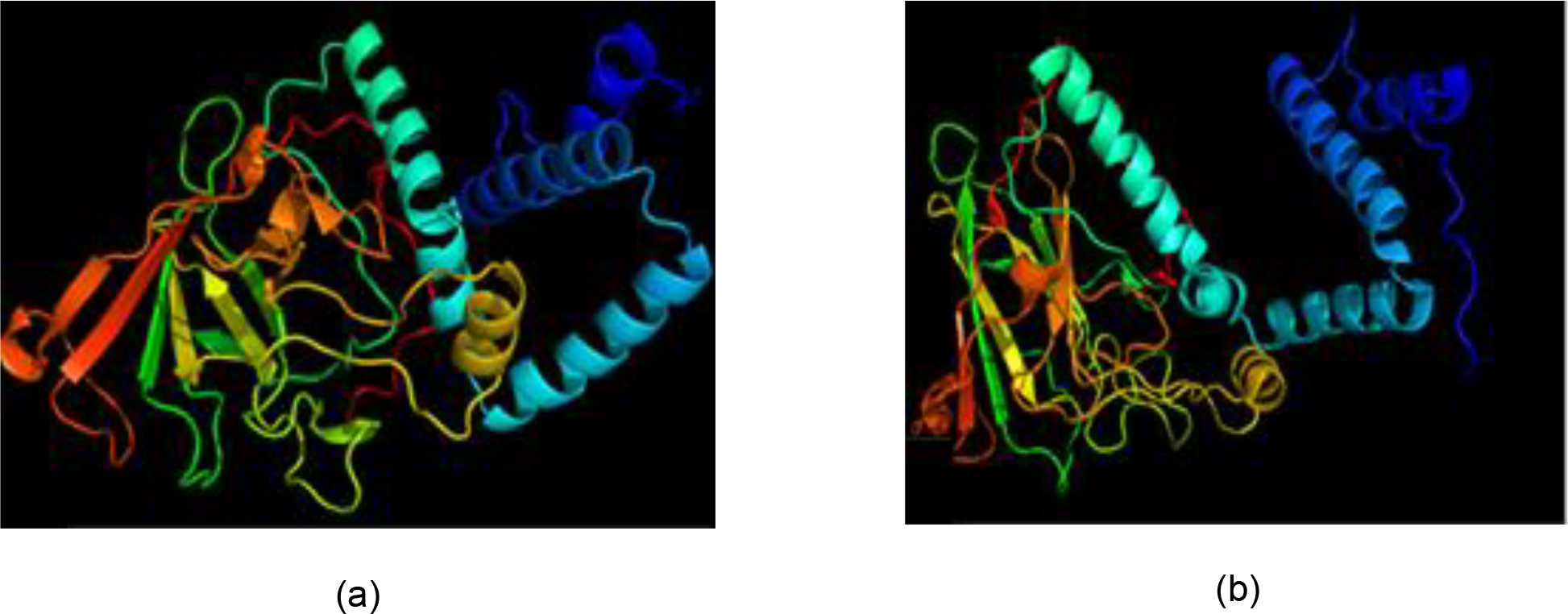
The template selected for modeling was the PDB:5VXT that corresponds to Catechol 1,2-dioxygenase from Burkholderia ambifaria, with 325 residues, 1.75 Å resolution and 50.33% identity. Thirty models were constructed and it was selected the one with lower DOPE (Discrete Optimized Protein Energy) score for refinement, seeking to reduce this score and improve the framing in favorable and allowed conformations [24]. Within these criteria, the DOPE score of the refined model was -28630 (Figure 1).
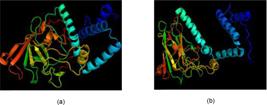
Three-dimensional structure of Catechol 1,2-dioxygenase. (a) Three-dimensional model of Catechol 1,2-dioxygenase of P. aeruginosa obtained in silico; (b) Three-dimensional structure of Burkholderia ambifaria (PDB: 5VXT) used as a template.
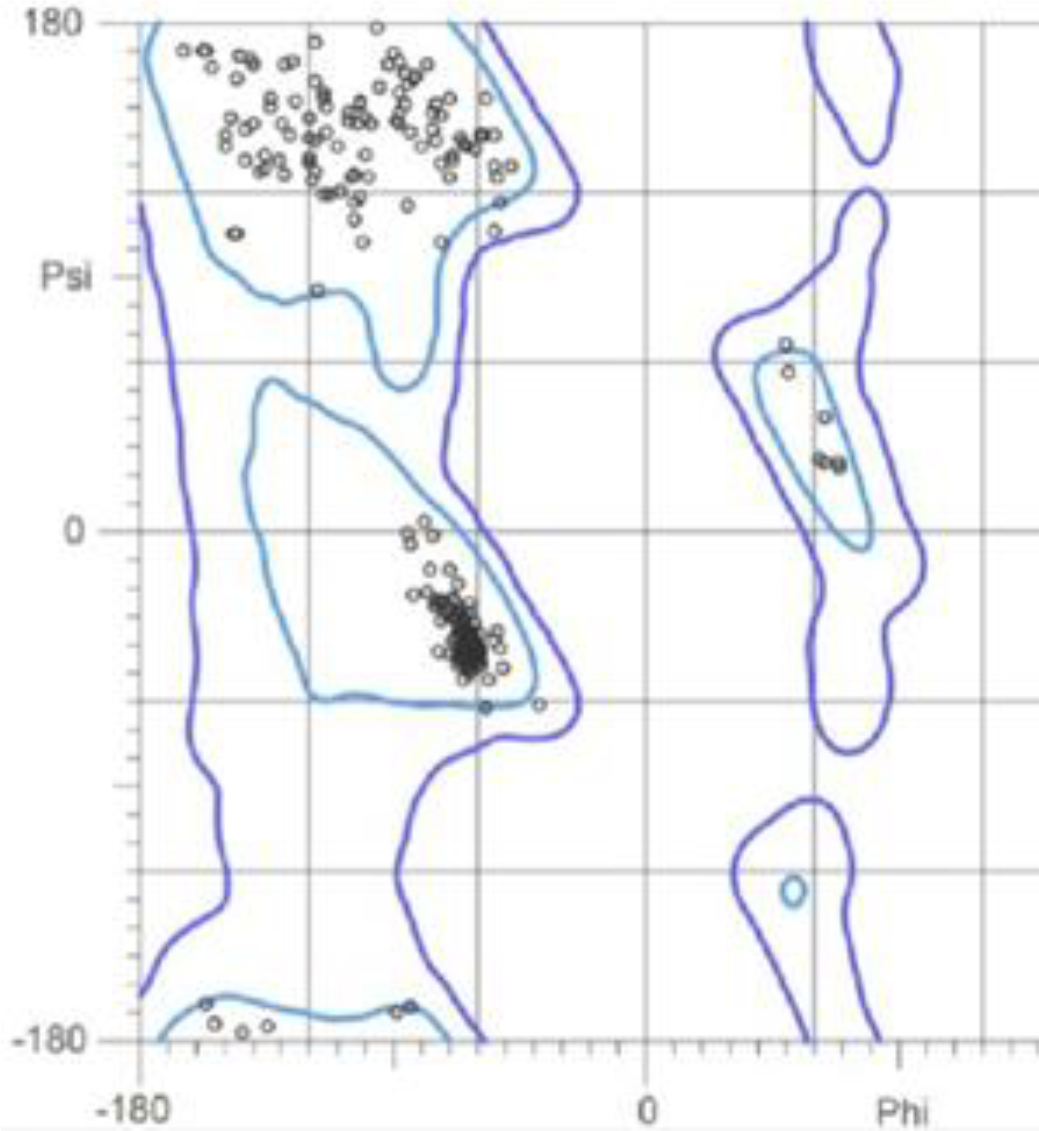
The obtained model was validated for the arrangement of amino acids. The results showed that 100% of these are located in allowed regions, of which 98.7% are arranged in favorable regions with no outliers, according to the Ramachandran plot (Figure 2).
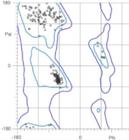
Ramachandran plot. Amino acids (black dots) are arranged in regions bounded in favorable (light blue) and allowed (dark blue). The Phi (x-axis) and Psi (y-axis) angles are shown in degrees.
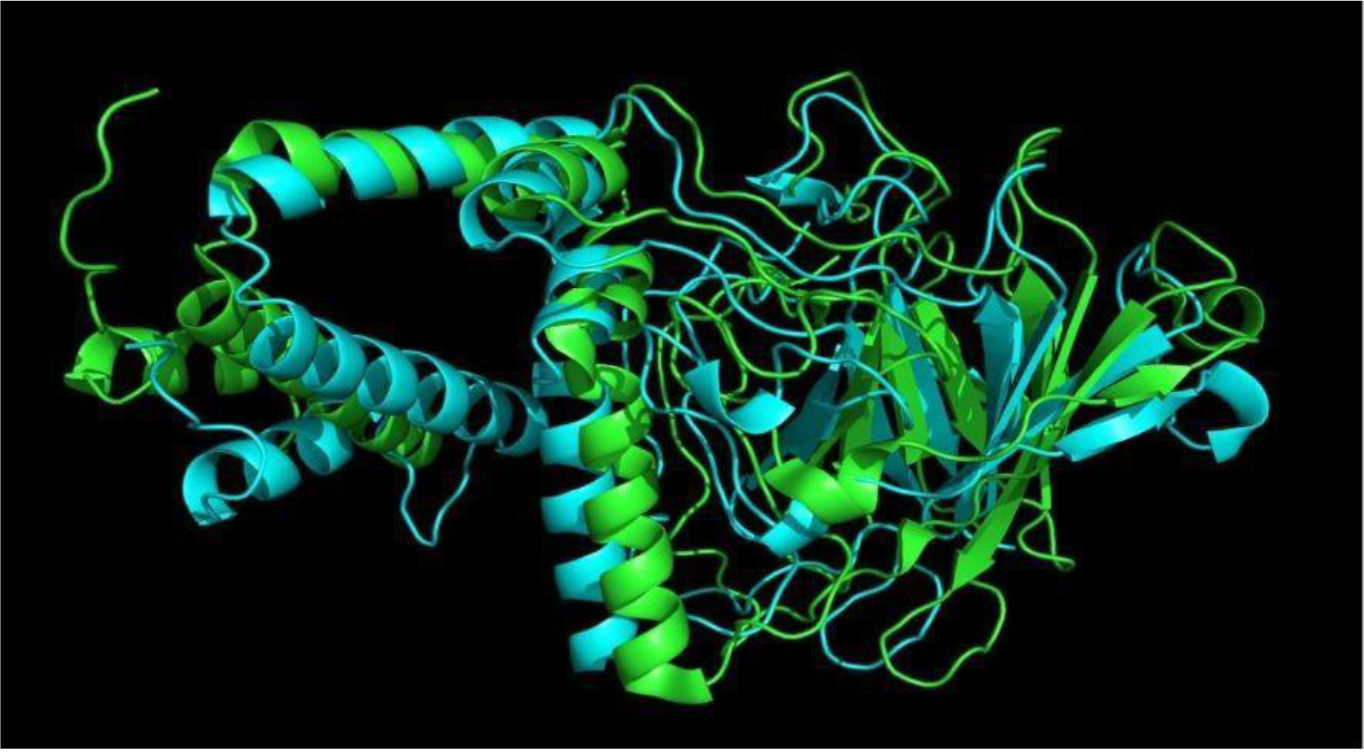
The results showed that both the modeled enzyme and its templates have conserved structural domains and similar tertiary structures. The structural discrepancies observed in the superposition are due to amino acid substitutions between the two primary sequences, as the bacteria are not of the same genus. This is expected, since the enzymes are homologous and do not have identical primary sequences (Figure 3).
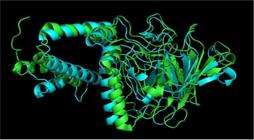
Overlaping of the model of the Catechol 1,2-dioxygenase from P. aeruginosa (light blue) with the template (green) (PDB: 5VXT).
Receptor/ligand complexes
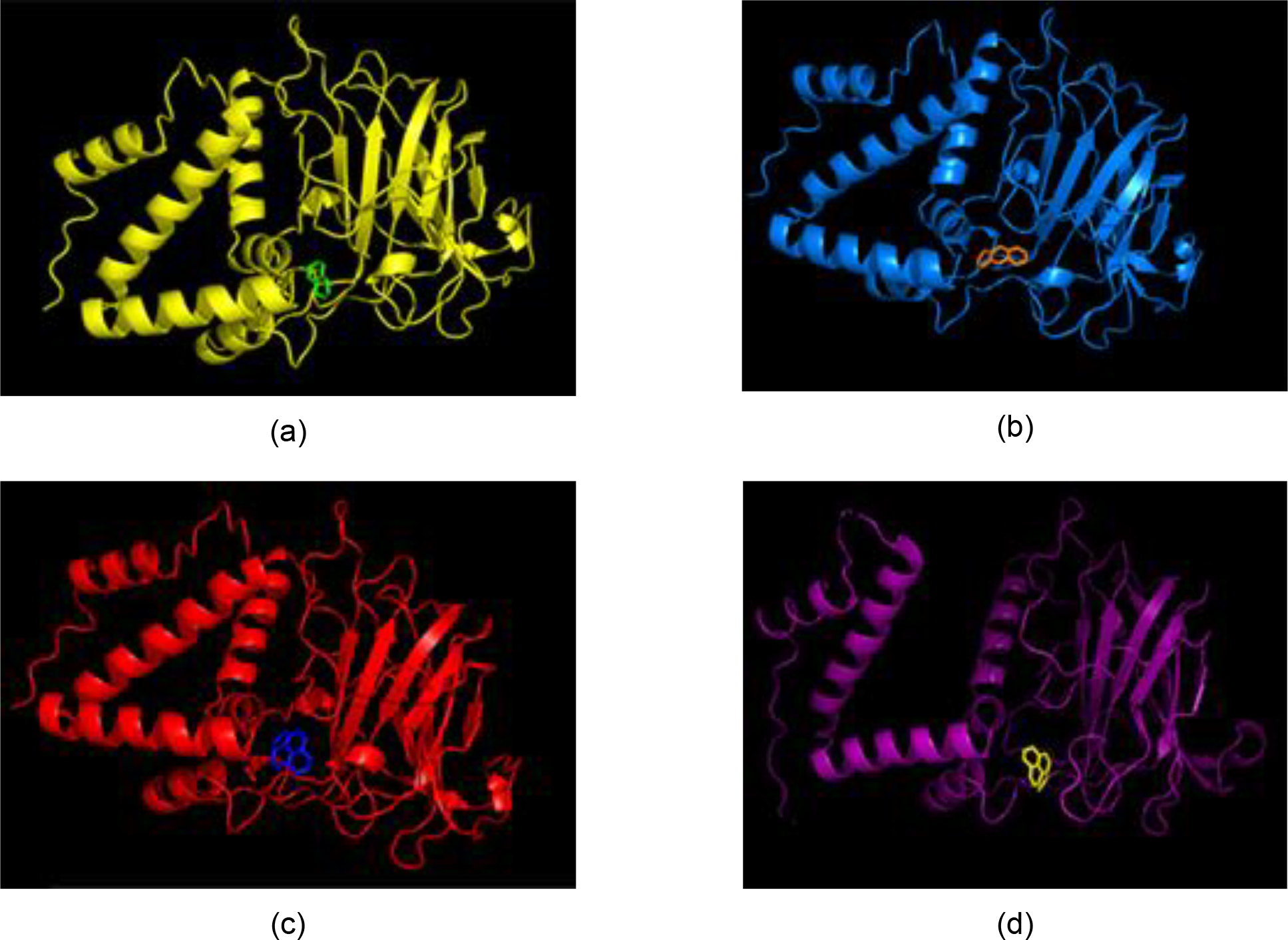
Molecular docking simulations showed that the three-dimensional model of Catechol 1,2-dioxygenase of P. aeruginosa was able to bind to all three PAH forming complexes. The enzyme/naphthalene, enzyme/anthracene and enzyme/pyrene complexes showed affinity energy equal to -5.5, -7.6 and -8.2 kcal/mol, respectively. AutoDock Vina generates random seeds equal -227841536 for naphthalene, -1662975872 for anthracene, and 830093768 for pyrene. Although in a computational environment, naphthalene is bound to Catechol 1,2-dioxygenase, the affinity energy indicates that the interaction is not stable. For comparison, molecular docking was performed between the PDB:5VXT structure of B. ambifaria and the ligand pyrene, which showed significant binding affinity to the model of Catechol 1,2-dioxygenase from P. aeruginosa. It was observed that the PAH bound to the same region as its homolog, possibly the catalytic site, where the substrate (ligand) is expected to bind for catalysis to occur (Figure 4).
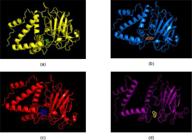
Lower energy conformer of the Catechol 1,2-dioxygenase from P. aeruginosa with PAH. (a), (b) and (c) represent the three-dimensional model of P. aeruginosa and (d), the template from B. ambifaria. (a) Interaction of the model (yellow) with and naphthalene (green); (b) Interaction of the model (blue) with Anthracene (orange); (c) and (d) Enzymes (red and purple, respectively) with pyrene (blue and yellow, respectively).
DISCUSSION
Enzyme tests, in vitro or in silico, rely on the three-dimensional structure of the enzyme to infer functionality parameters. When the experimental three-dimensional structure is not available in databases, molecular modeling becomes an option. To perform three-dimensional modeling satisfactorily it is important that the choice of the template meets some criteria, considering that the choice of the ideal template directly influences the stereochemical structural quality of the modeled structure. Starting from this assumption, the identity of the amino acid sequence, the size of the sequence that should present an approximate size to the target and the three-dimensional structure with high resolution, are factors that should follow a pattern [24].
The chosen template was Catechol 1,2-dehydrogenase from B. ambifaria. Although the species has no phylogenetic proximity to the genus Pseudomonas, which is commonly referred to for bioremediation, the enzymes meet the other requirements. In addition, there are studies that show the use and efficacy of Burkholderia sp. in PAH degradation [25-27].
The constructed model was validated according to the parameters of the Ramachandran plot, which evaluates the molecule according to its three-dimensional structure and the stability of the arranged amino acids. Thus, the data obtained for the model of Catechol 1,2-dioxygenase from P. aeruginosa are satisfactory, which demonstrates that the model is viable for further analysis.
The overlap of template and modeled enzymes indicates that, in addition to the presence of identity between sequences, there is also identity in the three-dimensional structure. This characteristic may indicate functional similarity of the enzymes, starting from the premise that the arrangement of the molecule contains conserved regions. Thus, its functionality is guaranteed, even if its primary sequence is not 100% identical [28].
Docking simulations showed that Catechol 1,2-dioxygenase is capable of interacting with analyzed PAH, indicating that possibly, in vitro, this interaction should occur. Naphthalene is an PAH formed by two benzene rings, being ubiquitous in the environment and commonly used in the industrial manufacture of plastics, pesticides and others. Moreover, it is worth noting that this substance can accumulate in organic tissues [29] and in humans it can cause hemolytic anemia, chronic renal failure and cerebral edema [30].
Anthracene is formed by three benzene rings and is widely used in industries for the coverage of electronic devices, in addition, this compound is easily dispersed in the environment [31]. When photo-oxidized they generate even more toxic products and, therefore, it was classified as harmful [32-33].
In what is pyrene, it is also used in industrial areas and is converted into Benzo (a) Pyrene (BaP). BaP is one of the products generated by PAH with the highest carcinogenic and embryotoxic potential in animals, and it has been used as an indicator of environmental contamination by PAH. Its intermediate metabolic products are mutagenic agents as has already been observed in fish and mammal livers after 6 hours of tests with BaP [34-35].
Bioremediation is an effective alternative to recovery from a PAH-degraded environment. However, this process needs to be done in consortium with several microorganisms, since a single type of microorganisms is not able to degrade all PAH present in the environment. Besides, there is some complexity to perform this association, due to the specificity of each microorganism used and the physical-chemical aspects that need to favor their performance [7].
In general, gram-negative bacteria are commonly used for mineralization of aromatic tricyclic hydrocarbons, so they are also the most used as models in studies. It is already known that some species of the Pseudomonas genus have potential for bioremediation of petroleum-derived contaminants; they are capable of degrading anthracene [36] and other PAH [37-39]. This information supports the biodegradation potential of PAH by Catechol 1,2-dioxygenase from P. aeruginosa, which makes it a candidate for bioremediation of these compounds.
In molecular docking simulations, although the linker is able to interact with the receiver, so that the interaction is favorable, affinity energy values considered significant must be less than -6.0 kcal/mol; this parameter indicates a possible stable interaction [40]. This value indicates that the complex formed is more stable, that is, it is more likely to occur in in vitro and/or in vivo conditions and would present in these conditions, greater biological activity [41]. The docking techniques associated with molecular modeling are of great importance for obtaining data quickly and less costly when compared with experimental methods. Obtaining three-dimensional structures by X-ray diffraction, as well as obtaining purified molecules for kinetic tests, take a long time, which can be minimized by computational techniques that present reliable results.
Bioremediation with the use of microorganisms, especially bacteria, is already a reality in several countries, being the genus Pseudomonas, one of the most used, and the species P. aeruginosa is the one commonly found in Brazilian soil. PAH degradation is a complex metabolic pathway; however, Catechol 1,2-dioxygenase is one of the main enzymes of the pathway and its functioning can direct knowledge about other enzymes.
CONCLUSION
The three-dimensional model of Catechol 1,2-dioxygenase from P. aeruginosa showed satisfactory validation parameters indicating a quality model, thus, simulations of the enzyme's interaction with PAH do not have their quality affected by this factor. In a simulation environment, which represented the absence of the bacterial microenvironment, the enzyme bound with significant affinity to PAH. Especially for anthracene and pyrene, the possibility for the enzyme to perform catalysis is considerable. The possibility of using the isolated enzyme could be an alternative to reduce the presence of PAH in the environment and its harmfulness without increasing the bacterial load in the soil.
-
Funding:
This research received no external funding.
Data Availability Statement:
Research data are available in the body of the manuscript.
REFERENCES
- 1 Llori KJR. [Determination of total petroleum hydrocarbon residues (diesel fraction) in waters of the Cuyabeno Faunistic Reserve using gas chromatography with flame ionization detector]. 2012. Spanish.
- 2 Kuppusamy S, Kadiyala T, Venkateswarlu K, Lee YB, Naidu R, Megharaj M. Remediation approaches for polycyclic aromatic hydrocarbons contaminated soils: technological constraints, emerging trends and future directions. Chemosphere. 2016;168:944-68.
-
3 Azevedo JAH, Araújo RS, Silva GMM. [Atmospheric polycyclic aromatic hydrocarbons from automotive sources: a brief review]. Holos. 2013;1:102-14. Portuguese. DOI: 10.15628/holos.2013.1234.
» https://doi.org/10.15628/holos.2013.1234. -
4 Jafarabadi AR, Bakhtiari AR, Toosi AS. Comprehensive and comparative ecotoxicological and human risk assessment of polycyclic aromatic hydrocarbons in Iranian coral islands. Ecotoxicol Environ Saf. 2018;145:640-52. DOI: 10.1016/j.ecoenv.2017.08.016.
» https://doi.org/10.1016/j.ecoenv.2017.08.016. -
5 Pheiffer W, Quinn LP, Bouwman H, Smit NJ, Pieters R. Polycyclic aromatic hydrocarbons in sediments from an urban river: comprehensive risk assessment application. Ecotoxicology. 2018;27(3):336-51. DOI: 10.1007/s10646-018-1898-4.
» https://doi.org/10.1007/s10646-018-1898-4. -
6 Mao X, Jiang R, Xiao W, Yu J. Use of surfactants for remediation of contaminated soils: a review. J Hazard Mater. 2015;285:419-35. DOI: 10.1016/j.jhazmat.2014.12.009.
» https://doi.org/10.1016/j.jhazmat.2014.12.009. - 7 Tonini RMCW, Rezende CE, Grativol AD. [Degradation and bioremediation of petroleum compounds by bacteria: review]. Oecol Aust. 2010;14(4):1010-20. Portuguese.
- 8 Gaylarde CC, Bellinaso ML, Manfio GP. [Biological and technical aspects of xenobiotic bioremediation]. Biotecnol Cienc Desenvolv. 2005. Portuguese.
-
9 Lacerda EMC, Santana WLAM, Filho MSC, Santos NCP, Moreira ITA. [Enzymatic processes in bioremediation and phytoremediation of petroleum in mangrove sediments: a review]. Res Soc Dev. 2021;10(11):e526101119944. Portuguese. DOI: 10.33448/rsd-v10i11.19944.
» https://doi.org/10.33448/rsd-v10i11.19944. -
10 Sharma A, Behrens SH, Chernoff YO, Bommarius AS. Modulation of the formation of Aβand Sup35NM-based amyloids by ion effects. J Phys Chem B. 2018;122(19):4972-81. DOI: 10.1021/acs.jpcb.7b12836.
» https://doi.org/10.1021/acs.jpcb.7b12836. -
11 Jacques RJS, Okeke BC, Bento FM, Peralba MCR, Camargo FAO. Characterization of a PAH-degrading microbial consortium from a petrochemical sludge landfarming site. Bioremed J. 2007;11:1-11. DOI: 10.1080/10889860601185822.
» https://doi.org/10.1080/10889860601185822. - 12 Câmara JMDA. [Analysis of bioremediation of monoaromatic compounds in water by Pseudomonas aeruginosa] [dissertation]. Rio Grande do Norte: Universidade Federal do Rio Grande do Norte; 2016. Portuguese.
- 13 Hernández AL, Vivanco MMV, Silva JLZ. [Medical microbiology and parasitology]. Havana: Editorial Ciencias Médicas; 2001. Spanish.
-
14 Cruz GF, Marsaioli AJ. [Natural processes of petroleum biodegradation in reservoirs]. Quim Nova. 2012;35(8). Portuguese. DOI: 10.1590/S0100-40422012000800024.
» https://doi.org/10.1590/S0100-40422012000800024. - 15 Broderick JB. Catechol dioxygenases. Essays Biochem. 1999;34:11.
-
16 Setlhare B, Kumar A, Mokoena MP, Olaniran AO. Catechol 1,2-dioxygenase is an analogue of homogentisate 1,2-dioxygenase in Pseudomonas chlororaphis strain UFB2. Int J Mol Sci. 2018;20(1):61. DOI: 10.3390/ijms20010061.
» https://doi.org/10.3390/ijms20010061. -
17 Macmullen WJ, Denn S. Information problems in molecular biology and bioinformatics. J Am Soc Inf Sci Technol. 2005;56(5):447-56. DOI: 10.1002/asi.20134.
» https://doi.org/10.1002/asi.20134. -
18 Sali A, Blundell TL. Comparative protein modelling by satisfaction of spatial restraints. J Mol Biol. 1993;234(3):779-815. DOI: 10.1006/jmbi.1993.1626.
» https://doi.org/10.1006/jmbi.1993.1626. -
19 Lengauer T, Rarey M. Computational methods for biomolecular docking. Curr Opin Struct Biol. 1996;6(3):402-6. DOI: 10.1016/S0959-440X(96)80061-3.
» https://doi.org/10.1016/S0959-440X(96)80061-3. - 20 DeLano WL. PyMOL molecular graphics system. Schrödinger Inc.; 2000.
-
21 Morris GM, Huey R, Lindstrom W, Sanner MF, Belew RK, Goodsell D.S., et al. AutoDock4 and AutoDockTools4: automated docking with selective receptor flexibility. J Comput Chem. 2009;30(16):2785-91. DOI: 10.1002/jcc.21256.
» https://doi.org/10.1002/jcc.21256. -
22 Eberhardt J, Santos-Martins D, Tillack AF, Forli S. AutoDock Vina 1.2.0: new docking methods, expanded force field, and Python bindings. J Chem Inf Model. 2021. DOI: 10.1021/acs.jcim.1c00203.
» https://doi.org/10.1021/acs.jcim.1c00203. -
23 Trott O, Olson AJ. AutoDock Vina: improving the speed and accuracy of docking. J Comput Chem. 2011;31(2):455-61. DOI: 10.1002/jcc.21334.
» https://doi.org/10.1002/jcc.21334. -
24 Fiser A. Template-based protein structure modeling. Methods Mol Biol. 2010;673:73-94. DOI: 10.1007/978-1-60761-842-3_6.
» https://doi.org/10.1007/978-1-60761-842-3_6. -
25 Lovell SC, Davis IW, Arendall WB, De Bakker PIW, Word JM, Prisant MG, et al. Structure validation by Cα geometry: φ,ψ and Cβ deviation. Proteins. 2003;50(3). DOI: 10.1002/prot.10286.
» https://doi.org/10.1002/prot.10286. - 26 Catter KM, Cavalcante RM, Barreto NSE, Sampaio SS, Vieira RHSF. [Bacteria isolated from mangroves and their potential in petroleum degradation]. Geochim Bras. 2007;21(2):140-50. Portuguese.
- 27 Lopes EF. [Genomic characterization and petroleum degradation capacity of a Burkholderia gladioli strain isolated from Lake Coari] [thesis]. Amazonas: Universidade Federal do Amazonas; 2019. Portuguese.
-
28 Revathy T, Jayasri MA, Suthindhiran K. Biodegradation of PAHs by Burkholderia sp. VITRSB1 isolated from marine sediments. Scientifica. 2015:1-9. DOI: 10.1155/2015/867586.
» https://doi.org/10.1155/2015/867586. - 29 Nelson DL, Cox MM. Lehninger principles of biochemistry. 6th ed. New York: Worth Publishers; 2014.
-
30 Hansen BH, Altin D, Vang SH, Nordtug T, Olsen AJ. Effects of naphthalene on gene transcription in Calanus finmarchicus. Aquat Toxicol. 2008;86(2):157-65. DOI: 10.1016/j.aquatox.2007.10.009.
» https://doi.org/10.1016/j.aquatox.2007.10.009. - 31 Gupta R, Singhal PC, Muthusethupathy MA, Malik AK, Chugh KS. Cerebral oedema and renal failure following naphthalene poisoning. J Assoc Physicians India. 1979;27(4):347-8.
- 32 Collin G, Höke H, Talbiersky J. Anthracene. In: Ullmann’s Encyclopedia of Industrial Chemistry. Weinheim: Wiley-VCH; 2006. p. 497-501.
-
33 Aksmann A, Dziadziuszko M, Pokora W, Wielgomas B, Tukaj Z, Dettlaff-Pokora A, et al. Time-dependent changes in antioxidative enzyme expression and photosynthetic activity of Chlamydomonas reinhardtii cells under acute exposure to cadmium and anthracene. Ecotoxicol Environ Saf. 2014;110:31-40. DOI: 10.1016/j.ecoenv.2014.08.005.
» https://doi.org/10.1016/j.ecoenv.2014.08.005. -
34 Banaeian Z, Mahdavian L. Thermodynamic study of interaction of polycyclic aromatic nanofilters (anthracene) and SWNT. Russ J Appl Chem. 2015;88:2056-64. DOI: 10.1134/S10704272150120241.
» https://doi.org/10.1134/S10704272150120241. -
35 Caruso MS, Alaburda J. [Polycyclic aromatic hydrocarbons - benzo(a)pyrene: a review]. Rev Inst Adolfo Lutz. 2008;67(1):1-27. Portuguese. DOI: 10.53393/rial.2008.v67.32785.
» https://doi.org/10.53393/rial.2008.v67.32785. - 36 European Commission. Polycyclic aromatic hydrocarbons: occurrence in foods, dietary exposure and health effects. Brussels: Health and Consumer Protection Directorate-General; 2002.
-
37 Bisht S, Bhargava B, Kumar V, Pandey P, Sharma VS, Sharma KD. Bioremediation of polyaromatic hydrocarbons using rhizosphere technology. Braz J Microbiol. 2015;46(1):7-21. DOI: 10.1590/s1517-838246120131354.
» https://doi.org/10.1590/s1517-838246120131354. -
38 Guzik U, Gren I, Kocurek KH, Wojcieszynska D. Catechol 1,2-dioxygenase from Pseudomonas putida strain N6. Int Biodeter Biodegrad. 2011;65(3):504-12. DOI: 10.1016/j.ibiod.2011.02.001.
» https://doi.org/10.1016/j.ibiod.2011.02.001. -
39 Silva AS, Camargo FAO, Andreazza R. [Enzymatic activity of catechol 1,2-dioxygenase and catechol 2,3-dioxygenase produced by Gordonia polyisoprenivorans]. Quim Nova. 2012;35(8):1587-92. Portuguese. DOI: 10.1590/S0100-40422012000800018.
» https://doi.org/10.1590/S0100-40422012000800018. -
40 Pantsar T, Poso A. Binding affinity via docking: fact and fiction. Molecules. 2018;23(8):1899. DOI: 10.3390/molecules23081899.
» https://doi.org/10.3390/molecules23081899. -
41 Ferreira LG, Dos Santos RN, Oliva G, Andricopulo AD. Molecular docking and structure-based drug design strategies. Molecules. 2015;20:13384-421. DOI: 10.3390/molecules200713384.
» https://doi.org/10.3390/molecules200713384.
-
Editor-in-Chief:
Alexandre Rasi Aoki
-
Associate Editor:
Najeh Maissar Khalil