 Thermoresponsive Leishmanicidal Emulgel Based on Copaifera reticulata Ducke: in Vitro Studies with the Amastigote Forms
Abstract
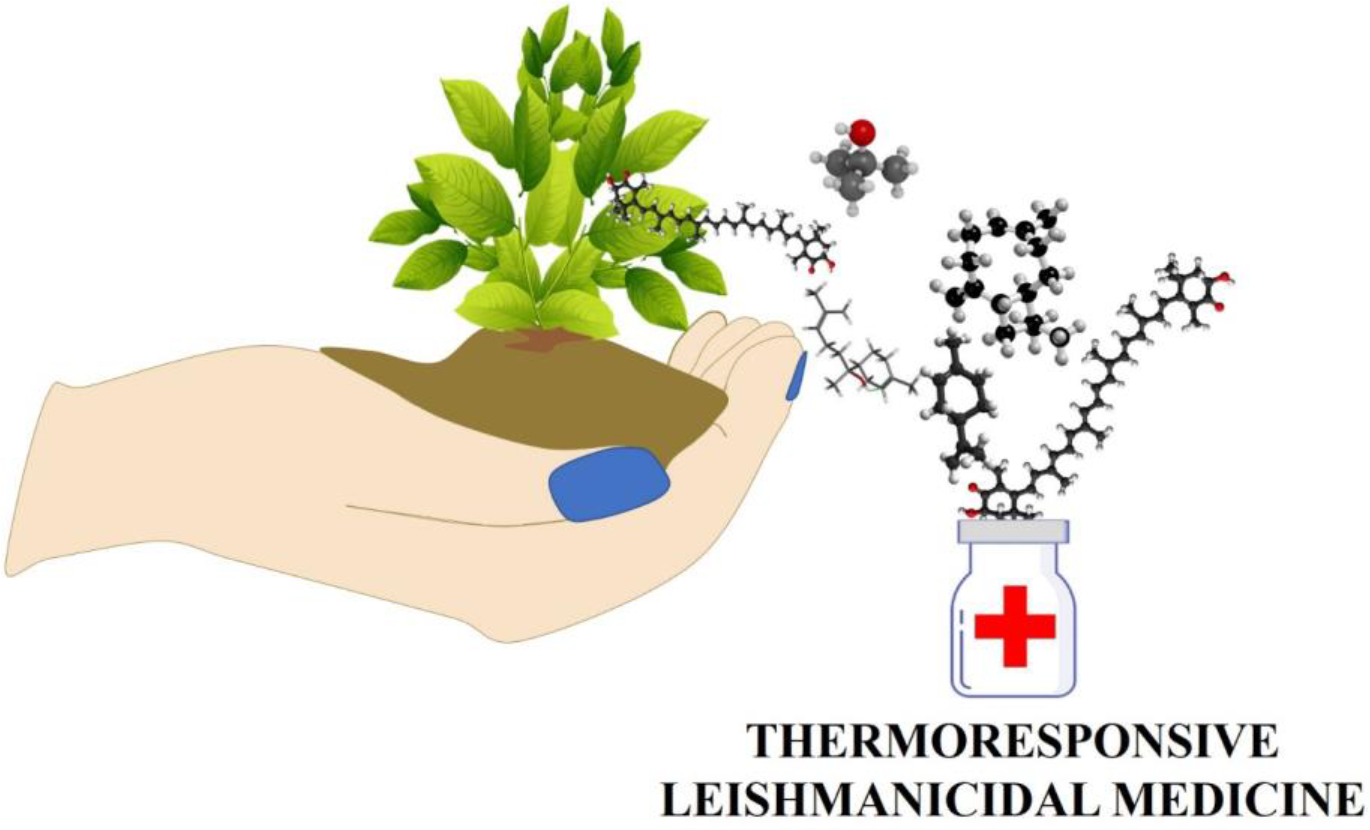
Leishmaniasis is a neglected disease that causes disfiguring skin damage. In a previous publication, we characterized a thermoresponsive medicine developed for the dermal release of the Copaifera reticulata Ducke. The medicine showed chemical and physical stability for two years, proven by validation studies. Furthermore, the topical medicine undergoes gelation when body-stimulated, which increases the time spent on the injured skin. The present study aims to complement the characterization of the developed medicine by showing the in vitro results against amastigote forms of Leishmania amazonensis and Leishmania infantum. The results showed a notable antiproliferative capacity, especially against L. infantum, due to the excellent selectivity of the copaiba oil by the protozoan. Furthermore, the drugs were more effective than pure copaiba oil, with lower IC50 values for the incorporated oils, since the IC50 of the incorporated oil and the free oil decreased more than fourfold (from 14.8 to 3.4 μg/mL for phytotherapeutic gel containing 8 % w/w copaiba oil resin - named PHY-8). These results, together with those recently published for these formulations, guarantee the medicine's potential as a leishmanicidal agent and make it a potential candidate for future in vivo studies.
Keywords:
Gel; thermoreversible system; cutaneous leishmaniasis; copaiba oil-resin; amastigotes forms.
HIGHLIGHTS
The studies showed the in vitro application of a recently reported drug.
Thermoresponsive stimulus gel containing high levels of copaiba oil.
Formulation that increases the leishmanicidal potential of the drug.
A viable treatment alternative for leishmaniasis patients.
INTRODUCTION
Tegumentary leishmaniasis is a disfiguring infectious disease that affects people and causes ulcers on the skin and in the mucous membranes of upper airways. This disease is caused by an intracellular protozoan of the Leishmania genus. Parasites have two main forms during their life cycle: amastigotes (occurring in the vertebrate host) and promastigotes (occurring in the invertebrate host) forms[1]. Currently, leishmaniasis is treated with N-methylglucamine and amphotericin B [2]. However, the cost of these drugs is high (N-methylglucamine R$ 599.14; 50 ampoules; a daily dose of 1-3 ampoules per day and Amphotericin B R$ 1.122; 50 mg - 25 ampoules, dosage of 1-5 mg/kg/day), which makes it challenging to access medicines without public contribution. Furthermore, these drugs have the inconvenience of requiring hospitalization for their administration due to intrinsic toxicity. These facts encourage the development of new, more tolerable, safer therapies for leishmaniasis.
Recognition of the healing, antibiotic [3], and leishmanicidal potential of copaiba oil have led us to develop medicine with thermo-responsive properties (emulsion-filled gels or emulgel) [4]. The high content of copaiba oil has guaranteed effects against the promastigote forms of the protozoa Leishmania amazonensis and Leishmania infantum. However, this form exists in the invertebrate host, which serves as a vector. Therefore, this study aims to demonstrate the benefits of using thermoresponsive medicine for the amastigotes forms, which infect humans. The medicinal previously published by us are composed of F127 copolymer 18% w/w, Carbopol C934P 0.25 %w/w, and copaiba oil in concentrations between 8-12% w/w[4,5].
MATERIAL AND METHODS
Materials
F127 Pluronic® was acquired from Sigma-Aldrich (Missouri, USA), Carbopol C934P® (Cb) was obtained from Lubrizol Advanced Materials (Sao Paulo, SP, Brazil), and Triethanolamine (TEA) was purchased from Synth (Sao Paulo, SP, Brazil). The copaiba oil resin (Copaifera reticulata Ducke) was obtained from the Copaíba da Amazônia company, according to the georeferencing described previously [4]. All experiments were carried out using ultra-pure water.
All the processes follow the environmental legislation in force through the National Biodiversity Authorization and Information System (SISBIO nº 72922-1) and the National System for Genetic Heritage Management (SISGEN nº AE28797), as well as duly authorized by the same association.
Preparation of medicine
First, Cb (0.25 %, w/w) was dispersed in purified water under vigorous stirring (ca 6 h). Then, the solution received F127 copolymer (18%, w/w), and the system was maintained at 5 ± 2oC for 24 h. Afterwards, the mixture was mechanically stirred at 100 rpm (Quimis stirrer, model Q235-2, Sao Paulo, SP, Brazil). After complete homogenization of dispersion (30 min), the pH was adjusted to 7 using TEA. Next, the copaiba oil (8, 10, and 12%, w/w) was slowly added to the preparation, which remained in constant agitation for 30 min. The formulations obtained were stored at 5 ± 2°C for at least 24 h before analysis. The phytotherapeutic gel (generically named PHY) in each oil concentration was named PHY-8, PHY-10, and PHY-12. Additionally, gel without the addition of copaiba oil was obtained and named standard gel (Std-gel).
Cell cultures
Promastigote forms of Leishmania amazonensis (IFLA/BR/1967/PH8 transfected with pIR1SAT-LUC(a)DsRed2(b) B5947) and Leishmania infantum (MHOM/MA/67/ITMAP-263 transfected with plasmid pSP72αHYGαLuc1.2) were cultivated in Warren medium (brain and heart infusion, hemin and folic acid; pH 7.2) supplemented with 10% inactivated fetal bovine serum (FBS) and incubated at 25ºC.
J774A.1 macrophages were maintained in RPMI 1640 medium (Gibco; NY, USA), pH 7.2, supplemented with L-glutamine and 10% FBS, incubated at 37°C in a 5% CO2 atmosphere.
Leishmanicidal activity of the phytotherapeutic medicine
For activity against amastigote forms of Leishmania, 5x10⁵ macrophages/mL were added with 5x10⁶ promastigotes/mL (ratio 1:10), in a stationary growth phase, in 96-well white plates. The plates were incubated at 34°C, with 5% CO2 for 24 h, for internalization and differentiation of the parasites into amastigote forms. The cells were then washed to remove the non-internalized parasites, treated with increasing copaiba oil (or PHY-concentrations medicinal), and incubated for 48 h. After the incubation period, the Pierce Firefly Luc One-Step Glow Assay kit (ThermoFicher, Rockford, USA) was added according to the manufacturer's instructions. The luminescence was quantified in a SpectraMax L luminometer (Molecular Devices) with λem = 570 nm and an integration time of 1s. The percentage of inhibition was calculated based on the luminescence of the control (untreated). The values were plotted and the IC50 inhibitory concentrations were calculated by non-linear regression [6]. Results were expressed as the mean ± standard deviation of at least three independent experiments.
The selective index (SI) was calculated using the cytotoxicity that we have recently published for these drugs, making CC50 J774A.1 cells/IC50 protozoa [4].
Statistical Analysis
The averages were compared using the free software R version 3.6.0, with the RStudio interface version 1.1.463 [7], with t.test algorithm. The significance level used for the rejection of the null hypothesis was 5% (p<0.05) [8].
RESULTS AND DISCUSSION
The developed medicines have high copaiba oil contents, gelation at approximately 12°C, and behaviors typical of semisolid systems. The rheological studies exhibited pseudoplastic behavior, with thixotropy and viscoelasticity at body temperature. Additionally, the emulgels showed higher skin permeation capacity than pure copaiba oil, indicating that the polymers act as human skin permeation promoters. A complete study of these phytotherapeutic medicines has recently been published [4,5]. This paper complements such studies and brings the in vitro results of the formulations (and the pure oil) against the intracellular amastigotes forms. This parasite form infects humans and is the main target of therapies in patients affected by these diseases. The antiproliferative activities of medicinal-loaded Copaiba oil-resin against the L. amazonensis and L. infantum amastigotes are shown in Table 1.
Antiproliferative activity of emulgels compositions and copaiba resin oil against amastigotes forms of Leishmania amazonensis and L. infantum.
Copaiba oil resin showed activity against amastigote forms of L. infantum and L. amazonensis, with IC50 between 15 and 20 µg/mL. The emulgels were more effective than copaiba oil for both protozoa (p<0.05). For example, the copaiba oil resin showed a mean IC50 value of 14.80 µg/mL for L. infantum, while PHY-8 showed a mean IC50 value of 3.35 µg/mL, considering the 8% w/w copaiba oil content in the respective medicine. The antiproliferative activity of emulgels (PHY-8, PHY-10, and PHY-12) against L. amazonensis was similar (p>0.05), while for L. infantum it was statistically different (p<0.05).
The cytotoxicities of copaiba oil resin and emulgels on J774A.1 macrophage cells (Table 1) were previously published [4]. These values were used by the determination of selective index (SI) (ratio: CC50 J774A.1 cells/IC50 protozoa). A value greater than 1.0 is considered more selective for the parasite. The selectivity index values between the copaiba oil and the emulgels (PHY-8, PHY-10, and PHY-12) were statistically different (p<0.05) for both protozoa. The results were noteworthy for L. infantum treated with emulgels, in which the selectivity was four times higher than copaiba oil, therefore justifying the lower IC50 values obtained. The selectivity index values reported for copaiba range from 1-125, due to variations in oil composition [9,10].
Overall, the results obtained are in agreement with the literature [9-12]. However, compared to those previously published, the medicine developed here is superior in thermoresponsive performance, chemical and physical stability, in addition to the dermal release performance verified in human skin[4]. Thus, like amphotericin B, whose activity was previously reported (IC50 value of 0.231 μg/mL [10]), the PHY-emulgel products were adequate and constituted a consistent proposition for future clinical trials.
-
Funding:
This research was funded by the Brazilian agencies CAPES (Coordenação de Aperfeiçoamento de Pessoal de Nível Superior/Coordination for the Improvement of Higher Education Personnel; Finance Code 001) and CNPq (Conselho Nacional de Desenvolvimento Científico e Tecnológico/National Council for Scientific and Technological Development; Process nº 405967/2018-7).
Acknowledgments:
None
Data Availability Statement:
Research data are only available upon request for corresponding author
REFERENCES
- 1 BRASIL. Ministério da Saúde. Secretaria de Vigilância em Saúde. Departamento de Articulação Estratégica de Vigilância em Saúde. [Health surveillance guide] [electronic source]. 5. ed. rev. and updated. Brasília: Ministério da Saúde, 2022.
- 2 BRASIL. Ministério da Saúde. Secretaria de Vigilância em Saúde. [American Cutaneous Leishmaniasis Surveillance Manual]. Brasília: Ministério da Saúde, 2007.
-
3 Campanholi KSS, Silva Junior RC, Gonçalves RS, Silva JB, Morais FAP, Santos RS, et al. Design and Optimization of a Natural Medicine from Copaifera reticulata Ducke for Skin Wound Care. Polymers (Basel). 2022, 14, 4483, doi:10.3390/polym14214483.
» https://doi.org/10.3390/polym14214483. -
4 Campanholi KSS, Gonçalves RS, Silva JB, Santos RS, Oliveira MC, Ferreira SBS, et al. Thermal Stimuli-Responsive Topical Platform Based on Copaiba Oil-Resin: Design and Performance upon Ex-Vivo Human Skin. J. Mol. Liq. 2022, 361, 119625, doi:10.1016/j.molliq.2022.119625.
» https://doi.org/10.1016/j.molliq.2022.119625. -
5 Campanholi KSS, Silva JB, Batistela VR, Gonçalves RS, Santos RS, Balbinot RB, et al. Design and Optimization of Stimuli-Responsive Emulsion-Filled Gel for Topical Delivery of Copaiba Oil-Resin. J. Pharm. Sci. 2021, doi:10.1016/j.xphs.2021.10.003.
» https://doi.org/10.1016/j.xphs.2021.10.003. -
6 Michel G, Ferrua B, Lang T, Maddugoda MP, Munro P, Pomares C, et al. Luciferase-Expressing Leishmania Infantum Allows the Monitoring of Amastigote Population Size, In Vivo, Ex Vivo and In Vitro. PLoS Negl. Trop. Dis. 2011, 5, e1323, doi:10.1371/journal.pntd.0001323.
» https://doi.org/10.1371/journal.pntd.0001323. - 7 RStudio Team, 2015 RStudio: Integrated Development for R. RStudio, Inc. Version 1.1.463 2015.
- 8 R Development Core Team, 2019 R: A Language and Environment for Statistical Computing. R Found. Stat. Comput. Version 4.5.1, 2019.
-
9 Monzote L, Herrera I, Satyal P, Setzer WN. In-Vitro Evaluation of 52 Commercially-Available Essential Oils against Leishmania amazonensis Molecules 2019, 24, 1-11, doi:10.3390/molecules24071248.
» https://doi.org/10.3390/molecules24071248. -
10 Santos AO, Ueda-Nakamura T, Dias Filho BP, Veiga Junior VF, Pinto AC, Nakamura CV. Effect of Brazilian Copaiba Oils on Leishmania amazonensis J. Ethnopharmacol. 2008, 120, 204-8, doi:10.1016/j.jep.2008.08.007.
» https://doi.org/10.1016/j.jep.2008.08.007. -
11 Moraes ARDP, Tavares GD, Rocha FJS, Paula E, Giorgio S. Effects of Nanoemulsions Prepared with Essential Oils of Copaibaand Andiroba against Leishmania infantum and Leishmania amazonensis Infections. Exp. Parasitol. 2018, 187, 12-21, doi:10.1016/j.exppara.2018.03.005.
» https://doi.org/10.1016/j.exppara.2018.03.005. -
12 Santos AO, Izumi E, Ueda-Nakamura T, Dias-Filho BP, Veiga-Júnior VF, Nakamura CV. Antileishmanial Activity of Diterpene Acids in Copaiba Oil. Mem. Inst. Oswaldo Cruz 2013, 108, 59-64, doi:10.1590/S0074-02762013000100010.
» https://doi.org/10.1590/S0074-02762013000100010.
-
Editor-in-Chief:
Paulo Vitor Farago
-
Associate Editor:
Paulo Vitor Farago