 Biochemical Tests for Quality Assessment of Jatropha mollissima (Pohl) Baill. (Euphorbiaceae)
Abstract
Biochemical tests for electrical conductivity and tetrazolium can provide an assessment of seed lot quality within a few days or hours, and research related to rapid vigor and viability tests for Jatropha mollissima (Pohl) Baill. seeds are scarce in literature. Thus, the purpose of this study was to optimize the methodology of the tetrazolium test for seed evaluation to facilitate analysis, or reduce the time of its procedures, in addition to defining a standard for the electrical conductivity test for the species. In the tetrazolium test, two types of cut (without tegument and longitudinal cut), two temperatures (30 ºC and 40 ºC), and two staining times (4 h and 16 h) were tested. The electrical conductivity was carried out with two seed quantities (15 and 25), two water volumes (75 mL and 100 mL), and two temperatures (25 ºC and 30 ºC), in five evaluation periods (3, 6, 9, 12, and 24 hours). As results, the combination of longitudinal cut and tetrazolium staining at 40 °C for 16 h reduces preparation time and seed losses. Thus, it can be an alternative to the methodology in which there is the complete removal of the seed coat and staining at 40 °C for 4 h. In addition, the electrical conductivity test was not efficient to evaluate the vigor of J. mollissima seed lots using the proposed methodology.
Keywords:
Seed analysis; electrical conductivity; vigor; viability; forest seeds; quality seeds; tetrazolium test.
HIGHLIGHTS
The alternative methodology for tetrazolium test is efficient for evaluation J. mollissima seeds.
The electrical conductivity test was not efficient to use among the tested methods.
The conduction of new evaluations to electrical conductivity test is necessary.
INTRODUCTION
Seeds begin their deterioration process after their maturity, when the fruit loses its attachment to the parent plant and the seed acquires maximum dry mass accumulation [1,2]. From this point on, the inevitable and irreversible loss of seed viability and vigor begins. Thus, tests that measure seed viability and vigor are necessary to evaluate the quality of forest seed lots.
Seed vigor is determined by a set of biological, biochemical, and genetic attributes that promote rapid and uniform germination, normal seedling development, and tolerance to adverse environmental factors [2,3] The germination, tetrazolium, accelerated aging, and electrical conductivity tests are examples of procedures to evaluate the physiological quality of seed lots [4].
The germination test is not practical for some forest species, because the results take days or weeks to be obtained. Furthermore, this test results only in the germination potential, without identifying possible causes for differences in viability values [4]. However, these results should not be discarded, since a seed lot is defined by a set of attributes [2]. The biochemical tests of electrical conductivity and tetrazolium [5] identify seed lot quality within hours, when properly standardized.
The electrical conductivity test is based on the degree of cell membrane deterioration, according to the amount of leached solutes [2,5]. Thus, the higher the electrical conductivity, the greater the membrane permeability, generating more solute leaching, which, in turn, indicates a less vigorous lot [2,5]. On the other hand, the tetrazolium test is based on the formation of the formazan compound in living tissues (with respiratory activity) by reducing the 2,3,5-triphenyl chloride salt of tetrazolium. This generates a red stain in the tissues [4], which is produced according to the intensity of respiration activities. Besides the identification of viability and vigor, the tetrazolium test also indicates the types of deterioration, malformation of embryo structures, or pathogen attack [4].
The low number of papers and the variations in research methodologies about viability and vigor tests in Caatinga species reveals the importance of this research. Jatropha mollissima (Pohl) Baill. (Euphorbiaceae) is a native species of Seasonally Dry Tropical Forests and Woodlands [6] - which is part of the semi-arid region of Brazil - and is widely used by the local population due to its medicinal and ornamental properties [7,8]. Due to these characteristics, there are studies on the species aiming the production of secondary metabolites for use in human or animal medicine, morphological and phenological characterizations [9-12].
Given the importance of the species, and with the purpose to improve and define the tests for seed physiology quality by adjusting the tetrazolium test methodology for J. mollissima seeds, we sought to simplify the analysis or reduce the procedure time of pre-existing methods, as well as to define a new method for the electrical conductivity test.
MATERIAL AND METHODS
The seeds of J. mollissima were collected by Rede de Sementes do Projeto de Integração do São Francisco, of the Núcleo de Ecologia e Monitoramento Ambiental. The seed lots were sent in February 2021 to the Laboratório de Sementes Florestais of the Universidade Federal do Paraná to be analyzed for viability and vigor (Table 1). The moisture content of the seed lots and thousand seeds weight were calculated according to [13].
Information on the seed lots of J. mollissima used in the study. %H: moisture content of the seed lots in February/2021; TSW: thousand seeds weight in February/2021.
Germination Test
We performed the germination test to gauge the reliability of the tetrazolium (TZ) and electrical conductivity (EC) tests. Germination was conducted in Gerbox® plastic boxes with medium-grained vermiculite substrate [14]. We conditioned the boxes in Mangelsdorf type germinators, at 25 ºC and 30 ºC temperatures and constant lighting. Regarding substrate wetting, we determined the water retention capacity (WRC) and obtained the proportion of 60 mL of distilled water, referring to 60 % of the WRC, for each 30 g of vermiculite [13].
The germination test was conducted in a randomized block design, where the blocks were represented by the six seed lots and the treatments characterized by two temperatures (25 ºC and 30 ºC), with five replications of 30 seeds. We considered seeds with primary root emission ≥ 2 mm to be germinated. After three consecutive days without germination, we considered the experiment terminated. The following response variables were calculated: germination percentage (%G), mean germination time (MGT), according to [15], and germination speed index (GSI), according to [16].
Tetrazolium Test
The methodology used in the test was based on [17]. Therefore, it was carried out using a randomized block design, characterized by six lots of seeds, in a factorial scheme with three factors: two temperatures (30 ºC and 40 ºC), two types of cut (complete removal of the coat, and longitudinal cut) and two staining times (4 and 16 hours). Each treatment had five replicates of 15 seeds.
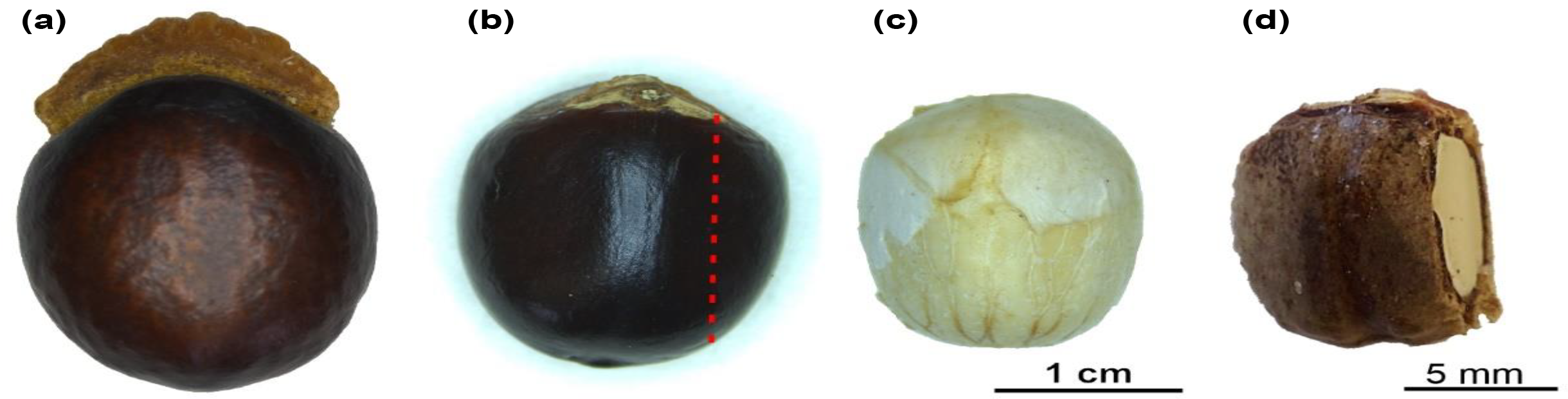
During pre-wetting, the seeds (Figure 1a) were kept between sheets of Germitest® paper towels saturated with distilled water for 16 hours at 25 ºC in a Biochemical Oxygen Demand (BOD) germinator with constant lighting, followed by the caruncle removal (Figure 1b) [17]. The complete removal of the seed coat was performed with care not to damage the internal structures of the seeds (Figure 1c). Also, the treatment with a longitudinal cut perpendicular to the ventral face was performed according to Figure 1d, with the aid of a scalpel.
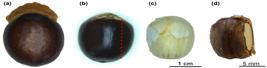
J. mollissima (A) complete seed, (B) seed without caruncle with an indication the longitudinal cut, (C) complete removal of the coat and (D) longitudinal cut perpendicular to the ventral face.
After the cutting process, we placed the seeds in glass containers wrapped in aluminum foil to prevent photo-oxidation of the tetrazolium salt, which remained at the treatment times and temperatures for staining in a concentrated solution of 2,3,5-triphenyl tetrazolium chloride (0.5%) [17]. After the staining periods, we washed the seeds with distilled water and evaluated their interior with a stereo microscope (Olympus SZ-ST), through the longitudinal cut. The classification of viable and non-viable seeds was done in accordance with [17].
Electrical Conductivity Test
We conducted the experiment in a randomized block design, represented by the six seed lots, in a factorial scheme with three factors and repetition in time: two seed quantities (15 and 25), two water volumes (75 mL and 100 mL) and two temperatures (25 °C and 30 ºC). Each treatment had four replicates, which were evaluated five times (3, 6, 9, 12, and 24 hours).
The seed caruncles were removed to avoid interference with the electrical conductivity results since these structures disintegrate when hydrated. The seeds were immersed in distilled water, in the respective treatments, and placed in a BOD type germinator at the predefined temperatures. The electrical conductivity was measured using a portable conductivity meter (Digimed M3) and the results were obtained at 25 ºC, through formula 1, and expressed in µS.cm-1.g-1.
Statistical Analysis
We used R software v. 3.6.3 [18] to conduct the statistical analyses and generate the graphs. To this end, the lots were considered blocks in all analyses, due to their uncontrolled intrinsic variations. The variables were analyzed separately because of the different characteristics of the experiments described below.
The TZ and %G data were subjected to Analysis of Variance (ANOVA) and F test at the 5% significance level. The experimental model was expressed using a Generalized Linear Model (GLM), with binomial distribution for the errors and a logit link function. The MGT and GSI data were subjected to the Shapiro-Wilk normality test at the 5% significance level. In the presence of normality, the data were analyzed in a completely randomized design. When the presence of significance at the 5% level by the F test was confirmed, we subjected the data to Tukey's test to verify significant differences at the 5% level.
The EC data were subjected to the Shapiro-Wilk test for normality of residuals at 5% significance, and logarithmic transformation was necessary to guarantee the assumption. Later, we verified the occurrence of residual autocorrelation, due to the EC measurement on the same sample at different times. For this to be done, we applied the Autocorrelation Function (ACF), which confirmed the time dependence of the data. Thus, an adjustment was made by using mixed effect modeling, considering the block interaction and factors as a random effect. The model was subjected to ANOVA with F-test at a 5% significance level to check for significant differences between the imposed treatments.
RESULTS
The mean germination time (MGT) showed a significant difference for the seed lots and temperatures (SM1). For %G and GSI, the factors analyzed separately were significant (p>0,05). This difference identified between the lots can be explained by differences in seed location and viability, which cannot be controlled. The difference between MGT and GSI for temperature shows the variation in germination speed in a controlled environment since this factor influences the increase in metabolic activities, as well as the intrinsic physiological differences in the lots.
Lots L2 and L1 showed higher germination percentages at both temperatures (Table 2), with averages greater than 70% for L2, 73% at 25 ºC, and 61% at 30 ºC for L1. L3 showed the lowest %G, considering the two temperatures evaluated in all lots, with average values of 51% for 25 ºC and 39% for 30 ºC. The germination results showed that the lots at 25 ºC presented higher mean germination percentages than the lots at 30 ºC.
Summaries of the mean values of the germination test, germination speed index and mean germination time of J. mollissima (Pohl) Baill. seeds.
It is important to emphasize that the lower the value obtained for the germination speed index (GSI), the lower the germination speed. Thus, it is observed that germination in L3 (51% and 39% of germination) took longer to stagnate compared to the other lots. The lots with the highest GSI values were those at temperatures of 25 ºC, which presented the highest germination percentage, such as L2 with a GSI of 3.35 and 76% of germination.
The mean germination time (MGT) varied between 7 and 9 days on average at 25ºC and between 9 and 10 days at 30ºC. L2 showed the shortest average time to complete germination (7 days) at 25 ºC, while L3 had the longest MGT, with 10 days on average, at 30 ºC temperature. The lots L2 and L1, which presented the highest germination percentage, had the lowest MGT at 25 ºC.
In view of the results, we verified the same trend in the performance of the lots at the two temperatures tested. At 25 ºC, the lots with the highest viability were L1 and L2, with 73% and 76% respectively, followed by L4, L5, and L6 with viability between 60% and 67%. At 30 ºC, L2 had the highest germination viability, with 71%, L1 at 61 %, and the others below 55%. In relation to vigor, at 25 ºC L2 presented 7 days of MGT and 3.35 of GSI, leading to a shorter germination time.
Statistical analysis of the tetrazolium test data revealed that there was a difference in seed viability among the lots evaluated at a 5% significance level. The factors showed a significant difference in isolation and interaction between temperature x staining time, and type of cut x staining times (SM1).
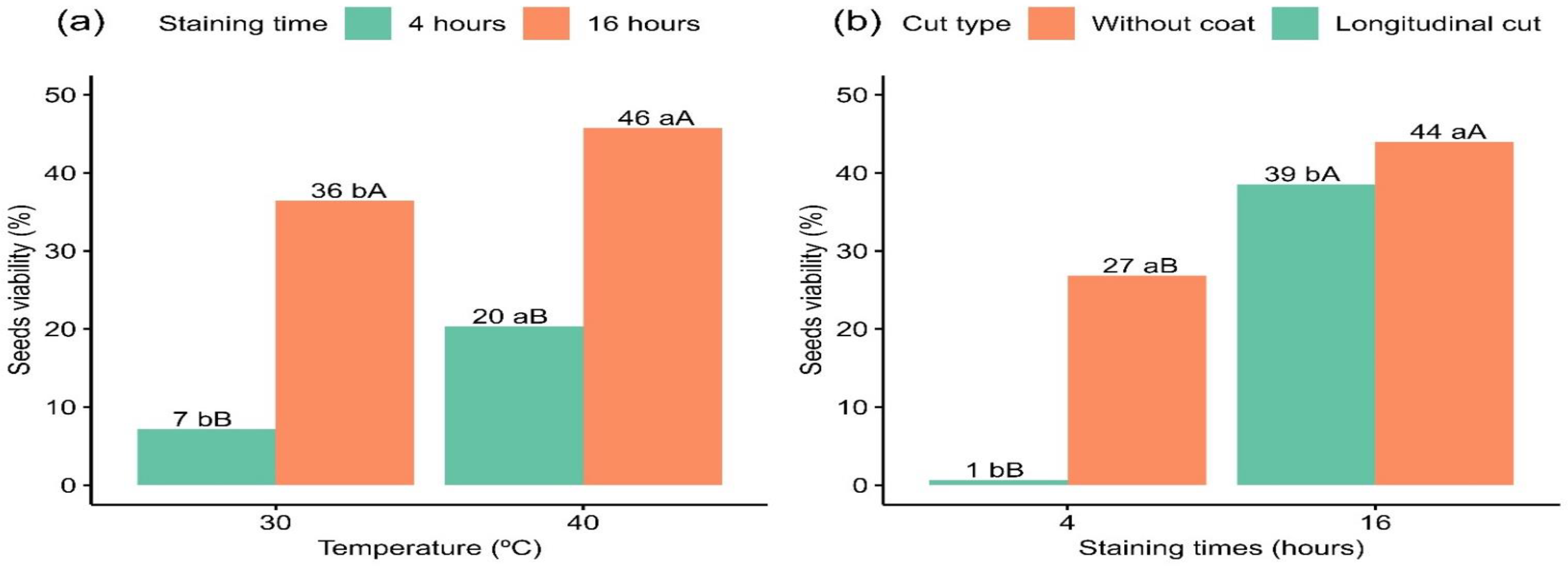
Figure 2 shows us that the longer exposure time of the seeds to the tetrazolium solution had superior results at both temperatures. However, at a temperature of 40 ºC, the stain on the seeds may be too intense, which makes it difficult to correctly identify the seed condition, which can compromise the obtained results. The type of cut influences the absorption of the tetrazolium solution, as the surface of the seed is exposed to more (in complete seed coat removal) or less (in longitudinal cut) contact with the solution. The same occurrence can explain the difference in staining time, as with the increase in exposition time to the solution, the staining of the seed becomes more intense. In relation to temperature, the seeds' metabolic reactions were intensified, which in turn induced water uptake and stain intensity due to the reaction with the tetrazolium salt.
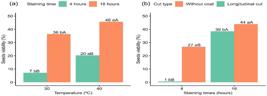
Interaction between (a) temperature and staining times; and (b) type of cut and staining times of viable seeds of J. mollissima via tetrazolium test. Lowercase letters refer to staining time and type of cut. Capital letters correspond to temperature and staining time.
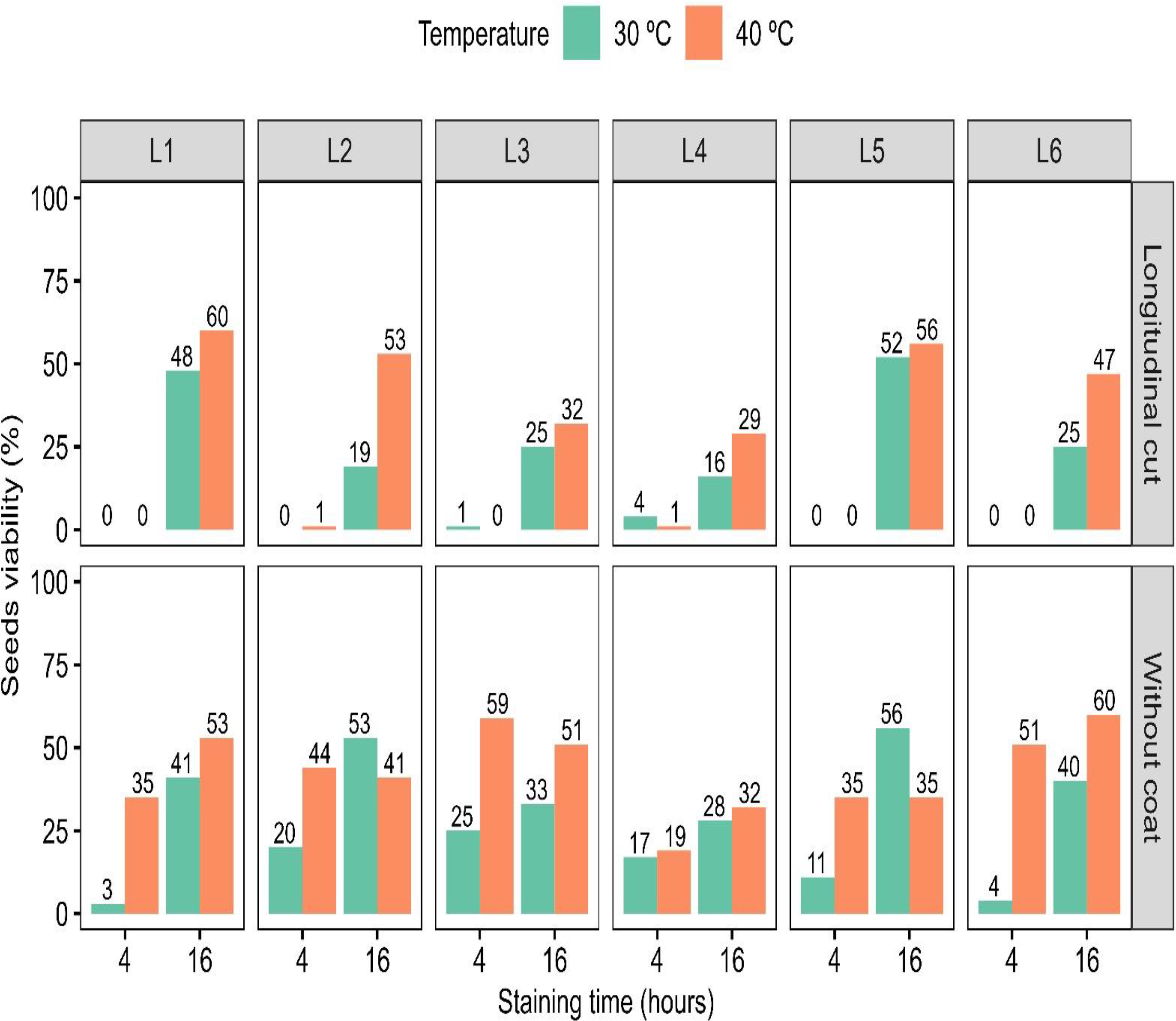
The longitudinal cut of the seed for 4 h of staining at both temperatures presented values close to or equal to zero (Figure 3), showing that these combinations are not efficient for J. mollissima. In the case of complete seed coat removal, we obtained superior results when compared to the longitudinal cut at both the temperatures and staining times evaluated, indicating effectiveness in the applied procedures. When submitted to 16 h of staining, regardless of the type of cut, it was possible to observe that the analyzed seed lots had superior results for viability, similar to those obtained in the germination test.
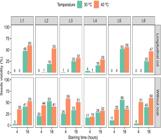
Viability of J. mollissima seed lots by tetrazolium test at different cut types and staining times.
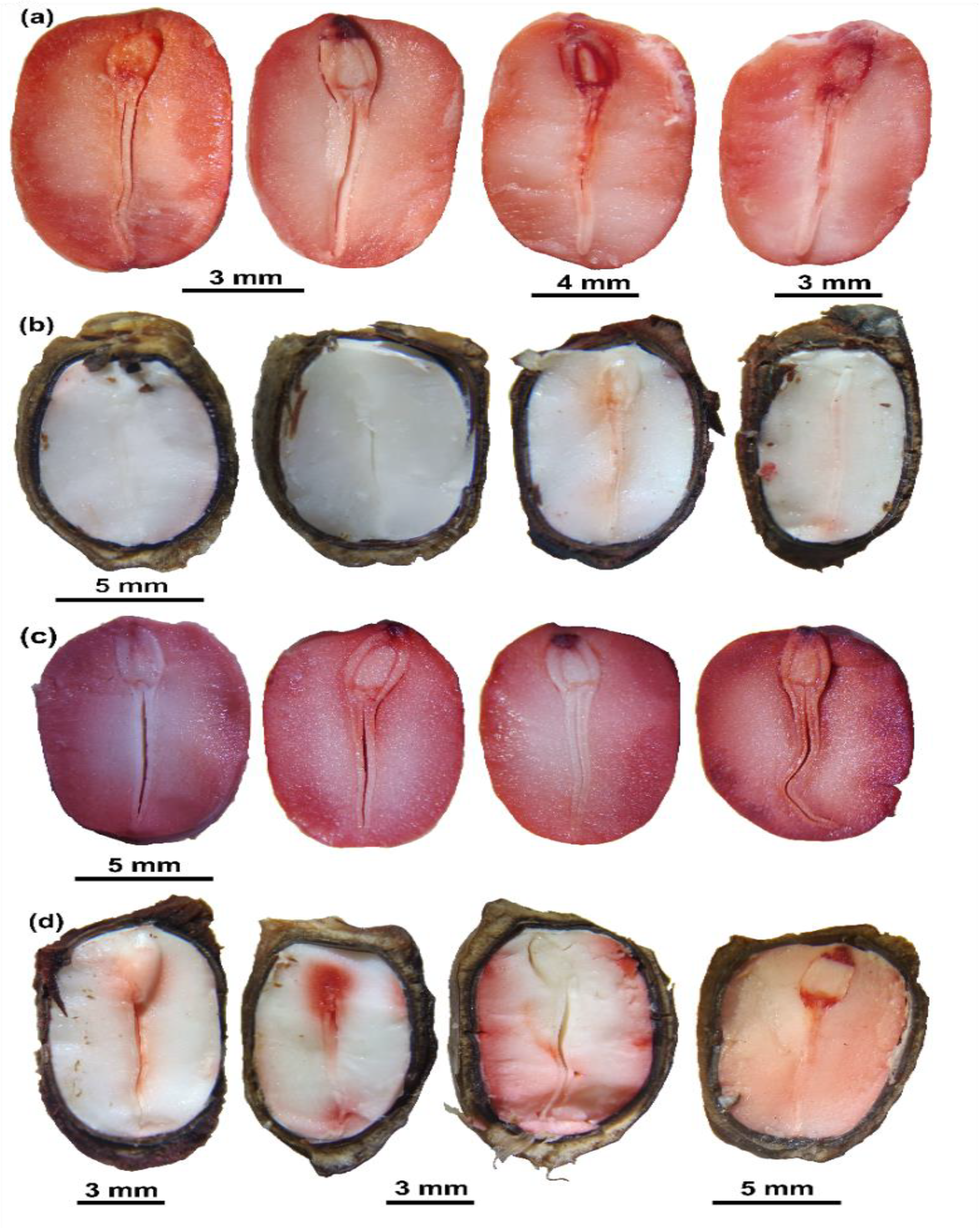
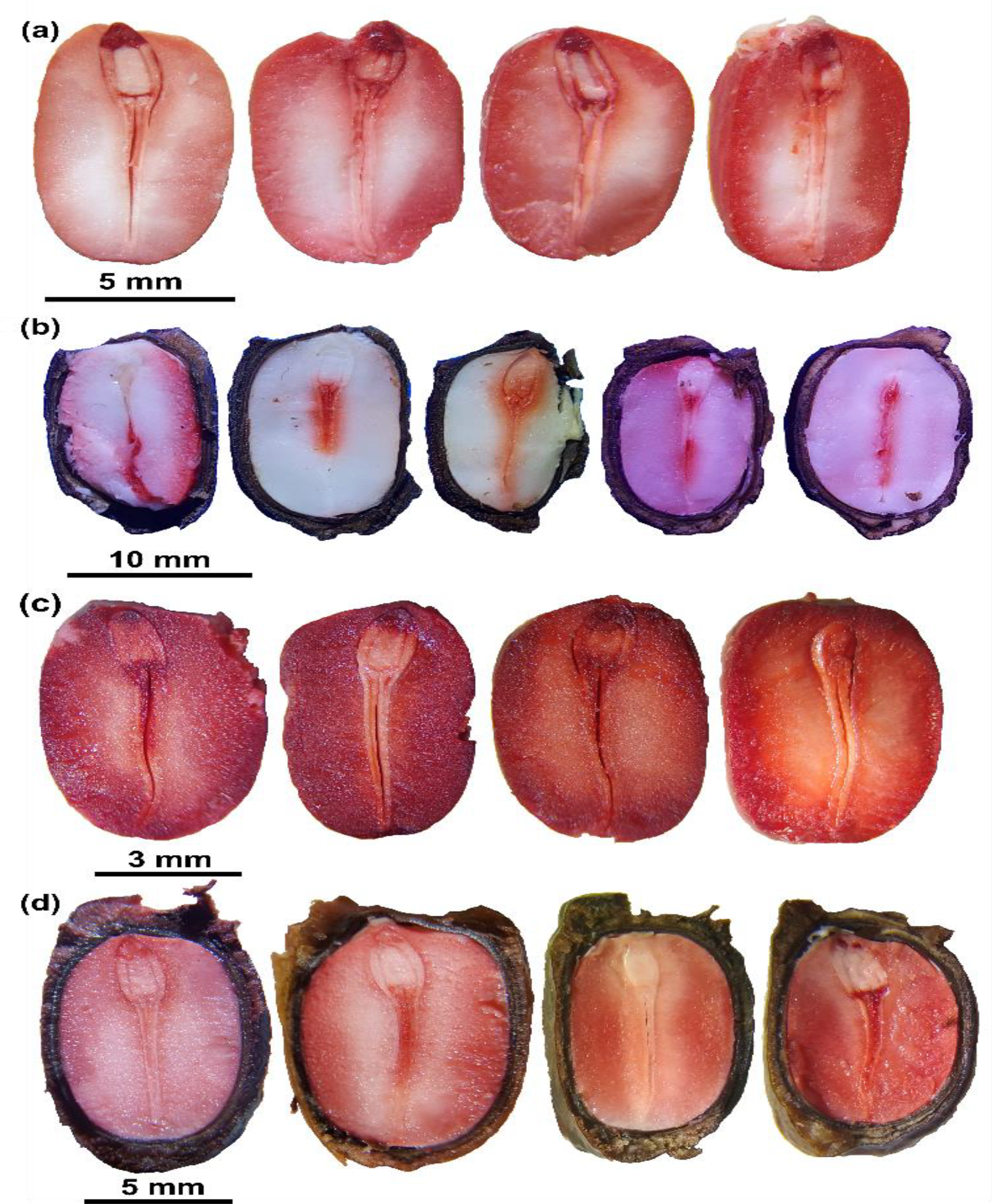
Complete seed coat removal demands less exposure time of the seed tissues to the tetrazolium solution (4 hours) and results in satisfactory staining for viability analysis (Figure 4a; Figure 5a). The seeds that remained for 16 h in the staining process at 30 °C (Figure 4c) showed greater stain intensity compared to that observed after only 4 hours in the tetrazolium solution. The longitudinal cut, in the condition of 4 h at 30 °C, did not show sufficient stain to identify seed viability (Figure 3; Figures 4b; 4d), indicating the need for more time to stain the internal tissues of the seeds.
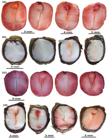
J. mollissima seeds submitted to a staining time of 4 h at 30 ºC by the tetrazolium test with (a) complete seed coat removal and (b) lack of stain with longitudinal cut; 16 h of staining time at 30 ºC with (c) complete seed coat removal and (d) lack of stain with longitudinal cut.
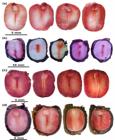
J. mollissima seeds submitted to 4 h of staining at 40 ºC by the tetrazolium test with (a) complete seed coat removal and (b) lack of stain with longitudinal cut; 16 h of staining with (c) complete seed coat removal and with (d) longitudinal cut.
The seeds without coat submitted to a 4 h staining time at 40 ºC presented uniform staining in general (Figure 5a), in a similar way to what was observed at 30 ºC (Figures 4a; 4c), although the extremity of the hypocotyl-radicle axis presented a more intense stain. In contrast, the longitudinal cut treatments show satisfactory results for the analysis (Figure 5d), with uniform stain at the higher temperature.
The longitudinal cut has proven to be efficient for the evaluation of J. mollissima seeds (Figure 5b; Figure 5d), but it takes longer to stain when compared to complete seed coat removal. The latter demands less staining time, although the analysis is more labor-intensive due to the time it takes to remove the coat without damaging the seed structures. In this way, both cut types can be used for viability evaluation via tetrazolium test, with attention to the specificities of each type.
Among the factors analyzed in isolation in the electrical conductivity test, the seed quantity treatments showed no significant difference (SM1). Temperature and water volume were significant factors at 5% by the F-test. On the other hand, there was significant interaction in the relationships between the factors of seed quantity x temperature and between seed quantity x water volume.
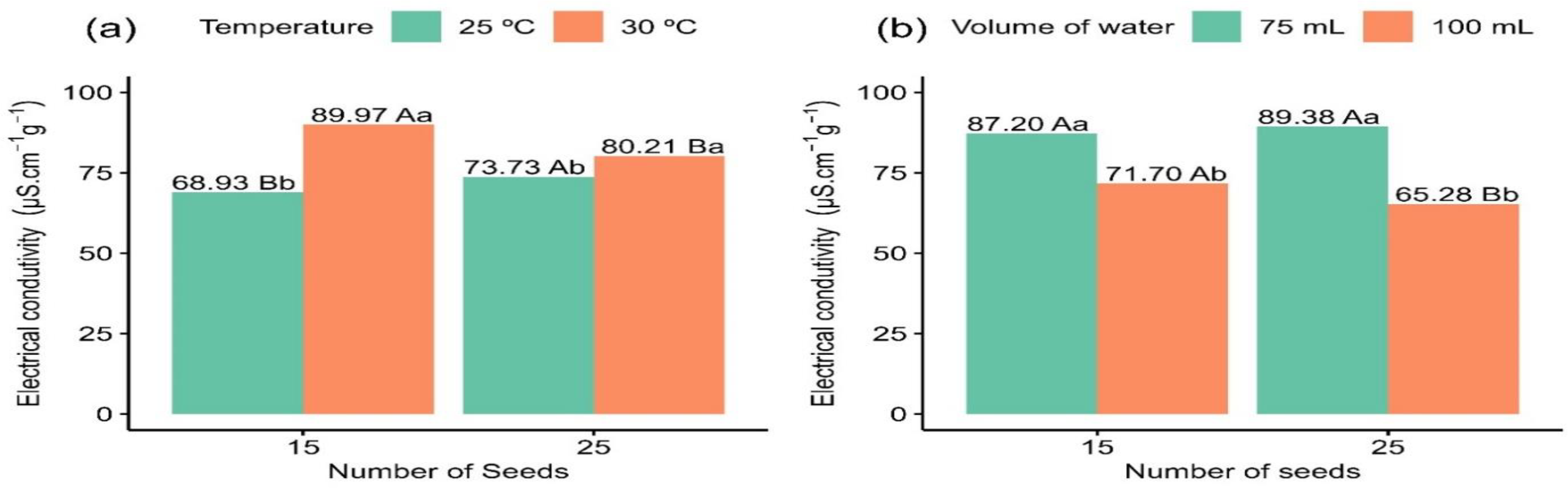
During the evaluations, we observed an increase in electrical conductivity values, which can be explained by the time the seeds spent in immersion (Figure 6). Therefore, the ANOVA identified a significant difference in the immersion time factor. The interaction between seed quantity x temperature (Figure 6a) shows that the EC values were higher at 30 ºC, and the combination with 15 seeds was statistically superior to the others. Regarding seed quantity and water volume, the highest conductivities were observed in the treatment with 75 mL of water, in both seed quantity tested (Figure 6b).
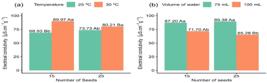
Interaction between (a) temperatures and J. mollissima seed quantity and (b) water volume and seed quantity for the EC test. Capital letters correspond to the quantity of seeds. Lowercase letters refer to temperature and water volume.
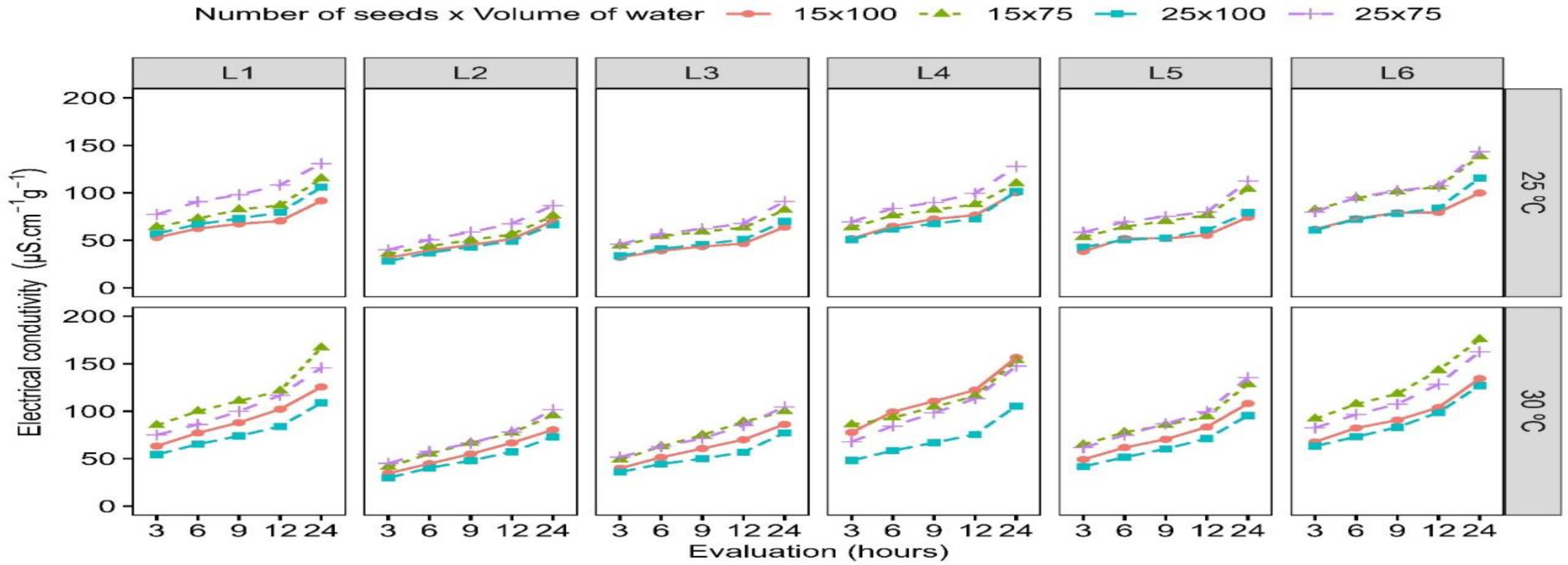
It is possible to observe a stabilization in the values of electrical conductivity, at the temperature of 25 ºC, between the 9 h and 12 h times (Figure 7), with differences of less than 10 µS.cm-1.g-1 and an increase in such values at 24 h time. The L3 lot showed EC values close to those seen in L2, with equal results in the 25 seeds x 25 ºC x 75 mL of water combination (67 µS.cm-1.g-1). Compared to the TZ, the L3 lot had a viability of 58% and germination equal to 50%. Thus, we observed that the electrical conductivity test was not efficient to evaluate the vigor of this lot, as its EC value is similar to that of L2, which obtained a germination value of above 70%.
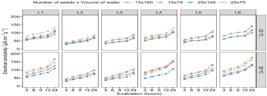
Electrical conductivity test for J. mollissima seed lots at different combinations of water volume, seed quantity, and temperatures.
The electrical conductivity results showed a trend over the course of the evaluations (Figure 7). At 30 °C, the EC was higher than at 25 °C. Regarding the amount of water, the treatments with the highest EC values were seen when combined with 75 mL, due to the higher concentration of ions in the solution. The L1 lot showed high viability (72% germination). However, the values presented in the EC test for this lot were similar to the lots with low viability, such as L4 and L5 (60% germination), while the lot with the lowest viability (50% germination) also had similar results to L2, which had the highest germination percentage (76%). For the purpose of validation, the EC test, when compared to the germination test, did not show results consistent with the vigor of the lots evaluated, which can overestimate the physiological quality of the seeds. Therefore, we do not recommend the use of the electrical conductivity test, in the experimental model studied, to evaluate the vigor of J. mollissima seed lots.
DISCUSSION
It is important to mention that the evaluators took less time to perform the procedure with the longitudinal cut than with the complete removal of the seed coat. This reduction in time contributes to the agility of the following steps in the evaluation. However, seeds submitted to this kind of cut need more exposure time to the tetrazolium solution in order to have their interior stained. This is due to the smaller contact surface area with the solution compared to the complete seed coat removal. We observed that the seeds with complete coat removal had the end of the hypocotyl-radicle axis stained with intense red color (Figures 2c; 2a) when subjected to a longer time of exposure to the solution. This result can be explained by the fact that this region is a diffusion point of the solution, which may camouflage the real stain of the structure and influence the result of the analysis, as the high respiratory activity of the seeds frequently indicates the proximity of their death or deterioration.
When [19] evaluated seed viability of different species, with varying oil concentrations using the tetrazolium test, the results showed lower viability compared to that found in germination tests. According to the authors, this variation is in accordance with the oil concentration, which is an indication that this component can hinder the diffusion of the tetrazolium solution inside the seeds. J. mollissima has between 22% and 38% oil content [20]. [3], and [4] indicate that for seeds of some species, the coat is also an impediment to tetrazolium solution diffusion and internal tissue staining, requiring the removal of this coat or the longitudinal cut for staining.
As observed, the 40 °C temperature provided superior results in both types of cut (Figure 3), since it influences the speed of metabolic and enzymatic activities [2,21,22]. However, we noticed that seeds with longitudinal cut were not stained within 4 hours of exposure at this temperature.
In a research conducted on Caatinga species by [24] pre-wetting periods varied between 12 and 48 hours, and temperatures remained between 25 ºC and 35 ºC. As for the staining process, the authors indicated that the concentration of the tetrazolium solutions varied from 0.05% to 1.0% and temperatures between 25 ºC and 41 ºC, with this final stage lasting for less than 5 hours. This pattern of time and concentration is also found in forest species occurring in other biomes and also in agricultural species [4,24,25]. Thus, standardizing the concentration of the tetrazolium solution combined with immersion time is important to obtain satisfactory results for seed evaluation [21].
Given this, we can see the importance of understanding the Jatropha mollissima seed and its components, so it is possible to define protocols more reliably for the species and determine a better way to evaluate it by the tetrazolium test. We also recommend that the evaluation be conducted by experienced analysts, in order to reduce variations in results due to inconsistencies in stain standardization. Also, the ease of the longitudinal cut compared to complete seed coat removal needs to be taken into consideration, due to the reduction in seed preparation and lower loss, when compared to complete tegument removal. However, complete removal requires less exposure time in the tetrazolium solution. Temperature is a limiting factor for seed germination, since heat accelerates metabolic activities, intensifying the processes of respiration, energy use, and the consequent degradation of reserves [26]. These processes cause the seeds to release more electrolytes into the solution, just as a larger volume of water (100 mL) will have more dissolved ions than a smaller volume (75 mL). [27] and [28] obtained similar results when they studied the test standardization in the Bowdichia virgilioides Kunth and J. curcas species.
It was not possible to verify stabilization in the EC values over the course of the evaluations, just as [27] had indicated, in the sense that vigorous seeds organize the membranes more quickly, stabilizing the release of solutes, enabling the differentiation of the lots. J. mollissima seeds start to disintegrate parts of the coat-even with the removal of the caruncle-as the evaluations continue, leading the EC to present higher values.
According to [29] the use of 75 mL of water for 24 hours at 25 ºC to evaluate the seeds of Amburana cearenses A. C. Smith, Aspidosperma pyrifolium Mart., Anadenanthera colubrina (Vell.) Brenan and Myracrodruon urundeuva Allemão is appropriate; while for J. curcas, it is recommended to immerse 15 seeds in 75 mL of water over 6 hours at 25 ºC [27]; and for B. virgilioides, [28] indicate the use of 25, 50 or 100 seeds immersed in 50 mL of water for 24 hours. In all the studies mentioned above, the electrical conductivity test proved to be efficient. In the present study, however, it was not possible to establish a connection between the values obtained in the electrical conductivity and the tetrazolium and germination tests.
According to [2], factors such as genotype, water content, seed size, temperature, immersing period, and physical conditions affect the results of the EC test, which corroborates the varied results found in the present study, even for lots collected from the same region. We observed that the lots collected in the municipality of Floresta (State of Pernambuco, Brazil) showed great variation in the results obtained by the tetrazolium and germination tests, and they could not be distinguished in the EC test.
The results of the research indicate that EC should not be used to assess the quality of J. mollissima seeds. We therefore recommend that new tests be carried out to identify the possible causes of not obtaining consistent results and tests with different evaluation intervals, temperatures or amounts of water, for example. According to [5], the use of the EC test is indicated for lot classification and for establishing quality procedures in seed production when there is less leaching of solutes and, consequently, lower electrical conductivity, indicating greater vigor. However, in the present study, differences were detected in EC values when compared to those observed for %G and TZ, as seen in the examples of seed lots L6 and L3.
CONCLUSION
The combination of longitudinal cut of seeds and 16 hours of staining at 40 ºC is also capable of producing satisfactory results and serves as an alternative to reduce preparation time and seed losses. The methodology applied for the electrical conductivity test is not indicated for vigor analysis of J. mollissima seeds, and the conduction of new evaluations is necessary.
-
Funding: This research was funded by Coordenação de Aperfeiçoamento de Pessoal de Nivel Superior - Brasil (CAPES), grant number 001.
Acknowledgments:
The authors would like to thank the Núcleo de Ecologia e Monitoramento Ambiental - NEMA/UNIVASF, the Projeto de Integração do Rio São Francisco com as Bacias Hidrográficas do Nordeste Setentrional - PISF, the Ministério do Desenvolvimento Regional - MDR for providing the seeds, and The Academic Publishing Advisory Center (Centro de Assessoria de Publicação Acadêmica, CAPA - www.capa.ufpr.br) of the Universidade Federal do Paraná (UFPR) for assistance with English language translation and developmental editing.
Supplementary material:
Supplementary material refers to tables of ANOVA (Analysis of Variance) results for the germination, tetrazolium, and conductivity tests.
This material is available at: https://doi.org/10.5281/zenodo.17410906
Data Availability Statement:
Research data are only available upon request for corresponding author.
REFERENCES
- 1 Bareke T. Biology of seed development and germination physiology. Adv Plants & Agric Res. [Internet]. 2018 [cited 2020 Dec 20];8(4).
-
2 Marcos-Filho J. Seed vigor testing: An overview of the past, present and future perspective. Sci Agric [Internet]. 2015 [cited 2021 Jan 20];72(4):363-74. Available from: http://dx.doi.org/10.1590/0103-9016-2015-0007
» http://dx.doi.org/10.1590/0103-9016-2015-0007 -
3 Milošević M, Vujaković M, Karagić D. Vigour tests as indicators of seed viability. Genetika. 2010;42(1):103-18. Available from: https://doi.org/10.2298/GENSR1001103M
» https://doi.org/10.2298/GENSR1001103M -
4 França-Neto JDB, Krzyzanowski FC. Tetrazolium: an important test for physiological seed quality evaluation. J Seed Sci. [Internet]. 2019 [cited 2020 Mar 8];(3):359-66. Available from: https://doi.org/10.1590/2317-1545v41n3223104
» https://doi.org/10.1590/2317-1545v41n3223104 -
5 Prado JP, Krzyzanowski FC, Martins CC, Vieira RD. Physiological potential of soybean seeds and its relationshipto electrical conductivity. J Seed Sci. [Internet]. 2019 Oct [cited 2022 May 17];41(4):407-15. Available from: http://dx.doi.org/10.1590/2317-1545v41n4214988
» http://dx.doi.org/10.1590/2317-1545v41n4214988 -
6 Queiroz LP, Cardoso D, Fernandes MF, Moro MF. Diversity and evolution of flowering plants of the Caatinga Domain. Caatinga: The Largest Tropical Dry Forest Region in South America. Springer; 2018. 23-63 p. Available from: https://doi.org/10.1007/978-3-319-68339-3_2
» https://doi.org/10.1007/978-3-319-68339-3_2 -
7 Braquehais ID, Vasconcelos FR, Ribeiro ARC, Silva ARA, Franca MGA, Lima DR, et al. [Toxicological, antibacterial, and phytochemical preliminary study of the ethanolic extract of Jatropha mollissima (Pohl) Baill (pinhão-bravo, Euphorbiaceae) leaves, collected in Tauá, Ceará, Northeastern Brazil]. Rev Bras Plantas Med. [Internet]. 2016;18(2 suppl 1):582-7. Available from: https://doi.org/10.1590/1983-084X/15_164
» https://doi.org/10.1590/1983-084X/15_164 -
8 Queiroz Neto RF, Araújo HN, Freitas CIA, Costa KMDFM, Abrantes MR, Almeida JGL, et al. The Jatropha mollissima (Pohl) Baill: chemical and pharmacological activities of the latex and its extracts. Semin Cienc Agrar [Internet]. 2019;40(6):2613-24. Available from: https://doi.org/10.5433/1679-0359.2019v40n6p2613
» https://doi.org/10.5433/1679-0359.2019v40n6p2613 -
9 Félix-Silva J, Gomes JAS, Fernandes JM, Moura AKC, Menezes YAS, Santos ECG, et al. Comparison of two Jatropha species (Euphorbiaceae) used popularly to treat snakebites in Northeastern Brazil: Chemical profile, inhibitory activity against Bothrops erythromelas venom and antibacterial activity. J Ethnopharmacol [Internet]. 2018 Mar;213:12-20. Available from: https://doi.org/10.1016/j.jep.2017.11.002
» https://doi.org/10.1016/j.jep.2017.11.002 -
10 Lima JO, Rios JB, Trevisan MTS, Gallão MI, Gallao M. Morphological characterization of fruits and seeds of Jatropha mollissima (Pohl) Baill. (Magnoliopsida: Euphorbiaceae). Braz J Biol Sci. [Internet]. 2015 [cited 2019 Nov 7];2(4):263-9. Available from: https://bjbs.com.br/backup_older/2015/v2n4/v02n04a09.pdf
» https://bjbs.com.br/backup_older/2015/v2n4/v02n04a09.pdf -
11 Neves EL, Funch LS, Viana BF. [Phenological behavior of three species of Jatropha (Euphorbiaceae) in the semi-arid Caatinga region of Brazil]. Braz. J. Bot. 2010;33(1):155-66. Available from: https://doi.org/10.1590/S0100-84042010000100014
» https://doi.org/10.1590/S0100-84042010000100014 -
12 Sátiro LN, Roque N. [The family Euphorbiaceae on the sand dunes of the middle São Francisco River, Bahia State, Brazil]. Acta Bot Brasilica. 2008;22(1):99-118. Available from: https://doi.org/10.1590/S0102-33062008000100013
» https://doi.org/10.1590/S0102-33062008000100013 - 13 Brasil. Regra para análises de sementes [Rules for seeds analysis]. Brasília: Ministry of Agriculture, Livestock and Food Supply; 2009. 399 p.
- 14 Walter LS. [Morphological characterization and germination potential of Jatropha mollissima (Pohl) Baill. seeds under abiotic stresses] [Master’s Dissertation]. Federal University of Paraná; 2020.
- 15 Labouriau LG. [Seeds germination]. Washington: General Secretariat of the Organization of American States; 1983. 174 p.
-
16 Maguire JD. Speed of germination: aid in selection and evaluation for seedling emergence and vigor. Crop Sci. 1962;2:176-7. Available from: http://dx.doi.org/10.2135/cropsci1962.0011183X000200020033x
» http://dx.doi.org/10.2135/cropsci1962.0011183X000200020033x -
17 Walter LS, Gabira MM, Silva MA, Nogueira AC, Kratz D. Adjustments in the tetrazolium test methodology for assessing the physiological quality of Jatropha mollissima (Euphorbiaceae). Bosque. 2020;41(1):77-82. Available from: https://revistabosque.org/index.php/bosque/article/view/260
» https://revistabosque.org/index.php/bosque/article/view/260 -
18 R Core Team. R: A Language and Environment for Statistical Computing [Internet]. Viena: R Foundation for Statistical Computing; 2022. Available from: https://www.r-project.org/
» https://www.r-project.org/ - 19 Wood CB, Miles S, Rix C, Terry J, Daws MI. The effect of seed oil content on viability assessment using tetrazolium - a case study using 171 species. PGR news letter. 2005;143(January 2005):17-23.
-
20 Silva SI, Oliveira AFM, Negri G, Salatino A. Seed oils of Euphorbiaceae from the Caatinga, a Brazilian tropical dry forest. Biomass Bioenergy [Internet]. 2014 Oct;69:124-34. Available from: https://doi.org/10.1016/j.biombioe.2014.07.010
» https://doi.org/10.1016/j.biombioe.2014.07.010 -
21 Araújo JO, Pinheiro DT, Dias DCFDS, Hilst PC, de Medeiros AD. Adequacy of the tetrazolium test to evaluate the viability of Jatropha curcas L. seeds. J Seed Sci. 2019;41(4):470-7. Availabe from: http://dx.doi.org/10.1590/2317-1545v41n4223299
» http://dx.doi.org/10.1590/2317-1545v41n4223299 - 22 Taiz L, Zeiger E, Moller IM, Murphy A. [Plant Physiology and Development]. 6 ed. Vol. 6 ed., Porto Alegre: Artmed. Porto Alegre: Artmed; 2017. 858 p.
- 23 Dantas BF, Matias JR, Ribeiro RC. [Tetrazolium test to evaluate seeds vigor and viability of Catinga forest species]. Informativo ABRATES. 2015;25(1):60-4.
-
24 Mireski MC, Guedes RS, Wendling I, Peña MLP, Medeiros AC de S. Drying on the viability and embryonic development of Ilex paraguariensis seeds. Cienc Florest. [Internet]. 2019 [cited 2021 Mar 30];29(3):1354-62. Available from: https://doi.org/10.5902/1980509824451
» https://doi.org/10.5902/1980509824451 -
25 Tavecchio NEM, Vigliocco AE, Terenti OA, Wassner D, Reinoso HE, Pedranzani HE. Jatropha curcas L. and J. macrocarpa Griseb: Seed morphology, viability, dormancy, germination and growth of seedlings. Am J Plant Sci [Internet]. 2018 [cited 2019 Nov 8];09(09):1835-54. Available from: https://doi.org/10.4236/ajps.2018.99134
» https://doi.org/10.4236/ajps.2018.99134 - 26 Vieira RD, Marcos-Filho JB. [Electrical conductivity test]. In: Vigor de sementes: conceitos e testes. Londrina: ABRATES; 2020. p. 601.
- 27 Araujo RF, Zonta JB, Araujo EF, Donzeles SML, Costa GM. Electrical conductivity test for physic nut (Jatropha curcas L.). Idesia (Arica). 2011;29(2):79-86.
-
28 Dalanhol SJ, Rezende EH, Abreu DCA De, Nogueira AC. [Electrical Conductivity Test in Seeds of Bowdichia virgilioides Kunth]. Floresta e Ambiente [Internet]. 2014;21(1):69-77. Available from: http://dx.doi.org/10.4322/floram.2014.013
» http://dx.doi.org/10.4322/floram.2014.013 - 29 Aguilar MVM, Santos TA, Taires M, Silva R, Barbosa GS, Dantas BF. [Electrical conductivity testing on seeds from native espécies stored in diferent lots]. Informativo ABRATES. 2018;28(1):37-40.
-
Editor-in-Chief:
Bill Jorge Costa
-
Associate Editor:
Bill Jorge Costa