 Neuro Fuzzy Deep Reinforcement Learning for Energy Optimized Routing in Large-Scale Wireless Sensor Networks
Abstract
Wireless Large scale Wireless Sensor Networks (WSN), composed of numerous sensors pivots the significant applications like smart city, environmental monitoring, industrial automation etc. The energy efficient routing protocols of the normal WSN experiences a major setback in terms of scalability, energy efficiency, routing overhead, data transmission, and fault tolerance. The increase in number of nodes significantly enhances the communication overhead and energy consumption. Moreover, the large scale WSN relies on the multi-hop communication for the data transfer from distant node to the sink node, creating communication bottlenecks. To overcome these concerns, the proposed work introduces a novel scalable Neuro-Fuzzy Deep Reinforcement learning algorithm for the energy efficient routing process. This algorithm integrates the capabilities of the neuro-fuzzy systems with the decision making capability of the Deep Reinforcement Learning (DRL) model to optimize the energy consumption and to ensure the prolonged network lifespan. The neuro-fuzzy component in the proposed work leverages the fuzzy logic to handle the uncertainties in the large scale WSN, such as dynamic topology, and the variable link quality while the neural network enhances the learning adaptability. The proposed work is analyzed in terms of energy efficiency, network lifetime, packet delivery ratio, throughput, end-to-end delay, scalability, and routing overhead to compare with the existing state of the art routing methodologies.
Keywords:
Wireless Sensor Networks (WSN); Energy-Efficient Routing; Neuro-Fuzzy Systems; Deep Reinforcement Learning (DRL); Scalability.
HIGHLIGHTS
Proposed a Neuro-Fuzzy DRL algorithm for scalable, energy-efficient WSN routing.
Integrated fuzzy logic and DRL to handle dynamic topology and optimize energy use.
Achieved improved energy efficiency, lifetime, and scalability over existing methods.
INTRODUCTION
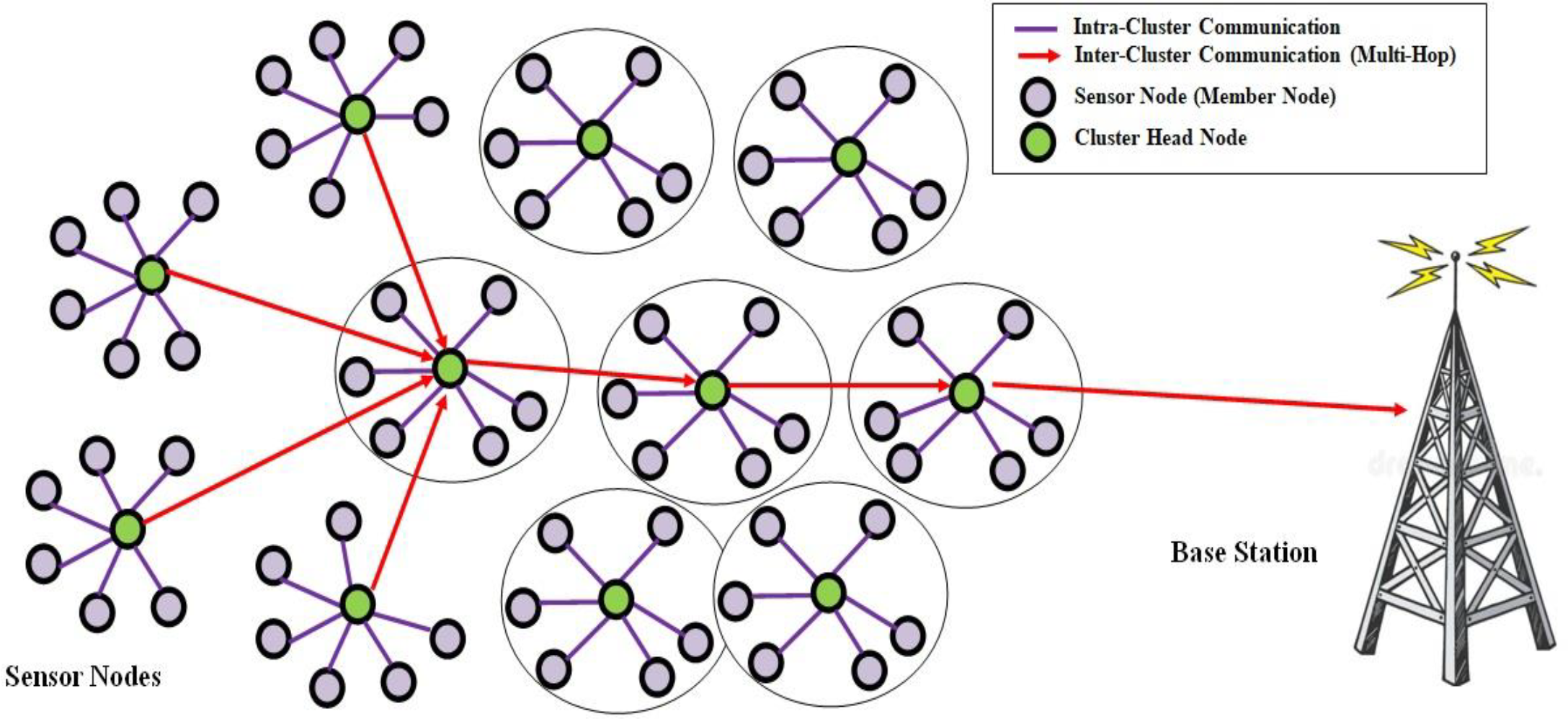
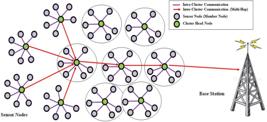
Wireless Sensor Networks (WSN) [1] covering large areas is an expansive and intricate mesh of interconnected sensor nodes deployed over the vast geographical areas. The sensor nodes are capable of sensing, collecting and transmitting the intended data from the source node to the sink node. The sensors are capable of sensing various physical and environmental conditions [2] like temperature, pressure, motion, air quality, and various other industrial factors relevant to the industrial monitoring systems. The major difference among the normal and the large-scale WSN is the number of sensor nodes in the network. The large scale WSN are capable of monitoring the hazardous locations with minimal human intervention, also revolutionizes the industrial automation or monitoring process. The versatility of the large scale WSN is evident in their diversified applications like detecting the forest fire [3], predicting the anomalies in weather condition [4], wild-life tracking [5], remote monitoring [6] of patients [7] etc. In addition to these applications, the large scale WSN shall also be applicable for industrial automation processes like supply chain management, traffic optimization in smart cities, soil moisture monitoring in the smart agriculture applications. The sample architecture of the large scale WSN is depicted in Figure 1.
Apart from the notable applications of the large scale WSN, it experiences a significant challenge like poor energy efficiency, consuming excessive energy in handling the large computational overhead of the data packets. This excessive energy makes the sensors to drain earlier than the sensors of the normal WSN, thus deteriorating the lifespan of the network. The increase in coverage area in the large scale WSN creates challenges in terms of scalability, latency, and data congestion. A recent study [8] on the performance of the large scale WSN reveals that about 30% of energy in the large scale WSN is consumed due to the processing of redundant data transmission, thus deteriorates the efficiency of the network. This major challenge necessitates the requirement of energy efficient routing protocol which is suitable for routing in the large scale WSN.
The existing routing algorithms in the large scale WSN are critical and had developed various strategies namely hierarchical based routing, flat based routing and location centric routing mechanism. Based on these categories, renowned algorithms like LEACH (Low Energy Adaptive Clustering Hierarchy) protocol [9], PEGASIS (Power Efficient Gathering in Sensor Information Systems) protocol [10], DD (Directed Diffusion) protocol [11] and GPSR (Greedy Perimeter Stateless Routing) protocols [12] have been introduced for providing energy efficient routing. The protocols like LEACH and PEGASIS protocols had proved to be more efficient in terms of energy consumption, however experiences a major setback in maintaining a balanced cluster formation among the sensor nodes. The flat based algorithms like Directed Diffusion (DD) algorithm extends in objective on data centric communication, experiences scalability concern and huge communication overhead as the dimension of the network is increased. Finally, the location centric protocol like GPSR protocol employs the geographical information for routing process, but highly relies on the accuracy and availability of data location. Overall, the major setback of the existing algorithms are the lack of scalability, adaptability and energy efficiency, enhances the necessity of the next generation algorithm that can dynamically adopt to the above mentioned challenges of the large scale WSN.
To overcome these challenges, this proposed work introduces a novel integrated model composed of Neuro fuzzy Deep Reinforcement Learning (DRL) model incorporating the interpretability offered by the Neuro fuzzy model and the adaptability learning by the DRL model [13]. The proposed model dynamically adjusts the routing decisions, mitigates the energy consumption. The fuzzy rules in the proposed model assists in overcoming the scalability, dynamic topology and the uneven energy distribution thus assuring the efficient energy consumption for a robust routing in the applications of large scale WSN. The contributions are as follows.
-
The proposed work balances energy consumption and reduces redundant transmissions, prolonging network lifespan.
-
The proposed work adapts dynamically to large-scale networks with changing topologies and node densities.
-
The proposed work integrates DRL and fuzzy logic for intelligent, robust routing under uncertain conditions.
-
The proposed Neuro fuzzy DRL method supports predictive maintenance and efficient asset tracking in large industrial IoT setups.
-
The proposed work supports for diversified applications of large scale WSN like precision agriculture, smart city, industrial automation and disaster management.
The research manuscript is organized with a detailed introduction and contribution of the proposed work in the section 1, followed by the detailed literature analysis in section 2 to frame the objectives of the proposed work. A detailed illustration on the Neuro-Fuzzy and DRL method is presented in section 3. The performance of the proposed work is analyzed and a comparative analysis is presented in section 4. The research manuscript is concluded in section 5, highlighting the merits, challenges of the proposed work.
LITERATURE REVIEW
The large scale WSN holds an inevitable role in the real time application, thus increases the necessity and the affinity of the researchers to introduce novel algorithms for energy efficient model. This section analyzes the state of the art routing methodologies in the large scale WSN addressing the routing efficiency, energy consumption, latency and scalability concern. This section assists in identifying the challenges in the existing state of art algorithms.
A fast changing clustering and routing algorithm (FC-CRA) [14] for the IoT application. In this model, the clusters are formed based on the clustering radius, dynamically adopting the deviation in the node distribution and residual energy. The communication inside the cluster is performed to overcome the earlier draining of nodes. In addition to this, this model overcomes the “energy hole” concern, thus enhancing the reliability of the network. A Segmentation iteration Clustering (SEG-C) algorithm [15] for minimizing the complexity in communication process and had developed a Sequential Optimization Algorithm (SOA) through the decomposition and the reconstruction process. This method had proved to be efficient in reducing the computational complexity and had enhances the scalability.
A novel Energy Distance Function based Improved K-Means Clustering algorithm (EDFIKM) [16] executed adaptive process of clustering. This model enhances the lifespan of the network by mitigating the time complexity during the data transmission. An Game based Dynamic Clustering Routing (GDCR) protocol [17] for the large scale WSN, employing the multidimensional clustering process among the sensor nodes. The clustering process was made on the basis of distance of separation between the source and sink node, aiming at mitigating the energy consumption.
A novel Improved Recursive Distance Vector Hop localization protocol (IR-DV-Hop) [18] for enhancing the Quality of Service (QoS) in the multi-hop large scale WSN. This protocol minimized the distance of separation between the base station and the cluster head, thus directly reduced the latency. This model is readily applied on the high density of sensor node and had reduced the delay in the data communication. Enhancing the scalability of the large scale WSN and as continuity, had proposed the hybrid algorithms [19] for optimizing the data communication from source to sink node. This model reduced the energy consumption and had achieved a better energy balance among the sensor nodes.
A Rule Based Energy Efficient Routing (RBEER) protocol [20] for a large scale WSN for addressing the major challenges like dynamic topology, mobility, bandwidth limitations and propagation delays. The novel protocol addressed the aforementioned challenged and had proved its efficiency. An effective framework for the efficient large scale WSN composed of dynamic vehicle routing mechanism [21], effectively reduced the traffic delay, RV shortage issue and organized the large scale mixed traffic. This method had addressed the average waiting time of the nodes to 27%. Furthermore, recent studies have explored batch authentication mechanisms in VANETs using lattice-based cryptographic techniques to ensure post-quantum security. Approaches such as CLA-FC5G, D-BlockAuth, FCA-VBN, FC-LSR, L-CPPA, and ECA-VFog have demonstrated promising results in resisting quantum attacks while maintaining lightweight computation suitable for 5G-enabled vehicular environments.
An underwater acoustic routing algorithm [22] using Intelligent Ant Colony Optimization and Energy Flexible (IAEF) protocol. This protocol identified the optimal path for the data communication and had offered an extended timespan for the network. An Underwater Core Node Set Routing (UCNSR) protocol [23] for solving the major challenges by the nodes. The major challenges observed from the literature analysis are in terms of scalability, energy efficiency, dynamic topology, enhanced communication overhead, uneven load distribution and complexity in multi-objective optimization. The detailed observation on the challenges is presented as follows.
-
The existing works efficiently managed energy consumption while scaling routing protocols to handle large numbers of nodes without rapid battery depletion [16], [19].
-
The state of art models had addressed frequent and unpredictable changes in network topology due to node mobility or failures [14], [17].
-
The existing routing models had minimized the data transmission costs and clustering overhead in densely populated sensor networks. [15], [18].
-
The existing methods had prevented congestion and bottlenecks by ensuring balanced load distribution across nodes. [16], [20].
-
The state of art methods integrated multiple objectives such as energy efficiency, latency, and quality of service in routing decisions. [22], [23].
Based on the identified challenges, the objectives of the proposed Neuro-Fuzzy based Deep Reinforcement Learning (NFDRL) routing model has been framed as follows.
-
To develop an adaptive framework using Neuro-fuzzy systems to dynamically adjust routing paths based on real-time network conditions.
-
To incorporate energy-aware learning to maximize node lifetime and network sustainability in large-scale WSNs.
-
To leverage deep reinforcement learning to enhance routing scalability while reducing computational and communication overheads.
-
To integrate mechanisms for balanced resource utilization to prevent network hotspots and congestion.
-
To employ Neuro-fuzzy logic to optimize trade-offs between energy consumption, latency, and QoS in routing protocols
PROPOSED METHODOLOGY
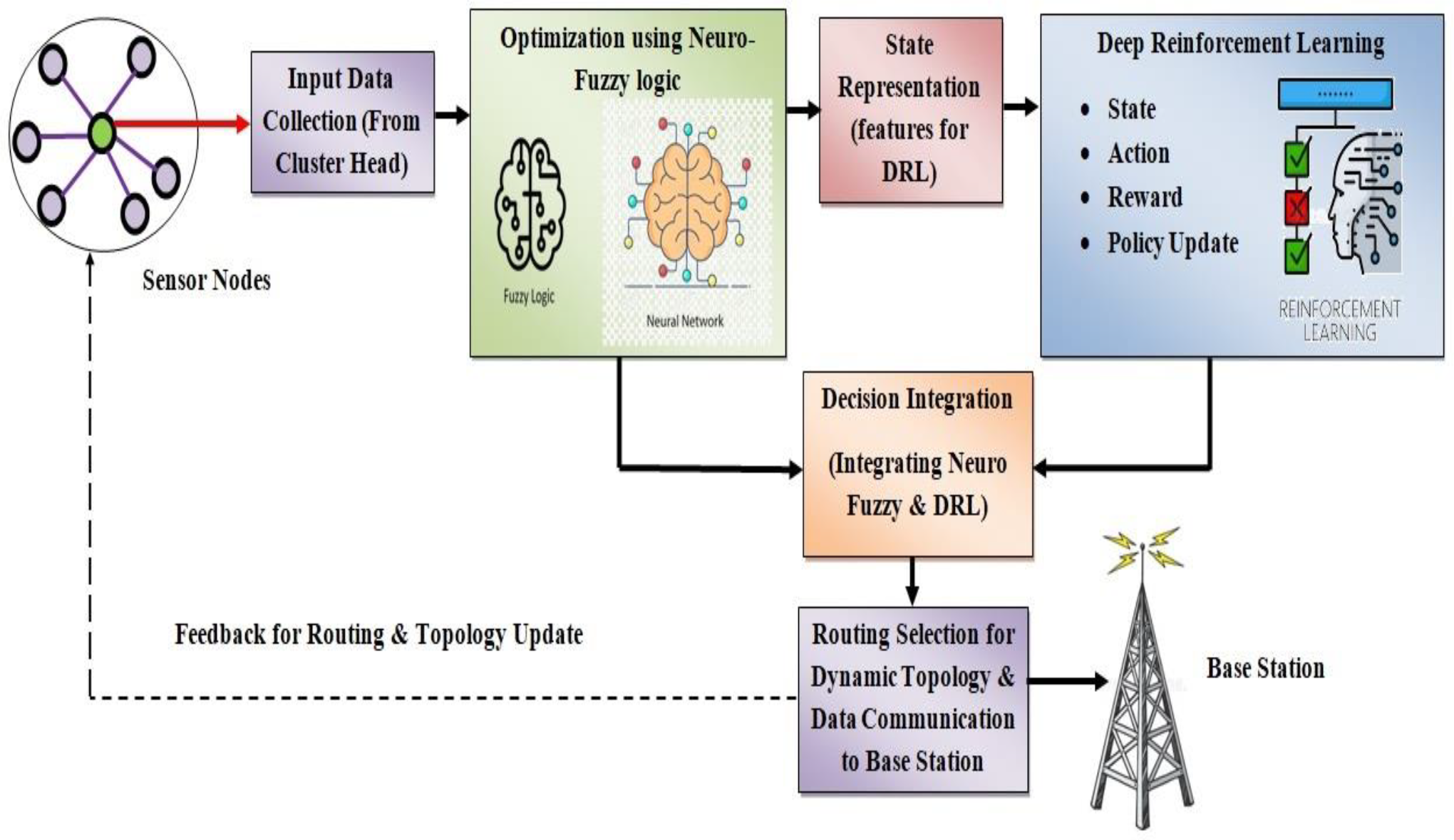
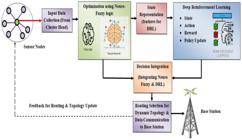
The proposed work of developing a novel Neuro Fuzzy Deep Reinforcement Learning (NFDRL) based dynamic routing algorithm for the heterogeneous large scale sensor network is composed of network deployment, data collection from the sensor, routing optimization using the neural fuzzy rules, dynamic routing selection process using the DRL model. The generalized architecture of the proposed Neuro-Fuzzy based Deep Reinforcement Learning based routing algorithm is presented in Figure 2.
Input data collection
The initial process in the proposed work is the input data collection, dealing with the acquisition of the vital metrics from the wireless sensor network. These metrics along with the data (di) forms the foundational data for the further processing. The inputs are obtained from the sensor nodes in a cluster and the measurements related to energy level, source - sink node distance, traffic load measurement, link quality estimation, density of the network and normalization of the collected data. Each sensor node (Ni) determines its residual energy (ER(t)) at time “t”as defined in Equation 1.
Where, is the initial energy, is the energy consumed upto time “t” and is the residual energy of the sensor node. The energy consumption of the sensor node is determined based on the transmitting power and receiving power as represented in Equation 2.
Where, and are the energy consumed for transmitting and receiving the data packet (di). The energy consumption of the sensor node is followed by the determination of the distance between the source node and the neighboring node (cluster head) as defined in Equation 3.
Where, and are the coordinates of the source node (x: Ni) and cluster head node (y: Nj). The Euclidean distance is represented in Equation 4.
Where, are the coordinates of the sink node. The third parameter to be determined is the traffic load measurement, which determines the total number of packets to be transmitted or to be processed as represented in Equation 5.
Where, and are the packet arrival and transmitted rate by the node (Ni). The quality of the transmission link with cluster head node is determines based on the signal to noise ratio (SNR) and the packet deliver ratio (PDR), followed by the determination of the network density which is determined using the dynamic nature of the nodes as defined in Equations 6 and 7 respectively.
The algorithm for the data collection from the sensor node is presented in Table 1.
The algorithm presented in Table 1, collects and processes the vital metrics of the nodes from each node of the large scale WSN and normalized it for the energy efficient routing process.
Routing optimization using Neuro-Fuzzy system
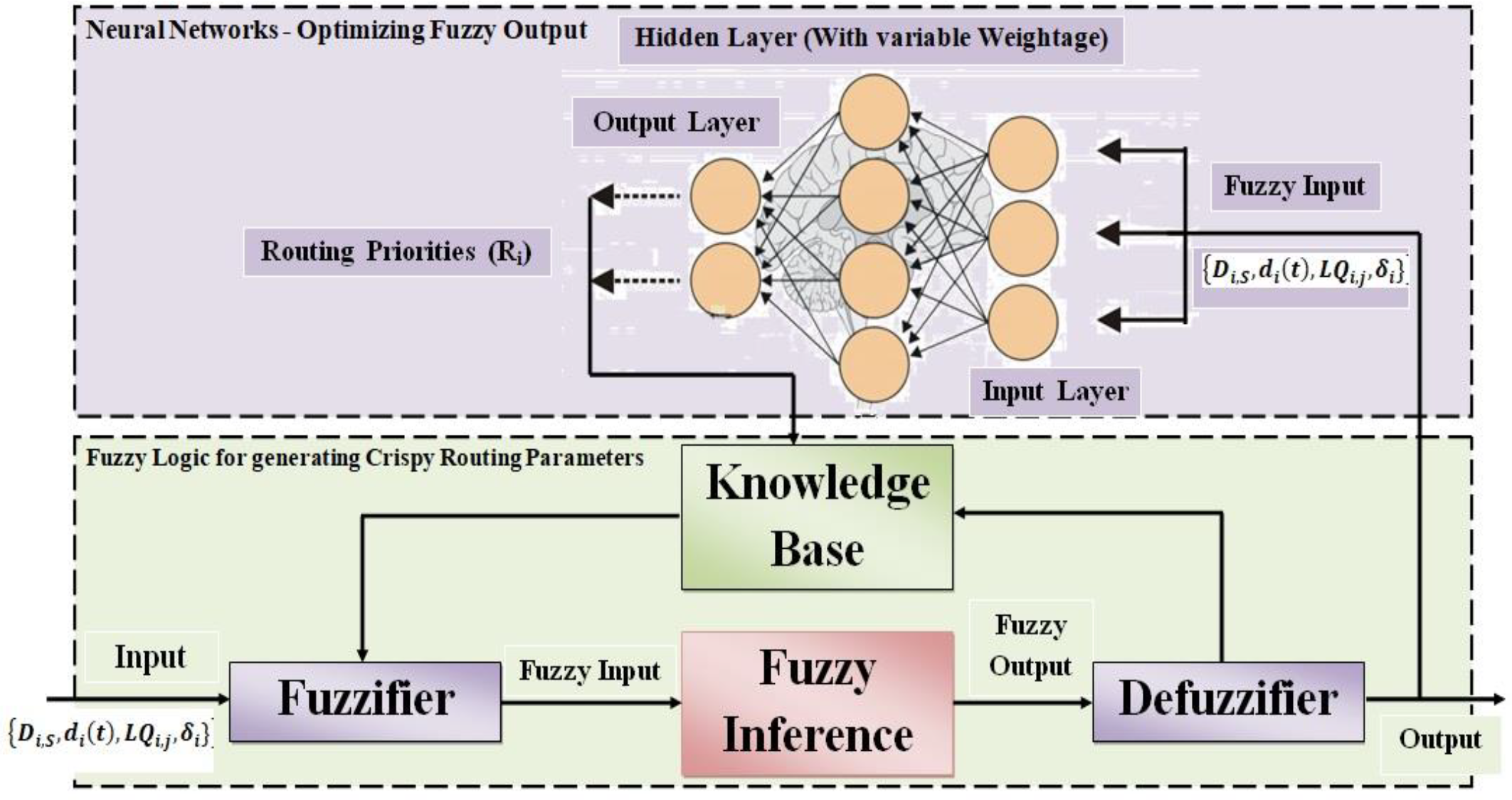
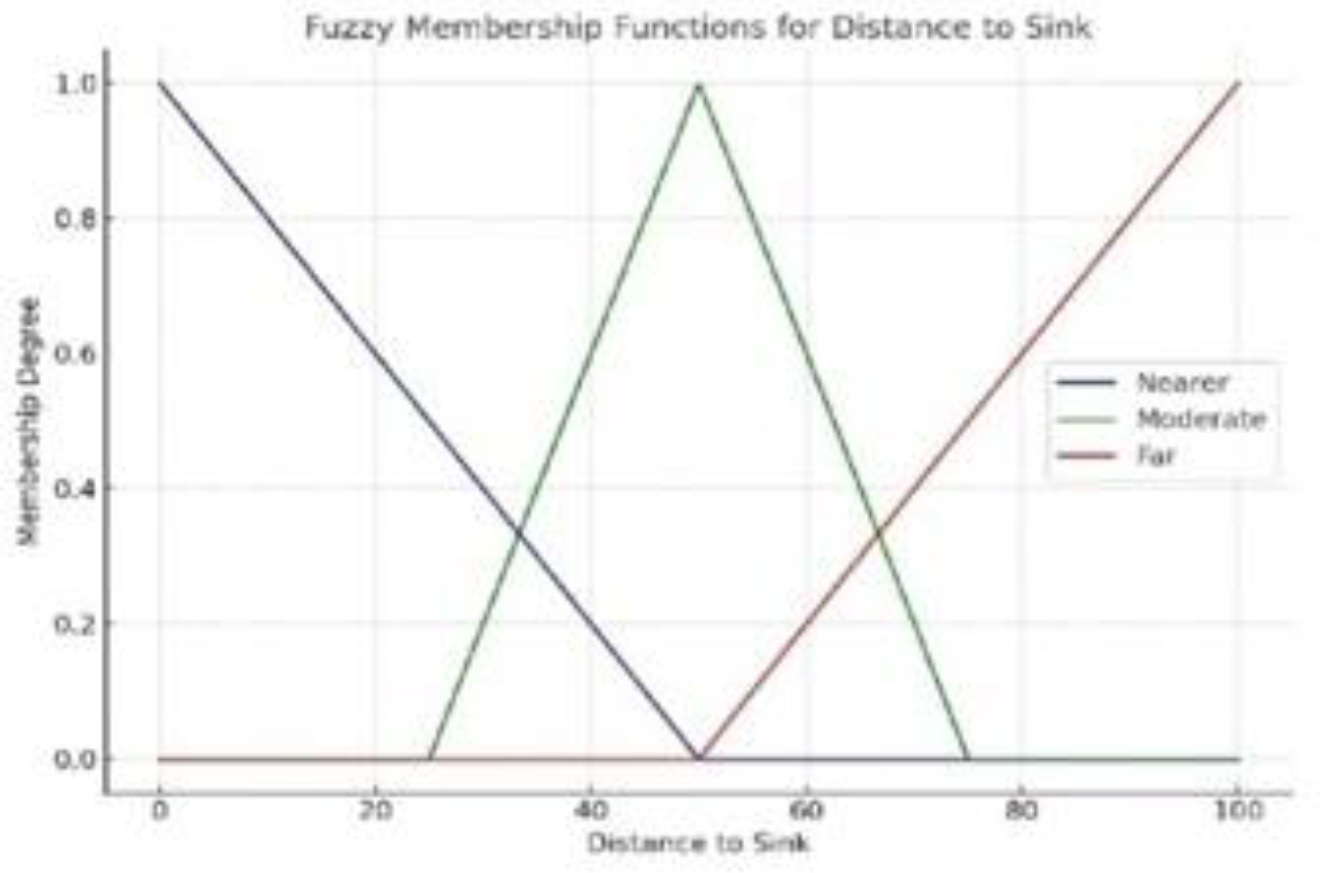
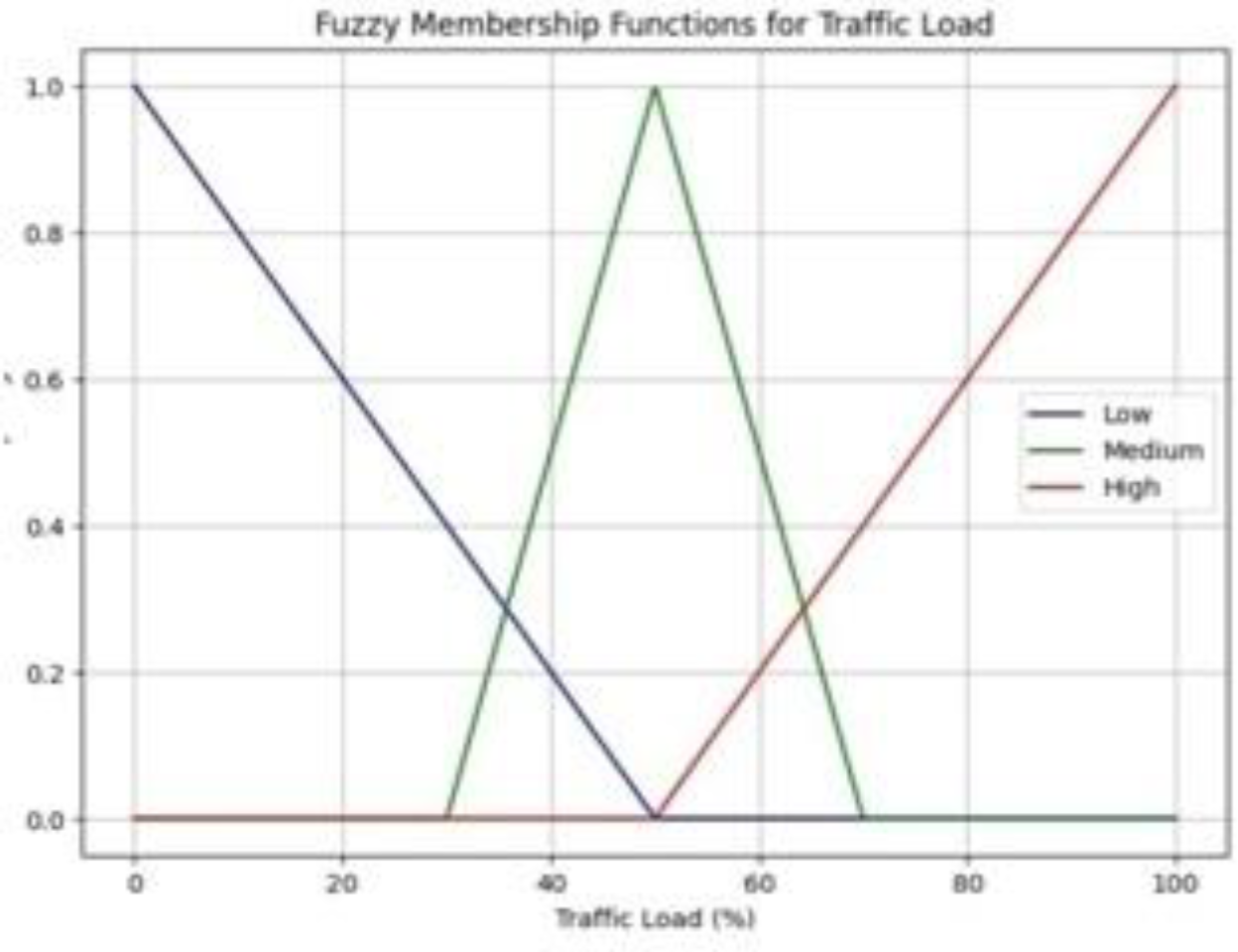
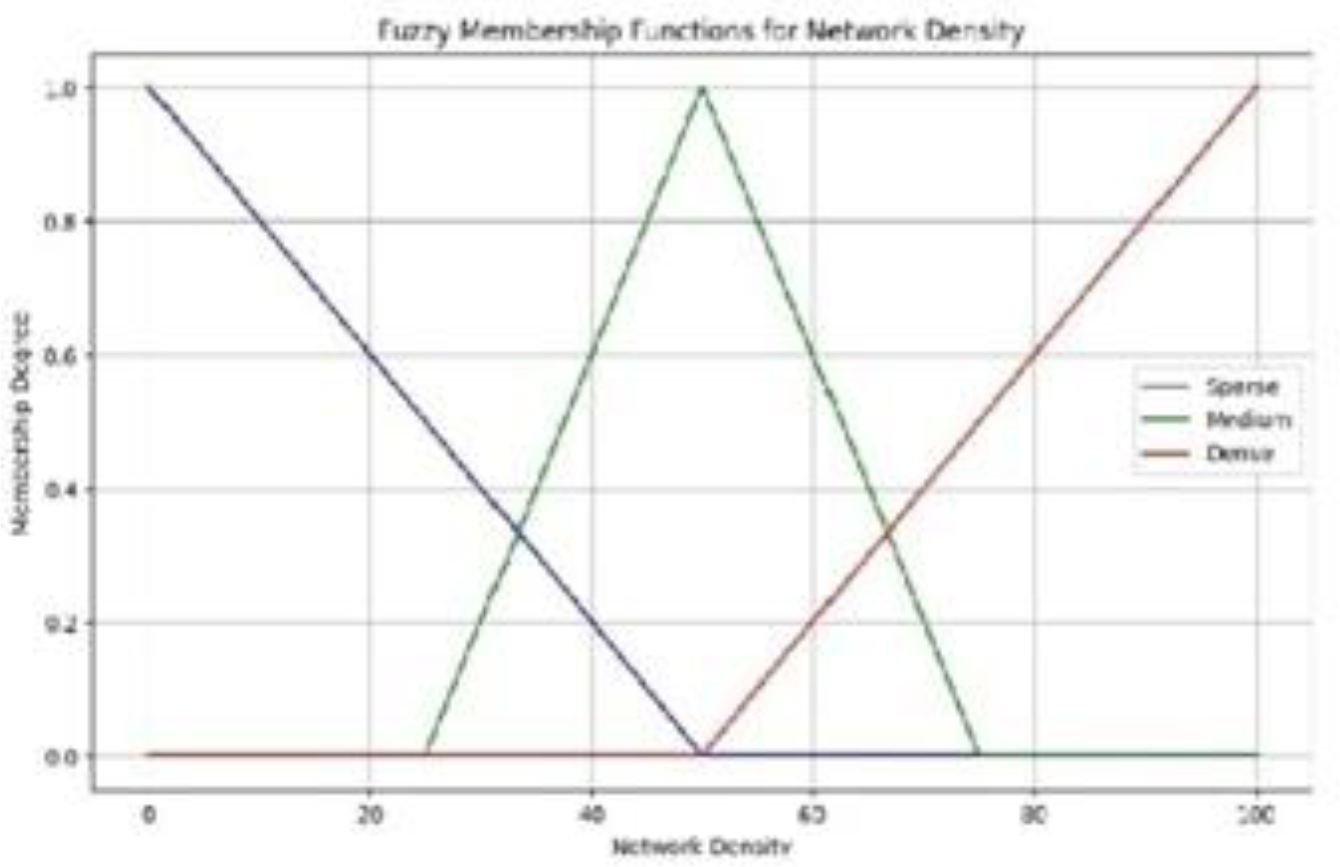
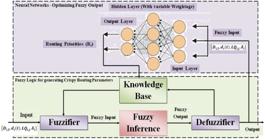
The Neuro-Fuzzy system integrates the reasoning capability of the fuzzy logic with the adaptive learning capability of the neural network to optimize the dynamic routing decisions in the large scale WSN. This neuro fuzzy system dynamically adjusts the significance of the metrics (residual energy, distance, traffic load, and network density) based on the dynamic topology and network conditions. The architecture of the proposed Neuro fuzzy based routing optimization is depicted in Figure 3. The initial fuzzy logic system is composed of three processes namely the Fuzzifier, fuzzy inference and the defuzzification process to generate a crispy/fuzzy output from the uncertain input. These processes were controlled by a knowledge base, which drives the entire fuzzy logic system. The fuzzy logic system maps the input data to the fuzzy output decisions. Initially the process is initiated with the fuzzification process with the input metrics , which are mapped to the linguistic variables {High, Medium and High} using the membership functions defined in equations 8,9 and 10.
Where, a, b and c are the parameters defining the range of the membership function.
The fuzzification process is driven by the knowledge based rule, which is a context of neuro fuzzy systems, composed of set of rules defined in Table 2, guiding the proposed system for the decision making process. The rules defined in the Table 2 integrate the various input conditions of the four input metrics derived from the sensor nodes to the conclusive and crispy output.
The fuzzy rule for the high priority of routing depends on the following abstracted condition, while the detailed neuro-fuzzy rule is defined above in Table 2. The basic conditions for the routing selections are:
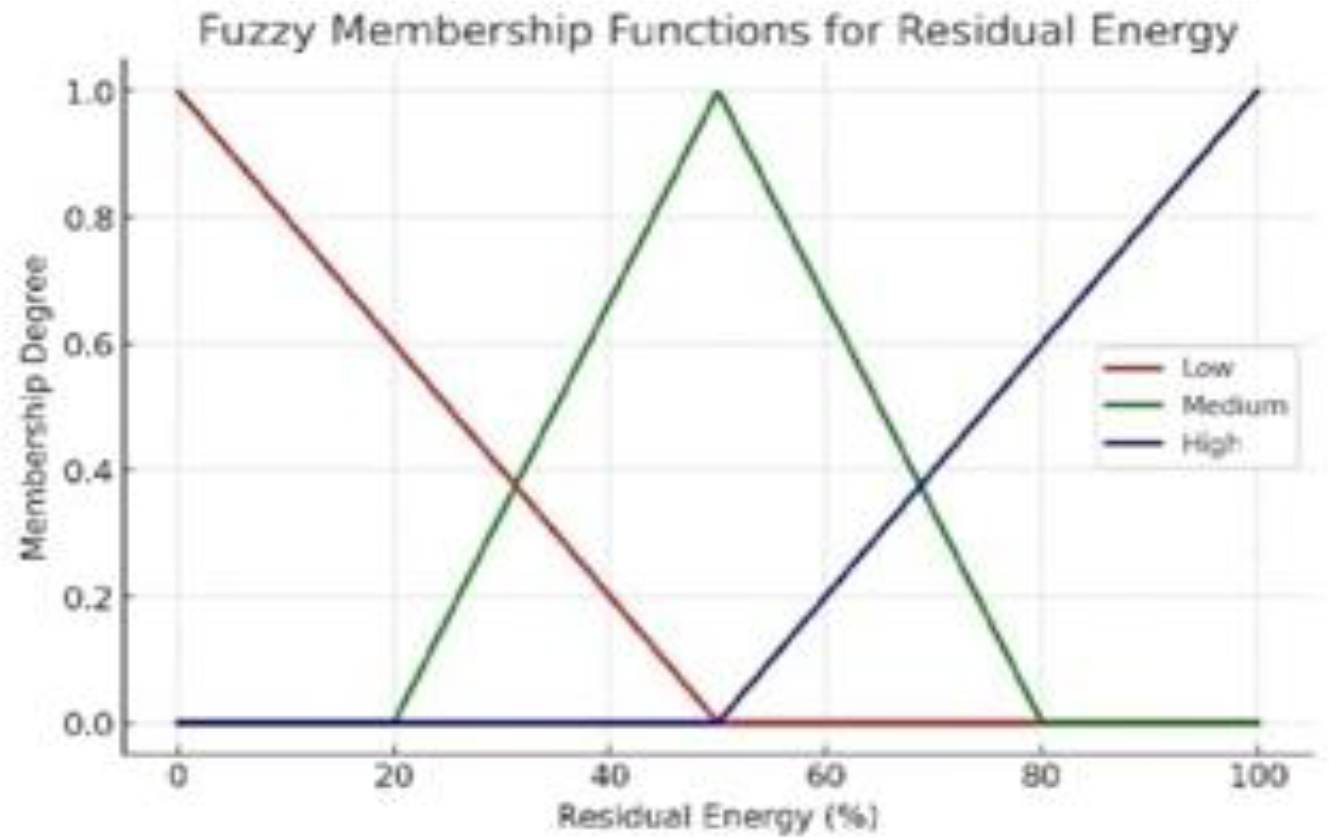
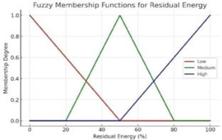
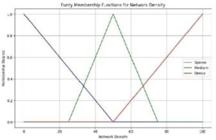
A sample condition for the selection of routing for communicating is presented in Equations 11, 12 and 13. The membership function for the parameter residual energy is presented in Figure 4.
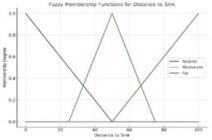
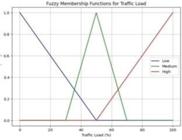
The fuzzification process is followed by the fuzzy inference, which maps the input variables to the output variables employing the neuro fuzzy logic system. This proposed model employs Sugeno fuzzy function, since the large scale WSN necessitates the real time decision making process in the dynamic routing process. The sugeno system generates the fuzzy output without the need for the defuzzification process and is compatible for the neural networks. The final process in the fuzzy logic is the defuzzification process, converting the fuzzy set into a crisp set of routing values. The centroid method is employed for the defuzzification process, generating the output variable using the membership function as defined in equation 14.
Where, Z is the output variable, is the membership function value at “z” and the numerator function represents the crispy parameter derived from the fuzzy logic. The derived crispy output is fed to the neural networks for dynamically adjusting the membership function parameters a, b, c and the rules based weights. The parameters a, b and c are the fuzzy output derived { from the fuzzy logic systems. The weightage of the hidden layer is modified based on the error function as represented in Equation 15.
Where, ἠ is the learning rate, is the weightage function at iteration “t” and is the weightage function at iteration “t+1”. The optimization of the input parameters, maximizes the network lifetime by balancing the energy size, mitigating the traffic congestion and routing delays as defined in Equation 16.
Where, is the total loss function. The proposed neural networks model employed ReLU and Softmax function for achieving scalable, robust and energy efficient routing decisions. The activations functions are mathematically represented in Equation 17 and 18 respectively.
The algorithm for optimizing the routing decisions using the neural fuzzy system is presented in Table 3.
The proposed Neuro-Fuzzy system continuously accepts the feedback for each transmission process, to make it robust and scalable for the dynamic WSN environment.
Deep Reinforcement Learning (DRL) based decision making
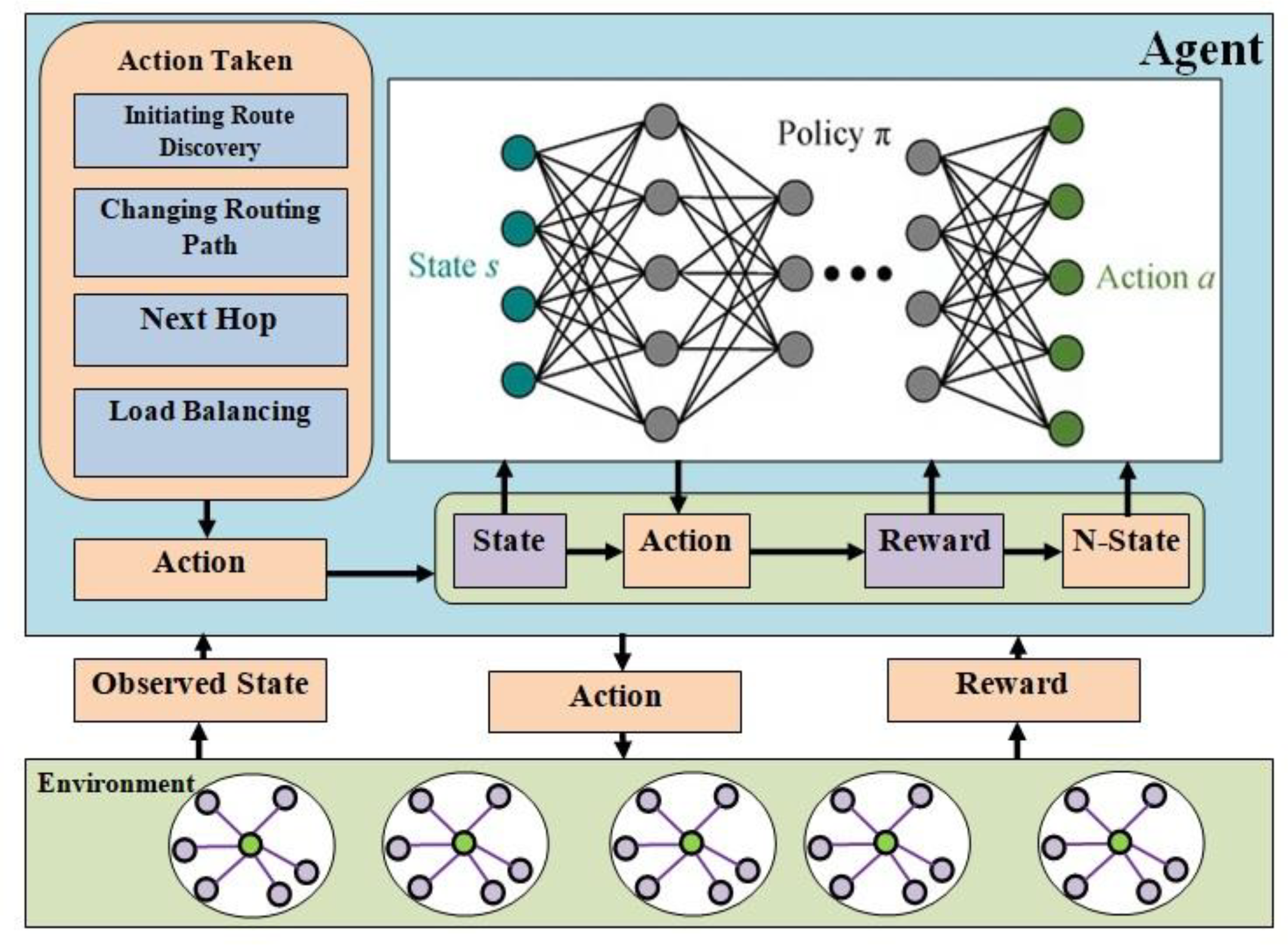
The proposed DRL model in the energy efficient routing process is responsible for the learning and decision making process in routing policies by interacting with the real time network environment as depicted in Figure 5.
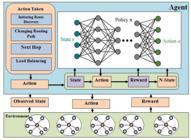
The DRL model is driven by the Markov Decision Process with the state represents the present condition of the sensor nodes to perform the decisive action (Ai) to maximize the long term rewards. The state (Si) is the feature vector derived from the neuro-fuzzy logic as defined in Equation 20.
The state agent interacts with the node environment to perform the state interaction and is represented by probability of moving the present state to the next state with reference to the present action as defined in Equation 21.
Where, is the next state, is the present action and is the noise in the present state of transition. The value function of the present state, quantifies the cumulative reward function as defined in Equation 22.
Where, is the value function, is the reward function at time “t” and is the discount factor. The reward function is preceded by the employment of Deep Q network. The decision making process depends on the reward function, next state, and the present action taken which derives the Q function on the basis of Bellman equation as defined in Equation 23.
The equation 23 denotes that the state and the action taken at the present state depends on the network topology and the routing decision taken for the previous communication, thus the network updates itself with the latest information about the topology and the input parameters. The derived Q function is approximated for the determination of loss function using the Deep Neural Networks parameterized by the angle Ө as represented in Equation 24.
Where, the θ represents the target network parameters, and is the quality function of the previous state and actions taken. The algorithm for the DRL based energy efficient routing selection is presented in Table 4.
The proposed algorithm performs the dynamic and energy efficient routing process based on the feedback policies and optimized the routing decision through the exploration, exploitation and by the decision made by the neural networks.
RESULTS AND DISCUSSION
The proposed Neuro-fuzzy based Deep Reinforcement Learning model for energy efficient routing in large scale WSN is implemented using Network Simulator (NS-3) tool, Matlab for the signal processing, Tensorflow for the Deep Reinforcement Learning model implementation and Scikit-fuzzy for the neuro-fuzzy based route optimization process. The specifications of the implemented network is presented in Table 5.
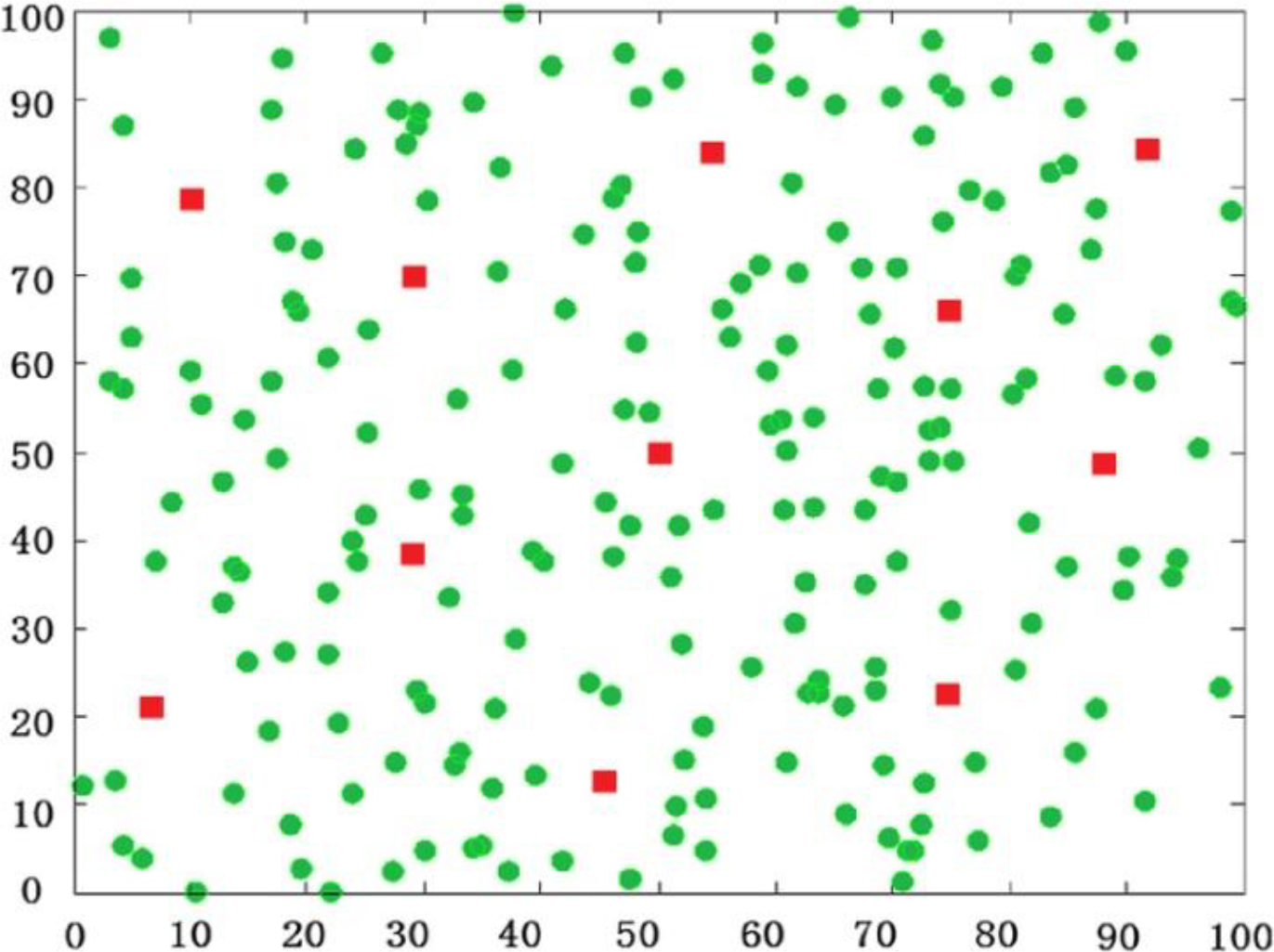
The sensor nodes were deployed in random and the initial network topology simulated using the Network Simulator (NS-3) tool is presented in Figure 6.
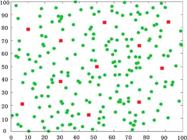
The green dots represent the member sensor nodes and the red squared structure denotes the cluster head at the initial stage. The proposed work is tested for various vital metrics of throughput, end-to-end delay, packet delivery ratio, network lifetime, energy consumption and is compared with the state of art methodologies like Hierarchical Chain-Based (HCB) routing and modified Honey Badger optimization algorithm (m-HBO)[24-28].
The throughput [29] in the large scale WSN is a metric, measuring the rate at which the data is successfully delivered over the communication channel. The throughput is a critical metric [30] for the evaluation of the network performance reflects on how effectively and efficiently the network and the proposed protocol handle the network traffic. The throughput shall be mathematically determined as represented in Equation 29.
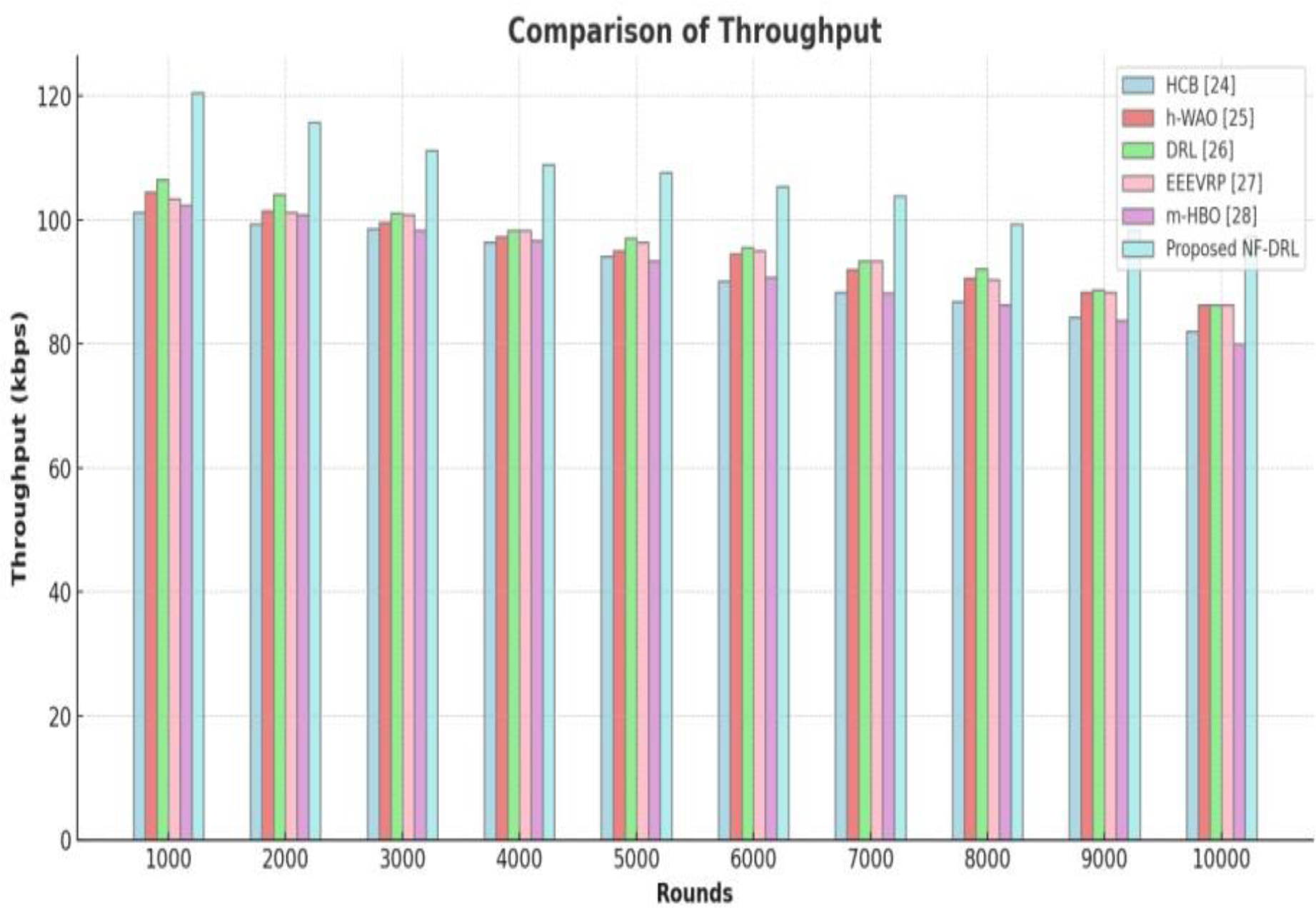
Where, T is the throughput, is the number of successfully received packets, is the packet size and is the total time required transferring the data. The throughput is measured in terms of bits per second (bps) and depends on multiple factors [31] like network topology [32], efficiency [33] of the proposed protocol and the level of congestion in the network channel. The observed value for the throughput [34] for multiple rounds (1000-10000) has been recorded and is presented in Table 6.
The proposed work (NF-DRL) method of energy efficient routing exhibits a major throughput of 120.5kbps for 1000 rounds and slowly diminishes to the maximum of 97.5 kbps which is comparatively high with the state of the art methodologies. The pictorial representation of the throughput analysis is presented in Figure 7.
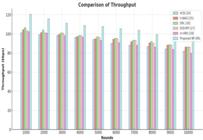
The Neuro-Fuzzy Deep Reinforcement Learning (NF-DRL) based routing achieves high throughput in large-scale Wireless Sensor Networks (WSNs) due to its adaptive and intelligent decision-making capabilities. It leverages neuro-fuzzy systems to handle network uncertainties and uses deep reinforcement learning to optimize routing paths, avoiding congested or energy-depleted nodes. By efficiently balancing traffic loads, minimizing retransmissions, and adapting to dynamic conditions, NF-DRL reduces congestion and energy consumption. Its scalability and fault tolerance further ensure uninterrupted data flow, making it ideal for maintaining high throughput in complex WSN environments. The throughput analysis is followed by the end-to-end delay and packet delivery ratio of the proposed work as tabulated in the Table 7.
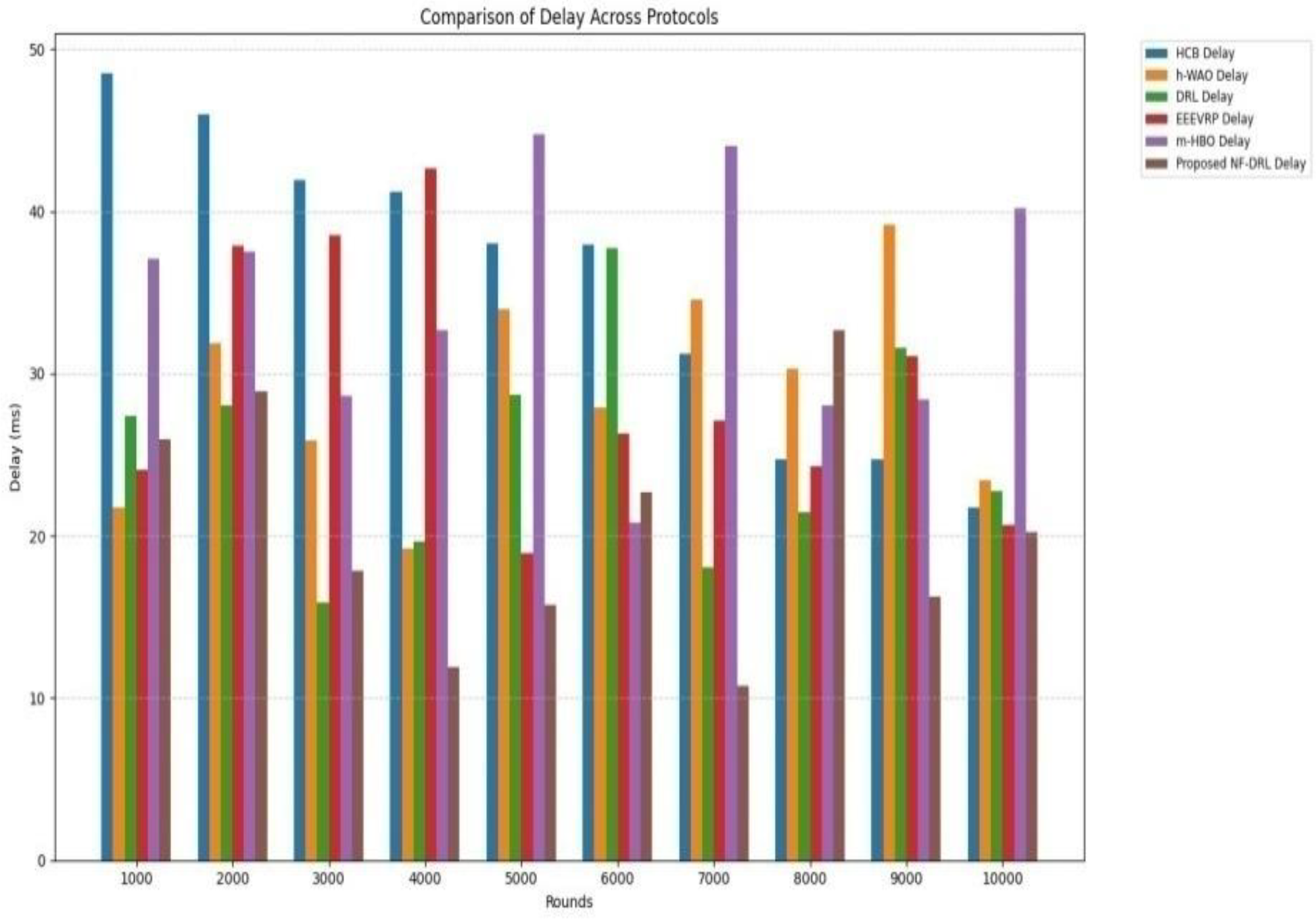
The tabulated values compare the performance of various routing protocols in large-scale WSNs based on delay (in milliseconds) and Packet Delivery Ratio (PDR, in %). The comparison of end-to-end delay is presented in Figure 8.
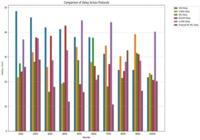
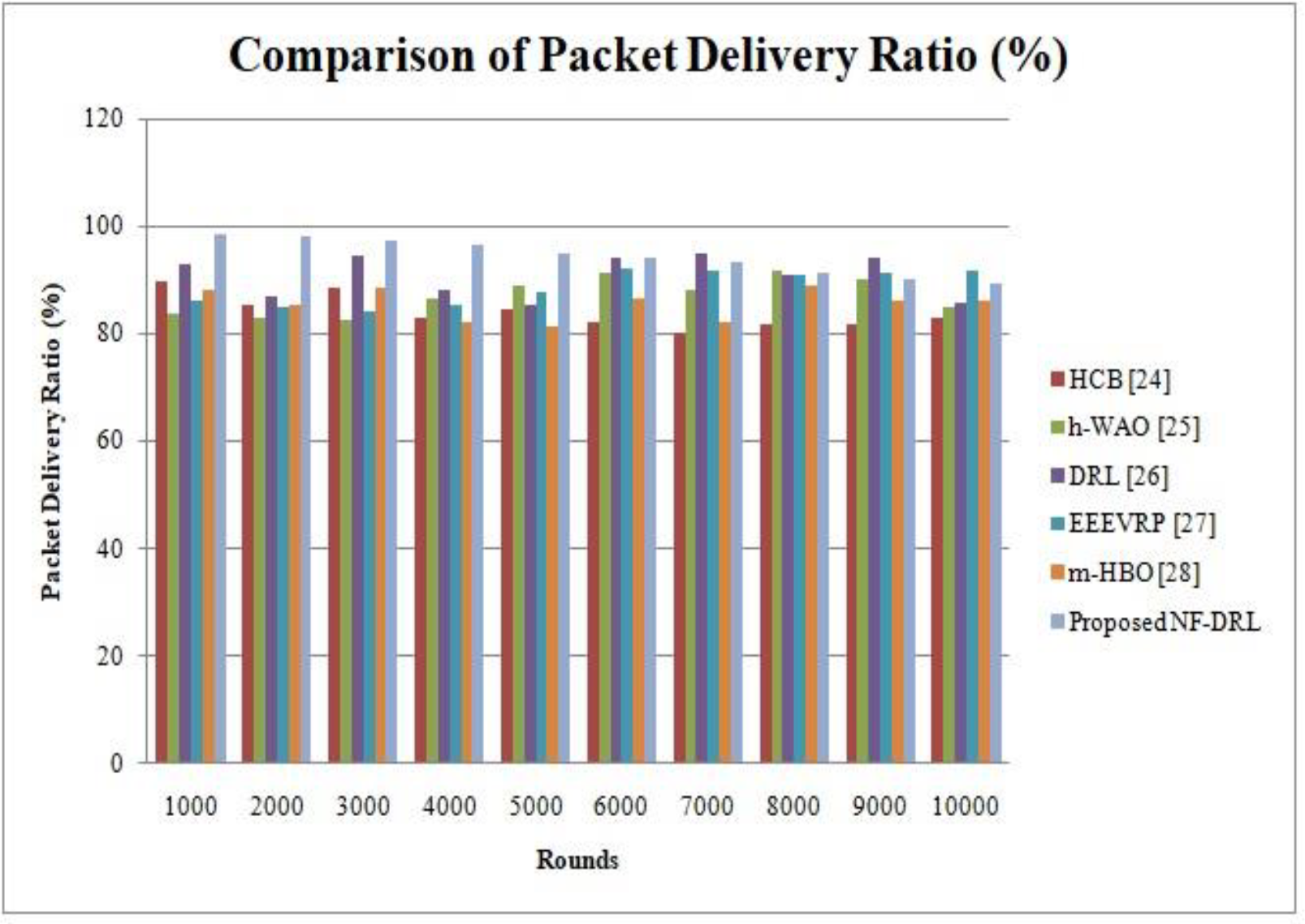
The proposed Neuro-Fuzzy DRL consistently achieves the lowest delay and highest PDR across all rounds, indicating superior efficiency and reliability. Other protocols like DRL and h-WAO exhibit moderate performance, while HCB, m-HBO, and EEEVRP show higher delays and comparatively lower PDR, reflecting limitations in scalability and responsiveness. The comparison of Packet Delivery Ratio (PDR) is presented in Figure 9.
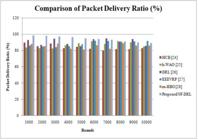
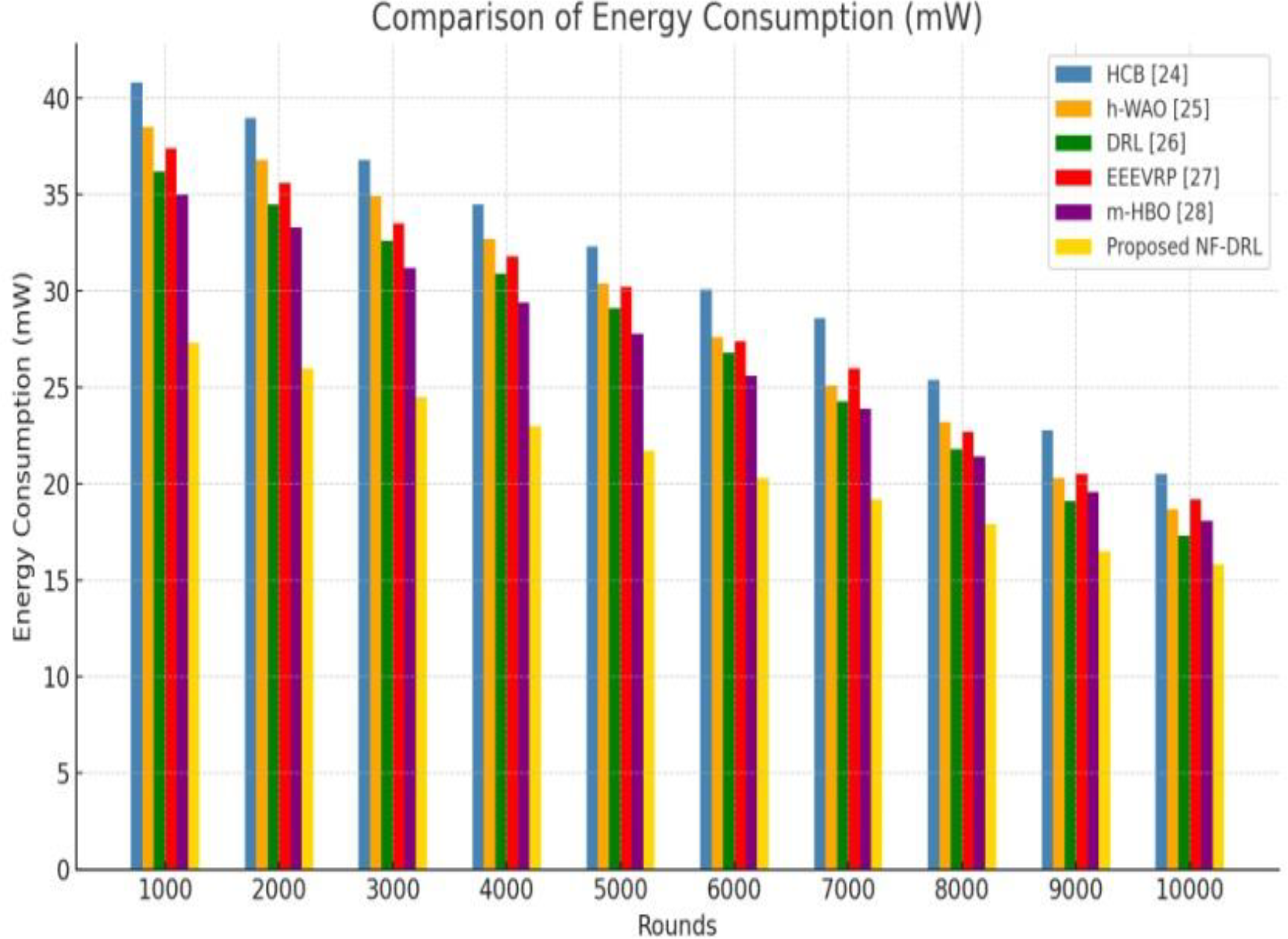
By integrating neuro-fuzzy systems with deep reinforcement learning, NF-DRL effectively balances network traffic, minimizes congestion, and selects energy-efficient paths. The neuro-fuzzy approach enhances learning by combining human-like reasoning with computational efficiency, while DRL optimizes routing strategies in dynamic network environments. The energy consumption and the network life time are closely related to each other, as the node consuming large amount of energy will have a reduced life time, thus proving that the energy consumption and network lifetime are inversely proportional to each other. The observed values of the energy consumption and network life time are tabulated in Table 8 and 9.
The Neuro-Fuzzy Deep Reinforcement Learning (NF-DRL) model exhibits minimal energy consumption compared to HCB, m-HBO, h-WAO, DRL, and EEEVRP due to its adaptive and intelligent decision-making capabilities. By integrating neuro-fuzzy logic, the model efficiently balances computational and communication tasks, reducing redundant transmissions and optimizing energy use. Its reinforcement learning component dynamically learns optimal routing strategies based on real-time network conditions, minimizing energy wastage. Additionally, the NF-DRL model's ability to predict and prevent energy hotspots through load balancing enhances overall energy efficiency. These advanced features collectively enable the NF-DRL model to achieve superior energy conservation in large-scale wireless sensor networks and is depicted in Figure 10.
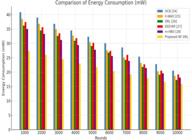
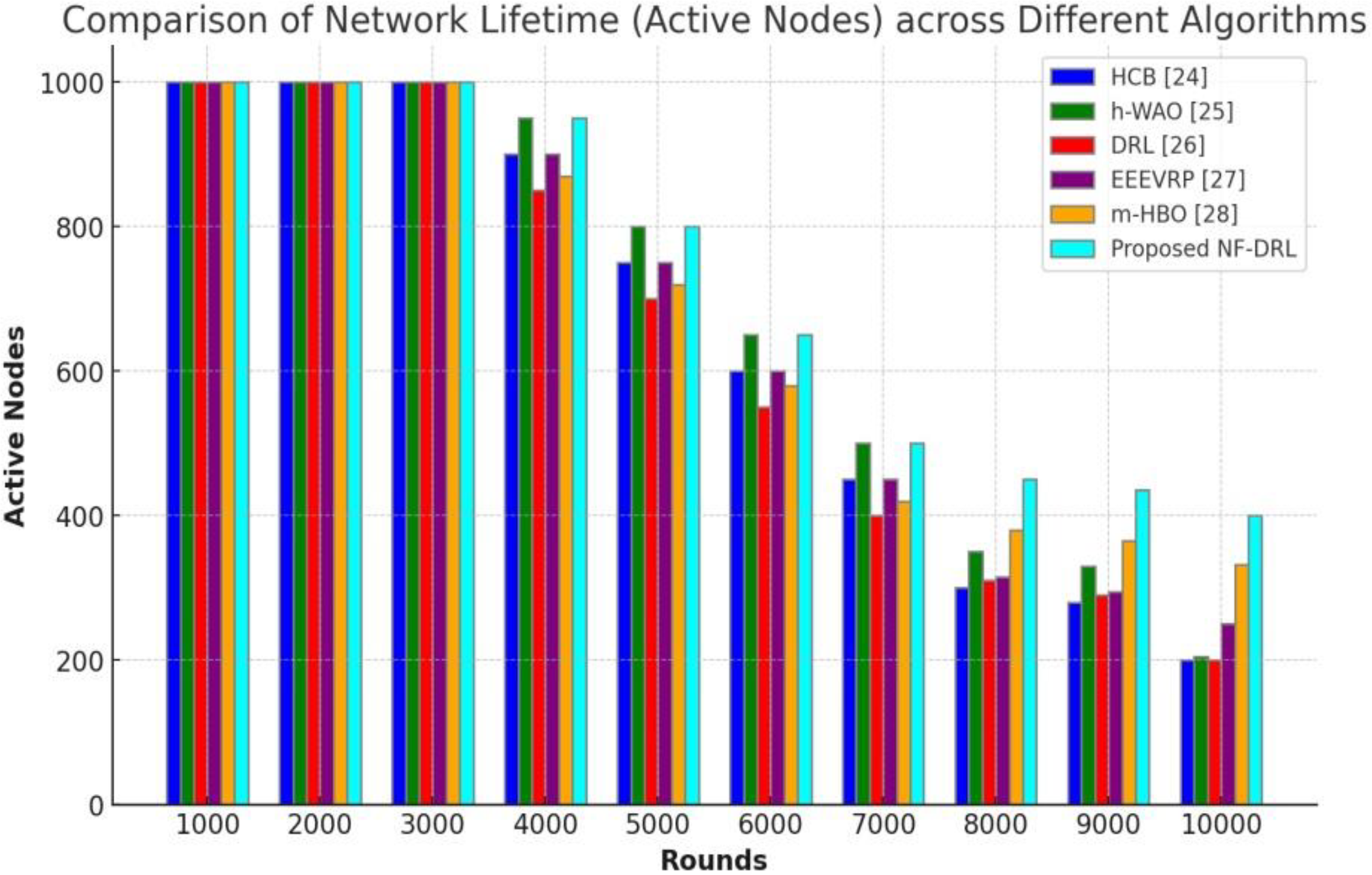
The Neuro-Fuzzy DRL method enhances network lifetime by optimizing energy-efficient routing. It minimizes energy consumption through intelligent decision-making, balancing energy loads across nodes, and avoiding energy hotspots. The observed values of network lifetime is presented in Table 9.
The Proposed Neuro-Fuzzy Deep Reinforcement Learning (NF-DRL) algorithm exhibits better network lifetime compared to HCB, m-HBO, h-WAO, DRL, and EEEVRP due to its ability to adaptively optimize routing decisions through a combination of neuro-fuzzy systems and deep reinforcement learning techniques. Unlike traditional algorithms such as HCB, m-HBO, and EEEVRP, which rely on predefined heuristics or static routing protocols, NF-DRL leverages the power of machine learning to continuously learn and refine its routing strategy based on real-time network conditions. The comparative analysis is depicted in Figure 11. The performance of the proposed work is compared with the state of art methods and is presented in Table 10.
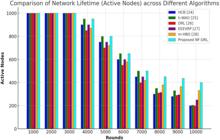
The neuro-fuzzy system within NF-DRL enables the algorithm to handle uncertainties and dynamic network behaviors by using fuzzy logic to model and process imprecise information. This allows NF-DRL to make more intelligent and context-aware decisions, improving energy efficiency and reducing unnecessary energy consumption. Additionally, the deep reinforcement learning component enables NF-DRL to optimize routing decisions over time, considering long-term network performance rather than just immediate outcomes. As a result, NF-DRL is able to distribute the energy consumption more evenly across nodes, reduce the risk of early node depletion, and enhance the overall longevity of the network. This dynamic, data-driven approach leads to a higher number of active nodes over multiple rounds, significantly improving network lifetime compared to the traditional methods.
The proposed Neuro-Fuzzy Deep Reinforcement Learning-based routing algorithm achieves 30% higher energy efficiency and extends network lifetime by 28%.It also improves packet delivery ratio by 18% and throughput by 22%, while reducing end-to-end delay and routing overhead. A 25% scalability improvement ensures stable and efficient network operation. These results make it ideal for life science and biological applications, enabling reliable and continuous monitoring.Overall, the work strengthens the connection between Life and Technology, promoting sustainable smart solutions.
CONCLUSION
The proposed Neuro-Fuzzy Deep Reinforcement Learning (NF-DRL) algorithm demonstrates remarkable performance in achieving energy-efficient routing in large-scale Wireless Sensor Networks (WSNs). By leveraging the adaptive decision-making capabilities of reinforcement learning and the interpretability of fuzzy logic, the NF-DRL algorithm optimizes routing paths to minimize energy consumption while maintaining high network performance. The results validate its effectiveness, showcasing a throughput of 120.5 kbps, an impressively low delay of 25.91 ms, and a packet delivery ratio of 98.32%. Energy efficiency is a standout feature, with consumption as low as 27.3 mW, enabling a prolonged network lifetime of 400 active nodes over 10,000 operational rounds. These results provide direct reinforcement for applications within the domains of agronomy, healthcare surveillance, alimentary and ecological sciences, as well as other practical biological frameworks, wherein uninterrupted and dependable data transfer is of paramount importance. In summary, the research fortifies the relationship between biological life and technological advancements, thereby advocating for sustainable and intelligent solutions.
Future enhancements can focus on several aspects. Incorporating predictive analytics using advanced machine learning techniques could further improve routing decisions by anticipating network dynamics and traffic patterns. The integration of blockchain for secure data transmission can enhance data integrity and resilience against attacks. Moreover, extending the algorithm to accommodate heterogeneous networks and mobility scenarios could broaden its applicability to dynamic and diverse IoT ecosystems.The proposed NF-DRL algorithm is highly applicable in real-world scenarios. For instance, in smart cities, it can help manage traffic more efficiently by routing sensor data quickly and reliably. In agriculture, it supports large-scale, energy-efficient monitoring of soil and crop health, which is essential for precision farming. In industrial settings, it enables better predictive maintenance by ensuring timely data transmission across complex IoT networks.
-
Funding:
No funding
Acknowledgments:
I would like to extend my acknowledgement to the management of Sri Venkateswara College of Engineering for providing research infrastructure.
Data Availability Statement:
The research data are only available upon request for corresponding author.
REFERENCES
-
1 ElSawy H, Zhaikhan A, Kishk MA, Alouini M. A tutorial-cum-survey on percolation theory with applications in large-scale wireless networks. IEEE CommunSurv Tutor. 2024;26(1):428-60. https://doi.org/10.1109/COMST.2024.3356729
» https://doi.org/10.1109/COMST.2024.3356729 -
2 Chandrasekaran K, Chinnasamy K. Query-based location aware energy efficient secure multicast routing for wireless sensor networks using fuzzy logic. TehVjesn. 2023;30(6). https://doi.org/10.17559/TV-20230307000418
» https://doi.org/10.17559/TV-20230307000418 -
3 Señor J, Portilla J, Portela-García M. Performance analysis of postquantum cryptographic schemes for securing large-scale wireless sensor networks. IEEE Trans Ind Inform. 2024;20(10):12339-49.https://doi.org/10.1109/TII.2024.3382364
» https://doi.org/10.1109/TII.2024.3382364 -
4 Thangam S, Sai Samhitha JS, Sagar KA, Yaswanth JS, Haritha K. Early forest fire prediction system using wireless sensor network. In: 2024 2nd Int Conf Device Intelligence, Computing and Communication Technologies (DICCT); 2024. p. 232-7. https://doi.org/10.1109/DICCT61728.2024.10562230
» https://doi.org/10.1109/DICCT61728.2024.10562230 -
5 Thiruppathi M, Vinoth Kumar K. Seagull optimization-based feature selection with optimal extreme learning machine for intrusion detection in fog-assisted WSN. TehVjesn.2023;30(5).https://doi.org/10.17559/TV-20230130000295
» https://doi.org/10.17559/TV-20230130000295 -
6 Baptista R, Haswell CA, Thomas G. Spectral mapping of the spiral structures in IP Pegasi on the decline from an outburst. Mon Not R Astron Soc. 2002;334(1):198-208. https://doi.org/10.1046/j.1365-8711.2002.05400.x
» https://doi.org/10.1046/j.1365-8711.2002.05400.x -
7 Su H, Qiu Q, Chen X, Zeng Z. Distributed adaptive containment control for coupled reaction-diffusion neural networks with directed topology. IEEE Trans Cybern. 2022;52(7):6320-30. https://doi.org/10.1109/TCYB.2020.3041977
» https://doi.org/10.1109/TCYB.2020.3041977 -
8 Shu W, Nie S, Hu F. AK-GPSR: an adaptive K-medoids-based greedy perimeter stateless routing algorithm for multi-channel vehicular network communication. IEEE Trans IntellTransp Syst. 2024;25(11):19100-9. https://doi.org/10.1109/TITS.2024.3384059
» https://doi.org/10.1109/TITS.2024.3384059 -
9 Ramachandran S, Prabakaran D. A novel deep reinforcement learning (DRL) method for detecting evasion attack in IoT environment. In: 2024 Int Conf Integrated Circuits and Communication Systems (ICICACS); 2024. p. 1-6. https://doi.org/10.1109/ICICACS61530.2024.10561691
» https://doi.org/10.1109/ICICACS61530.2024.10561691 -
10 Fan B, Xin Y. A clustering and routing algorithm for fast changes of large-scale WSN in IoT. IEEE Internet Things J. 2024;11(3):5036-49. https://doi.org/10.1109/JIOT.2023.3347411
» https://doi.org/10.1109/JIOT.2023.3347411 -
11 Liu H, Chen R, Zhang J, Jiang Z, Lu G. Optimizing data transmission in large-scale sensor networks using UAVs: a segmentation-clustering and sequential approach. IEEE Sens J. 2024;24(16):26770-87. https://doi.org/10.1109/JSEN.2024.3410172
» https://doi.org/10.1109/JSEN.2024.3410172 -
12 Zhou L, Zhang M, Wei Q, Jin Y, Wang S, Yan J. Energy-distance-function-based improved K-means for clustering routing algorithm. IEEE Internet Things J. 2024;11(22):36763-74. https://doi.org/10.1109/JIOT.2024.3443160
» https://doi.org/10.1109/JIOT.2024.3443160 -
13 Cai L, Luo L, Li Z, Xiong Z. Game-based dynamic clustering routing strategy for mobile wireless sensor networks. IEEE Internet Things J. 2024;11(15):26481-91. https://doi.org/10.1109/JIOT.2024.3431619
» https://doi.org/10.1109/JIOT.2024.3431619 -
14 Gantassi R, Messous S, Masood Z, Sias QA, Choi Y. Enhanced network QoS in large scale and high sensor node density wireless sensor networks using (IR-DV-Hop) localization algorithm and mobile data collector (MDC). IEEE Access. 2024;12:37957-73. https://doi.org/10.1109/ACCESS.2024.3383058
» https://doi.org/10.1109/ACCESS.2024.3383058 -
15 Krishnan R, Muniyandi A, Kalimuthu VK, Pelavendran MJ. A multi-layer guidance approach for submerged sensor networks integrating acoustic and optical technologies. TehVjesn. 2024;31(3):824-31. https://doi.org/10.17559/TV-20240131083259
» https://doi.org/10.17559/TV-20240131083259 -
16 Udayaprasad PK, Subbiah V, Elakkiya B, et al. Energy efficient optimized routing technique with distributed SDN-AI to large scale I-IoT networks. IEEE Access. 2024;12:2742-59. https://doi.org/10.1109/ACCESS.2024.3346034
» https://doi.org/10.1109/ACCESS.2024.3346034 -
17 Ismail AS, Abdel-Basset M, Moustafa EB, El-Hoseny H, El-Kenawy ESM. RBEER: rule-based energy-efficient routing protocol for large-scale UWSNs. IEEE Trans Green CommunNetw. 2024;8(3):1168-81. https://doi.org/10.1109/TGCN.2024.3381469
» https://doi.org/10.1109/TGCN.2024.3381469 -
18 Wang D, Li W, Pan J. Large-scale mixed traffic control using dynamic vehicle routing and privacy-preserving crowdsourcing. IEEE Internet Things J. 2024;11(2):1981-9. https://doi.org/10.1109/JIOT.2023.3339994
» https://doi.org/10.1109/JIOT.2023.3339994 -
19 Zhu W, Yang X, Wu T, Qiu Y. A routing algorithm for underwater acoustic-optical hybrid wireless sensor networks based on intelligent ant colony optimization and energy-flexible global optimal path selection. IEEE Sens J. 2024;24(10):17116-26. https://doi.org/10.1109/JSEN.2024.3404853
» https://doi.org/10.1109/JSEN.2024.3404853 -
20 Chang X, Wang J. UCNSR: underwater wireless sensor networks clustered routing protocol based on core node set. IEEE Sens J. 2024;24(23):39822-34. https://doi.org/10.1109/JSEN.2024.3429870
» https://doi.org/10.1109/JSEN.2024.3429870 -
21 Krishna VR, Sukanya V, Hameed MA. Optimizing wireless sensor network longevity with hierarchical chain-based routing and vertical network partitioning techniques. Meas Sens. 2024;36:101390. https://doi.org/10.1016/j.measen.2024.101390
» https://doi.org/10.1016/j.measen.2024.101390 -
22 Kumar N, Singh K, Lloret J. WAOA: a hybrid whale-ant optimization algorithm for energy-efficient routing in wireless sensor networks. ComputNetw. 2024;254:110845. https://doi.org/10.1016/j.comnet.2024.110845
» https://doi.org/10.1016/j.comnet.2024.110845 -
23 Suresh SS, Prabhu V, Parthasarathy V, Senthilkumar G, Gundu V. Intelligent data routing strategy based on federated deep reinforcement learning for IoT-enabled wireless sensor networks. Meas Sens. 2024;31:101012. https://doi.org/10.1016/j.measen.2024.101012
» https://doi.org/10.1016/j.measen.2024.101012 -
24 Abdou M, Amer HM, Abdelsalam MM, Khalil AT. EVRP: a novel geometrical based energy efficient eye vision routing protocol for wireless sensor networks based on the k-means algorithm. Ad Hoc Netw. 2024;160:103528. https://doi.org/10.1016/j.adhoc.2024.103528
» https://doi.org/10.1016/j.adhoc.2024.103528 -
25 Sathya G, Balasubramanian C. Hybrid boosted chameleon and modified Honey Badger optimization algorithm-based energy efficient cluster routing protocol for cognitive radio sensor network. Sustain Comput Inform Syst. 2024;43:101023. https://doi.org/10.1016/j.suscom.2024.101023
» https://doi.org/10.1016/j.suscom.2024.101023 -
26 Al-Mekhlafi ZG, Al-Shareeda MA, Manickam S. Chebyshev polynomial-based fog computing scheme supporting pseudonym revocation for 5G-enabled vehicular networks. Electronics. 2023;12(4):872. https://doi.org/10.3390/electronics12040872
» https://doi.org/10.3390/electronics12040872 -
27 Al-Shareeda MA, Anbar M, Manickam S, Khalil A, Hasbullah IH. Security and privacy schemes in vehicular ad-hoc network with identity-based cryptography approach: a survey. IEEE Access. 2021;9:121522-31. https://doi.org/10.1109/ACCESS.2021.3109641
» https://doi.org/10.1109/ACCESS.2021.3109641 -
28 Abbood A, Al-Shammri FK, Alzamili ZM, Al-Shareeda MA, Almaiah MA, AlAli R. Investigating quantum-resilient security mechanisms for flying ad-hoc networks (FANETs). J Robot Control. 2025;6(1). https://doi.org/10.18196/jrc.61169
» https://doi.org/10.18196/jrc.61169 -
29 Balakrishnan S, Vinoth Kumar K. Hybrid sine-cosine black widow spider optimization-based route selection protocol for multihop communication in IoT assisted WSN. TehVjesn. 2023;30(4). https://doi.org/10.17559/TV-20230201000306
» https://doi.org/10.17559/TV-20230201000306 -
30 Panchal AA, Singh RK. EEHCHR: energy efficient hybrid clustering and hierarchical routing for wireless sensor networks. Ad Hoc Netw. 2021;123:102692. https://doi.org/10.1016/j.adhoc.2021.102692
» https://doi.org/10.1016/j.adhoc.2021.102692 -
31 Ranjith V, Yaashuwanth C, Prathibanandhi K, Jayasankar T. Adaptive energy-efficient routing for video transmission in wireless multimedia sensor network using greedy algorithm. TehVjesn. 2025;32(4). https://doi.org/10.17559/TV-20240902001960
» https://doi.org/10.17559/TV-20240902001960 -
32 Panchal BA, Singh RK. EOCGS: energy efficient optimum number of cluster head and grid head selection in wireless sensor networks. Telecommun Syst. 2021;78(1):1-13. https://doi.org/10.1007/s11235-021-00873-z
» https://doi.org/10.1007/s11235-021-00873-z -
33 Singh RK, Verma S, Panchal A, Dubey S. Modified RCH-LEACH (MRCH) for wireless sensor networks. In: Yang XS, Sherratt S, Dey N, Joshi A, editors. Proc Ninth IntCongrInfCommunTechnol (ICICT 2024). Lecture Notes in Networks and Systems, vol. 1013. Singapore: Springer; 2024. p. 1-9. https://doi.org/10.1007/978-981-97-1191-9_1
» https://doi.org/10.1007/978-981-97-1191-9_1 -
34 Kavitha RJ, Anandavalli P. An efficient Scyphozoa swarm optimization and fuzzy density-based clustering routing for underwater wireless sensor networks. TehVjesn. 2024;31(5). https://doi.org/10.17559/TV-20231121001131
» https://doi.org/10.17559/TV-20231121001131
-
Editor-in-Chief:
Alexandre Rasi Aoki
-
Associate Editor:
Alexandre Rasi Aoki