 Effect of Packaging Materials, Storage Methods, and Durations on the Functional Quality of the Red Hot Pepper (Capsicum annum L.) Powder
Abstract
This study aimed to investigate the effect of packaging material, storage methods, and duration on the functional properties of red pepper powder during a ten-month storage period. Samples were packed in Low-density, high-density, black low-density polyethylene, and aluminum pouches and kept at ambient and refrigerated conditions. A significant (p<0.001) interaction of effect of the three factors was observed for all parameters except for MC and PI. The percentage of TCC lost was 8.41%, 14.19%, 21.23%, and 30.68% in ALP, HDPE, LDPE, and BLDPE under refrigerated storage, and 10.91%, 17.65%, 25.01%, and 52.02%, respectively, in the same bags at ambient. The loss in Oleoresin content was 44.34%, 37.82%, 37.25%, and 20.77% at ambient, and 32.27%, 27.25%, 28.16%, and 13.42% under refrigeration in ALP, HDPE, BLDPE, and LDPE, respectively. The percentage of TAOC lost was 46.76%, 56.40%, 66.22%, and 61.52%, under refrigeration; and 57.29%, 67.45%, 68.50%, and 66.36%, respectively, at ambient storage, for ALP, HDPE, BLDPE, and LDPE. AlP maintained high qualities during the storage, due to the lower permeability of the AlP outer environment. Finally, further study on the safety and other nutritional qualities of the product is needed.
Keywords:
Red hot pepper; Temperature; Carotenoids; Pungency; Oleoresin.
HIGHLIGHTS
The packaging materials and storage had a significant interaction effect on TCC, oleoresin & TOAC.
The quality of all samples reduced with an increasing of storage except for moisture content.
Aluminium poach preserved high quality of the product at the end of the storage.
INTRODUCTION
Hot red pepper's (Capsicum annum L.) unique pungency, aroma, color, and nutritional and medicinal qualities are highly prized [1,2]. It is a vegetable, spice, condiment, dried good, or processed product. It is the second most important vegetable in the world, after tomatoes [3]. With an annual production of over 16,721,691 million metric tonnes, China is the world's largest producer in 2023. Turkiye comes second with about 3,091,295 metric tonnes [4]. In Ethiopia, red hot pepper powder, or "berbere," is a valuable commodity and everyday food due to its therapeutic properties, colour, pungency, and other valuable attributes [5].
Ethiopia harvested 2,959,805.08 quintals of dry pepper and 6,433.73 quintals of green pepper from 168,345.57 hectares in 2021 [6]. According to the Central Statistical Agency (CSA), red pepper took a share of 73.13% of the area covered by vegetable production, followed by kale, which took 17.81% [7]. Despite the large production, research showed that postharvest loss is one of the primary issues with the red hot pepper postharvest system. According to Castelein and coauthors [8], the total extent of post-harvest loss of red pepper ranged from 5-45% at different stages of the post-harvest system. In Ethiopia, the primary causes of loss are inappropriate packaging materials and the high cost of hermetic packaging materials [9]. As an illustration, Yeshiwas and Tadele [10] reported 27.56% of an estimated postharvest loss, which included losses from marketing, transportation, and storage of 10%, 10%, and 7.56%, respectively. Comparably, Fufa [11] documented losses from loading and unloading, transportation, water addition, and incorrect drying of 1-2%, 1%, 5-10%, and 5%, respectively.
Besides, Addala and coauthors [12] revealed that storage conditions influence the rate at which the color of paprika-based products deteriorates. Products stored at high temperatures and humidity levels showed a faster rate of colour degradation than those stored at room temperature. Furthermore, the review discusses using packaging materials resistant to light, moisture, humidity, and oxygen to safeguard against harsh environmental conditions [13]. Furthermore, because of the breakdown of carotenoid pigments and the emergence of browning compounds, rising temperatures and water activity cause pepper powder's red colour to turn brown or black [14]. According to reports, the primary cause of carotenoid degradation is processing, drying, seed removal, and grinding [15,16]. Furthermore, exposing red peppers to direct sun or light during drying and storage reduces the stability of carotenoids [17]. Thus, packaging material to be designed and developed also needs to have the ability to contain, protect, and add value to the food within it [18].
Red pepper is a common element in "berbere powder," which is made by combining red pepper with various spices red pepper having the highest ratio. It is a vital component in the preparation of Ethiopian traditional dishes like "key wot" and "doro wat," where color and aroma are crucial. However, over time, the loss of color and scent quality becomes a significant problem attributed to various factors, including poor packaging, storage conditions, and storage durations. Low-density polyethylene bags and polypropylene are common materials used nationwide for storing hot peppers [9]. Conversely, low-density polyethylene and polypropylene bags are more permeable to oxygen and water vapor [19]. Ethiopians who consume red hot peppers purchase the pods at a discount during the peak harvest seasons, process them, and keep them in storage as spiced powder until the following growing season. Nonetheless, due to a lack of awareness about proper storage techniques, issues such as colour fading and caking of red-hot powder are prevalent during storage. For instance, the packing materials used are not airtight and cannot stop moisture diffusion, which leads to the oxidation and contamination of aflatoxin. According to Goshme and Ayele [20], Ethiopians are not well-informed about cultivating, processing, marketing, and storing spices. Additionally, a study on the packaging of red hot pepper powder was recommended [21]. However, research on red hot pepper powder storage solutions and packaging suitable for growers, dealers, and consumers in Ethiopia has not yet been conducted. Therefore, this study aimed to investigate the effects of packaging material, storage method, and storage duration on the functional qualities of red-hot pepper powder.
MATERIALS AND METHODS
Sample collection and preparation
The sample preparation, processing, and laboratory analysis were conducted at Ambo University's Biology and Chemistry laboratories. The commercially available hot pepper variety that has wide acceptance, namely Mareko Fana, was bought from farmers from Jimma Zone, Asendabo District. The fruits were dried under the sun until the pods achieved constant weight. The moisture content of dried samples was determined using the forced-air oven (Leicester, LE67 5FT, England) drying method [22]. The dried red-hot pepper pods were sorted to remove the stalk, debris, soil, malformed, bleached, and diseased pods. The samples were milled using KARLBOLB D-6072, Dreich, West Germany, Miller, and sieved by a 0.5mm mesh wire to obtain uniform particle size. The powder was packed in black polyethylene sheets, Aluminum foil laminate pouches, low-density polyethylene, and high-density polypropylene bags (Table 1). Samples were carefully thermally sealed using a pedal seaming machine for barrier functions against water vapor and oxygen migration and against loss of volatile aroma and stored for later analysis at ambient (25±2oC) and refrigerated (4±2oC) temperatures.
Packaging materials were chosen for their good sealability, low cost, and barrier capacities to moisture, oxygen, light, aroma, and greasy substances [23]. LDPE was chosen because of its tough, flexible, and slightly translucent material, which provides a good barrier to water vapor but a poor barrier to gases. LDPE has a temperature range of -50°C to +80°C and is commonly used as bags, flexible lids, or bottles. Furthermore, HDPE is stiffer and harder than LDPE and has better oil and grease resistance. It can be used at temperatures ranging from -40°C to +120°C. The aluminum pouch has absolute oxygen, moisture, and light barriers. Since none of them are sealable on their own, we used an additional inner layer of sealable flexible plastics. Black low-density polyethylene (BLDPE) was selected for its light barriers because coloured materials absorb light radiation. Finally, BLDPE was chosen based on its barrier to light because a coloured material absorbs light radiation [24, 25]
Experimental design and treatment combinations
A three-factor factorial design with three replications was used. The three factors are 1) Packaging material (four levels: LDPE, HDPE, BLDPE, and ALP), 2) Storage duration (five levels: 2, 4, 6, 8, and 10 months), and 3 Storage method (ambient and refrigerated conditions). The baseline data used to assess the trend of functional quality indicators was the initial values measured at time zero before the commencement of storage (Table 2).
Data measurement
The moisture content of the samples was determined according to the official method of AOAC [22]. Total carotenoid content was estimated according to the scheme described by Carvalho and coauthors [26]. The pungency of samples was assessed using the technique outlined by Hossain and Bala [27]. Method used by Wesolowska and coauthors [28] to determine the oleoresin content of red hot pepper powder samples. The total antioxidant capacity was determined according to the method of Prieto and coauthors [29].
Statistical analysis
The statistical analysis was conducted using Minitab version 21 software. For each response variable, the validity of model assumptions (normal distribution and constant variance assumptions on the error terms) was verified by examining the residuals as described in Montgomery [30]. The independence assumption was met through random selection of the samples and randomization of the order of the experiment. For significant (p < 0.05) and marginally significant (0.05 < p < 0.1) interaction effects, multiple means comparison of the 40 treatment combinations was made using Tukey's multiple range test at the 5% level of significance to generate letter grouping.
RESULTS AND DISCUSSION
Moisture content (MC)
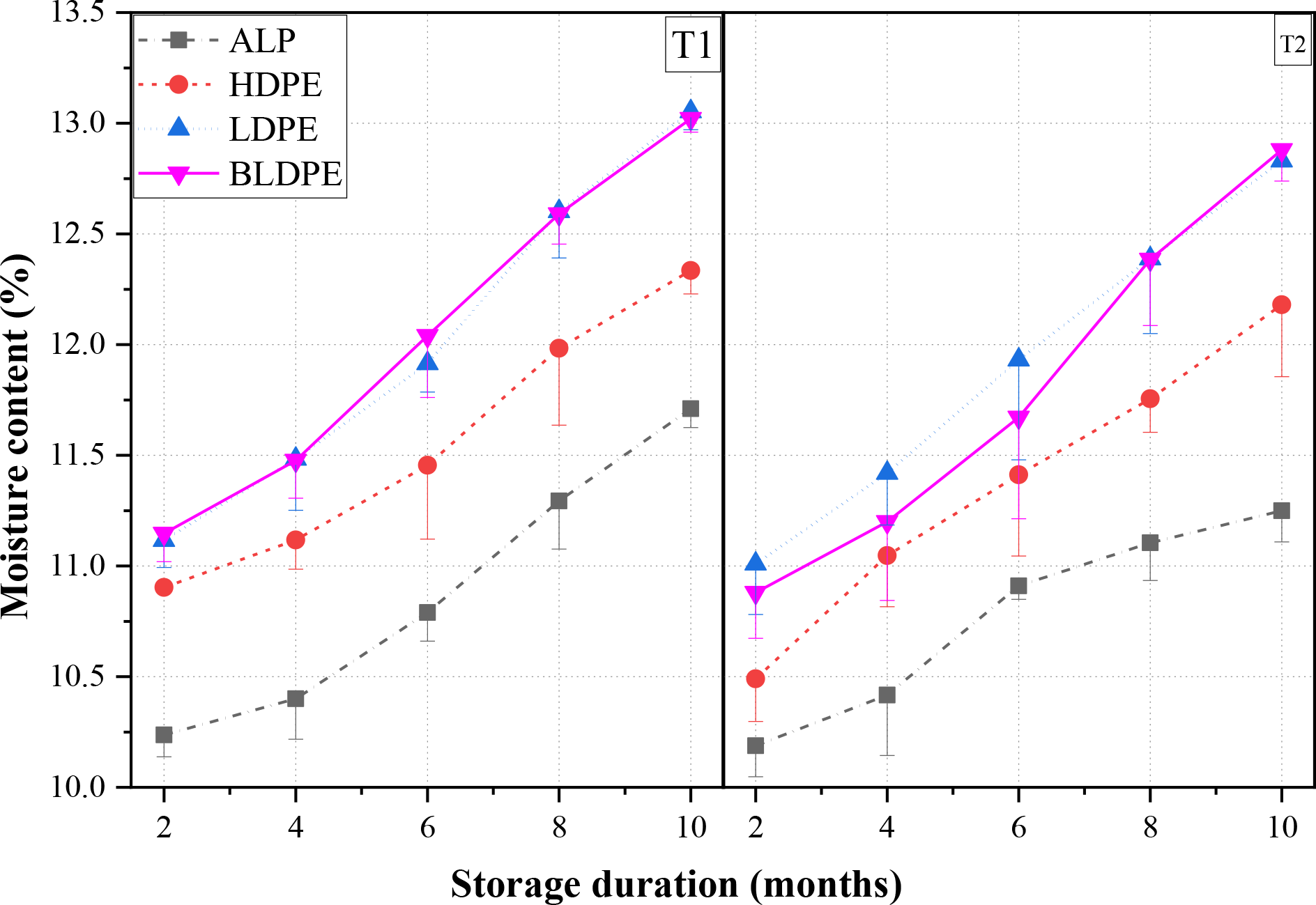
Moisture content of foods significantly influences their stability during storage. According to Iqbal and coauthors [31], the shelf life and storage stability increase with decreasing moisture content. Over ten months of storage under both storage conditions, our study revealed a progressive increase in the moisture content of all samples and storage materials (Figure 1). The packaging materials, storage conditions, and storage durations had no significant twoor three-way interaction effects (p > 0.05) other than the main effects. For ALP, HDPE, LDPE, and BLDP bags, the moisture content increased under refrigerated conditions from 10.24-11.71%, 10.90-12.34%, 11.12-13.03%, and 11.15-12.59%, and under ambient conditions from 10.19-11.25%, 10.49-12.18%, 11.01-12.83%, and 10.88-12.88%, respectively, over two to ten months of storage. This is due to the porosity of packaging materials and the hygroscopic nature of red pepper powder, which resulted in a slight increase in moisture content in all packaging materials under both storage conditions with advanced storage duration [32]. Similarly, Nath and coauthors [33] observed that at room and low temperatures, the moisture content increased from 10.25 to 12.88% and from 10.25 to 18.55%. Red pepper powder kept at a low temperature showed a noticeable shift in moisture content compared to powder kept at room temperature.
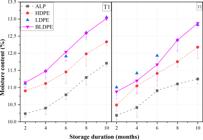
Effect of packaging materials, storage methods and storage duration on moisture content (%) of paper powder. T1 represents refrigerated storage, and T2 represents room temperature storage.
The product packed in ALP packages had a significantly lower increase in moisture content (p<0.05). This is because aluminum-laminate pouches have a lower water vapor transmission rate than other packaging materials, with HDPE plastic bags coming in second. Similarly, Lal and coauthors [34] found that green chili pepper powder in aluminum foil maintained good moisture content stability compared to unpacked products and clear glass jars after three months. After four months of storage, it was also noted that samples of red and yellow peppers packed in aluminum foil had less moisture content than samples packed in polypropylene and HDPE bags Sachidananda and coauthors [19]. Similarly, after six months, mango tablets kept in aluminum laminate packaging materials retained moisture content than those kept in polyethylene bags at varying temperatures (4, 25, and 35oC) and relative humidity (32% and 75%) [35]. The investigation also showed that, regardless of the storage temperature, the moisture content of the chili powder in vacuum-packed bags remains constant, which is also explained by its barrier qualities [33].
Our research also revealed that samples kept in a refrigerator had a higher moisture content (p<0.05) than samples kept in an ambient environment, with the former showing an elevated moisture content. The increasing trend of moisture content was similar in room temperature and refrigerated storage despite the differences in rate. However, in contrast to the samples stored in LDPE and BLDP bags (p<0.05), the moisture content recorded in ALP and HDPE did not differ significantly between the two storage methods (p>0.05). The highest humidity in refrigerated conditions caused the rise in moisture content for samples stored under refrigerated conditions [36].
Total Carotenoid content
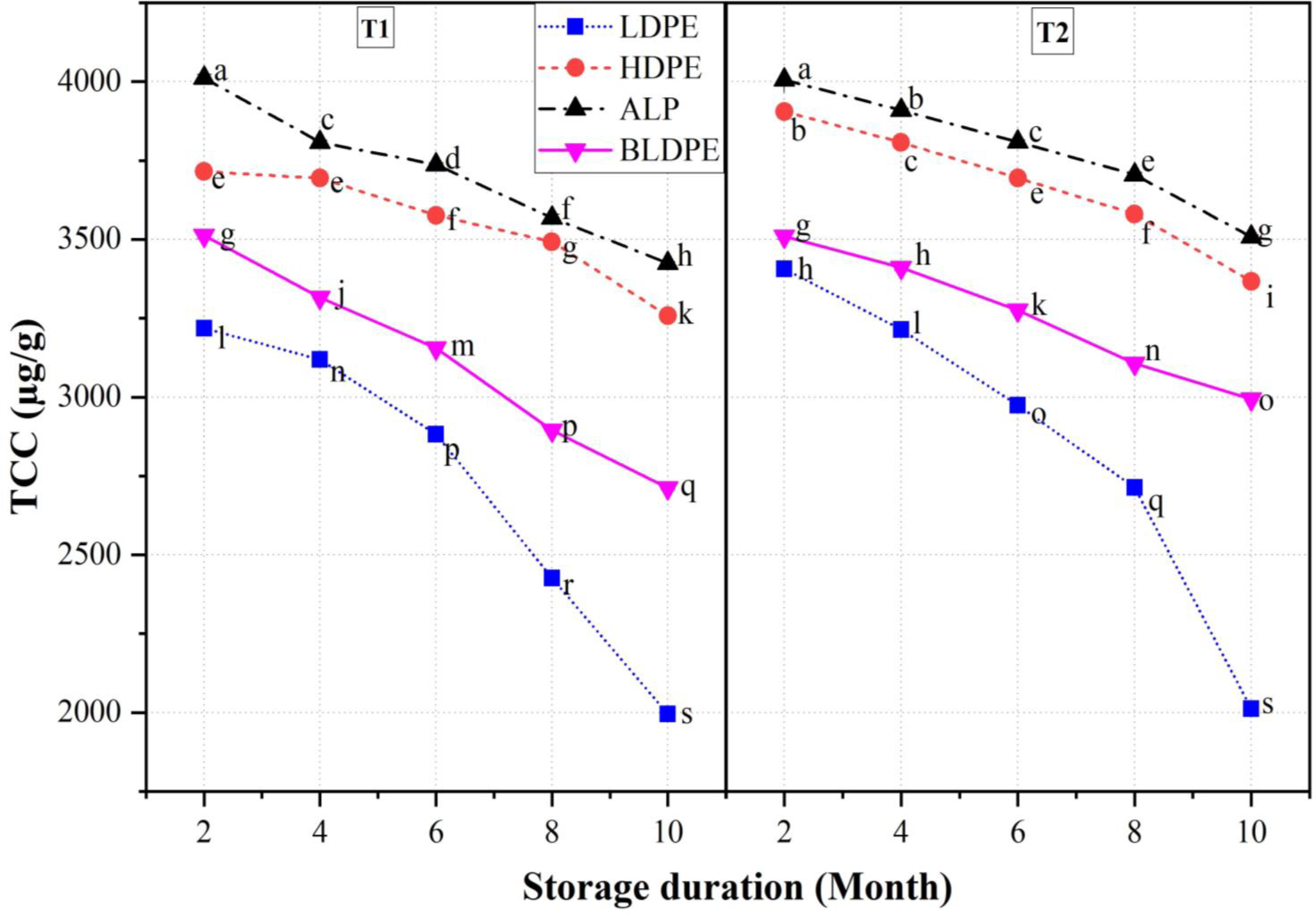
The interaction effect of packaging materials, storage temperature, and storage duration significantly affected the total carotenoid content. The total carotenoid values ranged from 4158.95-3809.03, 4158.95-3568.67, and 4158.95-3275.9 and 4158.95-2882.78 under cold storage, and ranged from 4158.95-3705.34, 4158.95-3424.87, 4158.95-3118.83 and 4158.95-1995.56 under room temperature storage in AlP, HDPE, LDPE, and BLDPE, respectively. The highest value of total carotenoid content was recorded for the samples packed in AlP bags after ten months of storage duration under cold storage temperature, followed by HDPE bags. The minimum value of TCC was recorded for the samples packed in BLDPE bags. Similarly, Praniland coauthors [35] found that low-density polyethylene recorded a maximum loss of beta-carotene at higher temperatures than storage laminated plastic bags. The highest TCC loss is attributed to the high relative humidity, high temperature, increased moisture, and water activity of low-density polyethylene bags because of their higher permeability to moisture.
Moreover, Yao and coauthors [37] reported excessive losses of β-carotene irrespective of packaging systems and storage temperatures after the six-month storage duration is attributed to the free radical activity that is more active at higher temperatures and leads to higher losses of β-carotene over storage. Atencio and coauthors [38] investigated that high temperature, light, and oxygen induce carotenoid losses during storage. Moreover, the severity of carotenoid loss depends on oxygen, while light is used as a catalyst to enhance oxidation [39]. Our experiment results revealed that AlP and HDPE bags exhibited better retention of carotenoids with an extended storage time as compared to other packaging materials that are more prone to the diffusion of oxygen and moisture (Figure 2). It was also reported that packaging materials with higher oxygen and water vapour permeability rates have a much higher rate of carotenoid degradation during storage [40,41].
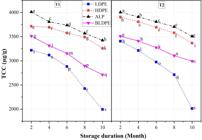
Effect of packing materials, storage methods, and storage duration on total carotenoid content (µg/g) of paper powder. Means sharing the same letter are not significantly different at the α=0.05 level of significance. T1 represents refrigerated storage, and T2 represents room temperature storage.
Pungency index
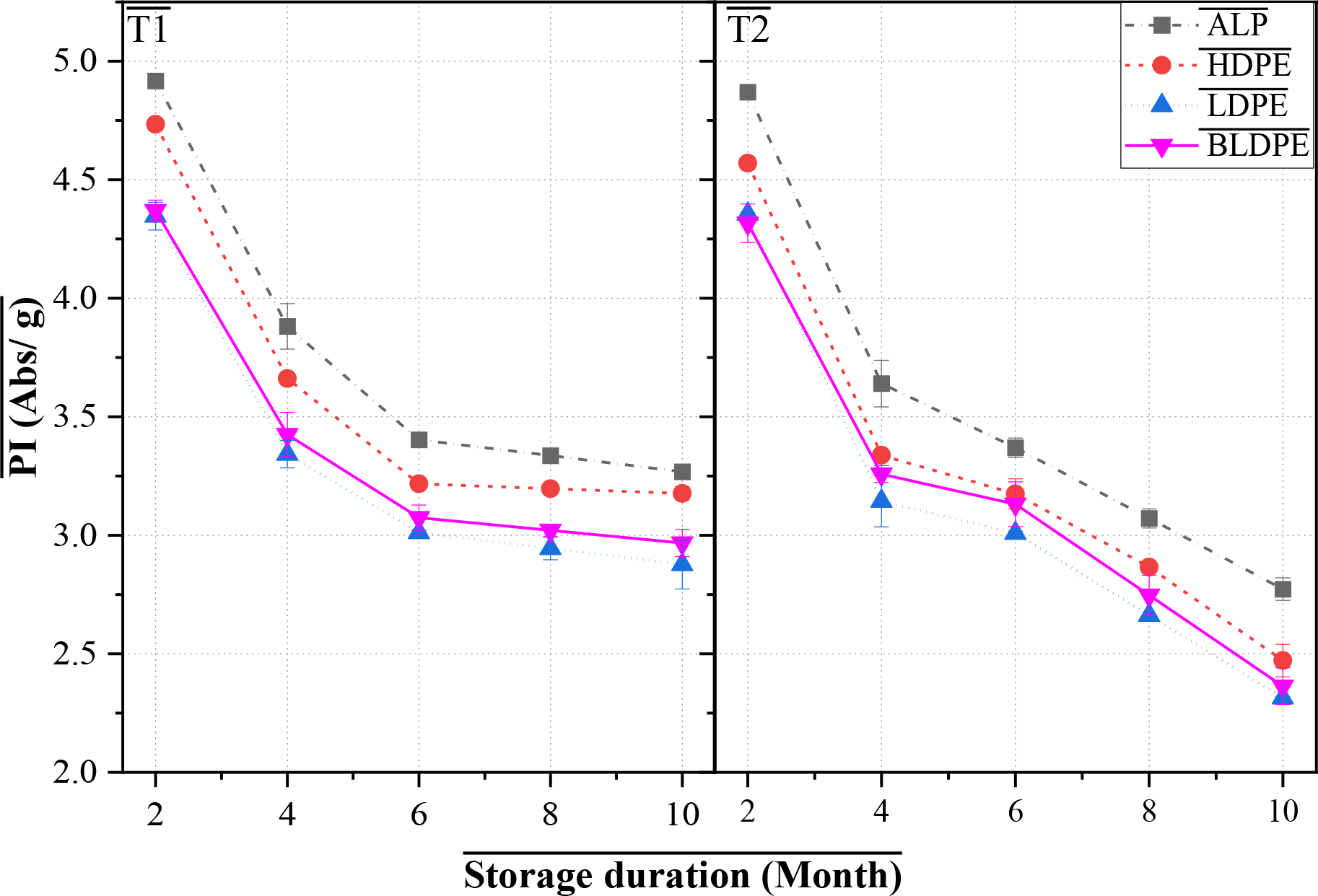
The present study also showed a gradual and steady decrease of the pungency index during storage for ten months (p < 0.001) under both storage conditions (Figure 3). Unlike other parameters, the interaction effects of packaging materials, storage time, and storage conditions did not significantly impacted the pungency index (p > 0.05). However, the one-way and two-way interaction effects were significant (p<0.05). Moreover, the PI decreased by 60.30, 43.28, 50.11%, and 40.11% in LDPE, HDPE, BLDPE, and ALP under refrigerated storage, whereas it decreased by 65.2, 49.11, 55.01, and 45.24% in LDPE, HDPE, BLDPE, and ALP at ambient temperature. The samples stored at ambient temperature showed a higher decrease in PI than at refrigerated temperatures. The degradation rate did not significantly vary in the first four storage months, but a fast decrease was observed after four months of storage in refrigeration. Similarly, Chetti and coauthors [42] reported the stability of capsaicin content for up to 3 months of storage with no significant effects regardless of packaging materials and storage conditions. In addition, there was no loss in capsaicin till six months in all the vacuum-packed samples in all storage conditions (light, dark, or cold storage and the moisture content of the samples’ before packaging); however, there was 12.5% loss from the 9-12 month storage duration without significant difference. They suggested that the deterioration of capsaicin under ambient storage was attributed to oxidation and moisture absorption from the atmosphere due to the higher permeability of jute bags to oxygen and water vapor. In contrast, a quick loss in pungency compounds up to three months rather than three-month storage durations, with minimum loss at room temperature [43]. These researchers suggested that residual enzymatic-induced oxidation is the cause of the rapid decrease in the capsaicin content of chili pepper powder during the first three months of storage. Additionally, Giuffrida and coauthors [44] reported 25% of total capsaicinoids degradation under ambient storage, while no loss of capsaicinoids was recorded under cold storage during one year of storage. This implies that the rate of degradation of capsaicinoids depends on the characteristics of packaging materials that limit the air, moisture, and light permeability.
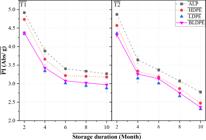
Effect of packing materials, storage methods and storage duration on pungency index (Abs/g) of paper powder. T1 represents refrigerated storage, and T2 represents room temperature storage.
Oleoresin
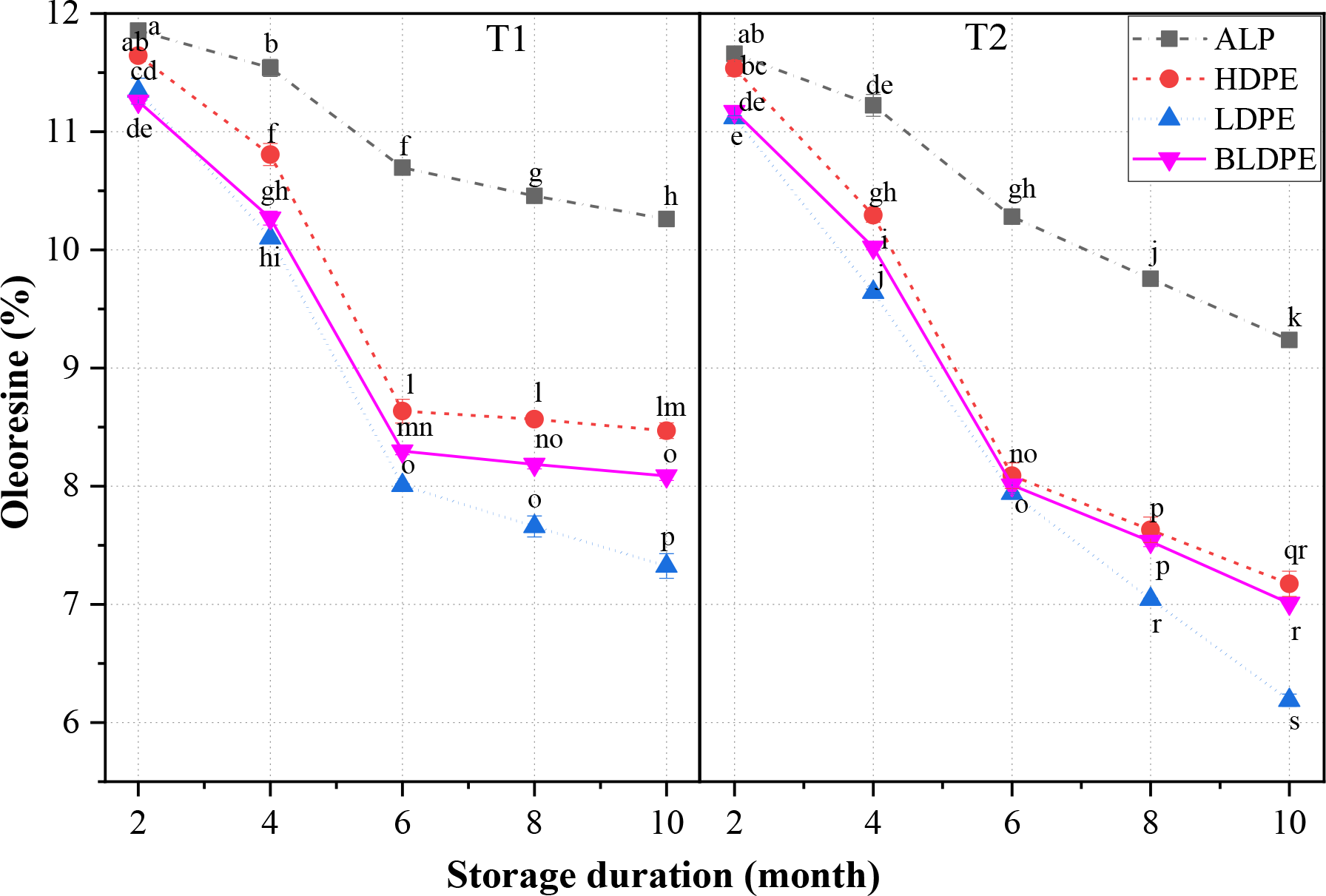
Oleoresin content varied significantly during the ten-month storage duration. The result showed a significant interaction effect of storage durations, packaging materials, and storage conditions on the oleoresin contents of the red hot pepper powder (p<0.05) (Figure 4). Under both storage methods, oleoresin content was decreased across the storage durations in all packaging materials. For instance, oleoresin content loss was 44.34, 37.82, 37.25, and 20.77% at ambient temperature and 32.27, 27.25, 28.16, and 13.42% loss at refrigerated temperature in LDPE, HDPE, BLDPE, and ALP, respectively. The finding showed that room temperature storage caused a maximum loss of oleoresin contents compared to refrigeration temperature storage. A trend of loss of oleoresin content was similar during the first six months for both storage methods. However, after six months, the samples stored at room temperature showed faster degradation than those at refrigerated storage. Similarly, Federzoni and coauthors [45] reported the reduction of oleoresin in paprika at higher temperatures due to the degradation of color. Additionally, Anjaneyulu and Sharangi [46] reported a slow rate of loss of oleoresin endorsed by the oxidative deterioration of the active ingredients, such as carotenoids in chilli peppers at higher temperatures.
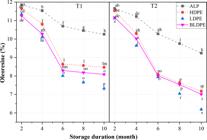
Effect of packing materials, storage methods, and storage duration on oleoresin (percent) water activity of paper powder. Means sharing the same letter are not significantly different at the α=0.05 level of significance. T1 represents refrigerated storage, and T2 represents room temperature storage.
On the other hand, the maximum oleoresin content was preserved in aluminum pouch packaging materials, followed by HDPE bags. The minimum oleoresin content was retained in black low-density polyethylene bags, followed by LDPE bags, under both storage conditions. Similarly, Apriyati and coauthors [47] reported that the degradation of oleoresin in polyethylene terephthalate (PET) bottles, polypropylene (PP) plastic bags, and aluminum foil bags from 15.66% to 5.78%, 5.66%, and 6.16% after nine months of storage of ginger. Accordingly, a higher degradation rate of oleoresin in plastic materials was due to its permeability to gas, aroma, and water. In our present study, oleoresin can be stored in all packaging materials for up to ten months under refrigerated storage, though aluminum pouches were the best. Additionally, aluminum pouches recorded the best preservation for up to ten months at room temperature. HDPE and BLDPE bags showed better oleoresin retention capacity, followed by LDPE at ten months of storage.
Total antioxidant capacity (TAC)
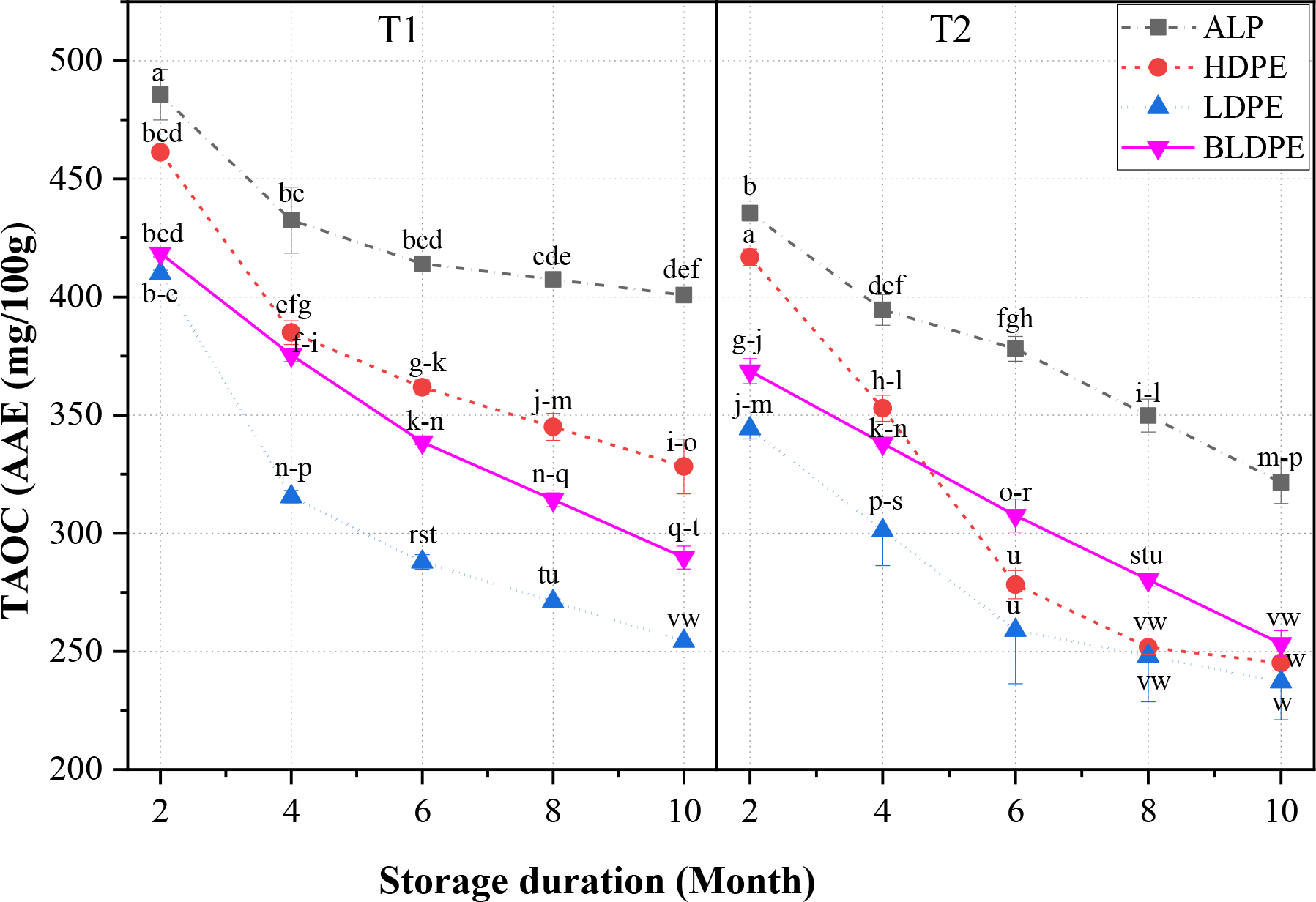
The ANOVA result showed a significant interaction effect of storage duration, packaging materials, and storage condition on the TAC (p<0.001). Overall, the result showed a decrease in TAC in packing materials at both storage conditions with advanced storage duration (Figure 5). The total antioxidant activity values decreased from 752.96-400.85, 752.96-328.26, and 752.26-254.37 and 752.96-289.74 under cold storage, and decreased from 752.96-321.59, 752-245.11, 752.9-237.15 and 752.26-253.26 under room temperature storage in ALP, HDPE, LDPE, and BLDPE, respectively.
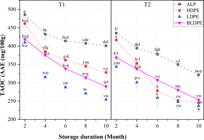
Effect of packing materials, storage methods, and storage duration on total antioxidant capacity (AAE mg/g) of paper powder. Means sharing the same letter are not significantly different at the α=0.05 level of significance. T1 represents refrigerated storage, and T2 represents room temperature storage.
The total antioxidant capacity loss was higher for red hot pepper powder packed in LDPE, BLDPE, and HDPE than in AlP (Figure 5) at room temperature and refrigerated storage methods. The decrease in TAC in all packaging materials under both storage conditions is caused by the degradation of phenolic compounds and carotenoids during extended storage time. It was also reported that antioxidant capacity is associated with red pepper phenolic compounds, capsaicinoids, and carotenoids [48, 49]. In contrast, Chong and coauthors [50] and Udomkun and coauthors [51] reported that the antioxidant activities in dried papaya samples during storage were directly affected by phenolic compounds, while other constituents such as reducing carbohydrates, tocopherols, carotenoids, terpenes, and pigments contributed less to the total antioxidant capacity.
Additionally, Udomkun and coauthors [51] reported that decreased antioxidant activity retention during storage could result from activating oxidative enzymes such as polyphenol oxidase or the chemical oxidation of phenolic compounds. Furthermore, the reduction of total antioxidant capacity could result from elevated moisture content [52], pH, and exposure to oxygen and light [53, 38]. The impact of light and storage temperature on the total antioxidant capacity of red hot pepper powder can be seen in Figure 5. The difference was seen in plastic packaging materials (HDPE, LDPE, and BLDPE) as a result of light, which is dependent on the amount of UV light absorbed, exposure time, temperature, dose, wavelength, and composition of the products [53].
Moreover, the result of the present study also indicated a higher antioxidant capacity degradation rate under ambient conditions than in refrigerated storage, which is attributed to the oxidation of certain fatty acids present in the cell structures at higher temperatures. Le and coauthors [54] explained that in response to various temperatures and storage, H2O2 concentration and malondialdehyde rise, causing a reduction in total phenolic compounds and their antioxidant activity.
CONCLUSION
This study highlights the importance of selecting appropriate packaging and storage conditions to preserve the functional quality of red hot pepper powder over time. The findings contribute to the optimization of post-harvest handling and processing strategies for spice products, supporting both nutritional preservation and product stability. These insights are valuable for food technologists, processors, and supply chain stakeholders aiming to improve shelf life, quality assurance, and consumer satisfaction in spice-based products.
-
Funding:
This research did not receive any external funding.
Data availability statement:
Research data are available in the body of the manuscript.
Acknowledgments:
The authors extend their gratitude to Jimma and Ambo University for the laboratory and logistical assistance. We also thank Miresa Tadese for his support in laboratory work. Finally, we thank the laboratory technicians at Ambo University for their unreserved help in providing the necessary reagents and equipment.
REFERENCES
- 1 Sarafi E, Siomos A, Tsouvaltzis P, Chatzissavvidis C, Therios I. Boron toxicity effects on grafted and non-grafted pepper (Capsicum annuum L.) plants. J Soil Sci Plant Nutr. 2017; 17: 441-60.
- 2 Singh Y, Thakur R, Sekhon BS. Genetic variability among bacterial wilt resistant genotypes of sweet pepper for yield and morpho-physiological traits under mid hill conditions of North Western Himalayas. Veg. Sci.2018; 45: 109-15.
- 3 Acquaah G. Horticulture: principles and practices. Pearson Education. 2008; Inc., USA.
-
4 FrutPlaner. Top 10+ Largest Producers of Chilli. https://frutplanet.com/largest-producers-of-chilli-today/, 2023.
» https://frutplanet.com/largest-producers-of-chilli-today/ - 5 Zekarias S. Hot pepper production and marketing in southwest Ethiopia: an alternative enterprise for small scale farmers. Trend Agri Econ. 2012; 5: 83-95.
- 6 CSA. Agricultural sample survey 2020/21 (2013 E.C.). Report on area and production of major crops. 2020/2021; Addis Ababa, Ethiopia.
- 7 CSA. Agricultural sample survey 2019/2020. Report on area and production of major crops (private peasant holdings, meher season). 2020; Addis Ababa, Ethiopia.
- 8 Castelein R, Soethoudt J, Broeze J, Axmann H. Food loss from harvest to farm gate in nine major cash crops: a review. Wageningen Food & Biobased Research (Report / Wageningen Food & Biobased Research 2104) - 35. 2021; The Netherlands.
- 9 Satheesh N, Parmar A, Fanta SW, Stathers T. Postharvest handling practices and mycotoxin occurrence along the dried berbere chili pepper value chain: A case study from Northern Ethiopia. J Stored Prod Res. 2023; 103: 102157.
- 10 Yeshiwas Y, Tadele E. An investigation into major causes for postharvest losses of horticultural crops and their handling practice in Debre Markos, north-western Ethiopia. Advan. Agri. 2021;1-10.
- 11 Fufa N. Assessing Pepper Storage Methods and Factors of Postharvest Losses in Major Producing Areas of Ethiopia. World J Agri Sci. 2022;18: 200-205.
- 12 Addala R, Vasavada M, Dong J, Subramanian S. Effect of storage conditions on rate of color degradation of paprika-based products. Int J Food Process Technol. 2015; 6: 1-10.
- 13 Khobragade U, Borkar P. Characteristics, Packaging and Storage of Red Chilli Powder: A Review. J ready eat food. 2018;5: 45-8.
- 14 Rhim JW, Hong SI. Effect of water activity and temperature on the color change of red pepper (Capsicum annuum L.) powder. Food Sci Biotechnol. 2011;20: 215-22.
- 15 Pérez-Gálvez A, Garrido-Fernández J, Mínguez-Mosquera MI, Lozano-Ruiz M, Montero-de-Espinosa V. Fatty acid composition of two new pepper varieties (Capsicum annuum L. cv. Jaranda and Jariza). Effect of the drying process and nutritional aspects. J Am Chem Soc. 1999; 76: 205-8.
- 16 Loizzo MR, Pugliese A, Bonesi M, De Luca D, O'Brien N, Menichini F, et al. Influence of drying and cooking process on the phytochemical content, antioxidant and hypoglycaemic properties of two bell Capsicum annum L. cultivars. Food Chem Toxicol. 2013; 53: 392-401.
- 17 Toontom N, Meenune M, Posri W, Lertsiri S. Effect of drying method on physical and chemical quality, hotness and volatile flavor characteristics of dried chili. Inter Food Res J. 2012; 19: 22-8.
- 18 Marsh K, Bugusu B. Food packaging-roles, materials, and environmental issues. J Food Sci. 2007; 72: R39-R55.
- 19 Sachidananda S, Samuel D, Abhijit K. Effect of packaging materials on quality characteristics of osmotically pretreated microwave-assisted dried sweet pepper (Capsicum annum L.). J Food Proc Technol. 2013; 4: 35-42.
- 20 Goshme D, Ayele T. Factors affecting production and marketing of spices in Ethiopia: A review. Inter J Forest Hortic. 2019; 5: 14-8.
- 21 Kefale B, Delele MA, Fanta SW, Mekonnen AS. Nutritional, Physicochemical, Functional, and Textural Properties of Red Pepper (Capsicum annuum L.), Red Onion (Allium cepa), Ginger (Zingiber officinale), and Garlic (Allium sativum): Main Ingredients for the Preparation of Spicy Foods in Ethiopia. J Food Qual. 2023; 1-13.
- 22 AOAC. Official Methods of Analysis. Association of Official Analytical Chemists. 2012; USA.
- 23 FOODTR. Food Packaging and Storage Guide. Increasing food literacy competencies of adults. 2022; Osmangazi/Bursa, Turkey.
- 24 Birley AW. Plastic used in food packaging and the role of additives. Food Chem. 1982; 8:81-4.
-
25 Pham NT. Characterization of Low-Density Polyethylene and LDPE-Based/Ethylene-Vinyl Acetate with Medium Content of Vinyl Acetate. Polymer. 2021; 18;13(14):2352. doi: 10.3390/polym13142352.
» https://doi.org/10.3390/polym13142352. - 26 Carvalho AV, de Andrade Mattietto R, de Oliveira Rios A, de Almeida Maciel R, Moresco KS, de Souza Oliveira TC. Bioactive compounds and antioxidant activity of pepper (Capsicum sp) genotypes. J Sci Technol. 2015; 52: 7457-64.
- 27 Hossain M, Bala B. Drying of hot chilli using solar tunnel drier. Sol Energy. 2007; 81: 85-92.
- 28 Wesolowska A, Jadczak D, Grzeszczuk M. Chemical composition of the pepper fruit extracts of hot cultivars Capsicum annuum L. Acta Sci Pol Hortorum Cultus. 2011; 10(1):171-84.
- 29 Prieto P, Pineda M, Aguilar M. Spectrophotometric quantitation of antioxidant capacity through the formation of a phosphomolybdenum complex: specific application to the determination of vitamin E. Anal Biochem. 1999; 269: 337-41.
- 30 Montgomery D. Design and analysis of experiments. Wiley, 2020; New York, USA.
- 31 Iqbal Q, Amjad M, Asi MR, Arino A. Mold and aflatoxin reduction by gamma radiation of packed hot peppers and their evolution during storage. J Food Protec, 2012;75: 1528-31.
- 32 Alsebaeai M, Chauhan A, Arvind HS. Effect of storability on the shelf life of green chili powder using different packaging materials. Int J Innov Res Sci Eng Technol. 2017;6: 18595-602.
- 33 Nath P, Kale S, Meena V. Influence of packaging material and storage temperature on red chili powder's color quality and shelf life. Indian J. Hortic. 2019; 76: 508-15.
- 34 Lal R, Panhwar AA, Shaikh SA, Lashari AA, Kaleri RR, Mastoi AA. et al. Study on the effect of packaging materials on the quality attributes of dried green chilli powder. Inter J Biol Biotechnol. 2023; 20: 323-8.
- 35 Pranil T, Moongngarm A, Manwiwattanagul G, Kerr WL. Effect of storage and packaging conditions on physical properties and carotenoid content of mango tablets. J Sustain Sci Manag. 2021;16: 138-51.
- 36 Razak N, Hamid N, Shaari A. Effect of storage temperature on moisture content of encapsulated Orthosiphon stamineus spray-dried powder. AIP Conference Proc. 2018; 2030: 1-12.
- 37 Yao L, Fan L, Duan Z. Effects of different packaging systems and storage temperatures on dried mango slices' physical and chemical quality. LWT. 2020; 121: 108981.
- 38 Atencio S, Verkempinck SH, Reineke K, Hendrickx M, Van Loey A. Heat and light stability of pumpkin-based carotenoids in a photosensitive food: A carotenoid-coloured beverage. Food. 2022; 11: 485-93.
- 39 Dutta D, Chaudhuri UR, Chakraborty R. Structure, health benefits, antioxidant property and processing and storage of carotenoids. Afr. J. Biotechnol. 2005; 4: 1510-20.
- 40 Júnior LM, Ito D, Ribeiro SML, da Silva MG, Alves RMV. Stability of β-carotene rich sweet potato chips packed in different packaging systems. LWT Food Sci Technol. 2018;92: 442-50.
- 41 Chilungo S, Muzhingi T, Van-Den T, Allen C. Effect of storage and packaging materials on colour and carotenoid content of orange-fleshed sweet potato flours. Int J Innov Sci Res Technol. 2019; 4: 362-9.
- 42 Chetti MB, Deepa G, Antony RT, Khetagoudar MC, Uppar DS, Navalgatti, CM. Influence of vacuum packaging and long-term storage on quality of whole chili (Capsicum annum L.). J Sci Technol. 2014;51: 2827-32.
- 43 Wang Y, Xia Y, Wang J, Luo F, Huang Y. Capsaicinoids in chili pepper (Capsicum annuum L.) powder as affected by heating and storage methods. Trans ASABE. 2009; 52: 2007-10.
- 44 Giuffrida D, Dugo P, Torre G, Bignardi C, Cavazza A, Corradini C, et al. Evaluation of carotenoid and capsaicinoid contents in powder of red chili peppers during one year of storage. Food Res Inter. 2014; 65: 163-70.
- 45 Federzoni V, Alvim ID, Fadini AL, Silva LBD, Queiroz MB. Co-crystallization of paprika oleoresin and storage stability study. 2019; Food Sci Technol. 39: 182-9.
- 46 Anjaneyulu A, Sharangi A. Effect of different packaging materials on the shelf life of dried red pepper (Capsicum annuum L.) stored in ambient conditions. J Crop Weed. 2022; 18: 82-9.
- 47 Apriyati E, TF Djaafar T, Purwaningsih M, Kobarsih M, Hatmi RU. 3rd International Conference on Agricultural Postharvest Handling an Processing. IOP Conf. Series: Earth Env Sci. 2022; 1024:633-40.
- 48 Campos MRS, Gómez KR, Ordo YM, Ancona DB. Polyphenols, ascorbic acid and carotenoids contents and antioxidant properties of habanero pepper (Capsicum chinense) fruit. Food Nutr Sci. 2013; 4: 47-54.
- 49 Tvrzník P, Jeřábek T, Kráčmar S, Fišera M. Changes in phenolic content in ground red pepper (Capsicum annuum L.) during storage. J Microbiol Biotechnol Food Sci. 2019;9: 345-8.
- 50 Chong CH, Law CL, Figiel A, Wojdyło A, Oziembłowski M. Colour, phenolic content and antioxidant capacity of some fruits dehydrated by a combination of different methods. Food Chem. 2013;141: 3889-96.
- 51 Udomkun P, Nagle M, Argyropoulos D, Mahayothee B, Latif S, Müller J. Compositional and functional dynamics of dried papaya as affected by storage time and packaging material. Food Chem. 2016; 196: 712-19.
- 52 Varastegani B, Lubowa M, Teixeira JA, Easa AM. Storage stability of spray dried Nigella sativa (Ranunculaceae family) instant beverage powder: effect of carrier agents on the physicochemical, phenolic compounds and antioxidant properties. Curr Res Nutr Food Sci. 2019; 7: 648-61.
- 53 Chandra R, Prihastyanti M, Lukitasari D. Effects of pH, high-pressure processing, and ultraviolet light on carotenoids, chlorophylls, and anthocyanins of fresh fruit and vegetable juices. eFood. 2021; 2 (3): 113-24.
- 54 Le TNQ, Do YV, Nguyen NQ, Tran TYN, Huynh BL, Bach LG, et al. Assessment of changes in product quality and antioxidant activity of dried soursop (Annona muricata L.) during product storage. Food Chem. 2024; 21: 101062.
-
Editor-in-Chief:
Bill Jorge Costa
-
Associate Editor:
Paulo Vitor Farago