 Phytochemical and in Vitro Biological Activity from Epicuticular Wax of the Copernicia prunifera (Mill.) H.E. Moore
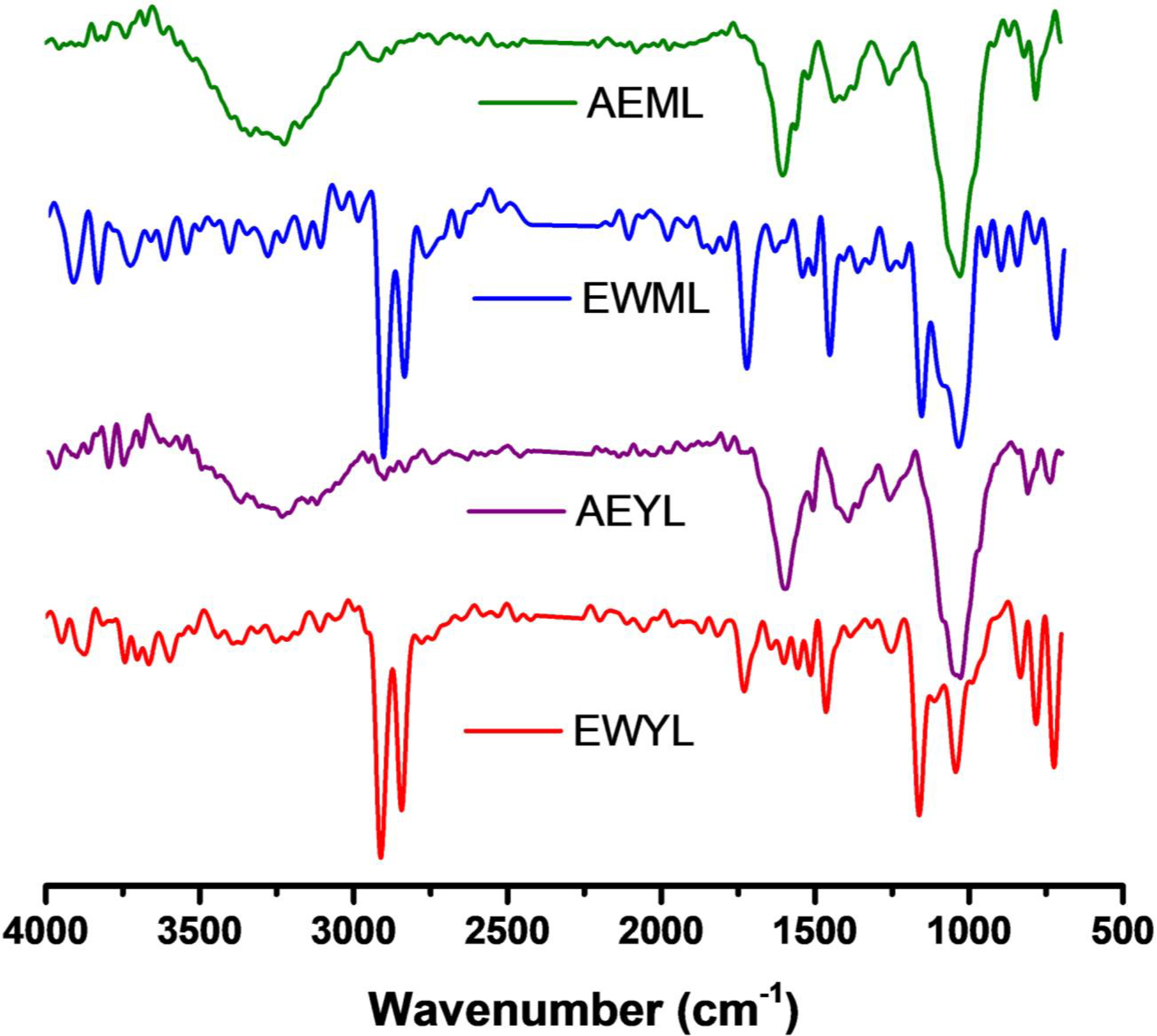
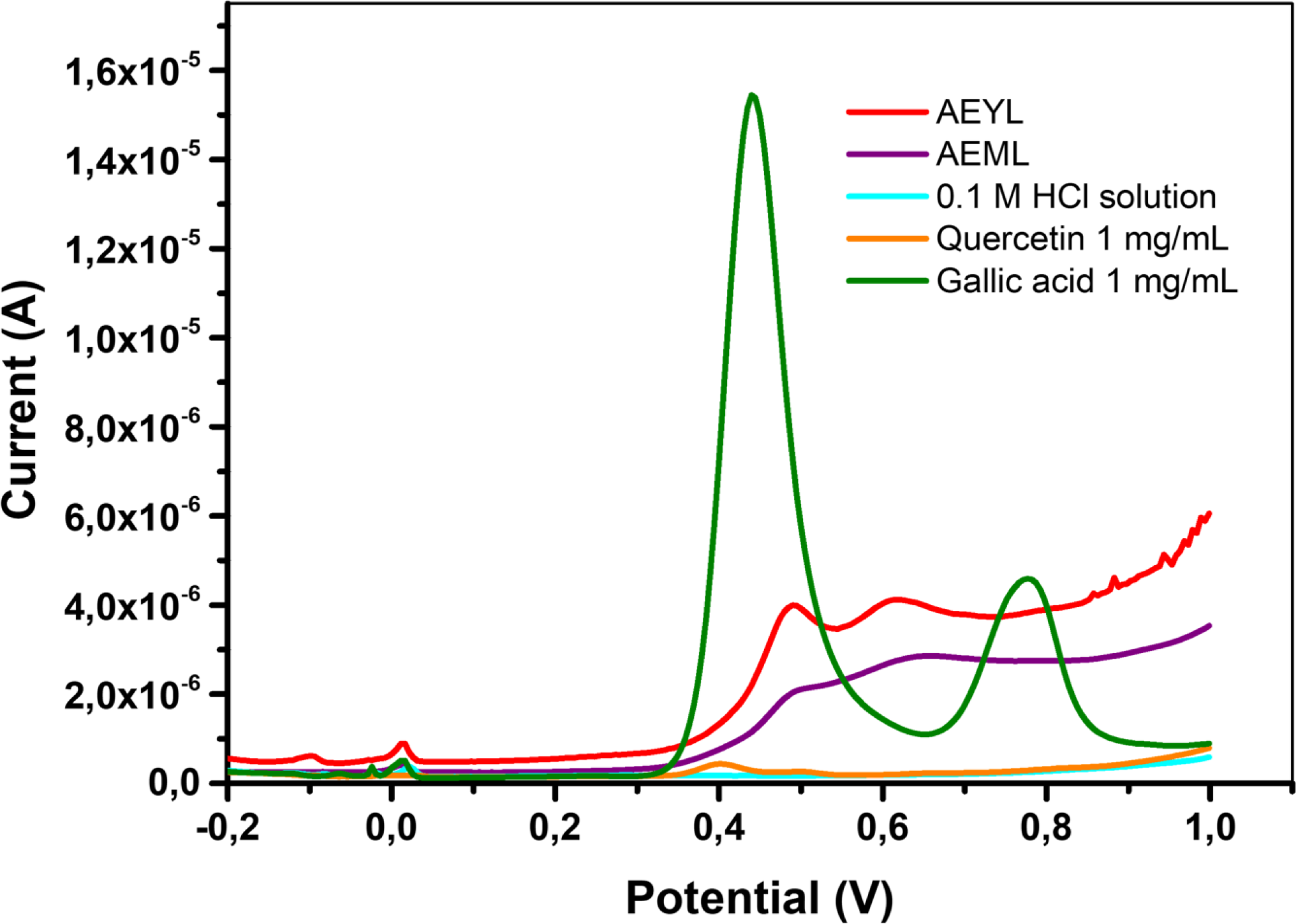
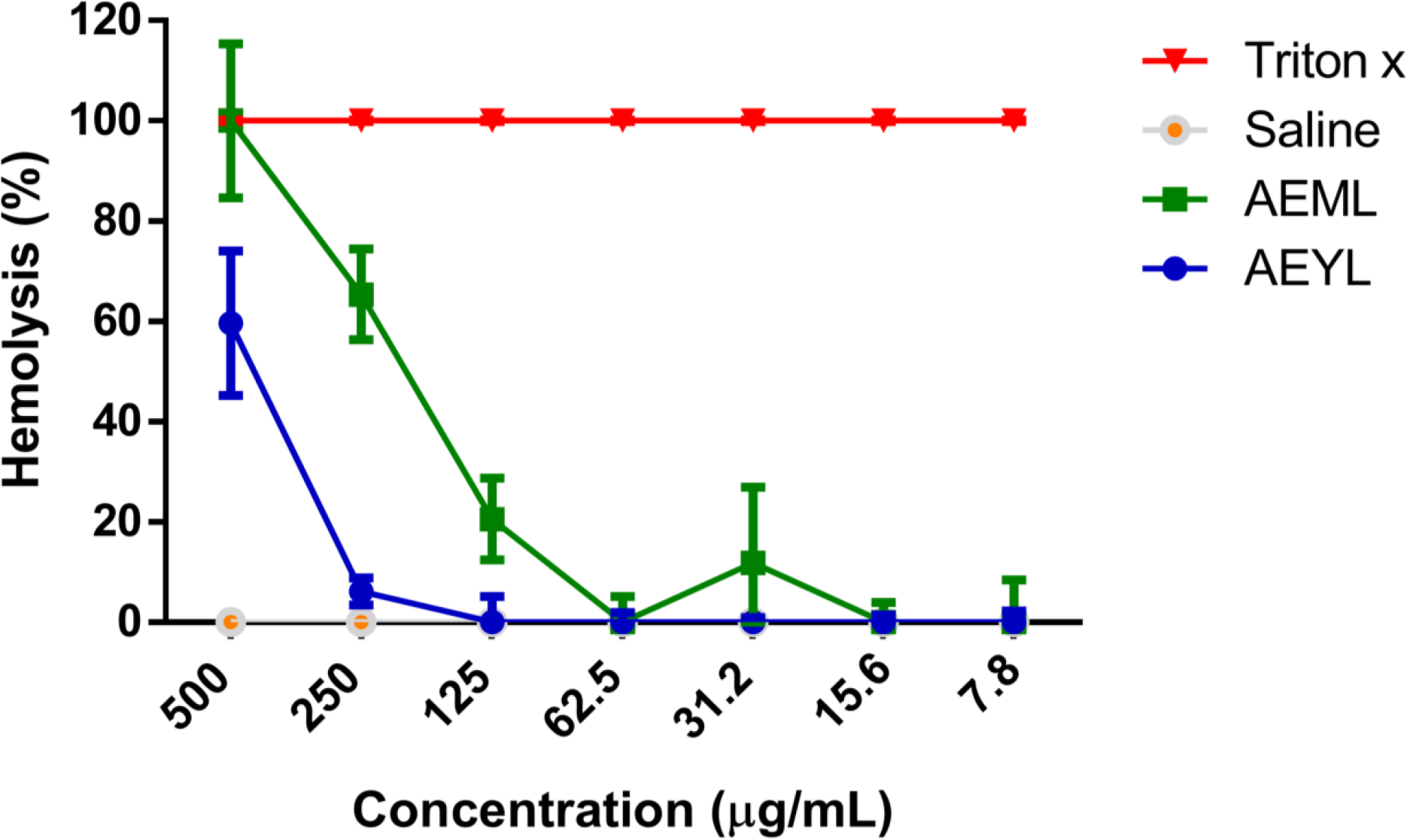
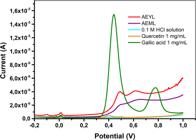
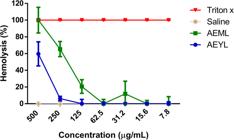
The study aimed to characterize the phytochemical, antioxidant and hemolytic activity, and cytotoxicity of aqueous extracts of epicuticular wax from young (AEYL) and mature (AEML) leaves of Copernicia prunifera, a palm native to Brazil that adds value to both the local and the country's economy. Qualitative phytochemical analysis and physical-chemical tests (Fourier transform infrared spectroscopy (FTIR-ATR) and differential pulse voltammetry) were performed. Quantitative analyses were carried out for total phenols, antioxidant activity by 2.2-azinobis-3-ethylbenzothiazoline-6-sulfonic (ABTS + •) and in vitro cytotoxic and hemolytic activity in human tumor cell lines and erythrocytes, respectively. Tannins, saponins and reducing sugars in all extracts were detected and total phenolic content was 56.48 ± 21.91 mg and 158.52 ± 39.27 in AEYL and AEML, respectively. Antioxidant activity was 34.9 ± 4.8 μg in AEYL and 100.3 ± 15.2 μg in AEML. The AEML extract presented higher total phenol content and greater cytotoxicity against the SF-295 glioblastoma cell line (IC₅₀ = 27.58 µg/mL) when compared to AEYL (IC₅₀ = 77.59 µg/mL), reinforcing its potential as a source of bioactive compounds.”. Hemolytic activity of AEYL was lower than in AEML, and both presented concentrations capable of causing hemolysis above those effective against tumor cell lines. The results obtained showed to have potential as a source of bioactive compounds and that add value to its production chain.
Keywords:
Arecaceae; carnauba; ceriferous powder; cytotoxic activity; hemolytic activity.
Phytochemical characterization of Copernicia prunifera wax extracts.
Antioxidant activity higher in mature leaf extracts in Copernicia prunifera.
Significant cytotoxic activity against glioblastoma cells.
 Thumbnail
 Thumbnail
 Thumbnail