 The Need for Ecohydrological Research in Brazilian Mountains: the Case of the Serra da Mantiqueira Range
Abstract
While certain Brazilian ecosystems attract significant attention from the global scientific community, others - particularly those in mountainous regions, which are both unique and highly vulnerable - remain underexplored and inadequately understood, especially from the ecohydrological perspectives. This article calls for developing robust hydrological and ecohydrological research in the Brazilian mountains, which can contribute to their environmental protection and water resources management. To support this call, I present examples of the Serra da Mantiqueira Range, which is one of the most important Atlantic Forest biodiversity hotspots in the World, besides being an important water source for the Southeast Brazil. I do not intend to present an exhaustive approach to the hydrology/ecohydrology of Brazilian mountains, since this is not possible, given their complexity and heterogeneity. Therefore, I propose to debate and illustrate this theme, to point knowledge gaps, and to propose a research agenda to contribute to the understanding of the water/ecosystem interactions in Brazilian mountains.
Keywords:
biodiversity hotspots; climate change; mountain hydrology; protected areas; tropical mountains.
HIGHLIGHTS
Many Brazilian tropical mountains are biodiversity hotspots.
There is a lack of ecohydrological knowledge about these environments.
The ecohydrological approach is needed to protect Brazilian mountains.
INTRODUCTION
Climate change (CC), alterations in land cover and pollution are resulting in intense biodiversity losses, especially in unique environments such as tropical mountains. Mountains are important sources of water, energy, and biodiversity, and are highly sensitive/vulnerable to CC and to anthropogenic and ecological imbalances [1]. These regions observe high gradients of temperature, precipitation, and insolation, leading to the establishment of several climatic systems in small areas, besides a great diversity of habitats [1].
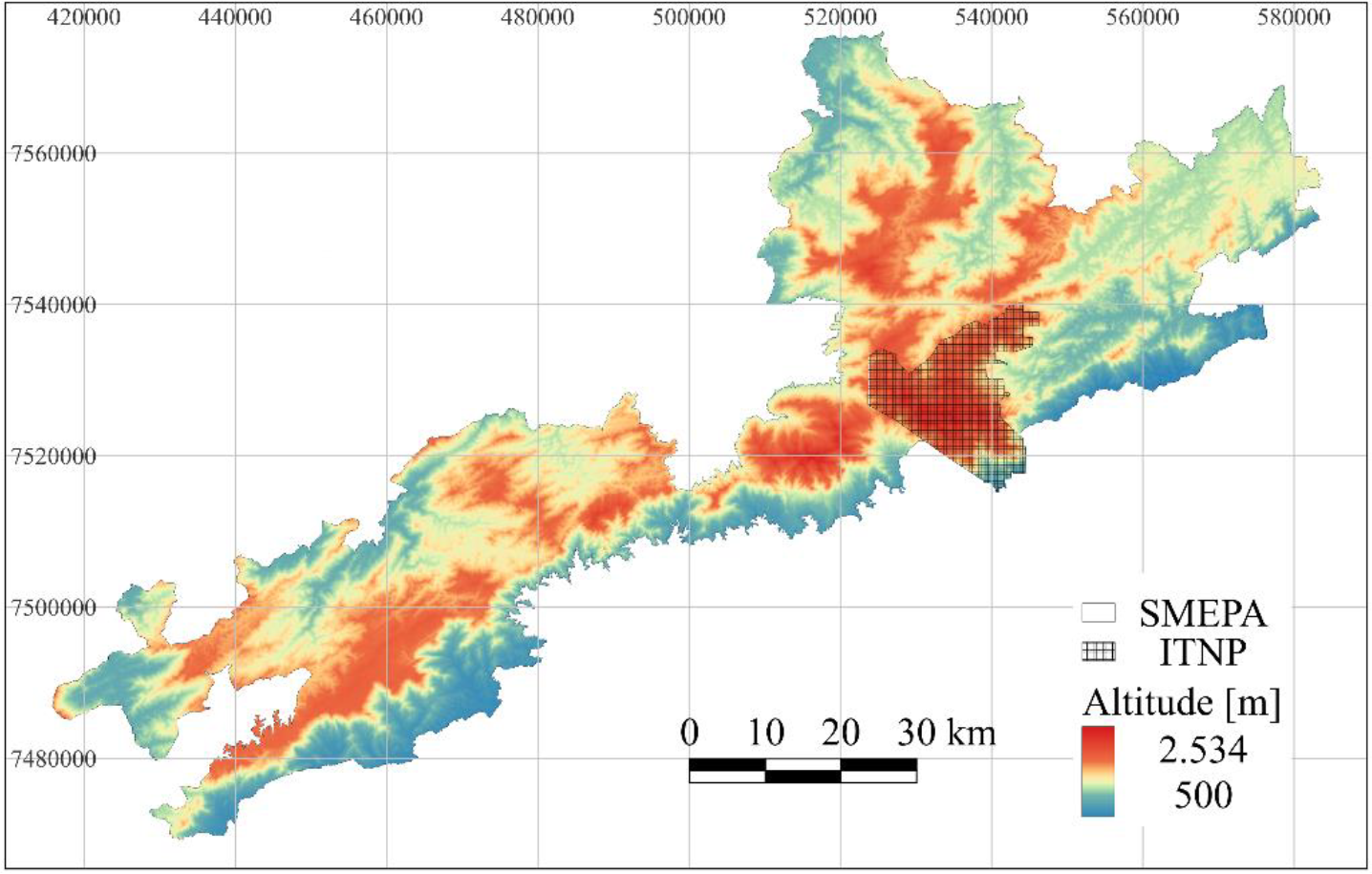
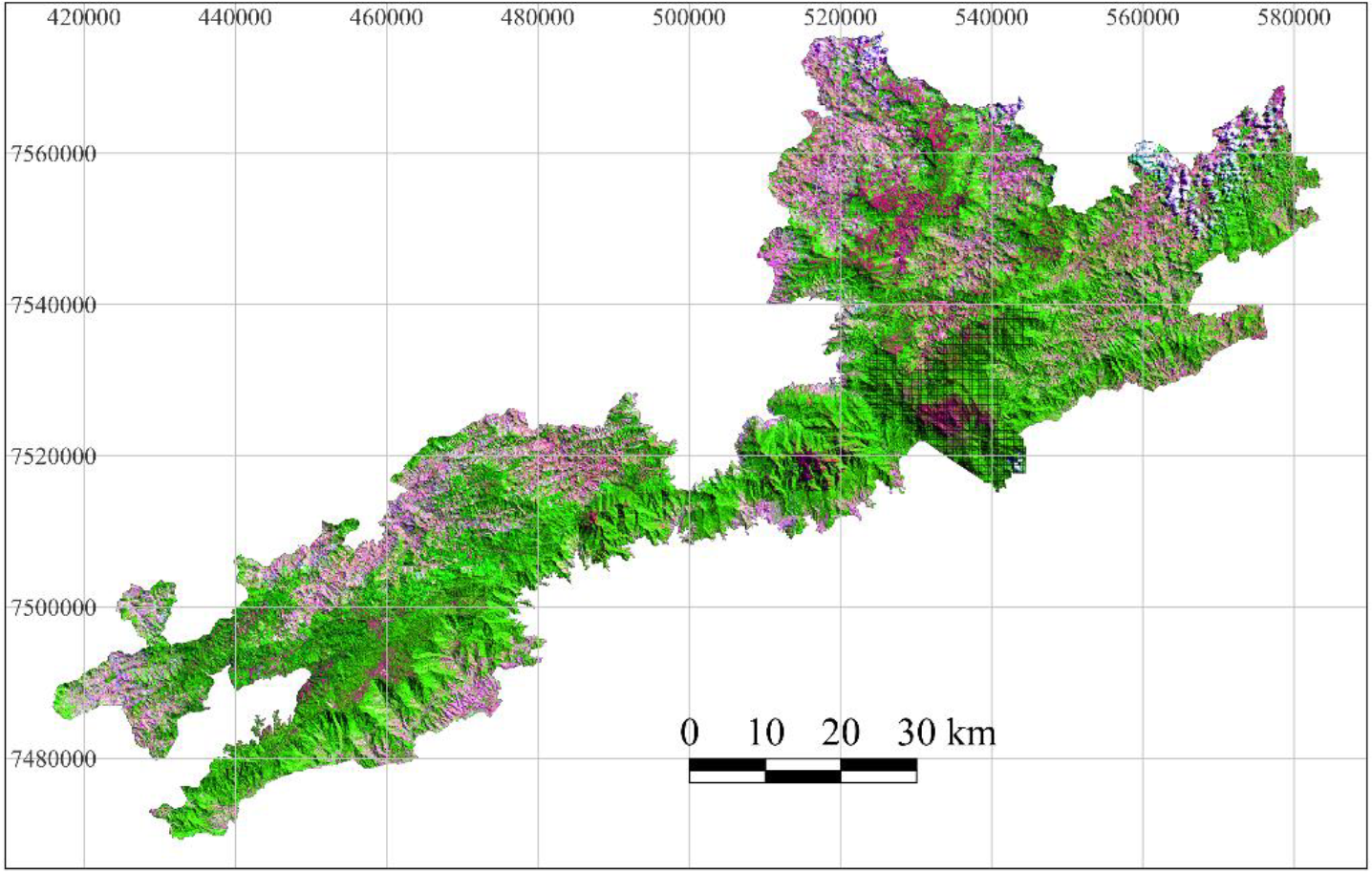
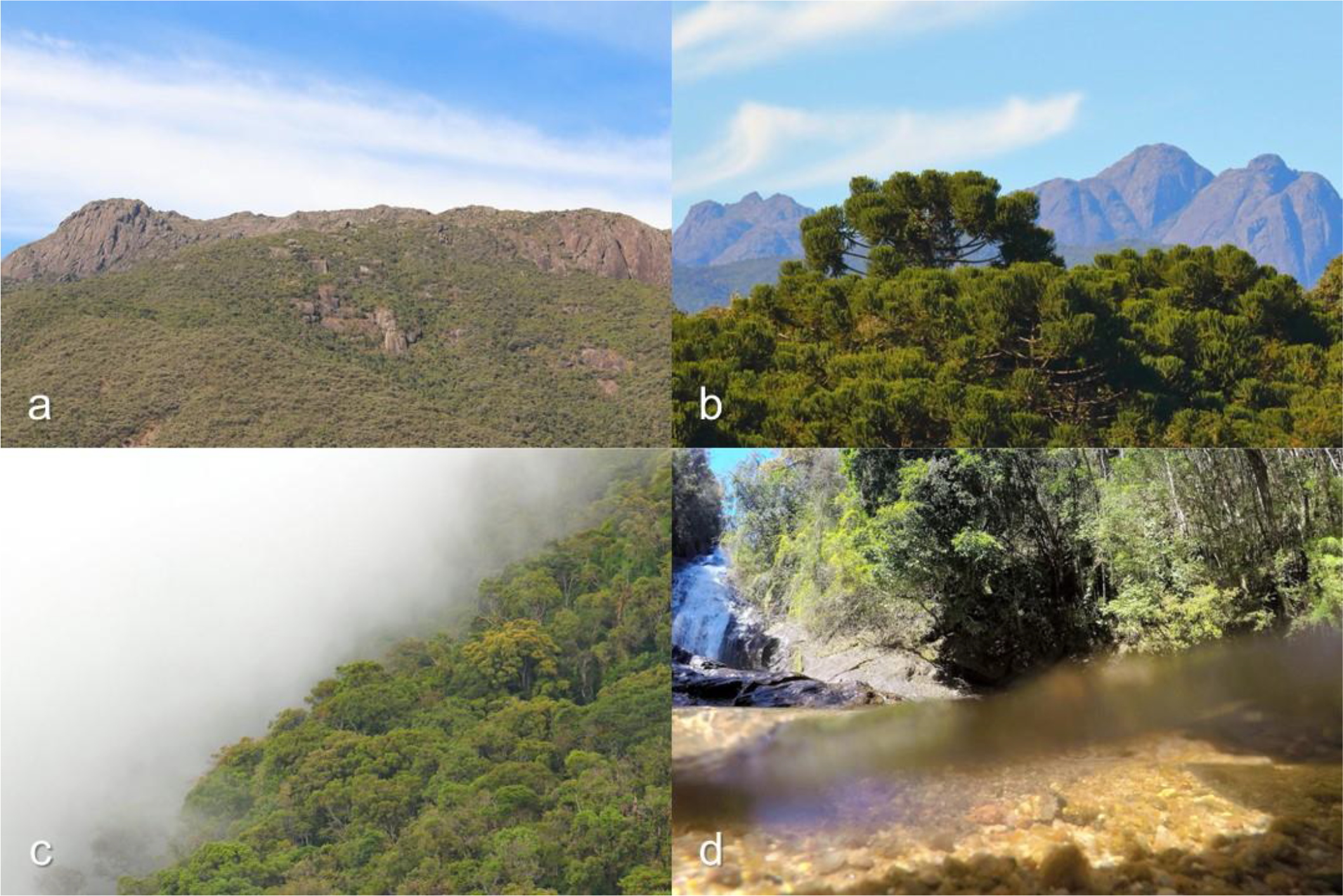
The Serra da Mantiqueira (SM) is one of the main Brazilian mountain ranges and is located between the States of São Paulo (SP), Minas Gerais (MG), Rio de Janeiro (RJ) and Espirito Santo (ES). The Serra da Mantiqueira Environmental Protection Area (SMEPA) (Figures 1, 2 and 3) was created in 1985 and is considered one of the most important places in the world for the conservation of amphibians, birds, and mammals [2]. Despite the well-known biodiversity of SM, several new species continue to be discovered in the area. The most recent official act to protect the SM was the creation of the São Paulo State Mantiqueira Natural Monument [3]. The decree that creates this natural monument highlights "[...] the important biodiversity of the Serra da Mantiqueira, which houses hundreds of species of fauna and flora, many of which are threatened with extinction [...]" and "[...] the relevant ecosystem services of the São Paulo sector of Serra da Mantiqueira, such as water supply and purification […]” and climate regulation [3].
Location (UTM 23K) and elevation map of SMEPA and Itatiaia National Park (ITNP). Data source: SMEPA and ITNP limits: [6,7]; digital elevation model (DEM) data: https://www.cnpm.embrapa.br/projetos/relevobr/.
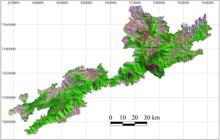
Location (UTM 23K) and land cover of the SMEPA and ITNP, using a Lansat 8 false color composition (bands 6, 5 and 4). Data source: http://www.dgi.inpe.br/catalogo/.
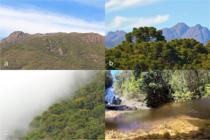
Typical landscapes of Serra da Mantiqueira Range: the region of the Marins and Itaguaré Peaks (a and b), Clouds over the mountains in Campos do Jordão/SP (c) and a mountain stream in Marmelópolis/MG (d) (source: the author).
The SM also plays a key role in the national water resources scenario: the mountain range is the divisor of two major Brazilian basins: the Paraíba do Sul River Basin (BHRPS) and the Rio Grande Basin (BHRG). The streams located in the SM serve as a water source for several municipalities in SP, MG, and RJ, and support several activities, from industry to hydropower production.
According to Viviroli and coauthors [4], the effective management of mountain water resources urgently needs more detailed studies and more reliable projections of management scenarios, since mountains are highly sensitive to climate change. Despite this, hydrological, and especially ecohydrological studies, are still scarce in Brazilian mountains. In this sense, Aparecido and coauthors [5] points that “Although many ecohydrological and climatic studies of montane environments have been carried out in temperate and boreal regions, few have been done in Neotropical regions.”.
To help fill this scientific gap, this article calls for the development of hydrological and ecohydrological research in Brazilian tropical mountains. In addition to the scientific aspect, this type of research can support the environmental protection and the sustainable water resources management of these environments. To achieve this objective, I use the Serra da Mantiqueira Range as a representative example of Brazilian mountains with high biodiversity and an abundance of water resources. Despite the great heterogeneity of the Brazilian mountains (which are located from the Amazon phytogeographic domain, in an equatorial climate, to the temperate Pampa of the Southern Region of Brazil), many of them share the same richness in terms of biodiversity and water resources. The examples and cases from SM allow us to illustrate the various research needs, and to reinforce the multidimensional benefits of ecohydrological studies in this kind of environment.
A BRIEF BACKGROUND ON ECOHYDROLOGY
Ecohydrology is the science that interfaces and integrates the disciplines of ecology and hydrology, which seeks to understand the relationships, functions, and influences of hydrological processes on biota/ecosystems, and vice versa, at the watershed scale [8-10]. According to the UNESCO [9], sustainable water resources management can only be achieved from an ecohydrological perspective, considering the following principles: (1) reversing the degradation and regulating the evolutionarily established water and nutrient circulation processes, as well as energy flows, at the basin scale, (2) increasing the resilience, robustness, biodiversity and ecosystem services of the ecosystems in the face of human impacts and (3) using the water-biota interaction as a water resources management tool.
BRAZILIAN MOUNTAINS AS LEGALLY PROTECTED AREAS
In Brazil, protected areas are known as “conservation units”. The Brazilian National System of Nature Conservation Units (SNUC) was established in 2000, through the Federal Law number 9,985 [11], and classifies protected areas into two main groups: (1) Full Protection Units and (2) Sustainable Use Units. Full protection is defined as the “maintenance of ecosystems free of alterations caused by human interference, admitting only the indirect use of their natural attributes" [11], while sustainable use is the allows some activities to be carried out in the protected area, with the condition of preserving the “[…] biodiversity and other ecological attributes, in a socially fair and economically viable way.” [11].
In addition to the SNUC, the Brazilian Forest Code [12] defines permanent protection areas as a “[…] protected area, covered or not by native vegetation, with the environmental function of preserving the water resources, the landscape, the geological stability, and biodiversity, facilitating the gene flow of fauna and flora, protecting the soil and ensuring the well-being of human populations.” [12]. According to the Brazilian Forest Code [12], mountain environments are considered permanent protection areas in the following conditions:
[…] the edges of the tablelands or plateaus, up to the relief breaking line, in a range not less than 100 (one hundred) meters in horizontal projections;
[…] at the top of hills, mountains, and mountain ranges, with a minimum height of 100 (one hundred) meters and an average slope superior to 25º, the areas delimited from the level curve corresponding to 2/3 (two-thirds) of the minimum height of the elevation always in relation to the base, defined by the horizontal plane determined by adjacent plain or water mirror or, in wavy reliefs, by the elevation;
[…] the areas at an altitude superior to 1,800 (one thousand eight hundred) meters, whatever the vegetation; [12].
The Serra da Mantiqueira Range is an emblematic case of a biodiversity hotspot located in a Brazilian mountain, whose ecological relevance is recognized by the existence of several PAs within its territory, besides the SMEPA itself. In 2006, the Ministry of the Environment of Brazil recognized this set of PAs as the “Mantiqueira Mosaic of Conservation Units” [13]. To illustrate the recurrence of PAs in Brazilian mountains, beyond the SMEPA, we can cite several other conservation units, for example: Serra da Bocaina National Park, Serra do Mar State Park, Bananal Ecological Station, Serra do Papagaio State Park, Serra da Bodoquena National Park, Serra da Canastra National Park, Serra dos Órgãos National Park, Pico da Neblina National Park.
THE HYDROLOGY AND ECOHYDROLOGY OF TROPICAL MOUNTAINS: AN OVERVIEW AND EXAMPLES FROM THE SERRA DA MANTIQUEIRA
According to Weingartner and coauthors [14], mountain hydrology is affected basically by altitude and relief. The hydrological response of mountain watersheds to the influence of altitude (over temperature, precipitation, and soil depth, for example) goes from intensification of rainfall patterns to the variability of subsoil water storage capacity [14]. Several characteristics of mountainous terrain (e.g.: complexity, altitude, and shape) influence the flow of air masses and their thermodynamic behavior, favoring and/or intensifying the occurrence of rainfall events, and defining the spatial distribution of rainfall over and around the mountain [15]. The influence of mountains over precipitation has been extensively addressed by Roe [16] and Houze [15], who highlighted the mechanisms through which mountains influence precipitation, for example: convective processes due to the heating of the terrain during the day, the mechanical elevation of stable air masses due to the orographic barrier, and the seeder-feeder mechanism (the latter, frequent in low mountains). The large differences in altitude, slope and aspect in mountains can increase the variability of precipitation, through processes such as rain shadows and intense winds [17]. Considering the effects of climate change on rainfall over a region, the atmospheric circulation, topography, land use, among other factors, interfere with global changes, giving rise to specific patterns of change on the regional scale [18], which are amplified by mountains.
According to UNEP [19], high elevation mountains are those higher than 2,500 m, and a common characteristic of Brazilian tropical mountains is their low altitude. Brazil does not have land above 3,000 m (its highest point is the Pico da Neblina Summit, in the State of Amazonas, with 2,995.3 m [20]), and only 22 of the country's highest points are above the 2,500 m threshold [21], indicating a low proportion of the national territory in high mountains. This fact, added to the latitudes of the Brazilian territory, excludes the presence of glaciers from its typical hydrology. This combination of altitudes and latitudes also make other phenomena sporadic, and not very significant in their annual/long term water balance. This is the case of snow, which still is a poorly understood phenomenon in Brazil [22]. Despite being sporadic, the occurrence of snow is not rare in the mountains of southern states of Brazil, especially in Rio Grande do Sul and Santa Catarina [23]. The Serra da Mantiqueira Range is probably the region of lowest latitude in Brazil to record snow events, with extensive reports in the media, and some in the scientific literature (for example, [24]).
Other hydroclimatic phenomena associated with lower temperatures and/or higher altitudes (such as frost and fog/mist) are recurrent in Brazilian mountains, especially in the Southeast and South regions. In SM, frost events occur, on average, 56 to 40 days per year in Itatiaia and Campos do Jordão, respectively [25]. The complete understanding of the fog's contribution to river flows and groundwater recharge demands precise water balances, that include both fog and horizontal precipitation [26]. According to Scholl and coauthors [26], these measurements allow to understand the role of fog as moisture source in the absence of rainfall, and as a carrier of pollutants (see section “Mountain watersheds pollution due to emerging pollutants”) and nutrients. Bittencourt and coauthors [27] studied the fog regime at a site of SM, identifying its occurrence in 64% of the monitored days, especially during the nights. In terms of water balance, Bittencourt and coauthors [27] concluded that fog provides the soil with 251.9 mm of water annually, which is a significant portion (10.7%) of the net precipitation at the studied site. Another important ecohydrological phenomenon associated with fog is the foliar water uptake (FWU), which was documented in Serra da Mantiqueira by Eller and coauthors [28], in Drimys brasiliensis trees. The FWU is an important water compensation mechanism, during low rainfall periods [28].
Tropical montane cloud forests (TMCF) are common in some Brazilian mountains and are also an emblematic characteristic of their ecohydrological elements. These botanical formations are located above 700 m of altitude in the Atlantic coast of Brazil [29], and are characterized by the frequent presence of fog, which is an extra source of water in addition to precipitation [29,30]. Due to these factors, besides the low evaporative losses, watersheds covered by TMCFs tend to present increased river discharges [29], contributing to the water availability of downstream areas.
Another typical vegetation of the Brazilian highlands are the altitude grasslands (campos de altitude, in Portuguese). An important compilation about this vegetation in Brazil was presented by Safford [25,31-33], according to who, these grasslands are “found exclusively on uplifted blocks of igneous or high-grade metamorphic rocks […]” [25]. Still according to Safford [25], the major occurrences of altitude grasslands in Brazil are in national and state parks, among them, Itatiaia, Serra da Bocaina, Serra dos Órgãos National Parks, besides Serra do Brigadeiro and Campos do Jordão State Parks. Unlike the TMCF, which already attract the attention of some researchers, little is known about the hydrology/ecohydrology of Brazilian altitude grasslands.
Runoff and streamflow also have several peculiarities in mountains. According to Morán-Tejeda and coauthors [34], “[…] mountain rivers represent a valuable laboratory as they reflect the natural conditions of mountain environments before any disturbance by humans is taking place.”. From a strictly hydraulic point of view, streamflow in mountain rivers is governed and influenced by topographical, geological, and geomorphological constraints. As a result, these rivers tend to present great spatial variability of hydraulic characteristics (flow speed and depth), which in turn, defines different habitats in small areas. According to Wohl [35], mountain rivers are very diverse in physical terms, with steep gradients as a common characteristic. These gradients tend to be correlated with other characteristics [35], for example: (1) rough channels with low erodibility, due to rocky beds and coarse clasts; (2) highly turbulent flow with several transitions between high and low speed sections (sub and supercritical flows); (3) low input of fine sediments; (4) large spatial-temporal variability of bedload transport; (5) great seasonality of streamflow (temporal variability); (6) large spatial variation of streamflow; (7) large longitudinal variation in the channel geometry, due to lithological and tectonic factors, among others; (8) under certain conditions, mountain rivers can experience very large increases in water and sediment yield in a few years, as a result of disturbances in the watershed; (9) large variation in aquatic and riparian biodiversity due to variation in river characteristics and altitude, temperature and precipitation.
Soil hydrology also has unique elements in tropical mountains. Benites [36] analyzed soils associated with rock outcrops in protected areas of Mantiqueira and Espinhaço Ranges, concluding that, in the highest parts of these mountains, the soils are shallow, sandy, with a large presence of aluminum and varying levels of organic matter. The soil types are directly associated with rocky outcrops, forming a mosaic of types and some endemic soil occurrences [36]. The typical vegetation of higher mountainous areas often needs to obtain water from these rocky substrates, given that soil is very shallow or almost inexistent. This was the focus of Schwinning [37], which states that the interaction between roots, rocks and water is complex and not yet fully understood. To explore scientific questions about the use of water from rocks, Schwinning [37] reviewed the work of Tetegan and coauthors [38] and Korboulewsky and coauthors [39] (among others), which demonstrated experimentally, that rock fragments can provide water for plants. Does the vegetation of Serra da Mantiqueira, and other Brazilian mountains, also use water from rocks? Under what conditions? If existing, is this use significant in the water balance and ecological functions of Brazilian mountains? These questions still require research to be answered.
Still regarding the mountain soil hydrology, Benites and coauthors [36] identified swampy peatlands in the highest parts of the SM (above 2000 m), originated by low temperatures and high humidity, or in hydromorphic areas with structural controls. These peatlands play an important role in terms of water resources, by regulating the water flow of rivers and watersheds in the highest areas [36]. This regulation occurs through the flooding of the peatland areas during rainy seasons, and their subsequent gradual drainage during dry seasons [36]. Finally, the combination of hydrometeorological, geological and pedological factors favors the occurrence of temporary ponds in some Brazilian mountains. These ephemeral ponds have great ecological relevance, for example, for amphibians, as demonstrated by Lima and coauthors [40].
Among the large groundwater systems in the State of São Paulo, the Serra da Mantiqueira Range is in the Crystalline Fractured Aquifer, in its Precambrian stretch, which was formed 550 million years ago and is composed of igneous and metamorphic rocks [41]. In the Vale do Paraíba Paulista region, the crystalline aquifer interfaces with the Taubaté sedimentary aquifer, formed by sandy to clayey sediments deposited more than 2 million years ago over the crystalline unit [41]. This interface between mountains and low areas indicates the mountain-block recharge (MBR) and mountain-front recharge (MFR) processes, which are extremely relevant in terms of water resources/ecosystem services, and still few explored scientifically in Brazil. Briefly, MBR and MFR describe the recharge of lowland aquifers from water originating in adjacent mountains. “Mountain-block recharge is groundwater inflow to a lowland aquifer from an adjacent mountain block.” [42], while the mountain-front recharge is the sum of the MBR and the infiltration (through the lowland basin fill/aquifer) of “[…] mountain-sourced perennial and ephemeral stream water after these streams exit the mountain block.” [42]. Understanding the MBR and MFR in Brazilian mountains is important from both a scientific and environmental point of view, as it allows us to elucidate the role of the mountain watersheds (and their ecosystems) as water producers for the lower regions, where occurs the most intense use of water resources.
BEYOND HYDROLOGY: EMBLEMATIC ECOHYDROLOGICAL ASPECTS OF THE SERRA DA MANTIQUEIRA
Epiphytic flora is an important and diverse botanic group in SM [43-45]. While other groups get water mainly from the soil, epiphytes obtain water directly from the precipitation (rainfall, dew), air (water vapour) and stem runoff [46], therefore, they are highly dependent on rainfall variability. Epiphytes are also a microhabitat for other organisms, often associated with the water storage provided by these plants. For example, de Paula Júnior and coauthors [47] studied the aquatic invertebrates associated with bromeliads in Serra da Mantiqueira and have found 35 taxa (with higher abundance of Ostracoda, Culicidae, Tanypodinae and Scirtidae). Scheffers and coauthors [48] showed that epiphytes microhabitats are an important refuge against climatic extremes for amphibians (frogs) and lizards, which can reduce the decrease in these populations. As previously mentioned, SMEPA is considered one of the most irreplaceable protected areas in the world for the conservation of amphibians [2], and several authors have reported their diversity in SM [49-51]. Since part of the life of amphibians occurs in water (which may be associated with ephemeral ponds in epiphytes, for example), this phylum is highly susceptible to changes in humidity and water quality [52], therefore, they are highly dependent on the rainfall regime and variability. In this context, Foster [53] presents an important discussion on the effects of climate change (including changes in rainfall) on TMCF, including possible effects on amphibians and epiphytes, which can provide important indications applicable to the environmental management of SMEPA and other Brazilian mountains.
The SMEPA is an important area of occurrence of Araucaria angustifolia in Brazil. A. angustifolia is the only Brazilian native species of the Araucariaceae family [54], and is […] critically threatened due to the intense exploration […]” [55]. As an illustration of the effects of hydrological variability (as well as hydroclimatic changes) on A. angustifolia communities, Brandes and coauthors [56] analyzed its growth response to climate (precipitation and temperature) in two sites at the northern limit of its occurrence (the Itatiaia Region), applying dendrochronological methods (tree ring analysis). Despite the proximity between the sites (about 15 km), Brandes and coauthors [56] demonstrated that A. angustifolia can present different growth responses to rainfall even in near locations. In this sense, according to Quinteiro and coauthors [55], local specialists stated that A. angustifolia pine nut occurrence in SM can be delayed or anticipated according to the rainfall regime. This nut is a key food source for various species, among them, Amazona vinacea [57], an endangered species of parrot. The effects of rainfall variability on A. angustifolia, and the dependence of species such as A. vinacea on its nuts, illustrate the cascade and less obvious effects of rainfall variability/changes over typical and threatened species that lives in Brazilian mountains.
Aquatic ecosystems are directly affected by the rainfall variability, especially in mountain rivers. Some authors [58,59] reported the diversity of the ichthyofauna in the SM. Among them, Ingenito and Buckup [58] concluded that the SM “[…] is an effective biogeographical barrier isolating the fish faunas […]” from the Rio Grande and Rio Paraíba do Sul Basins. In very near locations (separated by the SM basin divider) Ingenito and Buckup [58] found 47 fish species, of which 28 and 15 were identified exclusively (and respectively) in the BHRPS and the BHRG. According to Xenopoulos [60], “[…] river discharge is one index of ecological space and habitat heterogeneity for fish survival, growth and reproduction.”. This hydrological variable is totally associated with rainfall, both in terms of groundwater recharge/baseflow and direct runoff/stormflow. Various authors [60-64] reported the effects of climate change over freshwater fishes. These effects can be associated, for example, to the findings of Biagiotto and coauthors [65], who studied the reproduction of Harttia carvalhoi in the SM. According to Biagiotto and coauthors [65], the reproductive season of H. carvalhoi goes from September to February, which corresponds to higher precipitation levels and favorable environmental factors for the fish reproduction. It can therefore be assumed that changes in the frequency and/or intensity of rainfall during these periods (caused by climate change) will lead to alterations in the reproductive cycle of this fish species.
Fires in the Atlantic Forest are generally associated with human activities, which range from criminal/intentional fires, accidental fires, and the use of fire for the preparation of agricultural areas, a very common practice in the area surrounding the SMEPA [52,66]. Besides the direct impacts of fires in ecosystems, it also affects various “[…] physical, chemical, mineralogical, and biological soil properties […]” [67] and watersheds´ hydrology [68,69]. The SMEPA Management Plan [52] presents a consistent analysis of the impacts of fires in the Area, since this type of event is one of the main threats to the local ecosystems. The occurrence of fire hot spots in SMEPA (both in the area itself and in its buffer zones) is highly correlated with the intensity of El Nino conditions, which directly influences the rainfall in SM [52]. Besides that, the months of July to October (that are part of the dry season in SMEPA) have historically concentrated the highest frequency (about 89%) of fire hot spots in the Area and in its buffer zone [52]. In this sense, it is essential to incorporate rainfall studies in fire management at SMEPA, especially regarding medium-term forecasts linked to major teleconnections, such as El Niño/La Nina. This understanding allows to pre-allocate resources for firefighting, and to develop environmental education actions to alert and raise awareness among residents living in SMEPA. Furthermore: how will climate change affect the susceptibility and frequency of fires in SM and other Brazilian mountains?
The expected effects of climate change over the unique mountain hydrology and ecosystems were studied by several authors ([53,63,70-83]. Although CC is indicated as a threat to the SMEPA´s fauna and conservation [52], there is little information and studies on its impacts over the hydrology and the ecosystems of area. Here, I present an insight from researches that addressed the impacts of climate change on mountain hydrology, that fit the characteristics of the Serra da Mantiqueira Range. Foster [53] studied the impacts of CC over tropical montane cloud forests. One of the most evident potential impacts of CC on mountain ecosystems/hydrology is the change in the patterns of cloudiness and cloud formation, a key component for the establishment of TMCF. Besides changing the rainfall precipitation, climate change will directly influence specific components of TMCF hydrology (such as horizontal precipitation), resulting in various ecological losses [53]. Another important perspective on the impacts of CC on TMCF was presented by Still and coauthors [84].
RECOMMENDATIONS AND PROPOSALS FOR A RESEARCH AGENDA
The need for high-resolution data, field studies, and long-term experiments
In view of the intense dynamics, and the small scales in which several hydrological processes occur in mountainous regions, the full understanding of its hydrology/ecohydrology depends on high resolution data. Despite the current computational modeling capacity, remote sensing techniques, and downscaling tools, it is not possible to fully understand mountain hydrology without on-site monitoring and field studies, from the hillslope (or smaller) to the watershed scales. Several authors (e.g. [85-87]) have highlighted the need for fieldwork and data collection to promote effective advances in hydrological science, despite the difficulties of these activities in relation to other scientific approaches/methods. To defend the need for more field hydrology studies - especially in rapidly changing conditions due to climate change -, Burt and McDonnell [88] cites the case of tropical mountains, in which montane cloud forests are changing to rain-fed forest as temperature rises. Considering the climate emergency, I believe that each unmeasured extreme hydrological event is a wasted opportunity to improve our understanding and our capacity to respond/adapt to them, and to enhance our ability to simulate and predict these events.
Isolated experiments and hydrological measurements are important in the context presented. A step forward from these point activities is the establishment of experimental watersheds, for continuous and long-term ecohydrological monitoring. Decades ago, Hewlett and coauthors [89] highlighted the importance of these research facilities, remembering that much of the basic hydrological knowledge came from studies in planned experimental watersheds. Tetzlaff and coauthors [90] present various evidences to demonstrate the importance of long-term hydrological data, stressing that they “[…] act as sentinels to alert us to trends in basic hydrological metrics […]”, and allow us to understand processes that direct affect ecosystems and ecosystem services (such as water supply), for example, the seasonal hydrological variations and the extreme events.
Finally, I reinforce the importance of high-resolution hydrological monitoring in tropical mountains as a key tool for predicting and adapting to the effects of global warming on mountain hydrology. General Circulation Models and Greenhouse Gas Emissions Scenarios are recognized as major sources of uncertainty in climate change predictions [91]. However, in regions that are more vulnerable to CC and that do not have in-situ measured data (such as remote areas of tropical mountains), downscaling can be a significant source of uncertainties. According to Chen and coauthors [91], […] some downscaling methods are unable to capture the extremes of climate events that are often of particular concern in hydrology […]”, and these methods may “[…] add uncertainties in quantifying the impacts of climate change on hydrology.”.
Understanding ecohydrological connectivity between mountains and surrounding areas
The hydrological connectivity between mountains and surrounding areas needs to be better understood in Brazil. Taylor and coauthors [92] define landscape connectivity as “[…] the degree to which the landscape facilitates or impedes movement among resource patches.”, while hydrological connectivity is defined by Pringle [93] as the “water-mediated transfer of matter, energy, or organisms within or between elements of the hydrologic cycle.”.
Although most of the highest and steepest areas of mountains are legally protected in Brazil, they suffer great pressure from the surroundings. In an ideal scenario, these surroundings should act as buffer zones, to reduce the impacts on the PAs [11]. On the other hand, mountains are providers of ecosystem services (e.g. water supply) to adjacent areas, but they can also produce water-related disasters (such as flash floods and landslides).
The ecological and hydrological connectivity (hereafter, jointly called ecohydrological connectivity) between mountains and surroundings are bidirectional: from the mountains to the surroundings (downhill), and from the surroundings to the mountains (uphill). Moreover, the effects of this connectivity can be positive/constructive or negative/destructive. Assuming that mountains are protected areas, Table 1 presents examples of this connectivity.
Examples of the effects of ecohydrological connectivity between tropical mountains and surroundings.
Mountain watersheds pollution due to atmospheric transport and to emerging pollutants
In addition to the traditional effects of ecohydrological connectivity (shown in Table 1), mountain ecosystems are also subject to emerging water-related problems, such as plastic pollution. For example, Allen and coauthors [94] evaluated the atmospheric microplastic transport and deposition in a remote mountain catchment at the French Pyrenees, indicating that [...] microplastics can reach and affect remote, sparsely inhabited areas through atmospheric transport.". In this sense, the southeast face of the Serra da Mantiqueira interacts with the Paraíba do Sul River Valley, in which are located many cities, a large industrial park, and one of the most important highways in Brazil (the BR-116, which connects the metropolitan regions of São Paulo and Rio de Janeiro). Considering the atmospheric transport, are the SM ecosystems subject to emerging pollutants such as microplastics, and other to other contaminants produced by industrial activity and vehicles exhaust? If so, how do these pollutants jointly affect the ecosystems and the hydrology of Serra da Mantiqueira? This is the type of hypothesis that can (must) be investigated through ecohydrological studies.
Many of the Brazilian mountains (including those located in PAs) receive many ecotourists annually. There are several reports in the management plans, and in social media, of irregular disposal of solid wastes in these mountains. Besides this problem, are these tourists also a significant source of emerging pollutants (that are highly damaging to ecosystems) for mountain watersheds, such as those contained in cosmetics (for example, microplastics) and medicines (e.g. hormones and antibiotics)? We will only know this through the efforts of the hydrological community.
Improving the ecohydrological knowledge about unique, endemic, and threatened montane ecosystems and species
Ecohydrological studies focusing on TMCF, altitude grasslands and endangered endemic species are another key research theme for the proposed agenda, especially in face of global warming. As previously mentioned, authors such as Burt and McDonnell [88] point the risk of montane cloud forests becoming rain-fed due to climate change, which would trigger alterations in the entire local hydrological cycle and affect most of the related ecosystems. Gotsch and coauthors [95] presented an important study about water and carbon fluxes in tropical montane cloud forests, highlighting the need for a better understanding of the effects of climate change on such flows in the TMCF. According to them, “increased research efforts are needed to understand the degree to which anthropogenic climate change will affect the resilience of these unique ecosystems.” [95].
In addition to aquatic species/ecosystems and others directly related to water (such as amphibians), ecohydrological studies must be carried out to understand the indirect and less obvious relationships that occur. In other words, how does mountain hydrology affect terrestrial species/ecosystems?
Ecohydrology for environmental protection: applied research must support the management of the PAs
The management of PAs is formalized by their management plans, that are documents containing technical studies and the legal framework of each protected area. In addition, management plans establish programs, projects and other actions for the implementation and operationalization of the management. Ecohydrological studies in mountain PAs must both contribute to elements that already exist in the management plans and highlight new aspects/themes that have not yet been identified by the managers, to promote the conservation of the protected areas with effective scientific support.
Focus on highlands and remote sites
As emphasized throughout this article, Brazilian tropical mountains present great spatial variability both in hydrological, physical, and ecological characteristics. Significant differences in these attributes can be seen at very small distances. The basic hydrological monitoring networks, located in the lower surrounding areas of these mountains, do not produce data capable of adequately portraying the hydrology of the highest and most remote regions.
As also previously mentioned, new animal and plant species continue to be discovered in Serra da Mantiqueira (which also happens in other Brazilian mountains). Many of these discoveries can be attributed to the efforts of biologists and ecologists to explore difficult-to-access areas, which, due to this condition, are less susceptible to anthropogenic disturbances. Why can't hydrologists also get involved in projects and expeditions to explore, instrument, and monitor remote points of the Brazilian mountains? Possible answers to this question were presented by Allen and Berghuijs [87], who discussed the "reasons for not conduct fieldwork" (among them: time required, costs and risks).
There is hydrometeorological data collected, in-situ, in truly remote locations, such as the Antarctica [96,97] and the top of Mount Everest [98,99]. Except for a few cases (such as in the mountains of northern Brazil, immersed in the Amazon Forest), Brazilian mountains are much more accessible than many other points already monitored in the world, requiring much simpler and cheaper logistics. In other words, logistical difficulties cannot be considered a barrier to the advancement of ecohydrology in Brazilian mountains.
CONCLUSION
In this article, the Serra da Mantiqueira Range was used as a representative case to highlight the need for hydrological and ecohydrological studies in Brazilian tropical mountains. I tried to demonstrate the dependence of Brazilian mountain unique ecosystems on hydrological processes, and vice versa. This cause-and-effect relationship is much more complex when considering the hydrological ecosystem services provided by Brazilian mountains, and the anthropogenic impacts to which they are subjected.
Besides the Serra da Mantiqueira Range, Brazil has several other protected areas in mountain regions, which are equally rich in terms of biodiversity and water resources - only in the Country´s Southeast Region, in the Atlantic Forest phytogeographic domain, it can be mentioned the Serra da Bocaina National Park (https://www.icmbio.gov.br/parnaserradabocaina/) and the Serra do Mar State Park (https://guiadeareasprotegidas.sp.gov.br/ap/parque-estadual-serra-do-mar/). Many of the scientific gaps presented for SM are the same for other Brazilian mountains. However, these have their unique ecological and hydrological characteristics, creating more opportunities and specific knowledge gaps that must be explored by the scientific community.
Ecohydrology is, by nature, a multidisciplinary area. For its full development, focused on the Brazilian tropical mountains, it is not enough to reinforce the dialogue between hydrologists and biologists/ecologists: contributions and knowledge are also needed from geologists, climatologists, and other professionals. Regardless of the approach or the research interests, the efforts proposed in this article require commitment from scientists, given the peculiarities and difficulties inherent to them.
Finally, ecohydrological studies in the Brazilian tropical mountains must foster new hypotheses and scientific discoveries but also contribute to the protection of their unique and threatened ecosystems.
-
Funding:
This research was funded by the São Paulo Research Foundation (FAPESP), grant number 18/25831-6.
Acknowledgments:
None
Data Availability Statement:
Research data are only available upon request for corresponding author.
REFERENCES
- 1 United Nations. Agenda 21. In: United Nations, editor. United Nations Conference on Environment and Development. Rio de Janeiro; 1992.
-
2 Le Saout S, Hoffmann M, Shi Y, Hughes A, Bernard C, Brooks TM, et al. Protected Areas and Effective Biodiversity Conservation. Science. 2013 Nov 15;342(6160):803-5. Available from: https://www.sciencemag.org/lookup/doi/10.1126/science.1239268
» https://www.sciencemag.org/lookup/doi/10.1126/science.1239268 -
3 Assembléia Legislativa do Estado de São Paulo. Decreto no 65.457, 05 Jan 2021. [Establishes the Mantiqueira Paulista State Natural Monument in the municipalities of Cruzeiro and Piquete and provides related measures]. Diário Oficial do Estado de São Paulo; Jan 5, 2021 p. 1. Available from: https://www.al.sp.gov.br/repositorio/legislacao/decreto/2021/decreto-65457-05.01.2021.html Portuguese.
» https://www.al.sp.gov.br/repositorio/legislacao/decreto/2021/decreto-65457-05.01.2021.html -
4 Viviroli D, Archer DR, Buytaert W, Fowler HJ, Greenwood GB, Hamlet AF, et al. Climate change and mountain water resources: overview and recommendations for research, management and policy. Hydrol Earth Syst Sci. 2011 Feb 4;15(2):471-504. Available from: https://hess.copernicus.org/articles/15/471/2011/
» https://hess.copernicus.org/articles/15/471/2011/ -
5 Aparecido LMT, Teodoro GS, Mosquera G, Brum M, Barros F de V, Pompeu PV, et al. Ecohydrological drivers of Neotropical vegetation in montane ecosystems. Ecohydrology. 2018 Apr 12;11(3):1-17. Available from: https://onlinelibrary.wiley.com/doi/10.1002/eco.1932
» https://onlinelibrary.wiley.com/doi/10.1002/eco.1932 -
6 Instituto Chico Mendes de Conservação da Biodiversidade. [Serra da Mantiqueira Environmental Protection Area] 2022 [cited 2022 Dec 11]. Available from: https://www.gov.br/icmbio/pt-br/assuntos/biodiversidade/unidade-de-conservacao/unidades-de-biomas/mata-atlantica/lista-de-ucs/apa-da-serra-da-mantiqueira Portuguese
» https://www.gov.br/icmbio/pt-br/assuntos/biodiversidade/unidade-de-conservacao/unidades-de-biomas/mata-atlantica/lista-de-ucs/apa-da-serra-da-mantiqueira -
7 Instituto Chico Mendes de Conservação da Biodiversidade. Parque Nacional do Itatitia. 2022 [cited 2022 Dec 11]. Available from: https://www.gov.br/icmbio/pt-br/assuntos/biodiversidade/unidade-de-conservacao/unidades-de-biomas/mata-atlantica/lista-de-ucs/parna-do-itatiaia/parna-do-itatiaia
» https://www.gov.br/icmbio/pt-br/assuntos/biodiversidade/unidade-de-conservacao/unidades-de-biomas/mata-atlantica/lista-de-ucs/parna-do-itatiaia/parna-do-itatiaia -
8 McClain ME, Chícharo L, Fohrer N, Gaviño Novillo M, Windhorst W, Zalewski M. Training hydrologists to be ecohydrologists and play a leading role in environmental problem solving. Hydrol Earth Syst Sci. 2012 Jun 22;16(6):1685-96. Available from: https://hess.copernicus.org/articles/16/1685/2012/
» https://hess.copernicus.org/articles/16/1685/2012/ - 9 United Nations Educational Scientific and Cultural Organization, International Hydrological Programme. Ecohydrology for sustainability. Vol. 24. Paris: UNESCO; 2011.
-
10 Zalewski M. Ecohydrology - the scientific background to use ecosystem properties as management tools toward sustainability of water resources. Ecol Eng. 2000 Oct;16(1):1-8. Available from: https://linkinghub.elsevier.com/retrieve/pii/S0925857400000719
» https://linkinghub.elsevier.com/retrieve/pii/S0925857400000719 -
11 Brasil. Lei no 9.985. [Regulates Article 225, § 1, items I, II, III, and VII of the Federal Constitution, establishes the National System of Conservation Units for Nature, and provides other provisions]. Diário Oficial da União Brasil; Jul 18, 2000. Available from: https://www.planalto.gov.br/ccivil_03/leis/l9985.htm [Portuguese].
» https://www.planalto.gov.br/ccivil_03/leis/l9985.htm -
12 Brasil. Lei no 12.651, de 25 de maio de 2012. Diário Oficial da União May 25, 2012. Available from: https://www.planalto.gov.br/ccivil_03/_ato2011-2014/2012/lei/L12651compilado.htm
» https://www.planalto.gov.br/ccivil_03/_ato2011-2014/2012/lei/L12651compilado.htm -
13 Brasil, Ministério do Meio Ambiente. Portaria no 351, de 11 de dezembro de 2006. [Recognizes the Mantiqueira Mosaic of Conservation Units]. Diário Oficial da União Dec, 2006. Available from: https://antigo.mma.gov.br/areas-protegidas/instrumentos-de-gestao/mosaicos.html [Portuguese].
» https://antigo.mma.gov.br/areas-protegidas/instrumentos-de-gestao/mosaicos.html - 14 Weingartner R, Barbena M, Spreafico M. Floods in mountain areas - An overview based on examples from Switzerland. J Hydrol (Amst). 2003;282(1-4):10-24.
- 15 Houze RA. Orographic effects on precipitating clouds. Rev. Geophys. 2012;50(1):1-47.
- 16 Roe GH. Orographic precipitation. Annu Rev Earth Planet Sci. 2005 May 31;33(1):645-71. Available from: papers3://publication/doi/10.1146/earth.2005.33.issue-1
-
17 Buytaert W, Celleri R, Willems P, Bièvre B De, Wyseure G. Spatial and temporal rainfall variability in mountainous areas: A case study from the south Ecuadorian Andes. J Hydrol (Amst). 2006 Oct;329(3-4):413-21. Available from: https://linkinghub.elsevier.com/retrieve/pii/S0022169406001144
» https://linkinghub.elsevier.com/retrieve/pii/S0022169406001144 - 18 Beecham S, Chowdhury RK. Temporal characteristics and variability of point rainfall: A statistical and wavelet analysis. Int J Climatol. 2010;30(3):458-73.
- 19 UNEP World Conservation Monitoring Centre. Mountain watch. Cambridge; 2002.
- 20 Instituto Brasileiro de Geografia e Estatística. [Statistical Yearbook of Brazil 2022]. Vol. 82. Rio de Janeiro; 2023. [Portuguese].
- 21 Instituto Brasileiro de Geografia e Estatística. [Statistical Yearbook of Brazil 2022]. Rio de Janeiro; 2023. [Portuguese].
-
22 Mollmann Junior RA, Alves R de CM, Münchow GB, Moraes OLL de, Pontel CA. Weather Reasearch and Forecasting Model Simulation of a Snowfall Event in Southern Brazil. Rev. Bras. Geogr. Fis. 2021 Apr 25;14(2):1194-205. Available from: http://biblioteca.ibge.gov.br/visualizacao/monografias/GEBIS - RJ/RBG/RBG 1995 v57_n1.pdf
» http://biblioteca.ibge.gov.br/visualizacao/monografias/GEBIS - RJ/RBG/RBG 1995 v57_n1.pdf -
23 Mintegui JM, Puhales FS, Boiaski NT, Nascimento E de L, Anabor V. Some mean atmospheric characteristics for snowfall occurrences in southern Brazil. Meteorol Atmos Phys. 2019 Jun 9;131(3):389-412. Available from: https://doi.org/10.1007/s00703-018-0578-5
» https://doi.org/10.1007/s00703-018-0578-5 - 24 Pezza A, Ambrizzi T. Cold waves in South America and freezing temperatures in São Paulo: historical background (1888 - 2003) and case studies of cyclone and anticyclone tracks. Rev. Bras. Meteorol. 2005;20(1):141-58.
-
25 De Forest Safford H. Brazilian Páramos I. An introduction to the physical environment and vegetation of the campos de altitude. J Biogeogr. 1999 Jul 22;26(4):693-712. Available from: https://onlinelibrary.wiley.com/doi/10.1046/j.1365-2699.1999.00313.x
» https://onlinelibrary.wiley.com/doi/10.1046/j.1365-2699.1999.00313.x - 26 Scholl M, Eugster W, Burkard R. Understanding the role of fog in forest hydrology: Stable isotopes as tools for determining input and partitioning of cloud water in montane forests. Hydrol Process. 2011;25(3):353-66.
-
27 Bittencourt PRL, Barros F de V., Eller CB, Müller CS, Oliveira RS. The fog regime in a tropical montane cloud forest in Brazil and its effects on water, light and microclimate. Agric For Meteorol. 2019 Feb;265(November 2018):359-69. Available from: https://doi.org/10.1016/j.agrformet.2018.11.030
» https://doi.org/10.1016/j.agrformet.2018.11.030 -
28 Eller CB, Lima AL, Oliveira RS. Foliar uptake of fog water and transport belowground alleviates drought effects in the cloud forest tree species, Drimys brasiliensis (Winteraceae). New Phytol. 2013 Jul 28;199(1):151-62. Available from: http://doi.wiley.com/10.1111/nph.12248
» http://doi.wiley.com/10.1111/nph.12248 -
29 Bruijnzeel LA, Mulligan M, Scatena FN. Hydrometeorology of tropical montane cloud forests: Emerging patterns. Vol. Hydrol Process. 2011. 465-498 p. Available from: http://doi.wiley.com/10.1002/hyp.7974
» http://doi.wiley.com/10.1002/hyp.7974 -
30 Scholl MA, Giambelluca TW, Gingerich SB, Nullet MA, Loope LL. Cloud water in windward and leeward mountain forests: The stable isotope signature of orographic cloud water. Water Resour Res. 2007 Dec;43(12):n/a-n/a. Available from: http://doi.wiley.com/10.1029/2007WR006011
» http://doi.wiley.com/10.1029/2007WR006011 -
31 De Forest Safford H. Brazilian Páramos II. Macro- and mesoclimate of the campos de altitude and affinities with high mountain climates of the tropical Andes and Costa Rica. J Biogeogr. 1999 Jul 22;26(4):713-37. Available from: https://onlinelibrary.wiley.com/doi/10.1046/j.1365-2699.1999.00312.x
» https://onlinelibrary.wiley.com/doi/10.1046/j.1365-2699.1999.00312.x -
32 Safford HD. Brazilian Päramos. III. Patterns and Rates of Postfire Regeneration in the Campos de Altitude 1. Biotropica. 2001 Jun 15;33(2):282-302. Available from: https://onlinelibrary.wiley.com/doi/10.1111/j.1744-7429.2001.tb00179.x
» https://onlinelibrary.wiley.com/doi/10.1111/j.1744-7429.2001.tb00179.x -
33 De Forest Safford H. Brazilian Páramos IV. Phytogeography of the campos de altitude. J Biogeogr. 2007 Oct 11;34(10):1701-22. Available from: https://onlinelibrary.wiley.com/doi/10.1111/j.1365-2699.2007.01732.x
» https://onlinelibrary.wiley.com/doi/10.1111/j.1365-2699.2007.01732.x -
34 Morán-Tejeda E, Lorenzo-Lacruz J, López-Moreno JI, Rahman K, Beniston M. Streamflow timing of mountain rivers in Spain: Recent changes and future projections. J Hydrol (Amst). 2014 Sep;517:1114-27. Available from: https://linkinghub.elsevier.com/retrieve/pii/S0022169414005137
» https://linkinghub.elsevier.com/retrieve/pii/S0022169414005137 - 35 Wohl E. Mountain rivers revisited. Washington: American Geophysical Union; 2010.
-
36 Benites VM, Schaefer CEGR, Simas FNB, Santos HG. Soils associated with rock outcrops in the Brazilian mountain ranges Mantiqueira and Espinhaço. Rev. Bras. Bot. 2007 Dec;30(4):569-77. Available from: http://www.scielo.br/scielo.php?script=sci_arttext&pid=S0100-84042007000400003&lng=en&nrm=iso&tlng=en
» http://www.scielo.br/scielo.php?script=sci_arttext&pid=S0100-84042007000400003&lng=en&nrm=iso&tlng=en -
37 Schwinning S. A critical question for the critical zone: how do plants use rock water? Plant Soil. 2020 Sep 30;454(1-2):49-56. Available from: https://link.springer.com/10.1007/s11104-020-04648-4
» https://link.springer.com/10.1007/s11104-020-04648-4 -
38 Tetegan M, Korboulewsky N, Bouthier A, Samouëlian A, Cousin I. The role of pebbles in the water dynamics of a stony soil cultivated with young poplars. Plant Soil. 2015 Jun 11;391(1-2):307-20. Available from: http://link.springer.com/10.1007/s11104-015-2429-1
» http://link.springer.com/10.1007/s11104-015-2429-1 -
39 Korboulewsky N, Tétégan M, Samouelian A, Cousin I. Plants use water in the pores of rock fragments during drought. Plant Soil. 2020 Sep 10;454(1-2):35-47. Available from: http://link.springer.com/10.1007/s11104-020-04425-3
» http://link.springer.com/10.1007/s11104-020-04425-3 -
40 Lima LMC, Yves A, Almeida VG de, Neves MO, Sousa BM de. Anurans of a protected area from Mantiqueira Complex, Atlantic Forest of Minas Gerais state, Brazil. Biota Neotrop. 2021;21(3). Available from: http://www.scielo.br/scielo.php?script=sci_arttext&pid=S1676-06032021000300305&tlng=en
» http://www.scielo.br/scielo.php?script=sci_arttext&pid=S1676-06032021000300305&tlng=en - 41 Iritani MA, Ezaki S. [Groundwater in the State of São Paulo]. 3rd ed. São Paulo: SMA/IG; 2012. 104 p. Portuguese.
-
42 Markovich KH, Manning AH, Condon LE, McIntosh JC. Mountain-Block Recharge: A Review of Current Understanding. Water Resour Res. 2019 Nov 11;55(11):8278-304. Available from: https://agupubs.onlinelibrary.wiley.com/doi/10.1029/2019WR025676
» https://agupubs.onlinelibrary.wiley.com/doi/10.1029/2019WR025676 -
43 Alcantara S, Semir J, Solferini VN. Low Genetic Structure in an Epiphytic Orchidaceae (Oncidium hookeri) in the Atlantic Rainforest of South-eastern Brazil. Ann Bot. 2006 Jun 27;98(6):1207-13. Available from: https://academic.oup.com/aob/article-lookup/doi/10.1093/aob/mcl202
» https://academic.oup.com/aob/article-lookup/doi/10.1093/aob/mcl202 -
44 Alves FE, Menini Neto L. Vascular epiphytes in a forest fragment of Serra da Mantiqueira and floristic relationships with Atlantic high altitude areas in Minas Gerais. Braz J Bot. 2014 Jun 26;37(2):187-96. Available from: http://link.springer.com/10.1007/s40415-014-0053-6
» http://link.springer.com/10.1007/s40415-014-0053-6 -
45 Furtado SG, Menini Neto L. Vascular epiphytes in the cloud forests of the Serra da Mantiqueira, Southeastern Region of Brazil. Rodriguésia. 2022;73. Available from: http://www.scielo.br/scielo.php?script=sci_arttext&pid=S2175-78602022000100220&tlng=en
» http://www.scielo.br/scielo.php?script=sci_arttext&pid=S2175-78602022000100220&tlng=en -
46 Miller G, Hartzell S, Porporato A. Ecohydrology of epiphytes: Modelling water balance, CAM photosynthesis, and their climate impacts. Ecohydrology. 2021 Apr 20;14(3). Available from: https://onlinelibrary.wiley.com/doi/10.1002/eco.2275
» https://onlinelibrary.wiley.com/doi/10.1002/eco.2275 -
47 Paula Júnior AT de, Rosa BFJV, Alves RG, Divino AC. Aquatic invertebrates associated with bromeliads in Atlantic Forest fragments. Biota Neotrop. 2017;17(1):1-7. Available from: http://www.scielo.br/scielo.php?script=sci_arttext&pid=S1676-06032017000100202&lng=en&tlng=en
» http://www.scielo.br/scielo.php?script=sci_arttext&pid=S1676-06032017000100202&lng=en&tlng=en -
48 Scheffers BR, Edwards DP, Diesmos A, Williams SE, Evans TA. Microhabitats reduce animal’s exposure to climate extremes. Glob Chang Biol. 2014 Feb;20(2):495-503. Available from: http://doi.wiley.com/10.1111/gcb.12439
» http://doi.wiley.com/10.1111/gcb.12439 -
49 Neves MO, Pereira EA, Sugai JLMM, Rocha SB DA, Feio RN, Santana DJ. Distribution pattern of anurans from three mountain complexes in southeastern Brazil and their conservation implications. An Acad Bras Cienc. 2018 Apr;90(2):1611-23. Available from: http://www.scielo.br/scielo.php?script=sci_arttext&pid=S0001-37652018000401611&lng=en&tlng=en
» http://www.scielo.br/scielo.php?script=sci_arttext&pid=S0001-37652018000401611&lng=en&tlng=en -
50 Silva ET Da, Peixoto MAA, Leite FSF, Feio RN, Garcia PCA. Anuran Distribution in a Highly Diverse Region of the Atlantic Forest: the Mantiqueira Mountain Range in Southeastern Brazil. Herpetologica. 2018 Dec 1;74(4):294. Available from: https://bioone.org/journals/herpetologica/volume-74/issue-4/0018-0831.294/Anuran-Distribution-in-a-Highly-Diverse-Region-of-the-Atlantic/10.1655/0018-0831.294.full
» https://bioone.org/journals/herpetologica/volume-74/issue-4/0018-0831.294/Anuran-Distribution-in-a-Highly-Diverse-Region-of-the-Atlantic/10.1655/0018-0831.294.full -
51 Peixoto MA, Guedes TB, Silva ET da, Feio RN, Romano PSR. Biogeographic tools help to assess the effectiveness of protected areas for the conservation of anurans in the Mantiqueira mountain range, Southeastern Brazil. J Nat Conserv. 2020 Apr;54(January):125799. Available from: https://doi.org/10.1016/j.jnc.2020.125799
» https://doi.org/10.1016/j.jnc.2020.125799 - 52 Instituto Chico Mendes de Conservação da Biodiversidade. Plano de manejo da Área de Proteção Ambiental da Serra da Mantiqueira. Brasília; 2018. 371 p.
-
53 Foster P. The potential negative impacts of global climate change on tropical montane cloud forests. Earth Sci Rev. 2001 Oct;55(1-2):73-106. Available from: www.elsevier.comrlocaterearscirev
» www.elsevier.comrlocaterearscirev -
54 Santiago DS, Oliveira Filho AT, Menini Neto L, Carvalho FA, Salimena FRG. Floristic composition and phytogeography of an Araucaria Forest in the Serra da Mantiqueira, Minas Gerais, Brazil. Rodriguésia. 2018 Dec;69(4):1909-25. Available from: http://www.scielo.br/scielo.php?script=sci_arttext&pid=S2175-78602018000401909&lng=en&tlng=en
» http://www.scielo.br/scielo.php?script=sci_arttext&pid=S2175-78602018000401909&lng=en&tlng=en -
55 Quinteiro MM da C, Alexandre B da R, Magalhães LMS. Brazilian Pine (Araucaria angustifolia (Bertol.) Kuntze) Ethnoecology in the Mantiqueira Atlantic Forest. Floresta Amb. 2019;26(1):1-7. Available from: http://www.scielo.br/scielo.php?script=sci_arttext&pid=S2179-80872019000100134&tlng=en
» http://www.scielo.br/scielo.php?script=sci_arttext&pid=S2179-80872019000100134&tlng=en -
56 Brandes AF das N, Albuquerque RP, Lisi CS, Lemos DN de, Nicola LRM, Melo ALF, et al. The growth responses of Araucaria angustifolia to climate are adjusted both spatially and temporally at its northern distribution limit. For Ecol Manage. 2021 May;487(December 2020):119024. Available from: https://linkinghub.elsevier.com/retrieve/pii/S0378112721001134
» https://linkinghub.elsevier.com/retrieve/pii/S0378112721001134 -
57 Instituto Chico Mendes de Conservação da Biodiversidade, Ministério do Meio Ambiente. [The Red Book of Threatened Brazilian Fauna]. 1st ed. Brasília; 2018. 492 p. Available from: https://www.icmbio.gov.br/portal/images/stories/comunicacao/publicacoes/publicacoes-diversas/livro_vermelho_2018_vol1.pdf [Portuguese].
» https://www.icmbio.gov.br/portal/images/stories/comunicacao/publicacoes/publicacoes-diversas/livro_vermelho_2018_vol1.pdf -
58 Ingenito LFS, Buckup PA. The Serra da Mantiqueira, south-eastern Brazil, as a biogeographical barrier for fishes. J Biogeogr. 2007 Jul;34(7):1173-82. Available from: http://doi.wiley.com/10.1111/j.1365-2699.2007.01686.x
» http://doi.wiley.com/10.1111/j.1365-2699.2007.01686.x -
59 Braga FMS, Carmassi AL, Rondineli G, Lourenço JMRMF. Fish distribution in watersheds of the eastern part of the Serra da Mantiqueira (state of São Paulo). Braz J Biol. 2014 May;74(2):302-10. Available from: http://www.scielo.br/scielo.php?script=sci_arttext&pid=S1519-69842014000200302&lng=en&tlng=en
» http://www.scielo.br/scielo.php?script=sci_arttext&pid=S1519-69842014000200302&lng=en&tlng=en -
60 Xenopoulos MA, Lodge DM, Alcamo J, Marker M, Schulze K, Van Vuuren DP. Scenarios of freshwater fish extinctions from climate change and water withdrawal. Glob Chang Biol. 2005 Oct;11(10):1557-64. Available from: http://doi.wiley.com/10.1111/j.1365-2486.2005.001008.x
» http://doi.wiley.com/10.1111/j.1365-2486.2005.001008.x -
61 Comte L, Buisson L, Daufresne M, Grenouillet G. Climate-induced changes in the distribution of freshwater fish: observed and predicted trends. Freshw Biol. 2013 Apr 20;58(4):625-39. Available from: https://onlinelibrary.wiley.com/doi/10.1111/fwb.12081
» https://onlinelibrary.wiley.com/doi/10.1111/fwb.12081 -
62 van Vliet MTH, Ludwig F, Kabat P. Global streamflow and thermal habitats of freshwater fishes under climate change. Clim Change. 2013 Dec 25;121(4):739-54. Available from: http://link.springer.com/10.1007/s10584-013-0976-0
» http://link.springer.com/10.1007/s10584-013-0976-0 -
63 Papadaki C, Soulis K, Muñoz-Mas R, Martinez-Capel F, Zogaris S, Ntoanidis L, et al. Potential impacts of climate change on flow regime and fish habitat in mountain rivers of the south-western Balkans. Sci Total Environ. 2016 Jan;540:418-28. Available from: http://dx.doi.org/10.1016/j.scitotenv.2015.06.134
» http://dx.doi.org/10.1016/j.scitotenv.2015.06.134 -
64 Manjarrés-Hernández A, Guisande C, García-Roselló E, Heine J, Pelayo-Villamil P, Pérez-Costas E, et al. Predicting the effects of climate change on future freshwater fish diversity at global scale. Nat Conserv. 2021 Jan 22;43:1-24. Available from: https://natureconservation.pensoft.net/article/58997/
» https://natureconservation.pensoft.net/article/58997/ -
65 Biagiotto RH, Rondineli G, Carmassi AL, Braga FM de S. Reproductive aspects of Harttia carvalhoi Miranda Ribeiro, 1939, a small loricariid from streams of serra da Mantiqueira eastern, SP, Brazil. Biota Neotrop. 2012 Dec;12(4):252-7. Available from: http://www.scielo.br/scielo.php?script=sci_arttext&pid=S1676-06032012000400026&lng=en&tlng=en
» http://www.scielo.br/scielo.php?script=sci_arttext&pid=S1676-06032012000400026&lng=en&tlng=en -
66 Brandes AF das N, Sánchez-Tapia A, Sansevero JBB, Albuquerque RP, Barros CF. Fire records in tree rings of Moquiniastrum polymorphum: potential for reconstructing fire history in the Brazilian Atlantic Forest. Acta Bot Brasilica. 2019 Mar;33(1):61-6. Available from: http://www.scielo.br/scielo.php?script=sci_arttext&pid=S0102-33062019000100061&tlng=en
» http://www.scielo.br/scielo.php?script=sci_arttext&pid=S0102-33062019000100061&tlng=en -
67 Certini G. Effects of fire on properties of forest soils: a review. Oecologia. 2005 Mar 2;143(1):1-10. Available from: http://link.springer.com/10.1007/s00442-004-1788-8
» http://link.springer.com/10.1007/s00442-004-1788-8 -
68 Johansen MP, Hakonson TE, Breshears DD. Post-fire runoff and erosion from rainfall simulation: contrasting forests with shrublands and grasslands. Hydrol Process. 2001 Oct 30;15(15):2953-65. Available from: http://doi.wiley.com/10.1002/hyp.384
» http://doi.wiley.com/10.1002/hyp.384 -
69 Moody JA, Martin DA. Post-fire, rainfall intensity-peak discharge relations for three mountainous watersheds in the western USA. Hydrol Process. 2001 Oct 30;15(15):2981-93. Available from: http://doi.wiley.com/10.1002/hyp.386
» http://doi.wiley.com/10.1002/hyp.386 -
70 Caldwell PV, Miniat CF, Elliott KJ, Swank WT, Brantley ST, Laseter SH. Declining water yield from forested mountain watersheds in response to climate change and forest mesophication. Glob Chang Biol. 2016 Sep 26; 22(9):2997-3012. Available from: http://doi.wiley.com/10.1111/gcb.13309
» http://doi.wiley.com/10.1111/gcb.13309 -
71 Caruso B, Newton S, King R, Zammit C. Modelling climate change impacts on hydropower lake inflows and braided rivers in a mountain basin. Hydrol Sci J. 2017;62(6):928-46. Available from: http://dx.doi.org/10.1080/02626667.2016.1267860
» http://dx.doi.org/10.1080/02626667.2016.1267860 -
72 Eckhardt K, Ulbrich U. Potential impacts of climate change on groundwater recharge and streamflow in a central European low mountain range. J Hydrol (Amst). 2003 Dec;284(1-4):244-52. Available from: https://linkinghub.elsevier.com/retrieve/pii/S002216940300297X
» https://linkinghub.elsevier.com/retrieve/pii/S002216940300297X -
73 Egan PA, Price MF. Mountain Ecosystem Services and Climate Change. 2017. 33 p. Available from: http://unesdoc.unesco.org/images/0024/002487/248768e.pdf
» http://unesdoc.unesco.org/images/0024/002487/248768e.pdf -
74 Fang G, Yang J, Chen Y, Zhang S, Deng H, Liu H, et al. Climate Change Impact on the Hydrology of a Typical Watershed in the Tianshan Mountains. Adv Meteorol. 2015;2015:1-10. Available from: http://www.hindawi.com/journals/amete/2015/960471/
» http://www.hindawi.com/journals/amete/2015/960471/ - 75 Kohler T, Wehrli A, Jurek M. Mountains and climate change: A global concern. Berna; 2014.
- 76 Laghari AN, Vanham D, Rauch W. To what extent does climate change result in a shift in Alpine hydrology? A case study in the Austrian Alps. Hydrol Sci J. 2012;57(1):103-17.
-
77 Mahat V, Anderson A. Impacts of climate and catastrophic forest changes on streamflow and water balance in a mountainous headwater stream in Southern Alberta. Hydrol Earth Syst Sci. 2013 Dec 9;17(12):4941-56. Available from: https://hess.copernicus.org/articles/17/4941/2013/
» https://hess.copernicus.org/articles/17/4941/2013/ - 78 Muñoz R, Vaghefi SA, Drenkhan F, Santos MJ, Viviroli D, Muccione V, et al. Assessing Water Management Strategies in Data-Scarce Mountain Regions under Uncertain Climate and Socio-Economic Changes. Hydrol Sci J. 2024;38(11):4083-100.
-
79 Nolin AW. Perspectives on Climate Change, Mountain Hydrology, and Water Resources in the Oregon Cascades, USA. Mt Res Dev. 2012 Jan;32(S1):S35-46. Available from: http://apps.webofknowledge.com/full_record.do?product=UA&search_mode=GeneralSearch&qid=4&SID=3C6ElMO4GHMH78cfBEl&page=8&doc=72&cacheurlFromRightClick=no
» http://apps.webofknowledge.com/full_record.do?product=UA&search_mode=GeneralSearch&qid=4&SID=3C6ElMO4GHMH78cfBEl&page=8&doc=72&cacheurlFromRightClick=no -
80 Rasouli K, Pomeroy JW, Janowicz JR, Carey SK, Williams TJ. Hydrological sensitivity of a northern mountain basin to climate change. Hydrol Process. 2014 Jul 1;28(14):4191-208. Available from: http://doi.wiley.com/10.1002/hyp.10244
» http://doi.wiley.com/10.1002/hyp.10244 -
81 Schirpke U, Kohler M, Leitinger G, Fontana V, Tasser E, Tappeiner U. Future impacts of changing land-use and climate on ecosystem services of mountain grassland and their resilience. Ecosyst Serv. 2017 Aug;26:79-94. Available from: http://dx.doi.org/10.1016/j.ecoser.2017.06.008
» http://dx.doi.org/10.1016/j.ecoser.2017.06.008 - 82 Vergara W, Deeb A, Leino I, Kitoh A, Escobar M. Assessment of the Impacts of Climate Change on Mountain Hydrology. Washington: The World Bank; 2011. 184 p.
- 83 Yilmaz AG, Imteaz MA. [The impact of climate change on runoff in the upper part of the Euphrates basin]. Hydrol Sci J. 2011;56(7):1265-79. [French].
-
84 Still CJ, Foster PN, Schneider SH. Simulating the effects of climate change on tropical montane cloud forests. Nature. 1999 Apr;398(6728):608-10. Available from: http://www.nature.com/articles/19293
» http://www.nature.com/articles/19293 -
85 Silberstein RP. Hydrological models are so good, do we still need data? Environ Model Softw. 2006 Sep;21(9):1340-52. Available from: http://linkinghub.elsevier.com/retrieve/pii/S1364815205001428
» http://linkinghub.elsevier.com/retrieve/pii/S1364815205001428 -
86 Blume T, van Meerveld I, Weiler M. The role of experimental work in hydrological sciences - insights from a community survey. Hydrol Sci J. 2016 Oct 26;62(3):1-4. Available from: http://dx.doi.org/10.1080/02626667.2016.1230675
» http://dx.doi.org/10.1080/02626667.2016.1230675 -
87 Allen ST, Berghuijs WR. A need for incentivizing field hydrology, especially in an era of open data: discussion of “The role of experimental work in hydrological sciences - insights from a community survey”*. Hydrol Sci J. 2018 Jun 11;63(8):1262-5. Available from: https://doi.org/10.1080/02626667.2018.1495837
» https://doi.org/10.1080/02626667.2018.1495837 -
88 Burt TP, McDonnell JJ. Whither field hydrology? The need for discovery science and outrageous hydrological hypotheses. Water Resour Res. 2015 Aug;51(8):5919-28. Available from: http://doi.wiley.com/10.1029/EO064i046p00929-04
» http://doi.wiley.com/10.1029/EO064i046p00929-04 -
89 Hewlett JD, Lull HW, Reinhart KG. In Defense of Experimental Watersheds. Water Resour Res. 1969 Feb 9;5(1):306-16. Available from: https://agupubs.onlinelibrary.wiley.com/doi/10.1029/WR005i001p00306
» https://agupubs.onlinelibrary.wiley.com/doi/10.1029/WR005i001p00306 -
90 Tetzlaff D, Carey SK, McNamara JP, Laudon H, Soulsby C. The essential value of long-term experimental data for hydrology and water management. Water Resour Res. 2017 Apr 20;53(4):2598-604. Available from: https://agupubs.onlinelibrary.wiley.com/doi/10.1002/2017WR020838
» https://agupubs.onlinelibrary.wiley.com/doi/10.1002/2017WR020838 -
91 Chen J, Brissette FP, Leconte R. Uncertainty of downscaling method in quantifying the impact of climate change on hydrology. J Hydrol (Amst). 2011 May;401(3-4):190-202. Available from: http://dx.doi.org/10.1016/j.jhydrol.2011.02.020
» http://dx.doi.org/10.1016/j.jhydrol.2011.02.020 -
92 Taylor PD, Fahrig L, Henein K, Merriam G. Connectivity Is a Vital Element of Landscape Structure. Oikos. 1993 Dec;68(3):571. Available from: https://www.jstor.org/stable/3544927?origin=crossref
» https://www.jstor.org/stable/3544927?origin=crossref - 93 Pringle CM. Hydrologic connectivity and the management of biological reserves: A global perspective. Ecol Appl. 2001;11(4):981-98.
-
94 Allen S, Allen D, Phoenix VR, Le Roux G, Durántez Jiménez P, Simonneau A, et al. Atmospheric transport and deposition of microplastics in a remote mountain catchment. Nat Geosci. 2019 May 15;12(5):339-44. Available from: https://www.nature.com/articles/s41561-019-0335-5
» https://www.nature.com/articles/s41561-019-0335-5 -
95 Gotsch SG, Asbjornsen H, Goldsmith GR. Plant carbon and water fluxes in tropical montane cloud forests. J Trop Ecol. 2016 Sep 15;32(5):404-20. Available from: https://www.cambridge.org/core/product/identifier/S0266467416000341/type/journal_article
» https://www.cambridge.org/core/product/identifier/S0266467416000341/type/journal_article -
96 Doran PT, McKay CP, Fountain AG, Nylen T, McKnight DM, Jaros C, et al. Hydrologic response to extreme warm and cold summers in the McMurdo Dry Valleys, East Antarctica. Antarct Sci. 2008 Oct 16;20(5):499-509. Available from: https://www.cambridge.org/core/product/identifier/S0954102008001272/type/journal_article
» https://www.cambridge.org/core/product/identifier/S0954102008001272/type/journal_article -
97 Wright A, Gooseff M, Bergstrom A, Welch K. The hydrologic and geochemical contributions from snow to streamflow in the McMurdo Dry Valleys of Antarctica. Hydrol Process. 2024 Jun 2;38(6). Available from: https://onlinelibrary.wiley.com/doi/10.1002/hyp.15195
» https://onlinelibrary.wiley.com/doi/10.1002/hyp.15195 -
98 Matthews T, Perry LB, Koch I, Aryal D, Khadka A, Shrestha D, et al. Going to Extremes: Installing the World’s Highest Weather Stations on Mount Everest. Bull Am Meteorol Soc. 2020 Nov 1;101(11):E1870-90. Available from: https://journals.ametsoc.org/view/journals/bams/101/11/bamsD190198.xml
» https://journals.ametsoc.org/view/journals/bams/101/11/bamsD190198.xml -
99 Sherpa TC, Matthews T, Perry LB, Thapa A, Singh PK, Khadka A, et al. Insights from the first winter weather observations near Mount Everest’s summit. Weather. 2023 Dec 20;78(12):344-8. Available from: https://rmets.onlinelibrary.wiley.com/doi/10.1002/wea.4374
» https://rmets.onlinelibrary.wiley.com/doi/10.1002/wea.4374
-
Editor-in-Chief:
Paulo Vitor Farago
-
Associate Editor:
Paulo Vitor Farago