 Carrageenan, Beeswax and TiO2 Films: Preparation, Characterization and Application in the Conservation of Sugar Apples (Annona squamosa)
Abstract
Sugar apples are climacteric fruits that had a rapid deterioration due to their high respiration rate and ethylene production, making the application of postharvest technologies essential for extending their shelf life. The objective of this study was to develop an edible coating using carrageenan (CR), beeswax nanoparticle (BW) and titanium dioxide (TD) to extend the shelf life of sugar apples, using ultraviolet (UV) light, to maintain their shelf life at 15 ± 1 °C and 80 ± 1% RH for 12 days. The addition of BW and TD in CR films allowed us to obtain good barrier properties in different concentrations. Based on the results obtained for the water vapor permeability (WVP) value, a concentration of 1.52% of TD and 27.3% of BW was chosen. Coated sugar apples with 1.52% of TD irradiated with UV light managing to delay respiration until day 5 and maintain physical-chemical qualities and visual appearance for nine days, concluding that the edible coating of CR and TD, in the presence of UV light, can extend the shelf life of sugar apples for nine days at 15 ± 1 °C and 80 ± 1% RH.
Keywords:
Nanoparticles; coatings; biopolymer; shelf life; UV light.
HIGHLIGHTS
Thirteen films with different concentrations of beeswax and TiO2 were obtained and characterized.
Carrageenan films incorporated with beeswax and TiO2 nanoparticles showed good resistance to water vapor at different concentrations.
Sugar apples treated with the proposed film coating prolonged fruit mass and internal and external appearance until the 9° day, under refrigeration and UV light.
INTRODUCTION
The sugar apple (Annona squamosa L.), also known as “fruta do conde” or “ata”, is a fruit belonging to the Annonaceae family and is highly valued for both fresh and processed consumption [1]. As a climacteric fruit, it exhibits a high respiration rate and ethylene production, which intensify biochemical changes after harvest [2,3]. This accelerates deterioration, resulting in a shelf life of only two to three days at room temperature due to rapid softening [4]. Optimal ripening occurs at temperatures between 15 °C and 30 °C [5,6], although the safest storage temperature range is between 15 °C and 20 °C, with maximum shelf life achieved at 15 °C [6]. At temperatures above 25 °C, sugar apples are highly susceptible to fungal attacks, while storage at low temperatures (around 10 °C) leads to chilling injury, such as peel hardening and darkening [5].
A promising and sustainable strategy to mitigate chilling injury is the use of biodegradable packaging and/or edible coatings. These coatings can be produced from plant, microbial, or animal sources-or their combinations-and commonly include polysaccharides, waxes, and proteins [7]. Such coatings offer multiple benefits: they serve as barriers to physical, chemical, and biological damage; prevent loss of aroma and flavor; exhibit antimicrobial activity; reduce oxygen and moisture loss; extend shelf life; facilitate better handling; reduce discoloration during cold storage; and prevent peel yellowing [8,9].
Polysaccharides are widely employed as biopolymers in the formulation of filmogenic solutions due to their biodegradability, film-forming ability, and compatibility with bioactive compounds [10,11]. Among them, carrageenan (CR)-a linear sulfated polysaccharide from red algae- stands out for its excellent water vapor barrier properties and biodegradability. However, κ-carrageenan, one of its main forms, presents high hydrophilicity, which may compromise its mechanical strength and barrier efficiency [12]. To overcome these limitations and enhance its functional properties, it is often necessary to combine CR with additives such as lipid-based substances, metal-based nanomaterials, or UV-protective agents. These combinations can provide improved thermal stability, surface hydrophobicity, and mechanical reinforcement, depending on the formulation and application requirements [13].
Beeswax (BW) provides lipid-based moisture barriers, along with hydrophobicity, flexibility, gloss, and antioxidant and antibacterial properties [14,15]. Nonetheless, its standalone use in coatings is limited by issues like brittleness and lack of homogeneity [16]. On the other hand, titanium dioxide (TD), widely used as a food additive (E171), presents antimicrobial and ethylene-scavenging properties, UV protection, and high photocatalytic activity [11,17,18]. When exposed to UV light, TD generates reactive oxygen species (ROS), such as hydroxyl radicals, which degrade ethylene into CO₂ and water, delaying fruit senescence and preserving quality [11,19]. Previous studies confirm that incorporating either TD or BW in edible films helps maintain fruit quality and extend shelf life [20,21].
Ultraviolet (UV) light itself is a cost-effective, non-thermal preservation method that effectively inactivates microorganisms and minimizes nutrient loss in heat-sensitive foods [22]. UV-C, a shortwave form of UV radiation, is particularly effective in postharvest treatment. It can slow down respiration and ethylene production, inhibit chilling injury, and stimulate secondary metabolism, leading to increased synthesis of phenolics, flavonoids, and anthocyanins [23].
Notably, coatings made from biopolymers such as chitosan and cassava starch, when combined with TD and exposed to UV light, have shown reduced weight loss and delayed ripening in fruits like papaya [11]. This highlights the synergistic potential of combining edible films with UV-C treatment for improved preservation outcomes.
Given the proven eco-friendly benefits of CR, BW, and TD as individual components, this study proposes their combination into a single edible film. The aim is to enhance the strengths and offset the weaknesses of each component, yielding a multifunctional film suitable for application on sugar apples during storage. The film will be evaluated under both UV and non-UV conditions.
Ultimately, this approach aims not only to extend the shelf life of sugar apples but also to offer a sustainable alternative to plastic packaging. Additionally, it holds economic potential by reducing postharvest losses and promoting income-generating opportunities for rural communities in Brazil’s semiarid regions.
MATERIAL AND METHODS
Materials
There were used carrageenan powder (alimentary grade, NCM: 1302.3910) (CR), glycerin (Vetec, Sigma-Aldrich Brazil LTDA), tween 80 (Dinâmica, Química Contemporânea Ltda, Brazil), beeswax (saponification index 93.19 mg) (BW) and nanoparticles of titanium dioxide (anatase, particle size < 25 nm, purity 99.7%, Sigma-Aldrich Brazil Ltda) (TD). Sugar apple fruits (Annona squamosa) were harvested at Dani Fruit’s farm in the Municipality of Limoeiro do Norte, Ceará, Brazil (5° 8' 56'' S, 38° 5' 52'' O) after 90 days of pollination with a temperature of 30 ± 2 °C and 65.5% of RH.
Description of the experimental design used to obtain the films
A Central Composite Planning was used with two factors. The calculations were carried out in order to prepare a film-forming mixture with 2.5% dry matter (DM) containing CR (% defined in the planning), 20% of glycerin (in relation to the mass of biopolymer), 10% of tween 80 (surfactant) (in relation to the mass of BW), BW (% defined by planning) and TD (% according to planning). 13 tests were carried out, five of which were repetitions at the central point (point 9) used to determine the experimental error.
Preparation of mixed films
To prepare the films, the materials were first weighed on an analytical balance (ACCULAB, Brazil). Three beakers were separated with different materials; the first beaker with CR, glycerol and water (hydrophilic mixture); beaker 2 with TD and water [24] and; finally, beaker 3 (hydrophobic) with BW and tween 80. To start the procedure, beaker 1 was placed in a heated magnetic stirrer (Solab, Brazil) and stirred constantly until it reached 80 °C [25]; beaker 2 was then placed together with beaker 1 in the stirrer to heat up for a few min and then the solution from beaker 2 was added to beaker 1, a little at a time. Beaker 3 was then heated for a few min and then the solution from beaker 1 was pipetted into beaker 3, drop by drop, leaving it to homogenize and heat to 84 ± 1 °C. The solution was allowed to cool to 53 ± 2 °C; the whole mixture was transferred to a 15x15x1 cm acrylic dish and allowed to cool at room temperature (25 °C) until it became gelatinous. It was then placed in an oven (TE-394/2, Tecnal - Brazil) at 50 °C until dry and, finally, it was left to rest on a bench for a few min and, with the help of tweezers, the film was removed.
Characterization of the films
The Scanning Electron Microscopy (SEM) of the fractured surface and cross-section of the film were evaluated using a scanning electron microscope (Model VEGA 3) to investigate the morphology of films. The films were previously coated with an 8 nm layer of gold, by metallization for 5 min at 30 mA to provide electrical conductivity, using a vacuum metallizer (Quorum Tech Q150R). For the evaluation of the fractured surface, a voltage of 30 kV and a magnitude of 5 kx was used, and for the cross section, a voltage of 30 kV and a magnitude of 500x was used. In both cases, the spacing was 15 mm.
The film thickness was measured using a digital micrometer (Shahe, China). Ten random points were taken and the average of the results was calculated.
The opacity of the films was determined by the methodology of Queiroz and coauthors [10] using an UV-Visible spectrophotometer (EVO-600PC, Thermo Scientific) following the Equation 1. Measurements were taken in triplicate for each sample.
where: A600: Absorbance at 600 nm; d: Film thickness.
For the determination of apparent density, film samples were cut to the same size (3x3 cm) and the thickness (d) was measured with a digital micrometer (Shahe, China) at 5 points in the center of the sample and 4 points around the center following the methodology of Liu and Liu with some modifications [26]. The average of the measurements was calculated. The measurements were repeated five times for each film sample. The mass (m) was weighed on an analytical balance and the sample area (s) was also calculated. The density was determined using the following Equation 2.
where: ρ: Apparent density; m: Mass; s: Sample area; d: Thickness of the film.
The water vapor permeability (WVP) was determined in triplicate using the methodology adapted of Soares and coauthors [27], the films were cut into circles and placed in permeability capsules containing 6 mL of distilled water and then placed in a desiccator with a temperature of 25 °C and RH of 15%. Every hour, the capsule was weighed on an analytical balance over 8 h. WVP was then calculated using Equation 3 in g.mm/kPa.m2 h.
where: g: Weight of the water that permeated the film (g); A: Exposed permeation area (m2); t: Permeation time interval (h); x: Thickness of the water permeation disc (mm); ∆P: The pressure difference for water vapor between the two sides of the film (kPa).
The solubility was determined following the methodology of Marium and coauthors [28], films samples (3x3 cm) were cut and dried in the oven (TECNAL) at 105 °C for 2 h. After cooling to 25 °C in a desiccator, the samples were weighed on an analytical balance to obtain the initial mass (W1). The films were then subjected to constant agitation (60 rpm) in 50 mL of distilled water at 23 °C for 24 h. Subsequently, the dispersions were filtered through qualitative filter paper and the residues were dried in the oven at 105 °C for 2 h. Finally, the filter and the retained film fragments were weighed, and the dry mass of the filter was subtracted to determine the final mass of the sample (W2). Solubility (%) was calculated according to the following Equation 4.
Experimental design and application of edible coatings on sugar apples
Sugar apples (Annona squamosa) were transported to the laboratory and those that showed bruises, scratches, fungal contamination or any other type of imperfection were discarded. They were washed in running water to remove dirt and then immersed in sodium hypochlorite (2.0%) at 200 ppm (10 mL/ L of water) for 15 min for disinfection, and then rinsed with distilled water [29]. After drying at room temperature, the sugar apples were separated into groups to apply the treatments.
The fruits were divided into three groups: Control (without coating) - T0, BW (0%) with TD (1.52%) - T1, and BW (27.3%) with TD (1.52%) - T2, according to the best results obtained in the WVP evaluation. Each sugar apple was immersed in film-forming solutions, inside a beaker, according to the film precursor treatments for 5 min, and then left to drain for 10 min and then immersed again for 5 min, aiming for better adherence of the solution to the fruits [30].
The fruits from the control group were immersed in distilled water and subsequently dried at room temperature (25 ± 2 °C) on the bench, similar to the coated fruits. Then the fruits from treatments and controls were transported to a cold room, with a temperature of 15 ± 1 °C and RH of 80 ± 1%, for 12 days. For the application of irradiation with UV light was used a 25 mm x 120 mm 9W lamp (model CUH9L, GRECH) with a wavelength range from 230 nm to 430 nm was used, where the fruits, inside the cold chamber [11]. Sugar apples were placed 50 cm of the lamp and exposed for 2 min on days 0, 3, 6 and 9, with a total exposure of 8 min (1.68 kJm-2). Fruit evaluations occurred five times (0, 3, 6, 9 and 12 days) in the presence of UV light and three times (day 0, 6 and 12) in the absence of UV light. In total, 114 fruits were used.
Evaluation of sugar apples quality parameters
To evaluate the respiration rate, 3 fruits with a mass between 0.635-0.915 kg were placed, after weighing, in hermetically sealed containers containing a small container with 40 mL of NaOH (0.5 mol/L) and a cooler for air circulation for 2 h, and after that time, the titration with HCl (0.5 mol/L) was made [31]. To determine the weight loss, the difference between the initial weight of the fruit and the value obtained in each sampling interval in percentage was used [30].
For the firmness, a manual penetrometer (model FT 327, McCormick, USA) with a tip diameter of 8 mm was used, where two readings were taken between the areolas of the fruit, in the equatorial and opposite zones. The results were expressed in Newton (N) [32]. The determination of soluble solids (SS) was determinate using a digital refractometer (model PR - 100 Palett, Atago, Japan) in which, after removing the pulp from the fruits, 1.0 g of sample was separated and mixed with 1.0 mL of water and then two drops of pulp juice were added to the to read directly three times [33].
Total phenolic content and antioxidant activity (DPPH) were determined according to the methodology of Leite and coauthors [34] with modifications. The sample to be used in both analyses was prepared by placing 0.5 g of pulp in a mortar and mixing it with 40 mL of distilled water to soften it, and then filtering and transferring it to a 50 mL volumetric flask until rooting. For the analysis, the Folin-Ciocalteu reagent and Na2CO3 were used and the reading was made at 760 nm with a UV-vis spectrophotometer (Bel Spectro S-2000). The results were expressed in mg gallic acid equivalents (mg GAE) / 100 g of sample. For antioxidant capacity, a series of dilutions from 1mL to 0.2 mL of sample were performed. The DPPH reagent was used and readings were taken at 517 nm with the UV-vis spectrophotometer. The results were expressed as IC50 mg / 100 mL of sample.
Statistical analysis
The results from the films were analyzed using Statistica 13.2 software (Tibco Co., USA). Response surfaces were generated using polynomial regression models whenever the coefficient of determination (R2) was greater than 0.75. When R2 was below 0.75, the data were analyzed using the Sisvar program through analysis of variance (F-test). When significant differences were detected, the means were compared using Tukey’s test (p < 0.05). The data from the fruit quality parameters were initially tested for normality using the Shapiro-Wilk test (p < 0.05). Subsequently, they were subjected to analysis of variance (F-test), and when significant, mean comparisons were performed using Tukey’s test (p < 0.05). The analyses were conducted using the SISVAR software [35].
RESULTS
Thickness and opacity of the evaluated concentrations
The results of the thickness measurement and opacity of the films are presented in Table 1. According to these results, the addition of TD and BW increased the opacity of the films. Films 6, 7 and 9 didn't have significant differences in opacity, although in the SEM results film 6 looked thinner, it could be that the film is not completely homogeneous, so the measurements, when measuring thickness or when placing it in the spectrum to read the absorbance, had thick sections due largely to the BW not being able to incorporate as well with TD and CR.
Films 1 and 4 did not show significant differences in opacity, as did films 2 and 3, despite having the same concentration of BW in pairs. Film 5 was the least opaque, and it could be that, due to the presence of holes as can be seen in the SEM results, the light when reading the spectrum, coincided with these, unlike film 8 which, with only TD, had greater opacity than film 5, thanks to the TD filling in any holes that may have formed, allowing us to deduce that TD had a greater influence on opacity than BW. For the film thickness results, it can be seen that the increase in the concentration of BW and TD increased the thickness of the films, especially thanks to BW.
Surface micrographs (SEM)
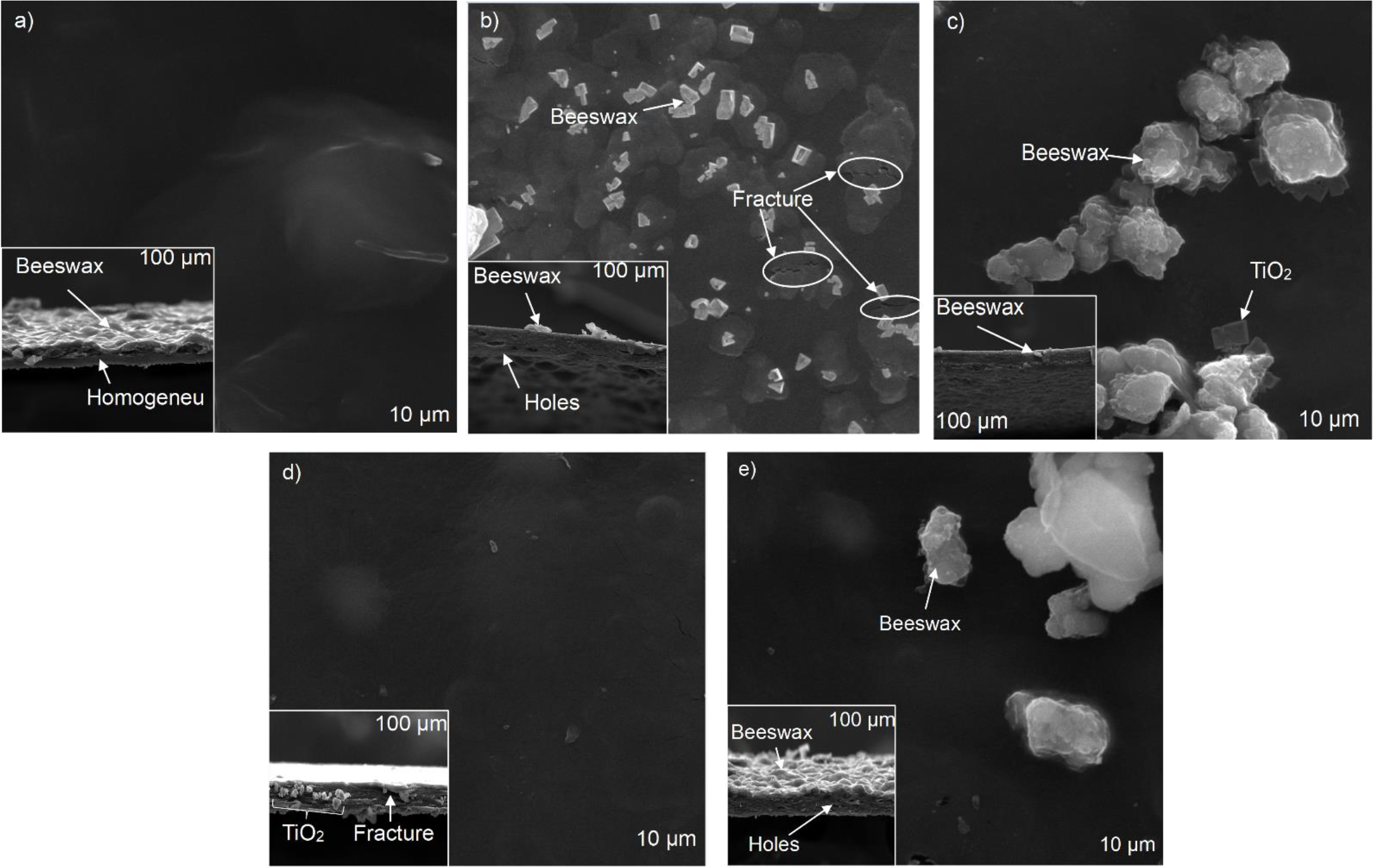
Figure 1 shows the SEM images of films with concentrations of BW and TD close to the treatments chosen to coat the fruit, obtained from the surface and the cross-section. Film Figure 1a, with 34.2% BW and 1.71% TD presented a nearly homogeneous mixture of components in the surface view, with slight opaque areas possibly due to the BW and CR that were not completely mixed. The cross-sectional view showed a wavy surface layer with some unmixed particles due to the BW, as well as a homogeneous matrix without holes or fractures. Separation between them was observed in both, the matrix and the wavy layer.
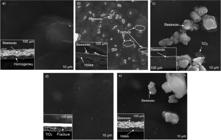
Film Figure 1b, with 20% BW, presented BW particles in the surface view that were not completely mixed with the CR, so some fractures could be observed. The cross-sectional view also showed some unmixed BW particles in a matrix with holes. Film Figure 1c, with 40% BW and 1% TD, showed particles possibly of BW that were slightly better mixed, but not completely, with CR and some loose TD particles. Transversely, only a thin matrix with a few small, loose particles, possibly BW, could be observed.
Film Figure 1d, with 1% TD had a more homogeneous surface than all the other films, with very slight opaque areas. In the cross-sectional view, an accumulation of TD particles and several fractures were observed. Film Figure 1e, with 20% BW and 1% TD, showed larger particles, probably BW, on the surface. Transversely, a thick, wavy surface layer formed due to the BW, and several holes in the matrix. This film showed no separation between the matrix and the wavy layer.
Apparent density, water vapor permeability and solubility
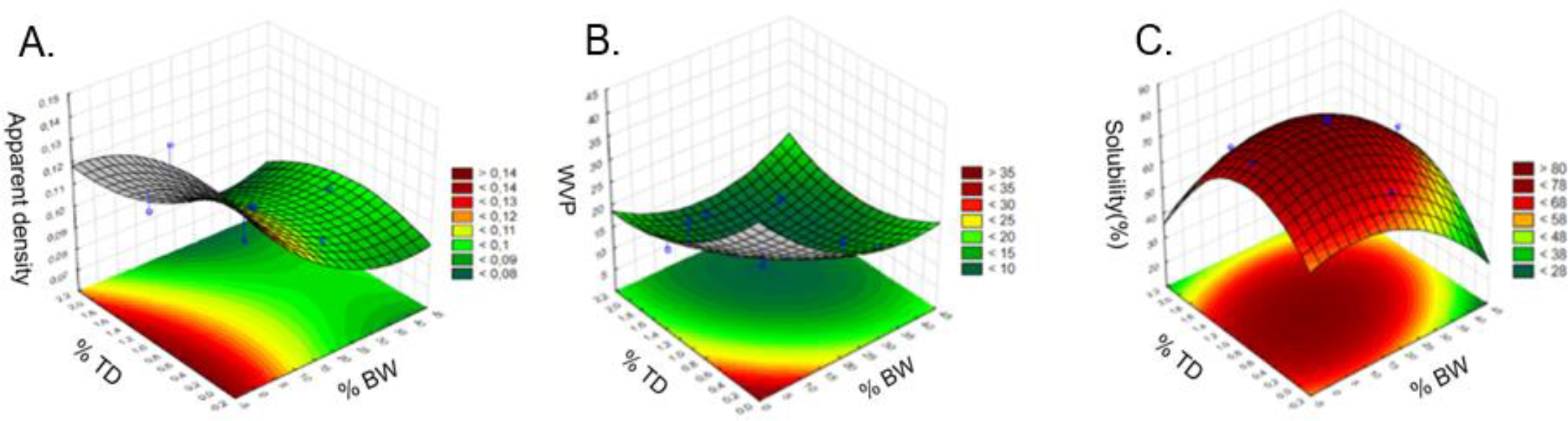
The film with the highest apparent density was the film with 1% TD and the lowest was the film with 34.2% BW with 1.71% TD. According to the result in Figure 2A, the addition of BW reduced the apparent density of the CR films. On the other hand, addition of TD increases it up to a certain value, but excess TD reduces the density.
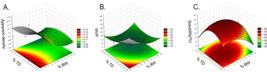
Response surface result of the apparent density evaluation, water vapor permeability (WVP) and solubility.
According to the results in Figure 2B, there was a significant influence of the percentages of BW and TD in WVP. A minimum of WVP was observed at 27.3% BW and 1.52% TD. According to the results in Figure 2C, the addition of BW and TD affect the solubility of the films, with maximum solubility being obtained by the joint addition of TD and BW. The film that presented the highest result had a concentration of 20% BW and 1.0% TD and the lowest was 34.2% BW with 0.29% TD.
Effect of coating on sugar apples and postharvest evaluation with and without UV light
Visual assessment, analysis of the respiration rate, weight loss, firmness, soluble solids, total phenolics and antioxidant activity (DPP)
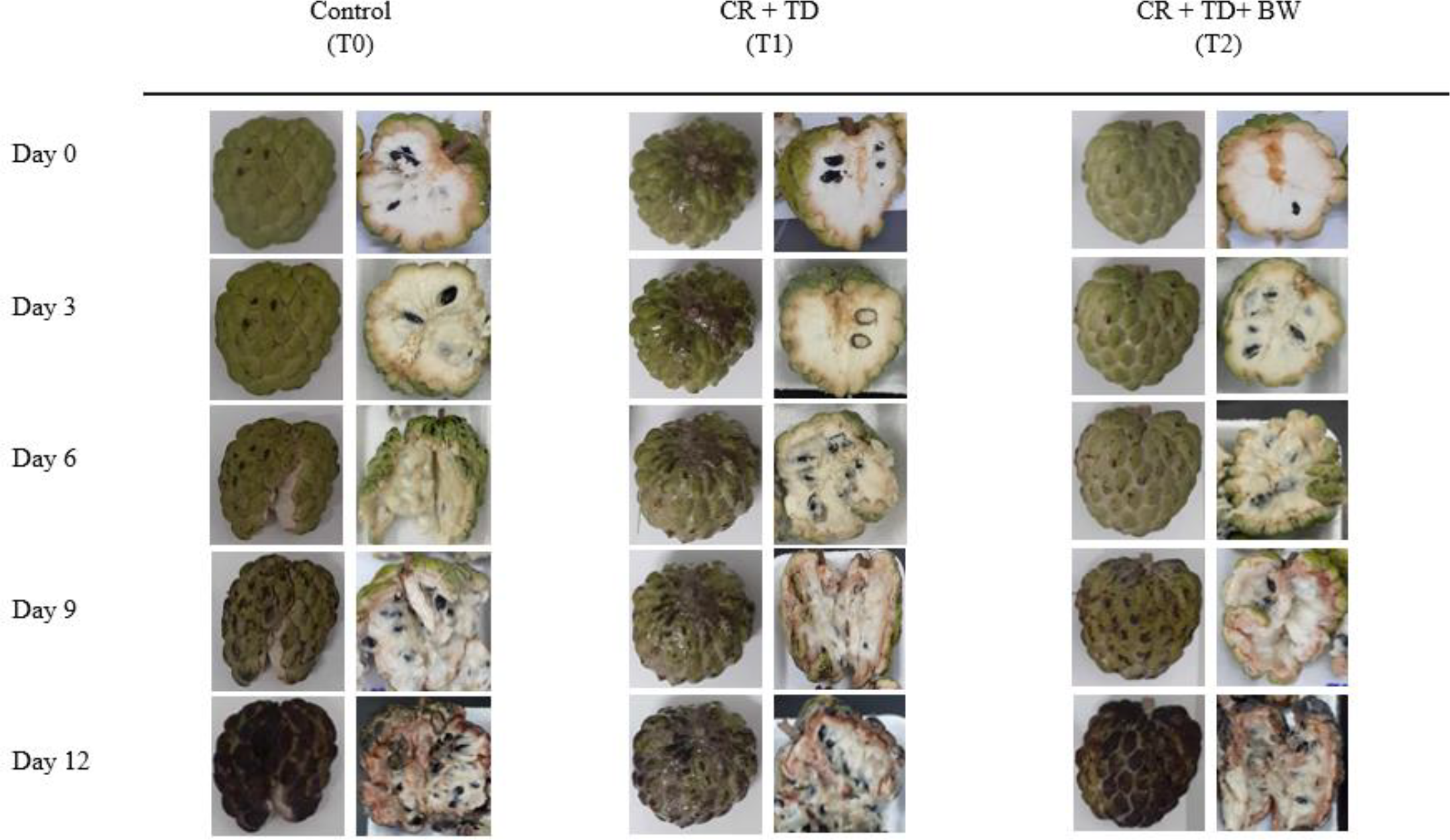
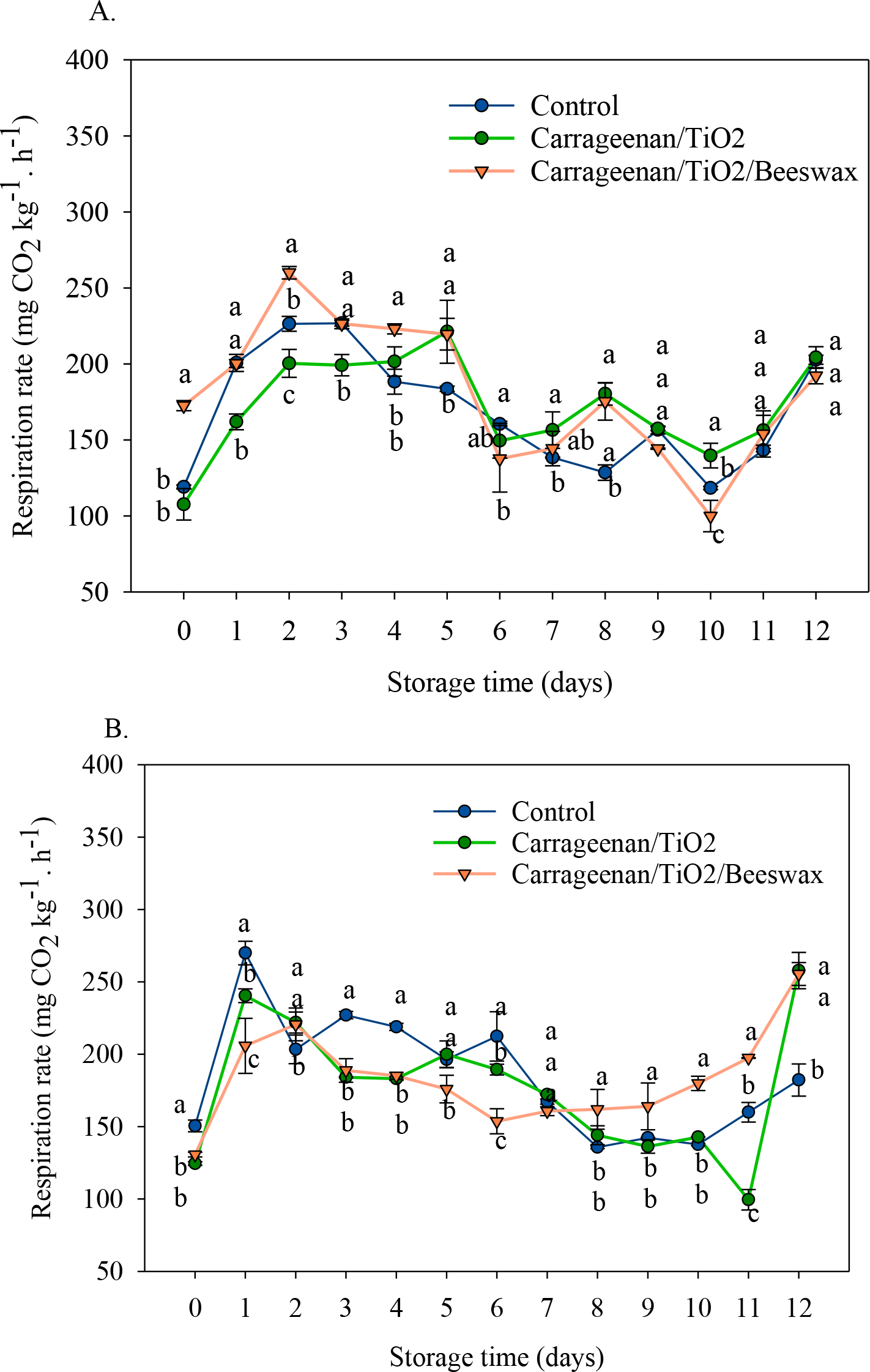
Figure 3 shows the external and internal appearance of sugar apples exposed to UV light over a 12-day storage period, while Figure 4 presents the fruit respiration rate under conditions with (A) and without (B) UV exposure.
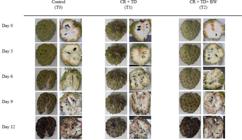
Visual assessment of internal and external appearance of sugar apples from uncoated fruits (control), CR+TD, and CR+TD+BW treatments during 12 days of storage at 15 ± 1 °C and RH 80 ± 1%, with presence of UV-light.
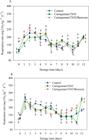
Respiration rate (mg CO2 Kg-1 h-1) of sugar apple fruits with different coatings with UV light (A) and without UV light (B) during storage at 15 ± 1 °C and RH of 80 ± 1%. Different letters indicate statistical difference by Tukey's test (p < 0.05). The vertical error bars represent their respective standard deviations.
Respiration rate was significantly affected by treatment over the storage period (p < 0.05). Under UV irradiation (Figure 3), fruits from the control treatment (T0) showed early opening of the carpels within the first few days, indicating a faster ripening process compared to the coated fruits. This effect is also evident in Figure 4A, with a sharp increase in respiration rate peaking on day 2.
In treatment T1 (CR + TD), although the respiration peak occurred on day 5 (Figure 4A), the fruit structure remained externally intact until day 9 (Figure 3), visually delaying the ripening process. However, from day 9 onwards, fruit expansion due to ripening caused the coating to rupture, exposing the pulp, which facilitated rapid fungal proliferation, as seen in Figure 3.
In treatment T2 (CR + TD + BW), despite a respiratory peak on day 2, similar to the control (T0) (Figure 4A), ripening was visually slower due to the higher integrity of the coating, which more effectively filled and protected the spaces between the carpels (Figure 3). Nevertheless, as in T1, internal pressure from fruit expansion partially ruptured the coating, allowing fungal development.
After 12 days of storage, T1 exhibited the best external appearance, with a greater proportion of green color and fewer black spots on the peel (Figure 3). Additionally, the internal appearance of coatings with and without BW (T2 and T1) showed no notable visual differences, but both were superior to the control, whose pulp displayed a reddish coloration indicative of advanced senescence (Figure 3). These results highlight the positive effect of the CR + TD coating in slowing fruit metabolism, with statistically significant differences (p < 0.05).
On the other hand, in the absence of UV light (Figure 4B), the T2 coating was more efficient at delaying the peak and reducing the intensity of respiration until day 2. While the T1 coating resulted in a lower respiration peak compared to the control fruits, both peaks occurred on day 1. This effect was beneficial, as both coatings were able to reduce the intensity and/or timing of the respiration peak in sugar apples. In the final days of the evaluation period, in both UV and non-UV treatments, an increase in respiration rate was observed (Figure 4B), likely associated with increased fungal presence and fruit opening (Figure 3), resulting from ripening.
Fruit weight loss was significantly affected by the treatments, both in the presence and absence of UV light (p < 0.05) (Table 2). Regardless of UV exposure, coated fruits exhibited significantly lower weight loss compared to the control (p < 0.05). Treatment T1 was the most effective, reducing fruit weight loss by 29% under UV light and 34% without UV light relative to uncoated fruits.
Results of the physicochemical parameters of sugar apples with different treatments with UV light and without UV light at 15 ± 1 °C and RH of 80 ± 1% after 12 days of storage.
Fruit firmness was significantly influenced by both the treatments and the presence of UV light (p < 0.05) (Table 2). Regardless of light exposure, coated fruits exhibited greater pulp firmness compared to the control. In the absence of UV light, treatments T1 and T2 did not differ statistically (p < 0.05); however, the highest mean value (2.3 N) was observed in T1, representing a 52% increase compared to uncoated fruits. Under UV light exposure, T1 also showed the highest mean firmness (4.0 N), corresponding to an 87% difference relative to the control, highlighting the protective effect of the coating on fruit tissue integrity during storage. Control fruits showed greater firmness in the absence of light. However, the firmness of the fruits from the T1 treatment was greater in the presence of UV light, when compared to the absence of light.
Soluble solids content was significantly influenced by the tested treatments and the presence or absence of UV light (p < 0.05) (Table 2). It was observed that fruits stored without UV exposure showed lower SS levels, with T1 and the control presenting statistically similar values (p < 0.05), both higher than T2. Under UV light, coatings T1 and T2 led to higher SS content in the fruits, with increases of 15% and 16%, respectively, compared to the same treatments under the absence of UV light.
There was a significant treatment effect, both in the presence and absence of UV light, on the total phenolic content of the fruits (p < 0.05) (Table 2). It was observed that only the T2 coating did not show differences in total phenolic content between light conditions (p < 0,05). Regardless of UV exposure, coated fruits exhibited lower phenolic content compared to the control. Under UV light, no statistical difference was found between the phenolic levels of fruits coated with T1 and T2 (p < 0.05). However, in the absence of light, the T1 coating resulted in a 9.68% increase in phenolic content compared to T2.
The antioxidant activity (DPPH) of the fruits was significantly influenced by the treatments, both in the presence and absence of UV light (p < 0.05) (Table 2). In the absence of light, fruits coated with T1 showed a 32% increase in antioxidant activity compared to the same treatment under light exposure. In contrast, DPPH values decreased in fruits coated with T2 and in the control under the same condition. Under UV light, fruits treated with T1 exhibited a 25% reduction in antioxidant activity compared to T2 and a 14% reduction compared to the control. In this condition, control fruits showed the lowest DPPH values, while those coated with T1 presented the highest.
DISCUSSION
The search for a film with good barrier properties against UV light is necessary to avoid the changes that can occur in food, such as flavor, discoloration, nutrient degradation and shelf life [36]. Haq and coauthors [37] mention that an alteration in the thickness of the films may occur due to the difference in phase densities and their interaction, where the lipid phase of the BW could prevent the structural formation of the polymer chains, causing a disordered structure and therefore increasing the thickness, as can be seen in films 1 with 2 and 3 with 4 (Table 1).
In the study of Park and coauthors [38], the addition of BW in films of polyvinyl alcohol and cellulose nanocrystals derived from corn straw decreased transparency of the films. Siripatrawan and Kaewklin [39] mention that a low amount of TD does not alter the film, remaining transparent due to the uniform dispersion in the matrix, but when the amount of TD increases the film presents greater opacity, having relation with our results where a greater amount of BW and TD produced greater opacity as in films 6 and 7 (Table 1).
The increase of TD in the films resulted in a homogeneous and compact matrix as can be seen in Figure 1a, Figure 1b and Figure 1e, where, from the cross-sectional view, Figure 1a presented a matrix without holes or fractures due to a higher concentration of TD compared to Figure 1e, where small holes began to be observed due to a lower concentration of TD and Figure 1b which presented larger holes due to the absence of the nanoparticle. In the study of Vejdan and coauthors [40], when adding 2 g of TD caused an agglomeration on the surface of the film, reducing its homogeneity, mentioning that it may have happened due to the high surface energy of TD in which it prevented its homogeneous dispersion, but with low concentrations (0.5 and 1.0 g) they achieved a uniform distribution. According to Balasubramanian and coauthors [41], the surface homogeneity may be related to the electrostatic interaction between positive polyelectrolytes and negatively charged TD, and the heterogeneity with high concentrations of TD, producing small agglomerates that reduce the homogeneity of the film surface due to the high surface energy they possess.
The increase of BW, in the presence of TD, generates roughness and heterogeneity as can be observed in both views, but especially the transversal one, of Figure 1d, Figure 1e and Figure 1a, where BW, up to a certain concentration, forms a second layer or wax agglomerates, making the film also more opaque and thicker (Table 1), which could be due, according to the study of Zhang and coauthors [42], to an instability of the emulsion when making the films, causing an agglomeration of lipid molecules, but when the presence of BW was low, it was randomly distributed in the matrix. Increased BW could accumulate on the surface of the films when the temperature was increased to 80 °C.
Regarding the WVP, films with the presence of a wavy layer due to the BW in the cross-sectional view (Figure 1a and Figure 1e) obtained low and similar WVP values, implying that the BW retained the passage of water vapor, the only difference being that one presented holes and some unmixed BW particles on the surface (Figure 1e), so its WVP was slightly higher.
The film with the highest WVP value had the most homogeneous surface due to the absence of BW and the presence of fractures in the cross-sectional view (Figure 1d), causing voids through which water vapor passed, unlike the film with the lowest value which, despite presenting clusters of unmixed BW and TD particles (Figure 1c), had a higher concentration of wax, which prevented the presence of holes, making it more hydrophobic and heterogeneous. The film with a slightly high WVP value (Figure 1b) was also due to the fractures that formed on the surface due to the BW not being completely mixed with the polymer matrix, in addition to presenting holes in the cross-sectional view, causing greater passage of water vapor. By comparing the SEM images (Figure 1) with the WVP response surface (Figure 2b), it can be deduced that both TD and BW alone, mixed with CR, do not control water vapor permeability as desired, despite BW being hydrophobic. However, using both components together, at certain concentrations that are not too high, it is possible to reduce permeability.
There is a relationship between water vapor transmission rate and density, where increasing density leads to a linear decrease in water vapor transmission rate after an inflection point [43] and also allows to control gas transfer by reducing oxygen within the coated food, inhibiting respiration and preventing weight loss [44].
Fonseca and coauthors [45] found that the addition of TD to HPMC-TD and gelatin-TD nanocomposite films did not change the density. According to Syahida and coauthors [46], the addition of high levels of palm wax to gelatin films produced cracking and phase separation, and it can be deduced from the results obtained that increasing the amount of BW produced an irregular surface with cracks in the films, causing the density to decrease.
In case of WVP, the BW causes a decrease in water transmission due to its hydrophobic nature, acting as a good barrier [47,10]. The reduction and increase of WVP in the films are observed in the SEM (Figure 1). When several BW agglomerates are formed, due to not being well incorporated during mixing, at very high concentrations, they can cause a slight increase in WVP (Figure 2B), as it makes the film thinner, fragile, heterogenous, and causes vacancies in the polymer matrix upon drying, allowing the passage of water vapor, while a more homogeneous film (Figure 1a) decreases WVP by forming a protective layer due to the BW, as can be observed in studies such as that of Zhang and coauthors [48] where to evaluated different hydrophobic agents on agar/maltodextrin films and the result of this combination with 10% BW was the lowest in WVP, however, with 20% BW it was highest.
The low availability of -OH groups may be the main factor why WVP decreases with increasing amount of TD [18]. Menezes and coauthors [49] also reported an interaction of TD with hydrophilic groups -OH and -NH2 in cassava starch films, resulting in lower WVP by decreasing the availability of hydrophilic groups and reducing water interactions with the film. It can be said that, according to Figure 2B, the concentration with 27.3% BW and 1.52% TD was the best since it significantly reduced the WVP due to the homogeneity of the mixture, so it is expected with this formulation to reduce the loss of water from the fruits during storage [50].
For solubility, in the case of adding nanoparticles such as TD to edible coatings, Menezes and coauthors [49] mention that the addition of 1.0% TD can cause a reduction in the solubility of the film, suggesting that the nanoparticle interacts through hydrogen bonds with the remaining hydrophilic groups, causing more hydrophobic nanocomposites. Pérez-Vergara and coauthors [47] mention that when evaluating the water solubility of films of native cassava starch, BW and propolis there was a decrease with increasing concentrations of starch and BW, inferring that wax was the main factor for this decrease, as it is a hydrophobic compound that, when remaining within the starch film matrix, formed a strong interaction through hydrogen bonds, reducing its affinity with water.
In Figure 6A, the effect of the T2 treatment, due to the presence of BW and the possible electrostatic interactions with TD and CR, may have canceled the effect of the action of the nanoparticles against ethylene in the presence of UV light, possibly affecting the production of hydroxyl radicals and reactive oxygen species that would oxidize ethylene into CO2 and water vapor [11] producing an increase in fruit respiration thanks to the presence of O2 within the coating.
According to the results in Figure 2B, although the film presented minimal WVP with 27.3% BW and 1.52% TD, the BW concentration could have generated spaces in the matrix when drying on the fruit, reducing the coating density (Figure 2A) and allowing O2 to enter. In the case of treatment T2 in the absence of UV light, CR, BW, and TD exhibited improved electrostatic interaction, increasing their gas barrier properties due to the activation of the nanoparticle against ethylene, oxidizing it to produce CO2, and due to the ability of BW as a lipid to control gas exchange between the external environment and the fruit, resulting in a lower respiration rate compared to T1 and the control.
In the final days of evaluation, in both treatments with and without UV light, an increase in the respiration rate was observed (Figure 6), possibly due to the presence of fungi and the opening of the fruits caused by ripening (Figure 5). T1 coating with UV light was the best treatment to delay the peak respiration of sugar apples until the fifth day of storage, since they are generally only acceptable for two or three days [4], and also by achieving a lower intensity than T2 and the control, allowing to reduce their senescence.
The results obtained both, in the presence and absence of UV light, could be associated with a higher respiratory frequency in uncoated fruits (T0) caused by the presence of cracks between the carpels due to ripening, which leads to excessive transpiration and produces greater water loss [3]. Despite the presence of BW in T2 with UV light, a lipid that influences water loss in more hydrophobic coatings [51] and with a concentration together with TD that would reduce this loss as a coating with low permeability (Figure 3), it failed to reduce the water load of the sugar apples, and the same thing could have occurred as in the respiration rate, where the BW did not allow an electrostatic interaction that was expected with TD and UV light.
Another option that could have occurred would be the generation of thin spaces or holes in the coating matrix, due to the heterogeneity of the coating, as can be seen in Figure 1, which influenced transpiration and, consequently, the greater weight loss of the fruit. Solubility could also have affected the result, since as can be seen in Figure 4, at a BW concentration of 27.3% the solubility is still high, which could cause parts of the coating to solubilize when the fruit transpires, causing the formation of holes and the entry of O2.
Agreeing with Parven and coauthors [52] where WL can occur due to the vapor pressure gradient between the tissue and the atmosphere passing through the fruit peel, losing water through transpiration, and also through respiration resulting in the loss of an atom of carbon in the form of CO2 in each cycle. The study carried out by Menezes and coauthors [11] mentions that TD allowed to reduce damage to WL in papaya by absorbing UV light in chitosan films with starch, degrading ethylene through the generation of free hydroxyl radicals and reactive oxygen species, reducing fruit respiration and consequently, reducing WL. Such results agree with the effects evidenced in the T1 coating, in the presence of UV light, in the present study.
The coatings, studied by Sousa and coauthors [53], with BW provided less WL compared to the control fruit, but the increase in BW concentrations in the coatings did not allow for a greater reduction in WL, despite being hydrophobic and act as a barrier, deducing that the relationship between the components in the coating is stronger than the components alone. It could be related to the results obtained, because the coating that had BW and TD did not have a good relationship together with UV light although separately, they act as good barriers.
For control fruits (T0), the absence of packaging promoted rapid ripening and weight loss due to the synthesis and activation of hydrolytic enzymes present in the depolymerization of peptic substances in the cell wall, through chemical and biochemical reactions during ripening [11]. The hydrolytic enzymes converted starch into cell wall sugar, resulting in a loss of cell turgor, causing softening and weight loss of the fruit [53].
In the presence of UV light, the results were similar to those of WL and the respiration rate, where the interaction of BW with TD and CR did not allow the photocatalytic degradation of ethylene in T2, producing an accumulation of the same, causing damage to the cell wall and generating less firmness in the fruit [54].
The better result of T1 in the presence of UV light could be that photocatalytic degradation of the ethylene due to TD when reacting with UV light, delaying damage to the cell wall and allowing the fruit to remain firm for longer than in the absence of light. The study by Menezes and coauthors [11] mentions that UV light had no effect on the firmness of the papaya pulp, but the coatings with and without TD were firmer than the control. For Kaewklin and coauthors [19], chitosan coatings with TD on tomatoes irradiated with UV light achieved greater firmness than chitosan coatings without TD and the control, mentioning that there was less accumulation of ethylene inside the coating due to its photodegradation due to TD, inhibiting the decomposition of the pectic substance of the cell walls.
A higher amount of SS in treatments T1 and T2 in the presence of light, unlike treatment T0, could have been due to the coatings that, by creating a modified atmosphere where their WVP capacity helped, accumulated CO2 and depleted O2, slowing down carbohydrate metabolism and starch depletion, causing a production of reserved starches and polysaccharides that were converted into soluble sugar form [3].
In the presence of UV light, in T1, the TD did not degrade all the ethylene within the coating, possibly due to the breakdown of the film when ripening the fruit from day 9, causing a greater amount of O2 around it, and therefore, a greater amount of ethylene produced, increasing carbohydrate metabolism, differing from the study by Kaewklin and coauthors [19], in which the soluble solids of tomatoes were lower in coatings with TD than without it and the control, suggesting that TD decreased concentrated ethylene, producing slower carbohydrate hydrolysis to form soluble sugars.
In the absence of UV light, in T2, the BW could promote a decrease in the enzymatic metabolism of converting starch into sugar, said by Sousa and coauthors [53] where their fruits coated with BW had lower SS than control fruits.
The coatings protect fruits from oxidation by acting as a gas transfer barrier, reducing the loss of phenolic content [30], this can be seen in the results of T2 in the absence of UV light and in T1 and T2 irradiated with UV light (Table 2), and may be because the BW in the unirradiated T2 treatment inhibited more the catalytic enzymes that oxidize phenolic compounds, so a low value was obtained, and in the case of irradiated treatments it could be due to the rupture of the coating during ripening, producing an excessive accumulation of ROS and therefore a decrease in total phenolics, having a result similar to the study by Iqbal and coauthors [55], in which cherries coated with BW, hydroxypropyl methylcellulose and nanoemulsions of essential oils also showed a reduction in total phenolics during storage.
The T1 treatment with or without irradiation could obtain a higher value than T2 due to the carbohydrate metabolism that occurred due to the rupture of the coating when the fruit ripens, a process in which phenolic compounds bound to components of the cell wall (starch, cellulose, pectin) are released [56] having a relation with the results obtained from SS where T1 also obtained higher values than T2.
In the study by Sousa and coauthors [53] the mango fruits (control) obtained a higher result than the coated fruits, deducing that the ripening of the fruit was the cause, since the phenolic compounds neutralize the free radicals produced during ripening, contrary to the study by Ghasil and coauthors [4], where the sugar apples that were subjected to different treatments (oxalic acid, salicylic acid and sodium nitroprusside) their total phenolics were decreasing, especially the control with a lower value, deducing that there was an oxidation of the phenols or another compound or a change in the soluble to insoluble form.
The effect of TD on the coatings, in the presence or absence of UV light, could decrease the presence of ethylene inside, reducing the activity of the polyphenol oxidase enzyme, preventing the hydrolysis of phenolic substances into anthraquinone and its subsequent oxidation in macromolecular precipitation of melanin (production of brown senescence and dark spots on the shell), resulting in a higher phenolic content [57] than the T2 treatment.
During the fruit ripening process, it is normal for antioxidants to decrease due to the development of free radicals [4], which were not controlled by a coating in the case of control fruits (T0) in the absence of UV light, so there was no delay in ripening. In the case of the T2 treatment, the coating could have been broken when the fruit expanded when ripening because the coating became solubilized in some areas or because there was not a homogeneous coating, causing the entry of O2 and resulting in greater respiration, and therefore faster ripening, causing a decrease in DPPH [58].
In the case of the result obtained with the presence of UV light, a greater antioxidant activity could have been promoted due to the presence of TD with CR. In the study of Taghipour and coauthors [59], pistachios with chitosan and TD coatings presented lower values than the control, deducing that the effectiveness of the treatment may depend on the fruit and the polymer used. Zambrano-Zaragoza and coauthors [60] mention that microbial growth causes an increase in antioxidant capacity through the biosynthesis of polyphenols and oxidation of pigments, in accordance with the presence of fungi in both treatment T2 and in the control in the last days of evaluation, which caused an increase in the DPPH value compared to T1, which delayed and reduced the presence of fungi in the fruit.
In the case of Khan and coauthors [61] they suggested that the treatments that managed to preserve the antioxidant activity were due to their oxygen barrier property, preventing the enzymatic oxidation of phenolic compounds, different from our result for the T2 treatment where the BW with TD and CR irradiated with UV light, could not act as an oxygen barrier.
According to the results obtained in the present study, coatings based on CR, TD and BW can be considered as an eco-friendly conservation method that could be used instead of the plastics that are conventionally used in the food industry due to their flexibility, resistance, lightness, low cost [62], gas and moisture barrier and impact resistance [63], but their main disadvantage is the time it takes to degrade, causing a negative environmental impact [62].
These coatings could help reduce losses generated during the harvest and storage of climacteric fruits. As observed in the results, the CR coating with 1.52% TD presented a good WVP and, when irradiated with a UV light lamp, its antimicrobial and ethylene degradation potential by the nanoparticle increased, maintaining the quality and acceptability of the fruit for much longer. This allows obtaining an innovative coating capable of extending the shelf life of climacteric fruits produced in rural areas by small producers, but which are not marketed in urban markets due to remoteness, lack of storage and distribution facilities, and the short shelf life of the fruit, as is the case of sugar apple, whose post-harvest losses range between 13% and 25% [64], representing a new job opportunity for rural residents in the marketing of new products.
CONCLUSION
CR films with BW and TD were developed, in which some concentrations presented good barrier properties. The lowest WVP result, according to the response surface, was essential to determine the optimal concentrations of the films for their subsequent use as coating on sugar apples, highlighting the films with 1.52% TD. The presence of UV light with this coating delayed peak respiration, decrease the mass loss, maintain the firmness, soluble solids and antioxidant activity, maintained acceptable quality up to the 9th day of storage at 15 ± 1 °C and 80 ± 1% RH for Annona squamosa. This study demonstrated the efficiency of CR + TD films irradiated with UV light as an innovative technology to preserve the quality and extend the shelf life of climacteric fruits.
-
Funding:
This research received no external funding
Acknowledgments:
The authors would like to thank the Coordination for the Improvement of Higher Education Personnel (CAPES) for granting the scholarship, the Federal Rural University of Semi-Arid Region, the Postgraduate Program in Environment, Technology and Society and the Semi-Arid Plant Sciences Research Center by SEM analysis for their support.
Data Availability Statement:
Research data are only available upon request for corresponding author.
REFERENCES
- 1 Kumari N, Prakash S, Kumar M, Radha, Zhang B, Sheri V, et al. Seed Waste from Custard Apple (Annona squamosa L.): A Comprehensive Insight on Bioactive Compounds, Health Promoting Activity and Safety Profile. Processes. 2022 Oct;10(10):2119.
- 2 Pareek S, Yahia EM, Pareek OP, Kaushik RA. Postharvest physiology and technology of Annona fruits. Food Res Int. 2011 Mar;44(7):1741-51.
- 3 Gohlani S, Bisen BP. Effect of different coating material on the storage behavior of custard apple (Annona squamosa L.). The Bioscan. 2012 Oct;7(4):637-40.
- 4 Ghasil I, Meena NK, Bhatnagar P, Singh H, Kumar A, Jain SK, et al. Effect of Postharvest Treatments on Biochemical and Bioactive Compounds of Custard Apple (Annona Squamosa L.) Cv. Balanagar. Int J Fruit Sci. 2022 Oct;22(1):826-36.
- 5 Patil RA, Rao DVS, Manasa B. Effect of modified atmospheric packaging on chilling injury and shelf-life of custard apple fruits. J Appl Hortic. 2013 Aug;15(2):100-5.
- 6 Venkatram A, Bhagwan A. Storage life improvement of custard apple (Annona squamosa L.) ‘Balanagar’ fruits by postharvest application of antioxidants. J Appl Hortic. 2013 Sep;15(3):215-9.
- 7 Andriani V, Handayani NA. Recent technology of edible coating production: A review. Mater Today: Proc. 2023 Mar;87:200-6.
- 8 Gupta V, Biswas D, Roy S. A Comprehensive Review of Biodegradable Polymer-Based Films and Coatings and Their Food Packaging Applications. Materials. 2022 Aug;15(17):5899.
- 9 Bizymis AP, Tzia C. Edible films and coatings: properties for the selection of the components, evolution through composites and nanomaterials, and safety issues. Crit Rev Food Sci Nutr. 2021 Jun;62(31):8777-92.
- 10 Queiroz LPO, Aroucha EMM, Silva WAO, Almeida JGL, Soares LP, Leite RHL. A novel edible biocomposite coating based on alginate from the brown seaweed Dictyota mertensii loaded with beeswax nanoparticles extends the shelf life of yellow passion fruit. Int J Biol Macromol. 2025 Jan;284(Pt.1):138051.
- 11 Menezes FLG, Leite RHL, Santos FKG, Aria AI, Aroucha EMM. TiO2 incorporated into a blend of biopolymeric matrices improves film properties and affects the postharvest conservation of papaya fruits under UV light. Food Chem. 2024 Sep;433:137387.
- 12 Liu Y, Qin Y, Bai R, Zhang X, Yuan L, Liu J. Preparation of pH-sensitive and antioxidant packaging films based on κ-carrageenan and mulberry polyphenolic extract. Int J Biol Macromol. 2019 May;134:993-1001.
- 13 Cheng C, Chen S, Su J, Zhu M, Zhou M, Chen T, et al. Recent advances in carrageenan-based films for food packaging applications. Front Nutr. 2022 Sep;9:1004588.
- 14 Formiga AS, Junior JSP, Pereira EM, Cordeiro INF, Mattiuz BH. Use of edible coatings based on hydroxypropyl methylcellulose and beeswax in the conservation of red guava “Pedro Sato”. Food Chem. 2019 Mar;290:144-51.
- 15 Sharma M, Saini CS. Postharvest shelf-life extension of fresh-cut guavas (Psidium guajava) using flaxseed protein-based composite coatings. Food Hydrocolloids. 2021 Aug;1:100015.
- 16 Reis MO, Olivato JB, Bilck AP, Zanela J, Grossmann MVE, Yamashita F. Biodegradable trays of thermoplastic starch/poly (lactic acid) coated with beeswax. Ind Crops Prod. 2018 Dec;112:481-7.
- 17 Qu L, Chen G, Dong S, Huo Y, Yin Z, Li S, et al. Improved mechanical and antimicrobial properties of zein/chitosan films by adding highly dispersed nano-TiO2 Ind Crops Prod. 2019 Apr;30:450-8.
- 18 Zhang X, Liu Y, Yong H, Qin Y, Liu J, Liu J. Development of multifunctional food packaging films based on chitosan, TiO2 nanoparticles and anthocyanin-rich black plum peel extract. Food Hydrocolloids. 2019a Mar;94:80-92.
- 19 Kaewklin P, Siripatrawan U, Suwanagul A, Lee YS. Active packaging from chitosan-titanium dioxide nanocomposite film for prolonging storage life of tomato fruit. Int J Biol Macromol. 2018 Feb;112:523-9.
- 20 Brasil YL, Formiga AS, Cruz RRP, Silva MS, Silva AGF, Mattiuz BH, et al. Edible coatings based on hydroxypropyl methyl cellulose and beeswax in pinecone. Rev Bras Ciênc Agrár. 2022 Dec;17(4):e2126.
- 21 Yang Z, Li M, Zhai X, Zhao L, Tahir HE, Shi J, et al. Development and characterization of sodium alginate/tea tree essential oil nanoemulsion active film containing TiO2 nanoparticles for banana packaging. Int J Biol Macromol. 2022 May;213:145-54.
- 22 Tchonkouang RD, Lima AR, Quintino AC, Cristofoli NL, Vieira MC. UV-C Light: A Promising Preservation Technology for Vegetable-Based Nonsolid Food Products. Foods. 2023 Aug;12(17):3227.
- 23 Zhou D, Liu Q, Zhu T, Li T, Fan G, Li X, et al. Effects of ultraviolet C on the quality and aroma volatile in peach fruit during postharvest storage. Food Chem. 2024 May;456(1):139906.
- 24 Noorian S, Nafchi AM, Bolandi M, Jokar M. Effects of Nano-Titanium Dioxide and Mentha piperita Essential Oil on Physicochemical, Mechanical, and Optical Properties of Cassava Starch Film. Starch. 2022 Jul;74(9-10).
- 25 Duan N, Li Q, Meng X, Wang Z, Wu S. Preparation and characterization of k-carrageenan/konjac glucomannan/ TiO2 nanocomposite film with efficient anti-fungal activity and its application in strawberry preservation. Food Chem. 2021 Jun;364(2):130441.
- 26 Liu Z, Liu X. Enhanced Antibacterial Performance of Chitosan/Corn Starch Films Containing TiO2/Graphene for Food Packaging. Polymers. 2022 Sep;14(18):3844.
- 27 Soares LP, Almeida JGL, Aroucha EMM, Leite RHL, Balaban RC, Santos FKG. Analysis of the Interaction of Saponified Sunflower Oil Surfactant in Potato Starch Biodegradable Films (Solanum tuberosum). Mater Res. 2025 Jun;28(suppl.1):e20240621.
- 28 Marium A, Tabassum A, Ali TM, Aliya R. Production of bio-degradable carrageenan-based films from Solieria robusta (red bamboo) of Karachi Coast by using glycerol and sorbitol. Int J of Biol Biotech. 2021 Mar;18(1):65-72.
- 29 Santos ER, Souza FTC. [Development of a fermented beverage using soursop pulp (Annona squamosa L.) as an alternative for harvest excesses]. Rev Bras Tec Agroindustrial. 2020 Jun;14(1):3191-211.
- 30 Rossi-Márquez G, Dávalos-Saucedo CA, Mayek-Pérez N, Di Pierro P. Multilayered Edible Coatings to Enhance Some Quality Attributes of Ready-to-Eat Cherimoya (Annona cherimola). Coatings. 2023 Dec;13(1):41.
- 31 Isermeyer VH. [A simple method for determining soil respiration and carbonates in the soil]. Z Pflanzenernahr Dung Bodenkd. 1952 Sep;56(1-3):26-38.
- 32 Moura EA, Chagas PC, Oliveira RR, Taveira DLL, Grigio ML, Araújo WF. Determination of the harvest time of sugar apples (Annona squamosa L.) in function of carpel interspace. Acta Sci. 2021 Nov;43:e48732.
- 33 Terán-Erazo B, Alia-Tejacal I, Balois-Morales R, Juárez-Lopez P, López-Guzmán GG, Pérez-Arias GA, et al. [Physical, chemical, and morphological characterization of soursop fruits (Annona muricata L.)]. Agrociencia. 2019 Dec;53(7):1013-27.
- 34 Leite DOD, Camilo CJ, Nonato CFA, Carvalho NKG, Salazar GJT, de Morais SM, et al. Chemical Profile and Evaluation of the Antioxidant and Anti-Acetylcholinesterase Activities of Annona squamosa L. (Annonaceae) Extracts. Foods. 2021 Sep;10(10):2343.
- 35 Ferreira DF. SISVAR: A computer analysis system to fixed effects split plot type designs. Bras J Biom. 2019 Dec;37(4):529-35.
- 36 Riahi Z, Khan A, Rhim J-W, Shin GH, Kim JT. Carrageenan-based active and intelligent packaging films integrated with anthocyanin and TiO2-doped carbon dots derived from sweet potato peels. Int J Biol Macromol. 2024 Feb;259:129371.
- 37 Haq MA, Hasnain A, Jafri FA, Akbar MF, Khan A. Characterization of edible gum cordia film: Effects of beeswax. LWT - Food Sci Technol. 2016 Jan;68:674-80.
- 38 Park N, Friest MA, Liu L. Enhancing the Properties of Polyvinyl Alcohol Films by Blending with Corn Stover-Derived Cellulose Nanocrystals and Beeswax. Polymers. 2023 Nov;15(21):4321.
- 39 Siripatrawan U, Kaewklin P. Fabrication and characterization of chitosan-titanium dioxide nanocomposite film as ethylene scavenging and antimicrobial active food packaging. Food Hydrocolloids. 2018 May;84:125-34.
- 40 Vejdan A, Ojagh SM, Adeli A, Abdollahi M. Effect of TiO2 nanoparticles on the physico-mechanical and ultraviolet light barrier properties of fish gelatin/agar bilayer film. LWT - Food Sci Technol. 2016 Mar;71:88-95.
- 41 Balasubramanian R, Kim SS, Lee J, Lee J. Effect of TiO2 on highly elastic, stretchable UV protective nanocomposite films formed by using a combination of k-Carrageenan, xanthan gum and gellan gum. Int J Biol Macromol. 2019 Nov;123:1020-27.
- 42 Zhang R, Wang W, Zhang H, Dai Y, Dong H, Kong L, et al. Effects of preparation conditions on the properties of agar/maltodextrin beeswax pseudo-bilayer films. Carbohydr Polym. 2020 Feb;236:116029.
- 43 Zhang W, Xiao H, Qian L. Beeswax-chitosan emulsion coated paper with enhanced water vapor barrier efficiency. Appl Surf Sci. 2014 May;300:80-5.
- 44 Li X, Li F, Zhang X, Tang W, Huang M, Huang Q, et al. Interaction mechanisms of edible film ingredients and their effects on food quality. Curr Res Food Sci. 2024 Feb;8:100696.
- 45 Fonseca JM, Valencia GA, Soares LS, Dotto MER, Campos CEM, Moreira RFPM, et al. Hydroxypropyl methylcellulose-TiO2 and gelatin-TiO2 nanocomposite films: Physicochemical and structural properties. Int J Biol Macromol. 2020 Nov;151:944-56.
- 46 Syahida SN, Ismail-Fitry MR, Ainun ZMA, Hanani ZAN. Effects of palm wax on the physical, mechanical and water barrier properties of fish gelatin films for food packaging application. Food Packag Shelf Life. 2020 Mar; 23:100437.
- 47 Pérez-Vergara LD, Cifuentes MT, Franco AP, Pérez-Cervera CE, Andrade-Pizarro RD. Development and characterization of edible films based on native cassava starch, beeswax, and propolis. NFS J. 2020 Sep;21:39-49.
- 48 Zhang R, Wang W, Zhang H, Dai Y, Dong H, Hou H. Effects of hydrophobic agents on the physicochemical properties of edible agar/maltodextrin films. Food Hydrocolloids. 2019b Oct;88:283-90.
- 49 Menezes FLG, Leite RHL, Santos FKG, Aria AI, Aroucha EMM. TiO2-enhanced chitosan/cassava starch biofilms for sustainable food packaging. Colloids Surf, A. 2021 Oct;630:127661.
- 50 Shah YA, Bhatia S, Al-Harrasi A, Tarahi M, Almasi H, Chawla R, et al. Insights into recent innovations in barrier resistance of edible films for food packaging applications. Int J Biol Macromol. 2024 May;271(Pt 1):132354.
- 51 Oliveira VRL, Santos FKG, Leite RHL, Aroucha EMM, Silva KNO. Use of biopolymeric coating hydrophobized with beeswax in post-harvest conservation of guavas. Food Chem. 2018 Mar;259:55-64.
- 52 Parven A, Sarker MR, Megharaj M, Meftaul IM. Prolonging the shelf life of Papaya (Carica papaya L.) using Aloe vera gel at ambient temperature. Sci Hortic. 2020 Jan;265:109228.
- 53 Sousa FF, Junior JSP, Oliveira KTEF, Rodrigues ECN, Andrade JP, Mattiuz BH. Conservation of ‘Palmer’ mango with an edible coating of hydroxypropyl methylcellulose and beeswax. Food Chem. 2021 Dec;346:128925.
- 54 Alves MJS, Nobias MC, Soares LS, Coelho DS, Maraschin M, Basso A, et al. Physiological changes in green and red cherry tomatoes after photocatalytic ethylene degradation using continuous air flux. Food Sci Technol Int. 2021 Nov;29(1):3-12.
- 55 Iqbal SZ, Hussain M, Ali H, Haider A, Ali S, Hussain A, et al. Preparation and application of hydroxypropyl methylcellulose blended with beeswax and essential oil edible coating to enhance the shelf life of sweet cherries. Int J Biol Macromol. 2024 Jun;272(Pt 1):132532.
- 56 Hernández-Miranda J, Reyes-Portillo KA, García-Castro A, Ramírez-Moreno E, Román-Gutiérrez AD. Impacts of Phenolic Compounds and Their Benefits on Human Health: Germination. Metabolites. 2025 Jun;15(7):425.
- 57 Xie J, Wang R, Li Y, Ni Z, Situ W, Ye S, et al. A novel Ag2O-TiO2-Bi2WO6/polyvinyl alcohol composite film with ethylene photocatalytic degradation performance towards banana preservation. Food Chem. 2022 Dec;375: 131708.
- 58 Osae R, Apaliya MT, Alolga RN, Kwaw E, Otu PNY, Akaba S. Influence of shea butter, bee wax and cassava starch coatings on enzyme inactivation, antioxidant properties, phenolic compounds and quality retention of tomato (Solanum lycopersicum) fruits. Appl Food Res. 2022 Jan;2(1):100041.
- 59 Taghipour S, Nia AE, Hokmabadi H, Yahia EM. Quality evaluation of fresh pistachios (Pistacia vera L.) cultivars coated with chitosan/TiO2 nanocomposite. Int J Biol Macromol. 2024 Dec;258(Pt 2):129055.
- 60 Zambrano-Zaragoza ML, Quintanar-Guerrero D, González-Reza RM, Cornejo-Villegas MA, Leyva-Gómez G, Urbán-Morlán Z. Effects of UV-C and Edible Nano-Coating as a Combined Strategy to Preserve Fresh-Cut Cucumber. Polymers. 2021 Oct;13(21):3705.
- 61 Khan OA, Zaidi S, Islam RU, Naseem S, Junaid PM. Enhanced shelf-life of peach fruit in alginate based edible coating loaded with TiO2 nanoparticles. Prog Org Coat. 2023 May;182:107688.
- 62 Freitas IZ, Santos AP, Brandalise LT, Bertolini GRF. Os sacos plásticos na perspectiva da sustentabilidade: Uma revisão sistemática. Rev Metrop Sustentabilidade. 2020 Dic;10(3):182-203.
- 63 Stoica M, Antohi VM, Zlati ML, Stoica D. The financial impact of replacing plastic packaging by biodegradable biopolymers - A smart solution for the food industry. J Cleaner Prod. 2020 Dec;277(2):124013.
- 64 Shrivastava A, Tripathi AD, Maurya KK. The drying characteristics and quality evaluation of tray dried custard apple (Annona squamosa L.) pulp. Int J Food Sci Technol. 2019 Jan;9(1):1-12.
-
Editor-in-Chief:
Paulo Vitor Farago
-
Associate Editor:
Bill Jorge Costa