 Effects of Bamboo (Guadua spp.) Dominance on Germination and Soil Seed Bank Diversity of an Open Forest in Western Amazonia
Abstract
The soil seed bank is essential for natural regeneration in tropical forests, but it was not known whether the predominance of bamboos of the genus Guadua in the forest understory influenced the composition and diversity of the soil seed bank and forest regeneration. For these reasons, we evaluated the soil seed bank in Western Amazon forests with and without dominant bamboo (Guadua spp.), comparing the density of emerged seedlings and floristic composition. The study was carried out in a forest fragment in the municipality of Senador Guiomard, Acre (10°04'S; 67°37'W. Altitude: 241 m), in forest typologies with and without dominant bamboo in the understory. In each typology, 20 samples of the soil seed bank were collected and germinated in an oven. Counting and identifying the emerged seedlings revealed a higher number of seedlings, density of emerged seedlings and species diversity in the samples from the forest without bamboo. The floristic similarity between the seed banks was low. In the forest with bamboo, the most common species were Trema micranthum, Cecropia sciadophylla and Alchorneopsis floribunda, while in the forest without bamboo it was Saccoloma sp.
Keywords:
Species diversity; Bamboo forest; Natural regeneration.
HIGHLIGHTS
Bamboo forests occupy more than 150,000 km2 in the southwestern Amazon, in Brazil, Peru and Bolivia.
The soil seed bank is essential for regeneration and succession in tropical forests.
Forests with bamboo have a lower diversity of seeds and number of emerged seedlings.
The floristic similarity between the soil seed banks of forests with and without bamboo is low.
INTRODUCTION
Forest regeneration and succession are crucial for the maintenance of forest ecosystems. These processes depend on the occurrence of seed dispersal and recruitment of new plants from the seedling bank and the seed bank in the forest floor [1, 2]. The soil seed bank is essential for natural regeneration in tropical forests [3] and is considered a stock of viable vegetative propagules present on the surface or in the subsurface layer of the soil, consisting mainly of seeds from species with high dispersal efficiency, dormancy, high production and high longevity [4]. Various natural or man-made factors can affect these processes. Knowing the seed bank composition is important for understanding the dynamics of vegetation [5] and its role in the regeneration of tropical forests in the face of growing threats, particularly those arising from deforestation and changes in land use. It is also important for assessing the vulnerability of forests and supporting the application of strategies to conserve and maintain biodiversity [6].
In the Western Amazon, an area estimated between 155,159 and 161,500 km2 that stretches between Brazil (Acre and Amazonas States), Bolivia (Pando Department) and Peru (Madre de Dios Department) [7, 8] is covered by native forests with the understory dominated by bamboos of the genus Guadua. Guadua is one of the most widely distributed genera of native bamboos in the Americas, with 20 of its 25 species occurring naturally in the forests of the Amazon biome. The genus includes the largest bamboo species in the Neotropics, with some of them reaching up to 30 m in height and 20 cm in diameter [9]. The bamboo forests of the southwestern Amazon are the largest extension of bamboo-dominated Neotropical forests on the planet [10]. Guadua weberbaueri Pilger and Guadua sarcocarpa Londoño & Peterson stand out among the native bamboo species most frequently found in these Western Amazon forests [11].
The dominance of this grass in the forest environment promotes drastic changes in the structure and functioning of these forests [11, 12, 13]. It is known that bamboo-dominated forests have a lower density and diversity of tree species, leading to a reduction in basal area compared to forests where bamboo is not present [12, 13]. In addition, such areas also have higher tree mortality and a reduction of up to 50% in carbon sequestration [14, 15].
In the eastern region of Acre, where this study was carried out, most of the trees in the dominant bamboo forests lose their leaves during the prolonged dry season. This seasonal behavior allows more light to penetrate to the forest floor, favoring the perpetuation of bamboo in the understory [11] and possibly influencing the germination of the soil seed bank, since temperature and light are among the most influential environmental factors in seed bank germination [16]. The presence of bamboo can also promote changes in nutrient cycling, in the local microclimate by opening up clearings [8] and, consequently, natural regeneration, limiting the perpetuation of species [17, 18].
The changes that bamboo dominance causes in forests reduces the diversity and alters the composition of seed species that arrive in forests through seed rain, interferes with the way seeds are dispersed and increases the circulation of propagules through abiotic dispersal mechanisms [17].
Since there are no studies evaluating the impact of bamboo dominance on the composition and diversity of the soil seed bank, two hypotheses can be put forward. In the first hypothesis (Null Hypothesis H0), it is assumed that the dominant presence of bamboo in the forest understory does not influence the composition and diversity of the soil seed bank. In the second hypothesis (Alternative Hypothesis H₁), the dominant presence of bamboo in the forest influences the composition and diversity of the soil seed bank, resulting in significant differences when comparing the seed banks in forests with and without bamboo.
Thus, the present study aimed to evaluate the soil seed bank in forests in Western Amazonia with and without dominant bamboo in the understory, comparing the density of emerged seedlings and the floristic composition of the seed banks originating from the two forest typologies.
MATERIAL AND METHODS
Characterization of the study area
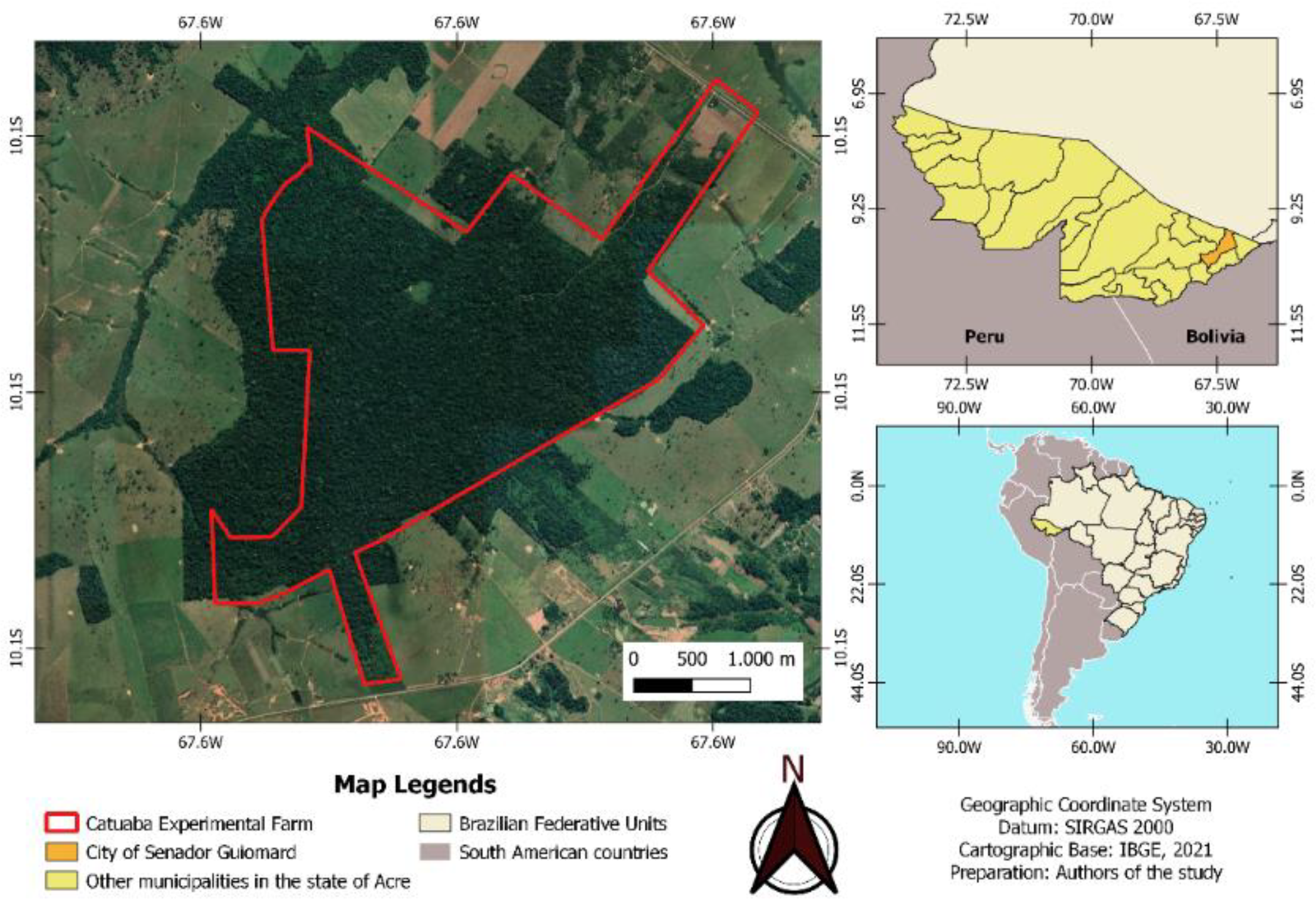
The study was carried out inside the forest fragment at the Catuaba Experimental Farm (Figure 1), a research area belonging to the Federal University of Acre, located in the municipality of Senador Guiomard (10°04'S; 67°37'W. Alt.: 241 m), around 23 km from the city of Rio Branco.
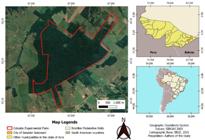
Location of the Catuaba Experimental Farm, in Senador Guiomard, Acre, Brazil. Source: Authors (2024).
There are primary and secondary forests on the site, the latter especially in the edge areas. The primary forest area is made up of two distinct types: 'Open Ombrophilous Forest with Bamboo' and 'Open Ombrophilous Forest with Palm Trees' [19]. The local relief is characterized as gently undulating and the predominant soils in the area are typical dystrophic RED LATOSOL, typical aluminum-yellow RED LATOSOL, typical dystrophic RED ARGISOL, typical dystrophic HAPLIC PLINTOSOL and dystrophic Ta HAPLIC GLYSOL, all with low natural fertility [20].
The local climate is hot and humid equatorial, with two distinct seasons. The dry season, between mid-April and mid-September, and the rainy season, between mid-October and mid-April. The driest month is June (31.6 mm) and the wettest January (289 mm). The average annual rainfall is 1,947.5 mm and the average annual temperature is 24.8 °C, oscillating between 23.2 °C and 25.7 °C [21, 22].
Collecting and monitoring the soil seed bank
To collect seed bank samples, two 0.8-hectare plots were set up 500 m apart to ensure independence between replicates [6]. One in the forest typology with dominant bamboo ('Open Ombrophilous Forest with bamboo') and the other in the typology where bamboo was not dominant ('Open Ombrophilous Forest with palm trees'), which was also considered the control plot to contrast changes in the composition and density of the seed bank from the bamboo-dominated forest. The plots were linear in shape (20 m wide x 400 m long) [23] to ensure the collection of the greatest possible variability of soil seed bank samples across the two forest typologies.
Twenty samples of the soil seed bank were collected in mid-January, at the height of the rainy season in the region, from areas where the greatest abundance, diversity and density of emerging seedlings could be observed in each forest typology (40 samples in total), with samples taken at a distance of 20 m from each other. To standardize the sample collection, a 25 cm x 25 cm template was used in conjunction with a metal shovel with a square nozzle. Before the collection, the litter above the ground was removed [6]. Once collected, the samples were placed in plastic trays (42 cm long x 28 cm wide x 7 cm high). As the conditions found in the forest environment make it difficult to take samples with a uniform thickness, washed sand was placed in each tray in order to homogenize the thickness of the samples. It was estimated that the average thickness of the soil layer collected from the 40 samples was 3.9 cm, which was equivalent to 2,437 cm3 of soil/sample.
Once the samples had been taken, they were transported to the greenhouse of the seedling production nursery at the Zoobotanical Park of the Federal University of Acre, located in the city of Rio Branco, Acre. The samples were irrigated evenly and seedling emergence was monitored for 106 days, and was considered to have ended when it stabilized and no new individuals were counted.
Identification of emerged seedlings
The emerged seedlings were identified by consulting literature and the help of a taxonomic identifier specialized in the identification of seedlings from Amazon primary and secondary forests (Dr. Tony Vizcarra Bentos, co-author of the study). The identification took place both with the individuals in the trays and exsiccates and photographs sent to the identifier, since all the plants were removed from the trays after the first opened pair of leaves had emerged for the exsiccates to be made.
Quantitative and qualitative analysis
The direct counting method of emerged seedlings was used to analyze their density, which was determined using the ratio between the total number of emerged seedlings in the samples from each forest type and the total area of the trays used to store the seed bank samples (0.1176 m2/tray, 2.352 m2/type).
Statistical analysis was carried out to assess significant differences between the number and the density of germinated seedlings in samples from the areas with and without dominant bamboo. The Shapiro-Wilk test was applied to verify the normality of the data from the two areas. To normalize the data distribution, the logarithmic transformation log1p(x) was applied, which calculates the natural logarithm of (1 + x). This approach is advantageous because it deals with zero values without causing errors, since the logarithm of zero is undefined. The transformation was applied to each germinated seedling count value whose distribution did not follow a normal distribution. The logarithmic transformation is especially useful for reducing positive asymmetry and compressing extreme values, making the data distribution more symmetrical.
After the logarithmic transformation, the normality of the transformed data was checked again. With the data normalized, the analysis continued by applying Welch's T-test to compare the mean germination counts and densities between the areas with and without bamboo. This test was chosen to deal with unequal variances between the groups tested. These analyses were carried out using Python 3.11 software, with the help of the Pandas Libraries (version 1.5.3) for manipulating and organizing the data and scipy (version 1.11.1) for running the statistical tests. The level of statistical significance of the tests was 0.05.
To assess whether the impact of bamboo on the composition and density of the soil seed bank was significant, several packages of the RStudio software (version 2024.12.1) were used. Data import was performed using the readxl package, which enabled efficient reading of Excel spreadsheets. For the ecological transformation of the data, the decostand function from the vegan package was employed, applying the Hellinger transformation.
Floristic diversity was assessed by calculating the Shannon-Wiener diversity index (H') and Pielou's evenness (J'). In addition, we also used the online tool iNEXT [24] to assess species diversity at different sample sizes and coverage levels, facilitating the calculation of rarefaction curves and extrapolation based on Hill's numbers. Using incidence data based on sampling units, rarefaction and extrapolation curves were produced for species diversity, both based on sample size and coverage. Hill number interpolation and extrapolation sampling curves were calculated for the three most widely used orders: species richness (q=0), Shannon diversity (q=1) and Simpson diversity (q=2). We applied 10 bootstrap replicates and set the confidence interval (CI) at 95% for these analyses.
It should be noted that measuring diversity using the Hill-Chao coefficients is a method that unifies different biodiversity parameters, such as species richness (q = 0), Shannon diversity (q = 1) and Simpson diversity (q = 2), and is also used to measure phylogenetic and functional diversity. Furthermore, it is a tool that can be adapted according to the needs of users, who can adjust the sensitivity of the method to the presence of rare or dominant species [25].
Floristic similarity between the areas was compared by determining Jaccard's similarity index (Sj) using Microsoft Excel 2013 software. Similarity between samples was also calculated using the Bray-Curtis distance with the vegan package of the RStudio Software.
To test for significant differences between groups, a PERMANOVA analysis (adonis) was conducted [26, 27], allowing the evaluation of variation between bamboo and non-bamboo conditions. Data ordination was performed through Principal Coordinates Analysis (PCoA) using the ape package of the RStudio [28], facilitating the visualization of spatial relationships among samples. Finally, the results were visualized using the ggplot2 package, which enabled the creation of plots with ellipses representing the dispersion of samples within each group, facilitating the interpretation of differences among the analyzed typologies.
RESULTS
A total of 293 seedlings emerged, 109 in the seed bank samples from the dominant bamboo forest typology and 184 in the samples from the non-dominant bamboo typology (Table 1). In the samples from the area with dominant bamboo, an average of 5.45 plants/sample emerged (max = 19 plants/sample; min = 1 plant/sample; CV (%) = 79.23%). In the samples from the area not dominated by bamboo, there was an average of 9.30 plants/sample (max = 24 plants/sample; min = 1 plant/sample; CV (%) = 72.93%).
Families and botanical species identified, and number of germinated seedlings from soil seed bank from forests with and without dominant bamboo (Guadua spp.) in the understory at the Catuaba Experimental Farm, Senador Guiomard, Acre, Brazil.
The density of emerged seedlings in the samples from the forest typology with dominant bamboo was 46.3 seedlings/m2 of sample, while in the samples from the forest typology without dominant bamboo, it was 79.0 seedlings/m2 of sample.
Statistical analysis to assess significant differences between the density of germinated seedlings showed that in the forest without dominant bamboo the distribution was normal (n = 20; mean = 79.08; sd = 59.18; p = 0.08), while in the forest with dominant bamboo the data did not follow a normal distribution (n = 20; mean = 46.34; sd = 37.67; p = 0.003). Therefore, after logarithmically transforming the values (n = 20; mean = 3.53; sd = 0.84; p = 0.33), Welch's T-test was used to compare the mean germination densities observed in the samples of forest types with and without dominant bamboo.
The p-value obtained in the Welch's T-test (0.00001671) was significantly lower than the significance level of 0.05, indicating a statistically significant difference in seedling density germination between the samples compared. As the log-transformed mean density of germinated seedlings in the forest typology with dominant bamboo was significantly lower, this suggests that the presence of bamboo may be limiting the number of seeds or germinated seedlings of other species in places where it is dominant.
With regard to the statistically significant differences between the number of germinated seedlings in the areas compared, the forest without dominant bamboo showed a normal distribution (n = 20; mean = 9.30; sd = 6.96; p = 0.08), while in the forest with dominant bamboo the data did not follow a normal distribution (n = 20; mean = 5.45; sd = 4.43; p = 0.003). After logarithmically transforming the values (n = 20; mean = 1.67; sd = 0.84; p = 0.45), Welch's T-test was applied to compare the germination means of the samples of the different forest types. The p-value obtained in the Welch's T-test (0.00009835) was significantly lower than the significance level of 0.05, indicating a statistically significant difference in seedling germination counts. The log-transformed mean of seedling germination in the forest with dominant bamboo was significantly lower, indicating that the presence of bamboo may be limiting the germination of seedlings of other species in this typology.
With regard to the qualitative analysis, of the 293 seedlings that emerged, 188 were identified to family level. Five were not identified to family level and are called “Unknown family 1” to “Unknown family 5” (Table 1). Of the botanical families identified, 9 were exclusive to the forest without bamboo and 3 to the forest with bamboo. Overall, 121 seedlings were identified at genus level and 144 at species level. In the forest area without bamboo, 6 species and 5 genera were unique to the area, while in the forest with bamboo, 5 species and 2 genera were unique. Occurring in both forest typologies were 8 species and 6 genera, respectively. Three seedlings from the area without bamboo were identified only to family level.
In the area dominated by bamboo, the most abundant species were Trema micranthum (Cannabaceae), Cecropia sciadophylla (Urticaceae) and Alchorneopsis floribunda (Euphorbiaceae), with 37, 22 and 10 individuals, respectively. The Fabaceae family showed the greatest specific diversity, represented by the species Abrus melanospermus, Mimosa sp. and Senegalia sp. In the typology where bamboo was not dominant, the most abundant species were Saccoloma sp. (Saccolomataceae), Cecropia sciadophylla (Urticaceae), and Metaxya sp. (Metaxyaceae), with 52, 30 and 24 individuals, respectively. The Fabaceae and Urticaceae families had the highest number of species, with three each.
With regard to the diversity indices, there was greater diversity in the area not dominated by bamboo (H' = 2.41) (Table 2). It should be noted that the Shannon-Wiener index (H') is a metric used to assess species richness in an area, and the higher its value, the more diverse the number of species at the site [29].
Values of the Shannon-Wiener diversity index (H'), Pielou's equability (J') and Jaccard's similarity (Sj) for forests with and without dominant bamboo (Guadua spp.) in the understory at the Catuaba Experimental Farm, Senador Guiomard, Acre, Brazil.
The Pielou's equability index (J') calculation for the area dominated by bamboo was J' = 0.49, and J' = 0.46 in the area not dominated by bamboo. This indicates that in the analyzed samples, 49% and 46% of the theoretical maximum diversity of each area was observed, respectively [30]. This index reflects the equability of the distribution of individuals of the species, where values close to 1 indicate high uniformity and values close to 0 low uniformity [31].
Jaccard's similarity index revealed a 35% similarity (Sj = 0.35) between the species identified in each forest typology. It is important to note that the species C. sciadophylla, which is a pioneer and heliophilous tree, is present in great abundance both in the samples from the area dominated by bamboo and in the area where bamboo did not dominate.
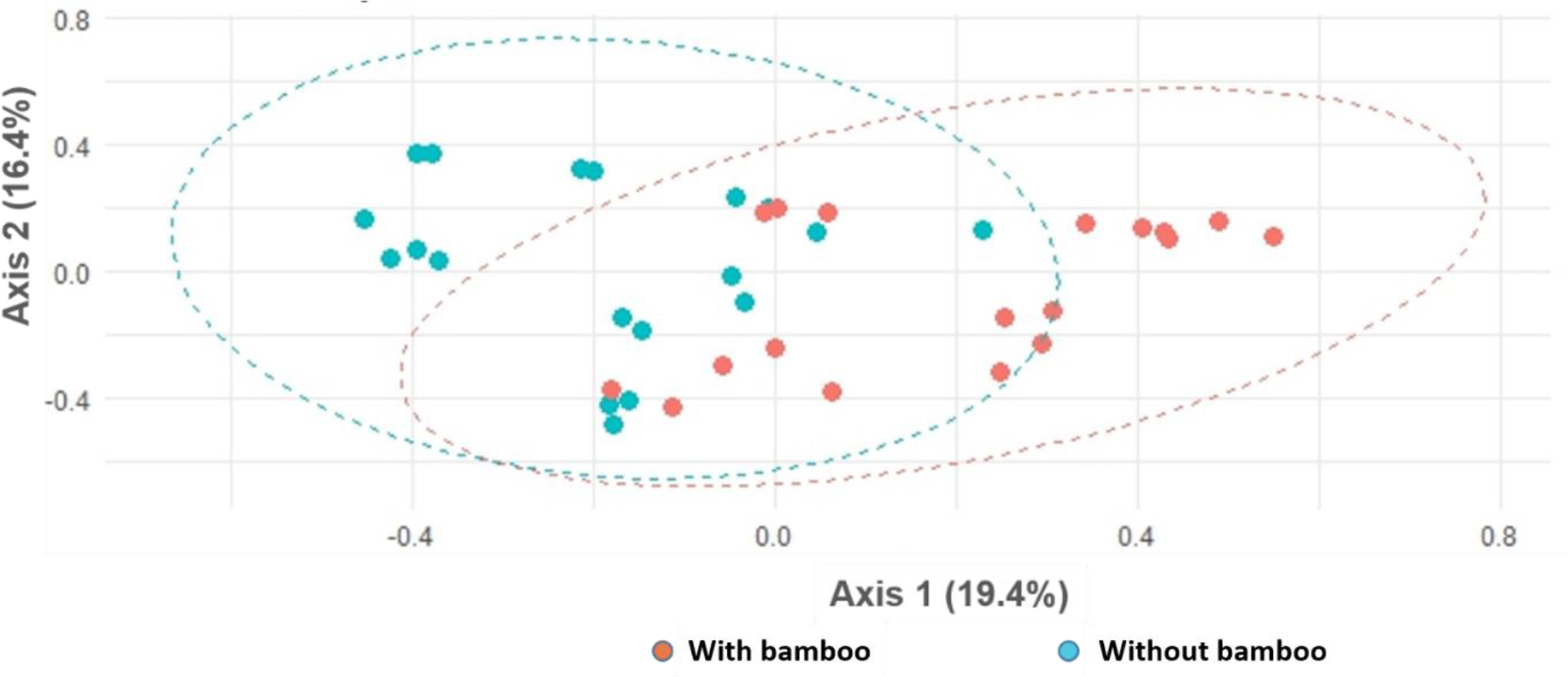
The PERMANOVA analysis (p = 0.001; F = 4.1427) (Table 3) indicates statistical evidence that bamboo dominance significantly influences the composition of the soil seed bank. This suggests that different environmental conditions, such as the dominance or absence of bamboo, may lead to significant differences in the structure of the seed community.
PERMANOVA results evaluating the effect of bamboo (Guadua spp.) dominance on the composition of the soil seed bank at the Catuaba Experimental Farm, Senador Guiomard, Acre, Brazil.
Regarding the Principal Coordinates Analysis (PCoA), it was observed that the soil seed bank samples collected from the bamboo-dominated area exhibited greater dispersion, indicating higher variability. In contrast, samples collected from the area without bamboo dominance were more clustered, suggesting greater similarity. The greater separation between the groups in the graph also indicates a greater difference in floristic composition and visually reinforces the PERMANOVA result (Figure 2).
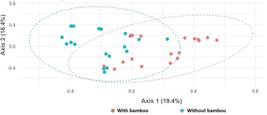
Principal Coordinates Analysis (PCoA) of soil seed bank composition in forests areas with and without bamboo (Guadua spp.) dominance in the understory at the Catuaba Experimental Farm, Senador Guiomard, Acre, Brazil. Source: Authors (2024).
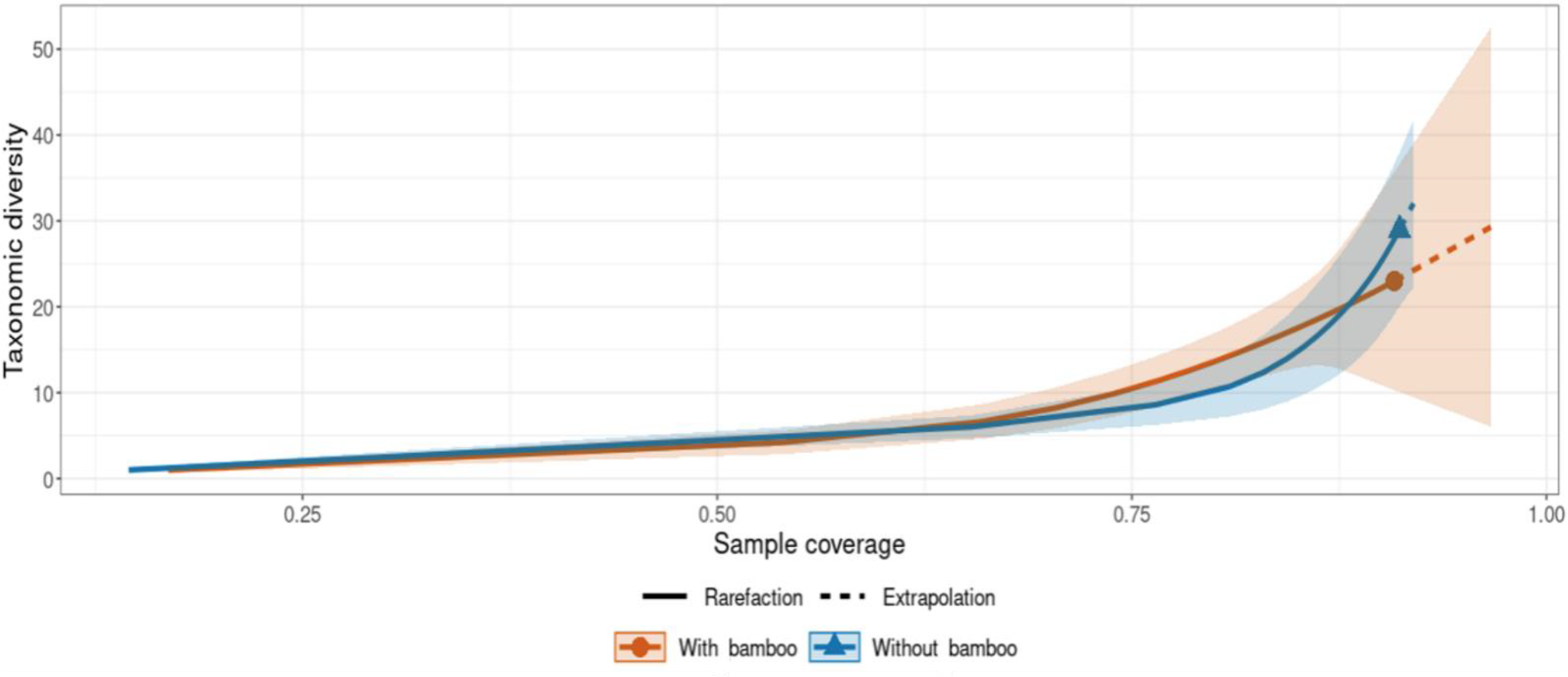
The coverage-based sampling curve revealed that, when sampling effort is standardized by sample coverage proportion, areas without bamboo presence exhibit higher taxonomic diversity in the soil seed bank compared to bamboo-dominated areas. Although both areas reached high sample coverage, the extrapolated diversity values indicate that the seed community in areas without bamboo is richer in species. This difference becomes more evident at coverage levels above 90%, suggesting that bamboo may be associated with a reduction in species diversity in the soil seed bank (Figure 3).
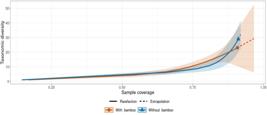
Coverage-based sampling curves for taxonomic diversity of the soil seed bank from forests with and without bamboo (Guadua spp.) dominance in the understory at the Catuaba Experimental Farm, Senador Guiomard, Acre, Brazil. Source: Authors (2024).
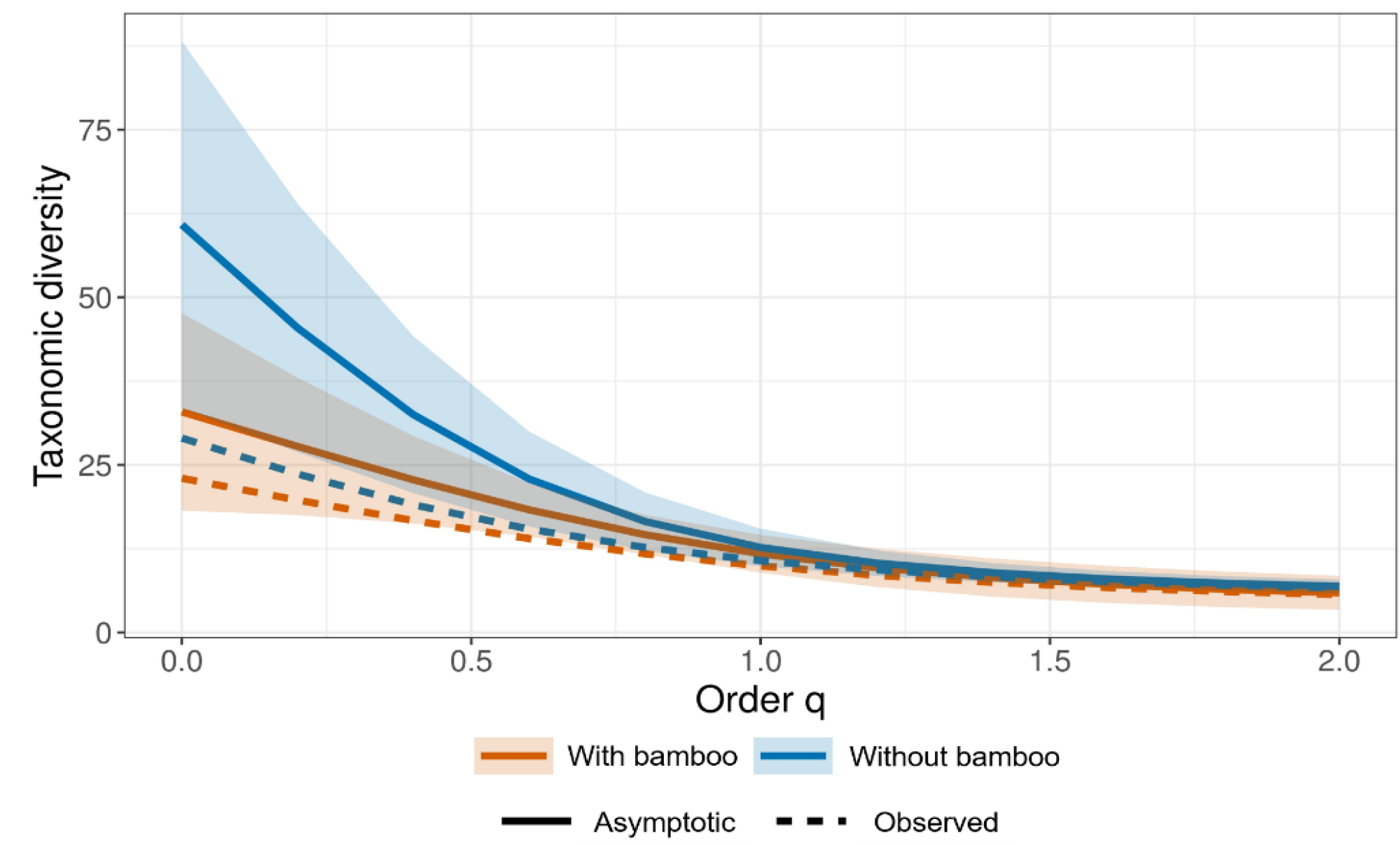
The diversity profile based on Hill numbers shows that the taxonomic diversity of the soil seed bank is consistently higher in areas without bamboo presence, especially when the emphasis is on rare species (q = 0) (Figure 4). This difference tends to decrease as the value of q increases, indicating that bamboo presence has a greater impact on species richness than on the relative abundance of dominant species. At q = 2, diversity values are similar between the areas, suggesting that the most common species occur in both forest types. The asymptotic curves reveal that the true diversity may be even higher, particularly in areas without bamboo, reinforcing the idea that bamboo exerts a restrictive effect on seed bank diversity, mainly by limiting the presence of rare species.
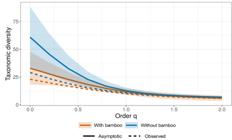
Observed (dashed lines) and asymptotic (solid lines) taxonomic diversity profiles based on Hill numbers (q = 0 to q = 2) for the soil seed bank from forests with and without bamboo (Guadua spp.) dominance in the understory at the Catuaba Experimental Farm, Senador Guiomard, Acre, Brazil. Source: Authors (2024).
DISCUSSION
A study that evaluated the soil seed bank in areas with and without bamboo dominance in a fragmented forest located in the state of São Paulo, Brazil, found a higher number of seedlings emerged in samples of the soil seed bank from the bamboo-dominated forest [32], diverging from the result found in this study. According to the authors of the study, the greater seedlings abundance in the soil seed bank samples from the bamboo area was due to the high number of ruderal herbaceous species, such as those from the Poaceae and Cyperaceae families, which accounted for 41% and 23% of the total emerged seedlings, respectively [32]. These species depend on high solar radiation to germinate and establish themselves [33]. On the other hand, samples from the area without bamboo showed a greater abundance of seedlings of pioneer, heliophilous and fast-growing tree species such as Casearia sylvestris, Croton floribundus and Trema micranthum [32]. It is important to note that this study was carried out in a very small forest fragment (3 hectares, of which 2 were dominated by bamboo). This condition may have influenced the results since anthropogenic disturbances resulting from the agricultural matrix surrounding the fragment (fire, pesticides and the entry of cattle into the forest) may have contributed to the dispersal of seeds of ruderal herbaceous species from adjacent pastures [34]. Another factor to consider is the edge effect [35], since some of the bamboo patches studied coincided with the edge of the forest fragment.
The lower number of seedlings observed in samples from the bamboo-dominated area in the present study may be related to the changes that bamboo causes within the forest. Disturbances caused by bamboo within the forest result in a high and constant level of mortality of other species, comparable to that observed when creating edges in recently isolated forest fragments in Central Amazonia [36]. The total tree mortality rate within bamboo-dominated forests in southwestern Amazonia (3.65% ± 2.60) [14] is more than three times higher than those observed in non-bamboo forests in Central Amazonia (1.03% [37], 0.86% [38] and 1.13% [39]).
The increase in tree mortality rates in forests dominated by bamboos of the genus Guadua in forests of the Amazon and the Brazilian Atlantic Forest is associated with the imposition of physical disturbances caused by bamboo culms and the high abundance of fast-growing, short-lived pioneer tree species [14, 15, 40]. As a result, forests with bamboo in the western Amazon region are characterized by having a much lower number of trees than forests without bamboo [41]. A study of bamboo forests around the Manu Park in the Peruvian Amazon found 343 ind.ha-1 and a basal area of 31.6 m2 in these forests [42], in contrast to the 603 ind.ha-1 and basal area of 31.6 m2 recorded in a forest without bamboo in the lower region of the Madre de Dios River in the same country [43].
The low tree density in the bamboo forests of southwestern Amazonia may have influenced the emergence of fewer seedlings from the seed bank samples from this type of forest during this study. Similarly, the greater number of seedlings that emerged from seed bank samples from forests without bamboo may be directly related to the fact that these forests in the southwest of the Amazon have a much higher tree density.
A study conducted in the same area as this study evaluated the small-scale effects of the dominance of native bamboo Guadua weberbaueri Pilg. on seed rain and found that of the total number of seeds found in forest areas with and without bamboo (4,635), 53.4% came from the area without bamboo and 46.6% from the environment with bamboo, suggesting a greater number of seedlings in the forest without bamboo as the seed bank germinated [17]. In a monsoon forest located in Thailand, an analysis of the abundance of emerged seedlings in environments with and without bamboo dominance revealed a greater abundance of emerging individuals (7 plants/m2) in environments not dominated by bamboo [44].
Analysis of the diversity of soil seed bank samples from areas dominated and not dominated by the bamboo Merostachys sp. revealed higher diversity values in the samples from the area not dominated by the grass [32]. A comparison of the transient seed bank of areas with and without bamboo dominance in a forest located in the state of São Paulo, Brazil, showed that there is no difference in seed count between the areas, but in the seed bank of the grass-dominated area there is a drastic reduction in species diversity [45].
The low similarity between the areas may be due to the changes that the high density of bamboo culms promotes in the forest environment. Environments dominated by species of Guadua show greater tree mortality and a higher incidence of light. Consequently, the forest understory becomes drier and warmer as a result of the opening of gaps caused by bamboo [8, 12, 14, 15, 17], promoting the germination of seedlings of pioneer and early secondary species that require a higher incidence of light to begin their development. It is important to emphasize, however, that pioneer species can also occur in forests at an advanced stage of development, such as in natural clearings in bamboo-dominated forests [11], or in areas close to the edges of fragments, where there is a high incidence of sunlight and high temperatures [46].
The lower number of species recorded in the samples from the Guadua spp. area in this study corroborates the data reported by a study carried out in the Atlantic Forest, which shows that the dominance of the bamboo Aulonemia aristulata does not alter the number of seeds in the soil, but drastically reduces the diversity of species present in the seed bank [40].
Forests with and without bamboo dominance have similar seed biomass, however, in sites dominated by the grass there is a reduction in species diversity [17], which corroborates what was observed in the present study. In addition, the authors point out that the dominance of Guadua spp. promotes changes in the seed dispersal cycle, limits the perpetuation of species dispersed through seed rain due to the mortality of tree species, and favors the arrival of wind-dispersed species, since such typologies tend to have canopies more spaced out.
CONCLUSION
A greater number of seedlings, density of emerged seedlings and species diversity index were observed in samples from the seed bank of the forest area without bamboo dominance.
The floristic similarity between seed banks originating from the soil of forest areas with and without bamboo dominance was low. In the area dominated by bamboo, the species Trema micranthum, Cecropia sciadophylla and Alchorneopsis floribunda predominated, while in the typology where bamboo was not dominant, the most abundant species were Saccoloma sp., Cecropia sciadophylla and Metaxya sp.
-
Funding:
This research was partially funded by the National Research Council-CNPq, which granted a research grant to the second and third authors.
Acknowledgments:
to José de Ribamar Bandeira (INPA) for support during fieldwork. To the Federal University of Acre (UFAC) for permission to conduct the study at the Catuaba Experimental Farm.
Data Availability Statement:
Research data are not available.
REFERENCES
- 1 Chazdon RL. Chance and determinism in tropical forest succession. In: Carson WP, Schnitzer SA. (Ed.). Tropical Forest Community Ecology. Hoboken (US): Wiley-Blackwell. 2008;384-408.
-
2 Dent DH, Estrada-Villegas S. Uniting niche differentiation and dispersal limitation predicts tropical forest succession. Trends Ecol. Evol. 2021 Aug;36(8):700-8. doi: https://doi.org/10.1016/j.tree.2021.04.001
» https://doi.org/10.1016/j.tree.2021.04.001 -
3 Martins AM, Engel VL. Soil seed banks in tropical forest fragments with different disturbance histories in southeastern Brazil. Ecol. Eng. 2007 Nov 1;31(3):165-74. doi: https://doi.org/10.1016/j.ecoleng.2007.05.008
» https://doi.org/10.1016/j.ecoleng.2007.05.008 -
4 Ribeiro TO, Bakke IA, Souto PC, Bakke AO, Lucena DS. [Diversity of the seed bank in different areas of managed caatinga in the semi-arid region of Paraíba, Brazil]. Ciênc. Florest. 2017 Jan;27(1):203-13. doi: https://doi.org/10.5902/1980509826459
» https://doi.org/10.5902/1980509826459 -
5 Campos JB, Souza MC. Potential for natural forest regeneration from seed bank in an upper Paraná River floodplain, Brazil. Braz. Arch. Biol. Technol. 2003 Dec;46(4):625-39. doi: https://doi.org/10.1590/S1516-89132003000400018
» https://doi.org/10.1590/S1516-89132003000400018 -
6 Sousa TR, Costa FRC, Bentos TV, Leal-Filho N, Mesquita RCG, Ribeiro IO. The effect of forest fragmentation on the soil seed bank of Central Amazonia. For. Ecol. Manag. 2017 Jun 1;393:105-12. doi: https://doi.org/10.1016/j.foreco.2017.03.020
» https://doi.org/10.1016/j.foreco.2017.03.020 -
7 Dalagnol R, Wagner FH, Galvão LS, Nelson BW, Aragão LEOC. Life cycle of bamboo in the Southwestern Amazon and its relation to fire events. Biogeosciences. 2018 Oct 18;15(20):6087-104. doi: https://doi.org/10.5194/bg-15-6087-2018
» https://doi.org/10.5194/bg-15-6087-2018 -
8 Carvalho AL, Nelson BW, Bianchini MC, Plagnol D, Kuplich TM, Daly DC. Bamboo-Dominated forests of the Southwest Amazon: Detection, spatial extent, life cycle length and flowering waves. PLoS ONE. 2013 Jan 24;8(1):e54852. doi: https://doi.org/10.1371/journal.pone.0054852
» https://doi.org/10.1371/journal.pone.0054852 -
9 Londono X, Peterson PM. Guadua sarcocarpa (Poaceae: Bambuseae), a new species of Amazonian bamboo with fleshy fruits". Syst. Bot. 1991 Oct;16(4):630-38. doi: https://doi.org/10.2307/2418866
» https://doi.org/10.2307/2418866 -
10 Lobovikov M, Paudel S, Piazza M, Ren H, Wu J. World bamboo resources: A thematic study prepared in the framework of the Global Forest Resources Assessment 2005. Non-wood forest prod. 2007;18:1-80. FAO, Rome, Italy. Available online at: https://www.fao.org/docrep/pdf/010/a1243e/a1243e00.pdf (Accessed on 27 November 2024).
» https://www.fao.org/docrep/pdf/010/a1243e/a1243e00.pdf -
11 Ferreira, EJL. [Bamboo is a challenge for the conservation and management of forests in southwestern Amazonia]. Ciênc. Cult. 2014 Set;66(3):46-51. doi: http://dx.doi.org/10.21800/S0009-67252014000300015
» http://dx.doi.org/10.21800/S0009-67252014000300015 -
12 Griscom BW, Daly DC, Ashton PM. Floristics of bamboo-dominated stands in lowland terra-firma forests of southwestern Amazonia. J. Torrey Bot. Soc. 2007 Jan 1;134(1):108-25. doi: https://doi.org/10.3159/1095-5674(2007)134[108:FOBSIL]2.0.CO;2
» https://doi.org/10.3159/1095-5674(2007)134[108:FOBSIL]2.0.CO;2 -
13 Fadrique B, Andrade PS, Rios WF, Salinas N, Silman M, Feeley KJ. Reduced tree density and basal area in Andean forests are associated with bamboo dominance. For. Ecol. Manag. 2021 Jan 15;480:118648. doi: https://doi.org/10.1016/j.foreco.2020.118648
» https://doi.org/10.1016/j.foreco.2020.118648 -
14 Medeiros H, Castro W, Salimon CI, Silva IB, Silveira M. Tree mortality, recruitment and growth in a bamboo dominated forest fragment in southwestern Amazonia, Brazil. Biota Neotrop. 2013 Jun;13(2):29-34. Available online at: https://www.biotaneotropica.org.br/BN/article/view/1185 (Accessed on 27 November 2024)
» https://www.biotaneotropica.org.br/BN/article/view/1185 - 15 Silveira M. [The open forest with bamboo in southwestern Amazonia: patterns and processes at multiple scales]. Rio Branco (AC): Ediufac; 2005.127 p.
-
16 Fenner M, Thompson K. The ecology of seeds. Cambridge (UK): Cambridge University Press;2005.260 p. doi: https://doi.org/10.1017/CBO9780511614101
» https://doi.org/10.1017/CBO9780511614101 -
17 Bona K, Purificação KN, Vieira TB, Mews HA. Fine-scale effects of bamboo dominance on seed rain in a rainforest. For. Ecol. Manag. 2020 Mar;460:117906. doi: https://doi.org/10.1016/j.foreco.2020.117906
» https://doi.org/10.1016/j.foreco.2020.117906 -
18 Griscom BW, Ashton PMS. Bamboo control of forest succession: Guadua sarcocarpa in Southeastern Peru. For. Ecol. Manag. 2003 March;175(1-3):445-54. doi: https://doi.org/10.1016/S0378-1127(02)00214-1
» https://doi.org/10.1016/S0378-1127(02)00214-1 - 19 ACRE. Governo do Estado do Acre. [Ecological Economic Zoning of Acre, Phase II: Synthesis document scale 1:250.000]. Rio Branco (AC): Sema; 2006. 356 p.
- 20 Bardales NG, Rodrigues TE, Oliveira H, Amaral EF, Araújo EA, Lani JL, et al. [Formation, classification and geographical distribution of soils in the state of Acre]. In: Souza CM, Araújo EA, Medeiros MFST, Magalhães AA (Eds.). {Natural Resources: Geology, Geomorphology and Soils of Acre}. Rio Branco (AC): Sema. 2010;64-91.
-
21 Duarte AF. [Aspects of the climatology of Acre, Brazil, based on the interval 1971-2000]. Rev. Bras. Meteorol. 2006 Jan;20(1):37-42. Available online at: https://acrebioclima.net/abcpublications/Environment_and_Health/LBA023-2006_AFDuarte.pdf (Accessed on 27 November 2024).
» https://acrebioclima.net/abcpublications/Environment_and_Health/LBA023-2006_AFDuarte.pdf -
22 INMET - Instituto Brasileiro de Meteorologia. [Climatological normals (1994/2024)]. Available online at: https://clima.inmet.gov.br/ (Accessed on 27 October 2024).
» https://clima.inmet.gov.br/ -
23 Leal-Filho N, Sena LS, Santos GR. [Spatio-temporal variations in soil seed stock in the Amazon rainforest]. Acta Amazonica. 2013 Sep;43(3):305-14. doi: https://doi.org/10.1590/S0044-59672013000300006
» https://doi.org/10.1590/S0044-59672013000300006 -
24 Chao A, Ma KH, Hsieh TC. (2016). User's guide for iNEXT Online: software for interpolation and extrapolation of species diversity. Institute of Statistics, National Tsing Hua University, Hsin-Chu, Taiwan. 2016 Sep. Available online at: https://www.researchgate.net/publication/307598336 (Accessed on 27 March 2025).
» https://www.researchgate.net/publication/307598336 -
25 Chao A, Chiu CH, Hu KH, Plas FVD, Cadotte MW, Mitesser O, et al. Hill-Chao numbers allow decomposing gamma multifunctionality into alpha and beta components. Ecol. Lett. 2024 Jan;27(1):e14336. doi: https://doi.org/10.1111/ele.14336
» https://doi.org/10.1111/ele.14336 -
26 Anderson MJ. A new method for non-parametric multivariate analysis of variance. Austral Ecol. 2001 Feb;26(1):32-46. doi: https://doi.org/10.1111/j.1442-9993.2001.01070.pp.x
» https://doi.org/10.1111/j.1442-9993.2001.01070.pp.x -
27 Chen X, Chen X, Huang, S, Fang, D. Impacts of Moso bamboo (Phyllostachys pubescens) invasion on species diversity and aboveground biomass of secondary coniferous and broad-leaved mixed forest. Front. Plant Sci. 2022 sep;29(13):1001785. doi: https://doi.org/10.3389/fpls.2022.1001785
» https://doi.org/10.3389/fpls.2022.1001785 -
28 Saldaña CL, Cancan JD, Cruz W, Correa MY, Ramos M, Cuellar E, et al. Genetic Diversity and Population Structure of Capirona (Calycophyllum spruceanum Benth.) from the Peruvian Amazon Revealed by RAPD Markers. Forests. 2021 Aug;12(8):1125. doi: https://doi.org/10.3390/f12081125
» https://doi.org/10.3390/f12081125 -
29 Konopiński MJ. Shannon diversity index: a call to replace the original Shannon’s formula with unbiased estimator in the population genetics studies. PeerJ. 2020 Jun;29(8):e9391. doi: https://doi.org/10.7717/peerj.9391
» https://doi.org/10.7717/peerj.9391 -
30 Lima ARS, Lima RC, Nepomuceno ITG, Nascimento HHC, Prata APN, Silva RRV. Influence of edge in the structure of the vegetation of an Open Ombrophilous Forest in Alagoas. Bioscience J. 2020 Mar/Apr;36(2):591-601. doi: https://doi.org/10.14393/BJ-v36n2a2020-46261
» https://doi.org/10.14393/BJ-v36n2a2020-46261 - 31 Felfili JM, Rezende RP. [Concepts and methods in phytosociology]. Brasília-DF: Ed da UNB; 2003, 68p. (UNB. Comum. Téc. Florest., v.5, n.1).
-
32 Rother DC, Costa PP, Silva TD, Valdemarin KS, Rodrigues RR. How bamboo influences the seed bank and biotic and abiotic factors of a Brazilian tropical forest. Acta Bot. Bras. 2021 Apr/Jun; 35(2):179-87. doi: https://doi.org/10.1590/0102-33062019abb0363
» https://doi.org/10.1590/0102-33062019abb0363 - 33 Lorenzi H. [Manual for the identification and control of weeds: No-till and conventional planting]. 6th. Ed. Nova Odessa (SP): Instituto Plantarum; 2014. 384 p.
-
34 Bierregaard RO, Lovejoy TE, Kapos V, Santos AA, Hutchings RW. The biological dynamics of tropical rainforest fragments: A prospective comparison of fragments and continuous forest. Bioscience. 1992 Dec; 42(11):859-66. doi: https://doi.org/10.2307/1312085
» https://doi.org/10.2307/1312085 -
35 Laurance WF, Yensen, E. Predicting the impacts of edge effects in fragmented habitats. Biol. Conserv. 1991 Jan;55(1):77-92. doi: https://doi.org/10.1016/0006-3207(91)90006-U
» https://doi.org/10.1016/0006-3207(91)90006-U -
36 Castro W, Salimon CI, Medeiros H, Silva IB, Silveira M. Bamboo abundance, edge effects, and tree mortality in a forest fragment in Southwestern Amazonia. Sci. For. 2013 Apr;41(2):159-64. Available online at: https://ppbio.inpa.gov.br/sites/default/files/20133280548.pdf (Accessed on 27 November 2024)
» https://ppbio.inpa.gov.br/sites/default/files/20133280548.pdf - 37 Higuchi N, Santos J, Ribeiro RJ, Freitas JV, Vieira G, Cöic A, et al. 1997. [Growth and increment of an experimentally managed Amazonian Terra-Firme forest]. In: Higuchi N, Ferraz JBS, Antony LMMKA, Luizão FJ, Luizão RC, Biot Y (Eds.). Biomassa de Nutrientes Florestais: Simpósio Internacional sobre Biomassa e Nutrientes Florestais; 1997; Manaus (AM): INPA/DFID; p.89-131.
-
38 Rocha RM. 2001. [Recruitment and mortality rates of the terra firme forest of the Cuieiras river basin in the region of Manaus-AM] [dissertação]. Manaus (AM): Instituto Nacional de Pesquisas da Amazônia & Universidade Federal do Amazonas; 2001. 49 p. Available online at: https://repositorio.inpa.gov.br/bitstreams/7663c592-6233-4e79-8bb7-ac210ce58b11/download (Accessed on 27 November 2024)
» https://repositorio.inpa.gov.br/bitstreams/7663c592-6233-4e79-8bb7-ac210ce58b11/download -
39 Teixeira LM, Chambers JQ, Silva AR, Lima AJN, Carneiro VMC, Santos J, et al. [Dynamics of the Terra-firme primary forest in Manaus-AM region using the Markov probabilistic transition matrix]. Acta Amazonica. 2007 Jul; 37(3):377-84. doi: https://doi.org/10.1590/S0044-59672007000300009
» https://doi.org/10.1590/S0044-59672007000300009 -
40 Lima RAF, Rother DC, Muler AE, Lepsch IF, Rodrigues RR. Bamboo overabundance alters forest structure and dynamics in the Atlantic Forest hotspot. Biol. Conserv. 2021 March;147(1):32-9. doi: https://doi.org/10.1016/j.biocon.2012.01.015
» https://doi.org/10.1016/j.biocon.2012.01.015 -
41 Leal GSA, Leal FA, Cruz ASA. [Profile of floristic diversity and spatial pattern of tree species in bamboo forests in Amazonia]. Adv. For. Sci. 2021 Jul/Sep;8(3):1545-55. doi: https://doi.org/10.34062/afs.v8i3.12678
» https://doi.org/10.34062/afs.v8i3.12678 -
42 Silman MR, Ancaya EJ, Brinson J. 2003. [Bamboo forests in western Amazonia]. In: Pitman RL, Pitman N, Álvarez P. (Ed): Alto Purús: Biodiversidad, Conservacion y Manejo. Lima: Duke University Center for Tropical Conservation and Impresso Gráfica SA. 2003;63-72. Available online at: https://users.wfu.edu/silmanmr/labpage/publications/silman2003.bambubosqe.pdf (Accessed on 27 November 2024)
» https://users.wfu.edu/silmanmr/labpage/publications/silman2003.bambubosqe.pdf -
43 Pitman NC, Terborgh JW, Silman MR, Núñez PV, Neill DA, Cerón CE, et al. Dominance and distribution of tree species in upper Amazonian terra firme forests. Ecology. 2001 Aug;82(8):2101-17. doi: https://doi.org/10.1890/0012-9658(2001)082[2101:DADOTS]2.0.CO;2
» https://doi.org/10.1890/0012-9658(2001)082[2101:DADOTS]2.0.CO;2 -
44 Larpkern P, Moe SR, Totland O. Bamboo dominance reduces tree regeneration in a disturbed tropical forest. Oecologia. 2011 Jul;165(1):161-8. doi: https://doi.org/10.1007/s00442-010-1707-0
» https://doi.org/10.1007/s00442-010-1707-0 -
45 Vinha D, Alves LF, Zaidan LBP, Guaratini MTG. [Influence of overabundance by Aulonemia aristulata (Bambuseae) on the transient seed bank in an Atlantic Forest fragment]. Rodriguésia. 2017 Jul/Sep; 68(4):1177-86. doi: https://doi.org/10.1590/2175-7860201768402
» https://doi.org/10.1590/2175-7860201768402 -
46 Hentz AMK, Corte APD, Sanquetta CR, Blum CT. Edge effect on the spatial distribution of trees in an Araucaria rainforest fragment in Brazil. Rodriguésia. 2018 Out/Dez;69(4):1937-52. doi: https://doi.org/10.1590/2175-7860201869428
» https://doi.org/10.1590/2175-7860201869428
-
Editor-in-Chief:
Paulo Vitor Farago
-
Associate Editor:
Jane Manfron