 Cultivation of Pleurotus ostreatus, Macrocybe titans and Coprinus comatus from Composted Household Organic Wastes of Yerba Mate (Ilex paraguariensis) and Coffee Grounds
Large quantities of coffee and yerba mate are consumed in households in Argentina and Brazil. In this study, we investigated the growth and production of Coprinus comatus, Macrocybe titans and Pleurotus ostreatus on compost of used yerba mate and coffee grounds to determine if these household wastes are suitable for the cultivation of edible mushrooms.
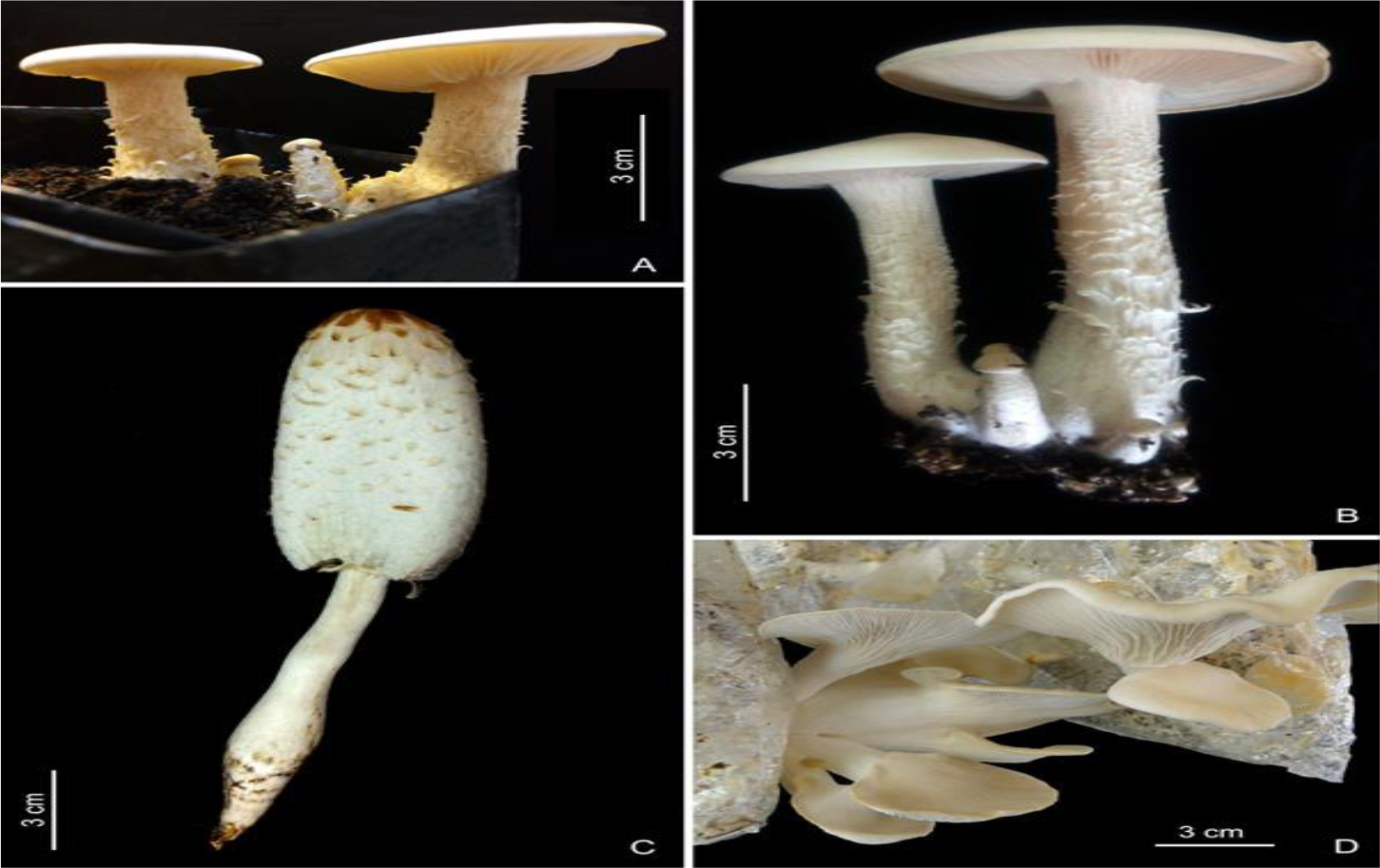
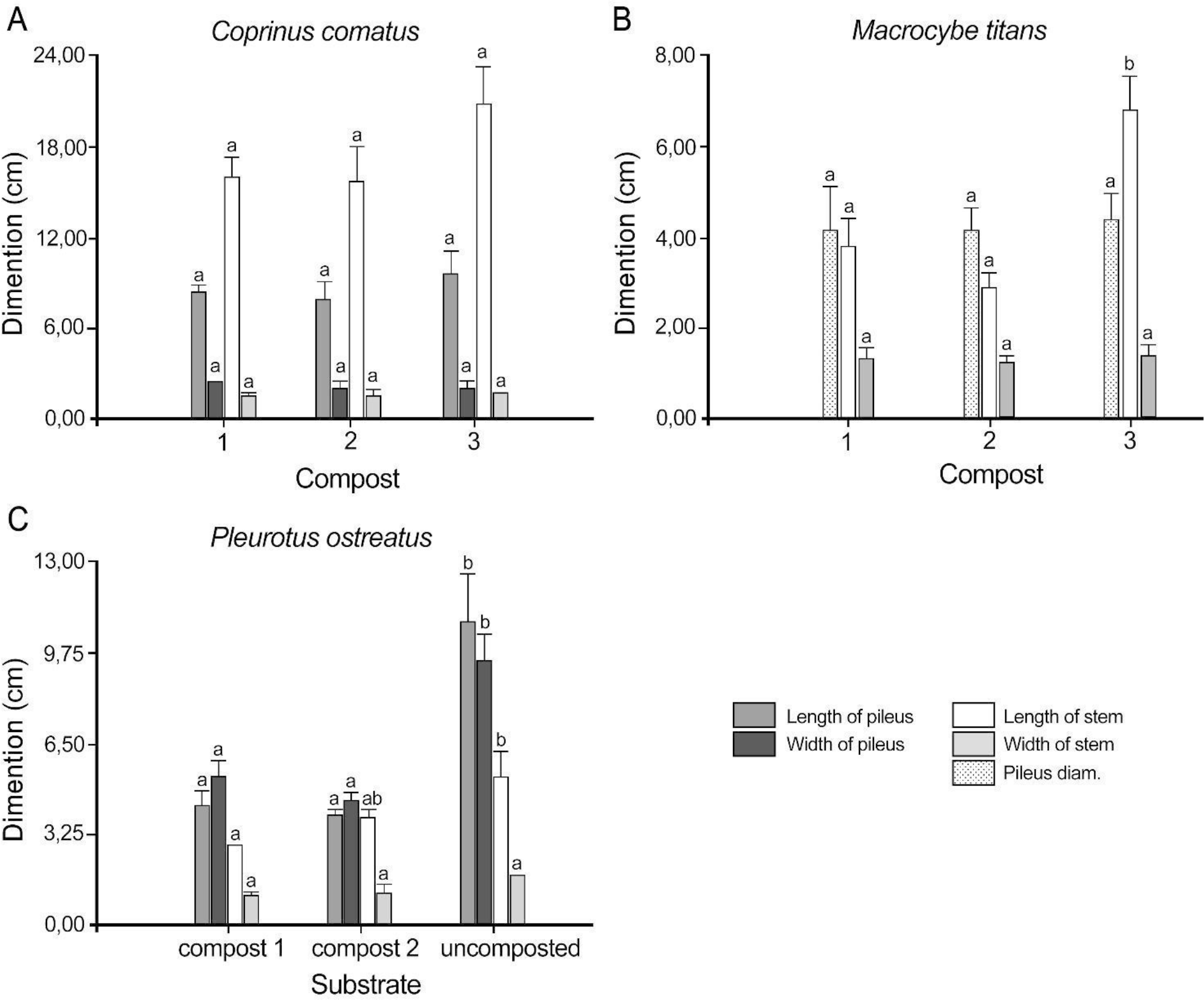
Prior to cultivation, a virtual survey was conducted and completed by 156 household representatives of households in Argentina, confirming the initial premise that Argentinians consume large amounts of yerba mate and coffee, resulting in significant quantities of these household wastes that could be reused for the cultivation of edible mushrooms. The initial composition of the compost was formulated with a 1:1 ratio of used yerba mate and coffee grounds, with a humidity level of 65%. The compost was maintained for 26 days and was turned twice per week. Several composts were made to observe the variability of the results. For P. ostreatus, a treatment was included where the initial substrate was used without composting. Blonde peat served as casing layer for the soil species, and they were placed in a production chamber at 20°C, photoperiod, 85-90% relative humidity, and aeration. The harvested basidiomata were weighed and the biological efficiency (BE) was calculated. While the efficiencies of Pleurotus ostreatus and Macrocybe titans were not outstanding, those obtained with C. comatus ranged from 58.7% to 177.3%. P. ostreatus and M. titans produced basidiomata of smaller size than nature, but Coprinus comatus generated basidiomata of equal or larger size.
Keywords:
Agaricales; Alternative substrates; Compost; Mushroom; Production.
A 1:1 ratio of used yerba mate and coffee grounds proves to be an effective compost for mushroom cultivation.
Notable biological efficiency achieved with Coprinus comatus on compost.
Cultivation bag size does not significantly affect C. comatus basidiomata size.
Macrocybe titans produced smaller-than-expected basidiomata in confined bag cultures.
 Thumbnail
 Thumbnail