 Production and Characterization of Biodegradable Films Based on Starch and Cellulose Nanofibrils from Pearl Millet (Cenchrus americanus (L.) Morrone)
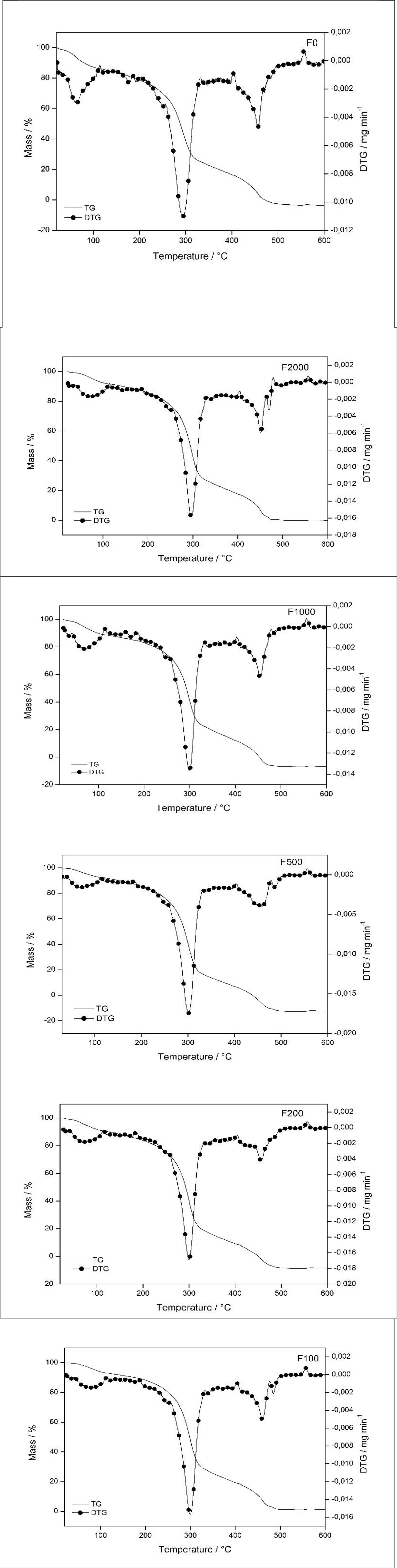
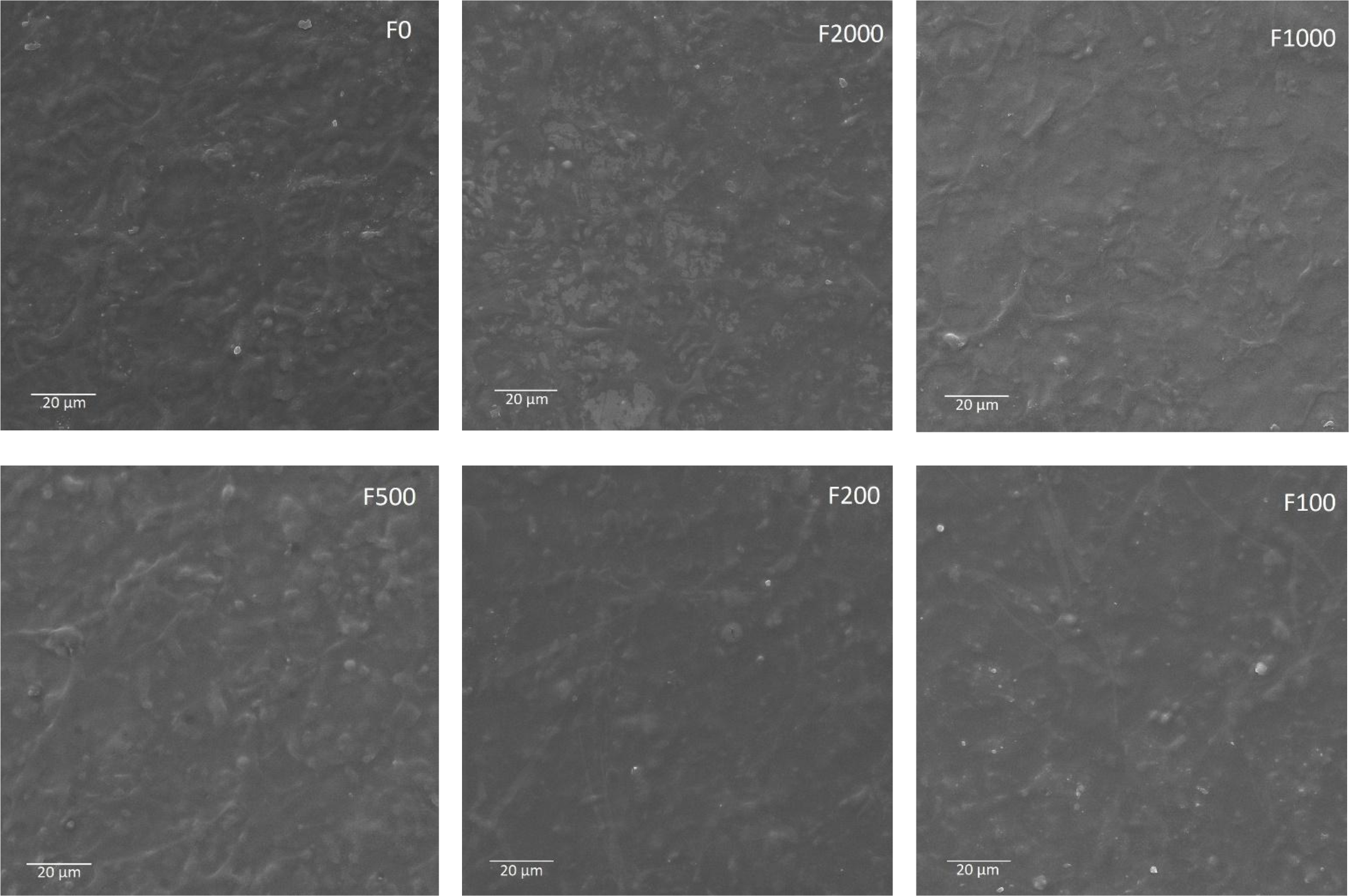
Food packaging, predominantly made from fossil fuel-based plastics, generates significant environmental impacts due to its non-biodegradable nature. An alternative lies in biodegradable films from renewable sources like starch and cellulose. This study aimed to develop and characterize biodegradable films based on starch reinforced with cellulose nanofibrils (CNF), both derived from underutilized pearl millet (Cenchrus americanus (L.) Morrone), following a biorefinery and circular economy concept. Films were produced by casting with different dilutions (CNF:water, w/w) of: 1:100, 1:200, 1:500, 1:1000 and 1:2000, along with the control formulation without CNF addition, named F100, F200, F500, F1000, F2000 and F0, respectively. They were characterized for their thermal, morphological, physical and mechanical properties. Results showed that CNF incorporation increased the thermal stability of the films in the first thermal event (from 63.5 °C for F0 up to 81.7 °C for F100). Water vapor permeability decreased, although the difference was not statistically significant, ranging from 8.87×10⁻¹¹ to 1.11×10⁻¹⁰ g. Pa-1. s-1. m-1, while the solubility content ranged from 17.4% to 19.5% (p > 0.05). The F500 formulation exhibited the best overall mechanical performance, with the highest tensile strength (2.47 MPa), intermediate stiffness (84.1 MPa), and preserved flexibility (118.1%). Conversely, excess CNF in formulation F100 led to agglomerates and compromised mechanical properties. In conclusion, starch and CNF from pearl millet are viable for producing biodegradable films. The F500 formulation, in particular, shows promising potential for application in low and intermediate moisture food packaging, offering a sustainable alternative to conventional plastics.
Keywords:
food packaging; bioplastic; nanocomposite.
• Valorization of pearl millet stalk and seeds for green packaging solutions.
• CNF incorporation improved thermal stability and modified film microstructure.
• CNF:water, (w/w) of 1:500 formulation showed the best balance of mechanical and barrier properties.
 Thumbnail
 Thumbnail