 Types of Spray Nozzles for Fungicide Application in Wheat Crop
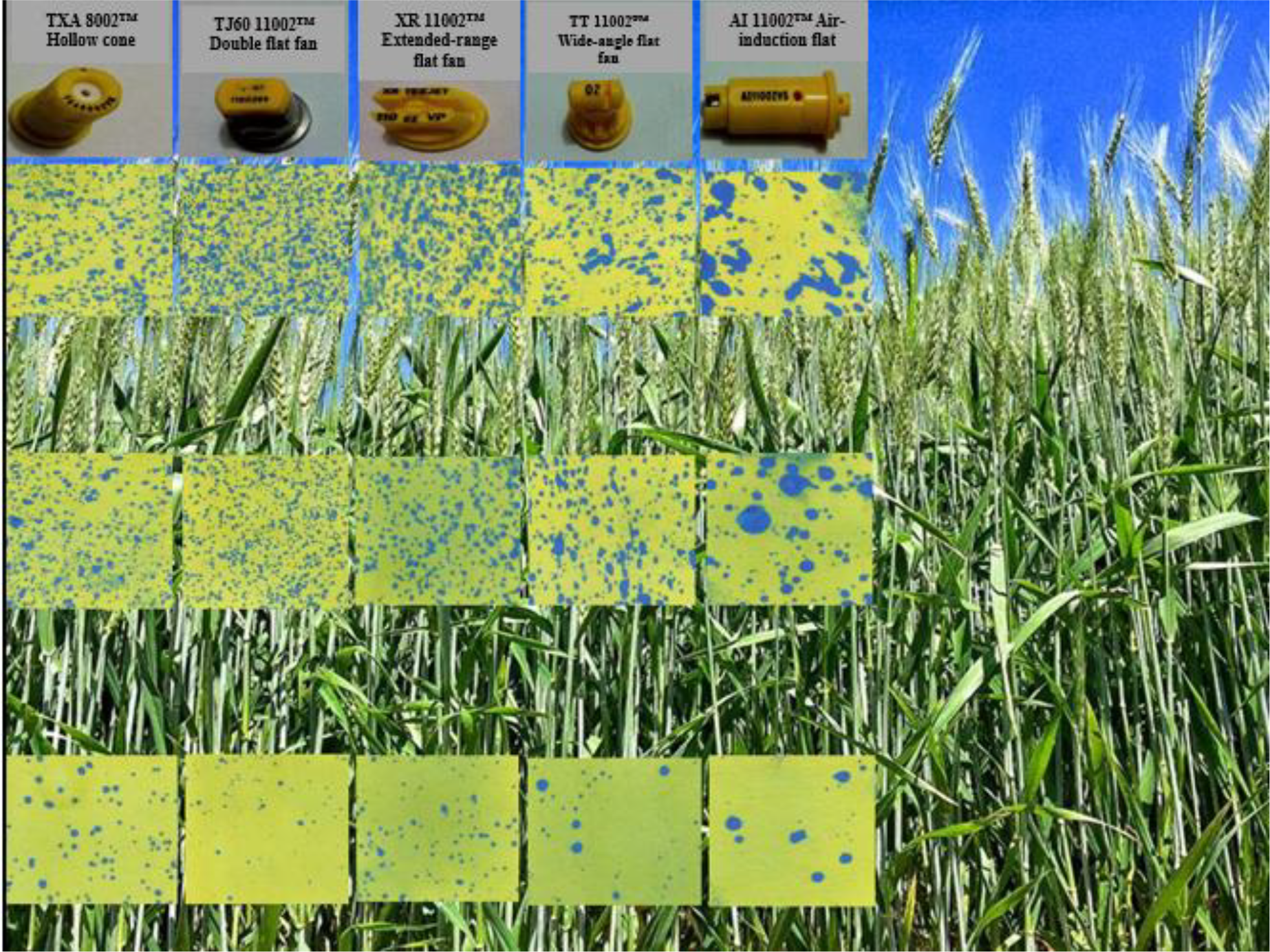
The aim of this study was to assess the influence of spray nozzles types on the chemical control of wheat (Triticum aestivum) leaf and ear diseases. The experimental design employed a randomized block design, comprising six treatments and four replications, conducted at Fazenda Escola Capão da Onça, State University of Ponta Grossa, Paraná, Brazil, during three crop seasons. The treatments included a control group (without the application of fungicides) and the application of fungicides using spray nozzles: hollow cone, double flat fan, extended-range flat fan, wide-angle flat fan, and air-induction flat fan. The sprayer utilized was a backpack pressurized by carbon dioxide (CO2). The evaluated variables encompassed the incidence and severity of leaf and ear diseases, spray quality (covered area, density, and relative amplitude), and yield components. The findings indicated the necessity of chemical control for fungal diseases in wheat plants. Differences among nozzles were limited to spray quality parameters (coverage and droplet density), without effects on disease incidence or yield.
Keywords:
plant diseases; crop yield; spraying quality; spraying technology; Triticum aestivum.
The aim was to evaluate spray nozzles influence on the chemical control of wheat diseases.
Treatments: control (without application of fungicides) and five different spray nozzles.
We analyzed the incidence and severity of leaf and ear diseases and yield components.
There was no difference among spray nozzles in all the variables analyzed.
 Thumbnail