
 Do-not-resuscitate order in ICU cancer patients
Abstract
Cardiopulmonary resuscitation is a standard procedure in situations of cardiorespiratory arrest. However, in terminally ill cancer patients, the benefit of resuscitation is questionable, and interventions that prolong suffering without improving quality of life should be avoided. However, the lack of global consensus and specific legislation in Brazil on do-not-resuscitate orders leads to insecurity and fear among professionals. Thus, problematizing the issue is crucial to ensure medical decision-making that respects the dignity and ethical guidelines of the profession.
Keywords
Resuscitation orders; Medical oncology; Intensive care units
Resumo
A reanimação cardiopulmonar é procedimento padrão em situações de parada cardiorrespiratória. No entanto, em pacientes oncológicos com doença em estágio terminal, o benefício da reanimação é questionável, e devem ser evitadas intervenções que prolonguem o sofrimento sem melhorar a qualidade de vida. Contudo, a ausência de consenso global e a falta de legislação específica no Brasil sobre ordens de não reanimação geram insegurança e receio entre os profissionais. Assim, problematizar o tema é crucial para garantir decisões médicas que respeitem a dignidade e as diretrizes éticas da profissão.
Palavras-chave
Ordens de não ressuscitar; Oncologia; Unidades de terapia intensiva
Resumen
La reanimación cardiopulmonar es un procedimiento estándar en situaciones de parada cardiorrespiratoria. Sin embargo, en pacientes oncológicos con enfermedad en etapa terminal, el beneficio de la reanimación es cuestionable, y deben evitarse intervenciones que prolonguen el sufrimiento sin mejorar la calidad de vida. No obstante, la ausencia de consenso mundial y la falta de legislación específica en Brasil acerca de la orden de no reanimar generan inseguridad y temor entre los profesionales. Por lo tanto, problematizar el tema es crucial para asegurar decisiones médicas que respeten la dignidad y las directrices éticas de la profesión.
Palabras clave
Órdenes de resucitación; Oncología médica; Unidades de cuidados intensivos
In the current medical context, cardiopulmonary resuscitation (CPR) is a standard procedure in cases of cardiorespiratory arrest (CRA). However, for critically ill patients, especially those with end-stage cancer, there is controversy about the benefits of this intervention 1. Thus, protocols that include the do-not-resuscitate order (DNR) have been implemented in health care planning to avoid invasive procedures that could prolong life, but also increase suffering 2.
The DNR implies the non-application of advanced life support protocols in cases of CRA, especially in patients with irreversible loss of consciousness or with advanced cancer. This decision, when made ethically, requires dialogue between the health care team, the patient and their representative, to ensure that information is properly shared 3.
The ethical and legal aspects of the DNR are not uniform globally, varying according to local legislations and cultures. In countries such as the United Kingdom, Australia, Canada and France, the DNR is legally recognized, which allows patients or representatives to refuse treatments, including CPR, with the support of a health care provider 4.
In Brazil, most health care providers support the use of DNR in terminally ill cancer patients. However, the lack of specific legislation creates barriers to its application and leads to insecurity among professionals, who fear legal complications and accusations of medical neglect 5.
In many countries, the DNR is part of the patient’s advance directives and living will (ADLW), through which they choose the procedures they want or not to receive when they are unable to communicate. The DNR is fundamental for respecting patient autonomy and for being an ethical guideline in end-of-life situations. In addition, promoting invasive, aggressive interventions with no proven benefits in critically ill patients in intensive care units (ICU) can negatively impact the quality of death 6.
The lack of legal support for DNRs in Brazil also results in the lack of medical conduct protocols, which leads to conflicts in health care teams and hinders decision-making in situations of imminent death 5. In the absence of ADLW or prior expression of will, the responsibility lies with the physician, who may insist on resuscitation, for fear of being accused of negligence and neglect 7.
The lack of specific legislation on DNRs in Brazil leads to the urgent need for debate, especially due to the complexity of end-of-life medical care 8. This gap can result in doubts about when to start or stop resuscitation attempts, which involves not only technical but also ethical aspects 5. In addition, the benefit should not only be clinical, but also existential, which makes the decision even more complex.
Debates on the DNR increased after the Federal Council of Medicine (CFM) Resolutions 1,805/2006 9 and 1,995/2012 10. The first resolution addresses orthothanasia and allows the limitation or suspension of life-support procedures in individuals with end-stage disease, provided that patient will is respected and suffering relief care is guaranteed. The second resolution provides for ADLWs in medical practice. In turn, the Charter of Rights of Health Care Users ensured the right to choose the place of death and the appointment of representatives for health care 11.
Although orthothanasia protects the right to die with dignity, the DNR still faces challenges in Brazil, especially in the Unified Health System. Moreover, in the case of severe cancer patients, prejudice against the disease, seen as synonymous with death and suffering, is an additional obstacle 12.
Considering the relevance and complexity of the issue, the study aimed to survey the opinion of physicians working in the ICU about non-cardiopulmonary resuscitation in cancer patients. This discussion is relevant not only for the training of future professionals, but also to improve medical practices in the face of existing ethical and bioethical challenges.
Method
This is an exploratory, descriptive and cross-sectional study with a quantitative approach, with the participation of physicians from a reference state cancer hospital located in Belém, Pará, Brazil. Data collection began after approval by the Research Ethics Committee.
Physicians of both sexes and different ages participated, who were selected by convenience sampling. Participation occurred by signing the informed consent form (ICF), and physicians and residents who worked in the ICU were included, regardless of specialty. Those who were not in full exercise of their functions during the data collection period, as well as those who refused or opted out from participating, were excluded.
Data were collected in person, by completing a semi-structured questionnaire composed of open and closed questions. The instrument was divided into three sections referring to the categories of interest of the researchers: sociodemographic data, knowledge about non-cardiopulmonary resuscitation and non-cardiopulmonary resuscitation in clinical practice in oncology.
The data obtained were systematized and analyzed by simple statistical methods, with calculation of percentages and absolute values. Multivariate analysis was used to evaluate the effects of the variables and trace possible associations, using Excel 2016 and Word 2016 software, supported by the Bioestat 5.3 platform.
Results
At the time of data collection, 37 physicians worked in the hospital’s ICUs , and of this total, 54% (n=20) participated in the study. Among the participants, 55% (n=11) were male and 45% (n=9) were female, and the majority (50%, n=10) were in the age group of 30 to 39 years, with predominantly Catholic religion (65%, n=13). In addition, 60% (n=12) were intensive care physicians, and 90% (n=18) graduated between 2016 and 2020. The time working in the institution ranged from two to three years, equivalent to 80% (n=16).
The relevance of the study issue was noted in 100% (n=20) of the sample, which classified it as “very important.” Regarding knowledge about the do-not-resuscitate order, when asked about the existence of any protocol, 65% (n=13) did not know any; 20% (n=4) answered yes at the national level; 10% (n=2) could not say; 5% (n=1) answered yes at the national and international levels. In the justifications, they cited two expressions: “exclusive palliativity” and “SPIKES Protocol.” It should be noted that the SPIKES Protocol is a difficult news communication protocol, therefore unrelated to the content of the question asked.
When asked to assess knowledge about the criteria for non-cardiopulmonary resuscitation of ICU patients, 50% (n=10) assessed it as “good”; 40% (n=8) as “regular”; 5% (n=1) as “poor”; 5% (n=1) as “very poor.” Regarding contact with the issue in professional training, 65% (n=13) answered affirmatively, and 35% (n=7) negatively. In the affirmative answers, we note undergraduate education and specific course/event, with 35% (n=7) each; medical residency, with 30% (n=6); and professional activity, with 5% (n=1). It is noted that participants could check more than one option in this section.
Regarding the questioning about the existence of ethical dilemmas involved in the DNR, 75% (n=15) agreed and 25% (n=5) disagreed. Among the justifications, they mentioned religious issues (40%, n=6); personal and family values (40%, n=6); lack of knowledge about the subject by family members (26.6%, n=4), by the health care team (20%, n=3) and by patients (13.3%, n=2). It should be noted that one of the participants mentioned as justification the prohibition of euthanasia in the country, which denotes that some concepts are not understood, especially when non-resuscitation is addressed.
When asked how often they experienced ethical conflict between the medical indication of non-cardiopulmonary resuscitation and their personal conceptions/values, 35% (n=7) of participants answered “never”; 35% (n=7), “rarely”; 20% (n=4), “sometimes”; 5% (n=1), “frequently”; and 5% (n=1) could not say.
Participants were also asked if they considered it necessary to have specific non-resuscitation medical recommendations/protocols for cancer patients. All participants answered “yes,” of which 80% (n=16) justified the answer. Among the justifications, we note the following: aid in decision-making (40%, n=8), evaluation of therapeutic prognosis (40%, n=8), introduction of palliative care (15%, n=3), medical and legal support (10%, n=2). It is noted that, because it is an open answer, it was possible to cover more than one topic.
Regarding the participants’ professional experience with non-cardiopulmonary resuscitation in oncology, it was observed that 75% (n=15) frequently intervene during a cardiorespiratory arrest (CRA) of an ICU cancer patient, and only 25% (n=5) intervene sometimes or rarely.
Regarding the degree of importance attributed to the issue in the hospital setting, the agreement was unanimous, and all evaluated the subject as very important for the care of cancer patients in the ICU.
Participants were also asked if they were aware of any medical guidelines, protocols or directives of non-resuscitation for cancer patients in the ICU, and no participant answered affirmatively. The frequency of answers was different when they were asked about DNR protocols: 35% (n=7) affirmed they knew some national and/or international protocol, which corroborates the lack of knowledge of specific DNR protocols for cancer patients.
Among the arguments to justify the act of not resuscitating an ICU cancer patient who is undergoing CRA, three are notable (participants were able to choose more than one alternative and add their own justifications): severe and irreversible current clinical condition (85%, n=17), patient under palliative care with progressive evolution of the disease (80%, n=16) and respect for the will of the patient and/or family (55%, n=11). No participant agreed that the length of stay in the ICU or the need to allocate the bed to other patients with chance of improvement were justifications for non-resuscitation (Figure 1).
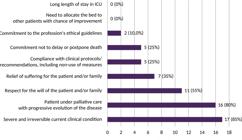
Main justifications for considering non-cardiopulmonary resuscitation of cancer patients in the ICU
When participants were asked whether, in an ICU emergency context, physicians should use all available resources to save a life, even in the case of cancer patients, 55% (n=11) totally agreed, 40% (n=8) partially agreed, 5% (n=1) partially disagreed, and none totally disagreed. Complementing this question, participants who totally and partially agreed justified the choice of using all available resources: when there is a possibility of reversibility of the current condition with subsequent quality of life (45%, n=9), because it is a right to life (15%, n=3), if the patient is not under palliative care (15%, n=3), because it is legally safer (5%, n=1), and 15% (n=3) did not justify it. The only participant who partially disagreed justified it with the impossibility of reversing the cause of CRA.
In the case of patients under palliative care, 55% (n=11) of the participants affirmed that they would change their conduct regarding the use of all available resources to save their lives. When justifying the answers, 30% (n=6) noted the importance of quality of life and the intention of not prolonging suffering. In addition, 15% (n=3) also mentioned the need for individualized analysis of the case, with evaluation of the benefits of such measure for the patient.
Regarding urgent and emergency situations that characterize imminent risk of death, 45% (n=9) of the participants totally disagreed with adopting all necessary and recognized measures to preserve the patient’s life, even against the patient’s will. Of these, 55% (n=11) justified it with the importance of respecting the patient’s decision.
Still on the previous question, in the case of a close family member of the physician, 65% (n=13) of the professionals stated that they would take into consideration the patient’s will. When asked if the patient were the physician, 60% (n=12) totally disagreed with adopting the measures, with respect for the patient’s decision being the justification indicated in 30% (n=6) of the answers.
When asked if they agreed with the statement that it is the physician’s duty to talk to the cancer patient about non-cardiopulmonary resuscitation, 75% (n=15) of the participants totally agreed. Of this total, 35% (n=7) pointed out as justification the importance of informing the patient about their clinical condition and possible prognoses. In addition, 15% (n=3) note the care of evaluating the patient’s psychological condition before talking to them in relation to the subject.
When asked about talking about non-cardiopulmonary resuscitation with the relatives/companions of cancer patients, 80% (n=16) of the participants totally agreed with doing so. Of these, 30% (n=6) justified it with the importance of family members being aware of the patient’s clinical condition, and 20% (n=4) cited the need to explain the existing therapeutic limitations.
When asked if they agreed that the physician should talk to other health care team members about non-cardiopulmonary resuscitation, so this decision is shared, 100% (n=20) totally agreed, of which 70% (n=14) justified the answer to this question. The justifications were grouped into categories to facilitate the synthesis of the answers: 45% (n=9) mentioned the multidisciplinary nature of the interventions; 15% (n=3), the need to share decision-making among the team so as not to generate conflicting attitudes in the approach to the family; 5% (n=1) noted the medical support; and 5% (n=1), the collective definition of therapeutic goals and plans.
Regarding the frequency with which the professionals talk about do-not-resuscitate orders with patients, 40% (n=8) affirmed they never had this dialogue; 25% (n=5), rarely; 25% (n=5), sometimes; and 10% (n=2), always. Regarding the approach to family members, 50% (n=10) answered that they always talk to the family about the subject; 40% (n=8), sometimes; 5% (n=1), rarely; and 5% (n=1), never. It was observed that communication is more common with the team, since 85% (n=17) stated that they always talk to other members of the multidisciplinary team about this decision, and 15% (n=3) sometimes.
When asked if they were in favor of the medical decision of non- cardiopulmonary resuscitation being recorded in the medical record, 90% (n=18) answered affirmatively. Of the total, 80% (n=16) justified the answers: 30% (n=6) mentioned the need to follow a therapeutic plan that meets the clinical condition of the patients; 25% (n=5), the legal and ethical support of the conduct; and 25% (n=5), the need for awareness of the family/team.
The last question of the instrument was if non-cardiopulmonary resuscitation for cancer patients in the ICU represented an ethical dilemma in daily medical practice. Of the total, 30% (n=6) of the participants stated that the do-not-resuscitate order always represented an ethical dilemma in daily medical practice; 45% (n=9) stated that sometimes; and 25% (n=5), rarely. And 65% (n=13) of the participants justified it, as shown in Figure 2.
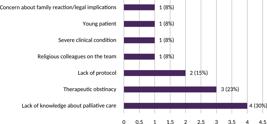
Justifications for considering the do-not-resuscitate order an ethical dilemma in daily medical practice
Discussion
The distribution of participants was relatively balanced between men (55%) and women (45%). Although this difference is not significant, it is important to consider possible gender implications in the perception and management of medical decision-making, since studies show different clinical attitudes and practices between men and women 13.
Most participants were aged 30–39 years (50%), an age group in which professionals are still consolidating their clinical practices and ethical posture, given the recent training. Also, more than half were intensive care physicians (60%), a group that often deals with decision-making about non-resuscitation and has more experience with critical and end-of-life situations 14.
All participants considered the DNR issue “very important,” especially due to its impact on end-of-life medical decision-making. In addition, with the progressive consolidation of palliative care, some issues have been given greater visibility and, thus, drawn attention to the need for shared decision-making and legal support in supporting medical interventions 15.
Currently, physicians are expected to have higher compliance with the ethical and legal guidelines of the profession and to respect the autonomy and will of patients. Although the participants recognize the importance of sharing information with patients, most do not adopt this practice in daily routine, and it is more common that the information is provided to the family, which corroborates findings from other studies 16.
The finding that 65% of the participants did not know DNR protocols indicates a significant gap, since the lack of knowledge of guidelines can increase the insecurity of professionals in the management of some clinical situations. Only 20% knew national protocols, and 5% knew both national and international protocols, which suggests limited dissemination of what DNRs are. In Brazil, there is no specific guideline for non-resuscitation in cancer patients in palliative care, while, at the international level, the issue is addressed in guidelines from institutions such as the National Comprehensive Cancer Network (NCCN), the European Society for Medical Oncology (ESMO), the National Institute for Health and Care Excellence (NICE) and the American Society of Clinical Oncology (ASCO) 17,18.
National protocols are key to guiding and ensuring the quality of medical care. However, their effectiveness depends on access to information and continuous training, which certainly result in safer and more individualized care. The combination of well-defined protocols and continuing education is essential to achieve better clinical outcomes and increased security in decision-making.
The reference to the SPIKES Protocol, used to communicate bad news, suggests confusion about what constitutes a DNR protocol. On the other hand, 65% of the physicians had contact with the issue during undergraduate education or through courses. In addition, residency was mentioned by 30%, which underscores its relevance in the acquisition of this knowledge. However, only 5% cited clinical practice, which suggests that daily experience alone is not enough to ensure a robust understanding of the issue.
The data indicate the need to address non-resuscitation criteria in medical education, especially in residency programs, where professionals will have more contact with the practice. In teaching such contents, adopting active methodologies can help in problematizing clinical situations and increasing the security of physicians, thus resulting in more prudent and informed decisions, especially in ICUs 19.
Among the participants, 75% recognized ethical dilemmas related to non-resuscitation, which reflects the complexity of such decision-making. Justifications for ethical dilemmas included religious issues, in addition to personal and family values, due to their impact on non-resuscitation decision-making. There was also concern about transgression of legal and ethical norms and non-compliance with institutional guidelines.
The lack of knowledge about DNR, reported by 30% of the professionals, can lead to ethically inappropriate decisions, and this result needs to be emphasized. In addition, the DNR should not be confused with euthanasia, since they involve different concepts and interpretations. The difficulty in establishing this difference between the two, mentioned by a physician, shows the importance of fostering the discussion of these issues among intensive care physicians, so their decisions are based on technical and scientific evidence, and not only on personal conceptions.
The continuing education of professionals is crucial to improve the understanding of the ethical and legal dilemmas related to the DNR. Although 35% of physicians do not report conflicts between the DNR and their personal values, 20% stated they occasionally face related dilemmas, which shows the need for support to deal with the emotional impact of these decisions 20-22. Creating spaces to discuss ethical issues and psychological support programs can help mitigate the impact of dilemmas and foster a healthier work environment and more balanced decisions 20. In addition, integrating ethics education into medical training and promoting regular discussions can strengthen the physicians’ ability to deal with these challenges effectively and consistently with the best interests of patients 21.
There was consensus among the physicians on the need for specific non-resuscitation protocols for cancer patients. This demonstrates the importance of clear guidelines in the ICU context, as non-resuscitation decision-making can be complex. In addition, 40% of the physicians noted that such protocols would provide a solid basis for ethical and clinical decision-making, reducing subjectivity and minimizing conflicts between health care providers, patients and family members 19.
About 40% of the participants mentioned that protocols help in the evaluation and management of poor prognosis, especially in cancer cases. Moreover, well-defined guidelines contribute toward avoiding futile and obstinate interventions and toward better communication with the patient and family, especially with regard to the indication of exclusive palliative care.
Of the total, 15% of the participants emphasized that the early introduction of palliative care improves the quality of life and aligns the interventions with the patients’ will. While 10% noted the medical and legal support provided by the protocols, as they ensure that DNR decisions follow best practices and legal standards and reduce the risk of litigation.
Given the frequency of CRA in cancer patients in the ICU, it is essential that physicians are prepared to deal with the ethical and legal aspects of their decisions, since several families may not understand the reasons for non-resuscitation. Therefore, decision-making needs to be discussed and shared in order to favor access to information, especially in critical situations with different opinions.
Despite the scarcity of ethical-professional regulation on DNRs in Brazil, the common practice is to implement them when death is imminent and the patient’s condition is irreversible 23,24. However, the lack of clarity about the DNR among health care providers often postpones the decision, prolonging the patient’s suffering. This situation could be avoided with clearer guidelines and prior dialogue about treatment preferences and indications.
It should be mentioned that 85% of the professionals agreed that the severity and irreversibility of the clinical condition are the main justifications for non-resuscitation, and 45% totally disagreed with the use of all medical resources in cases of severe compromise, justifying it with the need to assess the patient’s prognosis. This position reflects the concern to favor orthothanasia and avoid unnecessary prolongation of suffering. Thus, post-CPR quality of life becomes a key point 25. However, only 55% of the participants indicated as justification the respect for the patient’s or family’s will.
It is noted that 45% of the physicians disagreed with the use of all resources in cases of therapy refusal by the patient, which demonstrates a progressive valorization of autonomy in medical practice, in contrast to medical paternalism 23. This justification was maintained even in the scenario that the patient was a member of the family of the participant.
The majority (75%) agreed that physicians have the duty of addressing the subject with the patient, despite the possible emotional challenges. In addition, they considered important assessing the psychological state of patients before sharing information, as those with compromised cognitive ability may have difficulties in making decisions related to the end of life 20.
When asked about dialogue with family members or companions of patients, 80% of the physicians said they agreed with the practice. This conduct is in line with the recommendations of the literature, as there are situations in which family members are responsible for making decisions on behalf of the patient 18. In addition, the physicians’ practice of engaging family members in the decision-making process is positive when considering that several caregivers are invisible to the health care system, which sees them only as task performers, without recognizing their emotional involvement 16.
Teamwork was highly valued by the professionals in the context of end-of-life care. In the ICU, therapeutic decisions are usually made by consensus among team members, who should avoid interventions that will not benefit patients 15. Such integration raises essential questions about the patient’s clinical condition, treatment goals, likelihood of survival, quality of life and the need for palliative care to avoid dysthanasia. A Japanese study demonstrated that age, presence of malignancy and postoperative status are the main factors that affect the decision of not resuscitating 26.
Respect for autonomy requires that physicians investigate the patient’s preferences regarding treatment. However, the findings showed a gap; although the professionals recognize the importance of this communication, it is little frequent. Such gap may indicate that medical training is still limited in terms of problematizing the ethical dilemmas related to the DNR, thus hindering not only medical communication, but also the involvement of patients and family members in this type of discussion.
In cancer treatment, it is essential that all professionals have training in palliative care, which will favor decision-making on the indication of non-resuscitation. For professionals working in the ICU, such approach is especially necessary and important, due to the sensitive nature of the issue. It is not a matter of avoiding ethical conflicts, but of enhancing solutions so medical interventions in ICU cancer patients are technically and ethically oriented.
Final considerations
If, on the one hand, most participants recognize the importance of non-resuscitation guidelines, on the other hand, the lack of guidelines and/or protocols geared toward the oncological context indicates the need to foster discussions on the issue in the field of medicine. Moreover, the ethical and legal issues related to the subject need to be problematized in depth, in order to consider the personal and communicational challenges faced by intensive care physicians.
Finally, even considering the limitations in the generalization of the findings, given that the research was carried out in an oncology hospital in northern Brazil, it is believed that the results can support future research and enrich the debate on the complexity of the clinical situations addressed here.
References
-
1 Wen FH, Chen CH, Chou WC, Chen JS, Chang WC, Hsieh CH, Tang ST. Evaluating if an advance care planning intervention promotes do-not-resuscitate orders by facilitating accurate prognostic awareness. J Natl Compr Canc Netw [Internet]. 2020 [acesso 1 out 2024];18(12):1658-66. DOI: 10.6004/jnccn.2020.7601
» https://doi.org/10.6004/jnccn.2020.7601 -
2 Martina D, Kustanti CY, Dewantari R, Sutandyo N, Putranto R, Shatri H et al. Advance care planning for patients with cancer and family caregivers in Indonesia: a qualitative study. BMC Palliat Care [Internet]. 2022 [acesso 1 out 2024];21(1):204. DOI: 10.1186/s12904-022-01086-0
» https://doi.org/10.1186/s12904-022-01086-0 -
3 St Ledger U, Reid J, Begley A, Dodek P, McAuley DF, Prior L, Blackwood B. Moral distress in end-of-life decisions: a qualitative study of intensive care physicians. J Crit Care [Internet]. 2021 [acesso 1 out 2024];62:185-9. DOI: 10.1016/j.jcrc.2020.12.019
» https://doi.org/10.1016/j.jcrc.2020.12.019 -
4 Benbenishty J, Ganz FD, Lautrette A, Jaschinski U, Aggarwal A, Soreide E et al. Variations in reporting of nurse involvement in end-of-life practices in intensive care units worldwide (ETHICUS-2): a prospective observational study. Int J Nurs Stud [Internet]. 2024 [acesso 1 out 2024];155:104764. DOI: 10.1016/j.ijnurstu.2024.104764
» https://doi.org/10.1016/j.ijnurstu.2024.104764 -
5 Santos FL. Aspectos bioéticos na ordem de não reanimação: uma análise da percepção e conhecimentos dos médicos [dissertação] [Internet]. Curitiba: Pontifícia Universidade Católica do Paraná; 2019. Disponível: https://bit.ly/44YgnUt
» https://bit.ly/44YgnUt -
6 Hou X, Lu Y, Yang H, Guo R, Wang Y, Wen L et al. Preferences for a good death: a cross-sectional survey in advanced cancer patients. BMJ Support Palliat Care [Internet]. 2022 [acesso 1 out 2024];12(4):570-7. DOI: 10.1136/bmjspcare-2018-001750
» https://doi.org/10.1136/bmjspcare-2018-001750 -
7 Sultan H, Mansour R, Shamieh O, Al-Tabba' A, Al-Hussaini M. DNR and covid-19: the ethical dilemma and suggested solutions. Front Public Health [Internet]. 2021 [acesso 1 out 2024];12(9):560405. DOI: 10.3389/fpubh.2021.560405
» https://doi.org/10.3389/fpubh.2021.560405 -
8 Bernoche C, Timerman S, Polastri TF, Giannetti NS, Siqueira AW, Piscopo A et al. Atualização da Diretriz de Ressuscitação Cardiopulmonar e Cuidados Cardiovasculares de Emergência da Sociedade Brasileira de Cardiologia - 2019. Arq Bras Cardiol [Internet]. 2019 [acesso 1 out 2024];113(3):449-663. DOI: 10.5935/abc.20190203
» https://doi.org/10.5935/abc.20190203 -
9 Conselho Federal de Medicina. Resolução CFM nº 1.805, de 28 de novembro de 2006. Diário Oficial da União [Internet]. Brasília, p. 169, 28 nov 2006 [acesso 1 out 2024]. Seção 1. Disponível: https://bit.ly/4kL23V4
» https://bit.ly/4kL23V4 -
10 Conselho Federal de Medicina. Resolução CFM nº 1.995, de 9 de agosto de 2012. Dispõe sobre as diretivas antecipadas de vontade dos pacientes. Diário Oficial da União [Internet]. Brasília, 31 ago 2012 [acesso 1 out 2024]. Disponível: https://bit.ly/3TNksWf
» https://bit.ly/3TNksWf -
11 Brasil. Ministério da Saúde. Carta dos Direitos dos Usuários da Saúde [Internet]. 3ª ed. Brasília: Ministério da Saúde; 2011 [acesso 1 out 2024]. p. 1-30. Disponível: https://bit.ly/3IATYow
» https://bit.ly/3IATYow -
12 Dib RV, Gomes AMT, Ramos RS, França LCM, Paes LS, Fleury MLO. Pacientes com câncer e suas representações sociais sobre a doença: impactos e enfrentamentos do diagnóstico. Rev Bras Cancerol [Internet]. 2022 [acesso 14 out 2024];68(3):e-061935. Disponível: https://bit.ly/44R13Zx
» https://bit.ly/44R13Zx -
13 Carmichael J, Abdi S, Balaskas K, Costanza E, Blandford A. Assessment of optometrists' referral accuracy and contributing factors: a review. Ophthalmic Physiol Opt [Internet]. 2023 [acesso 1 out 2024];43(5):1255-77. DOI: 10.1111/opo.13183
» https://doi.org/10.1111/opo.13183 -
14 Sui W, Gong X, Qiao X, Zhang L, Cheng J, Dong J, Zhuang Y. Family members' perceptions of surrogate decision-making in the intensive care unit: a systematic review. Int J Nurs Stud [Internet]. 2023 [acesso 1 out 2024];137:104391. DOI: 10.1016/j.ijnurstu.2022.104391
» https://doi.org/10.1016/j.ijnurstu.2022.104391 -
15 Ajzenberg H, Connolly E, Morrison K, Oczkowski S. Exercising medical judgement: resuscitation and "Decision-making for end-of-life care," a new policy from the college of physician and surgeons of Ontario. Can J Anaesth [Internet]. 2024 [acesso 1 out 2024];71(4):447-52. DOI: 10.1007/s12630-024-02724-2
» https://doi.org/10.1007/s12630-024-02724-2 -
16 Nitkunan A. End-of-life care. Pract Neurol [Internet]. 2024 [acesso 1 out 2024];24(4):345-6. DOI: 10.1136/pn-2023-004075
» https://doi.org/10.1136/pn-2023-004075 -
17 Dans M, Kutner JS, Agarwal R, Baker JN, Bauman JR, Beck AC et al. NCCN Guidelines® Insights: palliative care, version 2.2021. J Natl Compr Canc Netw [Internet]. 2021 [acesso 1 out 2024];19(7):780-8. DOI: 10.6004/jnccn.2021.0033
» https://doi.org/10.6004/jnccn.2021.0033 -
18 Crawford GB, Dzierzanowski T, Hauser K, Larkin P, Luque-Blanco AI, Murphy I et al. Care of the adult cancer patient at the end of life: ESMO Clinical Practice Guidelines. ESMO Open [Internet]. 2021 [acesso 1 out 2024];6(4):100225. DOI: 10.1016/j.esmoop.2021.100225
» https://doi.org/10.1016/j.esmoop.2021.100225 -
19 Suija K, Mason SR, Elsner F, Paal P. Palliative care training in medical undergraduate education: a survey among the faculty. BMC Palliat Care [Internet]. 2024 [acesso 1 out 2024];23(1):19. DOI: 10.1186/s12904-024-01351-4
» https://doi.org/10.1186/s12904-024-01351-4 -
20 Diviani N, Bennardi M, Gamondi C, Saletti P, Stüssi G, Delbue-Luisoni M, Rubinelli S. Awareness, attitudes, and beliefs about palliative care: results from a representative survey of the Italian-speaking swiss population. PLoS One [Internet]. 2023 [acesso 1 out 2024];18(11):0294807. DOI: 10.1371/journal.pone.0294807
» https://doi.org/10.1371/journal.pone.0294807 -
21 Brasil. Ministério da Saúde. A avaliação do paciente em cuidados paliativos [Internet]. Rio de Janeiro: Instituto Nacional de Câncer; 2022 [acesso 1 out 2024]. Disponível: https://bit.ly/46h71oX
» https://bit.ly/46h71oX -
22 Pegoraro MMO, Paganini MC. Cuidados paliativos e limitação de suporte de vida em terapia intensiva. Rev. bioét. (Impr.) [Internet]. 2019 [acesso 1 out 2024];27(4):743-53. DOI: 10.1590/1983-80422019274353
» https://doi.org/10.1590/1983-80422019274353 -
23 Baek SK, Kim HJ, Kwon JH, Lee HY, Won YW, Kim YJ et al. Preparation and practice of the necessary documents in hospital for the "Act on decision of life-sustaining treatment for patients at the end-of-life". Cancer Res Treat [Internet]. 2021 [acesso 1 out 2024];53(4):926-34. DOI: 10.4143/crt.2021.326
» https://doi.org/10.4143/crt.2021.326 -
24 Tuesen LD, Bülow HH, Ågård AS, Strøm SM, Fromme E, Jensen HI. Patient-physician conversations about life-sustaining treatment: treatment preferences and participant assessments. Palliat Support Care [Internet]. 2023 [acesso 1 out 2024];21(1):20-6. DOI: 10.1017/S1478951521001875
» https://doi.org/10.1017/S1478951521001875 -
25 Oliveira HC, Sauthier M, Silva MMD, Crespo MDCA, Seixas APR, Campos JF. Do-not-resuscitate order in covid-19 times: bioethics and professional ethics. Rev Gaucha Enferm [Internet]. 2021 [acesso 1 out 2024];42:20200172. DOI: 10.1590/1983-1447.2021.20200172
» https://doi.org/10.1590/1983-1447.2021.20200172 -
26 Tsuji T, Sento Y, Nakanishi T, Tamura T, Kako E, Sato I et al. Incidence and factors associated with newly implemented do-not-attempt-resuscitation orders among deteriorating patients after rapid response system activation: a retrospective observational study using a Japanese multicenter database. Acute Med Surg [Internet]. 2023 [acesso 1 out 2024];10(1):870. DOI: 10.1002/ams2.870
» https://doi.org/10.1002/ams2.870
Edited by
-
Editora responsable:
Dilza Teresinha Ambrós Ribeiro
All data used or generated in this study are described and presented in full in the body of the article.

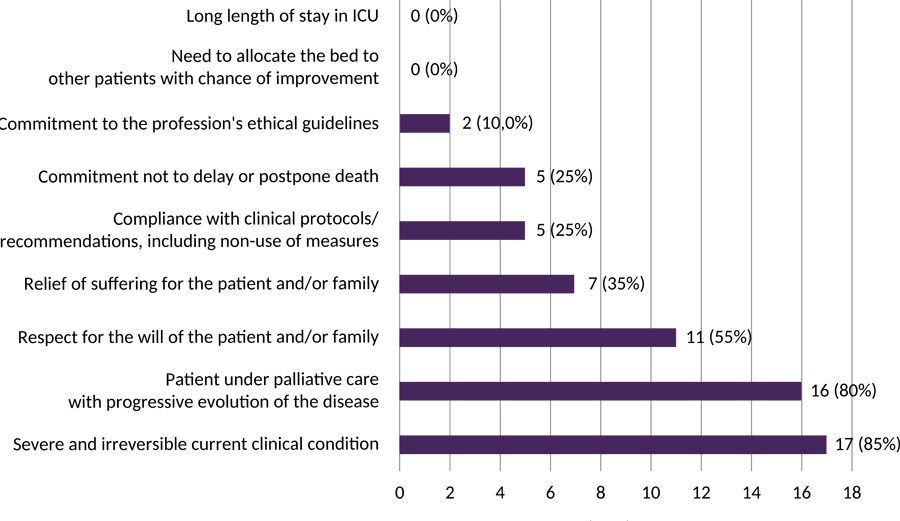 ICU: intensive care unit. The percentages are relative to the total number of participants (n=20).
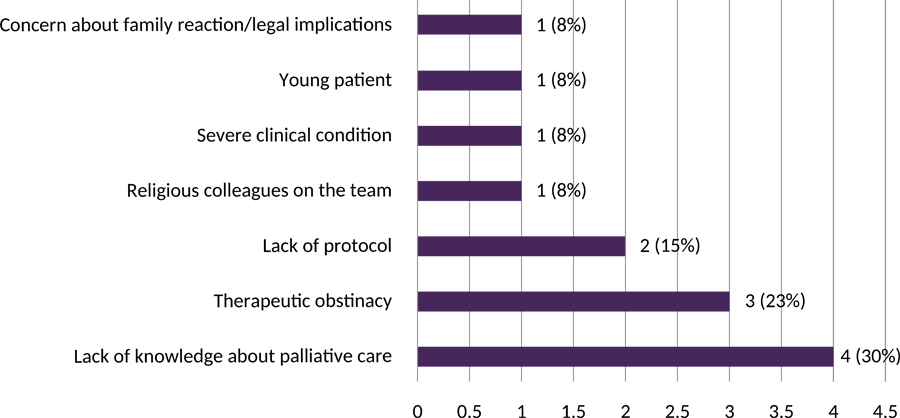 The percentages are relative to the total number of participants who justified the answer (n=13).