
 Perceptions of health care perceptions regarding trust in medical artificial intelligence in Spain
Abstract
This study examines the perceptions of healthcare professionals in Spain regarding trust in artificial intelligence, based on four clinical scenarios and considering technological familiarity, medical specialty, and age. From October to November 2024, a cross-sectional online survey was conducted with 165 professionals and students in the healthcare sector. The clinical scenarios described situations involving artificial intelligence-assisted diagnosis, prognosis, and therapeutic support; trust was measured using Likert scales. Data were analyzed using descriptive and inferential techniques in an open-source statistical environment. Familiarity was directly associated with trust; younger participants and physicians showed greater acceptance than other groups. Most participants reported low to moderate familiarity with artificial intelligence. The successful integration of artificial intelligence into the Spanish healthcare system requires targeted training by specialty and clear regulation, with increased technological familiarity being essential to foster trust.
Keywords
Artificial intelligence; Trust; Health personnel; Ethics, medical; Delivery of health care
Resumo
Este estudo analisa a percepção dos profissionais de saúde da Espanha sobre a confiança na inteligência artificial com base em quatro cenários clínicos, considerando a familiaridade tecnológica, especialidade e idade. Entre outubro e novembro de 2024, foi aplicado um questionário transversal on-line a 165 profissionais e estudantes do setor da saúde. As condições clínicas descreviam situações de diagnóstico, prognóstico e suporte terapêutico assistidos pela inteligência artificial; a confiança foi medida com escalas Likert. Os dados foram processados por técnicas descritivas e inferenciais em ambiente estatístico de código aberto. A familiaridade esteve diretamente relacionada à confiança; os participantes mais jovens e os médicos apresentaram maior aceitação do que outros grupos. A maioria dos participantes tiveram uma familiaridade baixa ou moderada. A inclusão com sucesso da inteligência artificial no sistema de saúde espanhol demanda treinamento específico das especialidades e uma regulamentação clara, sendo essencial aumentar a familiaridade tecnológica para gerar confiança.
Palavras-chave
Inteligência artificial; Confiança; Pessoal de saúde; Ética médica; Atenção à saúde
Resumen
Este estudio examina cómo los profesionales sanitarios españoles perciben y confían en la inteligencia artificial en cuatro escenarios clínicos, considerando familiaridad tecnológica, especialidad y edad. Entre octubre y noviembre de 2024 se aplicó una encuesta transversal en línea a 165 profesionales y estudiantes del sector sanitario. Las viñetas clínicas describían situaciones de diagnóstico, pronóstico y apoyo terapéutico asistidos por inteligencia artificial; la confianza se midió con escalas Likert. Los datos se procesaron mediante técnicas descriptivas e inferenciales en un entorno estadístico de código abierto. La familiaridad mostró relación directa con la confianza; los participantes más jóvenes y los médicos tuvieron mayor aceptación que otros grupos. La mayoría notificó familiaridad baja o moderada. Integrar con éxito la inteligencia artificial en el sistema sanitario español exige formación específica por especialidad y una regulación clara; y aumentar la familiaridad tecnológica es esencial para generar confianza.
Palabras clave
Inteligencia artificial; Confianza; Personal de salud; Ética médica; Atención a la salud
Despite the growing interest and development of artificial intelligence (AI) in the field of health care worldwide, the adoption of these technologies in clinical practice depends largely on the perception and acceptance of health care providers. Factors such as familiarity with AI, medical specialty and age can significantly influence the trust placed in these tools, and understanding this dynamic is essential to ensure successful and sustainable implementation.
In Spain, AI is expected to play a crucial role in addressing the challenges of population aging, chronic diseases and unequal access to specialized health care services. Despite the evident potential of AI, trust in these technologies remains a determining factor for their effective adoption.
As indicated by several studies 1, the perception and attitude of health care providers towards AI can facilitate or hinder its use in daily clinical practice. The current academic literature exhibits a gap as to the trust of health care providers in AI, with most studies on this technology in health care conducted in contexts outside Spain, mainly in Anglophone settings.
Considering the above, the main objective of this study was to examine how health care providers in Spain perceive AI in different clinical contexts, exploring the variables for familiarity with AI, medical specialty and age as key factors in the trust placed in these technologies. Therefore, this research aims to shed light on a crucial but little explored area in the Spanish context.
This study seeks to go beyond the simple description of trust in AI. Specifically, we propose to analyze how this trust is manifested in different clinical contexts, presenting clinical scenarios that illustrate specific applications of AI in patient diagnosis, treatment, and follow-up. Therefore, we explored the relation between trust and demographic and professional variables with the objective of tracing patterns and trends that may support future implementation strategies.
The results of this research are expected to not only contribute to the academic debate on AI in health care, but also provide valuable information for policymakers, health care providers, and technology developers, helping them better understand the needs and concerns of end users and design solutions that are accepted and used effectively in clinical practice.
Ultimately, the expectation is a fruitful partnership between humans and machines, in which AI is used as a complementary tool that enhances the skills and knowledge of health care providers to benefit patient health and well-being.
Structured narrative literature review
Trust in AI in health care
Although systematic reviews following the Preferred Reporting Items for Systematic Reviews and Meta-Analyses (PRISMA) 2 reporting guidelines are the gold standard for synthesizing evidence, there are situations where a structured narrative review may be more appropriate when seeking a broader, more contextual understanding of an issue. While PRISMA provides a rigorous framework for systematic reviews and meta-analyses, with a focus on transparency and reproducibility, a narrative review enables a more flexible and in-depth exploration of the literature.
This is especially useful in rising or multidisciplinary research areas in which studies may adopt heterogeneous methods and approaches. Given the higher flexibility of a structured narrative review, this type of review was used in this study.
Trust in AI systems in the health care sector has been the subject of analysis in several recent studies, which indicated that the health care providers’ perception of AI is influenced by factors such as usability, transparency, security, and implementation context 3.
In particular, the most critical applications of AI, such as diagnosis and treatment selection, often lead to greater reluctance among providers due to potential ethical implications and perceived risk of error. In the European context, initiatives to promote the integration of AI into health care systems have advanced rapidly, with countries such as France and Germany leading the development of regulatory frameworks and training programs for medical professionals.
However, Spain is still in the early stages of implementation, which underscores the importance of studies to understand the factors that can facilitate or hinder the adoption of AI in the Spanish health care system. The recent literature indicates that trust in AI systems requires special consideration in the clinical context, in which decisions have direct implications for patient health.
This literature does not originate in the Spanish context, although there are authors of Spanish origin who publish in English; therefore, we focus on studies with a European perspective and in English. Based on this literature and its review, there has been extensive research focused on examining trust, especially in the European regulatory framework.
Several studies explore strategies to promote trust, which cover technical reliability, adherence to ethics frameworks, and the participation of diverse actors. Studies have demonstrated that establishing work frameworks and procedures is fundamental for the development of reliable AI systems, as in the study of Manuel-Vicente and collaborators 4, who propose a comprehensive framework that complies with European Union (EU) directives.
This framework addresses fundamental aspects, such as data privacy, diversity, non-discrimination, equity, transparency, and technical robustness at different stages of the AI lifecycle. The regulatory analysis constitutes another critical dimension of this discourse. Meszaros and collaborators 5 and Bimczok and collaborators 6 provide information on existing and proposed regulations, such as the EU General Data Protection Regulation (GDPR) and the AI Act. They discuss the need for cohesive regulatory frameworks to ensure ethical and responsible applications of AI in health care in Europe, which address data protection, responsibility, transparency, robustness and accuracy.
On the other hand, De Raeve and collaborators 7 note the rising practice of engaging stakeholders in AI design and emphasizing the value of participatory design approaches. These methodologies involve health care providers, especially nurses, in co-creation processes, which contribute to improving the trust in and acceptance of AI solutions.
Innovative concepts, such as the “AI passport” introduced by García-Gómez and collaborators 8, serve as living documents that provide complete records of AI systems, thus promoting transparency, security, and responsibility. This initiative exemplifies ongoing efforts to implement practical tools for AI risk management. Mehrotra and collaborators 9 note that adequate trust must correspond to the actual capacity of the system, which avoids both mistrust and excessive trust.
Accordingly, LaRosa and Danks 10 argue that trust in AI should be based on understanding the underlying mechanisms that generate recommendations beyond the mere predictability of system behavior. A significant finding of Burgess and collaborators 11 is that health care providers evaluate AI systems in comparison with traditional “gold standards” of clinical knowledge production, particularly controlled randomized clinical trials. This comparison directly influences the willingness of health care providers to incorporate AI recommendations into their clinical practice.
In addition, the authors found that trust is often established in the first interactions with the system, which highlights the importance of proper implementation and initial training. A crucial aspect for the effective adoption of AI systems in the field of health care is the proper integration into existing clinical workflows. Studies show that time constraints during consultations are a significant barrier, requiring AI systems to provide concise and relevant information without increasing the cognitive load of professionals 9,11.
This situation shows the need to develop interfaces that facilitate fast and effective decision-making while maintaining the transparency necessary to foster adequate trust. McGarry and collaborators 12 complement our review of the literature on trust in medical AI by examining regulatory and governance challenges. The authors state that traditional risk-based regulation is inadequate for these new technologies, mainly because it is difficult to classify the risk of unprecedented systems and because continuous learning poses challenges for certification.
There is also a fundamental tension between the need for frequent software updates and established regulatory processes. This study emphasizes that trust in medical AI systems should consider social factors beyond technical accuracy, such as use context, clinical workflow, user-specific automation requirements, and the balance between false positives and negatives based on clinical and economic impact.
There is a study under review in an academic journal, and we analyzed in more detail the diverse typology to be taken into account when analyzing which factors influence the attribution of trust when using AI in medicine. The work of McGarry and collaborators 12 reinforces our argument about the need to consider multiple factors in building trust, beyond purely technical metrics, and the urgency of adapting existing regulatory frameworks to accommodate the unique characteristics of medical AI systems.
Method
This study adopts a cross-sectional design to explore the perceptions of health care professionals on AI. We opted for an online questionnaire, distributed through the snowball effect procedure using Psytoolkit 13, a web tool that proved effective for studies that require fast and reliable responses on a large scale.
Participants
The sample consisted of 165 medical professionals and students in Spain, recruited between October and November 2024. The sample included health care providers from various specialties, such as Medicine, Nursing, Psychology, Physiotherapy and others, ensuring a diverse representation of the health care system. Participants were recruited through the snowball effect or word of mouth.
Informed consent
All participants gave their informed consent to participate in the study before answering the questionnaire. This consent was obtained electronically on the Psytoolkit platform, in which participants were informed about the purpose of the study, the voluntary nature of their participation, the confidential treatment of their data, and the right to opt out from the study at any time. Data collection only began when participants explicitly agreed to participate in the study. This procedure was carried out in accordance with the ethical principles of research and the current regulations on data protection.
Data collection instrument
The questionnaire included demographic questions (age, specialty, years of experience) and a series of clinical scenarios developed to assess trust in different applications of AI. The scenarios addressed specific situations including diagnosis of rare diseases and remote monitoring of chronic patients, and participant trust was measured using a Likert scale ranging from “Totally Disagree” to “Totally Agree.”
Procedure for completing the questionnaire
Participants completed the online questionnaire anonymously. After reading the scenarios (4 in total), participants responded to each clinical scenario using a five-point Likert scale. The survey was preceded by an informed consent form that explained the purpose of the study and guaranteed data confidentiality. It also included was a question about familiarity with AI, measured on a Likert scale ranging from “Not at all familiar” to “Extremely familiar.”
Clinical scenarios
Diagnosis of rare diseases: an AI system, after analyzing a patient’s symptoms and medical record, suggests a diagnosis for a rare disease that had previously been ignored by several physicians. The recommended treatment is new but promising. Would you trust the diagnosis and treatment of a rare disease provided by an AI system, especially if it had previously been ignored by other physicians?
Remote Monitoring of Chronic Patients: an AI application monitors the vital signs of a patient with a chronic disease using handheld devices. AI notifies the patient and their physician when it detects patterns that indicate a possible worsening, enabling rapid intervention. Would you feel comfortable using an AI app to monitor a chronic disease remotely?
Automated advisory for healthy lifestyles: an AI chatbot provides personalized dietary and physical activity-related tips to a patient seeking to reduce their obesity issues. The chatbot adjusts its tips based on the patient’s progress and feedback. Would you trust the advice of an AI chatbot to improve your diet and physical activity?
Choice of cancer treatment: An AI algorithm evaluates the specific characteristics of a patient’s cancer, including tumor genetics, to recommend a personalized treatment plan. This plan includes a combination of traditional therapies and experimental options based on the likelihood of success. Would you feel comfortable with a cancer treatment plan recommended by an AI algorithm, based on genetic analysis of the tumor?
The analysis of the distribution by education showed a significant pattern (χ2=22.64, p<0.001), in which the undergraduate degree predominates with 45.7% of the participants, followed by the master’s degree with 23.3%. The doctoral degree represents 16.3% of the total; and the other levels of education represent 14.7%. This unequal distribution reflects the hierarchical structure that is typical of the Spanish health care system, in which most professionals have an undergraduate or master’s degree, while doctoral degrees are less common in direct clinical practice.
Statistical analysis
Descriptive and inferential statistical techniques were used to evaluate the collected data. The analysis used specialized software to ensure accuracy and reproducibility in the results. Data analysis used the R programming language, a tool that is widely recognized in the scientific community for its robustness in statistical analysis and data visualization 14. The data were reviewed to trace errors, outliers, and unassigned data. Incomplete observations were excluded following methodological criteria.
Categorical variables such as “education” and “area of practice” were coded as factors, while ordinal variables such as Likert scales were treated as ordered data. We described categorical variables such as age distribution, education and professional area of the participants. Independence tests were performed to analyze the categorical distributions of the key variables.
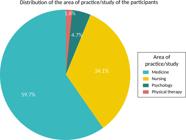
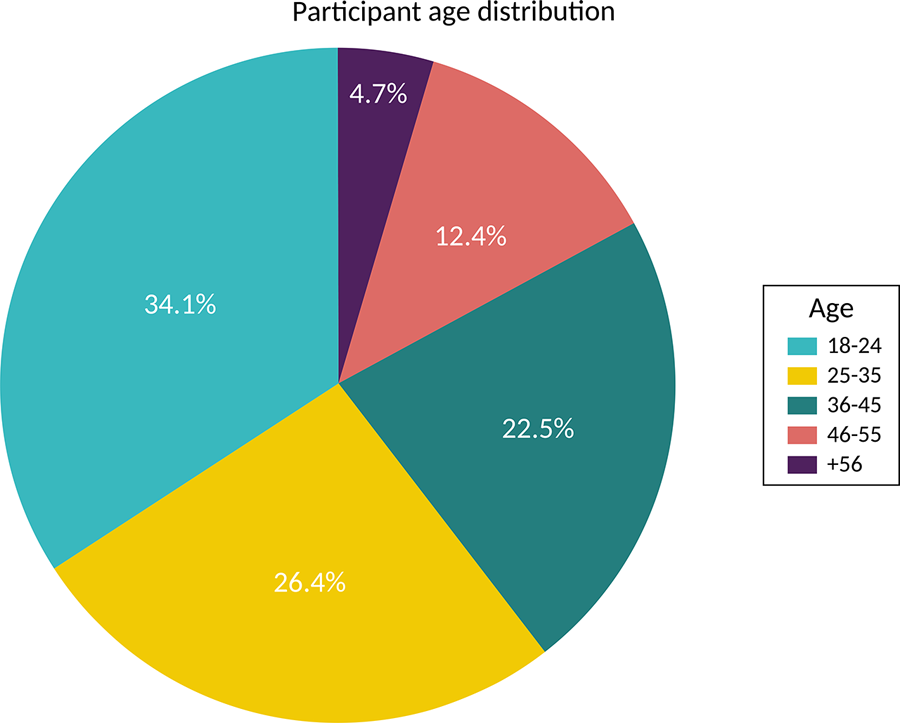
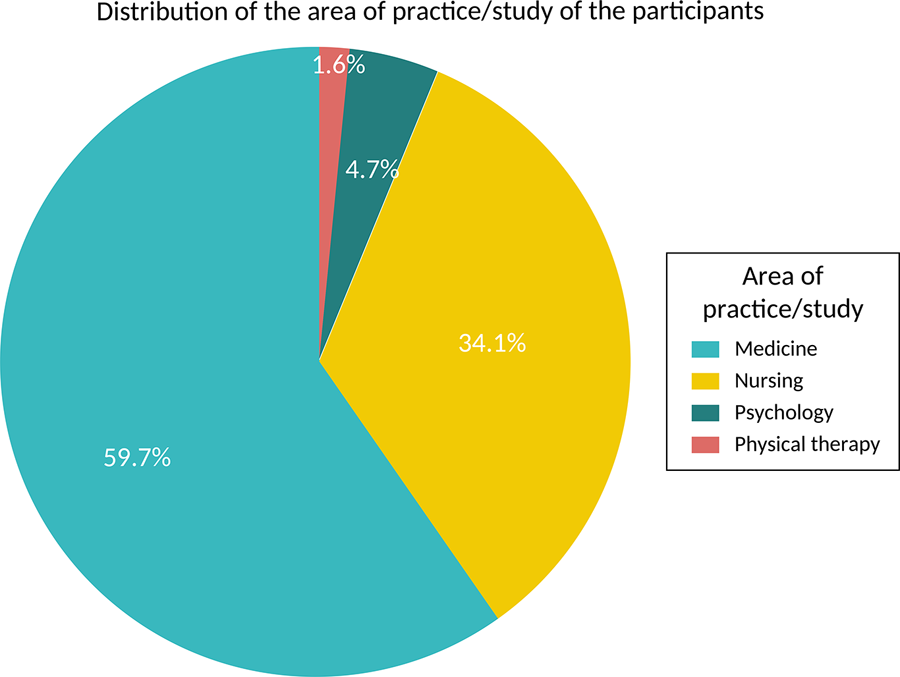
Age distribution was compared with a uniform distribution. The analysis showed a disproportionate representation, with a higher frequency in the age groups of 18-24 years (34.1%) and 25-35 years (26.4%) (χ2=24.8, p<0.001). The distribution by education showed significant differences, notably with undergraduate degree (45.7%) and master’s degree (23.3%) as the most represented levels (χ2=22.64, p<0.001). We observed overrepresentation in medicine (59.7%) (χ2=86.48, p<0.001). Likert scale responses were analyzed using descriptive statistics to trace trends in familiarity with and trust in AI in different scenarios (diagnosis, monitoring, advisory, and treatment choice).
In addition, correlations between familiarity with AI and trust were evaluated, considering variables such as age and education. Multiple linear regression models were applied to explore the relations between familiarity, trust, and demographic variables. The dependent variables were trust in AI in the specific scenarios; and the independent variables were familiarity with AI, age and area of practice.
The code used to perform the statistical analysis, along with other supplementary materials for the study, is available at the project repository hosted in the Open Science Framework (OSF). This repository provides public access to the R script, ensuring the transparency and reproducibility of the analysis.
Results
The results showed that familiarity with AI had a positive and significant impact on trust in its applications, with a greater effect in the areas of diagnosis and treatment. Age negatively influenced trust, with younger participants showing higher acceptance. The professional specialty moderated these relations, with physicians exhibiting more trust compared with other health care providers.
For a more in-depth analysis of the relations between the variables, we evaluated specific interactions: familiarity vs. age and area of practice vs. familiarity. Familiarity with AI was found to mitigate generational differences in trust in the technology. Participants with more medical experience exhibited higher levels of trust, even with moderate levels of familiarity with AI.
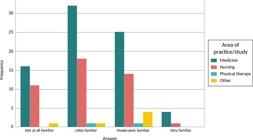
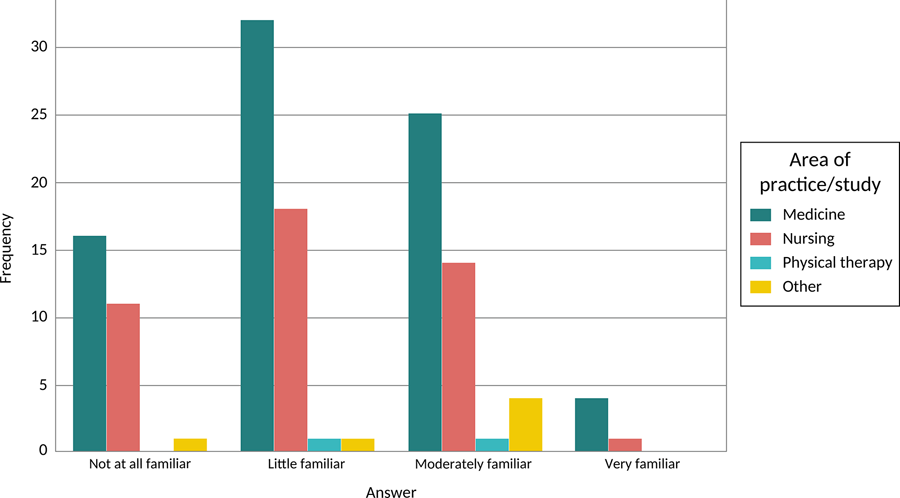
The levels of familiarity with AI were evaluated using a five-point Likert scale. The results indicated that most participants fell into categories of low or medium familiarity, with a higher proportion considering themselves “little familiar” or “moderately familiar.” This finding shows the need to promote AI training in health care, especially considering its growing relevance in the sector.
The results show a significant distribution by specialties. The medical team showed a more positive trend, with approximately 30 participants answering “agree” and 23 answering “neutral.” Nursing followed a similar pattern, but with more moderate numbers (16 “agree”; 9 “neutral”). It is notable that extreme positions (“totally disagree” and “totally agree”) were less frequent in all specialties, which shows a reasonable professional caution in relation to this application of AI.
Considering the context of the first scenario, this application of AI received one of the most positive evaluations of the study. The data show a strong inclination toward acceptance, particularly among physicians, with more than 40 participants answering “agree.” The nursing staff showed a similar pattern, with approximately 20 participants answering “agree.” The low rate of negative responses is particularly relevant, which suggests that this application of AI is perceived as less controversial and more practical.
Regarding the second scenario, the medical team expressed a strong acceptance of this application; approximately 43 participants answered “agree” and 21 answered “totally agree.” This high level of acceptance suggests significant trust in the use of AI for remote monitoring, especially among the physicians. In the case of the nursing professionals, approximately 19 participants answered “agree” and 18 answered “totally agree,” which also shows a positive trend, although with more moderate numbers. It is notable that the negative responses (“totally disagree” and “disagree”) were minimal in both professional groups, with only one participant from nursing and four from medicine expressing total disagreement.
In the case of the third scenario, the results showed moderate but positive acceptance. In medicine, approximately 35 participants answered “agree,” while nursing showed a similar distribution, with approximately 28 participants in this category. However, there is a notable increase in neutral responses compared with other applications, especially among physicians (12 responses) and nurses (four responses), which indicates some caution about the complete automation of lifestyle advisory.
In the case of the fourth scenario, there was a more conservative distribution. Among the physicians, 30 participants answered “agree,” while 26 maintained a neutral position. The nursing staff followed a similar pattern, but with more reduced numbers. It is notable that there was a significant number of “disagree” responses (12 in medicine, 9 in nursing), which shows ethical and responsibility concerns in critical oncological decision-making.
Discussion
The results of this study show that familiarity with AI arises as a key factor in building trust among medical professionals in Spain. This finding highlights the importance of technological training and capacity-building programs geared toward expanding knowledge and practical experience with these tools. The positive correlation between familiarity and trust suggests that exposure to AI, along with a clear understanding of its benefits and limitations, can promote more receptive attitudes toward its use in clinical applications.
The differences between specialties show the need for implementation strategies that are adapted to the characteristics and perceptions of each health care area. These differences indicate that some areas are more willing to adopt AI-based technologies, while others may require a more personalized approach that addresses their specific concerns. For example, specialties with less representation in the study could perceive these tools as a threat to professional autonomy or as an additional risk in clinical practice.
Another important finding is that perceptions about AI depend not only on technical knowledge, but also on factors related to risk perception and ethical responsibility. In critical clinical scenarios, such as diagnosing rare diseases or choosing cancer treatments, participants value the feasibility and safety of AI tools, and also express concerns about the transparency of algorithms and accountability for potential errors. This aspect reinforces the importance of ensuring that the solutions of these technologies are explainable and understandable not only to health care providers, but also to patients, on whom these technologies can have a direct impact.
Finally, the results suggest that specialties that are less familiar with AI could benefit from approaches that prioritize training in risks and the ethical integration of AI into clinical practice. This approach should include communication tools that demonstrate how these technologies can complement medical practice rather than replace professional expertise. These findings are consistent with previous studies that indicate that acceptance of AI is closely related to the perception of its risks and benefits, especially in critical health care applications.
Final considerations
The successful implementation of AI in the Spanish health care system will require not only improvements in technology, but also an approach oriented toward training and familiarizing health care providers with these tools. Based on the findings of this study, we propose the following recommendations:
-
Development of continuing education programs on AI adapted to different medical specialties, with emphasis on practical applications and case studies;
-
Adaptation of the implementation of AI tools to the specific needs of each specialty, considering the differences in willingness and trust observed in the study;
-
Promotion of policies that support the research and development of safe and effective AI solutions, with a clear regulatory framework that addresses safety and ethics issues;
-
Improvement of the transparency and communication with patients about the benefits and limitations of AI in health care, fostering a broader and more trusting adoption.
In this context, we believe it is essential to obtain the perspective of patients and users of the health care system at all stages of the life cycle of an AI product or system applied to health care, from design to implementation. The adoption of AI in the Spanish health care system has the potential to significantly improve the quality and efficiency of health care. However, its success will largely depend on the trust and acceptance of health care providers and patients.
To this end, it is worth noting the need to promote a partnership between health care providers, AI specialists and ethics specialists, focusing on addressing ethics issues and improving the acceptance of the technology. It is also important to establish mechanisms for ongoing evaluation of the effectiveness and safety of AI applications in health care, with regular feedback from providers and patients.
In conclusion, it is emphasized that this study provides a first step to understand the factors that influence this trust and offers clear guidelines for future research and implementation policies.
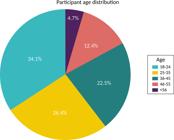
Percentage distribution of participants according to age group. There is a higher representation in the age groups of 18-24 years and 25-35 years, with lower presence of participants aged over 46 year
Acknowledgment
Aníbal M. Astobiza, Ramón Ortega Lozano and Marcos Alonso thank the organizing and scientific committee of the First Ibero-Latin American Congress on Ethics and Public Health and the Fourth International Congress on Philosophy of Public Health: “Ethical Commitments in Public Health” for allowing us to present our work in the scientific program. We thank the audience of this congress and especially Iris Parra Jounou for their comments, which helped to improve this text. The authors of the Project Trust and new means of integrating artificial intelligence: a methodological framework to overcome non-technological barriers in the adoption of medical AI, funded by MCIN/AEI/PID2024-156166OA-I00 and FEDER: A way to build Europe.This publication is part of the PID2024-156166OA-I00 scholarship, funded by MICIU/AEI/10.13039/501100011033 and FSE+
References
-
1 Rony MKK, Numan SM, Johra FT, Akter K, Akter F, Debnath M et al. Perceptions and attitudes of nurse practitioners toward artificial intelligence adoption in health care. Health Sci Rep [Internet]. 2024 [acesso 10 jun 2025];7(8):e70006. DOI: 10.1002/hsr2.70006
» https://doi.org/10.1002/hsr2.70006 -
2 Page MJ, McKenzie JE, Bossuyt PM, Boutron I, Hoffmann TC, Mulrow CD et al. The PRISMA 2020 statement: an updated guideline for reporting systematic reviews. BMJ [Internet]. 2021 [acesso 10 jun 2025];372:71. DOI: 10.1136/bmj.n71
» https://doi.org/10.1136/bmj.n71 -
3 Goodman B, Flaxman S. European Union regulations on algorithmic decision-making and a "right to explanation". AI Magazine [Internet]. 2017 [acesso 10 jun 2025];38(3). DOI: 10.1609/aimag.v38i3.2741
» https://doi.org/10.1609/aimag.v38i3.2741 -
4 de-Manuel-Vicente C, Fernández-Narro D, Blanes-Selva V, García-Gómez JM, Sáez C. A development framework for trustworthy Artificial Intelligence in health with example code pipelines. MedRxiv [Internet]. 17 jul 2024 [acesso 10 jun 2025]. DOI: 10.1101/2024.07.17.24310418
» https://doi.org/10.1101/2024.07.17.24310418 -
5 Meszaros J, Minari J, Huys I. The future regulation of artificial intelligence systems in healthcare services and medical research in the European Union. Front Genet [Internet]. 2022 [acesso 10 jun 2025];13:927721. DOI: 10.3389/fgene.2022.927721
» https://doi.org/10.3389/fgene.2022.927721 -
6 Bimczok SP, Godynyuk EA, Pierey J, Roppel MS, Scholz ML. How are excellence and trust for using artificial intelligence ensured? Evaluation of its current use in EU healthcare. South East Eur J Public Health [Internet]. 2023 [acesso 10 jun 2025];3:1-14. DOI: 10.70135/seejph.vi.239
» https://doi.org/10.70135/seejph.vi.239 -
7 De Raeve P, Davidson PM, Shaffer FA, Pol E, Pandey AK, Adams E. Leveraging the trust of nurses to advance a digital agenda in Europe: a critical review of health policy literature. Open Res Eur [Internet]. 2021 [acesso 10 jun 2025];13(1):26. DOI: 10.12688/openreseurope.13231.2
» https://doi.org/10.12688/openreseurope.13231.2 -
8 García-Gómez JM, Blanes-Selva V, Doñate-Martínez A. Proposing an AI passport as a mitigating action of risk associated to artificial intelligence in healthcare. Stud Health Technol Inform [Internet]. 2024 [acesso 10 jun 2025];316:547-51. DOI: 10.3233/SHTI240472
» https://doi.org/10.3233/SHTI240472 -
9 Mehrotra S, Jorge CC, Jonker CM, Tielman ML. Integrity-based explanations for fostering appropriate trust in AI agents. ACM Trans Interact Intell Syst [Internet]. 2024 [acesso 10 jun 2025];14(1):1-36. DOI: 10.1145/3610578
» https://doi.org/10.1145/3610578 -
10 LaRosa E, Danks D. Impacts on trust of healthcare AI [Internet]. In: Proceedings of the 2018 AAAI/ACM Conference on AI, Ethics, and Society; 2-3 fev 2018; Nueva Orleans. Nueva York: Association for Computing Machinery; 2018 [acesso 10 jun 2025]. p. 210-5. DOI: 10.1145/3278721.3278771
» https://doi.org/10.1145/3278721.3278771 -
11 Burgess ER, Jankovic I, Austin M, Cai N, Kapuscinska A, Currie ST et al. Healthcare AI treatment decision support: design principles to enhance clinician adoption and trust [Internet]. In: Proceedings of the 2023 CHI Conference on Human Factors in Computing Systems; 23-28 abr 2023; Hamburgo. Nueva York: Association for Computing Machinery; 2023 [acesso 10 jun 2025]. p. 1-19. DOI: 10.1145/3544548.3581251
» https://doi.org/10.1145/3544548.3581251 -
12 McGarry G, Crabtree A, Urquhart L, Chamberlain A. Responsibility and regulation: exploring social measures of trust in medical AI [Internet]. In: Proceedings of the Second International Symposium on Trustworthy Autonomous Systems; 16-18 set 2024; Austin. Nueva York: Association for Computing Machinery; 2024 [acesso 10 jun 2025]. p. 1-5. DOI: 10.1145/3686038.3686041
» https://doi.org/10.1145/3686038.3686041 -
13 Stoet G. PsyToolkit: a novel web-based method for running online questionnaires and reaction-time experiments. Teach Psychol [Internet]. 2016 [acesso 10 jun 2025];44(1):24-31. DOI: 10.1177/0098628316677643
» https://doi.org/10.1177/0098628316677643 -
14 Ihaka R, Gentleman R. R: a language for data analysis and graphics. J Comput Graph Stat [Internet]. 1996 [acesso 10 jun 2025];5(3):299-314. DOI: 10.2307/1390807
» https://doi.org/10.2307/1390807
Edited by
-
Editor in charge:
Dilza Teresinha Ambrós Ribeiro

 AI: artificial intelligence