
 VCISpain: protocol for a prospective multicenter observational study to validate a standardized classification tool for tracheal intubation using videolaryngoscopy
Abstract
Background and objective Videolaryngoscopy have transformed airway management by improving intubation success rates compared to direct laryngoscopy. However, its widespread adoption has been hindered by the lack of standardized classification tools for documentation and communication. This manuscript outlines the rationale and study design of the VCISpain project, which aims to evaluate the interobserver reproducibility of the Video Classification of Intubation (VCI) scale in the context of airway management using videolaryngoscopy in Spain.
Methods This manuscript presents the planned methodology of the VCISpain study, a prospective, observational, multicenter, open-label study. The study will collect data on tracheal intubations performed in operating rooms, intensive care units, and emergency departments. In each case, two anesthesiologists will independently apply the VCI scale to assess blade type, Percentage of Glottic Opening (POGO), and ease of intubation.
Ethics and registration The study was approved by the University of Navarra Ethics Committee (2022.079 mod1) and registered on ClinicalTrials.gov (NCT06537531). It is endorsed by the Spanish Society of Anesthesiology, Resuscitation and Pain Therapy (SEDAR) and the European Airway Management Society (EAMS).
Conclusions VCISpain seeks to establish a standardized classification tool for documenting and communicating findings related to videolaryngoscopy in airway management. By presenting the study rationale and design, this protocol aims to promote transparency, ensure methodological rigor, and encourage broader discussion to refine the study prior to implementation.
Keywords
Airway management; Patient care; Reproducibility of results; Tracheal intubation; Video-assisted techniques and procedures
Introduction
Tracheal Intubation (TI) remains a cornerstone of airway management in both anesthesia and critical care, despite its routine use.1,2 Difficult intubation occurs in approximately 5%-8% of cases, while failed TI is reported in 0.05%-0.35% of cases.3 Recent data indicate a decline in these rates ‒ 1.6 and 0.06 per 1,000 cases, respectively ‒ primarily due to advances such as Videolaryngoscopy (VL).4 Nonetheless, airway management complications remain a significant cause of morbidity and mortality.5,6
Direct Laryngoscopy (DL) has traditionally been the gold standard for visualizing the glottis and guiding tracheal tube placement.7 The advent of VL in 2001 marked a significant milestone, reducing rates of difficult and failed airways.8 Consequently, several national and international societies ‒ including the American Society of Anesthesiologists (ASA), the Canadian Airway Focus Group (CAFG), and the Spanish Society of Anesthesiology and Resuscitation (SEDAR) ‒ now recommend VL as a first-line technique for TI due to its ability to reduce complications and improve clinical outcomes.9-11
Traditional classification tools ‒ such as the Cormack-Lehane scale, its modification by Yentis and Cook, and the Percentage of Glottic Opening (POGO) ‒ remain the most commonly used methods for assessing intubation difficulty.7,12-14 However, these tools were originally developed for direct laryngoscopy and may not fully capture the specific challenges associated with VL.15 For example, excellent glottic visualization (e.g., 100% POGO) during VL does not always guarantee procedural success16,17 due to difficulties in maneuvering and inserting the tube through the glottis.18-20 Although alternative scales have been proposed to overcome these limitations, none have gained widespread acceptance.16,21
The Video Classification of Intubation (VCI) scale was developed to address this gap, providing a standardized classification tool for documenting VL intubations. It evaluates three components: blade type (Macintosh [M] or Hyperangulated [H]), Percentage of Glottic Opening (POGO), and ease of intubation (Easy [E], Difficult [D], or Failed [F]).22 The VCISpain study is a national, multicenter initiative aimed at evaluating the interobserver reproducibility and clinical applicability of the VCI scale in real-world practice across Spain. The study is endorsed by the Spanish Society of Anesthesiology, Resuscitation, and Pain Therapy (SEDAR) and the European Airway Management Society (EAMS). This manuscript presents the study rationale and design to promote transparency, ensure methodological rigor, and encourage constructive feedback prior to implementation.23
Methods
Objectives
Primary Aim
The primary aim of this study is to evaluate the interobserver reproducibility of the VCI scale during tracheal intubation using videolaryngoscopy across multiple centers in Spain.
Secondary aims
-
1 To assess the correlation between the Percentage of Glottic Opening (POGO) and the difficulty of tracheal intubation.
-
2 To evaluate the impact of the operator’s experience level on intubation-related outcomes.
-
3 To determine the incidence of complications associated with tracheal intubation using videolaryngoscopy.
Study design
The VCISpain study is a prospective, observational, multicenter, and open-label study. This design enables data collection across a diverse range of hospital settings, enhancing the external validity and generalizability of the findings. This protocol was developed in accordance with the STROBE (Strengthening the Reporting of Observational Studies in Epidemiology) guidelines for observational studies.
Study setting
The project involves 35 hospitals located across various autonomous communities in Spain. These centers encompass a wide array of clinical contexts, levels of care complexity, and technological capabilities, thereby ensuring a heterogeneous and representative sample. Additionally, the study includes anesthesiologists with varying levels of experience, offering a comprehensive and realistic analysis of the VCI scale’s application in clinical practice.
1 Clínica Universidad de Navarra (Madrid).
2 Clínica Universidad de Navarra (Pamplona).
3 Complejo Asistencial Universitario de Salamanca (Salamanca).
4 Complejo Hospitalario Universitario de A Coruña (A Coruña).
5 Complejo Asistencial de Zamora (Zamora).
6 Consorcio Hospital General de Castellón (Castellón).
7 Hospital Clínic de Barcelona (Barcelona).
8 Hospital del Bidasoa (Irún).
9 Hospital de Galdakao-Usansolo (Galdakao).
10 Hospital General de Requena (Valencia).
11 Hospital Infanta Sofía (Madrid).
12 Hospital Sant Joan Despí (Barcelona).
13 Hospital Universitari Dr. Peset (Valencia).
14 Hospital Universitario de Álava (HUA-Vitoria).
15 Hospital Universitario de Basurto (Bilbao).
16 Hospital Universitario de Getafe (Madrid).
17 Hospital Universitario de Navarra (Pamplona).
18 Hospital Universitario Donostia (San Sebastián).
19 Hospital Universitario Fundación Alcorcón (Madrid).
20 Hospital Universitario Infanta Leonor (Madrid).
21 Hospital Universitario La Fe (Valencia).
22 Hospital Universitario Lucus Augusti (Lugo).
23 Hospital Universitario Virgen de la Arrixaca (Murcia).
24 Hospital Universitario Virgen del Rocío (Sevilla).
25 HM Hospitales (Madrid).
26 Hospital Universitario La Paz (Madrid).
27 Consorcio Hospital General Universitario Valencia.
28 Hospital Universitario Torrecárdenas (Almería).
29 Hospital Universitario Gregorio Marañón (Madrid).
30 Hospital Universitario Puerta de Hierro (Madrid).
31 Hospital Son Llátzer (Mallorca).
32 Hospital Clinico de Valencia.
33 Hospital FREMAP (Madrid).
34 Hospital Universitario Ramón y Cajal (Madrid).
35 Hospital Universitario Virgen Macarena (Sevilla).
This extensive network of hospitals ensures a comprehensive representation of the variability and complexity encountered in airway management across Spain.
Pre-data collection preparations
To ensure consistent and standardized application of the VCI scale across all centers, a comprehensive training and coordination strategy was implemented before the initiation of data collection. All participating anesthesiologists completed a structured, one-hour virtual training session led by the principal investigator (MFV) and study coordinators (PC, MV). The session included a detailed review of the study protocol, proper completion of the Case Report Form (CRF), and specific guidance on applying the VCI scale. Emphasis was placed on protocol adherence, data quality, and ethical considerations.
Each participating hospital received a complete study package containing the CRF, informed consent templates, and all necessary supporting documentation for protocol implementation. To ensure ongoing support, a dedicated online discussion forum was created to allow investigators to submit questions and receive timely clarifications. In addition, monthly virtual meetings are being held with all site investigators to reinforce protocol adherence, resolve methodological concerns, and ensure consistency in the interpretation and documentation of the VCI scale across centers.
All participating centers obtained approval from their ethics committees, ensuring compliance with applicable ethical and regulatory standards throughout the study.
Eligibility criteria
This study will include adult patients (≥ 18-years-old) with an American Society of Anesthesiologists (ASA) physical status classification of I to III who require TI in a variety of clinical contexts, including diagnostic, therapeutic, or surgical procedures, as well as airway management in the operating room, Post-Anesthesia Care Unit (PACU), Intensive Care Unit (ICU), or emergency department. Eligible patients must undergo TI performed by an anesthesiologist or anesthesia resident participating in the study, and written informed consent must be obtained from the patient or their legal representative prior to the procedure.
Intervention in the VCISpain study
The intervention begins during the pre-anesthetic consultation or in the anesthetic-surgical preparation area (preoperative holding area), where eligible patients are provided with a detailed information sheet outlining the study objectives, methodology, and potential risks. The investigator anesthesiologists explain the protocol, address any questions or concerns, and ensure patient understanding before obtaining written informed consent.24 Participants are informed of their right to withdraw consent at any time. If consent is withdrawn, the participant’s data will be excluded from analysis in accordance with ethical guidelines, thereby respecting their autonomy (Appendices 1-2).
-
1 Blade Type: The videolaryngoscope is classified as either Macintosh (M) or hyperangulated (H).
2 Percentage of Glottic Opening (POGO): The POGO score is recorded at a standardized time point ‒ immediately before advancing the endotracheal tube into the glottis. This measurement reflects the actual glottic view under the force and positioning used during intubation. Investigators are instructed not to record the initial or best view, but rather the view observed at the moment of tube insertion, to ensure consistency and clinical relevance.
- 3 Ease of Intubation: This is categorized as easy (E), difficult (D), or failed (F).
a) Easy refers to successful tracheal intubation using the manufacturer’s standard technique for the selected videolaryngoscope, without the need for adjuncts or external assistance.
b) Difficult is defined as intubation requiring the use of adjuncts such as a bougie, stylet, or other guiding devices to facilitate tube placement.
c) Failed refers to the inability to intubate the trachea using the initially selected videolaryngoscope, necessitating the use of a different videolaryngoscope or an alternative device (e.g., fiberoptic bronchoscope, supraglottic airway, or surgical airway).
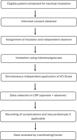

Simultaneously, a second anesthesiologist observes the tracheal intubation procedure and independently records the VCI score to assess interobserver reproducibility.
Complications will be prospectively recorded based on predefined clinical criteria, including:25 Hypoxemia (SpO2 < 90% for ≥ 10 seconds); Esophageal intubation (confirmed by capnography or clinical signs); Dental injury (visible tooth damage); Laryngeal trauma (presence of blood on the blade or tube, hoarseness, or stridor); Bronchospasm or laryngospasm (clinically diagnosed); Failed intubation (requiring a change in device or technique).
If a serious adverse event related to the videolaryngoscope is suspected, the attending physician may temporarily suspend the patient’s participation in the study. Throughout the process, patient safety is prioritized, and each center's standard protocols will be followed in the event of any incident.
Outcome measures
Primary outcome
The primary outcome is the inter-rater agreement and reproducibility of the VCI scale, defined as the level of concordance between the VCI scores assigned by the anesthesiologist performing the tracheal intubation and an independent observer.
Secondary outcomes
-
1 The correlation between the Percentage of Glottic Opening (POGO) score and the difficulty of tracheal intubation.
-
2 The impact of operator experience on VCI scale outcomes, including the influence of training level and prior videolaryngoscopy experience on interobserver agreement and VCI scoring.
-
3 The incidence of tracheal intubation-related complications. While complications such as hypoxemia and laryngeal trauma are included as secondary outcomes, their expected low frequency means that related analyses will remain exploratory and descriptive in nature.
Exploratory data
1) Patient Demographics: Includes age, sex, weight, height, Body Mass Index (BMI), and ASA status.
2) Operator Characteristics: Documents the experience of the intubator or observer categorized by role (resident or specialist), years of experience (< 4, 4-8, > 8), and the number of prior intubations with VL: < 25, 25-50, > 50.
3) Procedure Setting: Documents the clinical environment, including operating theater, ICU, Post-Anesthesia Care Unit (PACU), or emergency department.
4) Videolaryngoscope Characteristics: Captures the type of videolaryngoscope used during the procedure.
5) Data Related to the VCI Scale: a) VCI score: Includes blade type (Macintosh or hyperangulated), POGO (categorized as < 25%, 25%-50%, 50%-75%, > 75%), and difficulty (easy, difficult, failed); b) Rescue Devices: If a rescue device is used, a new VCI score will be recorded.
6) Complications: these include hypoxemia, esophageal intubation, dental injury, laryngeal trauma, bronchospasm or laryngospasm, and failed intubation.
Data collection and management
Data will be collected using a standardized and anonymized physical CRF, independently completed by both the intubating anesthesiologist and the observer during and immediately after the intubation procedure. The collected data will then be managed through the secure electronic platform Research Electronic Data Capture (REDCap), hosted at the University of Navarra (UNAV), ensuring stringent patient confidentiality and data integrity. REDCap offers validated data capture and a transparent audit trail through its comprehensive logging features.
Data management workflow
Data Transfer to REDCap: the pseudo-anonymized data will be entered into the secure REDCap platform. Each patient will be assigned a unique encoding code that is not directly linked to their personal information, ensuring confidentiality.
Ethical and Regulatory Compliance: all data will be collected and stored in full compliance with Good Clinical Practice (GCP) guidelines and current data protection regulations.
Data protection and quality assurance
Protocol Supervision: a designated clinical investigator will oversee the implementation of the study protocol, thoroughly documenting any deviations, adverse events, or protocol violations.
Audits: the coordinating team and the principal investigator will conduct regular audits to verify data integrity and quality, maintaining high research standards.
Data access and oversight
-
Centralized Access: the principal investigator (MFV) and two coordinators (PC and MV) will manage centralized access to the data, ensuring supervision of data security, quality, and statistical analysis.
-
Access for Participating Centers: data will be made available to all participating centers to promote transparency and foster collaboration during analysis.
-
Centralized Oversight: the principal investigator will coordinate the processes of data collection, storage, and analysis.
Statistical methods
A comprehensive statistical analysis will be conducted to describe the study’s quantitative and qualitative variables. Quantitative variables will be summarized using measures of central tendency and dispersion (mean ± standard deviation or median [interquartile range]), depending on the distribution of data. Qualitative variables will be presented as absolute frequencies and percentages.
To evaluate the interobserver reproducibility of the VCI scale among anesthesiologists, the Cohen’s Kappa coefficient will be used to measure the level of agreement between the anesthesiologist performing the tracheal intubation and the independent observer. Interpretation of agreement will follow standard criteria (≤ 0.20 poor, 0.21-0.40 fair, 0.41-0.60 moderate, 0.61-0.80 substantial, and > 0.80 almost perfect).
Binary logistic regression analysis will be performed to explore associations between key variables, specifically to assess the relationship between the Percentage of Glottic Opening (POGO) and the ease or difficulty of Tracheal Intubation (TI). Results will be reported as Odds Ratios (OR) with their corresponding 95% Confidence Intervals (95% CI).
Statistical significance will be determined using a p-value threshold of < 0.05. Data analyses will be performed using Stata 18 (StataCorp, College Station, TX, USA), a software providing advanced modeling and data-processing capabilities to ensure the precision and validity of the results.
Sample size
The study will enroll a total of 1,395 patients, accounting for a 5% dropout rate. The sample size calculation is based on achieving a precise estimate of the expected interobserver agreement measured by Cohen’s Kappa coefficient, assumed to be 0.80, with a desired precision of ± 0.11 and a confidence interval of 95%. Additionally, assuming a 10% incidence of difficult Tracheal Intubation (TI), this sample size will ensure adequate representation for meaningful secondary analyses.6 Patient recruitment is anticipated to take between 12 and 18 months, starting in September 2024.
Ethics and dissemination
Ethical approval of research
The VCISpain study complies with the principles outlined in the Declaration of Helsinki and the GCP Guidelines. Ethical approval has been granted by the Research Ethics Committee of the University of Navarra (session of September 5, 2024, reference 2022.079 mod1). The study was registered at ClinicalTrials.gov (NCT06537531), ensuring adherence to transparency and high ethical standards. Oversight of ethical compliance will be managed by the principal investigator and coordinators in collaboration with the University of Navarra (UNAV).
Confidentiality
To uphold participant confidentiality, all original records will be securely stored at the participating centers for five years after the study’s completion. The electronic database will be thoroughly cleaned, anonymized, and retained for this period; this approach guarantees compliance with data protection regulations and ensures the safeguarding of participant information.
Discussion
Airway management is a cornerstone of anesthetic practice; however, difficult tracheal intubation remains a significant concern, as highlighted by a recent audit in the United Kingdom.6 The introduction of VL has transformed airway management by providing superior glottic visualization, increasing first-attempt success rates, and reducing complications associated with multiple intubation attempts, such as hypoxemia, laryngeal trauma, and esophageal intubation.25 Nevertheless, the widespread adoption of VL continues to be limited by challenges related to training,26 financial constraints, and, notably, the lack of a standardized classification tool for documenting and communicating VL findings.23
The VCISpain study aims to bridge this gap by validating the VCI scale. This tool is designed to establish a standardized and reproducible language for airway management with videolaryngoscopy, addressing the limitations of traditional classification systems such as the Cormack-Lehane scale. Unlike these conventional tools, the VCI scale captures the unique features of videolaryngoscopy, particularly the “you see, and you fail” phenomenon, in which excellent glottic visualization does not necessarily ensure successful intubation.17 By standardizing communication, the VCI scale can enhance planning for future airway treatments, ultimately promoting patient safety.
The VCI scale integrates three key components: blade type (Macintosh or hyperangulated), the POGO score, and the ease or difficulty of the intubation procedure. This tool not only enhances documentation but also facilitates communication among clinicians, while supporting training and standardization in advanced airway management.
A previous study demonstrated the accuracy and reproducibility of the VCI scale in describing VL intubations.22 With its multicenter design ‒ encompassing 35 Spanish hospitals and anesthesiologists with varying levels of experience ‒ the VCISpain study provides a representative reflection of real-world clinical practice in Spain. Moreover, standardized training on the study protocol and the use of the VCI scale will help ensure the quality and reproducibility of the collected data.
This study offers several strengths, including the pioneering evaluation of the VCI scale in a multicenter setting, providing robust data on its reproducibility and clinical utility. Its pragmatic design minimizes interference with standard care, enhancing its relevance to everyday clinical practice.
Despite certain limitations ‒ such as heterogeneity among participating centers and variability in videolaryngoscope models and operator experience ‒ these factors may, in fact, increase the external validity of the findings by reflecting real-world clinical diversity.
One notable limitation is the absence of a direct comparison with existing classification systems, which prevents definitive conclusions regarding the superiority of the VCI scale over other tools.16 However, although not directly compared in this study, the VCI scale may offer advantages by integrating blade type, glottic view, and ease of intubation into a single, videolaryngoscopy-specific tool. It enhances clinical communication and documentation, not by replacing traditional scales, but by complementing them with context-specific information relevant to modern airway management.
The VCISpain study represents a significant step toward standardizing the communication of information related to videolaryngoscopy-guided tracheal intubation.27 Validation of the VCI scale has the potential to establish a new benchmark for both national and international clinical practice, informing future airway management guidelines. Integrating the VCI scale into routine care may improve patient safety, foster interdisciplinary collaboration, and support continuous professional development.
Conclusion
In conclusion, VCISpain represents a cultural shift in airway management through the use of videolaryngoscopy. By establishing a common language, it has the potential to promote interprofessional collaboration, support clinical education, and improve airway management planning. It also paves the way for future research in anesthesiology.
Beyond its practical applications, the VCI scale reflects a broader commitment to continuous improvement and innovation in patient care, emphasizing safety and effective clinical communication as cornerstones of modern anesthetic practice.
-
1
VCISpain Trial investigators group*: collaborating anesthesiologists from all centers. Elisa Fernández-Elías, Mercedes Álvarez-Fernandez, Cristina Gallardo-Mayo, Olaia Romero-Menchaca, María Mato-Hierro, Paula Ortega-Rezola, Cristina García-Fernández, María Eizaguirre-Cotado, Marta Amelburu-Egoscozabal. Ainhoa Garmendia-Odriozola, Claudia Gastesi-Larrañaga, Amaia Uria-Azpiazu. Idoia Gaztañaga-Igarzabal, Luis Jesús Esnaola-Ormazábal, Luis Miguel Martínez-Parra, Erika Calderon-Barajas, Miguel Mañero-Martin, Jaime Trigo-Ramirez, Joana Baldo-Gosalves, Beatriz Vazquez-Rivero, Nerea Gomez-Perez, Paula Gomez-Aguilar, Barbara Algar-Yañez, David Fernández-Racionero, Blanca Vidal-Alejandre, Juan Palop-Marín, Isidro Olavide-Goya, Pablo Montero-Lopes, Angela Escribano-Arranz, Pablo Martinez, Alvaro Casado-Iglesias, Jose Antonio Fernandez-Molina, Carmen Cara-Gilabert, Fran Mendoza-Garces, Elena San Juan-Rodriguez, Susana Petrus-Rubio, Isabel Barba, Laura Monge, Francisco Javier-Estomba, Juan Roberto-Salmerón, María Jesús Asensio, Itziar Murguia, Marta Errazquin, Fernando De Liras, Esther Marquinez, Belén Pérez-Cámara. Fuencisla Bernabé-Guerra, Marta Pérez-González, María Carmen Pavesio, Noelia de la Rosa, Paloma López de Calle, Teresa López-Correa, Alma M. Espinosa-Moreno, Laura Fernández-Tellez, Beatriz Martín-Vaquerizo, Alfonso Andueza-Artal, Úrsula López-Álvarez, Cristina Tato-Vázquez, Carlos Fernández-Aldea, Alejandro Bilbao-Ares, Juan Pablo Jimeno-García, Miguel Salvador-Bravo, Javier Domenech de la Lastra, Miguel Linares-Torras, David Revuelta-Quintero, Estibaliz Alsina-Marcos, Carmen Castro-Arias, Javier Alonso-Colorado, Alberto Sánchez-Fustes, Teresa Prim-Martínez, Alvaro Cervera, Ferran Marques, Victor Fibla, Pilar Santos-Cidon, Cristina Coto-Garcia, Guillermo Isidro-Lopez, Mayra Constanza Montealegre-Angarita, Jorge Egea-Moreno, Patricia Calvo-Pasaron, Laura Minguez-Lujan, Valentin Arana-Lozano, Camilo Jaramillo, Guido Mazzinari, Maria Jesús Montero, Paco Escriba, Pepe Cortell, Ana Teresa Buitrago-Lopez, Elena Arroyo, Sandra Segui-Urbita, Gonzalo Sanchez-Barbe, Pablo Rubio-Murias y Estrela Caamaño-Alonso.
Data availability statement
The data sets generated and/or analyzed during the current study are available from the corresponding author upon reasonable request.
Supplementary materials
References
- 1 Weiser TG, Haynes AB, Molina G, et al. Estimate of the global volume of surgery in 2012: an assessment supporting improved health outcomes. Lancet. 2015;385:S11.
- 2 de Jong A, Rolle A, Molinari N, et al. Cardiac arrest and mortality related to intubation procedure in critically ill adult patients: A multicenter cohort study. Crit Care Med. 2018;46:532-9.
- 3 Levitan RM, Heitz JW, Sweeney M, Cooper RM. The complexities of tracheal intubation with direct laryngoscopy and alternative intubation devices. Ann Emerg Med. 2011;57:240-7.
- 4 Schroeder RA, Pollard R, Dhakal I, et al. Temporal trends in difficult and failed tracheal intubation in a regional community anesthetic practice. Anesthesiology. 2018;128:502-10.
- 5 Joffe AM, Aziz MF, Posner KL, Duggan LV, Mincer SL, Domino KB. Management of difficult tracheal intubation: A closed claims analysis. Anesthesiology. 2019;131:818-29.
- 6 Cook TM, Woodall N, Frerk C. Major complications of airway management in the UK: results of the Fourth National Audit Project of the Royal College of Anaesthetists and the Difficult Airway Society. Part 1: anaesthesia. Br J Anaesth. 2011;106:617-31.
- 7 Cormack RS, Lehane J. Difficult tracheal intubation in obstetrics. Anaesthesia. 1984;39:1105-1111.
- 8 Cooper RM, Pacey JA, Bishop MJ, McCluskey SA. Early clinical experience with a new videolaryngoscope (GlideScope®) in 728 patients. Canadian Journal of Anesthesia 2005;52:191-198.
- 9 Apfelbaum JL, Hagberg CA, Connis RT, Abdelmalak BB, Agarkar M, Dutton RP et al. 2022 American Society of Anesthesiologists Practice Guidelines for management of the difficult airway. Anesthesiology 2022;136:31-81.
- 10 Law JA, Duggan LV, Asselin M, et al. Canadian Airway Focus Group updated consensus-based recommendations for management of the difficult airway: part 1. Difficult airway management encountered in an unconscious patient. Can J Anesth. 2021;68:1373-1404.
- 11 Gómez-Ríos MA, Sastre JA, Onrubia-Fuertes X, et al. Spanish Society of Anesthesiology, Reanimation and Pain Therapy (SEDAR), Spanish Society of Emergency and Emergency Medicine (SEMES) and Spanish Society of Otolaryngology, Head and Neck Surgery (SEORL-CCC) Guideline for difficult airway management. Part II. Revista Española de Anestesiología y Reanimación (English Edition) 2024;71.
- 12 Yentis SM, Lee DJH. Evaluation of an improved scoring system for the grading of direct laryngoscopy. Anaesthesia. 1998;53:104-4.
- 13 Cook TM, Levitan RM, Andrew Ochroch E, Hollander J. POGO score. Canadian Journal of Anesthesia/Journal Canadien D’anesthésie. 2000;47:477-8.
- 14 Cook TM. A new practical classification of laryngeal view. Anaesthesia. 2000;55:274-9.
- 15 Fernández-Vaquero MA, van Zundert AAJ, Gómez-Ríos MA. Intubación traqueal con videolaringoscopia: superando la barrera del lenguaje. Rev Esp Anestesiol Reanim. 2025;501676.
- 16 O’Loughlin EJ, Swann AD, English JD, Ramadas R. Accuracy, intra- and inter-rater reliability of three scoring systems for the glottic view at videolaryngoscopy. Anaesthesia. 2017;72:835-9.
- 17 Fernández-Vaquero MA, De Luis-Cabezón N, García-Aroca MA, et al. Pilot multicenter study to determine the utility of point-of-care ultrasound to predict difficulty of tracheal intubation using videolaryngoscopy with the McGrathTM Mac videolaryngoscope. Front Med (Lausanne). 2024;11:1406676.
- 18 Angadi SP, Frerk C. Videolaryngoscopy and Cormack and Lehane grading. Anaesthesia. 2011;66:628-9.
- 19 Pearce AC, Duggan LV, El-Boghdadly K. Making the grade: has Cormack and Lehane grading stood the test of time? Anaesthesia. 2021;76:705-9.
- 20 Mines R, Ahmad I. Can you compare the views of videolaryngoscopes to the Macintosh laryngoscope? Anaesthesia. 2011;66:315-6.
- 21 Swann AD, English JD, O’Loughlin DrEJ. The development and preliminary evaluation of a proposed new scoring system for videolaryngoscopy. Anaesth Intensive Care. 2012;40:697-701.
- 22 Chaggar RS, Shah SV, Berry M, Saini R, Soni S, Vaughan D. The Video Classification of Intubation (VCI) score: A new description tool for tracheal intubation using videolaryngoscopy: A pilot study. Eur J Anaesthesiol. 2021;38:324-6.
- 23 Saul SA, Ward PA, McNarry AF. Airway management: the current role of videolaryngoscopy. J Pers Med. 2023;13:1327.
- 24 I (Legislative acts) Regulations (EU) 2016/679 of the European Parliament and of the Council on the protection of natural persons with regard to the processing of personal data and on the free movement of such data, and repealing Directive 95/46/EC (General Data Protection Regulation) (Text with EEA relevance).
- 25 Hansel J, Rogers AM, Lewis SR, Cook TM, Smith AF. Videolaryngoscopy versus direct laryngoscopy for adults undergoing tracheal intubation: a Cochrane systematic review and meta-analysis update. Br J Anaesth. 2022;129:612-23.
- 26 Cook TM, Kelly FE. A national survey of videolaryngoscopy in the United Kingdom. Br J Anaesth. 2017;118:593-600.
- 27 Gómez-Ríos MÁ, Fernández-Vaquero MÁ, Van Zundert AAJ. A call for standardised videolaryngoscopy evaluation. Eur J Anaesthesiol. 2025;42:380-1.
Edited by
-
Associate Editor:Rodrigo Leal Alves


