 Entomological study of Phlebotomine Sand flies in Maceió (Brazil): 2011-2020 analysis
Abstract
This study investigated the spatiotemporal distribution of phlebotomine sand flies in Maceió, Alagoas, Brazil, over ten years (2011–2020). Maceió, the capital of the State of Alagoas, has a tropical climate with significant seasonal rainfall disparities. Data from the Center for Zoonoses Control (CZC) were analyzed, revealing fluctuations in sand fly populations across different city areas. This study identified 20 sand fly species, and Lutzomyia longipalpis - a vector of Leishmania infantum, the etiological agent of visceral leishmaniasis - found in 15 Maceió areas almost every year during the study period. The species Lu. intermedia, Lu. whitmani and Lu. migonei, which are involved in the epidemiology of cutaneous forms of leishmaniasis, were also found. Additionally, this study reports five species of phlebotomines found for the first time in Alagoas. Despite the high sand fly prevalence in certain areas, no correlation was found between sand fly abundance and climatic factors such as temperature and precipitation. These findings underscore the importance of continuous surveillance for leishmaniasis, given Maceió's high disease burden compared with that of other Alagoas cities. This study suggested that factors other than climatic variables may influence the sand fly distribution, highlighting the need for further research. Overall, this research contributes valuable insights into sand fly ecology and disease transmission dynamics in Maceió, serving as a basis for future studies and public health interventions.
Keywords:
leishmaniasis vectors; spatiotemporal analysis; disease surveillance; sand fly distribution
Resumo
Este estudo investigou a distribuição espaço-temporal de flebotomíneos em Maceió, Alagoas, Brasil, ao longo de dez anos (2011–2020). Maceió, capital do Estado de Alagoas, possui clima tropical com disparidades sazonais significativas na precipitação. Dados do Centro de Controle de Zoonoses (CCZ) foram analisados, revelando flutuações nas populações de flebotomíneos em diferentes áreas da cidade. Este estudo identificou 20 espécies de flebótomos, e Lutzomyia longipalpis - vetor da Leishmania infantum, o agente etiológico da leishmaniose visceral - encontrado em 15 áreas de Maceió, e em quase todos os anos do período estudado. As espécies Lu. whitmani e Lu. migonei, envolvidos na epidemiologia das formas cutâneas das leishmanioses, também foram encontrados. Além disso, este estudo reportou cinco espécies de flebótomos encontradas pela primeira vez em Alagoas. Apesar da alta prevalência de flebotomíneos em certas áreas, não foi encontrada correlação entre a abundância de flebotomíneos e fatores climáticos, como temperatura e precipitação. Esses resultados ressaltam a importância da vigilância contínua das leishmanioses, dado o alto índice da doença em Maceió, em comparação a outras cidades de Alagoas. O estudo sugere que outros fatores, além das variáveis climáticas, podem influenciar a distribuição dos flebotomíneos, destacando a necessidade de mais pesquisas. Assim, essa pesquisa oferece insights valiosos sobre a ecologia dos flebotomíneos e as dinâmicas de transmissão de doenças em Maceió, fornecendo uma base para estudos futuros e intervenções de saúde pública.
Palavras-chave:
vetores de leishmaniose; análise espaço-temporal; vigilância de doenças; distribuição de flebotomíneos
1. Introduction
Leishmaniasis is a vector-borne disease caused by parasites of the genus Leishmania, presenting a wide clinical spectrum and diverse epidemiological manifestations. Leishmaniasis is a zoonosis of concern for public health (Gontijo and Melo, 2004). Worldwide, over 50 species of Leishmania have been identified, and in Brazil, eight species have been isolated from patients afflicted with the disease (Anversa et al., 2018). Depending on the species and individual response of the host, leishmaniasis can be asymptomatic or can result in a variety of disorders, such as mucocutaneous leishmaniasis (MCL), visceral leishmaniasis (VL), and cutaneous leishmaniasis (CL) (Galluzzi et al., 2018). Phlebotomine sand flies (order Diptera, family Psychodidae, and subfamily Phlebotominae), include 1,067 described species worldwide and 557 species described in the Americas (Galati, 2024), with 30 confirmed as vectors of leishmaniasis and over 40 others suspected as such (Akhoundi et al., 2016). There are few studies describing the phlebotomine sand fly fauna of the State of Alagoas, Brazil. A study with data from 1999 described seven species collected in two inner cities of the state (Andrade Filho and Brazil, 2009). Another study reported eighteen species found in 47 municipalities of the state (including Maceió), with Lu. longipalpis as the predominant species, and ten species were recorded for the first time (de Souza Freitas et al., 2018). According to Galati (2024), 24 species of sand flies have been reported in the State of Alagoas (Galati, 2024). Phlebotomine females are known to be carriers of pathogens. In the case of leishmaniasis, they are infected during a blood meal on a reservoir infected with the parasite Leishmania (Cecílio et al., 2022).
The presence and seasonal variation of sand fly populations in each area are influenced by both physical and climatic variables, including soil type, altitude, slope, and relative air humidity, as well as temperature, relative air humidity, and the pluviometric index (Ministério da Saúde, 2006). Climate conditions, such as temperature and humidity, are among the primary factors influencing the activity, development, and survival of sand flies (Cecílio et al., 2022). Although each species has different characteristics concerning temperature and humidity, many species generally prefer conditions with an air temperature of approximately 25°C and an air humidity of approximately 60% (Trájer, 2021). Furthermore, environmental changes driven by human activities, such as deforestation and agricultural expansion, have led to the spread of the disease into previously nonendemic regions (Harhay et al., 2011).
In Brazil, the majority of confirmed VL cases were recorded in northeastern Brazil, and Alagoas reported 499 cases between 2011 and 2020. CL is also a health problem, with 609 cases reported in Alagoas during the same period (Ministério da Saúde, 2024). Entomological studies in endemic areas to characterize sand fly fauna have contributed to the knowledge of potential vectors involved in the transmission of leishmaniasis. Therefore, in this study, we show the geographic distribution of phlebotomine sand flies in the neighborhoods of Maceió, along with the population density and vegetative cover of these areas.
2. Methodology
The entomological survey was conducted in the municipality of Maceió, the capital of the State of Alagoas, in the Northeast Region of Brazil, which is located on the coast, with extensive waterways such as the shores of the Atlantic Ocean and the choked coastal area of Mundau Lagoon. The study considered 51 urban and peri-urban areas of the municipality (Cerqueira et al., 2024). The city is organized into 51 neighborhoods, with an estimated population of 957,916 inhabitants and a population density of 1,880,77 people/km2 (IBGE, 2022). Maceió has a tropical climate, with significantly more rainfall during the winter months than during the summer months, according to the Köppen and Geiger system.
Entomological data at the Center for Zoonoses Control (CZC) in Maceió, AL, were obtained from 2011- 2020. The CZC is the public division responsible for the continuous vigilance of city zoonoses, realizing the capture of sand flies with light traps, as recommended by the literature (Ministério da Saúde, 2006), and performing the Forattini method for further identification (Forattini, 1973). The data consisted of the spatial distribution of phlebotomine in the city of Maceió (Alagoas, Brazil) in distinct areas, quantification, and taxonomic identification of the sand flies following the keys of (Galati, 2024) and (Young and Duncan, 1994).
The data were analyzed via the ArcGIS® tool to construct distribution maps for the sand fly population (with CENSO data from 2010) and vegetation data maps for Maceió (IMA/AL, 2016). Sand fly distribution maps were developed via a normalization procedure that produces an index of phlebotomines/light traps by dividing the number of sand flies by the number of traps set up for each city area. The National Institute of Meteorology website contains meteorological data (INMET, 2023). Spearman’s correlation coefficient was calculated between the total number of sand flies captured per year and the temperature and precipitation considering the data from the municipality. The present study has limitations inherent to the specific location of the CDC light trap, climatic conditions during sand fly capture, and the quantitative number of each sample found.
3. Results
The annual entomological data collected between 2011 and 2020 included Maceió's localities, which were analyzed and categorized by sand fly sex (Table 1). The data show that many CDC light traps were installed in 2016, which was the year with the greatest number of captured sand flies. The quantitative data of the annual average precipitation and temperature for Maceió between 2011 and 2019 are shown in Table 1. In 2020, data from the INMET weather stations were lacking. The year 2017 recorded the highest average precipitation during the study period (209.37 mm), even though the average temperature remained around 25°C.
Frequency of sand flies captured in Maceió (Alagoas, Brazil) areas between 2011 and 2020, precipitation data, and average annual temperature of the city during the studied period.
During this decade, 20 species of sand flies were identified (Table 2) in the municipality of Maceió. The phlebotomine sand flies Lu. intermedia, Lu. brasiliensis, Lu. goiana, Lu. rorotaensis, and Lu. sordelli were found only once in areas with vegetation coverage higher than 25%. The species Lu. choti, Lu. evandroi, Lu. longipalpis, Lu. whitmani, Lu. corumbaensis, Lu. migonei, and Lu. sallesi were the most frequently captured species and were found for at least 5 years during the entomological survey. Lu. longipalpis was found in 15 Maceió areas (considering the entire study period), and every other year, this species was found, with the exception of 2012. Lu. corumbaensis were found in 19 Maceió areas during 6 out of 10 years of study. Twenty-four areas presented vegetation cover less than 10%, and sand flies were found in 14 areas, the species of which were Lu. longipalpis, Lu. whitmani, Lu. evandroi, Lu. corumbaensis, Lu. sallesi and Lu. chotti. In this study, five species were recorded and reported for the first time in Alagoas (Table 2): Lu. capixaba, Lu. carmelinoi, Lu. claustrei, Lu. goiana and Lu. rorotaensis.
Figure 1 shows the spatiotemporal distribution of sand flies per Maceió area during the analyzed years. The Ipioca neighborhood was the most investigated area, with the highest number of sand flies collected (2887) in 2016 and the highest calculated index (5.05) in 2011 (Figure 1). The Ipioca neighborhood presented a high level of phlebotomine sand flies for 5 years during the period analyzed. Notably, the studied areas have not been uniform over the years, and many localities have not been studied, such as the closer area of Mundau Lagoon. Spearman’s correlation did not reveal a relationship between the number of captured sand flies and the climate data.
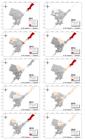
Maceió areas showing the distribution of sand flies analyzed between 2011 and 2020. The gray areas were not studied by CZC, and the white areas were investigated with CDC light traps, but no sand flies were found. Red areas (light to dark) indicate areas with sand fly presence, represented as an index of phlebotomine sand fly capture per light trap.
The vegetation coverage for each Maceió locality during the study period is illustrated in Figure 2. Notably, the Ipioca neighborhood (in the northeast coastal area) had the highest proportion of sand flies per light trap (Figure 1), but it was not the most populous area (between 5,000 and 15,000 inhabitants) and presented more than 28% vegetation coverage. The nearby neighborhoods of Jacarecica, Guaxuma, Garça Torta, and Riacho Doce and the border of Pescaria have a relatively high percentages of vegetation cover, which could favor the sand fly cycle but with relatively little sand fly collection and close to the rural area.
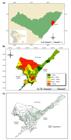
Location, population and vegetation distribution of the Maceió localities, Alagoas, Brazil. A) Maceió city (State of Alagoas, Brazil) is in Northeast region. B) The Maceió localities are colored according to the number of people living in each area, with dark green indicating lower population density and red indicating higher population density. C) Vegetation coverage of Maceió city.
4. Discussion
This study described the spatiotemporal distribution of sand flies in the capital of Alagoas, Maceió, Brazil, over 10 years (from 2011- 2020). Maceió is the most populous city of the state, with areas close to the sea and lagoon, which is also a significant extension in the littoral region of vegetative cover (Batista et al., 2021; Cerqueira et al., 2024). This configuration suggests a potential area that favors the spread of sand flies, such as the Ipioca region, with the highest number of sand flies collected throughout the 10 years of the study. The features of this city region could cooperate with the life cycle of sand flies, with hematophagous habits and environmental conditions.
During the analyzed period of the entomological survey, Brazil reported 34,930 cases of VL and 194,795 cases of CL (Ministério da Saúde, 2024). This indicates the importance of continuous surveillance of the disease and associated vectors. According to the Sistema de Informação de Agravos de Notificação (SINAN, 2024), from 2011- 2020, Maceió reported the highest number of leishmaniasis cases in the state, with 448 cases of VL (Alagoas reported a total of 499), along with 39 reported deaths caused by VL and 210 cases of CL (Alagoas reported a total of 609). The vectors identified in our study are known to be responsible for both diseases, underscoring the importance of continuous surveillance of leishmaniasis and its vectors. In Brazil, the phlebotomine Lu. longipalpis is the main vector of the VL, whereas the CL can be transmitted by different vectors, such as Lu. intermedia, Lu. migonei and Lu. whitmani (Pinheiro et al., 2021), all the species found in our study in Maceió, highlighting the need for continuous surveillance.
The temperature and rainfall data analyzed in this study did not show a significant correlation with the presence of sand flies. A similar study conducted in a city in the midwestern region of Brazil over 2 years with a tropical climate revealed a correlation between climatic variables and the capture of Lu. longipalpis (de Souza Fernandes et al., 2022). On the other hand, a study performed in Pernambuco (bordering Alagoas) from 2015--2016 under the same climatic conditions did not find correlations between the climatic conditions evaluated and the sand flies collected (Silva et al., 2017). An analysis of CL cases reported in Caxias (Maranhão, Brazil) over 10 years revealed a weak positive correlation with relative air humidity and no correlation with temperature or rainfall (Oliveira et al., 2021).
Compared with to the 20 species of sand flies identified in the municipality of Maceió, a study in the neighboring state of Sergipe (Jeraldo et al., 2012) reported Lu. longipalpis as the most prevalent species, suggesting its role as the primary vector of visceral leishmaniasis in the rural region of Aracaju. Additionally, another study revealed an association between the transmission of CVL and the proximity of residences to vegetation (Santos et al., 2023). An increase in Lutzomyia sp. frequency during the wet season was also observed. Captures conducted both inside and outside homes confirmed the importance of chicken coops in promoting the presence of Lu. longipalpis in the peridomestic environment. The prevalence of this species within domestic environments supports its endophilic nature and potential for intradomicile transmission of visceral leishmaniasis (Jeraldo et al., 2012).
A descriptive study of VL in Alagoas from 2008--2017 reported 352 cases in 66 municipalities, and Maceió presented 5.4% of the cases (Ferreira et al., 2024). Among the 352 VL cases, 26.4% were residents of urban areas, followed by 7.9% in peri-urban areas. A high occurrence of VL was observed in the age group with high vulnerability from 1--4 years (Ferreira et al., 2022). From 2007--2013, 4.466 cases of Canine Visceral Leishmaniais (CVL) were reported in Alagoas, and Maceió presented 808 positive dogs in 32 areas (out of 51) with detected cases (Rocha et al., 2018).
Alagoas (Brazil) has 24 phlebotomine sand fly species recorded (Galati, 2024), and we are now reporting five species for the first time. These species are not widely recognized as primary vectors of Leishmania in Brazil, suggesting potential roles in sylvatic cycles. Further studies are necessary to understand their epidemiological relevance and continuous surveillance. The present study has limitations regarding the details of the collected data, such as the description of the specific location of the CDC light trap placement, as well as the surrounding environment. This includes details that contribute to understanding the dynamics of the sand fly life cycle, such as possible reservoirs, vegetation, and climatic conditions on the day of collection at a specific site, as well as factors that promote their propagation. In this context, the importance of further studies with more detailed information is emphasized, enabling more precise conclusions and, consequently, contributing to improved vector control strategies.
5. Conclusion
This study investigated the spatiotemporal distribution of phlebotomine sand flies in Maceió over a decade, revealing areas where important species such as Lu. Longipalpis were found. Additionally, for the first time, we report five sand fly species in the State of Alagoas, increasing the total number of phlebotomines recorded in the state to 30. The lack of correlation between the presence of sand flies and climatic variables suggests the influence of other factors on the distribution of these insects, but our study has some limitations in terms of the data. These data reinforce the need for continuous surveillance of leishmaniasis and its vectors in urban areas, especially in tropical regions such as Maceió, where favorable environmental conditions may promote the proliferation of these insects and increase the risk of disease transmission.
Acknowledgements
We thank the Prefeitura de Maceió – Alagoas (Unidade de Vigilância de Zoonoses) for providing the data used in this study.
References
-
AKHOUNDI, M., KUHLS, K., CANNET, A., VOTÝPKA, J., MARTY, P., DELAUNAY, P. and SERENO, D., 2016. A historical overview of the classification, evolution, and dispersion of Leishmania parasites and sandflies. PLoS Neglected Tropical Diseases, vol. 10, no. 3, pp. e0004349. http://doi.org/10.1371/journal.pntd.0004349 PMid:26937644.
» http://doi.org/10.1371/journal.pntd.0004349 -
ANDRADE FILHO, J.D. and BRAZIL, R.P., 2009. Phlebotomine sand flies (Diptera: Psychodidae: Phlebotominae) of Alagoas state, northeast of Brazil. Neotropical Entomology, vol. 38, no. 5, pp. 688-690. http://doi.org/10.1590/S1519-566X2009000500022 PMid:19943022.
» http://doi.org/10.1590/S1519-566X2009000500022 -
ANVERSA, L., TIBURCIO, M.G.S., RICHINI-PEREIRA, V.B. and RAMIREZ, L.E., 2018. Human leishmaniasis in Brazil: A general review. Revista da Associação Médica Brasileira, vol. 64, no. 3, pp. 281-289. http://doi.org/10.1590/1806-9282.64.03.281 PMid:29641786.
» http://doi.org/10.1590/1806-9282.64.03.281 -
BATISTA, B.A., CORREIA FILHO, W.L.F., DE OLIVEIRA-JÚNIOR, J.F., DE BARROS SANTIAGO, D. and DOS SANTOS, C.T., 2021. Avaliação da expansão urbana na Cidade de Maceió, Alagoas–Nordeste do Brasil. Research, Society and Development, vol. 10, no. 11, pp. e253101119537. http://dx.doi.org/10.33448/rsd-v10i11.19537
» http://dx.doi.org/10.33448/rsd-v10i11.19537 - CECÍLIO, P., CORDEIRO-DA-SILVA, A. and OLIVEIRA, F., 2022. Sand flies: basic information on the vectors of leishmaniasis and their interactions with Leishmania parasites. Communications Biology, vol. 5, no. 1, pp. 305. PMid:35379881.
- CERQUEIRA, M.A., BARBOSA, R.V.R. and DA SILVA LÔBO, T.P., 2024. Evolution of land surface temperature, land use land cover and their relationship: A case study of Maceió, Brazil. Urban Climate, vol. 58, pp. 102199.
- DE SOUZA FERNANDES, W., DE OLIVEIRA MOURA INFRAN, J., FALCÃO DE OLIVEIRA, E., ETELVINA CASARIL, A., PETILIM GOMES BARRIOS, S., LOPES DE OLIVEIRA, S.L. and GUTIERREZ DE OLIVEIRA, A., 2022. Phlebotomine sandfly (Diptera: Psychodidae) fauna and the association between climatic variables and the abundance of Lutzomyia longipalpis sensu lato in an intense transmission area for visceral leishmaniasis in central Western Brazil. Journal of Medical Entomology, vol. 59, no. 3, pp. 997-1007. PMid:35139201.
- DE SOUZA FREITAS, M.T., DOS SANTOS, C.F.R., DE ANDRADE, E.M., MARCONDES, C.B., DE QUEIROZ BALBINO, V. and ARLEY COSTA PESSOA, F., 2018. New records of phlebotomine sand flies (Diptera: Psychodidae) from the state of Alagoas, northeast of Brazil. Journal of Medical Entomology, vol. 55, no. 1, pp. 242-247. PMid:29029319.
-
FERREIRA, J.R.S., SILVA, K.M., DE ALMEIDA, M.S.G., GOMES, D.C.S., CAVALCANTI, M.G.S., FERREIRA-JÚNIOR, G.C., ALVES, L.C., BRAYNER, F.A. and MATOS-ROCHA, T.J., 2022. American visceral leishmaniasis in a state of northeastern Brazil: Clinical, epidemiological and laboratory aspects. Brazilian Journal of Biology = Revista Brasileira de Biologia, vol. 82, pp. e238383. https://doi.org/10.1590/1519-6984.238383 PMid:34105676.
» https://doi.org/10.1590/1519-6984.238383 -
FERREIRA, J.R.S., SILVA, K.M., CAVALCANTI, M.G.S., FERREIRA-JÚNIOR, G.C., SOUZA, E.C., MAGALHÃES, P.K.A., GOMES, D.C.S., FONSECA, S.A., MARANHÃO, T.L.G.Q., ROCHA, M.A.N., NASCIMENTO, C.M.A., LIMA, R.F., ALVES, L.C., BRAYNER, F.A., COSTA, J.G.D. and MATOS-ROCHA, T.J., 2024. Spatio-temporal analysis of the visceral leishmaniasis in the state of Alagoas, Brazil. Brazilian Journal of Biology = Revista Brasileira de Biologia, vol. 84, pp. e253098. https://doi.org/10.1590/1519-6984.253098 PMid:35195169.
» https://doi.org/10.1590/1519-6984.253098 - FORATTINI, O.P., 1973. Entomologia médica: psychodidae; phlebotominae; leishmanioses; bartonelose São Paulo: Edgard Bluche, vol. IV.
-
GALATI, E.A.B., 2024 [viewed 14 January 2025]. Morfologia e terminologia de Phlebotominae (Diptera: Psychodidae). Classificação e identificação de táxons das Américas [online]. São Paulo: Faculdade de Saúde Pública da Universidade de São Paulo, vol. 1. Apostila da Disciplina Bioecologia e Identificação de Phlebotominae do Programa de Pós-Graduação em Saúde Pública. Available from: http://www.fsp.usp.br/egalati
» http://www.fsp.usp.br/egalati - GALLUZZI, L., CECCARELLI, M., DIOTALLEVI, A., MENOTTA, M. and MAGNANI, M., 2018. Real-time PCR applications for diagnosis of leishmaniasis. Parasites & Vectors, vol. 11, no. 1, pp. 273. PMid:29716641.
-
GONTIJO, C.M.F. and MELO, M.N., 2004. Leishmaniose visceral no Brasil: quadro atual, desafios e perspectivas. Revista Brasileira de Epidemiologia, vol. 7, no. 3, pp. 338-349. http://doi.org/10.1590/S1415-790X2004000300011
» http://doi.org/10.1590/S1415-790X2004000300011 -
HARHAY, M.O., OLLIARO, P.L., COSTA, D.L. and COSTA, C.H.N., 2011. Urban parasitology: visceral leishmaniasis in Brazil. Trends in Parasitology, vol. 27, no. 9, pp. 403-409. http://doi.org/10.1016/j.pt.2011.04.001 PMid:21596622.
» http://doi.org/10.1016/j.pt.2011.04.001 -
INSTITUTO BRASILEIRO DE GEOGRAFIA E ESTATÍSTICA – IBGE, 2022 [viewed 11 April 2024]. Instituto Brasileiro de Geografia e Estatística [online]. Available from: http://www.ibge.gov.br
» http://www.ibge.gov.br -
IMA/AL 2016 [viewed 9 June 2023]. IMA/AL [online]. Available from: https://www2.ima.al.gov.br
» https://www2.ima.al.gov.br -
INSTITUTO NACIONAL DE METEOROLOGIA – INMET, 2023 [viewed 9 July 2023]. Instituto Nacional de Meteorologia [online]. Available from: https://portal.inmet.gov.br
» https://portal.inmet.gov.br -
JERALDO, V.D.L.S., GÓES, M.A.D.O., CASANOVA, C., MELO, C.M.D., ARAÚJO, E.D.D., BRANDÃO FILHO, S.P., CRUZ, D.E.R. and PINTO, M.C., 2012. Sandfly fauna in an area endemic for visceral leishmaniasis in Aracaju, State of Sergipe, Northeast Brazil. Revista da Sociedade Brasileira de Medicina Tropical, vol. 45, no. 3, pp. 318-322. http://doi.org/10.1590/S0037-86822012000300008 PMid:22760129.
» http://doi.org/10.1590/S0037-86822012000300008 -
MINISTÉRIO DA SAÚDE, 2006 [viewed 9 March 2024]. Manual de vigilancia da leishmaniose visceral [online]. Available from: https://bvsms.saude.gov.br/bvs/publicacoes/manual_vigilancia_controle_leishmaniose_visceral.pdf
» https://bvsms.saude.gov.br/bvs/publicacoes/manual_vigilancia_controle_leishmaniose_visceral.pdf -
MINISTÉRIO DA SAÚDE, 2024 [viewed 8 September 2024]. Ministério da Saúde [online]. Available from: https://www.gov.br/saude/pt-br/assuntos/saude-de-a-a-z/l
» https://www.gov.br/saude/pt-br/assuntos/saude-de-a-a-z/l -
OLIVEIRA, R.S., PIMENTEL, K.B.A., MOURA, M.L., ARAGÃO, C.F., GUIMARÃES-E-SILVA, A.S., BEZERRA, J.M.T., MELO, M.N. and PINHEIRO, V.C.S., 2021. Clinical, epidemiological and climatic factors related to the occurrence of cutaneous leishmaniasis in an endemic area in northeastern Brazil. Brazilian Journal of Biology = Revista Brasileira de Biologia, vol. 81, no. 3, pp. 557-565. http://doi.org/10.1590/1519-6984.224937 PMid:32876165.
» http://doi.org/10.1590/1519-6984.224937 -
PINHEIRO, M.P.G., SILVA-INACIO, C.L., SILVA, M.M.D.M., ARAÚJO, P.S.F.D. and XIMENES, M.D.F.F.D.M., 2021. Potential vectors of Leishmania spp. in an Atlantic Forest conservation unit in northeastern Brazil under anthropic pressure. Parasites & Vectors, vol. 14, no. 1, pp. 38. http://doi.org/10.1186/s13071-020-04523-2 PMid:33430944.
» http://doi.org/10.1186/s13071-020-04523-2 - ROCHA, M.A.N., MATOS-ROCHA, T.J., RIBEIRO, C.M.B. and ABREU, S.R.O., 2018. Epidemiological aspects of human and canine visceral leishmaniasis in state of alagoas, northeast, Brazil. Brazilian Journal of Biology = Revista Brasileira de Biologia, vol. 78, no. 4, pp. 609-614. PMid:29412243.
- SANTOS, N.A.F., SILVA-JUNIOR, F.F., SILVA, F.B.R., TOSTA, C.D., MOURA, K.D., JERALDO, V.L.S., MADI, R.R., PINTO, M.C. and MELO, C.M., 2023. Spatial analysis of the risk for canine visceral leishmaniasis in an urban area in the State of Sergipe. Brazilian Journal of Biology = Revista Brasileira de Biologia, vol. 83, pp. e275439. https://doi.org/10.1590/1519-6984.275439. https://doi.org/10.1590/1519-6984.275439
-
SILVA, A.P.O.D., MIRANDA, D.E.O., SANTOS, M.A.B., GUERRA, N.R., MARQUES, S.R., ALVES, L.C., RAMOS, R.A.N. and CARVALHO, G.A., 2017. Phlebotomines in an area endemic for American cutaneous leishmaniasis in northeastern coast of Brazil. Revista Brasileira de Parasitologia Veterinária, vol. 26, no. 3, pp. 280-284. http://doi.org/10.1590/s1984-29612017038 PMid:28902258.
» http://doi.org/10.1590/s1984-29612017038 -
SINAN, 2024 [viewed 9 July 2024]. Sistema de Informação de Agravos de Notificação [online]. Available from: https://portalsinan.saude.gov.br
» https://portalsinan.saude.gov.br -
TRÁJER, A.J., 2021. The potential impact of climate change on the seasonality of Phlebotomus neglectus, the vector of visceral leishmaniasis in the East Mediterranean region. International Journal of Environmental Health Research, vol. 31, no. 8, pp. 932-950. http://doi.org/10.1080/09603123.2019.1702150 PMid:31859534.
» http://doi.org/10.1080/09603123.2019.1702150 - YOUNG, D.G. and DUNCAN, M.A. 1994. Guide to the identification and geographic distribution of Lutzomyia sand flies in Mexico, the West Indies, Central and South America (Diptera: Psychodidae) Gainesville: American Entomological Institute.