 Detection of enterobacteria among psittacine birds from the illegal wildlife trade and held in triage center for rehabilitation and release
Abstract
The wildlife trade is one of the most prevalent illegal activities worldwide, and Brazil is a significant contributor. Psittacidae species are highly desired by buyers due to their commercial appeal. Animals seized by the responsible agencies are typically sent to wild animal rehabilitation and triage centers (Centros de Reabilitação e Triagem de Animais Selvagens - CETAS), where multiple species cohabit under stress, potentially facilitating microbial transmission. In addition to ecological issues, the colonization and transmission of pathogenic microorganisms between individuals and the potential for these animals to serve as carriers and reservoirs of zoonotic pathogens constitute some of the most critical problems for both animal and human health. The microbiota of free-living psittaciformes is mostly composed of Gram-positive bacteria and the presence of Gram-negative bacteria can compromise the birds' health. This study aimed to characterize the enteric Gram-negative microbiota in psittacine birds rescued from the illegal wildlife trade and temporarily housed at a CETAS facility in São Paulo- Brazil. Cloacal swabs were collected every five days over a 45-day period to monitor the presence and variation of Gram-negative bacterial species during captivity. The results showed that all 19 birds (100%) tested positive for Gram-negative bacteria, with 87% of the isolates belonging to the Enterobacteriaceae family. Among these, 46% were identified as Escherichia coli, 21% as Klebsiella spp., and 13% as Proteus spp. These findings highlight the need for microbiological screening during the rehabilitation process to mitigate health risks.
Keywords:
Enterobacteriaceae; psittacine birds; wildlife trade; one health; rehabilitation center
Resumo
O tráfico de animais selvagens é uma das atividades ilegais mais prevalentes no mundo, sendo o Brasil um signicante contribuinte neste contexto. Espécies de Psitacídeos são amplamente desejadas pelos consumidores finais dada sua procura no comércio de animais. Estes indivíduos que são apreendidos pelos órgãos competentes são, geralmente, encaminhados para os CETAS (Centros de Reabilitação e Triagem de Animais Selvagens), onde variadas espécies compartilham do mesmo ambiente sob stress, facilitando a potencial transmissão de microrganismos. Além das problemáticas ecológicas, a colonização e transmissão de microrganismos patogênicos entre os indivíduos e o potencial destes animais atuarem como hospedeiros de transporte e reservatórios de patógenos zoonóticos constituem uma grande preocupação para a saúde humana e animal. A microbiota de psitacídeos de vida livre é majoritariamente composta por bactérias Gram-positivas e a presença de bactérias Gram-negativas pode comprometer a saúde destas aves. O objetivo deste estudo foi caracterizar a microbiota entérica de psitacídeos resgatados do tráfico de animais e mantidos em um CETAS de São Paulo (Brasil) para reabilitação. Suabes cloacais foram coletados a cada cinco dias durante um período de 45 dias para monitoramento da presença e variação de espécies de bactérias Gram-negativas durante a permanência em cativeiro. Os resultados demonstraram que toas as 19 aves (100%) testaram positive para bactérias Gram-negativas, sendo 87% dos isolados pertencentes à família Enterobacteriaceae. Dentre estes, 46% foram identificados como Escherichia coli, 21% como Klebsiella spp., e 13% como Proteus spp. Estes resultados enfatizam a necessidade de avaliações microbiológicas nos animais durante a reabilitação para mitigação de riscos à saúde.
Palavras-chave:
Enterobacteriaceae; psitacídeos; tráfico de animais selvagens; saúde única; centros de reabilitação
1. Introduction
The wildlife trade in Brazil represents the third largest illegal activity in the country, with Brazil being responsible for 15% of the global profit, a substantial percentage given the numerous difficulties that the country, as a developing nation, faces in combating crime (RENCTAS, 2001). In 2021, the RENCTAS (Rede Nacional de Combate ao Tráfico de Animais Silvestres) estimated that approximately 38 million animals are taken from the wild in Brazil to be sold. This is a significant number of animals, which may be even greater today. The RENCTAS report is the most comprehensive national-level report in which the number of animals seized in all states is estimated, and the report has been published for more than 20 years. Charity and Ferreira (2020) published another report compiling data from various sources, such as literature studies and data sets accessible from agencies and police forces at the federal, state, and municipal levels. Nevertheless, it is difficult to estimate the number of animals seized in Brazil in recent years because of many data gaps, as there is no consistent record of data on a single platform regarding the number of animals seized daily.
When these animals are seized by responsible institutions or nongovernmental organizations, they are usually sent to wild animal rehabilitation and triage centers (Centros de Reabilitação e Triagem de Animais Selvagens - CETAS), where they are treated to become healthier and prepared to be returned to their natural habitats. According to the normative instruction created by IBAMA (Instituto Brasileiro do Meio Ambiente e dos Recursos Naturais Renováveis) in 2014 and revoked in 2021, animals sent to these centers should be examined by veterinarians, and on the basis of the findings of this examination, the destiny of the animal could be (1) an internation at the center for rehabilitation, which may include quarantine in the case of disease, or (2) immediate release into its natural habitat when the animal is healthy and recently captured (Brasil, 2021). The exponential increase in seized animals has caused centers in Brazil to become overcrowded and operate beyond capacity. This overcapacity results in inadequate captivity and management of species and, often, in improper and unsupported release practices for the purpose of freeing up space for new animals (Santos et al., 2018).
In this context, birds are the principal group of animals trafficked, with 70% going to the domestic illegal market and 30% going to the international trade (Ribeiro and Silva, 2007). Even with the data gap regarding the number of birds seized in Brazil, it is possible to identify the Psittacidae family as the most represented in this trade, just behind the Passeriformes order (Charity and Ferreira, 2020). Most of the animals captured and sold in Brazil are from the northern and north-western regions. One of the underlying reasons for this observation is that some individuals in marginalized social classes look for ways to survive, and by capturing these prized birds for the purpose of selling them, these individuals form the first step in the wildlife trafficking chain (Oliveira et al., 2020; Souza et al., 2024).
Because Brazil has one of the greatest biodiversity levels in the world, this activity has consequences for ecological dimensions; however, in a broader context, this activity also affects social, economic and health aspects in Brazil. These birds are captured and sent to holding areas where they await sale indefinitely. These conditions, in addition to stress, can easily lead to immunosuppression and expose these animals to potential diseases. Most of the places where these animals stay do not have good hygienic conditions. Given the immunosuppression and suboptimal hygiene conditions prevalent in many of these locations, birds are more susceptible to infectious diseases (Somenzi, 2016).
One of the natural defenses of organisms against potential diseases is their natural microbiota, which protects the host from external pathogens. However, in cases of immune dysfunction or imbalance, microbiota may fail, increasing the likelihood of the host being colonized by pathogens (Taddei et al., 2015). These pathogens can be either primary or opportunistic, and the development of an infection depends on the virulence factors carried by the microorganism; however, the specific virulence markers that enable some bacteria, such as Escherichia coli, to cause diseases are not yet fully understood (Silva and Santos, 2015).
The microbiota of an organism is species-specific because the symbiotic relationship depends on the associations between two organisms, and these associations are multifactorial and involve factors such as adhesion sites, chemical substances and nutrient availability; additionally, the components of this microbiota do not trigger immunogenicity in a specific host (Gershwin, 2013). Although there is no consensus concerning the microbiota of psittacine birds, some authors have conducted studies suggesting that Gram negative bacteria are not a natural component of the microbiota of psittacines; therefore, the presence of genera such as Escherichia spp. and Klebsiella spp. may suggest a sanitary risk in the management of these birds (Flammer and Drewes, 1988; Knöbl and Menão, 2010).
Because these centers have no means of sending these animals back to their habitat owing to the lack of governmental support, the animals often stay at these centers longer than the necessary or are sometimes sent to zoos or legal guardians (Kuhnen and Kanaan, 2014). However, the period of stay in these centers is crucial to guarantee the health of the birds.
Given that these birds share space with other animal species in this wildlife management centers, and these other animals have different microbiotas, the objective of this study was to evaluate the presence and persistence of Enterobacteriaceae family bacteria and other Gram-negative species in a monitored group of psittacine birds during their rehabilitation period.
2. Material and Methods
2.1. Birds
This study was approved by the Ethics and Animal Use Committee of the School of Veterinary Medicine and Animal Science from the University of São Paulo (CEUA 1572080922). For this study, 19 birds from the Psittaciformes order were evaluated; 15 of these birds were from the species Amazona aestiva, and 4 were from Ara ararauna. The birds were held in operations organized with the Civil Police of the State of São Paulo in collaboration with the nongovernmental organization SOS Fauna in Brazil. When these birds arrived at the police station, a sterile Stuart transport swab was used to immediately collect a fecal sample from each bird; then, the swab was sent under refrigerated conditions to the Avian Medicine Laboratory at the School of Veterinary Medicine and Animal Science at the University of São Paulo (FMVZ-USP). The birds were sent to the CEPTAS in the city of Cubatão - São Paulo. During their stay at the center, 7 additional fecal swabs were collected at 5-day intervals over a period of 45 days.
2.2. Sample processing
The swabs were inoculated into BHI broth (Brain Heart Infusion - Difco, BD, USA) and incubated at 37°C for 24 h. Then, 100 µL of the broth was plated onto MacConkey agar (Difco, BD, USA) and incubated again at 37°C for 24 h.
2.3. Identification
All the colonies isolated from the MacConkey agar (Difco, BD, USA) were stored in semisolid storage media. For identification, strains were re-plated onto TSA agar (Tryptic Soy Agar - Difco, BD, USA), and isolated colonies were subjected to protein extraction using acetonitrile (Sigma-Aldrich, USA) and ethanol (Emsure, USA) protocol. The extracted bacterial proteins were distributed in duplicate to a steel target plate. Mass spectra were acquired using the FlexControl software (Bruker Daltonik, Germany), employing the MTB_autoX method.
Bacterial identification was performed using the MALDI Biotyper CA Systems 3.0 (Bruker Daltonik, Germany). Identification scores were interpreted according to the manufacturer's recommendations: scores ≥ 2.0 indicated reliable species-level identification; scores between 1.7 and 2.0 indicated genus-level identification; and scores < 1.7 were considered not reliable.
2.4. Data organization
All the data obtained from MALDI-TOF MS were tabulated (Supplementary Table S1), allowing identification of colonized bacteria in the sampling intervals and analysis of dynamic transmission.
3. Results
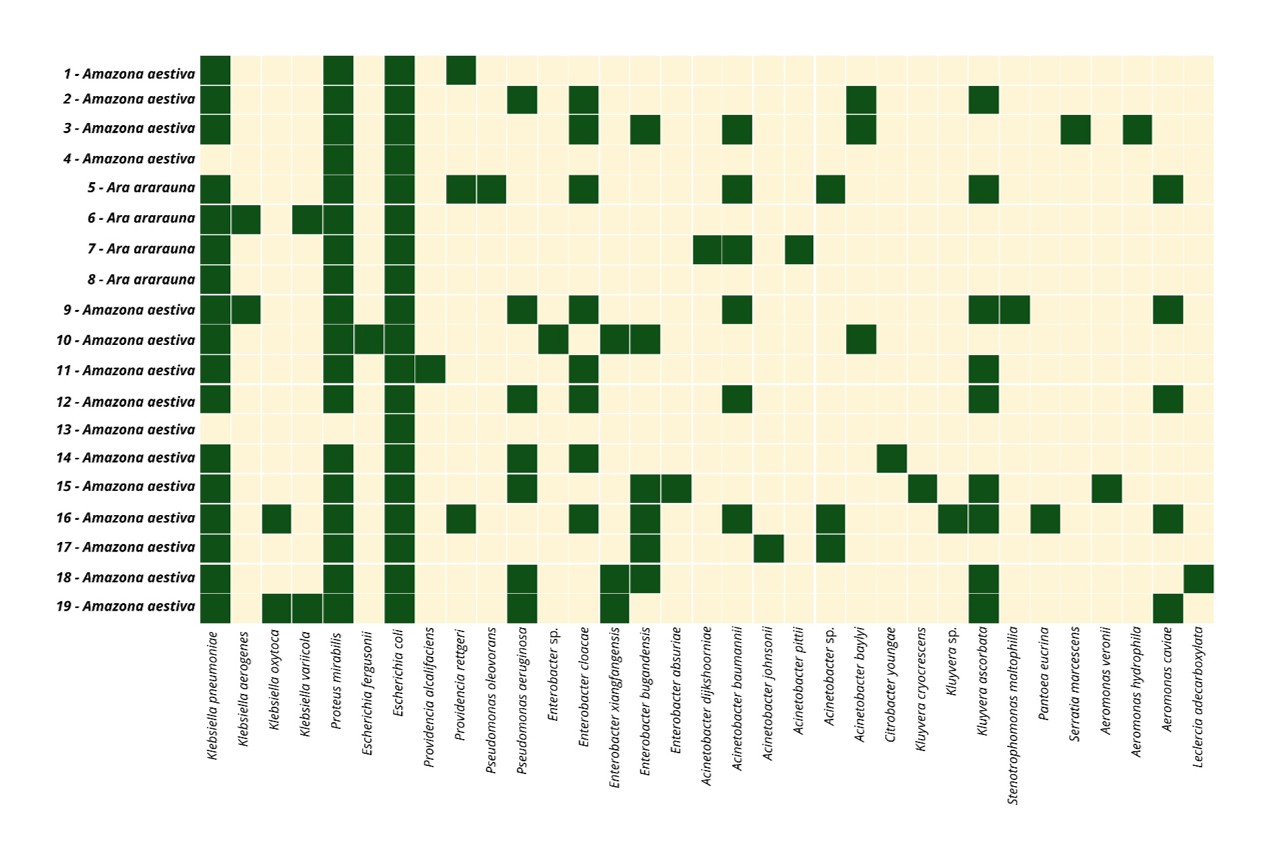
This study revealed the presence of Gram-negative bacteria from the Enterobacteriaceae family in 100% of samples collected from the 19 psittacine birds at 5-day intervals. Among the 124 colonies isolated, 81% belonged to the Enterobacteriaceae family. Among these strains, 46% were strains of the genus Escherichia spp., including colonies of E. coli and one colony of Escherichia fergusonii.
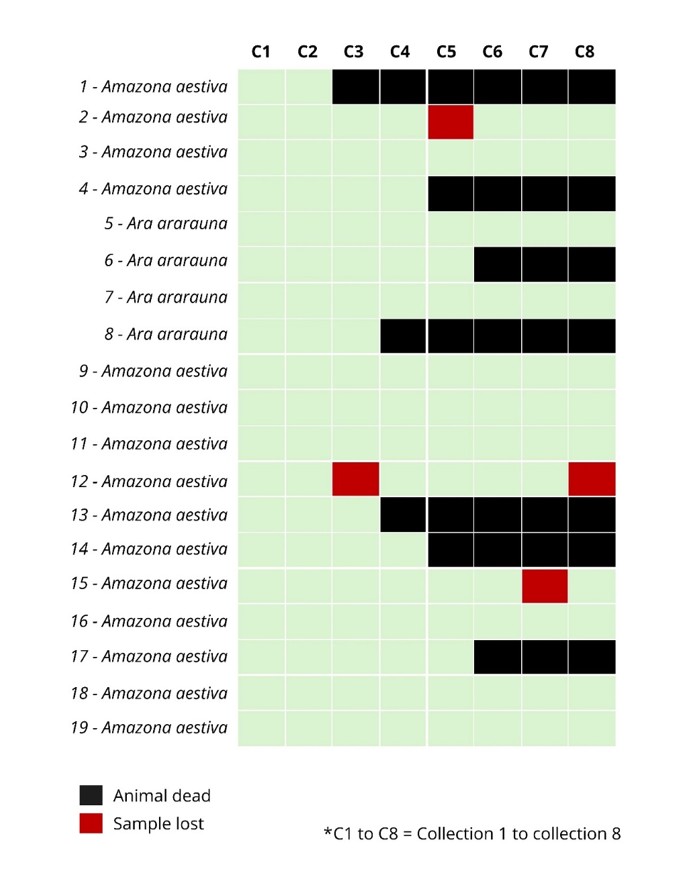
Several constraints were encountered during sampling period analysis. Figure 1 illustrates disruptions in sample collection and bird mortality events.
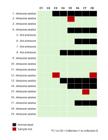
Sampling availability timeline across 19 psittacine birds during rehabilitation period. Collections are labeled corresponding to eight consecutive samplings at five-days intervals.
In the first collection, at the time that the birds were seized before entering the CEPTAS, 18 out of 19 birds (94,73%) were colonized by E. coli; the only exception was bird number 1 (Amazona aestiva). However, a strain of E. coli was present in the second collection in this bird.
According to the MALDI-TOF results, a tendency for a gradual increase in the number of Gram-negative strains was observed in most of the birds between collections II and VIII (Supplementary Table S1).
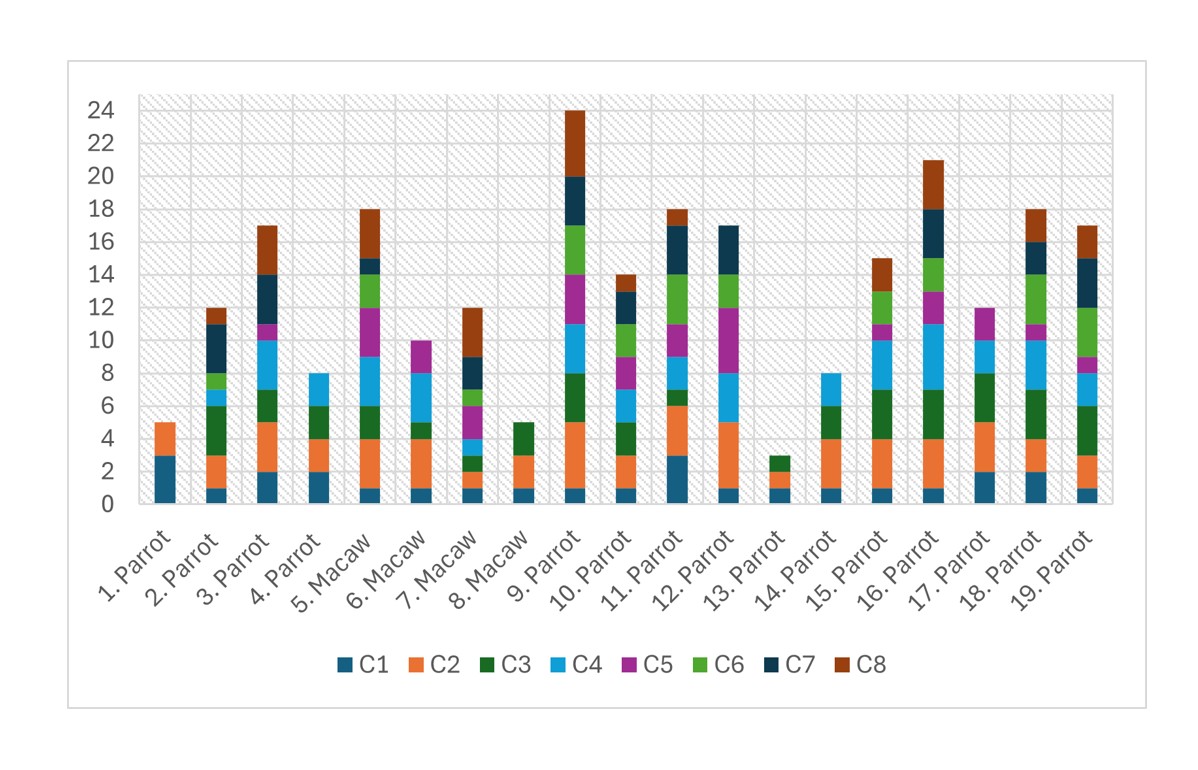
From the second collection (5th day of captivity), polymicrobial colonization was observed with an increase in bacterial species diversity (Graphic 1). In addition to the genus Escherichia, the predominance of the genus Klebsiella spp. was observed, with Klebsiella pneumoniae, Klebsiella oxytoca and Klebsiella variicola representing 21% of the enterobacteria isolated and Proteus spp. representing 13%. The overall diversity of bacterial species identified from these birds is illustrated in Figure 2.
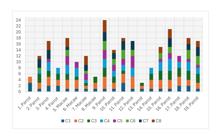
Graphical representation of the increase in polymicrobial colonization in birds across successive sampling points. Each color within the bars represents a distinct collection. The final height of each bar corresponds to the total number of different bacterial species identified in each bird over the 45-day rehabilitation period.
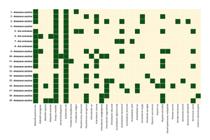
For 78.9% of the birds (15/19), the same bacteria isolated in the first collection persisted in the subsequent collections, in addition to other species. In the other 21.05% (4/19) of birds, the same bacterial colonies as in the first collection did not persist. Among the 19 birds, 17 (89.47%) showed diversity in bacterial species; the other 2 birds (10.52%) were not colonized by different strains compared with the first sampling (Supplementary Table S1).
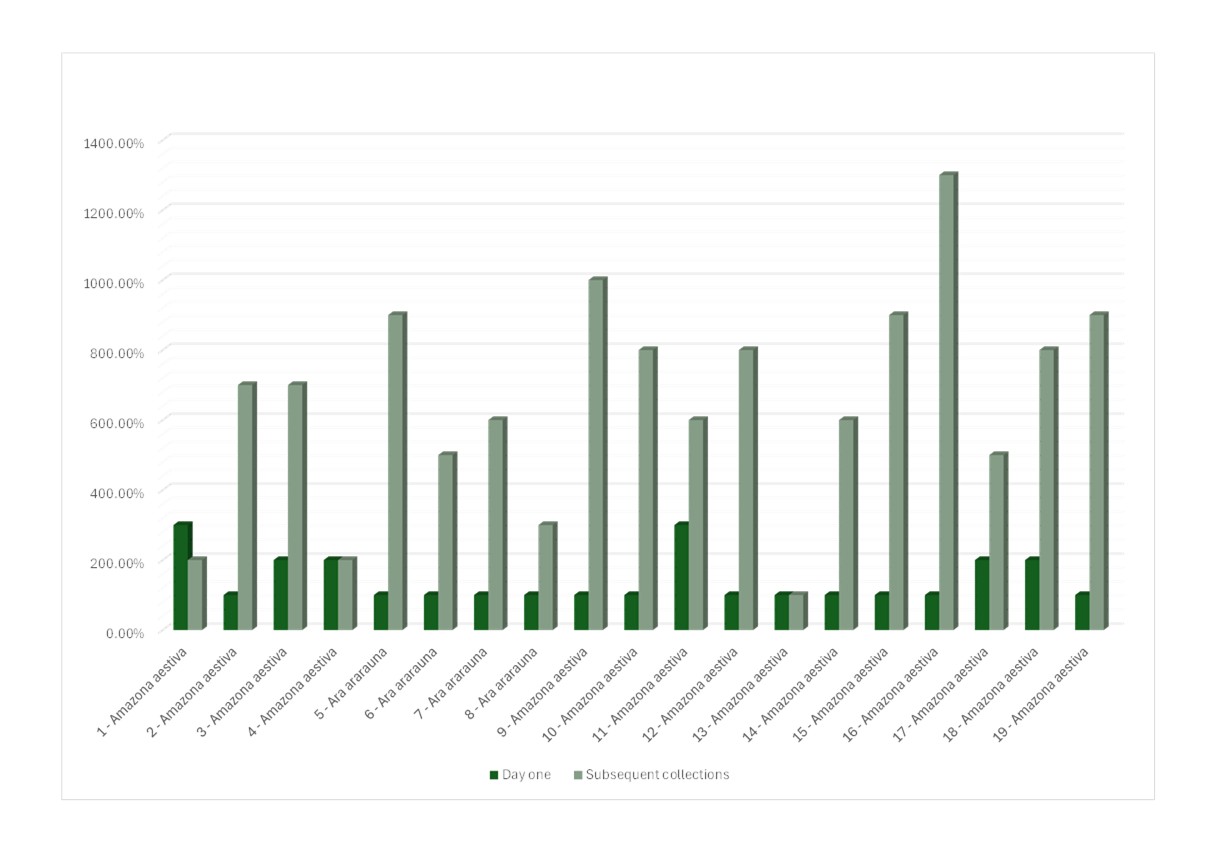
During their stay at the triage center for rehabilitation, a substantial presence of Gram-negative strains, i.e., strains that do not belong to their natural enteric microbiota, was observed, even though the birds appeared to be in a clean and well-ventilated environment. Apart from birds 1, 4 and 13, which died within the first half of the sampling period, a remarkable increase in bacterial species diversity was observed between the initial sampling (upon arrival at the police station) and subsequent collections. This increase is represented as a percentage in Graphic 2.
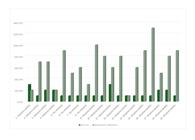
Comparative analysis of the increase in bacterial diversity between the initial collection (day 1) and the subsequent collections across all birds.
4. Discussion
The illegal trade of wild birds poses a significant risk to biodiversity and public health, especially considering the potential of these animals to act as reservoirs of pathogenic microorganisms. Although birds seized by environmental authorities are sent to triage and rehabilitation centers (CETAS), these facilities often lack adequate infrastructure and standardized protocols for managing the animals' health and minimizing microbial cross-contamination.
In 100% of the birds evaluated in this study, the presence of bacteria that do not appear to constitute the natural enteric microbiota of birds of the Psittaciformes order was observed. This indicates a high level of environmental exposure and/or transmission between birds housed in the same facility. The presence of these bacteria suggests a breakdown in biosafety measures.
Studies on how the colonization of these bacteria in clinically normal psittacine birds can be dangerous to bird health are lacking in the scientific literature; however, even if these animals do not present clinical signs, they could still be reservoirs of pathogens for other species, including pathogens for humans (Sanches et al., 2017).
Escherichia coli was the most frequently isolated bacteria in this study, colonizing 94% of the birds in the first collection and 100% of the birds in subsequent collections. Proper care in handling these birds is crucial to ensure their health and to prevent colonization by a wide variety of bacteria. Ferreira and Knöbl (2009) emphasized that quality management in the handling of animals, good ventilation and continuous cleaning and disinfection are essential to prevent and control infections by E. coli - one of the most concerning enteropathogen in avian medicine.
It is critical to ensure minimal good biosecurity practices. The use of disinfectants alone is not enough to prevent infections, and their excessive application can be harmful to birds, including the potential to increase resistance in certain bacteria species. Therefore, some basic procedures can be adopted, such as changing gloves when handling the animals, using a footbath, thoroughly cleaning the feeder and waterer, and avoiding contact between the birds and the floor, as a major part of contamination by enterobacteria occurs via the fecal‒oral route when enterobacteria are eliminated in the feces (Benez, 2004; Salles and Moraes, 2009).
Furthermore, it was possible to identify an increase in bacterial species diversity in these birds from the first collection to subsequent collections. The observed increase in species diversity over the period reinforces the idea that captivity may facilitate polymicrobial colonization. All the birds (100%) were colonized by Enterobacteria from the first collection, indicating that the birds entered the center already contaminated. The diversity increased by collection 2 (5th day of capture), indicating that the bacterial species identified in collections 2 (5th day), 3 (10th day) and 4 (15th day) had infected the birds inside the center.
Mattes et al. (2005) compared cloacal swab samples from two psittacine bird groups: one raised in a high-biosafety conservation center with single cages and control of contamination of food by microorganisms and the other in a recreational center with daily visitor interaction, less biosafety, and shared spaces. The study revealed less E. coli colonization in the conservation center (20%) than in the recreational center (80%), highlighting the importance of biosecurity procedures in bird care (Mattes et al., 2005).
One of the most important protocols to follow when these birds arrive at the center is the quarantine period. IBAMA Normative Instruction No. 5, dated May 13th, 2021, states that the quarantine for an animal recently arrived at a CETAS is determined according to the animal’s taxonomic group and the findings of a professional evaluation, with the objective of preventing the spread of diseases and treating any possible preexisting disease (Brasil, 2021). While this is a valuable instruction, it is not explicit or even implicit that all the animals should be subjected to quarantine as soon as they enter the center. Every animal must be separated before being placed in a shared space with other animals. The reason is that even without clinical signs, these animals can asymptomatically carry pathogens, which could pose a risk to other animals.
In our study, no birds exhibited clinical signs during their stay at the CEPTAS. However, by the end of the period, we observed a mortality rate of 36% (7/19). Although a postmortem examination could not be performed, importantly, the deaths may have been caused by microbial infection. Saidenberg (2008) isolated an E. coli enteropathogen called EPEC (enteropathogenic Escherichia coli) from psittacine birds with enteric symptoms. However, the same pathotype was also isolated from asymptomatic birds. The isolation of enterobacteria in these birds, especially E. coli, is concerning, as these bacteria may pose a pathogenic risk to human health (Gomes and Hernandes, 2015).
It is equally important to evaluate the risks of these infected birds outside the center after rehabilitation in the context of what their ideal destination would be. According to the IUCN (2013), all releases have a conservation objective, meaning that the entire process needs to be well planned and follow a set of guidelines to ensure the success of the species in nature. In their “Guidelines for Reintroductions and Other Conservation Translocations”, the importance of ensuring that recently released animals do not spread pathogenic microorganisms or parasites in their habitat is explicitly stated. This guidance can be addressed during the planning phase of release through microbiological exams.
Some birds intermittently excreted certain bacteria, as shown in Supplementary Table S1. This finding highlights the need to collect samples at intervals. For example, for parrot 2 (Amazona aestiva), the strain of E. coli appeared in collection 1; however, it did not appear in collection 2 but returned in collections 3, 4, 6, 7 and 8. Similarly with bird 5 (Ara ararauna), Klebsiella pneumoniae was not identified in collection 1; however, K. pneumoniae was identified in collections 2, 4, and 6.
The organization that releases the birds must monitor them beyond the release day for ecological reasons. The monitored release could serve as a control for subsequent rewilding, as this type of work is not commonly reported in many records in Brazil. Control over the population before and after the reintroduction of new individuals is crucial to confirming the overall success of the release and ensuring the perpetuation of the species.
5. Conclusion
The wildlife trade in Brazil has increased annually, and the lack of recorded data does not allow a comprehensive overview of the current situation. Raising wild birds as domestic pets has consequences for one’s health, in addition to having ecological and environmental impacts. The number of birds removed from nature for trade affects the ecological functions of these birds, impacting their habitats and the perpetuation of species. Furthermore, removing many individuals in the same population of endangered species can result in a reduction in genetic variability.
The findings of this study improve our understanding, from a zoonotic perspective, of the risks associated with keeping these birds in homes to human health. Additionally, these findings emphasize how biosecurity is crucial inside centers to ensure the integrity of species. The overcrowding of triage centers is at the root of this issue. It is not possible to develop an ideal reintroduction process for these birds without appropriate financial support. It is also important to better understand the natural microbiota of psittacine birds, as the literature on this subject is limited. A better understanding of the microbiota of these birds can help avoid unnecessary antimicrobial use and lead to the implementation of protocols to prevent the spread of bacteria within centers.
Supplementary Material
Supplementary material accompanies this paper.
Table S1
This material is available as part of the online article from https://doi.org/10.1590/1519-6984.299449
Acknowledgments
The authors wish to thank the funds from FAPESP 2022/11917-1, CNPq 309921/2023-6 (TK) and 141155/2022-1 (V.G.P.R – PhD student).
Data Availability Statement
The research data are only available upon request to the corresponding author.
References
- BENEZ, E.M., 2004. Aves, criação, clínica, teoria, prática, silvestres, ornamentais e avinhados 4. ed. São Paulo: Tecmedd.
-
BRASIL. Instituto Brasileiro do Meio Ambiente e dos Recursos Naturais Renováveis – IBAMA, 2021 [viewed 24 May 2025]. Normative Instruction No. 5, dated May 13th, 2021 [online]. Diário Oficial da República Federativa do Brasil, Brasilia, 13 maio. Seção 1, pp. 187. Available from: https://www.ibama.gov.br/component/legislacao/?view=legislacao&legislacao=139089
» https://www.ibama.gov.br/component/legislacao/?view=legislacao&legislacao=139089 -
CHARITY, S. and FERREIRA, J.M., 2020 [viewed 16 January 2025]. Wildlife trafficking in Brazil [online]. Available from: https://www.researchgate.net/publication/344099996
» https://www.researchgate.net/publication/344099996 - FERREIRA, J.A.P. and KNÖBL, T., 2009. Colibacilose. In: A. BARCHIERI JÚNIOR, E.N. SILVA, J.D. FÁBIO, L. SESLI and M.A.F. ZUANAZE, eds. Doença das aves 2. ed. Campinas: Facta, pp. 7-17.
-
FLAMMER, K. and DREWES, L.A., 1988. Species-related differences in the incidence of gram-negative bacteria isolated from the cloaca of clinically normal psittacine birds. Avian Diseases, vol. 32, no. 1, pp. 79-83. https://doi.org/10.2307/1590952 PMid:3289533.
» https://doi.org/10.2307/1590952 - GERSHWIN, L.J., 2013. Respostas Imunes a Microrganismos Infecciosos. In: D.C. HIRSH and Y.C. ZEE, eds. Microbiologia veterinária. 3. ed. Rio de Janeiro: Guanabara Koogan, pp 7-17.
- GOMES, T.A.T. and HERNANDES, R.T., 2015. Escherichia coli Enteropatogênica (EPEC). In: F. ALTERTHUM, ed. Trabulsi-Alterthum – Microbiologia 6. ed. São Paulo: Atheneu, pp 303-309.
-
INTERNATIONAL UNION FOR CONSERVATION OF NATURE AND NATURAL RESOURCES – IUCN, 2013 [viewed 15 April 2025]. Guidelines for reintroductions and other conservation translocations [online]. Available from: https://iucn.org/resources/publication/guidelines-reintroductions-and-other-conservation translocations
» https://iucn.org/resources/publication/guidelines-reintroductions-and-other-conservation -
KNÖBL, T. and MENÃO, M.C., 2010 [viewed 23 March 2025]. Escherichia coli enteropatogênica (EPEC) isoladas de psitacídeos [online]. Fiep Bulletin. Available from: https://ojs.fiepbulletin.net/fiepbulletin/article/view/1112
» https://ojs.fiepbulletin.net/fiepbulletin/article/view/1112 -
KUHNEN, V.V. and KANAAN, V.T., 2014. Wildlife trade in Brazil: A closer look at wild pets welfare issues. Brazilian Journal of Biology = Revista Brasileira de Biologia, vol. 74, no. 1, pp. 124-127. https://doi.org/10.1590/1519-6984.18912 PMid:25055093.
» https://doi.org/10.1590/1519-6984.18912 -
MATTES, B.R., CONSIGLIO, S.A.S., ALMEIDA, B.Z., GUIDO, M.C., ORSI, R.B., SILVA, R.M., COSTA, A., FERREIRA, A.J.P. and KNÖBL, T., 2005. Influência da biossegurança na colonização intestinal por Escherichia coli em psitacídeos. Arquivos do Instituto Biológico, vol. 72, no. 1, pp. 13-16. https://doi.org/10.1590/1808-1657v72p0132005
» https://doi.org/10.1590/1808-1657v72p0132005 -
OLIVEIRA, W.S.L., BORGES, A.K.M., DE FARIA LOPES, S., VASCONCELLOS, A. and ALVES, R.R.N., 2020. Illegal trade of songbirds: an analysis of the activity in an area of northeast Brazil. Journal of Ethnobiology and Ethnomedicine, vol. 16, no. 1, pp. 16. https://doi.org/10.1186/s13002-020-00365-5 PMid:32228669.
» https://doi.org/10.1186/s13002-020-00365-5 -
REDE NACIONAL DE COMBATE AO TRÁFICO DE ANIMAIS SILVESTRES – RENCTAS, 2001 [viewed 13 January 2025]. 1° Relatório Nacional sobre o Tráfico de Fauna Silvestre [online]. Available from: https://renctas.org.br/trafico-de-animais/
» https://renctas.org.br/trafico-de-animais/ - RIBEIRO, L.B. and SILVA, M.G., 2007. O comércio ilegal põe em risco a diversidade das aves no Brasil. Ciência e Cultura, vol. 59, no. 4, pp. 1-2.
- SAIDENBERG, A.B.S., 2008. Detecção de fatores de virulência de Escherichia coli isoladas de psitacídeos com diferentes manifestações clínicas São Paulo: Universidade de São Paulo, 46 p. Dissertação de Mestrado em Ciências.
- SALLES, C.T.P. and MORAES, H.L.S., 2009. Prevenção de doenças / Manejo Profilático / Monitoria. In: A. BARCHIERI JÚNIOR, E.N. SILVA, J.D. FÁBIO, L. SESLI and M.A.F. ZUANAZE, eds. Doença das aves 2. ed. Campinas: Facta, pp 18-45.
-
SANCHES, L.A., GOMES, M.D.S., TEIXEIRA, R.H.F., CUNHA, M.P.V., OLIVEIRA, M.G.X., VIEIRA, M.A.M., GOMES, T.A.T. and KNOBL, T., 2017. Captive wild Birds as reservoirs of enteropathogenic E. coli (EPEC) and Shiga-toxin producing E. coli (STEC). Brazilian Journal of Microbiology: Publication of the Brazilian Society for Microbiology, vol. 48, no. 4, pp. 760-763. https://doi.org/10.1016/j.bjm.2017.03.003 PMid:28619663.
» https://doi.org/10.1016/j.bjm.2017.03.003 -
SANTOS, A.B.I., SILVA, A.B.G.V., ESTEVÃO, J.A. and SARTORE, M.O., 2018 [viewed 18 February 2025]. Distribuição e panorama dos centros de triagem de animais silvestres no Brasil. Anais Congresso Nacional de Meio Ambiente de Poços de Caldas [online], vol. 7, no. 1. Available from: https://www.meioambientepocos.com.br/anais-2018/
» https://www.meioambientepocos.com.br/anais-2018/ - SILVA, R.M. and SANTOS, A.C.M., 2015. Escherichia coli Patogênica Extraintestinal (ExPEC). In: F. ALTERTHUM, ed. Trabulsi-Alterthum – Microbiologia 6. ed. São Paulo: Atheneu, pp. 333-341.
- SOMENZI, C.C., 2016. Diagnóstico imunológico. In: J.A.B. SCUTTI. Fundamentos da imunologia São Paulo: Rideel, p. 257-262.
-
SOUZA, N.F., MOURA, F.B.C., OLIVEIRA, R.A. and ROCHA, N.S., 2024. Wildlife trafficking in North and Southeast of Brazil: 5 years of study. Revista Ibero-Americana de Humanidades, Ciência and Educação (Bauru), vol. 10, no. 9, pp. 1412-1422. https://doi.org/10.51891/rease.v10i9.15541
» https://doi.org/10.51891/rease.v10i9.15541 - TADDEI, C.R., BRANDT, K. and SAMPAIO, M.C., 2015. Microbiota Humana. In: F. ALTERTHUM, ed. Trabulsi-Alterthum – Microbiologia 6. ed. São Paulo: Atheneu, pp. 101-107.
Edited by
-
Editor:
Takako Matsumura Tundisi