 Innovative chitosan: pomegranate peel extract active coatings for enhanced preservation of fish fillets
Abstract
Active packaging technologies have emerged as a promising approach to enhancing the preservation of perishable foods by inhibiting microbial contamination, delaying oxidative degradation, and extending shelf life. This study focuses on the antioxidant and antimicrobial potentials of pomegranate peel extract (PPE) and its application in chitosan-based active coatings to preserve fish fillets. PPE was characterized by high levels of total phenolics (258.79 ± 2.3 mg Gallic acid equivalent GAE/g) and flavonoids (209 ± 1.7 mg/g), with gallic acid (1.02 ± 0.39 mg/g) and catechin (0.60 ± 0.21 mg/g) identified as the major bioactive compounds. These constituents contributed to strong antioxidant activity as measured by the 2,2-Diphenyl-1-picrylhydrazyl (DPPH) assay and 2,2-zino-bis 3-ethylbenzothiazoline-6-sulfonic acid) ABTS (assay, exhibiting inhibitory concentration (IC50 values) of 11.75 ± 1.24 µg/mL and 3.3 ± 0.86 µg/mL, respectively. PPE also demonstrated significant antimicrobial efficacy against common foodborne pathogens, generating inhibition zones ranging from 12 to 25 mm at a concentration of 100 mg/mL, with pronounced effects against Staphylococcus aureus EMCC1351 and Klebsiella spp. When incorporated into chitosan coatings at 1% and 2% concentrations, PPE effectively reduced both lipid and protein oxidation and inhibited microbial growth in fish fillets stored at refrigeration temperature (4 ± 1 °C), maintaining microbial loads within acceptable limits for up to 15 days. These findings illustrate the potential of PPE as a sustainable, natural preservative, offering an eco-friendly solution by utilizing agro-industrial by-products to develop biodegradable active packaging materials for food preservation. This approach aligns with current trends in food safety, waste valorization, and environmental sustainability.
Keywords:
Fish fillet; Pomegranate peel extract; Antioxidant activity; Antimicrobial activity; Chitosan; Active packaging
Highlights
High bioactive content – PPE is rich in total phenolics and total flavonoids with gallic acid and catechin as major constituents
Potent antioxidant activity – Effective antimicrobial properties
Chitosan-PPE films – Successfully developed biodegradable coatings incorporating 1% and 2% PPE for eco-friendly food packaging solutions
Shelf-life extension – Films significantly reduced oxidation and microbial growth
1 Introduction
Seafood, including fish and shellfish, is increasingly popular due to its high nutrient content and health benefits. Fish protein is considered complete, containing all essential amino acids, and is easier to digest than red meat due to lower connective tissue. Fish provides significant B vitamins, and fatty fish such as salmon, herring, and mackerel are rich in vitamins D and A. Additionally, seafood such as mussels and oysters are good sources of trace minerals, including iodine, iron, copper, zinc, and magnesium. However, seafood is prone to spoilage because of its high content of unsaturated fatty acids, which need proper handling and storage to preserve quality (Lorenzo et al., 2017). Lipid oxidation is the primary factor responsible for the deterioration of fish products, leading to a reduction in their nutritional quality. This process leads to unpleasant changes in texture, appearance, taste, and odor (Lorenzo et al., 2017; Delgado-Adámez et al., 2016). The formation of potentially deleterious secondary products – including ketones, aldehydes, and hydroperoxides, resulting from lipid oxidation – and the resulting decrease in nutritional integrity are also critical concerns (Lorenzo et al., 2017). Fish muscle is highly prized because of its high concentration of omega-3 polyunsaturated fatty acids (ω-3 PUFA). Its low n-6/n-3 ratio makes it a top source of crucial long-chain -3 PUFA (C20-C24). These essential fatty acids are vital for many biological processes and provide significant cardioprotective and neuroprotective health benefits (Campoverde & Estevez, 2017; Xie et al., 2021). The fishing industry grapples with significant product deterioration that compromises the microbiological, biochemical, and physical quality of fish. To combat this, conventional preservatives, natural extracts (like polyphenols), and bacteriocins are employed to inhibit microbial growth and enzymatic degradation (Khaledian et al., 2021; Sharma et al., 2021). A key advancement is active packaging, which integrates bioactive ingredients to suppress both oxidation and bacterial proliferation, thereby extending shelf life and quality (Barbosa-Pereira et al., 2013). Antioxidants are compounds that scavenge free radicals and can protect essential nutrients from oxidation. Therefore, plant phenolic compounds have become popular as natural preservatives in food preservation due to their ability to retard the oxidation of food nutrients (Saparbekova et al., 2023). Driven by consumer demand for natural alternatives over synthetic ones (Hassoun & Çoban, 2017), antioxidant active packaging is a promising technology. It uses embedded compounds to interact with the immediate atmosphere, preventing lipid and protein oxidation during storage (Mei et al., 2019; Maryam Adilah & Nur Hanani, 2016). Chitosan, a polysaccharide from chitin, is a highly valued, non-toxic, biodegradable, and biocompatible material (Abbas & Abdul-Rahman, 2020). It inherently possesses antimicrobial and antioxidant properties, making it ideal for active food packaging (Abbas & Abdul-Rahman, 2020). Its film-forming capacity allows it to create coatings that act as barrier layers against oxygen and moisture, effectively retarding lipid oxidation and microbial growth in perishable foods (Berizi et al., 2018). Recent research focuses on using chitosan as a carrier for bioactive compounds like plant extracts. The incorporation of natural antioxidants into chitosan matrices can provide synergistic effects, improving both the functional and mechanical properties of the packaging material. (Hosseini et al., 2015; Mei et al., 2019). Pomegranate (Punica granatum L.) is a fruit rich in phytochemicals, including flavonoids and phenolic acids (Uzuner, 2020). Pomegranate peels are currently considered a rich source of bioactive substances that have antioxidant and antimicrobial properties (Akhtar et al., 2015; Elfalleh et al., 2012). Therefore, this study aimed to develop and assess novel chitosan-based active coatings incorporating pomegranate peel extract (PPE) for enhancing the preservation of fish fillets under refrigerated conditions. This research contributes to advancing sustainable, natural, and functional food packaging solutions that simultaneously enhance food safety and extend shelf life, thereby minimizing the reliance on synthetic preservation agents.
2 Materials and methods
2.1 Plant materials and microbial strains
Pomegranate peels were procured from local markets of Alexandria, Egypt. The microbial strains used in this study (Escherichia coli BA 12296, Streptococcus mutans EMCC1815, Staphylococcus aureus NCTC 10788, and Candida albicans ATCCMYA-2876) were obtained from Ain Shams Culture Collection Center (MERCN), Ain Shams University, Cairo, Egypt.
2.2 Preparation and characterization of pomegranate peel extract
2.2.1 Pomegranate peel extraction
PPE was prepared following the method of Živković et al. (2021). The pomegranate peels were ground and dried, and subsequently combined with deionized distilled water (1:10 w/v) at 50 °C for three hours. The mixture was centrifuged, and the supernatant was filtered through Whatman No. 1 filter paper. The filtrate was then lyophilized using a freeze dryer (FDF 0350; Soul, Korea) to obtain PPE powder, with a final extraction yield of 10% based on dry weight.
2.2.2 Total phenolic and flavonoids
The total phenolic content (TPC) was determined using the Folin-Ciocalteu assay (Kim et al., 2013; Dewanto et al., 2002). A mixture of 0.5 mL ddH2O and 0.125 mL Folin-Ciocalteu reagent was added to a 1 mL aliquot of PPE. After shaking several times, the mixture was kept at ambient temperature for six minutes. It was then mixed with 25 mL of 7% Na2CO3, and the total volume was adjusted to 3 mL and incubated in a dark place for 30 minutes before reading the absorbance at 760 nm against a blank. A calibration curve was generated using gallic acid, and the total phenolic content was expressed as milligrams of gallic acid equivalents per gram of dry weight (mg GAE/g DW). The flavonoids in pomegranate peel extract were estimated using catechol as a standard (Radha et al., 2014). Following the addition of 1000 µL of PPE, 4 mL of ddH2O, and 300 µL of 5% NaNO2, the mixture was incubated at 25 ± 1 °C for five minutes, followed by the introduction of 300 µL of 10% AlCl3. After adding 2 mL of (1 N) NaOH and increasing the volume to 10 mL with ddH2O, the mixture was incubated at 25 ± 1 °C for 15 minutes. The absorbance was measured at 510 nm, and the total flavonoid content was expressed as milligrams of catechol per gram of extract (mg CE/g extract).
2.2.3 2,2-Diphenyl-1-picrylhydrazyl (DPPH) assay
The method of (Dewanto et al., 2002; Brand-Williams et al., 1995) was used for the antioxidant capacity of PPE. Serial aliquots of PPE (5–50 µL) were pipetted into the ten different test tubes. To every tube, 2.5 mL of 0.1 mM DPPH radical solution was added. The tubes were incubated in the dark for 20 minutes to allow the reaction to complete. Absorbance readings of the mixture were recorded at 517 nm using a blank as a reference.
The percent antioxidant activity of the PPE was calculated following Equation (1):
The results were expressed as milligrams of gallic acid equivalent per gram of dry extract (mg GAE/g). The analysis was conducted in triplicate. The IC50 was calculated by plotting the % inhibition against concentrations. A lower IC50 value indicates a greater antioxidant activity.
2.2.4 2,2-Azino-bis (3-ethylbenzothiazoline-6-sulfonic acid) (ABTS) assay
The assay was performed using the methodology described by Re et al. (1999). Equal volumes of potassium persulfate (2.4 mmol/L) and ABTS radical (7 mmol/L) were mixed and incubated in the dark for 16 hours. The prepared reagent was diluted 1:60 v/v with (ddH2O). Different volumes of PPE (5–50 μL) were transferred to test tubes, and 4 mL of ABTS radical reagent was added. After incubating the mixture for six minutes, the absorbance at 734 nm against the control was noted, and the ABTS radical scavenging activity was calculated as follows in Equation 2:
The results were expressed as mg AAE/g DW, and the experiment was conducted in triplicate.
A plot of ABTS radical inhibition (%) against PPE concentration was used to determine the IC50 value. Ascorbic acid was used as a standard antioxidant reference to validate the method and allow comparison of antioxidant capacity results between assays.
2.2.5 HPLC profiling of phenolic compounds
Phenolic compounds were analysed following Parkes et al. (2022) with minor modifications using an Agilent 1260 Infinity HPLC system (Agilent Technologies, USA). Separation was performed on a C18-HL column (150 mm × 3 mm, 3 µm; Thermo Fisher Scientific, USA) at 60 °C. The mobile phase consisted of solvent A (acetonitrile with 0.1% formic acid) and solvent B (deionized water with 0.1% formic acid). The gradient was 0–5 min, 10% A; 5–15 min, 40% A; 15–25 min, 60% A; 25–30 min, 90% A; 30–35 min, hold; 35–40 min, return to 10% A. Flow rate was 0.5 mL/min with a 10 µL injection volume. Detection at 280 nm (general phenolics), 320 nm (hydroxycinnamic acids), and 360 nm (flavonols). Compounds were identified by retention times, UV–VIS spectra, and co-injection with standards. Quantification used external calibration curves from ten standards: gallic acid, catechin, chlorogenic acid, caffeic acid, syringic acid, p-coumaric acid, ferulic acid, rutin, quercetin, and kaempferol. Results were expressed as µg/ g.
2.2.6 Antimicrobial activity
The antimicrobial activity of PPE was assessed according to the agar well diffusion method (Kadaikunnan et al., 2015). PPE stock solutions were prepared in sterile distilled water to obtain final concentrations of 25, 50, 75, and 100 mg/mL. Nutrient agar (NA) was used for bacterial strains, and potato dextrose agar (PDA) for yeast and mold. Escherichia coli ATCC25922, Staphylococcus aureus EMCC1351, Pseudomonas Spp, Clostridium Spp, Klebsiella Spp, and Candida albicans EMCC105 were used as foodborne pathogens. Inocula were prepared from fresh overnight cultures (106 CFU/mL for bacteria; 105 CFU/mL for yeast and mold) and spread evenly over the agar surface. Wells (6 mm diameter) were filled with 100 μL of PPE solution. Sterile distilled water served as the control (NC), and chloramphenicol (30 μg/ml) was used as a positive control. Bacterial plates were incubated at 37 °C for 24 h, yeast/mold plates at 28 °C for 72 h. The inhibition zone (IZD) was measured in millimetres, including the diameter of the well. All assays were performed in triplicate.
2.3 Formulation of chitosan-PPE- based solution
Chitosan-based coating solutions were prepared following the procedures of Hosseini et al. (2015) and Moghadam et al. (2020). Briefly, 10 g of chitosan (≥ 85% deacetylation) was dissolved in 360 mL of 2% (v/v) aqueous acetic acid under magnetic stirring at 60 °C for 60 min to ensure complete solubilization. Glycerol (40 mL) was then incorporated as a plasticizer, and stirring was continued until homogeneous. The resulting chitosan solution was divided into four equal portions (100 mL each). The first portion served as the control chitosan coating (CH). The second, third, and fourth portions were supplemented with 0.5 g, 1 g, and 2 g of PPE, respectively. PPE was previously dissolved in a minimal volume of distilled water to facilitate dispersion. Each formula was stirred for 10 min at 100 °C to ensure uniform distribution of PPE. Solutions were then cooled to 70 °C before application to fish fillet samples. All coating solutions were freshly prepared immediately before use to ensure the preservation of bioactivity.
2.4 Experimental design
Lean fish (Argyrosomus regius- Asso, 1801) was purchased from Abo Qier fish farm, Alexandria, Egypt (Figure 1A). The fish were transferred directly to the ice box. Small scales and residues were removed. The back muscles of the fish were formed into fillets (≈ 80 g). Later, the fillets were divided into five groups for the experiment (Table 1, B). The first group was immersed in sterile water as a control (NC) and was not coat, while the other groups were coated as follows: the second with chitosan film (CH); the third with chitosan + 0.5% PPE (T1), the fourth with chitosan + 1% PPE (T2), and the fifth with chitosan + 2% PPE (T3). After immersing for one minute, the coated fish fillet samples were drained for ten minutes at room temperature and dried in a hot air dryer for three minutes. Coated fillet pieces were placed on foam plates using seven foam plates assigned to storage intervals; each plate contained three fillet slices used as experimental units and stored in a refrigerator at 4 ± 1 °C (Figure 1B). The protective capacity of the coating materials was evaluated by monitoring key quality deterioration indices at predetermined temporal nodes (0, 3, 6, 9, 12, and 15 days).

A-Meagre fish and meagre fish fillet product, B- fish fillet coated with a formulated film.
2.5 Physicochemical and microbiological analyses
2.5.1 pH values
The method of (Shakhtour & Babji, 2013) was applied to ascertain the pH values of coated fillets. The flesh (10 g) was homogenized for 2 min with 90 mL ddH2O and filtered with filter paper (Whatman No. 1). A pH meter (AD1030, Romania) was used to determine the pH of the filtrate.
2.5.2 Color properties
The surface colour of the fish fillets was measured using a portable colourimeter (Smartcolour Pro, Serial No. 1002; BYK-Gardner GmbH, Germany) calibrated with a standard white tile. Measurements were taken using the CIELAB colour system to determine lightness (L*), redness/greenness (a*), and yellowness/blueness (b*) values. In the CIELAB colour space, L* denotes lightness (higher values = lighter), a* indicates red-green intensity (positive = red, negative = green), and b* represents yellow-blue intensity (positive = yellow, negative = blue) (Rambabu et al., 2019). Three measurements were taken from different points on the surface of each sample, and the average values were recorded for statistical analysis.
2.5.3 Peroxide values
Peroxide value (PV) was determined by weighing 1.00 ± 0.01 g of homogenized raw fish fillet into a Pyrex test tube, adding 20 mL glacial acetic acid: chloroform (2:1, v/v) and 1.00 g potassium iodide (KI), sealing with a rubber stopper, and heating at less than 60 °C for 30 s to dissolve solid fish fats to facilitate dissolution in the solvent before the reaction begins, and cooled under running tap water. The mixture was transferred to an Erlenmeyer flask containing 30 mL of distilled water, and the liberated iodine was titrated with 0.002 N sodium thiosulfate using starch as an indicator. The peroxide value was determined by the iodometric titration method, and the results were expressed as mEq of active oxygen per kilogram of lipid (mEq O2/kg fat) (Chernukha et al., 2023). All measurements were performed in triplicate and reported as mean ± SD.
2.5.4 Thiobarbituric Acid Reactive Substances (TBARS)
TBARS assay for the coated fillet samples was conducted using a modified version of the protocol established by Berizi et al. (2018).
The TBARS value was calculated based on the absorbance measured at 532 nm using a conversion factor of 7.8 to express results as mg malondialdehyde (MDA) per kg of fish meat, according to the established spectrophotometric method using the molar extinction coefficient of the MDA-TBA complex (≈1.56 × 10⁵ M−1·cm−1) (Özalp Özen et al., 2011; Urbonavičiūtė et al., 2023). As the following Equation 3:
TBARS values less than 5 mg MDA/kg indicate good oxidative quality, and values up to 7–8 mg MDA/kg are the upper acceptable limit for quality and consumption. A one-milliliter aliquot of the homogenized fillet was dispensed into a reaction vessel. To inhibit artifactual oxidation, 50 μL of butylhydroxytoluene (BHT) was introduced, followed by the addition of 2 mL of Thiobarbituric acid (TBA)–trichloroacetic acid (TCA) reagent mixture. The resulting solution was subjected to heat treatment via incubation in a boiling water bath for 25 minutes. Subsequently, the mixture underwent centrifugation at 7000 x g for 15 minutes. The absorbance of the resulting supernatant was quantified spectrophotometrically at a wavelength of 532 nm. The concentration of TBARS was calculated and expressed as milligrams of malondialdehyde (MDA) per kilogram of sample.
2.5.5 Total Volatile Basic Nitrogen (TVB-N)
Volatile spoilage compounds, measured as TVB-N, were quantified in the fillet matrix according to the established protocol of Jinadasa (2014). This procedure relies on the alkaline release of volatile nitrogenous bases, which are subsequently trapped and quantified via acid-base titration. The extraction process involved mixing 10.0g of the prepared sample with 200 mL of 7.5% TCA. Following a two-minute reaction period, the mixture was subjected to filtration (Whatman No. 2) to obtain a protein-free filtrate. A precise volume of 25.0 mL of the clear filtrate was introduced into the distillation unit. The volatile compounds were released by adding 50 mL of NaOH and 50 mL of ddH2O followed by steam-distillation. The ammonia released was captured by reaction with a 25 mL aliquot of boric acid solution containing the methyl red/methylene blue indicator, completing the collection phase upon reaching a 100 mL distillate volume. The final TVB-N content (mg/100g) was ascertained by standardized acid titration (using 0.1N H2SO4 and calculated as follows in Equation 4:
where: a = mL of Sulfuric acids; b = Normality of Sulfuric acid
2.5.6 Microbiological analysis of coated fish fillet
The microbial load of the coated fish fillets was assessed by determining the total viable count (TVC), coliforms, and yeast and mold enumeration. All microbial colony counts were subsequently transformed and expressed as log10 colony-forming units per gram (log10 cfu/g) (Licciardello et al., 2018). The determination of the overall mesophilic aerobic population utilized Nutrient Agar (Oxoid, UK) as the primary cultivation medium. The inoculated plates were subjected to an incubation period of 24 hours at a controlled temperature of 37 °C. Coliform bacteria were quantified using Violet-Red Bile Agar (VRB), adapting the method described by Hernández et al. (2009). Following inoculation, the plates were incubated at 37 °C for 24 hours. The enumeration was restricted to characteristic colonies: those exhibiting a purple-pink pigmentation accompanied by a distinct purple halo surrounding the colony. The enumeration of yeasts and molds was performed using PDA medium. The plates were incubated at a slightly elevated temperature of 42 °C for an extended period of 72 hours to optimize the growth of these specific microorganisms.
2.5.7 Sensory evaluation
The organoleptic profile of both the coated and uncoated fish fillets was determined by a trained and screened sensory panel to assess changes during refrigerated storage. The evaluation panel consisted of ten members (five males and five females) aged from 25 to 45 years, all affiliated with the Food Science Department at the City of Scientific Research and Technological Applications, Egypt. Prior to evaluation, panelists were trained in the recognition and scoring of quality attributes specific to fish fillets. Samples were presented in randomized order to mitigate bias and were identified by randomized three-digit codes. The evaluations were conducted in a controlled environment featuring white-fluorescent lighting at an ambient temperature of 22 ± 2 °C. Panelists were instructed to rinse their palates thoroughly with water between the assessment of consecutive samples. The panelists utilized a nine-point Hedonic Scale to quantify their preference, where a score of 1 represented “dislike extremely” and a score of 9 represented “like extremely.” The specific sensory attributes assessed included appearance, odor, texture, and overall acceptability. Sensory evaluations were performed at specific temporal nodes throughout the storage period (0, 3, 9, 12, and 15 days) to track deterioration kinetics. The fillets were maintained under refrigerated conditions at 4 ± 1°C between evaluation points. The resulting scores were compiled, and mean scores were calculated for subsequent statistical analysis.
2.6 Statistical analysis
All experiments were conducted in triplicate (n = 3 independent replicates) to ensure statistical reliability and reproducibility of the results. Data were analysed using one-way ANOVA followed by Duncan’s multiple comparison test (SPSS, version 22.0.29). Results are expressed as mean ± standard deviation (SD). Differences were considered statistically significant at p < 0.05 (Calinski et al., 1981).
3 Results and discussions
3.1 Total phenolic and flavonoids of PPE
Phenolic compounds are well-established for their antioxidant properties and associated health benefits, driving their increasing popularity and consumer interest. The water-based extract derived from pomegranate peel exhibited a substantial total phenolic content (258.79 ± 23.00 mg GAE/g) (Table 2). This value suggests a significant abundance of hydrophilic phenolic compounds within the peel matrix. The polarity of these compounds renders them highly suitable for incorporation into food systems, where they are generally regarded as safe (GRAS). These findings align closely with previously reported literature, which documented high TPC values for PPE (202.40 mg GAE/g) (Wang, 2011); (258.20 mg GAE/g) (Qin et al., 2015; Yuan et al., 2015). Concurrently, the flavonoid content was 209.00 ± 17.00 mg CE/g (Table 2). Notably, the flavonoid fraction constitutes approximately 80.76% of the total polyphenolic content in the extract, which strongly correlates with its high antioxidant capacity. Compared to other reported values (39.20 mg CE/g) for whole pomegranate by Viuda-Martos et al. (2013), the flavonoids of the peel demonstrate their great potential as a rich source of phenols and flavonoids. In the context of food processing and preservation, these compounds confer significant advantages, such as mitigating lipid and protein oxidation during prolonged storage, thereby maintaining product quality and shelf life.
3.2 Antioxidant activity of PPE
The concentration-dependent antioxidant activity of PPE is defined as the minimum concentration of the extract required to scavenge the available free radicals. In this study, the PPE demonstrated a significant capacity for radical scavenging, with an IC50 of 11.75 ± 1.24 μg/mL by the DPPH method and 3.30 ± 0.86 μg/mL by the ABTS Radical Cation Decoulorization Method (Table 2). These results emphasize the potent antioxidant function of PPE, underscoring its potential utility as an effective natural antioxidant agent in food applications. Elfalleh et al. (2012) reported that PPE demonstrated an IC50 of 11.48 μg/mL. Abu-Niaaj et al. (2024) showed that the IC50 of PPE water extract is 4.78 μg/mL, whereas Kanatt et al. (2012) found an IC50 of PPE by DPPH radical assay of 4.90 μg/mL, which is lower than our findings. In turn, Ahmad et al. (2024) incorporated PPE with carboxymethyl cellulose for fabrication of a coating material for extending the shelf-life of beef burger, which enhanced the antioxidant activity up to 84%. In the same context, the addition of PPE enhanced the preservation properties of chitosan film (Yuan et al., 2015). Collectively, these findings underscore the promising versatility of PPE, highlighting its potential for impactful applications across diverse sectors, including food preservation and pioneering advancements in food packaging technologies. This attribute positions PPE as a viable additive within active packaging frameworks, facilitating enhanced product stability and extended market viability.
3.3 Phenolic compounds profile
The High-Performance Liquid Chromatography (HPLC) analysis provided a quantitative profile of the phytochemicals in the PPE (Table 3). The phenolic profile revealed gallic acid (1016.05 ± 0.39 µg/g) and catechin (597.66 ± 0.21 µg/g) as the principal compounds. While gallic acid and catechin were dominant, several other phenolic compounds were quantified at lower concentrations, ranging from 1.34 ± 0.14 to 164.22 ± 0.19 µg/g extract (Table 3). These minor constituents, despite their lower individual concentrations, collectively exert a significant and synergistic influence on the overall antioxidant capacity of the PPE. These multi-compound effects often result in greater protection than the sum of the individual components. These findings are consistent with the literature, confirming the rich polyphenolic composition of PPE. The abundant phenolic content in pomegranate peel underscores its promise for exploitation as a reservoir of bioactive agents suitable for integration into food preservatives. Kaderides et al. (2018) and Kumar et al. (2022) reported that the antioxidant capacity of PPE is linked to the presence of specific bioactive compounds such as punicalagin, gallic acid, and ellagic acid, which exhibit strong radical scavenging, metal-chelating, and lipid oxidation–inhibiting properties. Pomegranate peel constitutes a rich matrix, comprising an estimated 27 distinct bioactive constituents; prominent among these are gallic acid, punicalagin, and ellagic acid (Drinić et al., 2020; Feng et al., 2022; Man et al., 2022). The bioactive constituents in pomegranate peel-primarily polyphenols such as tannins, flavonoids, and phenolic acids-are chiefly responsible for its potent antioxidant and antimicrobial properties (Smaoui et al., 2019).
3.4 Antimicrobial activity
The PPE demonstrated significant inhibitory activity against all test strains (Table 4 and Figure 2). Experimental data revealed that higher concentrations of the extract generated proportionally larger zones of inhibition. A comparative analysis of PPE efficacy revealed a spectrum of antimicrobial activity.Staphylococcus aureusEMCC 1351 was the most susceptible, with inhibition zones ranging from 10.00 to 25.00 mm. Moderately susceptible organisms werePseudomonasspp. andKlebsiella spp. (8.00–20.00 mm). In contrast, minimal inhibitory effects were recorded forClostridiumspp. (6.00–14.00 mm) and the reference strainEscherichia coliATCC 25922 (6.00–18.00 mm), indicating notable resistance (Figure 2). The differential inhibitory zones reported in Figure 2 reflect a gradient of efficacy. Crucially, the inhibitory effect was statistically significant (p < 0.05) for all foodborne pathogens, confirming the PPE’s broad-spectrum potential despite potency variations. The variation in antimicrobial effectiveness is fundamentally due to the diverse mechanisms of action exhibited by the extracted phenolic compounds. These compounds engage with microbial cells through multiple pathways, leading to differential potency, altering the permeability or integrity of the microbial cell membrane and deactivating crucial intracellular or extracellular enzymes required for metabolism or cell wall synthesis, thus disrupting essential microbial metabolic processes. The antimicrobial activity of phenolic compounds such as those abundant in PPE is often ascribed to their capacity to penetrate the microbial cell membrane via passive diffusion (Ecevit et al., 2022). The broad-spectrum inhibitory activity demonstrated by the PPE can be attributed to its proposed multi-target mode of action, which mitigates the risk of single-point resistance development common to more specific agents (Kumar et al., 2022; Rahnemoon et al., 2021; Mabrouk Mohamed et al., 2019). PPE consistently demonstrates potent, broad-spectrum antimicrobial activity across a diverse range of microorganisms, effectively inhibiting both Gram-positive and Gram-negative bacteria (Abbas & Abdul-Rahman, 2020; Tito et al., 2021; Živković et al., 2021). The integration of PPE as a functional additive within a hydroxymethyl cellulose film matrix produced significant antibacterial activity, reporting log reductions of 72.40% against Gram-negative and 65.90% against Gram-positive bacteria (Ahmad et al., 2024). This successful incorporation validates its potential as a natural preservative agent in biopolymer matrices.

3.5 Evaluation of a Chitosan-PPE composite film
3.5.1 pH values
The results revealed that the initial pH values (day 0) of all samples - NC, CH, T1, T2, and T3 - were 6.20, 5.60, 5.70, 5.80, and 5.70, respectively (Figure 3). The low pH of the coated fillet could be attributed to the acetic acid used when formulating the coating solution. The pH of the control (NC) was found to be higher than that of the treatments (p < 0.05), ranging from 6.20 to 6.83 on day 12. Meanwhile, the study revealed no substantial disparities between the treated samples at various concentrations of PPE and chitosan during storage. The final pH values of CH, T1, T2, and T3 treatments on day 15 were 5.53, 5.77, 5.45, and 5.40, respectively. The stability of pH might have resulted from the impact of bioactive substances of PPE, which prevented the deterioration of the samples. The results from this study are consistent with the findings of Berizi et al. (2018), who reported a progressive increase in pH in control samples during storage, whereas samples treated with acidic antimicrobial agents, including pomegranate extract, chitosan, and essential oils, exhibited a decreasing pH trend.

The pH value of coated fillet fish samples. Each reported value is the mean ± SD of three replicates. Where: NC (control), CH (coated by chitosan), T1(CH + 0.5% PPE), T2 (CH + 1% PPE), and T3 (CH + 2% PPE).
3.5.2 Color analysis
Color measurement is a critical quality control parameter to ensure that products meet visual standards and processing does not adversely affect appearance. Based on the color analysis in (Table 5), the lightness parameter (L*) remained statistically consistent (p > 0.05) across control, chitosan (CH), and T1 film-treated samples, indicating no significant whitening or darkening effect from the treatments. In contrast, both the red (a*) and yellow (b) chromaticity coordinates were significantly higher in treated samples compared to the control (p < 0.05). This pronounced shift toward higher positive a* and b* values aligns visually with the inherent purplish-red hue of the incorporated pomegranate peel extract, suggesting the bioactive compounds responsible for its antimicrobial activity also contribute directly to the color profile of the film. Similar results have also been recorded by several other previously studied plant extracts (Sun et al., 2017; Berizi et al., 2018).
3.5.3 Peroxide Values (PV)
The determination of peroxide value is widely used to evaluate the rancidity of unsaturated fats in fatty products. The antioxidant efficacy of the chitosan-based films on lipid oxidation in refrigerated fish fillets is quantified in Figure 4. In chilled fish, a PV value not exceeding approximately 10 mEq O2/kg fat is considered acceptable quality. The lipid content of the samples was 3.57 ± 1.73%, and PV was calculated accordingly. The moisture content of meagre fish samples was recorded as 72.34 ± 3.6%, and protein content showed 21.08 ± 2.54% in meagre fish samples.

Peroxide values (PV) in mEq of active oxygen/ kilogram of oil of fillet fish coated with chitosan-PPE film. NC (control), CH (coated by chitosan), T1(chitosan + 0.5% PPE), T2 (chitosan + 1% PPE), and T3 (chitosan + 2% PPE).
A protective effect against lipid peroxidation was discernible from day six of storage. The control (uncoated) samples consistently yielded the highest peroxide values (PV), reaching 0.70 mEq O2/kg at this initial assessment point. In contrast, fillets coated with the composite chitosan-pomegranate peel extract (CH-PPE) film demonstrated a marked reduction in PV (0.40 mEq/kg), indicating a mitigation of primary oxidation products. This trend persisted throughout the 15-day storage period. Notably, chitosan coating alone (CH) provided negligible antioxidant protection, with its PV trajectory closely following, and at later stages exceeding, that of the control. The critical finding emerges by the study’s endpoint (day 15), where the dose-dependent efficacy of the PPE became unequivocal. Samples coated with chitosan films containing 1% and 2% PPE exhibited significant delay in lipid deterioration, with final PVs of 1.30 and 1.00 mEq/kg, respectively. These values stand in stark contrast to the substantially higher PVs observed for the chitosan-alone coating (1.80 mEq/kg) and the control group (2.7 ± 0.15 mEq/kg oil). The data conclusively demonstrate that the antioxidant activity is directly conferred by the integrated pomegranate peel extract. The superior performance of the 2% PPE formulation suggests a concentration-dependent mechanism, where a higher bioactive payload provides a more robust antioxidative reservoir throughout storage. This result underscores the composite film’s dual functionality, acting as a physical barrier while simultaneously releasing natural antioxidants to preserve lipid quality. Serrano-León et al. (2018) revealed that the incorporation of PPE with chitosan reduced the hydroperoxide production of chicken restructured product compared to control (NC), while the delay in lipid oxidation increased with the higher PPE dosage up to 2%. The same trend was found by (Yu et al., 2010), who reported that treatments of ground beef with antioxidants delayed the lipid oxidation process. A decrease in peroxide value (PV) during storage has also been noted in beef pate treated with Allium cepa husk extract due to its polyphenolic content (Chernukha et al., 2023).
3.5.4 Thiobarbituric Acid Reactive Substances (TBARS)
The thiobarbituric acid reactive substances (TBARS) assay was employed to quantify secondary lipid oxidation products. For refrigerated fish fillets. As anticipated, TBARS values exhibited a progressive increase with storage time across all samples, reflecting the cumulative nature of lipid peroxidation. No statistically significant differences in TBARS were observed among treatments until day 9 of refrigerated storage (p > 0.05). A pivotal divergence in oxidative stability emerged by day 12. At this interval, fish fillets coated with the chitosan-pomegranate peel extract (Ch-PPE) composite film demonstrated significantly lower TBARS values compared to both the uncoated control and samples coated with chitosan alone (CH) (p < 0.05) (Figure 5). This protective effect became most pronounced at the end of the study (day 15). The control group exhibited the highest level of oxidative rancidity with a TBARS value of 5.226 ± 0.33 mg MDA/kg. In contrast, fillets coated with the chitosan film incorporating 2% PPE (CH-2%PPE) maintained superior oxidative stability, registering the lowest TBARS value of 1.638 ± 0.14 mg MDA/kg (p < 0.05). These findings confirm that the integration of PPE into the chitosan matrix significantly enhances the coating’s antioxidant efficacy. The results demonstrate that chitosan alone provides a limited barrier effect but insufficient antioxidant activity to significantly retard secondary lipid oxidation in a high-fat substrate like fish fillets. The significant reduction in TBARS values for the Ch-PPE groups, particularly at the 2% concentration, reveals a critical synergistic interaction. Consequently, the application of the CH-2%PPE coating directly translates to a measurable extension of the product’s oxidative shelf life, preserving sensory attributes (minimizing rancid odours and flavours) and nutritional quality by protecting unsaturated lipids from degradation. This efficacy is consistent with the established correlation between phenolic content and antioxidant activity in muscle food preservation (Radha et al., 2014). The observed dose-dependent inhibition of malondialdehyde (MDA) formation aligns with established literature, where a strong positive correlation between MDA concentration and storage duration has been consistently documented (Hernández et al., 2009; Serrano-León et al., 2018). Therefore, the Ch-PPE composite film represents a promising bio-based strategy for quality preservation, leveraging natural by-product extracts to mitigate a primary cause of spoilage in perishable seafood.

TBARS values of fish fillet coated with Ch-PPE film. Where: NC (control), CH (coated with chitosan), T1(CH + 0.5% PPE), T2 (CH + 1% PPE), and T3 (CH + 2% PPE).
3.5.5 Total Volatile Basic Nitrogen (TVBN)
Total Volatile Basic Nitrogen is a key chemical indicator for monitoring the progressive spoilage and protein degradation in seafood. During chilled storage, the TVB-N levels in the range 30–35 mg N/100 g are regarded as an upper acceptability limit (Pellegrini et al., 2025). In this study, TVBN levels in uncoated control samples increased significantly from day 9 (11.16 ± 0.15 mg N/100 g) through the end of storage, reaching a peak of 22.20 ± 0.19 mg N/100 g by day 15 (p < 0.05) (Figure 6). This rise is indicative of heightened microbial and enzymatic proteolytic activity over time. By comparison, all active coating treatments effectively moderated TVBN accumulation. Both T1 and T2 formulations yielded values below those of the control and chitosan-alone coatings. Notably, the chitosan-based film incorporated with 2% pomegranate peel extract (T3) demonstrated the strongest preservation effect. On day 12, T3-coated fillets registered a TVBN value of 8.21 ± 0.06 mg N/100 g, rising only to 10.31 ± 0.07 mg N/100 g by day 15, well within the acceptable freshness threshold. These results underscore the efficacy of PPE as a functional additive in chitosan coatings for maintaining protein quality and extending the shelf life of refrigerated fish fillets. The observed reduction in TVBN is attributed to the combined antioxidant and antimicrobial properties of PPE, which inhibit both oxidative and microbial pathways of protein degradation. This aligns with previous studies documenting similar TVBN-suppressing effects of PPE in various food matrices (Hernández et al., 2009; Pellegrini et al., 2025), as well as findings on chitosan–PPE blends improving quality retention in frozen fish.
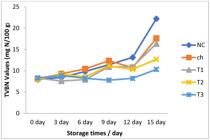
TVB-N values of fish fillet coated with chitosan-PPE film. NC (control), CH (coated with chitosan), T1(chitosan + 0.5% PPE), T2 (chitosan + 1% PPE), and T3 (chitosan + 2% PPE).
4 Microbiological analysis
4.1 Total Viable Count
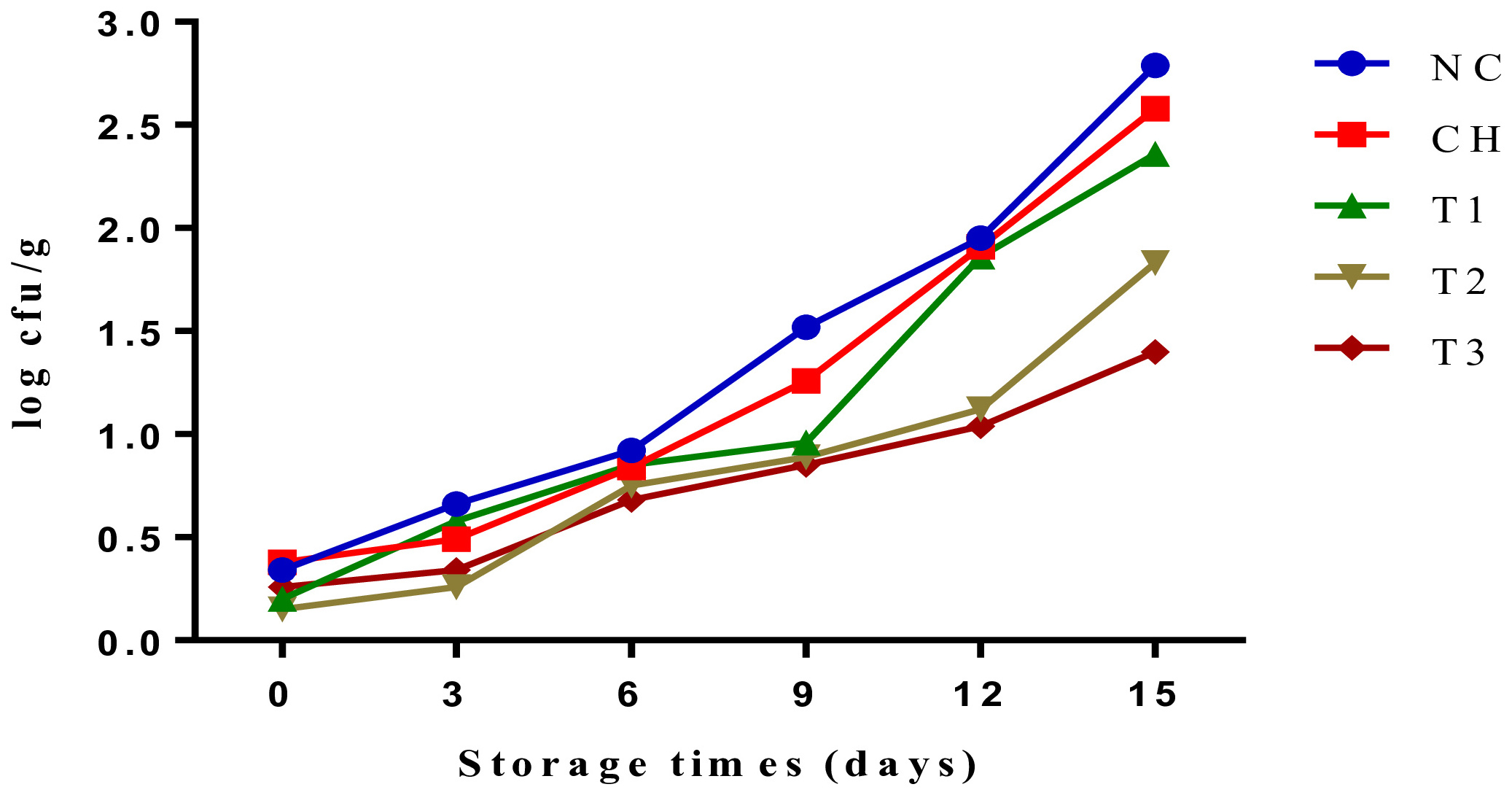
Microbiological analysis quantified as TVC further substantiated the preservation efficacy of the active coatings (Figure 7). Initial TVC values at day zero were statistically uniform across all treatment groups. However, as storage progressed, a clear dose-dependent antimicrobial effect emerged. Samples coated with chitosan films containing 1% (T2) and 2% (T3) PPE demonstrated superior inhibition of microbial proliferation compared to both the uncoated (NC) and the chitosan-only (CH) coating. Critically, only the T2 and T3 treatments maintained microbial loads within internationally recognized safety thresholds throughout the entire 15-day refrigerated storage period. According to the study results, these samples recorded TVCs of 5.49 and 4.34 log10 CFU/g, respectively. Values remained below the maximum permissible limit of 106 CFU/g (6 log10 CFU/g) established by the International Commission on Microbiological Specifications for Foods (ICMSF), as mentioned in the literature by Hao et al. (2021), Li et al. ( 2023), Sanjee & Karim (2016). These results provide robust empirical support for the use of PPE as a natural bio-preservative. The observed suppression of spoilage is directly attributable to the synergistic action between chitosan and the phenolic compounds. These findings are in concordance with prior studies by Das et al. (2021) and Yuan et al. (2015) emphasizing that the antimicrobial efficacy is a direct function of the concentration of constituents in PPE. Therefore, the chitosan-PPE film at the 2% incorporation level (T3) successfully transitions from a passive barrier to an active packaging system that proactively modulates the food’s microenvironment to inhibit spoilage and enhance safety.

Total microbial count of fish fillet coated with chitosan-PPE film. Each reported value is the mean ± SD of three replicates. Means in the same row followed by different letters are significantly different (p<0.05). Where: NC (control without any additions), CH (coating by chitosan), T1 (chitosan with PPE at 0.5%), T2 (chitosan with PPE at 1%), and T3 (chitosan with PPE at 2%).
4.2 Coliform count
Figure 8 shows the efficacy of the chitosan-pomegranate peel extract (Ch-PPE) coatings against coliform. The data reveal a distinct antimicrobial advantage for the composite films. Coatings containing 1% (T2) and 2% PPE (T3) effectively suppressed coliform proliferation, maintaining counts below the critical safety threshold of 102 CFU/g (2 log10 CFU/g) (ICMSF guidelines for fresh fish) throughout the 15-day storage period. This targeted inhibition of coliforms, a key hygiene indicator, highlights the functional role of PPE beyond broad-spectrum microbial reduction. The observed effect is mechanistically linked to the synergistic action between the chitosan matrix and the bioactive phytochemicals in the extract. The dose-dependent response aligns with the work of Yuan et al. 2015, while the successful application in a complex food system supports the findings of Serrano-León et al. 2018 regarding PPE’s preservation potential. Collectively, this evidence positions the CH-PPE composite not merely as a barrier but as an active packaging capable of modulating the microbial ecology on the food surface to enhance safety and prolong shelf life.

Coliform count of fish fillet coated with Ch-PPE film. where: NC (control without any additions), CH (coating by chitosan), T1(chitosan with PPE at 0.5%), T2 (chitosan with PPE at 1%), and T3 (chitosan with PPE at 2%).
4.3 Yeast and mold
Yeast and mold populations are critical spoilage indicators due to their resilience under diverse storage conditions, including refrigeration. Analysis of these eukaryotic contaminants further demonstrated the enhanced preservative function of the chitosan-pomegranate peel extract (CH-PPE) composite films (Figure 9). All PPE-incorporated coatings (T1: 0.5%, T2: 1%, T3: 2%) significantly suppressed yeast and mold proliferation compared to both the uncoated control (NC) and the chitosan-alone (CH) treatments. Importantly, each active formulation maintained fungal counts below the established microbiological safety limit of 103 CFU/g (3 log10 CFU/g) for the entire 15-day chilled storage period. This consistent inhibition across a concentration gradient underscores the potent antifungal activity inherent to the PPE. The observed antifungal efficacy is mechanistically consistent with the known properties of pomegranate peel bioactive compounds. Polyphenolic compounds disrupt fungal cell membrane integrity and interfere with critical enzymatic processes. This aligns with prior studies confirming PPE’s broad-spectrum activity against bacteria and fungi. When integrated into a chitosan matrix, a synergistic preservative effect is achieved. Consequently, the CH-PPE film transcends the role of passive packaging to function as an active preservation technology. It simultaneously addresses oxidative rancidity (via antioxidant activity) and microbial spoilage (via antibacterial and antifungal action), thereby extending shelf life without synthetic additives. This approach aligns with the growing demand for sustainable and bio-based packaging solutions that valorize agricultural by-products like pomegranate peel, contributing to a circular economy while meeting consumer preference for clean-label ingredients.

Yeast and Molds of fish fillet coated with chitosan combined-PPE film. NC (control without any additions), Ch (coating by chitosan), T1 (chitosan with PPE at 0.5%), T2 (chitosan with PPE at 1%), and T3 (chitosan with PPE at 2%).
5 Sensory evaluation
Figure 10 details the impact of chitosan-PPE composite films on the organoleptic quality of coated meagre fillets. Sensory evaluation revealed a distinct treatment-dependent influence on key attributes. Regarding visual parameters, all coated samples, including those with PPE, received scores for colour and appearance that were statistically indistinguishable from the uncoated control (NC). This indicates that the active coatings, despite their inherent pigmentation, did not adversely affect the product’s visual acceptability. More notably, treatments incorporating PPE (T1, T2, T3) demonstrated measurable enhancements in several hedonic qualities. Panelists awarded higher scores for odour and tenderness to samples T1 and T2, while T2 and T3 were rated superior in taste. This pattern suggests that the integration of PPE positively modulates sensory profiles beyond mere preservation. These findings aligned with the study of Alsaggaf et al. (2017) and Yuan et al. (2016), who reported that chitosan coating with pomegranate peel improved the sensory quality, texture, and firmness of seafood products during storage. Mehdizadeh et al. (2025) also demonstrated that chitosan coating combined with PPE and other materials helped maintain the sensory characteristics of refrigerated trout fillets. The sensory data collectively indicate that the chitosan-PPE composite functions as more than a preservative barrier; it acts as a quality-enhancing agent. The combination successfully maintains baseline visual acceptability while concurrently improving the olfactory, textural, and gustatory perception of the fillets. The improved odour scores likely reflect the mitigation of spoilage-related volatile compounds, while enhanced tenderness may be linked to the antioxidant activity of PPE mitigating protein cross-linking. The superior taste scores for higher PPE concentrations suggest that the extract’s compounds may contribute to favorable notes or effectively mask potential off-flavours associated with lipid oxidation. Thus, the application of this active coating aligns with a two-fold objective: extending shelf life through antimicrobial action while actively improving the sensory experience, thereby supporting greater consumer acceptance.

Sensory scores of meagre fish fillet treated with chitosan combined with pomegranate peel extract. Where: NC (control without coating), CH (coated with chitosan), T1 (coated with chitosan and 0.5% PPE), T2 (coated with chitosan and 1% PPE), T3 (coated with chitosan and 2%PPE).
6 Conclusion
This study successfully demonstrates the valorization of pomegranate peel (Punica granatum L.), a significant agro-industrial by-product, through its functional integration into chitosan-based active packaging. The aqueous PPE was characterized by a high concentration of phenolic compounds, including gallic acid and catechin, which were identified as principal constituents. These phytochemicals conferred potent concentration-dependent antioxidant and broad-spectrum antimicrobial activities, establishing a robust biochemical foundation for their application. The innovative formulation of chitosan films incorporating PPE (0.5–2%) created an advanced, edible, active coating. When applied to meagre (Argyrosomus regius) fillets, this composite material exhibited a multifaceted preservative mechanism. It significantly decelerated the primary and secondary stages of lipid autoxidation, as evidenced by reduced peroxide and TBARS values, and effectively inhibited protein degradation, maintaining TVB-N levels well within acceptable freshness limits throughout 15 days of refrigerated storage. Critically, the coating system provided a synergistic antimicrobial barrier. It maintained total viable counts, coliforms, and yeast and mold populations below the safety thresholds established by international food safety standards (ICMSF). Notably, the application of the 2% PPE-chitosan coating (T3) not only extended the microbiological shelf life but also enhanced key sensory attributes including odour, tenderness, and taste without compromising the visual appearance of the product. Therefore, this research validates a sustainable and dual-function packaging strategy. The chitosan-PPE composite acts simultaneously as a physical barrier and a reservoir of bioactive compounds, actively modulating the food microenvironment to delay spoilage. By transforming a waste stream into a high-value natural preservative, this work contributes directly to the principles of the circular bioeconomy and clean-label food production. It presents a commercially viable and eco-friendly alternative to synthetic additives, offering a promising solution for extending the shelf life and preserving the quality of highly perishable protein-based foods like fish fillets. By converting pomegranate peel into an effective preservative agent, the study provides a practical pathway for waste reduction while delivering a natural alternative to synthetic additives. The proven performance and alignment with global sustainability frameworks underscore its strong potential for commercial implementation.
Data Availability Statement
The data analyzed for this investigation are available from the corresponding author upon reasonable request.
-
Cite as:
El-Sohaimy, S. A., El-Naggar, M. N., Shehata, M. G., Zeitoun, A. A., & Zeitoun, M. A. (2026). Innovative chitosan: pomegranate peel extract active coatings for enhanced preservation of fish fillets. Brazilian Journal of Food Technology, 29, e2025153. https://doi.org/10.1590/1981-6723.1532025
-
Funding:
None.
References
- Abbas, A. F. D., & Abdul-Rahman, S. M. (2020). Antimicrobial activity of edible film from chitosan isolate incorporated with pomegranate peel extract and its use in chicken breasts coat. Plant Archives, 20, 1127-1132.
-
Abu-Niaaj, L. F., Al-Daghistani, H. I., Katampe, I., Abu-Irmaileh, B., & Bustanji, Y. K. (2024). Pomegranate peel: Bioactivities as antimicrobial and cytotoxic agents. Food Science & Nutrition, 12(4), 2818-2832. PMid:38628214. https://doi.org/10.1002/fsn3.3963
» https://doi.org/10.1002/fsn3.3963 -
Ahmad, H. N., Yong, Y., Wang, S., Munawar, N., & Zhu, J. (2024). Development of novel carboxymethyl cellulose/gelatin-based edible films with pomegranate peel extract as antibacterial/antioxidant agents for beef preservation. Food Chemistry, 443, 138511. PMid:38290302. https://doi.org/10.1016/j.foodchem.2024.138511
» https://doi.org/10.1016/j.foodchem.2024.138511 -
Akhtar, S., Ismail, T., Fraternale, D., & Sestili, P. (2015). Pomegranate peel and peel extracts: Chemistry and food features. Food Chemistry, 174, 417-425. PMid:25529700. https://doi.org/10.1016/j.foodchem.2014.11.035
» https://doi.org/10.1016/j.foodchem.2014.11.035 -
Alsaggaf, M. S., Moussa, S. H., & Tayel, A. A. (2017). Application of fungal chitosan incorporated with pomegranate peel extract as edible coating for microbiological, chemical and sensorial quality enhancement of Nile tilapia fillets. International Journal of Biological Macromolecules, 99, 499-505. PMid:28274866. https://doi.org/10.1016/j.ijbiomac.2017.03.017
» https://doi.org/10.1016/j.ijbiomac.2017.03.017 -
Barbosa-Pereira, L., Angulo, I., Paseiro-Losada, P., & Cruz, J. M. (2013). Phenolic profile and antioxidant properties of a crude extract obtained from a brewery waste stream. Food Research International, 51(2), 663-669. https://doi.org/10.1016/j.foodres.2013.01.042
» https://doi.org/10.1016/j.foodres.2013.01.042 -
Berizi, E., Hosseinzadeh, S., Shekarforoush, S. S., & Barbieri, G. (2018). Microbial, chemical, textural, and sensory properties of coated rainbow trout by chitosan combined with pomegranate peel extract during frozen storage. International Journal of Biological Macromolecules, 106, 1004-1013. PMid:28844801. https://doi.org/10.1016/j.ijbiomac.2017.08.099
» https://doi.org/10.1016/j.ijbiomac.2017.08.099 -
Brand-Williams, W., Cuvelier, M., & Berset, C. (1995). Use of a free radical method to evaluate antioxidant activity. Lebensmittel-Wissenschaft + Technologie, 28(1), 25-30. https://doi.org/10.1016/S0023-6438(95)80008-5
» https://doi.org/10.1016/S0023-6438(95)80008-5 -
Calinski, T., Steel, R. G. D., & Torrie, J. H. (1981). Principles and procedures of statistics: A biometrical approach. Biometrics, 37(4), 859. https://doi.org/10.2307/2530180
» https://doi.org/10.2307/2530180 -
Campoverde, C., & Estevez, A. (2017). The effect of live food enrichment with docosahexaenoic acid (22:6n-3) rich emulsions on growth, survival, and fatty acid composition of meagre (Argyrosomus regius) larvae. Aquaculture (Amsterdam, Netherlands), 478, 16-24. https://doi.org/10.1016/j.aquaculture.2017.05.012
» https://doi.org/10.1016/j.aquaculture.2017.05.012 -
Chernukha, I., Kupaeva, N., Khvostov, D., Bogdanova, Y., Smirnova, J., & Kotenkova, E. (2023). Assessment of antioxidant stability of meat pâté with Allium cepa husk extract. Antioxidants, 12(5), 1103. PMid:37237969. https://doi.org/10.3390/antiox12051103
» https://doi.org/10.3390/antiox12051103 -
Das, A. K., Nanda, P. K., Chowdhury, N. R., Dandapat, P., Gagaoua, M., Chauhan, P., Pateiro, M., & Lorenzo, J. M. (2021). Application of pomegranate by-products in muscle foods: oxidative indices, colour stability, shelf life and health benefits. Molecules (Basel, Switzerland), 26(2), 467. PMid:33477314. https://doi.org/10.3390/molecules26020467
» https://doi.org/10.3390/molecules26020467 -
Delgado-Adámez, J., Bote, E., Parra-Testal, V., Martín, M. J., & Ramírez, R. (2016). Effect of the olive leaf extracts in vitro and in active packaging of sliced Iberian pork loin. Packaging Technology & Science, 29(12), 649-660. https://doi.org/10.1002/pts.2267
» https://doi.org/10.1002/pts.2267 -
Dewanto, V., Wu, X., Adom, K. K., & Liu, R. H. (2002). Thermal processing enhances the nutritional value of tomatoes by increasing total antioxidant activity. Journal of Agricultural and Food Chemistry, 50(10), 3010-3014. PMid:11982434. https://doi.org/10.1021/jf0115589
» https://doi.org/10.1021/jf0115589 -
Drinić, Z., Mudrić, J., Zdunić, G., Bigović, D., Menković, N., & Šavikin, K. (2020). Effect of pomegranate peel extract on the oxidative stability of pomegranate seed oil. Food Chemistry, 333, 127501. PMid:32682230. https://doi.org/10.1016/j.foodchem.2020.127501
» https://doi.org/10.1016/j.foodchem.2020.127501 -
Ecevit, K., Barros, A. A., Silva, J. M., & Reis, R. L. (2022). Preventing microbial infections with natural phenolic compounds. Future Pharmacology, 2(4), 460-498. https://doi.org/10.3390/futurepharmacol2040030
» https://doi.org/10.3390/futurepharmacol2040030 -
Elfalleh, W., Hannachi, H., Tlili, N., Yahia, Y., Nasri, N., & Ferchichi, A. (2012). Total phenolic contents and antioxidant activities of pomegranate peel, seed, leaf, and flower. Journal of Medicinal Plants Research, 6(32), 4724-4730. https://doi.org/10.5897/JMPR11.995
» https://doi.org/10.5897/JMPR11.995 -
Feng, Y., Lin, J., He, G., Liang, L., Liu, Q., Yan, J., & Yao, Q. (2022). Compositions and biological activities of pomegranate peel polyphenols extracted by different solvents. Molecules (Basel, Switzerland), 27(15), 4796. PMid:35956745. https://doi.org/10.3390/molecules27154796
» https://doi.org/10.3390/molecules27154796 - Hao, R., Peng, L., Peng, S., Cheng, Y., & Chen, J. (2021). Development of active and intelligent chitosan-based films incorporated with black rice bran anthocyanins for food freshness monitoring and preservation. International Journal of Biological Macromolecules, 182, 1246-1257.
-
Hassoun, A., & Çoban, Ö. E. (2017). Essential oils for antimicrobial and antioxidant applications in fish and other seafood products. Trends in Food Science & Technology, 68, 26-36. https://doi.org/10.1016/j.tifs.2017.07.016
» https://doi.org/10.1016/j.tifs.2017.07.016 -
Hernández, M. D., López, M. B., Álvarez, A., Ferrandini, E., García García, B., & Garrido, M. D. (2009). Sensory, physical, chemical, and microbiological changes in aquacultured meagre (Argyrosomus regius) fillets during ice storage. Food Chemistry, 114(1), 237-245. https://doi.org/10.1016/j.foodchem.2008.09.045
» https://doi.org/10.1016/j.foodchem.2008.09.045 -
Hosseini, S. F., Rezaei, M., Zandi, M., & Farahmandghavi, F. (2015). Fabrication of bionanocomposite films based on fish gelatin reinforced with chitosan nanoparticles. Food Hydrocolloids, 44, 172-182. https://doi.org/10.1016/j.foodhyd.2014.09.004
» https://doi.org/10.1016/j.foodhyd.2014.09.004 -
Jinadasa, B. K. K. (2014). Determination of quality of marine fishes based on total volatile base nitrogen test (TVB-N). Nature and Science, 12(5), 106-111. Retrieved in 2025, December 10, from http://www.sciencepub.net/nature/ns1205/014_24190ns120514_106_111.pdf
» http://www.sciencepub.net/nature/ns1205/014_24190ns120514_106_111.pdf -
Kadaikunnan, S., Rejiniemon, T. S., Khaled, J. M., Alharbi, N. S., & Mothana, R. (2015). Functional properties of Bacillus amyloliquefaciens. Annals of Clinical Microbiology and Antimicrobials, 14(1), 9. PMid:25858278. https://doi.org/10.1186/s12941-015-0069-1
» https://doi.org/10.1186/s12941-015-0069-1 - Kaderides, K., Papaoikonomou, L., Giaouris, E., & Goula, A. M. (2018). Microwave-assisted extraction of phenolics from pomegranate peels: Optimization, kinetics, and comparison with ultra-sound assisted extraction. Chemical Engineering and Processing, 133, 1-10.
- Kanatt, S. R., Chander, R., & Sharma, A. (2012). Antioxidant and antimicrobial activity of pomegranate peel extract improves the shelf life of chicken products. International Journal of Food Science & Technology, 47(2), 246-252.
-
Khaledian, S., Basiri, S., & Shekarforoush, S. S. (2021). Shelf-life extension of Pacific white shrimp using tragacanth gum-based coatings containing Persian lime peel (Citrus latifolia) extract. Lebensmittel-Wissenschaft + Technologie, 141, 110937. https://doi.org/10.1016/j.lwt.2021.110937
» https://doi.org/10.1016/j.lwt.2021.110937 -
Kim, S., Min, S. C., Shin, H., Lee, Y., Reum, A., Yeon, S., & Han, J. (2013). Evaluation of the antioxidant activities and nutritional properties of ten edible plant extracts and their application to fresh ground beef. Meat Science, 93(3), 715-722. PMid:23273483. https://doi.org/10.1016/j.meatsci.2012.11.029
» https://doi.org/10.1016/j.meatsci.2012.11.029 -
Kumar, N., Daniloski, D., Pratibha, Neeraj, D’Cunha, N. M., Naumovski, N., & Petkoska, A. T. (2022). Pomegranate peel extract – A natural bioactive addition to novel active edible packaging. Food Research International, 156, 111378. PMid:35650986. https://doi.org/10.1016/j.foodres.2022.111378
» https://doi.org/10.1016/j.foodres.2022.111378 - Li, Y., Liang, J., Zhang, H., & McClements, D. J. (2023). Development of active food packaging films incorporated with plant extracts: Microstructural, physical, antioxidant, and antimicrobial properties. Food Hydrocolloids, 137, 108397.
-
Licciardello, F., Kharchoufi, S., Muratore, G., & Restuccia, C. (2018). Effect of edible coating combined with pomegranate peel extract on the quality maintenance of white shrimps (Parapenaeus longirostris) during refrigerated storage. Food Packaging and Shelf Life, 17, 114-119. https://doi.org/10.1016/j.fpsl.2018.06.009
» https://doi.org/10.1016/j.fpsl.2018.06.009 - Lorenzo, J. M., Domínguez, R., & Carballo, J. (2017). Control of lipid oxidation in muscle food by active packaging technology. In R. Banerjee, A. K. Verma, & M. W. Siddiqui (Eds.), Natural antioxidants: Applications in foods of animal origin (pp. 343-382). Oakville: Apple Academ Press.
-
Mabrouk Mohamed, O., El-Sayed Shaltout, O., Aly Amin, W., Mustafa Ezz, T., & Mohamed Zeitoun, A. (2019). Evaluation of bioactive compounds in pomegranate fruit parts as an attempt for their application as an active edible film. Journal of Biomaterials, 3(1), 7-17. https://doi.org/10.11648/j.jb.20190301.12
» https://doi.org/10.11648/j.jb.20190301.12 -
Man, G., Xu, L., Wang, Y., Liao, X., & Xu, Z. (2022). Profiling phenolic composition in pomegranate peel from nine selected cultivars using UHPLC-QTOF-MS and UPLC-QQQ-MS. Frontiers in Nutrition, 8, 807447. PMid:35141267. https://doi.org/10.3389/fnut.2021.807447
» https://doi.org/10.3389/fnut.2021.807447 -
Maryam Adilah, Z. A., & Nur Hanani, Z. A. (2016). Active packaging of fish gelatin films with Morinda citrifolia oil. Food Bioscience, 16, 66-71. https://doi.org/10.1016/j.fbio.2016.10.002
» https://doi.org/10.1016/j.fbio.2016.10.002 - Mehdizadeh, T., Langroodi, A. M., Khorshidi, M., & Tajik, H. (2025). Effects of a chitosan edible coating containing pomegranate peel extract, citric acid, and nisin on the shelf life and quality characteristics of refrigerated trout (Oncorhynchus mykiss) fillets. Food Chemistry: X, 28, 101914.
-
Mei, J., Ma, X., & Xie, J. (2019). Review on natural preservatives for extending fish shelf life. Foods, 8(10), 490. PMid:31614926. https://doi.org/10.3390/foods8100490
» https://doi.org/10.3390/foods8100490 -
Moghadam, M., Salami, M., Mohammadian, M., Khodadadi, M., & Emam-Djomeh, Z. (2020). Development of antioxidant edible films based on mung bean protein enriched with pomegranate peel. Food Hydrocolloids, 104, 105735. https://doi.org/10.1016/j.foodhyd.2020.105735
» https://doi.org/10.1016/j.foodhyd.2020.105735 -
Parkes, R., McGee, D., McDonnell, A., Gillespie, E., & Touzet, N. (2022). Rapid screening of phenolic compounds in extracts of photosynthetic organisms separated using a C18 monolithic column-based HPLC-UV method. Journal of Chromatography. B, Analytical Technologies in the Biomedical and Life Sciences, 1213, 123521. PMid:36436322. https://doi.org/10.1016/j.jchromb.2022.123521
» https://doi.org/10.1016/j.jchromb.2022.123521 - Pellegrini, M., Andyanto, D., Petozzi, A., Iacumin, L., Bernardi, C. E. M., & Comi, G. (2025). Integrated microbiological, physicochemical, and sensory assessment of shrimp quality during commercial iced storage: implications for -life evaluation and freshness indicators. Microorganisms, 14(6), 1266. PMid:42354890.
-
Qin, Y. Y., Zhang, Z. H., Li, L., Yuan, M. L., Fan, J., & Zhao, T. R. (2015). Physio-mechanical properties of an active chitosan film incorporated with montmorillonite and natural antioxidants extracted from pomegranate rind. Journal of Food Science and Technology, 52(3), 1471-1479. PMid:25745215. https://doi.org/10.1007/s13197-013-1137-1
» https://doi.org/10.1007/s13197-013-1137-1 -
Radha, K. K., Babuskin, S., Azhagu, S. P., Sasikala, M., Sabina, K., Archana, G., Sivarajan, M., & Sukumar, M. (2014). Antimicrobial and antioxidant effects of spice extracts on the shelf life extension of raw chicken meat. International Journal of Food Microbiology, 171, 32-40. PMid:24308943. https://doi.org/10.1016/j.ijfoodmicro.2013.11.011
» https://doi.org/10.1016/j.ijfoodmicro.2013.11.011 -
Rahnemoon, P., Sarabi-Jamab, M., Bostan, A., & Mansouri, E. (2021). Nano-encapsulation of pomegranate (Punica granatum L.) peel extract and evaluation of its antimicrobial properties on coated chicken meat. Food Bioscience, 43, 101331. https://doi.org/10.1016/j.fbio.2021.101331
» https://doi.org/10.1016/j.fbio.2021.101331 -
Rambabu, K., Bharath, G., Banat, F., Show, P. L., & Cocoletzi, H. H. (2019). Mango leaf extract incorporated chitosan antioxidant film for active food packaging. International Journal of Biological Macromolecules, 126, 1234-1243. PMid:30584938. https://doi.org/10.1016/j.ijbiomac.2018.12.196
» https://doi.org/10.1016/j.ijbiomac.2018.12.196 -
Re, R., Pellegrini, N., Proteggente, A. R., Pannala, A. S., Yang, M., & Rice-Evans, C. (1999). Antioxidant activity applying an improved ABTS radical cation decolorization assay. Free Radical Biology & Medicine, 26(9-10), 1231-1237. PMid:10381194. https://doi.org/10.1016/S0891-5849(98)00315-3
» https://doi.org/10.1016/S0891-5849(98)00315-3 -
Sanjee, S. A., & Karim, M. E. (2016). Microbiological quality assessment of frozen fish and fish processing materials from Bangladesh. International Journal of Food Sciences, 2016, 8605689. PMid:27019847. https://doi.org/10.1155/2016/8605689
» https://doi.org/10.1155/2016/8605689 -
Saparbekova, A. A., Kantureyeva, G. O., Kudasova, D. E., Konarbayeva, Z. K., & Latif, A. S. (2023). Potential of phenolic compounds from pomegranate (Punica granatum L.) by-product with significant antioxidant and therapeutic effects: A narrative review. Saudi Journal of Biological Sciences, 30(2), 103553. PMid:36632073. https://doi.org/10.1016/j.sjbs.2022.103553
» https://doi.org/10.1016/j.sjbs.2022.103553 -
Serrano-León, J. S., Bergamaschi, K. B., Yoshida, C. M. P., Saldaña, E., Selani, M. M., Rios-Mera, J. D., Alencar, S. M., & Contreras-Castillo, C. J. (2018). Chitosan active films containing agro-industrial residue extracts for shelf life extension of chicken restructured product. Food Research International, 108, 93-100. PMid:29735106. https://doi.org/10.1016/j.foodres.2018.03.031
» https://doi.org/10.1016/j.foodres.2018.03.031 - Shakhtour, F. G. M., & Babji, A. S. (2013). The effect of powdered cumin sprinkling on biochemical and quality attributes of red Tilapia fillets stored in ice. Journal of Food Technology, 11, 14-21.
-
Sharma, S., Barkauskaite, S., Jaiswal, A. K., & Jaiswal, S. (2021). Essential oils as additives in active food packaging. Food Chemistry, 343, 128403. PMid:33268167. https://doi.org/10.1016/j.foodchem.2020.128403
» https://doi.org/10.1016/j.foodchem.2020.128403 -
Smaoui, S., Hlima, H. B., Mtibaa, A. C., Fourati, M., Sellem, I., Elhadef, K., Ennouri, K., & Mellouli, L. (2019). Pomegranate peel as phenolic compounds source: advanced analytical strategies and practical use in meat products. Meat Science, 158, 107914. PMid:31437671. https://doi.org/10.1016/j.meatsci.2019.107914
» https://doi.org/10.1016/j.meatsci.2019.107914 -
Sun, L., Sun, J., Chen, L., Niu, P., Yang, X., & Guo, Y. (2017). Preparation and characterization of chitosan film incorporated with thinned young apple polyphenols as an active packaging material. Carbohydrate Polymers, 163, 81-91. PMid:28267521. https://doi.org/10.1016/j.carbpol.2017.01.016
» https://doi.org/10.1016/j.carbpol.2017.01.016 -
Tito, A., Colantuono, A., Pirone, L., Pedone, E., Intartaglia, D., Giamundo, G., Conte, I., Vitaglione, P., & Apone, F. (2021). Pomegranate peel extract as an inhibitor of SARS-CoV-2 spike binding to human ACE2 receptor (in vitro): A promising source of novel antiviral drugs. Frontiers in Chemistry, 9, 638187. PMid:33996744. https://doi.org/10.3389/fchem.2021.638187
» https://doi.org/10.3389/fchem.2021.638187 - Uzuner, S. (2020). Pomegranate. In A. K. Jaiswal (Ed.), Nutritional composition and antioxidant properties of fruits and vegetables (cap. 34, pp. 549-563). London: Academic Press.
-
Viuda-Martos, M., Perez-Álvarez, J. A., Sendra, E., & Fernandez-Lopez, J. (2013). In vitro antioxidant properties of pomegranate (Punica granatum) peel powder extract obtained as coproduct in the juice extraction process. Journal of Food Processing and Preservation, 37(5), 772-776. https://doi.org/10.1111/j.1745-4549.2012.00715.x
» https://doi.org/10.1111/j.1745-4549.2012.00715.x -
Wang, Z. (2011). Extract of phenolics from pomegranate peels. The Open Food Science Journal, 5(1), 17-25. https://doi.org/10.2174/1874256401105010017
» https://doi.org/10.2174/1874256401105010017 -
Xie, D., Chen, C., Dong, Y., You, C., Wang, S., Monroig, Ó., Tocher, D. R., & Li, Y. (2021). Regulation of long-chain polyunsaturated fatty acid biosynthesis in teleost fish. Progress in Lipid Research, 82, 101095. PMid:33741387. https://doi.org/10.1016/j.plipres.2021.101095
» https://doi.org/10.1016/j.plipres.2021.101095 -
Yu, J., Ahmedna, M., & Goktepe, I. (2010). Potential of peanut skin phenolic extract as antioxidative and antibacterial agent in cooked and raw ground beef. International Journal of Food Science & Technology, 45(7), 1337-1344. https://doi.org/10.1111/j.1365-2621.2010.02241.x
» https://doi.org/10.1111/j.1365-2621.2010.02241.x -
Yuan, G., Chen, X., & Li, B. (2016). Chitosan films and coatings containing essential oils: the antioxidant and antimicrobial activity, and application in food systems. Food Research International, 89(Pt 1), 117-128. PMid:28460897. https://doi.org/10.1016/j.foodres.2016.10.004
» https://doi.org/10.1016/j.foodres.2016.10.004 -
Yuan, G., Lv, H., Yang, B., Chen, X., & Sun, H. (2015). Physical properties, antioxidant and antimicrobial activity of chitosan films containing carvacrol and pomegranate peel extract. Molecules (Basel, Switzerland), 20(6), 11034-11045. PMid:26083037. https://doi.org/10.3390/molecules200611034
» https://doi.org/10.3390/molecules200611034 -
Živković, I., Šavikin, K., Živković, J., Zdunić, G., Janković, T., Lazić, D., & Radin, D. (2021). Antiviral effects of pomegranate peel extracts on human norovirus in food models and simulated gastrointestinal fluids. Plant Foods for Human Nutrition, 76(2), 203-209. PMid:33825092. https://doi.org/10.1007/s11130-021-00895-7
» https://doi.org/10.1007/s11130-021-00895-7
Edited by
-
Associate Editor:
Fabio Gomes Moura.