 Preliminary characterization of Algerian Aïch from durum wheat semolina: traditional processing, quality attributes, sensory evaluation, and microstructure
Abstract
This study aims to support the preservation and sustainable transmission of Aïch, an important culinary tradition of eastern Algeria, by scientifically documenting its traditional processing techniques. To do so, we conducted in-depth household surveys in the municipality of Guelma to characterize local practices and develop detailed process flow diagrams of Aïch preparation. Scientific analysis, such as proximate composition, microstructural evaluation, and color parameters, indicates that Aïch is a protein‑rich product (16.58%), only slightly lower than the raw semolina (16.90%), a minor variation attributable to limited nitrogen losses during steam pre‑cooking rather than a significant nutritional change, and contains 1.20% ash. Additionally, the data illustrate distinct visual attributes, particularly a high level of lightness (L* = 76.23), modestly lower than that of the raw semolina (L* = 83.96) due to the combined effects of coarser grain granulometry and steam pre-cooking. Importantly, Aïch displays brightness and a yellow hue reminiscent of homemade couscous. Scanning Electron Microscopy (SEM) analysis revealed a consolidated structure resulting from surface starch gelatinization induced by steam pre-cooking, which forms a binding matrix that solidifies the grain. Energy-dispersive X-ray (EDX) analysis confirmed this organic structural network, showing a high predominance of carbon (55.81% by weight) and oxygen (43.72% by weight), along with trace amounts of phosphorus (0.34% by weight) and calcium (0.01% by weight). Sensory evaluation showed that Aïch provides a positive overall experience, marked by its aroma, texture, appearance, and taste. Future work could explore innovative ways to adapt Aïch production to modern contexts without compromising authenticity, focusing on product development, value addition, and enhancements in processing and quality assurance.
Keywords:
Aïch; Survey; Proximate composition; Color; Microstructure; Sensory evaluation
Highlights
• Traditional processing through local household survey
• Proximate composition reveals high protein content in Algerian Aïch from durum wheat
• Microstructure shows a binding matrix from steam-induced gelatinization
• Positive sensory experience validated by aroma, texture, and taste
1 Introduction
North African countries, specifically Algeria, Tunisia, Egypt, and Libya, are known for their rich historical and cultural heritage, which has greatly influenced their agricultural and culinary practices (Boronat et al., 2023). The region has varied climatic conditions that have a significant effect on cereal cultivation and dietary patterns (Mefleh et al., 2022). Wheat, especially durum wheat (Triticum durum Desf.), is esteemed for its adaptability to arid and semi-arid regions of North African and its significant nutritional benefits (De Sousa et al., 2021). Most of the durum wheat, cultivated in Mediterranean regions is milled to produce durum wheat semolina. This, in turn, is utilized in the production of several of cereal food products, with pasta holding the most important in terms of commodity value (Samaan et al., 2006).
Couscous is a traditional cereal product that is well known around the world. It is a staple food of North African (Aboubacar & Hamaker, 2000; Rahmani & Muller, 1996) and Middle Eastern cuisines. According to Codex Alimentarius (1995), "couscous" is defined as a product made from coarse and fine durum wheat semolina (T. durum), which is agglomerated by adding potable water, and then undergoes physical and thermal treatments. The main reasons behind its large popularity are the simplicity of preparing the couscous, its high nutritional value and its cheapness (Bellocq et al., 2018).
Couscous is an emblematic product of North Africa cuisine, particularly in Algeria, and is often seen as a symbol of conviviality and sharing. This traditional Algerian dish symbolizes the authenticity and continuity of African civilization (Benatallah et al., 2008). It exists in several varieties, one of which is Aïch. According to Boukid (2025), Aïch is classified as a traditional pasta known as Berkoukes. In Algeria's Aurès region, it is referred to as Aïch el har bel Gueddid and is typically prepared with large granules of steamed durum wheat semolina, served with a spicy red sauce and salted dried meat (Gueddid). It is often associated with festive occasions such as Mawlid and Yennayer, and may also be prepared as a broth-based dish.
Despite the prominence of Aïch within North Africa cuisine, there exists a notable gap in the scientific literature regarding this traditional product. Comprehensive studies that explore the nuances of Aïch, including its production processes and culinary applications, are lacking. This gap presents a unique opportunity for research aimed at preserving knowledge about this traditional food.
The proposed study aims to investigate the traditional production process of Aïch through a household survey conducted in the municipality of Guelma, in eastern Algeria, thereby documenting the various steps involved in its creation. By collecting detailed information from local households, the research captures valuable insights into unique, community-based preparation methods that are at risk of disappearing due to modernization and lifestyle changes. Additionally, the research aims to assess the quality of Aïch by evaluating its proximate composition, colorimetric properties, microstructural features, and sensory characteristics, which are key parameters for understanding consumer preferences and supporting the sustainable transmission of this culinary tradition. This approach encourages both conservation and adaptation, ensuring that this culinary heritage remains vibrant and relevant amid evolving cultural and dietary landscapes.
2 Material and methods
2.1 Raw material
The raw materials used in this study included durum wheat semolina (T. durum) containing 12.29% moisture, 0.84% ash, 1.03% fat, and 16.90% protein. Its colorimetric properties were defined as L* = 83.96, a* = − 2.11, and b* = 33.30. The salt, intended for culinary use, along with the semolina, was purchased from Guelma market. Water was also used for hydration during the preparation of Aïch.
2.2 Survey area and data collection
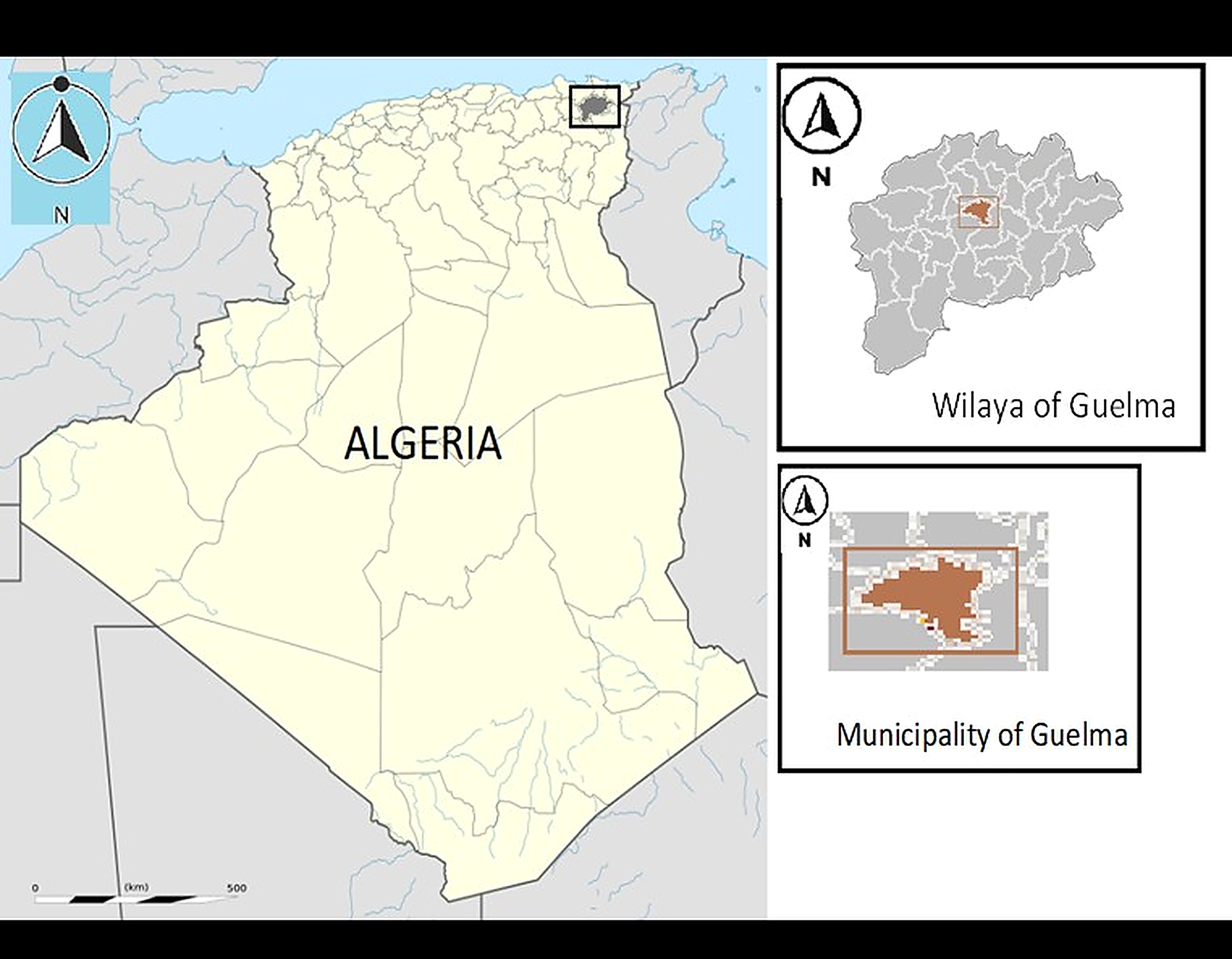
To establish the traditional diagram of Aïch fabrication, a survey was conducted in the municipality of Guelma, located in eastern Algeria as shown in Figure 1. The region was selected for its accessibility and the prevalence of Aïch fabrication among local housewives. Only women were interviewed, because the transmission of local culinary knowledge mainly occurs from mother to daughter, consequently, the production of Aïch is a skill primarily transmitted through the female line. A total of 50 women, selected for their experience in making, preparing, and consuming Aïch, participated in the study. The women's participation in the survey was voluntary and reflected a high level of positive engagement, with many expressing keen interest in the topic.
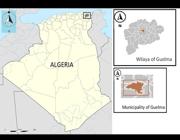
The survey was conducted using quota sampling, based on two main criteria: first, a geographical distribution covering the various neighborhoods of the commune of Guelma; and second, the selection of women who master the traditional preparation method of Aïch. This approach was chosen to ensure the representativeness of the household survey and to obtain the maximum possible level of detail, in accordance with the work of Bourekoua et al. (2017).
The local language was used to ensure effective communication and accurate data collection.
Data were collected through structured interviews utilizing a specially designed questionnaire tailored to capture comprehensive insights into the manufacturing, preparation and consumption practices associated with Aïch. To validate the survey questionnaire, a pre-survey was initially conducted with 10 women to test and validate it before the main data collection.
The questionnaire comprised 31 questions divided into four sections. The first section focused on demographic information, including respondents' age, education level, position, and experience in Aïch production. The second section collected details about the production process, specifically the various names for Aïch, ingredients used, and types of semolina. The third section included a detailed diagram of the production stages, with questions aimed at eliciting precise information about each operation, such as the sieves utilized and the methods and duration of drying. Finally, the fourth section explored preparation methods and motivations for consuming Aïch meals.
2.3 Reproduction of traditional Aïch making
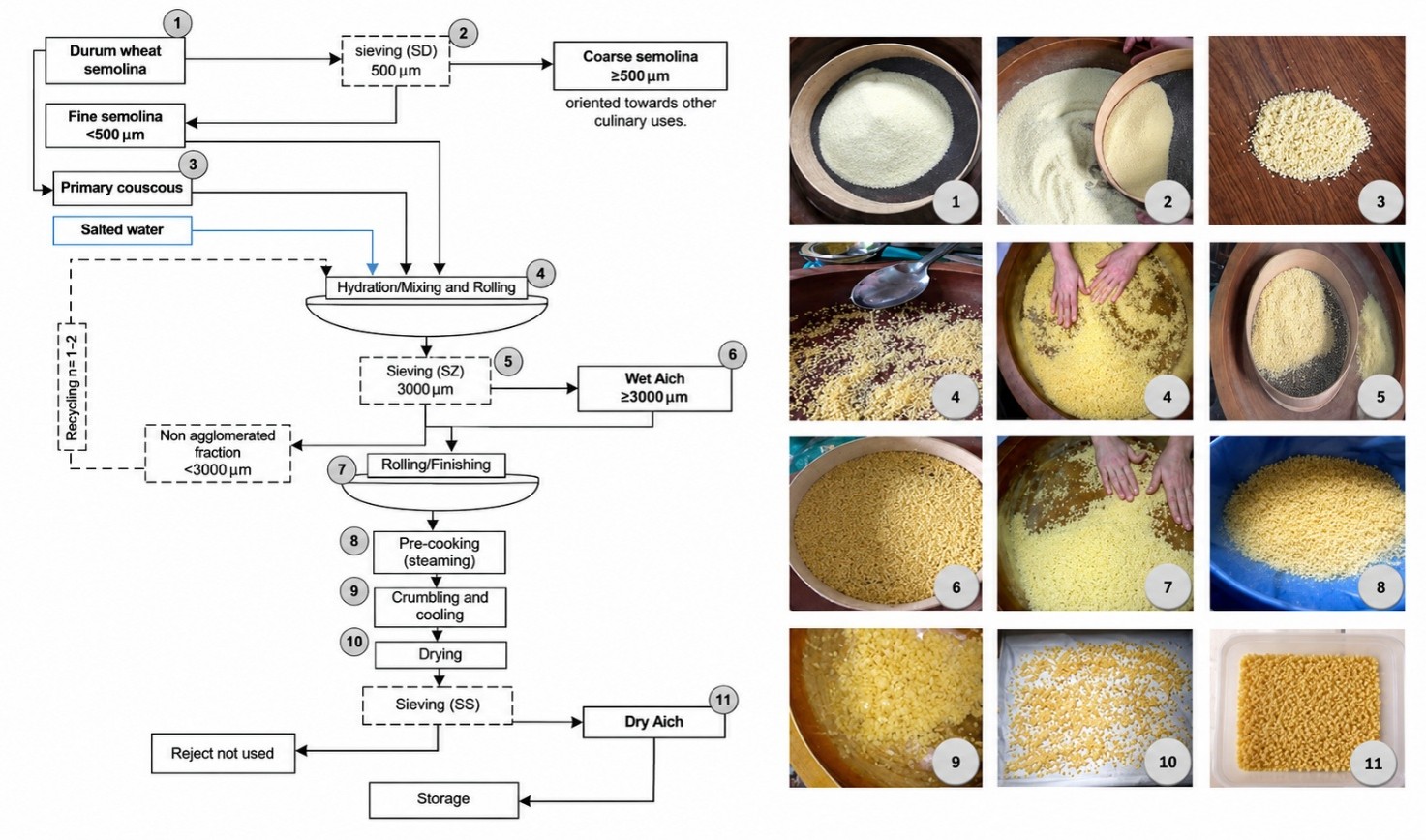
Based on the survey findings, the production of Aïch was reproduced following the traditional handmade process, as described in Figure 2. The utensils used in the manufacturing of Aïch are presented below and illustrated in Figure 2 across the different steps of the process. The “gassâa” is a large wooden container traditionally used for the rolling operations. Three distinct sieves, each characterized by a specific mesh size, were employed for particle grading: locally, they are known as “dekkak” (500 µm), “ezzraâ” (3000 µm), “sekkat” (1600 µm). These mesh sizes correspond to locally used traditional household tools passed down through generations, whose openings were measured in the laboratory to provide precise characterization. Additionally, a couscoussier placed over a pot of boiling water was used during the pre-cooking step.
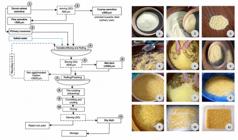
Traditional diagram for manufacturing Aïch identified from a survey of 50 housewives in the municipality of Guelma. SD: Sieve Dekkak, SZ: Sieve Ezzraâ, SS: Sieve Sekkat, n: number of repetitions of recycling.
The production was carried out by following the traditional steps of Aïch preparation, beginning with the classification of semolina and continuing until the dry Aïch was obtained, ready for consumption.
2.4 Dry Aïch quality evaluation
The analysis of Aïch, involved determining its proximate composition, color attributes, microstructural characteristics, and sensory properties. A single, sufficiently large composite batch was prepared to ensure maximum homogeneity across all evaluations, including the sensory analysis. All analytical measurements were performed in triplicate to ensure statistical accuracy. Prior to testing, samples were stored in airtight containers, kept in the dark, and maintained at room temperature to preserve their structural and biochemical integrity.
2.4.1 Proximate composition
The moisture content of Aïch was evaluated by ICC 110/1 method (International Association for Cereal Chemistry, 1996). The ash, fat, and protein contents were determined using the AOAC standard methods for dry matter: 942.05 method for ash and 960.52 method for protein content and 996.01 method for fat content (AOAC, 2005). The results obtained were the average of three measurements.
2.4.2 Color assessment
The colour of dry Aïch was determined by measuring the CIE L* (100 = white; 0 = black), a* (+, red; ˗, green), b* (+, yellow; −, blue) values using a Chroma Meter CR-410 (Konica, Osaka, Japan), operating with standard D65 illuminant, 10° observer angle, diffuse illumination geometry (d:0°). The results obtained were the average of three measurements.
2.4.3 Microstructure and elemental analysis by EDS of dry Aïch grains.
Microstructural and morphological properties of dry Aïch grains were examined using a Thermo Scientific Apreo 2 C scanning electron microscope. It features an Energy-dispersive X-ray spectroscopy (EDS) microanalysis device for elemental composition analysis. Prior to analysis, the grains were thoroughly dried at 40 °C for 4 hours. A temperature of 40 °C is well below the gelatinization temperature of durum wheat starch (which typically starts above 55 °C–60 °C). The prepared samples were then mounted on aluminum stubs and observed at various magnifications (×68, ×1000, and ×2500), under an accelerating voltage of 20 kV.
2.4.4 Sensory analysis
The sensory evaluation of Aïch was conducted with a panel of 32 semi-trained participants, comprising both males and females aged 20 to 47 years. These individuals, identified as habitual consumers of Aïch, voluntarily engaged in the assessment of various sensory attributes. Prior to the test, participants were informed about the study’s objectives and provided their consent in accordance with the ethical standards of the INATAA Institute, Constantine 1 Frères Mentouri University.
A consumer-based hedonic test was implemented using a nine-point hedonic scale (1: dislike, 5: neutral, 9: extremely like) to quantify preferences. Samples were presented in identical, coded containers marked with random three-digit numbers, ensuring anonymity and reducing bias. Panelists received written instructions for evaluating the samples based on taste, aroma, texture, appearance, and overall acceptability, following the methodology outlined by Lim et al. (2011). The preparation of cooked Aïch adhered to established protocols detailed in the survey section on Aïch preparation.
Dry Aïch grains were rehydrated by immersion in water for a few minutes. After draining, the rehydrated grains were placed in a couscoussier set over a pot of boiling water and steamed for approximately 15 minutes. This process was repeated over three consecutive steaming cycles to obtain a tender texture suitable for consumer tasting. Once cooked, the Aïch was served directly to the sensory panel.
2.5 Data analysis
Data analyses of the survey were performed using Epi Info statistical software (version7.2.6.0, USA). All experiments were conducted in triplicate under identical conditions. The results are expressed as mean ± standard deviation, calculated with Excel STAT 2013.
3 Results and discussion
3.1 Results of the survey
3.1.1 Identification of the women interviewed
The characteristics and sociodemographic structure of the studied population are presented in Table 1.
The ages of the surveyed women range from 47 to 96 years, with an average age of 66. As shown in Table 1, they are grouped into three categories: 47–60 years, 60–80 years, and 80–96 years. Notably, 58% of the participants are over 60 (44% fall within the 60–80 age range, and 14% within the 80–96 range), reflecting a predominance of older individuals and highlighting the absence of younger women. Regarding the level of education, it appears that 26% of the surveyed women are illiterate, 64% have a primary or secondary education level, and the remaining 10% have an intermediate level of education. The majority of the surveyed women are non-actives. Indeed, 96% of the studied sample falls into this category, while the remaining 4% corresponds to retired women. These findings are consistent with those of (Chemache et al., 2018), who reported that the most experienced women in couscous preparation are typically older, non-active outside the home, and generally possess only primary or secondary levels of education. The analysis of the collected data reveals that the experience of the surveyed population in Aïch manufacturing ranges from 18 to 83 years (the majority are elderly women over 60 years old). Notably, 78% of the women have 30 or more years of experience, while the remaining 22% have between 18 and 29 years of experience.
3.1.2 Information about manufacturing
The product is referred to as Aïch, the most common and widely recognized name in the region where the survey was conducted. However, other names still used by the surveyed women and in different regions of Algeria include: berkoukes (86%), berkoukech (14%), mardoud (10%), bourdima (6%), and tebrouri (2%).
Among all the women surveyed, 68% make their Aïch at home; while 32% buy it at the market. The latter, although they know how to make it themselves, prefer to purchase it either from other women or buy the industrially manufactured product.
The main ingredients used in the traditional production of Aïch according to the survey results are durum wheat semolina, couscous, salt and water. Two variants of Aïch preparation were identified: 40% of women prepare Aïch grains directly from semolina, while 60% use pre-prepared couscous grains as a binding nucleus. Both methods share the same principle of progressive semolina agglomeration; the second variant simply uses a pre-formed core to facilitate and accelerate the process. The couscous used can be made directly from semolina just before the agglomeration of Aïch, or obtained as the largest class of an old ordinary couscous. The most frequently reported method (60%) was selected for experimental reproduction in this study.
About 58% of the surveyed women prefer the use of superior semolina in the production of Aïch. This type of semolina, according to these women, possesses technological qualities such as purity and richness in gluten necessary for obtaining a well-firm product that preserves its initial shape and integrity after cooking.
3.1.3 Main traditional steps in the manufacturing of Aïch
The traditional diagram steps for Aïch manufacturing, established based on the findings of our survey conducted in the commune of Guelma, are illustrated in the Figure 2. Aïch was prepared using 30 g of primary couscous, 200 g of fine semolina (particle size < 500 µm), and 104 mL of salted water at a concentration of 2.5%.
These quantities were determined through preliminary experiments based on the results of the household survey. It is important to note that this formulation does not correspond to an arbitrarily selected single preparation. The proportions of primary couscous, fine semolina, and salted water were established following a series of preliminary trials specifically designed to identify the formulation most representative of the practices reported by the 50 surveyed women. The resulting formulation should therefore be regarded as an empirical approximation derived jointly from survey data and experimental validation, rather than a fixed standard, given the natural variability inherent among households.
3.1.3.1 Classification of semolina
Before proceeding with the manufacturing, all the women sift the high-quality semolina purchased from the market using a sieve with a mesh opening of 500 µm (called Dakkak sieve) in order to classify it into two fractions of different granulation. A fine semolina that is used in the manufacturing process, and a coarse fraction directed towards other culinary uses (Step 1 and 2).
3.1.3.2 Hydration, mixing and rolling
The primary couscous grains are first sprinkled with small amounts of salted water and gently mixed by hand to ensure uniform hydration, obtained either from previous preparations of traditional couscous or specially made just before the rolling of Aïch using the same semolina (Step 3). Fine semolina (dkak) is then dusted over the moistened grains, and the mixture is rolled under the palms using circular and/or back-and-forth movements. These steps are repeated several times until the grains are fully coated with fine semolina (dkak) and reach the granulometry desired by the women preparing them.
This stage is a crucial and delicate step, where the manufacturers must master the process of moistening the mixture of couscous and fine semolina. Poor management could lead to clogging or the formation of a paste, as well as a lack of homogeneity in the grains of Aïch.
The surveyed women reported that the hydration of the couscous and fine semolina mixture is carried out using salted water, with the concentration of table salt (NaCl) in the drinking water estimated at 2.5% (w/v).
It is worth noting that 4% of the housewives add hot green pepper, which they squeeze into the hydration water, in order to extend the shelf-life of the product. Cichewicz & Thorpe (1996) demonstrated, through a study on several Capsicum species, that their aqueous extracts exert inhibitory activity against pathogenic bacteria such as Bacillus cereus, Clostridium sporogenes, Clostridium tetani, and Streptococcus pyogenes. This activity is attributed to phenolic compounds, notably capsaicin and dihydrocapsaicin, as well as other phenylpropanoids (cinnamic and coumaric acids) that act synergistically within the fruit matrix. (Dorantes et al., 2000) further confirmed the effectiveness of Capsicum annuum L. extracts against major foodborne pathogens. These results thus provide a scientific basis for this empirical traditional practice.
3.1.3.3 Sieving
The product obtained after rolling is sieved using a sieve with a mesh opening of 3000 µm (called ezzraâ sieve) (Step 5). This sieve separates aggregates larger than 3000 µm from the sieved fraction, which consists of semolina particles and smaller agglomerates (less than 3000 µm), intended for recycling.
3.1.3.4 Finishing
A final shaping step is carried out to obtain Aïch grains with their definitive size and shape (Step7). This involves an intense rolling of the still-moist Aïch grains with the palms of the hands, using alternating circular and back-and-forth movements. Approximately 92% of the women surveyed confirm the importance and consistent application of this step in the Aïch preparation process. During this rolling, various ingredients may be used, such as oil, water, fine semolina, or soft wheat flour. By the end of this operation, the Aïch grains become more compact and cohesive, with a smoother surface, well separated and more uniform in size.
The freshly prepared, still-moist Aïch is left to rest for a period ranging from 30 minutes to overnight before being steamed. According to the women surveyed, this resting time is essential to allow proper water absorption during hydration and to prevent the grains from clumping together during the initial steaming process.
3.1.3.5 Pre-cooking (Steaming)
Steaming is a crucial step in preserving the shape, integrity, and individualization of Aïch grains during preparation for consumption (Step 8). Without this step, the grains risk becoming excessively sticky. This pre-cooking stage is carried out using a couscoussier placed over a pot of boiling water, with a cooking time estimated by the women surveyed to be between 10 and 15 minutes. The preparers use a cloth in which they place the Aïch inside the couscoussier.
3.1.3.6 Crumbling and cooling
At the end of the pre-cooking stage, it is essential to immediately and manually loosen the still-hot grains (Step9) to ensure optimal separation of the precooked Aïch grains, and then allow them to cool at room temperature.
3.1.3.7 Drying
Around 88% of the women surveyed reported that drying the precooked Aïch (Step 10) is first carried out in the shade, exposed to the open air. It is then completed under the sun for a short period (approximately half a day). The remaining households prefer drying exclusively in the shade, without sun exposure. This combined drying method starting in the shade and followed by brief sun exposure has the advantage of preserving the quality of the Aïch and preventing organoleptic alterations, particularly the development of undesirable odors and flavors due to direct sunlight. The end of the drying process is detected by touch, the sound of the grains when stirred, or the cracking of grains between the teeth. The duration of drying depends on the season and the method applied. According to our findings, it ranges from 2 to 3 days during warm seasons and may extend to up to a week in winter.
Upon completion of the drying process, the dried Aïch is sifted using a mesh sieve with 1600 µm openings (called Sekkat), to remove non-agglomerated particles, primarily consisting of fine semolina (Step 11). Subsequently, the dried Aïch is stored in cloth bags or plastic containers in a cool location, allowing for preservation for a year or longer. To further extend the shelf-life of dried Aïch, homemakers often incorporate ingredients like black peppercorns or red chili peppers.
3.1.4 Preparation and consumption of Aïch
3.1.4.1 Preparation
According to the survey results, the preparation of Aïch for consumption begins with its rehydration in room temperature water. This involved by soaking and stirring for a few seconds, followed by draining for 10-15 minutes.
Then, the rehydrated Aïch is steamed by placing it in a couscoussier set over a pot of boiling water (in 100% of cases). According to the respondents, the cooking time is estimated between 5 and 10 minutes after steam begins to appear on the surface of the Aïch. Once cooked, it is transferred to a gassâa, fluffed by hand, and sprinkled with a certain amount of water. A resting period of approximately 15 minutes is necessary to allow proper absorption of the water. This steaming process is repeated two times (in about 57% of cases) or three times (in 5% of cases). Approximately 27% of the households use small amounts of vegetable oil (sunflower oil) on the Aïch grains after the second steaming.
Alongside the cooking of Aïch, a rich red sauce is prepared, generously composed of chickpeas, vegetables, animal fat (chahma), and possibly dry or fresh meat. It is into this sauce that the nearly cooked Aïch grains are added to finish cooking, allowing them to absorb all the flavors.
3.1.4.2 Modes of consumption
According to our survey results, two modes of consuming Aïch stand out: either with a red sauce (100%), or prepared only with milk seasoned with salt and black pepper (60%). However, Aïch with red sauce remains the most widespread and is the version most frequently prepared by women.
The vegetables used in preparing the sauce include potato (96%), carrot (30%), zucchini (26%), turnip (16%), eggplant (2%), tomato (94%), hot green pepper (52%), red chili pepper (96%), dried fava beans (88%), and onion and garlic, which are grated unlike the other vegetables that are coarsely chopped. Chickpeas are the most essential legume, used by 100% of the women.
Regarding the types of meat that can be used in preparing Aïch sauce, the most prominent is salted and dried meat known as Gueddid (100%). Gueddid is a traditional, sun-dried salted meat product widely consumed across the Maghreb region (Algeria, Morocco, and Tunisia). This preserved meat is most commonly prepared following the celebration of Eid Al-Adha. While various types of red meat can be used, including camel meat, the preparation traditionally incorporates diverse parts of the carcass (Gagaoua & Boudechicha, 2018). According to survey respondents, fresh red meat (36%), poultry (90%), and rabbit meat (14%) may also be used. Rabbit meat is valued for its tangy flavor, which adds a distinctive taste to the sauce.
Other ingredients may also be used, primarily Chahma (78%), which is animal fat usually of ovine origin as well as stored and used in various traditional dishes. Aïch may also be accompanied by traditional cheeses such as Klila and Bouhezza (12%). Fermess, a very dry and hard apricot with a brown color, is another ingredient used by 44% of homemakers in Aïch sauce.
According to the women surveyed, Aïch is often consumed during the winter, when it is particularly appreciated for its nutritional and comforting qualities, especially on very cold days. It is typically prepared 2 to 3 times a month on average, and can reach up to 4 times a month. In summer, it is rarely prepared around once a month and this always depends on family preferences.
3.2 Proximate composition
The results obtained for the proximal composition and color parameters of dry Aïch grains are given in Table 2. The analysis revealed a moisture content of 11.14%, which is below the maximum limit of 13.5% specified by The Codex Alimentarius (1995) for couscous. This reduced moisture level in the final product is important for ensuring better quality preservation and extending shelf-life.
Given that semolina is the sole ingredient in couscous production, the levels of proteins, starch, lipids, and fibers in the dry couscous grains are directly determined by the intrinsic composition of the raw semolina (Boggini et al., 2012; Hammami et al., 2022; UNESCO, 2020).
The protein content of dry Aïch grains was determined to be 16.58%, exceeding the typical protein range of 10–15% reported for couscous made from durum wheat semolina (Boggini et al., 2012; Hammami et al., 2022; UNESCO, 2020). This finding also exceeds the protein levels reported for semolina milled from wheat cultivars studied by Ounane et al. (2006), which ranged from 10.1% to 15.9% (with a mean of 13.5% dry matter). The minor difference observed between the raw semolina (16.90%) and Aïch (16.58%) falls within the analytical standard deviation range and is consistent with slight nitrogen losses occurring during steam pre-cooking, and does not represent a significant nutritional loss. This result strongly suggests that Aïch grains exhibit a favorable protein profile, potentially offering enhanced nutritional benefits. Furthermore, this value falls within the upper range of the normal protein content (8%–18%) reported for semolina milled from wheat by Feillet (2000). It is important to note that adequate levels of gluten protein are crucial for providing desirable attributes such as mechanical strength and optimal cooking quality in pasta (Yüksel et al., 2018).
The ash content of Aïch grains was found to be 1.20%, exceeding the maximum limit of 1.1% specified by the Codex Alimentarius (1995) for couscous (Boggini et al., 2012). This represents a notable increase, consistent with findings by Guezlane et al. (1986), who reported higher ash levels in couscous compared to the semolina from which it is derived. The elevated ash content is primarily attributed to the contribution of minerals from added ingredients, such as salt and cooking water. Notably, salt concentration tends to rise in the final product due to water evaporation during the drying process, which further influences the ash level (El Yamlahi et al., 2014). Given that this minor excess (+0.10%) is negligible, it does not impact the product's safety, quality, or legal marketability. Instead, this slight variation falls well within the expected analytical and technological tolerances for non-industrialized, traditional foods where salt is essential for dough processing.
The fat content of Aïch grains is estimated at 1.03%, which is significantly lower than the value reported by Doukani (2015), who found that industrial couscous shows a fat content of 3.32%. El Yamlahi et al. (2014) cited several studies demonstrating the impact of lipids on pasta production, highlighting their significant role in influencing both the color attributes and the cooking characteristics of pasta. In a study by Ounane et al. (2006), it was found that the cooking quality of couscous produced from different durum wheat semolinas is partially affected by the composition of free lipids in the semolina.
3.3 Color
The color of dry couscous grains is a critical quality indicator, predominantly influenced by the intrinsic properties of the native durum wheat semolina, particularly its carotenoid and flavonoid pigments and enzymatic activities (Boggini et al., 2012; Hammami et al., 2022; Hammami & Sissons, 2020). As with other pasta products derived from durum wheat, North African consumers typically favor couscous with a bright yellow hue, which is considered a key indicator of quality and appeal (Debbouz, 1992).
According to Hammami et al. (2022), who referenced several sources, couscous grains exhibit a high lightness L* (30-75), marked yellow hue b* (25-45), and low red hue a* (0-4). While this may not apply universally, Boggini et al. (2012) reported that studies conducted by Guezlane et al. (1986) and Debbouz and Donnelly (1996) showed that homemade couscous tends to exhibit slightly higher L* (71.3) and b* (30.7) values compared to industrial couscous (L* = 68.9; b* = 27.1), likely due to reduced carotenoid pigment loss during processing.
The color evaluation of dry Aïch grains, expressed according to the CIE-Lab color space, yielded the following values as shown in Table 2: L* = 76.23, a* = -0.35, and b* = 31.12. The L* value of 76.23 in Aïch is at the higher end or slightly above the typical reported range for couscous lightness (30-75). This correlates well with the brighter lightness noted in homemade couscous by Boggini et al. (2012) (L* = 71.3), suggesting that Aïch grains retain good brightness. The b* value of 31.12 falls well within the documented yellow hue range for couscous (25-45) and is quite close to the higher yellow values associated with homemade couscous (b* = 30.7), indicating a strong retention of carotenoid pigments responsible for the characteristic yellow color. The low a* value (− 0.35) aligns with reported low red hues (0-4) in couscous, confirming minimal red color contribution and dominance of yellow tones.
Compared to the raw durum wheat semolina (L* = 83.96, a* = –2.11, and b* = 33.30), the Aïch grains exhibited slightly lower L* and b* values. This minor decrease suggests a slight loss of pigments or other color changes during the Aïch fabrication process (likely due to processing or granulometry size effects). The color of couscous grains is primarily determined by the initial pigmentation of the durum wheat semolina; however, the granulometry of the final product also plays a decisive role (Debbouz et al., 1994; Boggini et al., 2012). Given that Aïch presents a granulometry superior to 3000 µm, its coarser particle size likely influences light reflection and pigment distribution at the grain surface. In addition, Hammami et al. (2022) reported that the steaming stage contributes to carotenoid degradation, decreases lightness (L*), and enhances the yellow hue (b*). Taken together, these factors particle size and thermal processing account for the color changes observed during Aïch production. However, despite this minor change, the final color of the Aïch grains remains predominantly bright and yellow.
The colorimetric profile of Aïch grains fits well within the ranges reported for couscous in the literature, especially resembling homemade-type couscous with bright, yellow, and low-red hues, suggesting good preservation of native semolina color pigments. This suggests that the Aïch variety maintains a favorable color profile, which is a crucial quality attribute for consumer acceptance.
3.4 Microstructure and elemental analysis by EDS of dry Aïch grains
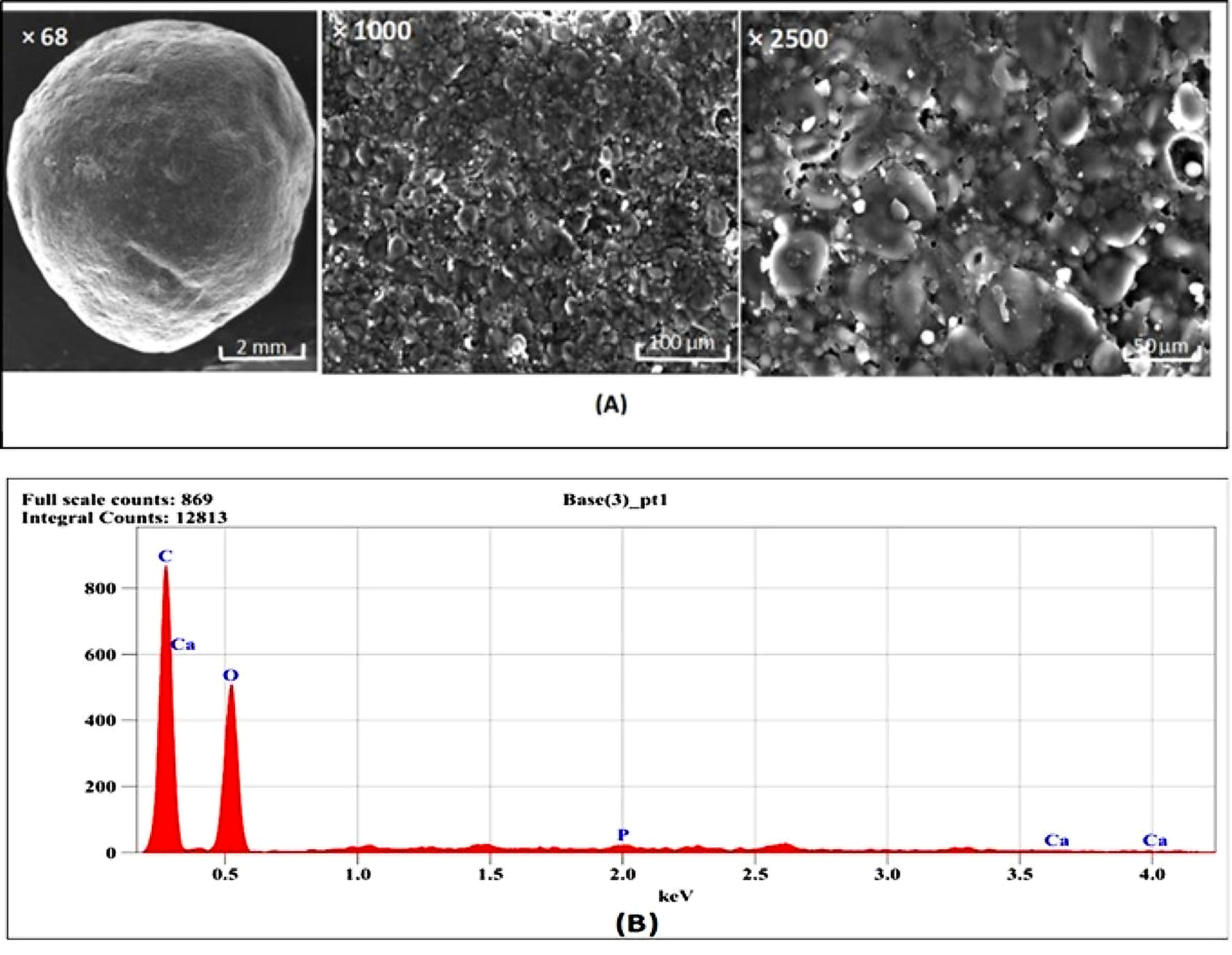
The surface of the Aïch grains from durum wheat semolina was analyzed using scanning electron microscopy (SEM), as shown in Figure 3 (A).
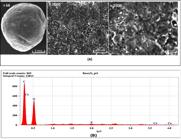
Microstructure and elemental analysis by EDS of dry Aïch grains made from durum wheat semolina. (A): Scanning electron microscopy (SEM) micrographs of a whole granule (×68) and its surface microstructure at higher magnifications (×1000 and ×2500). (B) Energy-dispersive X-ray (EDX) spectrum illustrating the elemental composition, with peaks identifying carbon (C), oxygen (O), phosphorus (P), and calcium (Ca).
The low-magnification image (× 68) shows an overview of an Aïch grain. The grain exhibits a generally spherical or slightly irregular shape, consistent with the description provided by Hammami et al. (2022), who noted that a couscous grain typically appears as an approximately spherical granular object. Its surface appears relatively smooth but with some textural roughness. This morphology is characteristic of the agglomeration-based manufacturing process. Manual rolling, in which the primary couscous grains are coated with fine semolina (dkak) and salted water, is responsible for this agglomerated structure.
A detailed view at × 1000 magnification reveals a rough and granular surface, showing micro-agglomerates of fine semolina bound together; this observation complements and extends the findings of Boudouira et al. (2023), who described couscous grains as roughly spherical with a rough surface formed through random agglomeration of semolina particles. The semolina particles do not float freely but appear embedded within a gelled matrix. This matrix, which has dried, is visible as a smoother and lighter layer surrounding the particles. It is the result of steam pre-cooking. Heat and moisture have induced starch gelatinization on the surface of the grains. Areas can be observed where particles seem to have fused or stuck together. This is the effect of starch gelatinization, which acts as a natural adhesive and then solidifies through air-drying.
At high magnification (× 2500), numerous small, smooth, and shiny spheres can be observed. These are the native starch granules from durum wheat semolina. Some remain intact, while others have been partially deformed by hydration and gelatinization. The starch granules are trapped within a network or matrix that appears to be the protein matrix (gluten) and gelatinized starch films. This structure provides the final cohesion of the grain. At this level of magnification, the fused or bonded appearance is even more evident. The edges of the semolina fragments are not sharp or well-defined but rather rounded and cohesive, which is irrefutable evidence of the effect of steam cooking on the grain’s microscopic structure. These findings are consistent with those of Boudouira et al. (2023), who reported that smooth zones between semolina particles facilitate adhesion, while steam cooking promotes starch gelatinization, contributing to grain cohesion and structural stability. The presence of voids between elementary particles further reflects the influence of humidification, rolling, and drying steps on the final porosity.
The elemental composition of Aïch grains was assessed using Energy Dispersive Spectroscopy (EDS). As shown in the EDS graph in Figure 3(B), the energy peaks correspond to the elements present on the surface of the grain. The main peaks are those of carbon (C) and oxygen (O), which are expected given that Aïch is made from durum wheat semolina, an organic material primarily composed of carbohydrates (starch), proteins (gluten), and fat, all rich in carbon and oxygen. A small peak of phosphorus (P) is also visible, along with traces of calcium (Ca).
These qualitative observations are supported by the quantitative data presented in Table 3, which provides the elemental composition of the sample in both weight percentage and atomic percentage. The majority of the sample mass consists of carbon (55.81%) and oxygen (43.72%). In terms of atomic count, carbon (62.79%) is the most abundant element, followed by oxygen (36.89%). The presence of phosphorus (0.34% by weight) is notable and may be attributed to components naturally found in semolina, such as nucleic acids and phospholipids. Calcium is present in very low amounts (0.01% by weight), indicating minimal mineral content on the grain surface.
3.5 Sensory analysis
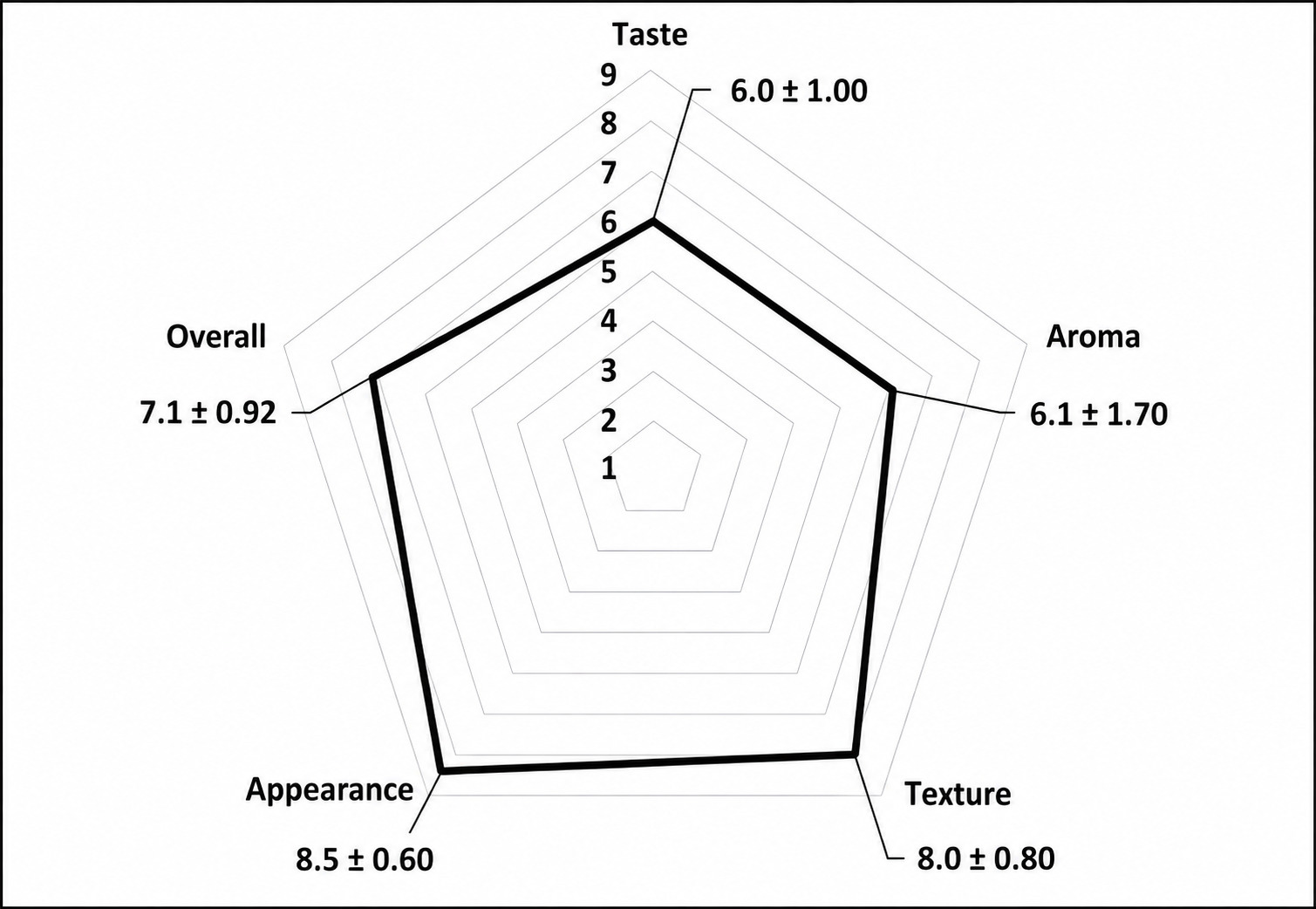
As illustrated in Figure 4, the hedonic sensory profile of traditional Algerian Aïch, produced following the traditional handmade process, was evaluated according to the following five sensory attributes: taste, aroma, appearance, texture, and overall acceptability, using a hedonic test based on a 9-point scale.
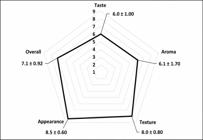
Sensory characteristics of traditional Algerian Aïch produced following the traditional handmade process.
The sensory evaluation of Aïch produced significant results across various aspects. The taste of Aïch received an average score of 6.0, indicating a generally positive reception among participants. The aroma was rated slightly higher at 6.1, emphasizing the dish's unique and appealing fragrance, which is a crucial factor in culinary attractiveness. In contrast, the texture of Aïch achieved a notably higher score of 8.0, reflecting excellent consistency, grain quality, and mouthfeel that contributed to participant satisfaction. The appearance of Aïch received the highest rating at 8.5, displaying its visual appeal through presentation and grain size. Overall, the dish attained an evaluation score of 7.1, suggesting that the panelists liked Aïch moderately to very much. This positive assessment is largely attributed to the product's outstanding visual and textural attributes. While the scores for Taste (6.0) and Aroma (6.1) remain favorable as they exceed the midpoint of the hedonic scale, they were the lowest in the overall profile. This can be attributed to the sample being prepared solely with water, lacking any spices or sauces, leading to an aroma characteristic of plain dried cereal-based products.
4 Conclusions
This study provided a comprehensive documentation of traditional Algerian Aïch, based on findings from a household survey conducted in the municipality of Guelma, Algeria, involving 50 women. The process of making Aïch from durum wheat semolina comprises several steps: semolina classification, hydration, mixing and rolling of primary couscous with fine semolina and salted water, sieving, finishing, pre-cooking, crumbling and cooling, followed by drying and storing the grains until consumption. The survey also shed light on the preparation methods for consumption and the different modes of use, including the variety of ingredients incorporated into this traditional dish.
Proximate composition analyses revealed that the analyzed Aïch sample exhibited a relatively high protein content compared with literature values reported for couscous products, while color analyses characterized it by distinctive visual attributes, notably its brightness and a yellow color similar to homemade couscous. These findings suggest good preservation of the original semolina pigments. Microscopic analysis revealed that the microstructure of Aïch grains is defined by a heterogeneous agglomerate consolidated through surface starch gelatinization during steam pre-cooking, a transformation that contributes to the product’s cohesion and final texture. Complementary EDX analysis confirmed the organic nature of the grains, with a predominance of carbon and oxygen, and the presence of phosphorus and calcium in trace amounts, findings that are consistent with the intrinsic composition of durum wheat semolina. Sensory evaluation further demonstrated the product’s organoleptic appeal, especially its favorable aroma and texture, thereby underscoring Aïch’s cultural significance and potential as a valued traditional food product.
Future research should focus on exploring the incorporation of functional ingredients or fortification with micronutrients, in order to enhance Aïch’s health benefits while preserving its traditional identity. Additionally, studies on shelf-life, microbial safety, and packaging strategies are also recommended to support its commercialization and wider dissemination. A complete proximate composition analysis, including carbohydrate determination, should also be addressed in future studies to provide a full nutritional profile of Aïch. Furthermore, microbiological safety assessment during and after processing, particularly in relation to the extensive manual handling involved, should be considered a priority for future investigations. In addition, future work could include a comparison with industrially manufactured Aïch -type products, in order to better position traditional Aïch within the broader landscape of related cereal-based products.
It should also be noted that, as the first scientific investigation of Aïch, this study relied on a single representative production batch derived from survey-informed preliminary trials, and therefore does not capture potential inter-batch, inter-producer, or regional variability. Future work should extend this research through comparative analyses across multiple batches, producers, and regions, in order to further validate and refine the quality characterization of this traditional product. By combining ethnographic and analytical approaches, this research underscores the cultural significance of Aïch and its essential role in sustaining community identity and culinary heritage.
Data Availability Statement
All data generated or analyzed in this study are included in this published article.
Cite as:
Funding:
References
-
Aboubacar, A., & Hamaker, B. (2000). Low molecular weight soluble starch and its relationship with sorghum couscous stickiness. Journal of Cereal Science, 31(2), 119-126. https://doi.org/10.1006/jcrs.1999.0262
» https://doi.org/10.1006/jcrs.1999.0262 - Association of Official Analytical Chemists – AOAC. (2005). Official Method of Analysis (18th ed.). Gaithersburg: AOAC.
-
Bellocq, B., Ruiz, T., & Cuq, B. (2018). Contribution of cooking and drying to the structure of couscous grains made from durum wheat semolina. Cereal Chemistry, 95(5), 646-659. https://doi.org/10.1002/cche.10078
» https://doi.org/10.1002/cche.10078 - Benatallah, L., Agli, A., & Zidoune, M. N. (2008). Gluten-free couscous preparation: traditional procedure description and technological feasibility for three rice-leguminous supplemented formulae. Journal of Food Agriculture and Environment, 6(2), 105.
-
Boggini, G., Namoune, H., Abecassis, J., & Cuq, B. (2012). Other traditional durum-derived products. In M. Sissons, J. Abecassis, B. Marchylo & M. Carcea (Eds.), Durum wheat: chemistry and technology (2nd ed., pp. 177-199). St. Paul, MN: AACC International Press.. https://doi.org/10.1016/B978-1-891127-65-6.50015-5
» https://doi.org/10.1016/B978-1-891127-65-6.50015-5 -
Boronat, Ò., Mora, M., Romeo-Arroyo, E., & Vázquez-Araújo, L. (2023). Unraveling the Mediterranean cuisine. What ingredients drive the flavor of the gastronomies included in the Mediterranean diet? International Journal of Gastronomy and Food Science, 34, 100802. https://doi.org/10.1016/j.ijgfs.2023.100802
» https://doi.org/10.1016/j.ijgfs.2023.100802 -
Boudouira, N., Yüksel, A. N., Bayram, M., Benatallah, L., & Zidoune, M. N. (2023). Characterisation of gluten‐free couscous produced with different legume flours by traditional method. International Journal of Food Science & Technology, 58(3), 1186-1194. https://doi.org/10.1111/ijfs.16266
» https://doi.org/10.1111/ijfs.16266 -
Boukid, F. (2025). Traditional cereals-based foods in North African cuisine: wheat as the cornerstone. North African Journal of Food and Nutrition Research, 9(19), 41-56. https://doi.org/10.51745/najfnr.9.19.41-56
» https://doi.org/10.51745/najfnr.9.19.41-56 - Bourekoua, H., Djeghim, F., Benatallah, L., Zidoune, M. N., Wójtowicz, A., Łysiak, G., & Różyło, R. (2017). Durum wheat bread: flow diagram and quality characteristics of traditional Algerian bread Khobz Eddar. Acta Agrophysica, 24(3), 405-417. Retrieved in 2026, March 6, from
-
Chemache, L., Kehal, F., Namoune, H., Chaalal, M., & Gagaoua, M. (2018). Couscous: ethnic making and consumption patterns in the Northeast of Algeria. Journal of Ethnic Foods, 5(3), 211-219. https://doi.org/10.1016/j.jef.2018.08.002
» https://doi.org/10.1016/j.jef.2018.08.002 -
Cichewicz, R. H., & Thorpe, P. A. (1996). The antimicrobial properties of chile peppers (Capsicum species) and their uses in Mayan medicine. Journal of Ethnopharmacology, 52(2), 61-70. PMid:8735449. https://doi.org/10.1016/0378-8741(96)01384-0
» https://doi.org/10.1016/0378-8741(96)01384-0 - CodexAlimentarius (1995). Norme Codex pour le Couscous: codex Stan 202, 1995 Rome, Italy: Codex Alimentarius Commission.
-
De Sousa, T., Ribeiro, M., Sabença, C., & Igrejas, G. (2021). The 10,000-year success story of wheat! Foods, 10(9), 2124. PMid:34574233. https://doi.org/10.3390/foods10092124
» https://doi.org/10.3390/foods10092124 - Debbouz, A. (1992). Influence of raw material and processing on couscous quality (Doctoral dissertation). Fargo: North Dakota State University.
- Debbouz, A., & Donnelly, B. (1996). Process effect on couscous quality. Cereal Chemistry, 73(6), 668-671.
- Debbouz, A., Dick, J. W., & Donnelly, B. J. (1994). Influence of raw material on couscous quality. Cereal Foods World, 39, 231-236.
-
Dorantes, L., Colmenero, R., Hernandez, H., Mota, L., Jaramillo, M. E., Fernandez, E., & Solano, C. (2000). Inhibition of growth of some foodborne pathogenic bacteria by Capsicum annuum extracts. International Journal of Food Microbiology, 57(1-2), 125-128. https://doi.org/10.1016/S0168-1605(00)00216-6
» https://doi.org/10.1016/S0168-1605(00)00216-6 - Doukani, K. (2015). Etude comparative entre le couscous industriel et le couscous à base de glands. Revue Nature et Technologie, 7(2), 2-11.
- El Yamlahi, A., Salghi, R., & Ouhssine, M. (2014). Quality study of cooked and dried barley semolina. International Journal of Engineering Inventions, 4(2), 31-44.
- Feillet, P. (2000). Le grain de blé: composition et utilisation. Versailles: Editions Quae.
-
Gagaoua, M., & Boudechicha, H. R. (2018). Ethnic meat products of the North African and Mediterranean countries: an overview. Journal of Ethnic Foods, 5(2), 83-98. https://doi.org/10.1016/j.jef.2018.02.004
» https://doi.org/10.1016/j.jef.2018.02.004 -
Guezlane, L., Selselet Attou, G., & Senator, A. (1986). Etude comparee de couscous de fabrication industrielle et artisanale Retrieved in 2026, March 6, from https://agris.fao.org/search/en/providers/123819/records/64735ee708fd68d546034a66
» https://agris.fao.org/search/en/providers/123819/records/64735ee708fd68d546034a66 -
Hammami, R., & Sissons, M. (2020). Durum wheat products, couscous. In G. Igrejas, T. Ikeda & C. Guzmán, (Eds.), Wheat quality for improving processing and human health (pp. 347-367). Cham: Springer. .. https://doi.org/10.1007/978-3-030-34163-3_15
» https://doi.org/10.1007/978-3-030-34163-3_15 -
Hammami, R., Barbar, R., Laurent, M., & Cuq, B. (2022). Durum wheat couscous grains: an ethnic Mediterranean food at the interface of traditional domestic preparation and industrial manufacturing. Foods, 11(7), 902. PMid:35406989. https://doi.org/10.3390/foods11070902
» https://doi.org/10.3390/foods11070902 - International Association for Cereal Chemistry – ICC. (1996). Standard methods of the international association for cereal science and technology Vienna: ICC.
-
Lim, H. S., Park, S. H., Ghafoor, K., Hwang, S. Y., & Park, J. (2011). Quality and antioxidant properties of bread containing turmeric (Curcuma longa L.) cultivated in South Korea. Food Chemistry, 124(4), 1577-1582. https://doi.org/10.1016/j.foodchem.2010.08.016
» https://doi.org/10.1016/j.foodchem.2010.08.016 -
Mefleh, M., Darwish, A. M. G., Mudgil, P., Maqsood, S., & Boukid, F. (2022). Traditional fermented dairy products in southern Mediterranean countries: from tradition to innovation. Fermentation (Basel, Switzerland), 8(12), 743. https://doi.org/10.3390/fermentation8120743
» https://doi.org/10.3390/fermentation8120743 -
Ounane, G., Cuq, B., Abecassis, J., Yesli, A., & Ounane, S. M. (2006). Effects of physicochemical characteristics and lipid distribution in Algerian durum wheat semolinas on the technological quality of couscous. Cereal Chemistry, 83(4), 377-384. https://doi.org/10.1094/CC-83-0377
» https://doi.org/10.1094/CC-83-0377 -
Rahmani, N., & Muller, H. (1996). The fate of thiamin and riboflavin during the preparation of couscous. Food Chemistry, 55(1), 23-27. https://doi.org/10.1016/0308-8146(95)00065-8
» https://doi.org/10.1016/0308-8146(95)00065-8 -
Samaan, J., El‐Khayat, G. H., Manthey, F. A., Fuller, M. P., & Brennan, C. S. (2006). Durum wheat quality: II. The relationship of kernel physicochemical composition to semolina quality and end product utilisation. International Journal of Food Science & Technology, 41(s2), 47-55. https://doi.org/10.1111/j.1365-2621.2006.01313.x
» https://doi.org/10.1111/j.1365-2621.2006.01313.x -
UNESCO (2020). Le Couscous Entre au Patrimoine Culturel Immatériel de l’UNESCO. Retrieved in 2026, March 6, from https://news.un.org/fr/story/2020/12/1084812
» https://news.un.org/fr/story/2020/12/1084812 - Yüksel, A. N., Oner, M. D., Bayram, M., & Oner, M. (2018). Rediscovery of couscous in the world. Global Journal of Medical Research: L Nutrition & Food Science, 18, 25-30.
*
Corresponding Author: Hayat Bourekoua, Frères Mentouri Constantine 1 University, Institut de la Nutrition, de l’Alimentation et des Technologies Agro-Alimentaires (INATAA), Laboratoire de Nutrition et Technologie Alimentaire (LNTA), Route de Ain El-Bey, 25000, Constantine, Algeria, e-mail: bourekoua.hayat@umc.edu.dzSection Editor: