 Experimental development and nutritional analysis of a gluten-free cookie with Brazil-nut, amaranth, and oat flakes
Abstract
Celiac disease is an autoimmune condition triggered by gluten consumption, which causes poor nutrient absorption and various nutritional complications. Given the growing demand for gluten-free products, the aim of this research was to formulate gluten-free cookies using amaranth flour, Amazonian nut flour and oat flakes, thus evaluating their proximal composition, physicochemical properties, technological characteristics and sensory acceptance. Among the raw materials, Amazon nut flour stood out for its high protein (38.00%) and fat (33.00%) content, while oat flakes had a higher fiber content. In the formulations, F3 had the highest protein content (21.32 ± 0.44%), and F1 showed higher antioxidant capacity (15.87 ± 0.34 µmol ET/g) and phenolic compound content. No significant differences were observed in baking performance (92-95%) or spread factor, and all samples had <4 ppm gluten. Sensory evaluation showed that F2 and F3 were the most acceptable. It is concluded that the cookies developed represent a nutritious and functional alternative for people on a gluten-free diet, while also promoting the use of local ingredients.
Keywords:
Food allergy; Celiac disease; Protein; Anemia
Highlights
The use of Brazil nut, amaranth flour, and oak flakes achieved a high protein content and notable antioxidant capacity in cookies
All gluten-free cookie formulations have proven safe for celiac or gluten sensibility
The use of local Peruvian ingredients promotes sustainability, food security, and regional economic diversification
1 Introduction
Celiac Disease (CD) is a permanent intolerance to gluten in the diet (Carrillo, 2008). Moresco & Righi (2019) stated that the total and permanent elimination of gluten from the diet is the only effective treatment for this group of people, although this diet often consists of food products that are scarce, expensive, and sometimes nutritionally deficient. The ingestion of gluten-containing foods triggers an inadequate response from the immune system, which causes enteropathy and villous atrophy in the small intestine mucosa, leading to malabsorption of nutrients, proteins, fats, carbohydrates, mineral salts, and vitamins (Carrillo, 2008). This can lead to nutritional deficiencies reflected in diseases such as anemia, vitamin deficiency, and hypocalcemia, even if the person with celiac disease follows a balanced diet. The most common symptoms include chronic diarrhea, weight loss, and iron deficiency anemia, in addition to abdominal pain, flatulence, bloating, and irregular bowel movements (Moscoso & Quera, 2015). In 2011, non-celiac gluten sensitivity was documented, which causes allergies with symptoms of anaphylaxis, baker's asthma, and contact dermatitis; and it is also related to autoimmune diseases such as celiac disease, gluten ataxia, and dermatitis herpetiformis (Villanueva, 2017; Martín, 2020). Despite the common misconception that gluten is only present in wheat, other cereals such as rye (Secale cereale L.), spelt (Triticum spelta L.), kamut (Triticum turgidum L.), triticale (Triticum spp. × Secale cereale L.), and barley (Hordeum vulgare L.) also contain gluten, formed by other proteins like the union of gliadin and glutenin, although in a smaller proportion (Molina, 2013).
Furthermore, cookies are one of the globally popular products, with endless possibilities for innovation in their development. Gluten-free cookies are scarce in the Latin American market, as replacing wheat flour requires including certain starches like protein fractions (Macedo, 2021). In Spain, gluten-free cookies represent the second most consumed gluten-free product, accounting for 21% of gluten-free product sales (Martín, 2020). In Latin American countries like Argentina and Colombia, the recognition of the disease is recent, and therefore there is a limited market supply. In Chile, the availability of gluten-free products has grown and tripled since 2015, also driven by non-celiac consumers (Cavero Bravo & Saenz Peralta, 2020). The gluten-free product industry is growing due to the demand from consumers with specific needs, but it still faces challenges in production and compliance with regulations (Miguens, 2015; European Union, 2009; Estévez & Araya, 2016). The technology for developing gluten-free foods still requires adjustments to achieve products with nutritional characteristics like conventional ones (Molina, 2013). Despite the availability of certain commercial products for people with celiac disease, food choices remain restricted because of limited options in the market (Lugo, 2015; Estévez & Araya, 2016). Therefore, the objective of this research was to develop gluten-free cookies based on Brazil nut flour, amaranth, and oat flakes, providing a nutritious and safe alternative for people with celiac disease or with gluten-free nutritional needs.
2 Materials and methods
2.1 Raw material
The raw materials used were amaranth flour (Amaranthus caudatus L.) originating from Apurímac (Oscar Blanco variety), Brazil nut flour (Bertholletia excelsa Bonpl.) originating from Madre de Dios, and whole oat flakes (Avena sativa L.) from Chachapoyas, Amazonas department, Peru.
2.2 Manufacturing process
The cookie manufacturing process, described in detail in Table 1, consisted of creaming margarine, panela (unrefined whole cane sugar), and vanilla in a semi-industrial mixer (KitchenAid 300 W, 5KSM150, USA) for 8 minutes at medium speed until a homogeneous creamy mixture was obtained. Subsequently, the flour mixture (composed of amaranth flour, Brazil nut flour, and oat flakes according to the proportions defined for each formulation) was incorporated along with baking powder, salt, and baking soda and mixed for 6 minutes. The dough was then flattened with a rolling pin to a uniform thickness of 5 mm and cut using a 5 mm round mold. Cookies were baked at 150 °C for 12 minutes in a conventional oven (Indurama, Roma 32, Ecuador). After baking, samples were cooled at room temperature for 1 hour and stored in polypropylene bags at room temperature until further analysis.
2.3 Methods of analysis
The standardized methods of Association of Official Analytical Chemists (2005) were used: moisture (AOAC 925.09), fat (AOAC 920.85), ash (AOAC 923.03), protein (AOAC 955.39) (Nx6.25), crude fiber (NTP 205), and carbohydrates were calculated by difference: %CHO = (100 – (%Moisture + %Fat + %Ash + %Protein)). In addition, physicochemical characterization such as acidity and pH was performed, alongside a determination of the presence of gluten in the final product. Each analysis was carried out in triplicate and expressed as the mean value and standard deviation.
2.3.1 Determination of phenolic compounds and antioxidant capacity
Phenolic extraction from the samples was performed with 30 mL of 70% methanol solvent acidified with 0.1% acetic acid following the method of Pilco-Quesada (2020). Both extracts were stored at -18 °C until analysis. A Folin-Ciocalteu reagent was then used (Singleton & Rossi Junior, 1965; Torres & Ganoza, 2017). Furthermore, 250 µL of Folin-Ciocalteu (1:5 dilution in distilled water, v/v) was taken and sonicated (Branson 2800, CPX-952-216R, USA) for 15 minutes. Then, 1250 µL of 75 g/L sodium carbonate was added to the solution, which was vortexed (Kelsun, KSL-2000, China) and allowed to rest for 30 minutes. Subsequently, absorbance was measured at 755 nm. Finally, the total phenolic concentration (TPC) was determined using a gallic acid standard curve (0.04-0.25 mg/mL) and expressed in mg gallic acid equivalents per 100 g of sample on a wet basis (mg GAE/g sample w.b.). The antioxidant capacity was determined using the ABTS method recommended by Corral Aguayo et al. (2008), with slight modifications. These modifications consisted of variations in the equipment used, adjustments in the type of solvent used for the dilution of the ABTS radical, as well as modifications in the reaction time with respect to the original procedure. The results were expressed in micromoles Trolox equivalents per gram of sample on a wet basis (μmol TE/g sample w.b.).
2.3.2 Physical properties
2.3.2.1 Bulk density
The modified methods described by Kaur (2013) and Piazza & Masi (1997) were applied. For this, a 100 cm3 graduated cylinder was filled with the flour samples and cookie formulations, and the cookie sample was measured and weighed before entering and leaving the oven. Bulk density was determined by dividing the weight of the sample by its volume (g/cm3).
2.3.2.2 Water absorption capacity (WAC) and oil absorption capacity (OAC)
The modified method of Aboubakar (2008) was used. In addition, 1 g of composite flour was added to 10 mL of distilled water (density of 0.98 cc/g) or oil (density of 0.91 cc/g) in previously weighed centrifuge tubes. The mixture was intermittently shaken during a 30-minute rest at room temperature and then centrifuged (Listo, C-2204, Russia) at 3000 rpm for 30 minutes, and the supernatant was weighed in a graduated cylinder. WAC and OAC were expressed as grams of water or oil per gram of sample on a dry basis.
2.3.2.3 Baking yield
The modified method of Bala (2015) was used to calculate the baking yield of the cookies. This was determined as the resulting percentage of the ratio between the weight of the raw dough and the weight of the baked product.
2.3.2.4 Spread factor
The AACC method 10-50.05 (American Association of Cereal Chemists, 2000) was used. The width (W) and thickness (T) of the cookies were measured in centimeters. The spread factor was determined by the W/T ratio after 30 minutes of cooling. To measure the total width, the cookies were placed edge-to-edge and the resulting measurement was recorded.
2.3.3 Quantification of gluten by ELISA 12 with the AgraQuant Gluten G12 kit
Indeed, 0.25 g of sample was weighed and placed in a tube, to which 2.5 mL of an extension solution was added. The mixture was incubated at 50 °C for 40 minutes. Then, 7.5 mL of 80% ethanol were added and agitated on a rotator for 60 minutes for extraction. The obtained extracts were centrifuged at 2000 × g for 10 minutes. The wells were washed five times with the wash buffer. Subsequently, 100 μL of the conjugate were incorporated into each well, incubated for 20 minutes, and the excess was removed. This washing procedure was repeated five times. Then, 100 μL of the substrate were added to each well and incubated for 20 minutes in the dark. Finally, 100 μL of the stop solution were added, and the absorbance at 450 nm was measured (Yu, 2021).
2.4 Experimental design
A Completely Randomized Design (CRD) was used. Three formulations in different proportions of amaranth flour (AF), Brazil nut flour (BNF), and oat flakes (OF) were considered as independent variables: formulation 1 used 33.3% AF, 33.3% BNF, and 33.4% OF; in formulation 2, the proportions were 43.3% AF, 23.3% BNF, and 33.4% OF; while in formulation 3, 43.3% AF, 33.3% BNF, and 23.4% OF were applied. Each of the formulations was repeated three times, totaling nine experiments. The following characteristics were considered as dependent variables: physicochemical analysis (acidity and pH), proximate analysis (moisture, fat, protein, fiber, and ash), phenolic compounds and antioxidant capacity, physical properties (bulk density, WAC, OAC, baking yield, spread factor), gluten quantification by Elisa 12, and sensory evaluation. In addition, significant differences between the means were determined using one-way analysis of variance (ANOVA) followed by Tukey’s post hoc test (p < 0.05) using Minitab 2019 software.
2.5 Sensory evaluation
The sensory evaluation of the gluten-free protein cookie formulations made from Brazil nut, amaranth, and oat flakes was conducted with the participation of 50 untrained consumer panelists. The participants assessed the overall acceptability of three formulations using a 9-point hedonic scale; 9 corresponded to “like it extremely”, 1 to “dislike it extremely”, and the midpoint 5 indicated “neither like it nor dislike it”.
3 Results
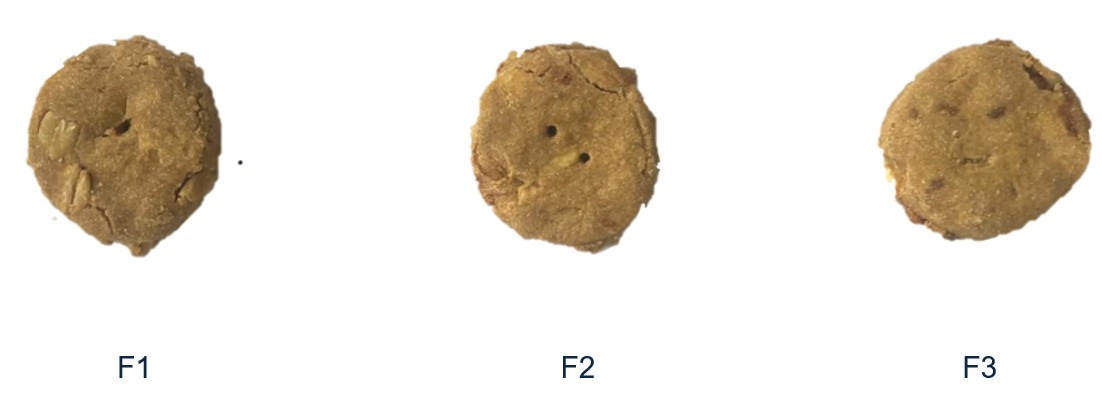
Figure 1 shows the appearance of the baked cookies. Since the proportions of flours and flakes are different, a distinct texture and appearance are shown in each one.

3.1 Proximate and physicochemical analysis in raw material
The physicochemical and proximate results of the flakes and flours are detailed below with the means and standard deviation obtained in triplicate. The values for Brazil nut flour and oat flakes for fat, protein, and fiber are the result of information provided on their packaging in 100 g servings. Table 2 shows statistically significant differences (p < 0.05) in all the parameters evaluated between the raw materials AF, BNF, and OF. The AF sample presented the highest pH and moisture values, while BNF stood out for its higher acidity, ash content, fat, protein, and fiber. For its part, OF showed intermediate or low values in most variables. These results show notable differences in the composition of the samples, which may be related to their origin or previous treatment.
3.2 Proximate and physicochemical analysis in cookie formulations
Table 3 shows statistically significant differences across formulations for each parameter F1, F2, and F3 (p<0.05). F2 presented the highest pH (8.47%), while F3 showed higher acidity, moisture, protein, and fiber. In contrast, F2 stood out for its higher fat content. The ash content was similar between F1 and F3 but lower in F2. These results reflect that the variation in the formulations influences the physicochemical properties of the final product due to the different proportions of the flours used.
3.3 Analysis of total phenolic compounds and antioxidant capacity
The results in Table 4 present the analyses of TPC and antioxidant capacity of the AF, BNF, and OF samples. Statistical significance revealed that BNF samples possessed the highest values in both parameters, with 1.89 ± 0.11 mg GAE/g sample w.b. and 22.4 ± 0.48 μmol TE/g sample w.b., surpassing AF and OF. Similarly, sample F1 showed slightly higher phenolic content (1.21 ± 0.02 mg GAE/g sample w.b.) and higher antioxidant capacity (15.87 ± 0.34 μmol TE/g sample w.b.).
3.4 Evaluation of physical properties
Table 5 shows the differences of BNF compared to AF and OF, standing out for its lower bulk density and water absorption capacity, but with a greater affinity for oil. This is due to it being a nut flour, which tends to be hydrophilic. Regarding the formulations, significant differences were observed in some properties. Formulation F2 showed a lower bulk density, indicating a lighter texture, and a slightly higher water absorption capacity, although only significantly different from F3. No significant differences were identified in the oil absorption capacity among the formulations. In general, certain functional variations are evident, especially in density, while the behavior regarding oil and water absorption remains similar among the samples.
Determination of bulk density, water absorption capacity (WAC) and oil absorption capacity (OAC).
3.5 Sensory analysis
As shown in Table 6, no significant differences (p > 0.05) were observed between formulations F2 and F3, which showed higher acceptability scores compared to F1.
4 Discussion
4.1 Proximate and physicochemical analysis in raw material
In relation to the pH and acidity analysis, amaranth flour was determined to have an average pH of 6.86 and an acidity of 0.03, like those reported by Pascual & Zapata (2010) in amaranth flour of the A. caudatus L. variety, who determined a pH of 6.0 and 0.18 acidity.
Regarding moisture content, amaranth presented 9.59%. This value is higher than that reported by Mamani (2017), who determined 5.76% in amaranth of the A. caudatus variety from Bolivia, N° EG-1. However, Pascual & Zapata (2010) obtained a content of 10.3% for the Oscar Blanco variety, which is similar to the results presented. According to Capurro & Huerta (2016), they reported 12.51% for the Oscar Blanco variety, which is within the 15% limit referred to in Peruvian Technical Standard 205.040 of INDECOPI, and therefore, the amaranth flour with 9.59% is within the limit.
The amaranth flour presented a fat content of 7.3% in the variety studied, close to the study by Calderón (2010), who obtained 6.7% in amaranth flour from India of the VL-44 variety. On the other hand, amaranth flour presented an ash content of 1.77%, close to 2.2% reported by Pascual & Zapata (2010) for the A. caudatus Oscar Blanco variety from the Huaraz-Ancash Department province. Similarly, Calderón (2010) studied the VL-44 variety from India, obtaining 2.91% ash in raw amaranth flour. Also amaranth flour presented a protein content of 12.38%, fiber of 1.33%, and carbohydrates of 67.85%, respectively, values that are close to those reported by Laguna & Sifuentes (2019), who obtained 13.81% protein and 2.62% fiber in the A. caudatus variety, and by Martinez-Lopez (2020) with 15.05 g/100 g protein, 2.91 g/100 g ash, and 62.41 g/100 g carbohydrates.
In a study of the Brazil nut carried out by Saravia (2020), they determined that this seed contains 3.51% ash, a lower value than that presented by the flour in this study (10.14%). Pomeranz & Meloan (1994) mentioned that this may be due to the milling and dehydration of the grain, the amount of bran or pericarp of the cereal, or in this case, the shell that may remain at the time of milling, causing more minerals to be filtered and increasing the amount of ash. With respect to moisture, Gomes (2019) determined ranges between 4.37-3.46 g/100 g moisture in microparticles of Brazil nut cake extract, being lower due to the assumption that it is a sample of a product that has been previously baked before analysis.
The results of the chemical composition of oat flakes are presented in Table 2. A moisture content of 8.50%, ash of 0.40%, and fat of 7.00% were obtained, values that are close to those reported by Quispe (2022), who reported 9.50% moisture, 1.37% ash, and 6.03% fat. The protein content was 12.10%, and fiber was 5.9%, higher values than those reported by Quispe (2022) for the Avena sativa variety, which were 8.54% protein and 1.65% fiber.
4.2 Proximate and physicochemical analysis in cookie formulations
According to the studies by Quimis (2020), a pH value of 6.35 and acidity of 0.16% could be reported on gluten-free cookies based on quinoa flour, banana, and oat flakes. The higher acidity observed in the present study can be attributed to the presence of bananas, which contain malic acid as its predominant organic acid.
According to Quispe (2017), Brazil nut presents a fat content of 66%, which represents twice the fat content of the flour used in the cookie formulation. This higher lipid contribution explains the increase in fat levels observed in the formulations. In addition, the fat content of formulation F3 was similar to Silva-Paz (2023), who obtained a value of 10.4% in amaranth-based cookies. Calderón (2010) reported a fat content of 15.45% in amaranth cookies, values that fall within the range observed for the cookie formulations evaluated in this study.
In comparison with the ash percentage, Laguna & Sifuentes (2019) studied a substitution of wheat flour with tarwi flour and kiwicha flour, obtaining an optimal cookie value of 0.94% ash. Calderón (2010) in amaranth flour cookies obtained a value of 1.79%. It is observed that there are differences in the ash content for the cookie formulations.
Studies carried out by Raj & Beryl (2018) evaluated the partial substitution of wheat flour with kiwicha up to 60%, obtaining a protein content that ranged between 6.43% and 7.22%, and a fiber content between 50.21% and 51.32%. These values are lower than those obtained in the cookie formulations presented in Table 3. For their part, according to Raj & Beryl (2018), in a study on sweet cookies made with 25% kiwicha substitute flours, protein contents between 8.65% and 9.25%, and fat contents between 11.60% and 16.36% were reported. When comparing these results with those obtained in the analyzed formulations, a higher protein content and fat levels within the reported range are observed due to the nutritional composition of the substitute flours.
Similarly, in an analysis of Brazil nut cake extract powder by Gomes (2019), they showed a moisture value of 4.37%, similar to the moisture content of F1 and not far from the results of the other formulations. Furthermore, it is shown that the three evaluated formulations exceed the minimum protein requirement (3.0%) established by the Ecuadorian Technical Standard INEN 2085:2005 and by the Technical Specifications of foods of the National School Feeding Program Qali Warma (minimum 8.5%) (Instituto Nacional de Defensa de la Competencia y de la Protección de la Propiedad Intelectual, 2005). The cookies made with amaranth flour, Brazil nut, and oat flakes reached protein contents ranging between 18.25% and 21.32%. Formulation F3 presented the highest value (21.32%), followed by F1. However, it is shown that the three formulations comply with the maximum moisture limit established by the sanitary regulation for the manufacture, processing, and sale of bakery, cookie, and pastry products RM N° 1020-2010/MINSA (12%).
4.3 Analysis of phenolic compounds and antioxidant capacity by ABTS
In Table 4, the results of the phenolic compounds in the raw material are relatively low. In AF, the result was 0.25 mg GAE/g extracted with 70% methanol and acidified with 0.1% acetic acid. Comparing with Carrasco & Encina (2008) in the methanolic extract of unspecified variety A. caudatus flour, they obtained values close to the present one, varying between 0.19 and 0.30 mg GAE/g, as Pazinatto et al. (2013) could obtain values between 0.4 and 5.6 mg GAE/g, thus finding more polyphenols. While Peiretti (2017) performed the extraction with 80% methanol in amaranth flour without specifying the variety and obtained results of 3.91 mg/g gallic acid equivalents, it could be noted that their value was much higher than the present one. Procopet & Oroian (2022) identified 8 of 12 compounds in amaranth seeds: vanillic, caffeic, chlorogenic, p-coumaric, rosmarinic acids, and flavonoids such as kaempferol, myricetin, and luteolin. Bang et al. (2024) found that rutin was the main compound in all analyzed species and the phytochemical with the highest antioxidant power (Mazorra, 2011). Consistent with previous findings, Carrasco & Encina (2008) analyzed the antioxidant capacity in amaranth flour, and the values ranged between 39.17 and 56.08 mg/gallic acid/100 g and a present value of 2.54 mg TE/g. They indicated that this grain had a high content of TPC, which may be related to a high antioxidant capacity. Their antioxidant capacity values ranged between 556.43 and 660.37 mg TE/g, therefore being higher. However, Pazinatto et al. (2013) obtained 0.88 TE/g, and this may be due to the type of amaranth variety studied.
It is important to consider that the sample extracts were stored at -18 °C for 3 months. Al-Dabbas et al. (2023) and Zhang (2021) indicated that in the study of phenolic compounds and flavonoids after freezing for up to 3 months, they found that phenolics decrease over time in freezing, especially from the first month, and flavonoids tend to degrade more.
According to BNF, the study by Selvin (2020) determined total phenols, obtaining 1.62 mg/g gallic acid equivalent. In contrast, Braga (2010) obtained the highest concentration of 0.43 and 1.23 mg GAE/g. Both studies obtained values approximately equal to the present one in Table 4. Vasquez-Rojas et al. (2021) identified mainly hydroxybenzoic acids in Brazil nut, with eight compounds in their free form or derived from gallic acid, ellagic acid, 4-hydroxybenzoic acid, protocatechuic acid, and vanillic acid. In smaller amounts, hydroxycinnamic acids such as ferulic acid and p-coumaric acid were found. In the study of antioxidant capacity, Selvin (2020) mentioned that the high antioxidant capacity of the Brazil nut prevents lipid oxidation, reducing the risks of developing pathologies such as arteriosclerosis and some types of cancer. Sánchez (2023) developed a study of oat flour for the development of a pound cake. Its extraction was using 51% ethanol with sonication for 15 min at 60 °C, obtaining 0.86 ± 0.02 mg GAE/g. Morales & Sarmiento (2020) obtained 0.73 ± 0.02 mg GAE/g, like the present value of 0.31 ± 0.02. According to the study by Soycan et al. (2019), they analyzed the bound, free, and conjugated fractions, which showed that they contain compounds such as 4-hydroxybenzoic, vanillic, caffeic, syringic, p-coumaric, ferulic, and sinapic acids, in addition to 4-hydroxybenzaldehyde and vanillin. The three avenanthramides (A, B, and C) were only detected in the free and conjugated fractions. With respect to the antioxidant capacity in oat flour, Morales & Sarmiento (2020) obtained a value of 164.46 ± 9.49 μmol TE/g cookie sample. Sánchez (2023) obtained a value of 3.34 μmol TE/g sample using the ABTS method in oat flake flour, the closest value to the present one, and in oat pound cakes with 2.5% moringa, a value of 12.77 ± 0.56 μmol TE/g sample was obtained, similar to formulations F2 and F3.
In relation to cookies, Morales & Sarmiento (2020) also analyzed phenolic compounds in oat and pea cookies, obtaining a value of 1.47 mg GAE/g in cookie samples. Compared with the 3 formulations in Table 4, they are not far from this study. Pazinatto et al. (2013) studied products based on amaranth flour, performing the extraction in an aqueous methanolic medium, averaging a value of 1.5 mg GAE/g, being close to formulation F1 and similar to F2 and F3. In the cookie study by Gomes (2019), they performed the extraction with methanol: water at 3:97 v/v in Brazil nut cake microparticles and stored at -20 °C until analysis. The value after 90 days of storage, similar to the present study, was quite high at 1607 mg/100 g, deducing that the high values are due to them being microparticles. They also performed the extraction with 40:60 v/v ethanol of the Brazil nut cake, determining the antioxidant capacity with a value of 9.01 μmol TE/g, a value that coincided in similarity with the present study.
4.4 Evaluation of physical properties
In relation to the bulk density of AF, it presented a value of 0.50 g/cm3 in Table 5, similar to that reported by other authors such as Jain & Grewal (2015) and Martín Herrero (2022), who obtained values of 0.067 g/cm3, and 0.64 g/cm3, respectively. A study on different granulometries of amaranth flour by Coțovanu & Mironeasa (2021) obtained densities between 0.35 and 0.76 g/cm3, still within the presented value. In contrast, Singh & Punia (2020) reported a value of 6.06 g/mL, which is considerably higher than that recorded for amaranth flour. This value of 6.06 g/mL greatly exceeds the physical density for powdery materials and is even higher than the density of light metals and probably indicates reporting errors.
For its part, OF recorded a bulk density of 0.51 g/cm3, which is consistent with that reported by Shah (2016), who indicated a value of 0.39 g/mL. While Venegas (2009) obtained 0.57 g/cm3 in oat flour, a result comparable to the present study. The slight difference could be explained because oat flakes were used in this research, which tend to occupy a greater volume compared to flour. Similarly, Arriola-Guevara et al. (2020) reported 0.41 g/mL in oat bran flour, a lower value due to its fine granulometry and high fiber content, the main characteristic that reduces its bulk density. Table 5 showed that amaranth flour presented a higher WAC, with a value of 8.54 g/g, although lower than those reported by Urbina Dicao et al. (2023) and González (2018), who reported 137.60 mL/100 g and 220 mL/100 g for the A. caudatus and A. hypochondriacus L. varieties, respectively. Regarding the oil absorption capacity, Brazil nut flour presented the highest value with 7.47 g/100 g, followed by amaranth flour with 7.25 g/g, a value that exceeds that reported by Shah (2016), who indicated 1.97 g/g.
The OF presented a WAC and OAC of 8.19 g/g and 6.79 g/g, respectively, which is lower than Venegas' (2009) report, who obtained 1.14 g/g and 0.78 g/g in whole oat flour, respectively. These differences are due to the fact that OF, being a laminated structure, retains water mainly due to the swelling of the starch and fiber matrix. According to Oyola (2025), 4.35 g/g was reported for OAC in oat flour, that is, a value that is lower than the result obtained. Rodríguez (2023) pointed out that in cookie formulations with 15% oat flakes, the WAC and OAC values ranged between 194.23% to 184.71% and 147.79% to 169.05%, respectively, also being higher than those found in the present investigation. This difference is explained because 35% wheat flour was used in these formulations, which, due to its gluten and lipid content, contributes to water absorption and the formation of a network that traps part of the fats.
Also, the spread factor values of González (2019) and Brites (2019) were similar to the present one (8.93-9.32), with samples of gluten-free canary seed cookies and gluten-free cookies of buckwheat, millet, and chia seeds. The results were 8.82 and 8.29, spread like F1 but not far from formulations F2 and F3 shown in Table 7. For its part, Dogruer (2023), in a formulation with 60% hazelnut flour, similar to the present one due to the presence of a nut flour, obtained a value of 7.47 close to formulation F1. The same author explains the behavior of the high values: this is because those formulations that contain flours with higher lipid content have a low water retention capacity and increase the spread factor.
A similar trend was observed in the baking yield values reported by Espinoza & Tapia (2023), which were similar to those obtained in the present study (94.67%). In their research with gluten-free cookies made from rice, millet, and kiwicha flour, they achieved a yield of 96.74%, comparable to that of formulation F1 and not far from formulations F2 and F3 shown in Table 7. Oyola & Padilla (2020) reported a significantly higher yield (190.56%) in cookies made with partial substitution of tocosh potato flour and kiwicha flour, an elevated value due to the incorporation of additional inputs during mixing. In relation to the results of the gluten analysis, Cueva & Imbaquingo (2024) obtained a negative result in 100 g of sample using the qualitative immunochromatographic method in soy (30%) and oat (70%) cookies. According to the requirements established in CODEX Standard Stan 118-1979, “CODEX Standard for Foods for Special Dietary Uses for Persons Intolerant to Gluten”, gluten-free products must not contain more than 20 mg/kg of this protein. The formulations were determined to be gluten-free, making them suitable for people with celiac disease or special dietary requirements (Food and Agriculture Organization, 2008).
4.5 Sensory analysis
Several studies have documented that gluten-free products tend to show lower sensory performance, particularly in texture and flavor, when compared to commercial products containing gluten. In the study by Ola et al. (2025), consumers preferred the texture and flavor of conventional crackers over gluten-free crackers, indicating that the absence of gluten affected these attributes. In the present study, comments collected during the sensory evaluation indicated that formulations F2 and F3 were perceived as having better crunchiness and flavor compared to F1. Similarly, Simons & Hall (2018) reported that overall acceptability scores for gluten-free crackers ranged from 1.4 to 8.3 depending on the proportion and type of flour used in the formulations.
5 Conclusion
This study demonstrated that the production of gluten-free cookies based on amaranth flour, Brazil nut flour, and oat flakes constitutes a nutritionally enhanced and technologically viable alternative for individuals requiring gluten-free products, highlighting the application of underexplored local raw materials in gluten-free cookie formulations. The protein content of all formulations complied with current regulatory standards for this type of product, with formulation F3 showing the highest protein value 21.32%. Likewise, all three formulations met the gluten-free criteria established by the Codex Alimentarius, ensuring their suitability for individuals with gluten intolerance. Additionally, BNF, although still underutilized in bakery applications, stood out due to its recognized bioactive compounds. Sensory evaluation revealed favourable consumer acceptance of formulations F2 and F3, indicating an appropriate balance between technological performance, nutritional composition, and sensory attributes. The novelty of this study lies in the incorporation of Brazil nut flour, amaranth flour, and oat flakes into gluten-free cookie formulations, enabling the development of a value-added bakery product based on local raw materials. The results demonstrated that the use of AF, BNF, and OF represents a viable alternative to the limited availability of gluten-free products, while also providing an improved protein profile without the addition of wheat flour. In this context, the proposal promotes the development of innovative foods that strengthen food security, foster sustainability, and generate a positive impact on the regional economy and the diversification of the food industry.
Data Availability Statement
The data supporting this study are not publicly available, but can be requested from the corresponding author upon reasonable request.
-
Cite as:
Rivera-Arias, S. M., Carbajal Pariona, V. G., Coavoy-Sánchez, I. A., & Pilco-Quesada, S. (2026). Experimental development and nutritional analysis of a gluten-free cookie with Brazil-nut, amaranth, and oat flakes. Brazilian Journal of Food Technology, 29, e2025125. https://doi.org/10.1590/1981-6723.1252025
-
Funding:
None.
References
- Aboubakar, A. O. (2008). Effect of various treatments on the functional properties of soybean flour. International Journal of Food Science & Technology, 43, 1070-1076.
- Al-Dabbas, A., Al-Khayyat, A., & Ahmad, N. M. (2023). Effect of different storage conditions on the phenolic compounds, flavonoids, and antioxidant activity of fresh and dried pomegranate (Punica granatum L.) arils. Applied Food Research, 3(1), 100238.
- American Association of Cereal Chemists – AACC. (2000). Approved methods of analysis (10th ed.). St. Paul: AACC International.
- Arriola-Guevara, E., Cruz-Castañeda, V., González-Aguilar, V., & Pérez-Soto, J. A. (2020). Functional properties of amaranth (Amaranthus spp.) and oat bran (Avena sativa) flours. CYTA: Journal of Food, 18(1), 473-480.
- Association of Official Analytical Chemists – AOAC. (2005). Official methods of analysis (18th ed.). Washington D.C.: AOAC.
- Bala, S. (2015). Effect of incorporation of amaranth flour on the quality characteristics of wheat flour cookies. Journal of Food Science and Technology, 52(9), 5648-5655.
- Bang, J., Han, M., Cho, Y. S., & Kim, M. (2024). Anti-inflammatory effects of amaranth seeds in lipopolysaccharide-stimulated RAW 264.7 macrophages by inhibiting NF-κB and MAPK signaling pathways. Food Science and Biotechnology, 33(1), 16-25.
-
Braga, L. M. (2010). Antioxidant capacity and phenolic compounds of Brazil nut (Bertholletia excelsa HBK) oil. Química Nova, 33(5), 1161-1165. https://doi.org/10.1590/S0100-40422010000500028
» https://doi.org/10.1590/S0100-40422010000500028 - Brites, C. (2019). Gluten-free cookies of buckwheat, millet, and chia seeds: Nutritional, rheological, and sensory analysis. Food Science and Technology International, 25(7), 546-555.
- Calderón, D. S. S. (2010). Effects of defatted amaranth flour on physical and sensory characteristics of shortbread cookies. Revista Mexicana de Ingeniería Química, 9(1), 89-98.
- Capurro, B. D., & Huerta, P. M. F. (2016). Evaluación de la calidad sanitaria de harinas de amaranto (Amaranthus caudatus) y trigo (Triticum aestivum) en el distrito de San Martín de Porres Lima: Universidad Nacional Mayor de San Marcos.
- Carrasco, A., & Encina, G. P. (2008). Compuestos fenólicos, capacidad antioxidante e inhibición de la oxidación lipídica en harina de kiwicha (Amaranthus caudatus). Revista Peruana de Biología, 15(2), 241-244.
- Carrillo, J. (2008). Enfermedad celíaca: Patogenia, diagnóstico y tratamiento. Revista Médica Clínica Las Condes, 19(1), 1-11.
- Cavero Bravo, R. B., & Saenz Peralta, C. A. (2020). Análisis de la demanda de productos sin gluten en Chile (Tesis de pregrado). Universidad de Chile, Santiago.
-
Corral-Aguayo, R. D., Yahia, E. M., Carrillo-Lopez, A., & González-Aguilar, G. (2008). Correlation between some nutritional components and the total antioxidant capacity measured with six different assays in eight horticultural crops. Journal of Agricultural and Food Chemistry, 56(22), 10498-10504. PMid:18956873. https://doi.org/10.1021/jf801983r
» https://doi.org/10.1021/jf801983r -
Coțovanu, I., & Mironeasa, S. (2021). Effect of different grinding techniques on physico-chemical properties of amaranth flour. Foods, 10(9), 2006. PMid:34574116. https://doi.org/10.3390/foods10092006
» https://doi.org/10.3390/foods10092006 - Cueva, M. S., & Imbaquingo, E. G. (2024). Determinación de gluten en galletas de soya (Glycine max) y avena (Avena sativa) mediante la técnica de inmunocromatografía (Tesis de pregrado). Universidad Técnica del Norte, Ibarra.
- Dogruer, M. (2023). Utilization of hazelnut flour in gluten-free cookie production: Effect on rheological, physical, and sensory properties. Journal of Food Processing and Preservation, 47(4), e17572.
- Espinoza, G. K. P., & Tapia, T. R. (2023). Elaboración de galletas sin gluten a base de harina de arroz (Oryza sativa), mijo (Panicum miliaceum) y kiwicha (Amaranthus caudatus) para niños con enfermedad celíaca (Tesis de pregrado). Universidad Técnica de Babahoyo, Babahoyo.
-
Estévez, L. A., & Araya, M. (2016). Gluten-free products: Challenges and innovations. Revista Médica Clínica Las Condes, 27(1), 84-90. https://doi.org/10.1016/j.rmclc.2015.11.006
» https://doi.org/10.1016/j.rmclc.2015.11.006 - European Union. (2009, enero 21). Reglamento (CE) No 41/2009 de la Comisión de 20 de enero de 2009 sobre la composición y etiquetado de alimentos para personas intolerantes al gluten. Diario Oficial de la Unión Europea, Valencia.
- Food and Agriculture Organization – FAO. (2008). CODEX standard for foods for special dietary uses for persons intolerant to gluten. Rome: FAO.
- Gomes, G. F. (2019). Microparticles of Brazil nut cake extract: Production, characterization and application in gluten-free cookies. Food Science and Technology, 39(1), 168-175.
- González, R. L. (2018). Propiedades funcionales de la harina de amaranto (Amaranthus hypochondriacus L.) en la elaboración de un alimento extruido. Revista Mexicana de Ciencias Agrícolas, 9(1), 211-224.
- González, L. M. (2019). Desarrollo de una formulación de galletas sin gluten a base de harina de alpiste (Phalaris canariensis) (Tesis de maestría). Universidad Politécnica Salesiana, Ecuador.
- Instituto Nacional de Defensa de la Competencia y de la Protección de la Propiedad Intelectua – INDECOPI. (2005). Norma Técnica Peruana 205.040: Alimentos: Determinación de fibra cruda. Lima: INDECOPI.
- Jain, S., & Grewal, R. B. (2015). Physico-chemical and functional properties of different grain amaranth (Amaranthus spp.) varieties grown in India. International Journal of Food Sciences and Nutrition, 66(5), 564-569.
- Kaur, M. (2013). Effect of blending of different flours on the physico-chemical, nutritional and sensory properties of gluten-free biscuits. International Journal of Food Science & Technology, 48(12), 2616-2623.
- Laguna, L. C., & Sifuentes, R. P. (2019). Sustitución de harina de trigo por harina de tarwi (Lupinus mutabilis) y harina de kiwicha (Amaranthus caudatus) en la elaboración de galletas. Revista Científica de la Universidad Peruana Unión, 9(1), 22-32.
- Lugo, M. S. (2015). La enfermedad celíaca: Un desafío nutricional. Archivos Latinoamericanos de Nutrición, 65(3), 195-204.
- Macedo, A. (2021). Innovación en la elaboración de galletas sin gluten. Revista Chilena de Nutrición, 48(2), 241-248.
- Mamani, R. R. (2017). Caracterización fisicoquímica y funcional de harina de amaranto (Amaranthus caudatus L.) variedad EG-1. Revista Boliviana de Química, 34(3), 73-81.
- Martín Herrero, J. (2022). Optimización de la formulación de galletas sin gluten a base de harina de amaranto y harina de plátano (Tesis de máster). Universidad Politécnica de Valencia, Valencia.
-
Martín, F. (2020). La dieta sin gluten en la enfermedad celíaca y sensibilidad al gluten no celíaca. Nutrición Hospitalaria, 37(Suppl 2), 40-47. https://doi.org/10.20960/nh.03157
» https://doi.org/10.20960/nh.03157 - Martinez-Lopez, A. (2020). Nutritional value of amaranth (Amaranthus hypochondriacus) flour and its potential use in the development of gluten-free products. CYTA: Journal of Food, 18(1), 606-614.
- Mazorra, E. R. (2011). Rutina: Un flavonoide con potencial antioxidante y antienvejecimiento. Revista Cubana de Farmacia, 45(4), 589-598.
- Miguens, M. (2015). El mercado de alimentos libres de gluten en Argentina (Tesis de especialización). Universidad Nacional de Rosario, Rosario, Santa Fe.
-
Molina, A. G. (2013). El gluten: Componente clave en la enfermedad celíaca. Revista Chilena de Nutrición, 40(2), 162-169. https://doi.org/10.4067/S0717-75182013000200008
» https://doi.org/10.4067/S0717-75182013000200008 - Morales, J. K. R., & Sarmiento, D. M. M. (2020). Determinación de compuestos fenólicos y capacidad antioxidante en galletas de avena (Avena sativa) y arveja (Pisum sativum) (Tesis de pregrado). Universidad Técnica de Machala, Machala.
-
Moresco, K. M., & Righi, R. A. (2019). Celiac disease: Current challenges and future perspectives. Jornal Brasileiro de Patologia e Medicina Laboratorial, 55(1), 1-10. https://doi.org/10.5935/1676-2444.20190008
» https://doi.org/10.5935/1676-2444.20190008 - Moscoso, A., & Quera, R. (2015). Enfermedad celíaca: Revisión de la literatura. Revista Médica de Chile, 143(3), 350-360.
-
Ola, E., Hogan, V. J., & Seo, H. S. (2025). Descriptive sensory analysis of gluten-containing and gluten-free chocolate chip cookies available in the marketplace. Foods, 14(13), 2233. https://doi.org/10.3390/foods14132233
» https://doi.org/10.3390/foods14132233 - Oyola, D. M. (2025). Efecto de la sustitución parcial de harina de avena por harina de trigo en las propiedades funcionales de un panqué (Tesis de pregrado). Universidad de Guayaquil, Guayaquil.
- Oyola, D. M., & Padilla, K. A. (2020). Elaboración de galletas a base de harina de tocosh de papa (Solanum tuberosum) y harina de kiwicha (Amaranthus caudatus) (Tesis de pregrado). Universidad Técnica de Machala, Machala.
- Pascual, C. V., & Zapata, V. E. (2010). Estudio de las propiedades fisicoquímicas y nutricionales de la harina de amaranto (Amaranthus caudatus L.) variedad Oscar Blanco (Tesis de pregrado). Universidad Nacional Santiago Antúnez de Mayolo, Huaraz.
-
Pazinatto, A. C., Malta, L. G., Pastore, G. M., & Maria Netto, F. (2013). Antioxidant capacity of amaranth products: Effects of thermal and enzymatic treatments. Food Science and Technology, 33(3), 485-892. https://doi.org/10.1590/S0101-20612013005000076
» https://doi.org/10.1590/S0101-20612013005000076 - Peiretti, P. G. (2017). Total phenolic content and antioxidant activity of amaranth flour and its products. Journal of Food and Nutrition Research, 5(3), 220-224.
-
Piazza, L., & Masi, P. (1997). The bulk density of wheat flour. Cereal Chemistry, 74(2), 159-162. https://doi.org/10.1094/CCHEM.1997.74.2.159
» https://doi.org/10.1094/CCHEM.1997.74.2.159 - Pilco-Quesada, S. (2020). Effect of extrusion on phenolic compounds and antioxidant capacity of purple corn flour. Food Science and Technology, 40(4), 856-862.
- Pomeranz, Y., & Meloan, C. E. (1994). Food analysis: Theory and practice (3rd ed.). London: Chapman & Hall.
- Procopet, M., & Oroian, M. (2022). Amaranth as a functional ingredient in food products. Foods, 11(20), 3224. PMid:37430973.
- Quimis, J. V. (2020). Elaboración de galletas libres de gluten a base de harina de quinua, plátano y hojuelas de avena (Tesis de pregrado). Universidad Técnica de Machala, Machala.
- Quispe, G. E. (2017). Determinación de las propiedades fisicoquímicas y funcionales de la harina de nuez amazónica (Bertholletia excelsa) (Tesis de pregrado). Universidad Nacional Agraria La Molina, La Molina.
- Quispe, J. R. G. (2022). Evaluación de la calidad de hojuelas de avena (Avena sativa) de diferentes marcas comerciales (Tesis de pregrado). Universidad Nacional del Altiplano, Puno.
-
Raj, S. S., & Beryl, J. D. (2018). Development and quality evaluation of sweet cookies using amaranth (Amaranthus caudatus) flour. International Journal of Current Microbiology and Applied Sciences, 7(9), 166-175. https://doi.org/10.20546/ijcmas.2018.709.020
» https://doi.org/10.20546/ijcmas.2018.709.020 - Rodríguez, A. C. (2023). Influencia de la incorporación de harina de avena en las propiedades fisicoquímicas y sensoriales de galletas de harina de trigo. Revista de Ciencia y Tecnología de Alimentos, 3(1), 1-15.
- Sánchez, M. M. P. (2023). Determinación de la capacidad antioxidante y compuestos fenólicos en harina de avena (Avena sativa) con incorporación de moringa (Moringa oleifera) para la elaboración de un panqué (Tesis de pregrado). Universidad Técnica de Machala, Machala.
- Saravia, J. L. (2020). Composición química y propiedades funcionales de la harina de nuez amazónica (Bertholletia excelsa) desgrasada. Revista de la Sociedad Química del Perú, 86(4), 442-451.
- Selvin, G. P. M. (2020). Brazil nut (Bertholletia excelsa): A review of its nutritional composition, health benefits and toxicity. Journal of Nutritional Science and Vitaminology, 66(2), 125-134.
- Shah, B. R. (2016). Effect of different levels of oat bran on the physico-chemical and sensory characteristics of soft dough biscuits. Journal of Food Science and Technology, 53(2), 1146-1152.
- Silva-Paz, E. D. (2023). Evaluación de las propiedades fisicoquímicas y sensoriales de galletas a base de harina de amaranto (Amaranthus caudatus L.). Revista Ciencia y Tecnología de Alimentos, 3(1), 15-28.
-
Simons, C. W., & Hall, C. (2018). Consumer acceptability of gluten-free cookies containing raw cooked and germinated pinto bean flours. Food Science & Nutrition, 6(1), 77-84. https://doi.org/10.1002/fsn3.531
» https://doi.org/10.1002/fsn3.531 - Singh, S., & Punia, S. (2020). Evaluation of physical, nutritional and anti-nutritional properties of amaranth (Amaranthus spp.) flour. Journal of Food Science and Technology, 57(3), 903-912.
-
Singleton, V. L., & Rossi Junior, J. A. (1965). Colorimetry of total phenolics with phosphomolybdic-phosphotungstic acid reagents. American Journal of Enology and Viticulture, 16(3), 144-158. https://doi.org/10.5344/ajev.1965.16.3.144
» https://doi.org/10.5344/ajev.1965.16.3.144 -
Soycan, G., Schär, M. Y., Kristek, A., Boberska, J., Alsharif, S. N. S., Corona, G., Shewry, P. R., & Spencer, J. P. E. (2019). Avenanthramides in commercial oat products: Are oats an important polyphenol source for consumers? Food Chemistry: X, 3, 100047. PMid:31432024. https://doi.org/10.1016/j.fochx.2019.100047
» https://doi.org/10.1016/j.fochx.2019.100047 - Torres, V. M., & Ganoza, G. (2017). Determinación de compuestos fenólicos totales y capacidad antioxidante en hojas de Bixa orellana L. Revista de Investigación de Química y Farmacia, 3(1), 22-27.
-
Urbina Dicao, K. S., Santacruz Terán, S. G., Guapi Álava, G. M., & Revilla Escobar, K. (2023). Caracterización fisicoquímica de los cereales y funcionalidad de las harinas de amaranto (Amaranthus caudatus) y quinoa (Chenopodium quinoa). Revista Colombiana de Investigaciones Agroindustriales, 10(2), 33-41. https://doi.org/10.23850/24220582.5708
» https://doi.org/10.23850/24220582.5708 -
Vasquez-Rojas, W. V., Martín, M., Miralles, B., Recio, I., Fornari, T., & Pilar Cano, M. (2021). Composition of Brazil nut (Bertholletia excels HBK), its beverage and by-products: A healthy food and potential source of ingredients. Foods, 10(12), 1-24. PMid:34945560. https://doi.org/10.3390/foods10123007
» https://doi.org/10.3390/foods10123007 - Venegas, O. (2009). Propiedades funcionales de la harina de avena. Ciencia y Tecnología de Alimentos, 19(2), 8-10.
-
Villanueva, S. R. (2017). Sensibilidad al gluten no celíaca: Un nuevo desafío diagnóstico. Revista Médica Clínica Las Condes, 28(2), 241-249. https://doi.org/10.1016/j.rmclc.2017.02.007
» https://doi.org/10.1016/j.rmclc.2017.02.007 - Yu, X. (2021). Optimization of gluten extraction from wheat flour using ultrasound-assisted aqueous two-phase extraction. Food Chemistry, 356, 129753.
- Zhang, C. (2021). Stability of phenolic compounds and antioxidant activity during frozen storage of chokeberry (Aronia melanocarpa) juice. Food Science and Technology, 41(4), 987-993.
Edited by
-
Section Editor:
Valdecir Luccas.